A canvas bag may look simple, but its construction involves more than choosing a piece of fabric and adding handles. The way the handles are attached, the bottom is shaped, and the seams are joined can all affect how the bag performs when it is filled and carried.
A lightweight tote for a promotional event may have very different requirements from a retail bag designed to carry books, groceries, or branded products. Even bags that look similar on the outside can require different construction details to suit their intended use.
That is why reinforcement is not simply about making a canvas bag thicker or adding more stitches. It is about understanding where support is needed and choosing a design that balances strength, appearance, weight, and cost.
For custom canvas bags, these decisions are best considered early in product development—when the structure, materials, and specifications are still being finalized.
Why Reinforcement Should Be Considered During Product Development
Canvas bags are used for different purposes, from lightweight promotional giveaways to retail shopping bags and reusable everyday totes. These applications do not place the same demands on the bag.
A promotional bag intended to carry brochures may need a different structure from a retail tote designed to hold books, packaged products, or heavier purchases. A private-label brand may also have specific expectations for appearance, hand feel, and repeated use.
Reinforcement decisions should therefore begin with the intended product requirements.
Match reinforcement to the intended use
Before choosing a reinforcement method, buyers should clarify:
- What products will the bag carry?
- What is the approximate weight of the contents?
- Will the bag be used occasionally or repeatedly?
- Does it need to maintain a particular shape?
- Is a lightweight, flexible feel important?
- Are there visual or branding requirements that affect the construction?
These details help determine where reinforcement is necessary and which methods are appropriate.
Avoid adding reinforcement without a clear purpose
More reinforcement does not automatically mean a better product.
Adding thick patches, extra layers, or dense stitching in unnecessary areas can make a bag heavier, stiffer, and more expensive. It may also affect the appearance of the finished product.
A more practical approach is to reinforce the areas that experience the greatest stress while keeping the rest of the bag suitable for its intended use.
Identify the Key Stress Points in a Canvas Bag
Before selecting materials or sewing methods, buyers should identify the areas most likely to experience pulling, bending, abrasion, or concentrated weight.
Handle attachment points
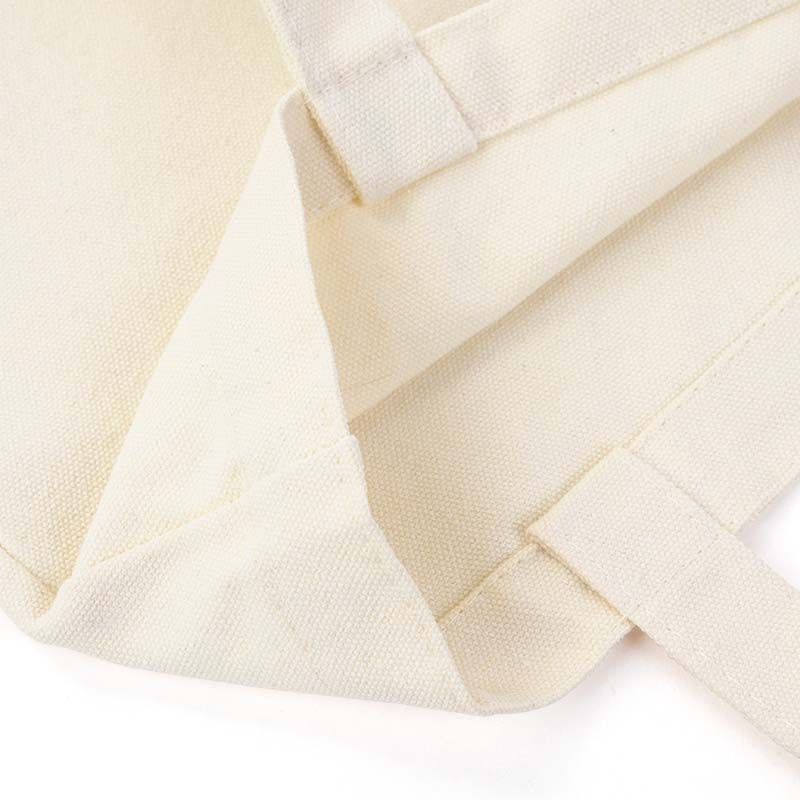
The areas where handles connect to the bag body are important because the weight of the contents transfers through these attachment points.
Potential design considerations include:
- Handle attachment length and position
- Reinforcement patches behind the attachment area
- Stitching pattern and stitch coverage
- Compatibility between handle material and bag fabric
The goal is to distribute pulling forces across a suitable area rather than concentrating them along a small section of fabric.
Bottom Panel
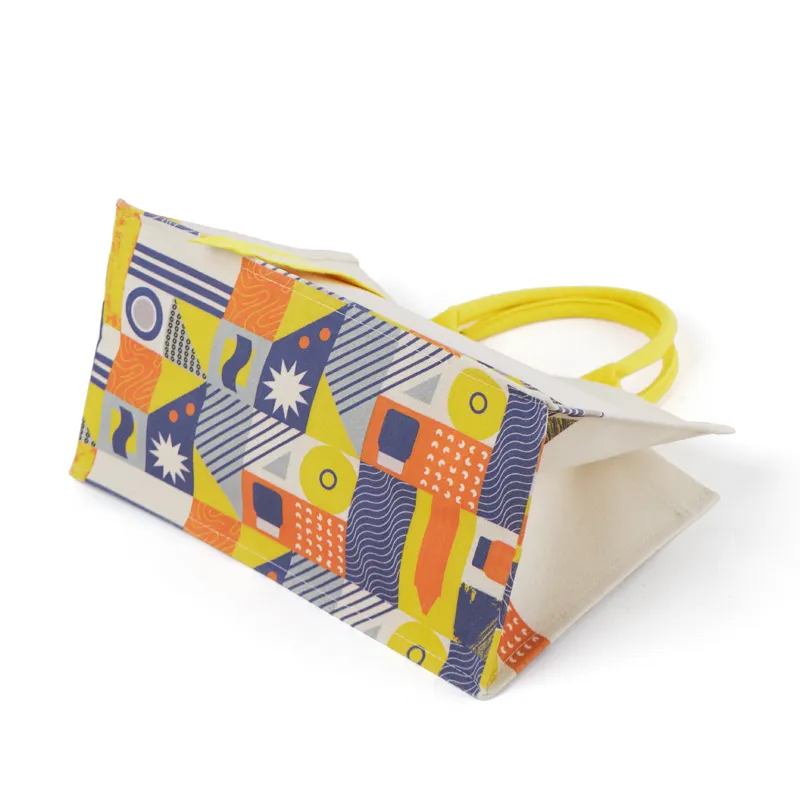
The bottom panel supports the contents and affects the bag's overall shape.
A large bag carrying dense products may require a more supportive bottom construction than a small promotional tote.
Design considerations include the bottom panel dimensions, gusset construction, additional fabric layers, and whether a removable support insert is appropriate.
Side Seams and Bottom Corners
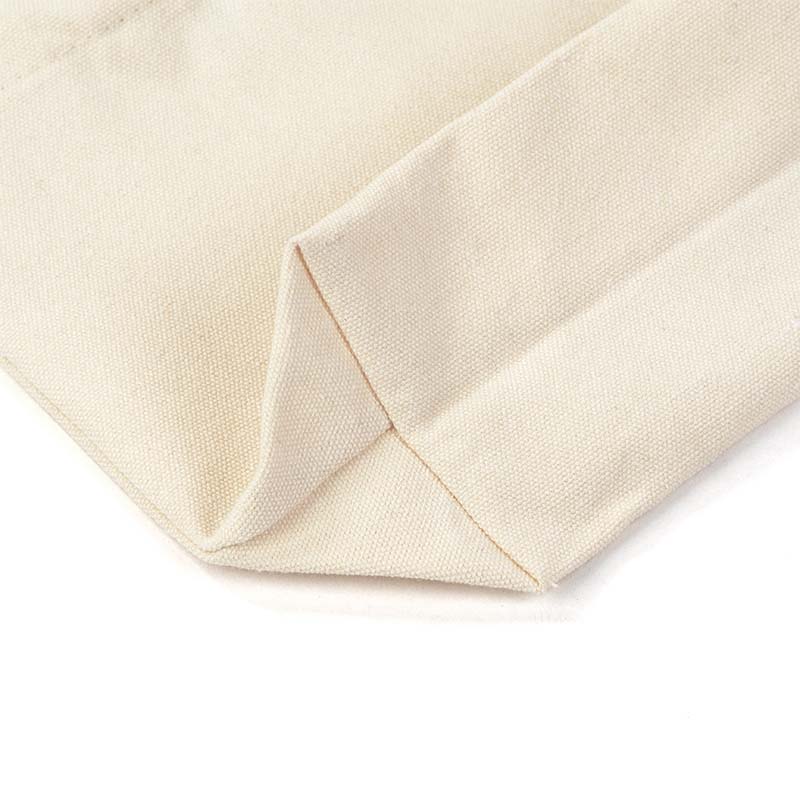
Side seams connect the main body panels, while bottom corners often bring several fabric layers together.
These areas should be reviewed for potential stress concentration, especially in bags with wide gussets or structured bases.
Reinforcement may involve additional stitching, backing materials, or adjustments to the seam construction.
Pocket and Accessory Attachments
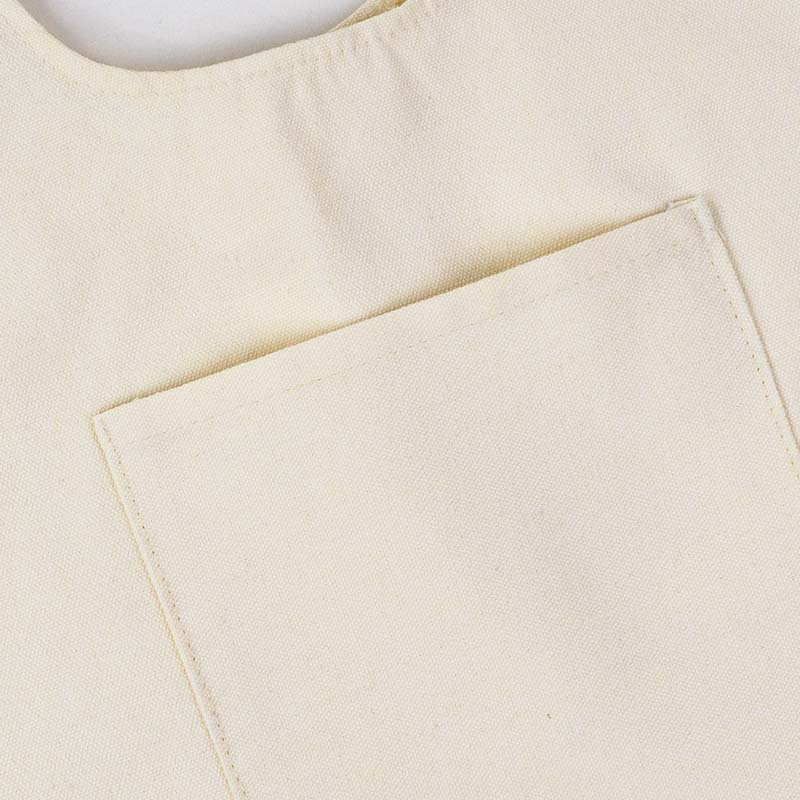
External pockets, decorative panels, and additional accessories can create localized stress where they attach to the bag body.
If a pocket is expected to hold relatively heavy items, its attachment should be designed accordingly.
Small reinforcement details at pocket corners may help reduce the risk of the fabric pulling away during use.
How to Reinforce Canvas Bag Handles
Handle reinforcement should be planned according to the handle material, attachment style, bag dimensions, and intended use.
Choose a Suitable Handle Attachment Area
The handle should connect to an area of the bag body that can support the expected load.
A narrow attachment area may concentrate force, while a wider attachment can help distribute it across more fabric.
For larger bags, designers should consider how the handle position affects the balance of the bag when it is carried.
The attachment should also avoid unnecessary interference with pockets, seams, and other construction details.
Add a Reinforcement Patch
A reinforcement patch is an additional piece of fabric placed behind or around the handle attachment.
Its purpose is to provide additional support to the canvas and spread the stitching load over a larger area.
When designing a reinforcement patch, consider:
- Whether it should be placed inside or outside the bag.
- Whether the patch material is compatible with the main canvas.
- How far it should extend beyond the attachment area.
- Whether the additional layers create excessive bulk.
An internal patch may create a cleaner exterior, while an external patch can become part of the bag's visual design.
For lined bags, the internal construction should be planned so the patch can be securely attached without compromising the finish.
Use Box Stitching or Box-X Stitching
Box stitching creates a rectangular stitch pattern around the handle attachment area.
Box-X stitching adds diagonal stitching across the rectangle, creating an X-shaped pattern.
Both methods are commonly used in bag construction, but their suitability depends on the complete attachment design.
Stitching method |
Typical application |
Box stitching |
Flat handle attachment areas |
Box-X stitching |
Handle or webbing attachments requiring additional stitch reinforcement |
Bartack stitching |
Localized reinforcement at selected stress points |
The stitching pattern should be selected together with the handle width, attachment length, fabric thickness, and sewing process.
Handle width and attachment length
Handle width affects comfort, appearance, and how the handle sits against the hand or shoulder. Attachment length affects how much of the handle is secured to the bag.
For product development, buyers should confirm:
- Handle width and thickness
- Handle material
- Handle drop or length
- Attachment position
- Attachment length
- Whether the handle is sewn onto the exterior, inserted into a seam, or attached using another construction method
These specifications should be reviewed together with the intended bag capacity and use.
How to Reinforce the Bottom of a Canvas Bag
The bottom structure affects how the bag supports its contents, maintains its shape, and sits when placed on a surface.
Not every canvas bag needs a rigid base. Buyers should first decide whether the finished product should be soft and flexible or more structured.
Add an extra fabric layer
An additional fabric layer can provide more support in the bottom area.
This option may be suitable when the bag needs added reinforcement but should remain relatively flexible.
You should consider the combined thickness of the bottom layers, especially where the base joins the side panels. Excessive thickness can make sewing more difficult and create bulky seams.
Use a bottom insert
A bottom insert can help the bag maintain a flatter base and support its shape.
Depending on the design, the insert may be removable or enclosed within the bag construction.
Potential benefits include:
- A more structured base
- Improved shape retention
- Better support for certain types of contents
However, inserts may increase material cost and affect storage, folding, or washing requirements. Buyers should confirm whether the insert needs to be removable and how it will be accessed.
Consider a gusseted bottom
A gusset adds depth to the bag and can create more usable space.
For bags intended to carry boxed products, retail purchases, or bulkier items, a bottom gusset may help the bag accommodate the contents more effectively.
The gusset dimensions should be considered alongside the bag’s width and height. A wider base changes the bag’s shape and may also affect how the bottom seams are constructed.
Reinforce bottom corners
Bottom corners can experience concentrated stress, particularly when the bag is filled or when contents press against the base.
Depending on the construction, reinforcement may involve additional fabric, adjusted seam construction, or localized stitching.
The aim is to support the corner without creating unnecessary bulk or making the bag difficult to sew consistently.
How to Reinforce Seams and Corners
Seams connect the panels that form the bag. Their design affects the bag’s shape, appearance, and ability to handle use.
Choose a seam construction suited to the design
Different bag constructions create different seam requirements.
For example, a flat tote and a tote with a wide gusset do not have the same panel intersections. The seam design should reflect the bag’s shape, intended contents, and desired finish.
Buyers should clarify the following with the manufacturer:
- Which seams need reinforcement?
- Are the seams exposed or enclosed?
- Will the bag have a lining?
- Are there thick intersections where several layers meet?
- Does the finished product need to fold flat?
Reinforce high-stress corners selectively
Corner reinforcement can be useful when the construction creates concentrated stress. However, reinforcing every corner in the same way may not be necessary.
The appropriate solution depends on the bag’s panel layout and how the contents will sit inside it.
For custom designs, buyers should review corner construction on the sample rather than relying only on a written description.
Consider the effect of lining
A lining may affect how reinforcement is added and concealed.
For example, reinforcement placed inside a lined bag may be hidden from view, while an unlined bag may require a cleaner external finish.
The lining, reinforcement layers, and outer canvas should be considered together to avoid unnecessary bulk or visible construction issues.
Reinforcement Materials: What Should Buyers Consider?
The material used for reinforcement should be compatible with the bag’s canvas, intended use, and target price.
Reinforcement option |
Potential purpose |
Buyer considerations |
Matching canvas |
Adds support while maintaining a consistent appearance |
Color, thickness, and bulk |
Heavier canvas |
Provides a more substantial reinforcement layer |
Stiffness, sewing difficulty, and cost |
Webbing |
Commonly used for handles and straps |
Width, thickness, texture, and appearance |
Bottom insert |
Helps the base maintain its shape |
Removability, flexibility, and care requirements |
Lining fabric |
Can conceal internal reinforcement and improve finishing |
Compatibility with the outer fabric and construction |
There is no single material that is suitable for every canvas bag. Buyers should choose reinforcement materials based on the intended product specification rather than assuming that the thickest or stiffest option is always preferable.
How to Specify Reinforcement Requirements to a Manufacturer
One of the most useful steps for B2B buyers is to turn general expectations into clear product requirements.
A request such as “Please make the bag stronger” does not provide enough information for a manufacturer to determine the appropriate construction.
Instead, buyers should communicate the product’s intended use and the design details that matter.
Provide the intended use and contents
Describe what the bag is expected to carry.
For example:
- Promotional materials for an event
- Retail products purchased in-store
- Books or packaged goods
- Branded merchandise
- Everyday personal items
If possible, provide the approximate contents’ weight and dimensions. This helps the manufacturer understand the intended application.
Confirm the main product specifications
The product specification may include:
- Bag dimensions
- Canvas material and weight
- Handle material, width, and length
- Handle attachment design
- Bottom structure
- Lining requirements
- Reinforcement locations
- Printing or embroidery requirements
Not every project needs every detail finalized at the beginning. However, the critical structural requirements should be clear before sample approval.
Explain the balance between strength and appearance
Buyers should also communicate the desired look and feel.
For example, a promotional tote may need to remain lightweight and economical, while a retail product may require a more structured appearance.
A private-label brand may also want reinforcement to remain concealed so that the finished bag maintains a clean exterior.
The manufacturer can then recommend suitable construction options for review during sampling.
How to Evaluate Reinforcement During Sampling
A sample is an opportunity to assess whether the proposed design meets the product requirements before bulk production.
Rather than checking only whether the bag looks correct, buyers should review the reinforcement as part of the complete construction.
Check the construction details
During sample review, inspect:
- Handle attachment placement
- Stitching consistency
- Reinforcement patch coverage
- Bottom and corner construction
- Seam finishing
- Visible bulk or unevenness
- Whether the bag maintains the intended shape
These checks help identify construction issues that may affect the finished product.
Test under agreed conditions
If load handling is important, buyers and manufacturers should agree on the test conditions before evaluating the sample.
The test should reflect the intended use and should be conducted consistently. Buyers should avoid assuming that a sample’s performance under one condition guarantees performance under every real-world situation.
For repeat orders, the approved sample and documented specifications can serve as references for production consistency.
Review the complete bag—not just one reinforced area
A strong handle attachment does not automatically mean the entire bag is suitable for the intended load.
The bag body, seams, base, corners, and handle system should all be considered together.
This is particularly important when the product has a wide gusset, lining, bottom insert, or multiple layers of fabric.
Common Reinforcement Design Mistakes Buyers Should Avoid
Adding reinforcement without identifying the stress point
Extra material may increase cost without addressing the area that needs support.
Better approach: Identify the intended use and likely stress points before choosing a reinforcement method.
Assuming thicker canvas solves every problem
Canvas weight is only one part of the construction. Handle attachment, seam design, bottom structure, and workmanship also matter.
Better approach: Evaluate material and construction together.
Over-reinforcing the entire bag
Excessive reinforcement can make the bag heavier, stiffer, and more expensive.
Better approach: Reinforce selectively according to the product’s requirements.
Confirming strength without defining test conditions
A general request for a “strong bag” can lead to different expectations between the buyer and manufacturer.
Better approach: Agree on the intended contents, approximate load, test method, and acceptance criteria where applicable.
Changing construction after sample approval without review
Changes to fabric, dimensions, handle material, or reinforcement can affect the final construction.
Better approach: Review structural changes before bulk production and update the approved specifications when necessary.
Balancing Strength, Cost, Weight, and Appearance
Priority |
Design consideration |
Load handling |
Identify the areas that transfer or support the load |
Cost control |
Avoid unnecessary reinforcement and complex construction |
Lightweight feel |
Use reinforcement selectively and consider total material thickness |
Appearance |
Decide whether reinforcement should be visible or concealed |
Shape retention |
Consider the base, gusset, lining, and insert together |
Production consistency |
Use clear specifications and review samples before bulk production |
The right balance depends on the product’s target market and intended use.
For a promotional gift, cost and ease of distribution may be important. For a retail or private-label product, buyers may place greater emphasis on finish, usability, and consistency across production runs.
The objective is not to make every canvas bag as heavy or rigid as possible. It is to develop a construction that meets the product’s requirements without adding unnecessary cost or complexity.
FAQ
What is the strongest way to reinforce a canvas bag?
There is no single reinforcement method that is strongest for every design. The appropriate solution depends on the bag’s intended use, material, construction, and load requirements. Handle attachments, seams, corners, and the bottom should be evaluated as a complete structure.
Does thicker canvas make a bag stronger?
Not necessarily. Thicker canvas may provide a more substantial material, but overall performance also depends on the stitching, handle attachment, seam construction, and bottom design.
Should every canvas tote have a reinforced bottom?
Not every tote requires the same bottom structure. Lightweight promotional bags may not need a rigid insert, while bags intended to carry heavier or bulkier products may benefit from additional support.
What information should buyers provide when ordering reinforced canvas bags?
Buyers should provide the intended use, approximate contents and weight, bag dimensions, canvas specifications, handle requirements, preferred bottom structure, and any relevant appearance or budget requirements.
Can reinforcement be customized for private-label canvas bags?
Yes. Reinforcement locations, materials, handle construction, bottom structure, and finishing details can be considered during custom product development. The final design should be reviewed and approved through sampling before bulk production.
Conclusion
Reinforcing a canvas bag begins with understanding how the finished product will be used. For procurement teams, retailers, promotional gift companies, and private-label brands, the most important step is to define the product requirements before choosing the reinforcement method.
Handle attachments, seams, corners, and the bottom may require different solutions depending on the bag’s design and intended contents. By identifying stress points, selecting suitable materials, communicating clear specifications, and evaluating samples under agreed conditions, buyers can make more informed decisions before bulk production.
At INITI, custom canvas bags can be developed around your product specifications, branding requirements, and intended application. Sharing your bag dimensions, expected use, and reinforcement preferences helps the team understand your requirements and discuss suitable construction options for your project.
Related Articles


 Hot News