Sports Squeeze Bottle vs Shaker Bottle: Which Product Fits Your Market?
A sports squeeze bottle and a shaker bottle are both common around gyms, sports fields and fitness events, so it is easy to treat them as two versions of the same product.
They are not.
A sports squeeze bottle is primarily designed for fast hydration. The flexible bottle body allows the user to squeeze water through a sports spout without repeatedly unscrewing a cap.
A shaker bottle is primarily designed for mixing drinks. It normally has a wider opening, secure screw-on lid and some form of mixing mechanism for protein powder, pre-workout, meal replacements or other powdered beverages.
That difference sounds small, but it changes almost everything about the product:
- Bottle material
- Body stiffness
- Lid design
- Opening size
- Cleaning
- Mixing performance
- Capacity
- Branding
- Target customer
- Retail positioning
For a football team or marathon giveaway, a shaker bottle may add features nobody needs.
For a protein brand, a simple squeeze bottle may fail to solve the main reason customers need the product in the first place.
So the more useful question is not:
Which bottle is better?
It is:
Which bottle matches the way your target customer actually drinks?
| Feature |
Sports Squeeze Bottle |
Shaker Bottle |
| Main purpose |
Fast hydration |
Mixing powders and liquids |
| Typical contents |
Water, sports drinks |
Protein, supplements, meal-replacement drinks |
| Bottle body |
Usually flexible |
Usually rigid or semi-rigid |
| Common body materials |
PE / similar flexible plastics |
PP / Tritan-type copolyester / other rigid plastics |
| Drinking system |
Pull spout / push-pull sports cap |
Flip cap / drinking spout |
| Mixing mechanism |
Usually none |
Ball, whisk, grid or integrated mixer |
| Mouth opening |
Moderate |
Usually wide |
| One-handed sports use |
Excellent |
Moderate |
| Cycling / field sports |
Excellent |
Less practical |
| Protein powder |
Poor |
Excellent |
| Measurement scale |
Less common |
Common |
| Storage compartment |
Rare |
Available on some designs |
| Cleaning complexity |
Low |
Medium |
| Promotional programs |
Excellent |
Good |
| Fitness / supplement retail |
Moderate |
Excellent |
| Unit complexity |
Lower |
Higher |
The categories can overlap—some shaker bottles work perfectly well as everyday water bottles—but their core functions remain different. Myprotein similarly defines shaker bottles around powder mixing and wide-mouth filling, while sports bottles are primarily designed around hydration.
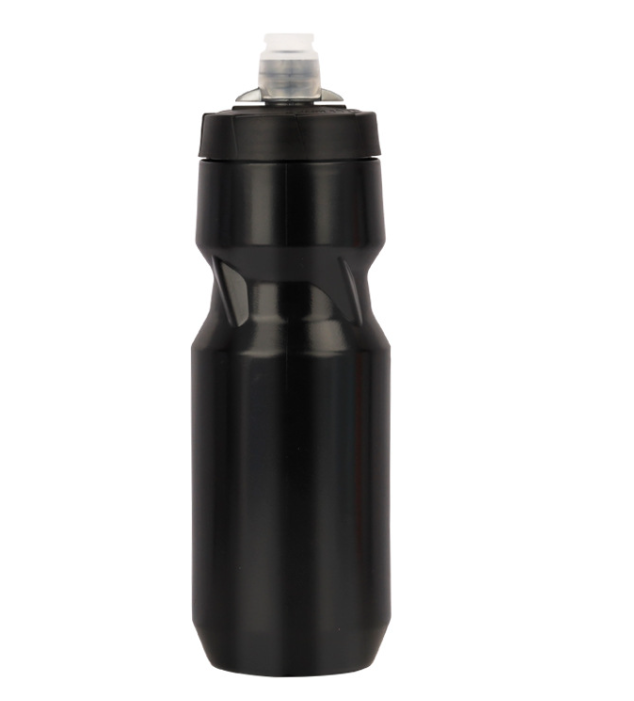
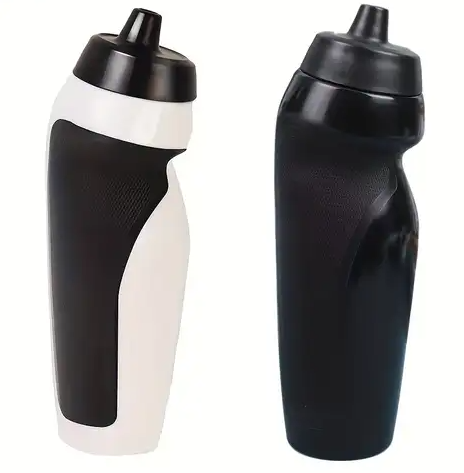
A sports squeeze bottle usually has a flexible bottle body that deforms when pressure is applied by hand.
Instead of waiting for water to flow by gravity alone, the user squeezes the bottle and pushes liquid through the drinking spout.
That makes it useful when stopping to drink is inconvenient.
Typical users include:
- Football players
- Basketball players
- Cyclists
- Runners
- School sports teams
- Gym users
- Marathon participants
- Outdoor-event participants
INITIGIFT's current squeeze-bottle structure uses a flexible PE body with a PP cap and pull-type sports spout, which is typical of this product category.
Why Does the Flexible Body Matter?
Imagine a cyclist reaching for a bottle while riding.
A rigid bottle can certainly provide water, but the user generally has to:
- Open the drinking mechanism
- Tilt the bottle
- Allow the liquid to flow
With a squeeze bottle, pressure from the hand actively pushes water through the spout.
That can make hydration faster.
The same advantage matters during:
- Team training
- Sideline breaks
- Running
- Outdoor exercise
The product is therefore designed around speed and simplicity, not around mixing ingredients.
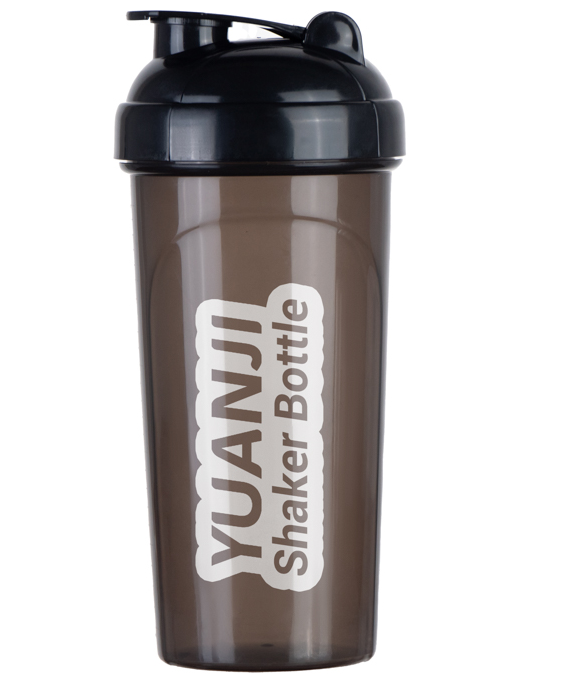
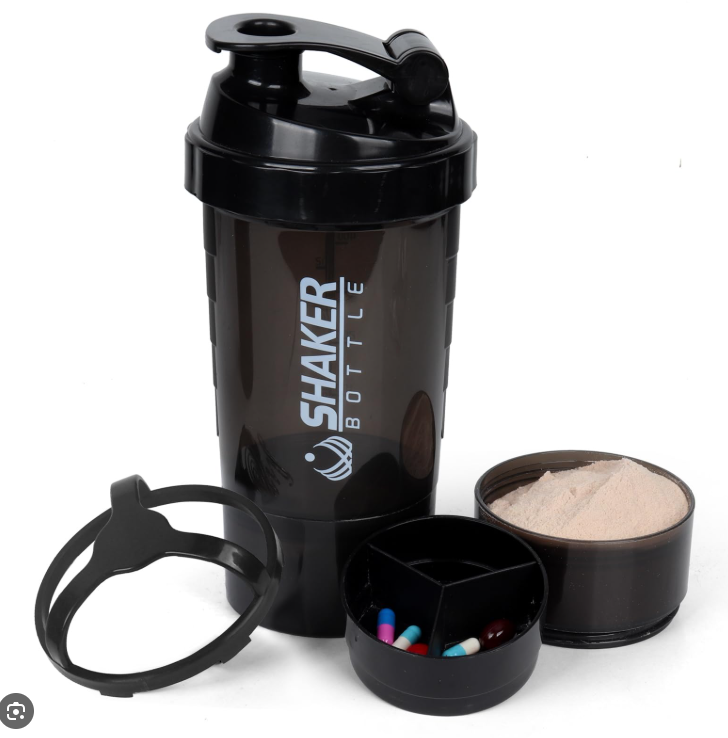
A shaker bottle is essentially a portable mixing container.
Its purpose is to combine liquid with powders such as:
- Protein powder
- Creatine
- Pre-workout
- Electrolyte powder
- Meal replacements
- Greens powders
The defining feature is normally a mixing system.
Common designs include:
- Wire mixing ball
- Plastic mixing ball
- Internal grid
- Mixing screen
- Shaped internal agitator
- Electric mixer in more advanced products
The bottle is closed and shaken so the moving mixer helps break up clumps.
Current consumer shaker guides consistently treat mixing efficiency, leak resistance and cleaning as the three core performance areas.
Why Are Shaker Bottles Usually Wide-Mouthed?
Try putting a scoop of protein powder into a narrow sports bottle.
A significant amount may end up around the neck—or on the floor.
Shaker bottles therefore usually have a wider opening.
That makes it easier to:
- Add powder
- Add ice
- Pour liquid
- Remove the mixing ball
- Wash the inside
- Reach the bottom during cleaning
The wide opening is one of the simplest physical differences between a shaker and a conventional sports bottle.
The Biggest Difference Is Not the Shape—It Is the Drinking Routine
Two bottles can have the same capacity and similar branding but still serve completely different routines.
Sports Squeeze Bottle
The typical routine is:
Fill → exercise → squeeze → drink → continue
The user needs:
- Fast access
- One-handed operation
- Controlled water flow
Shaker Bottle
The typical routine is:
Add liquid → add powder → close → shake → drink → clean
The user needs:
- Wide filling opening
- Tight closure
- Effective mixing
- Easy cleaning
This is why adding a mixing ball to a sports bottle does not automatically make the product a good shaker.
The entire bottle needs to support the mixing process.
Which Is Better for Team Sports?
For football, basketball, hockey training and similar activities, the sports squeeze bottle usually makes more sense.
Why?
Players mainly need:
- Water
- Electrolyte drinks
- Fast drinking
- Easy grip
- Simple operation
They normally do not need to mix protein powder during the game.
Squeeze bottles are also useful for teams because:
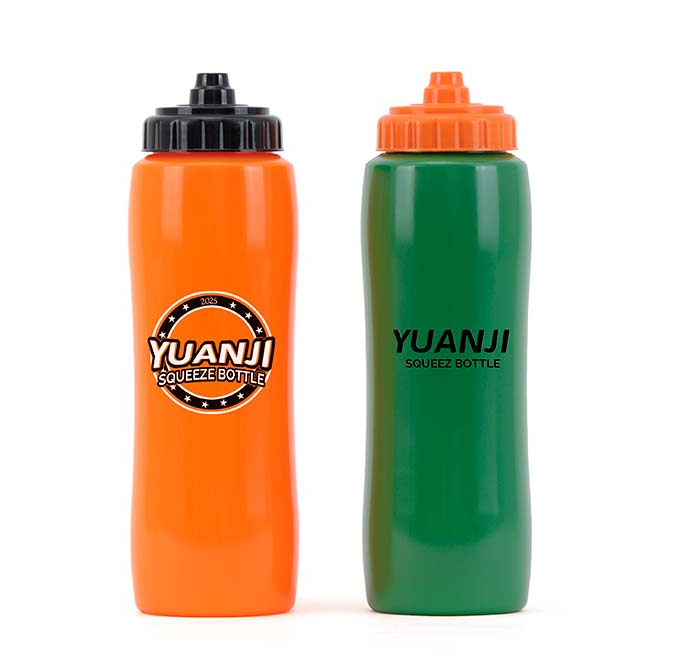
- Colors can match team identity
- Player names or numbers can be added
- Logos have a large visible print area
- Bottles can be distributed in bulk
- The structure is relatively simple
INITIGIFT currently positions its squeeze bottle around sports teams, schools, gyms, marathons, outdoor activities and promotional events for the same reason.
Which Is Better for Cycling?
Usually the squeeze bottle.
Cycling is one of the strongest use cases for this structure.
The important features become:
- Bottle diameter
- Cage compatibility
- Flexible body
- Easy grip
- High-flow sports spout
A cycling bottle may need to be grabbed, used and replaced in the cage quickly.
A bulky shaker with:
- Mixing ball
- Storage compartment
- Oversized lid
does not add much value.
If cycling is the target market, bottle dimensions and actual cage testing are more useful than simply labeling the product “sports bottle.”
Which Is Better for Running and Marathons?
For active hydration:
Sports squeeze bottle.
For post-race supplement mixing:
Shaker bottle.
These are two different moments in the same market.
A marathon sponsor might distribute lightweight sports bottles to runners.
A sports-nutrition brand at the recovery zone might distribute shaker bottles for:
- Protein
- Recovery powder
- Electrolyte mixes
So even within one event, the correct product depends on the intended usage point.
Which Is Better for Gyms?
This is where the answer becomes less obvious.
A gym can use both.
Sports Squeeze Bottle
Better for members who mainly need:
- Water
- Electrolytes
- Hydration during training
Shaker Bottle
Better for members using:
- Protein powder
- Pre-workout
- Creatine
- Meal replacements
If the gym has a strong:
- Supplement counter
- Nutrition program
- Personal-training offering
a shaker usually has greater functional relevance.
If the gym mainly wants an inexpensive branded bottle for new-member welcome kits, a basic sports bottle may be sufficient.
Which Is Better for Supplement Brands?
Shaker bottle—by a significant margin.
A shaker naturally complements products such as:
- Whey protein
- Plant protein
- Creatine
- Meal replacement powder
- Pre-workout products
It can be:
- Sold separately
- Included in a starter kit
- Added to a subscription
- Used as a promotional gift
- Bundled with supplement tubs or pouches
The product and the supplement reinforce each other.
That is one reason shaker bottles are common merchandise for sports nutrition brands.
Which Is Better for Schools?
A sports squeeze bottle is usually the simpler option.
It works well for:
- School teams
- Sports day
- Student events
- Outdoor activities
- Clubs
The advantages are straightforward:
- Lightweight
- Simple lid
- Easy hydration
- Large branding surface
- Easy color matching
A shaker only makes sense if the program has a specific fitness or nutrition use.
Which Is Better for Corporate Wellness Programs?
Either can work.
The choice depends on what the wellness campaign is trying to encourage.
Choose a Sports Bottle When the Program Focuses On:
- Drinking more water
- Walking
- Running
- General fitness
- Outdoor activities
Choose a Shaker When the Program Focuses On:
- Gym participation
- Protein intake
- Fitness nutrition
- Meal replacement
- Structured workout programs
The second option usually creates a stronger “fitness product” impression, while the squeeze bottle is broader and easier for almost anyone to use.
Which Is Better for Promotional Giveaways?
For very broad promotional distribution, squeeze bottles often have an advantage.
Their structure is simpler:
They are easy to understand and have a very broad audience.
Typical projects include:
- Sports events
- School campaigns
- Corporate events
- Charity races
- Outdoor promotions
A shaker is more specialized.
That specialization can actually be valuable when the audience is clearly interested in:
- Fitness
- Nutrition
- Gym training
But it may be unnecessary for a general consumer promotion.
Which Is Better for Retail?
Retail depends more heavily on perceived product value.
A simple squeeze bottle often competes as a relatively straightforward hydration product.
A shaker can offer more visible features:
- Mixing ball
- Measurement scale
- Supplement compartment
- Carry loop
- Wide-mouth design
- Multiple lid styles
That gives retailers more ways to differentiate products and create price tiers.
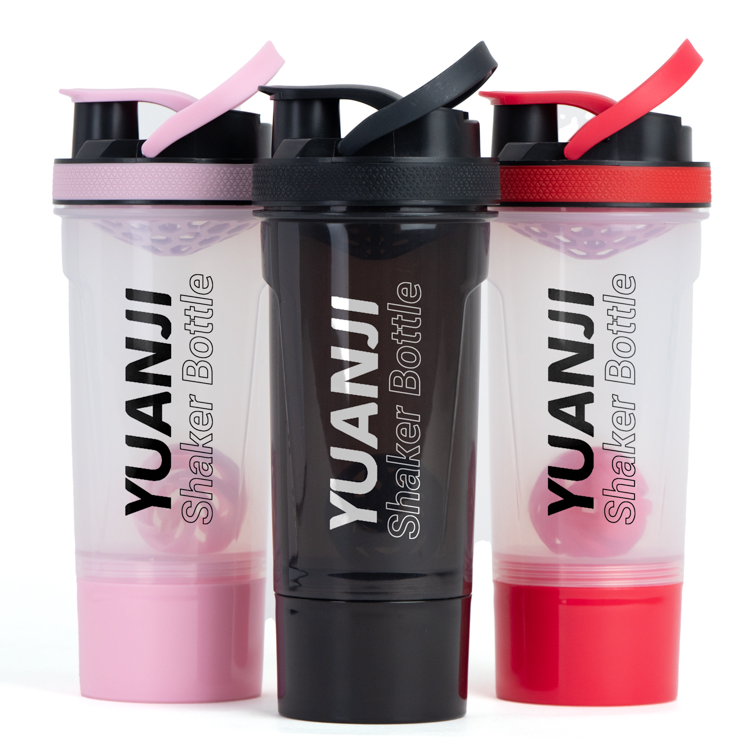
INITIGIFT's current bottle range includes both conventional mixing-ball shakers and shaker bottles with storage compartments, which illustrates this opportunity for feature-based retail segmentation.
The Material Difference: Flexible vs Rigid
The difference in function naturally leads to different material choices.
Flexible polyethylene is commonly used because the user needs to deform the bottle body.
A squeeze bottle that is too rigid defeats its own purpose.
PE can provide:
- Flexibility
- Low weight
- Impact resistance
- Relatively simple molding
- Good suitability for sports-bottle bodies
A PP cap may then be combined with the PE bottle body.
INITIGIFT's current squeeze-bottle specification uses this PE-body / PP-cap direction.
PP for Shaker Bottles
Polypropylene is widely used in shaker bottles because it can create a more rigid container while remaining relatively lightweight.
It works well for:
- Bottle bodies
- Lids
- Storage compartments
- Internal mixing components
A rigid bottle is useful because vigorous shaking should not significantly collapse the bottle body.
Tritan-Type Copolyester
Clear copolyester materials are also used when brands want:
- High transparency
- Rigid body
- Premium appearance
- Better visibility of liquid
They are common in higher-positioned reusable drinkware.
But material names alone should not be treated as proof of compliance or performance.
Exact resin grade and intended food-contact use still matter.
Does “BPA-Free” Mean the Bottle Is Automatically Food-Safe?
No.
This is a useful distinction.
“BPA-free” tells you something about one particular substance.
It does not automatically establish that the complete bottle complies with every destination-market food-contact requirement.
A bottle also includes:
- Body resin
- Lid
- Spout
- Seal
- Color masterbatch
- Printing
- Mixing ball or grid
For the EU, food-contact materials must comply with the Framework Regulation (EC) No 1935/2004, GMP requirements and applicable material-specific rules; plastic food-contact materials are additionally subject to EU plastics legislation.
For the U.S., FDA food-contact rules cover substances used in food-contact articles and their intended conditions of use.
So for a custom bottle project, the useful question is not simply:
“Is this BPA-free?”
but:
“Does this exact material and finished construction meet the requirements of the target market and intended beverage use?”
Squeeze Spout vs Shaker Flip Cap
The lid is another major difference.
Pull Spout on a Sports Squeeze Bottle
A pull-type sports spout is designed for frequent drinking.
Typical actions are:
pull/open → squeeze → drink → close
The important points are:
- Spout flow rate
- Opening force
- Closing force
- Leakage
- Comfort in the mouth
For team sports, high-flow drinking can matter more than sophisticated lid design.
Flip Cap on a Shaker Bottle
A shaker needs to survive vigorous shaking.
That means the lid has a different job.
It needs to keep the drink inside while the bottle is repeatedly moved with significant force.
Key areas include:
- Screw thread
- Main lid seal
- Flip cap
- Gasket
- Drinking opening
A lid that works perfectly for still water may leak when the bottle is shaken aggressively.
This is why shaker testing should include actual shaking, not just storing a filled bottle upright.
Why Leak Testing Is More Critical for Shakers
Imagine a bottle filled with:
inside a gym bag.
A small leak is far more unpleasant than a few drops of water.
Protein residue can create:
- Odor
- Staining
- Difficult cleaning
This makes lid consistency especially important for shaker bottles.
Current shaker-bottle tests and product reviews repeatedly rank leak resistance alongside mixing ability and cleaning as a core performance requirement.
Mixing Ball vs Mixing Grid
A shaker bottle can use several mixing systems.
Mixing Ball
A loose ball moves through the liquid while the bottle is shaken.
It may be:
- Stainless steel whisk
- Plastic ball
- Weighted mixer
Advantages:
- Simple
- Visible to consumer
- Replaceable on some designs
Mixing Grid
A fixed internal grid breaks up powder as the liquid passes through it.
Advantages:
- No loose component
- Lower chance of losing the mixer
- Can create a clean interior layout
Integrated Mixing Shape
Some bottles use internal geometry instead of a separate mixer.
These designs rely on:
- Curved internal surfaces
- Vortex shape
- Baffles
to improve fluid movement.
There is no universal “best mixer.”
The real test is whether the bottle mixes the target powder effectively.
Does Every Shaker Need a Mixing Ball?
No.
A bottle can still be designed as a shaker using:
- Mixing grid
- Integrated agitator
- Vortex structure
But a completely ordinary rigid bottle with no mixing feature may struggle with powders that clump easily.
That is why it should not automatically be marketed as a shaker simply because the consumer can shake it.
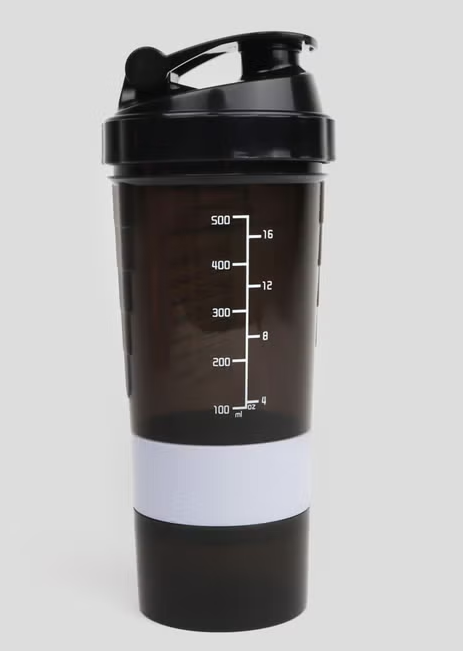
Measurement Markings Matter More on Shakers
Many shaker bottles have:
This helps users control:
- Water quantity
- Protein ratio
- Supplement serving
For a general sports squeeze bottle, measurement markings are less central.
This seemingly small feature can significantly increase relevance for fitness and nutrition customers.
Storage Compartments: A Shaker-Specific Feature
Some shakers include detachable compartments under the bottle.
They can hold:
- Protein powder
- Creatine
- Tablets
- Capsules
- Snacks
This turns the bottle into more of a compact nutrition system.
It is useful for:
- Commuters
- Gym members
- Travelers
- Supplement customers
But it also creates additional components.
That means more attention to:
- Threads
- Connection strength
- Component fit
- Cleaning
- Packaging volume
A simple squeeze bottle avoids this complexity entirely.
Which Bottle Is Easier to Clean?
Usually the squeeze bottle.
Its internal structure is simple and normally has fewer components.
A shaker may contain:
- Wide screw lid
- Flip cap
- Mixing ball
- Grid
- Storage compartment
- Gaskets
These features create more areas where drink residue can remain.
Why Odor Matters More for Shaker Bottles
Water rarely leaves a strong smell.
Protein drinks can.
Residue can remain around:
- Threads
- Cap hinges
- Gaskets
- Mixing balls
- Bottom corners
If the bottle is not washed quickly, odor can become a significant consumer complaint.
For shaker development, cleaning is therefore a product-performance issue—not just a care instruction.
Bottle Shape Also Affects Cleaning
Rounded internal corners generally clean more easily than narrow corners or complex internal ribs.
A very stylish bottle shape may look attractive on the shelf while being difficult to clean after a thick protein shake.
The same principle applies to the lid.
Simple geometry can be an advantage.
What Capacity Makes Sense?
There is no universal bottle capacity.
The right size depends on use.
Sports Squeeze Bottles
Capacity needs to balance:
- Hydration volume
- Hand grip
- Weight when full
- Bike-cage compatibility where relevant
A larger bottle carries more water but becomes heavier and less convenient during movement.
Shaker Bottles
Capacity depends partly on:
- Powder serving
- Liquid ratio
- Required mixing space
An important detail is that a shaker should not normally be filled completely to the top before mixing.
The contents need room to move.
So:
Total bottle capacity and practical mixing capacity are not always the same.
This is one reason a shaker may appear relatively large compared with the actual finished drink volume.
Does a Shaker Make a Good Everyday Water Bottle?
Yes.
Without powder, a shaker can simply carry water.
That gives it broader usefulness.
However, compared with a dedicated hydration bottle, it may be:
- Wider
- Bulkier
- More complex
- Less convenient during active sport
So a shaker is more versatile around the gym, while a sports squeeze bottle is more optimized for active hydration.
Can a Squeeze Bottle Mix Electrolyte Powder?
Yes—if the powder dissolves easily.
A sports bottle can be perfectly suitable for:
- Electrolyte tablets
- Easily dissolved powders
- Sports drink concentrates
The difference becomes obvious with powders that tend to clump, such as some:
- Protein powders
- Meal replacements
That is where the shaker's mixing mechanism becomes useful.
Branding: Which One Gives More Promotional Value?
Both can work very well, but they tell a different brand story.
Squeeze Bottle Branding
Works especially well for:
- Team logo
- School logo
- Event sponsor
- Marathon graphics
- Club branding
The smooth bottle body can provide a highly visible print area during active use.
Because the bottle itself is relatively simple, custom:
- Body color
- Cap color
- Logo color
can create strong visual identity.
Shaker Bottle Branding
Naturally fits:
- Fitness brands
- Supplement brands
- Gyms
- Wellness companies
- Sports nutrition retailers
Branding options may include:
- Main body logo
- Measurement scale
- Cap color
- Mixing-ball color
- Storage-compartment color
- Printed motivational text
The extra components create more opportunities for product differentiation.
Printing Method Depends on the Bottle
Possible methods can include:
- Screen printing
- Pad printing
- UV printing
- Labels
- Other decoration methods depending on material and surface
Printing performance should be tested for:
- Adhesion
- Abrasion
- Washing
- Flexing
The last point is particularly important on a squeeze bottle.
If the bottle body repeatedly bends, a decoration method that looks perfect on a rigid bottle may behave differently.
Which Is Better for Bulk Shipping?
Squeeze bottles can have an advantage because the structure is simpler and relatively lightweight.
Shakers may require more packing volume because of:
- Wider body
- Bigger lid
- Mixing ball
- Storage components
For large promotional programs, packaging efficiency can affect total landed cost.
Useful data to confirm include:
- Individual product weight
- Pieces per carton
- Carton dimensions
- Gross weight
- Packaging method
A slightly cheaper bottle can still become more expensive overall if it packs inefficiently.
Which Product Usually Has More QC Points?
The shaker bottle.
Not because it is automatically lower quality, but because it has more functions.
Sports Squeeze Bottle QC
Typical checks include:
- Body molding
- Flexibility
- Spout operation
- Cap fit
- Leakage
- Color
- Logo
- Odor
- Packaging
Shaker Bottle QC
May additionally include:
- Screw-thread fit
- Flip-cap closure
- Mixing mechanism
- Measurement markings
- Gasket
- Storage compartment
- Mixing performance
- Cleaning accessibility
More components create more potential failure points.
Useful Finished-Product Tests
Leakage Test
Fill the bottle, close it and test it in multiple positions.
For shakers, also shake it vigorously.
Drop Test
Useful for evaluating:
- Body cracking
- Cap separation
- Lid damage
The product should be tested at a realistic filled weight where appropriate.
Cap Cycle Test
Repeated opening and closing can reveal:
- Hinge weakness
- Spout wear
- Loss of sealing performance
Squeeze Cycle Test
Especially relevant to flexible sports bottles.
Repeated deformation can help evaluate:
- Body recovery
- Stress whitening
- Cracking
- Print durability
Mixing Test
For shaker bottles, use the type of powder the target consumer is actually likely to mix.
Evaluate:
- Remaining clumps
- Powder trapped at bottom
- Powder trapped around grid
- Ease of cleaning afterward
A shaker that performs well with a thin electrolyte powder may behave differently with a thick protein mix.
Food-Contact Documentation Should Match the Actual Market
Because both products directly contact beverages, food-contact requirements matter.
For EU projects, plastic food-contact articles fall under the EU food-contact regulatory framework, including general FCM requirements and plastics-specific legislation.
For U.S. projects, the regulatory status of the exact food-contact substances and intended conditions of use needs to be considered.
That means specifications should consider more than the main bottle resin.
Relevant components may include:
- Body
- Cap
- Spout
- Seal
- Mixer
- Colorants
- Printing
- Coatings
The finished product is the system consumers actually drink from.
Common Product-Selection Mistakes
Choosing a Shaker Just Because the Target Market Is “Fitness”
Not every fitness customer uses protein powder.
A running club may get far more value from a squeeze bottle.
Choosing a Sports Bottle for a Supplement Brand
If customers need to mix powder, the bottle is missing the most important function.
Adding Too Many Features to a Promotional Product
Storage compartments and complicated lids may increase cost without increasing actual usage.
Focusing Only on Capacity
Grip, mouth opening, lid, mixing space and bottle diameter matter too.
Calling Every Plastic Bottle “Leakproof”
Leak resistance needs to be evaluated on the complete bottle, especially during vigorous shaker use.
Assuming “BPA-Free” Is a Complete Compliance Claim
It is only one aspect of material selection and does not replace applicable food-contact documentation.
Ignoring Cleaning
This is especially dangerous with protein shakers, where inaccessible residue can quickly create odor complaints.
Which Product Fits Which Market?
| Market |
Better Starting Point |
Why |
| Football / basketball teams |
Sports squeeze bottle |
Fast active hydration |
| Cycling |
Sports squeeze bottle |
Grip, squeeze flow, bottle-cage use |
| Marathon / running event |
Sports squeeze bottle |
Lightweight hydration |
| Schools |
Sports squeeze bottle |
Simple, broad use |
| General promotional campaign |
Sports squeeze bottle |
Easy distribution and broad audience |
| Gym membership gift |
Either |
Depends on hydration vs nutrition focus |
| Supplement brand |
Shaker bottle |
Powder mixing is core function |
| Protein brand |
Shaker bottle |
Direct product relevance |
| Fitness retailer |
Shaker bottle |
Higher feature differentiation |
| Corporate wellness |
Either |
Depends on campaign |
| Sports nutrition event |
Shaker bottle |
Supplement use |
| Team recovery kit |
Shaker bottle |
Post-training nutrition |
A Simple Way to Decide
Choose a sports squeeze bottle when the customer needs:
- Water quickly
- One-handed drinking
- Lightweight construction
- Team colors
- Event distribution
- Simple cleaning
- Broad promotional appeal
Choose a shaker bottle when the customer needs:
- Protein or supplement mixing
- Measurement markings
- Wide-mouth filling
- Secure vigorous shaking
- Powder storage
- A more fitness-specific product
And if the target customer mainly wants an everyday premium water bottle, neither product may be the ideal answer—a rigid Tritan or stainless-steel water bottle may fit that market better.
What Should Be Specified for a Custom Sports Squeeze Bottle?
| Item |
What to Confirm |
| Intended Market |
Team / cycling / school / event |
| Capacity |
Required volume |
| Body Material |
PE or specified alternative |
| Cap Material |
PP or specified alternative |
| Spout |
Pull / push-pull / custom |
| Bottle Flexibility |
Soft / medium |
| Body Color |
Standard / custom |
| Cap Color |
Standard / custom |
| Logo |
Printing method + position |
| Cage Compatibility |
Required / not required |
| Food Contact |
Destination-market requirement |
| Testing |
Leakage / squeeze cycles / drop |
| Packaging |
Bulk / polybag / retail |
| Quantity |
Total + color split |
What Should Be Specified for a Custom Shaker Bottle?
| Item |
What to Confirm |
| Intended Market |
Gym / supplement / retail |
| Capacity |
Total and usable mixing volume |
| Body Material |
PP / copolyester / custom |
| Mouth |
Wide opening |
| Lid |
Screw lid + flip cap |
| Mixing System |
Ball / whisk / grid / integrated |
| Measurement Scale |
mL / oz / both |
| Storage Compartment |
Required / not required |
| Carry Loop |
Required / not required |
| Logo |
Printing method + position |
| Food Contact |
Destination-market requirement |
| Testing |
Leakage / mixing / drop / cap cycles |
| Packaging |
Bulk / retail / gift set |
| Quantity |
Total + color split |
FAQ
What is the main difference between a sports squeeze bottle and a shaker bottle?
A sports squeeze bottle is designed primarily for quick hydration during activity. A shaker bottle is designed primarily to mix powdered supplements with liquid.
Can a shaker bottle be used as a water bottle?
Yes. It can carry normal water, although it may be bulkier than a dedicated sports hydration bottle.
Can a sports squeeze bottle mix protein powder?
It can physically hold protein powder and liquid, but without a proper mixing mechanism and wide opening it may be less effective and harder to clean than a shaker.
Which bottle is better for gyms?
Both can work. A sports bottle is suitable for hydration-focused programs, while a shaker is more relevant to gyms with strong supplement and nutrition use.
Which is better for sports teams?
A squeeze bottle is generally more practical because it allows rapid hydration and simple one-handed operation.
Which is better for supplement brands?
A shaker bottle is usually the better choice because its mixing function directly supports powdered nutrition products.
What materials are sports squeeze bottles commonly made from?
Flexible PE-type plastics are commonly used for the bottle body, often combined with PP components such as caps and spouts.
What materials are shaker bottles commonly made from?
PP and clear copolyester-type plastics are common, while some premium shakers also use stainless steel.
Does a shaker bottle need a mixing ball?
Not necessarily. It can use a ball, whisk, mixing grid or integrated mixing structure.
Which product is easier to customize for large promotional orders?
Both can be customized, but squeeze bottles generally have a simpler structure and are especially suitable for team, school, event and broad promotional programs.
Conclusion
Sports squeeze bottles and shaker bottles may share the same gym bag, but they solve different problems.
A sports squeeze bottle is a hydration tool.
Its strengths are:
- Speed
- Simplicity
- Flexible body
- One-handed drinking
- Lightweight construction
That makes it particularly suitable for:
- Teams
- Cycling
- Schools
- Running events
- Promotional campaigns
A shaker bottle is a mixing tool.
Its strengths are:
- Powder mixing
- Wide-mouth filling
- Measurement
- Secure shaking
- Supplement storage options
That makes it particularly suitable for:
- Gyms
- Protein brands
- Supplement companies
- Fitness retail
- Sports nutrition programs
Neither product is universally better.
The better product is the one whose function matches the customer's routine.
If the user mainly needs water during activity, simplify the product and choose the squeeze bottle.
If the user needs to turn powder and liquid into a drink, the shaker bottle earns its extra complexity.
Inquiry Support
For a custom sports bottle or shaker project, you can provide:
- Target market
- Intended beverage
- Estimated quantity
- Preferred capacity
- Preferred material
- Lid or spout preference
- Mixing mechanism if required
- Required colors
- Logo artwork
- Food-contact market requirements
- Packaging requirements
If you have not finalized all details, you can first send the intended use and target quantity, and we can recommend a suitable bottle structure.
Related Products



 Hot News