Mesh Laundry Bag vs Fabric Laundry Bag: Which Should You Choose?
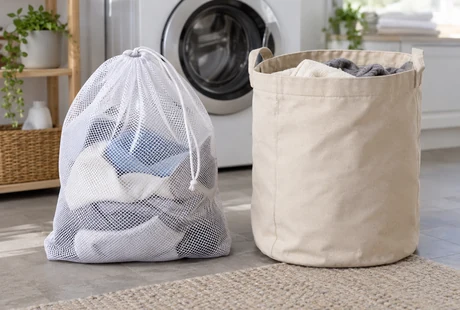
Mesh laundry bags and fabric laundry bags often appear in the same product category, but they are usually designed for different jobs.
A mesh laundry bag is generally the better choice when airflow, quick drying or washing clothes inside the bag matters.
A solid fabric laundry bag is usually better when the main purpose is carrying, sorting or storing laundry and you want more privacy, structure or branding space.
The simple version is:
Choose mesh for washing and ventilation.
Choose solid fabric for storage, transport and concealment.
But there are exceptions.
A small fine-mesh zipper bag used for washing bras has almost nothing in common with a large drawstring mesh sack used in a dormitory. Likewise, a lightweight polyester laundry pouch behaves very differently from a heavy cotton-canvas laundry sack.
So the real difference is not simply whether one bag has holes.
It is how the fabric structure affects:
- Water flow
- Airflow
- Drying
- Garment protection
- Carrying strength
- Privacy
- Weight
- Cleaning
- Storage
- Branding
First, What Does “Mesh vs Fabric” Actually Mean?
Technically, mesh is also a fabric.
Mesh describes an open fabric structure with visible spaces between the yarns or filaments.
It can be made from:
- Polyester
- Nylon
- RPET
- Cotton
A solid fabric laundry bag, by comparison, normally uses a more closed woven or knitted material such as:
- Cotton
- Canvas
- Polyester
- Oxford fabric
- Nylon
So a more technically accurate comparison would be:
Open mesh laundry bag vs solid fabric laundry bag
rather than treating “mesh” and “fabric” as two raw materials.
This distinction matters because a polyester mesh bag and a solid polyester Oxford bag use the same general fiber family but behave very differently because of their construction.
| Feature |
Mesh Laundry Bag |
Solid Fabric Laundry Bag |
| Airflow |
Excellent |
Low to moderate |
| Water flow during washing |
Excellent |
Limited |
| Drying speed |
Usually faster |
Usually slower |
| Suitable for washing garments inside |
Yes, depending on design |
Usually not the main purpose |
| Visibility of contents |
High |
Low |
| Privacy |
Low |
High |
| Damp clothing storage |
Better for short periods |
Can trap moisture |
| Garment separation |
Excellent |
Good |
| Delicate protection |
Excellent with fine mesh |
Depends on construction |
| Carrying heavy laundry |
Depends on mesh strength |
Often better |
| Branding area |
Limited by mesh surface |
Usually better |
| Travel organization |
Excellent |
Excellent |
| Dormitory use |
Good |
Good |
| Hotel laundry collection |
Good |
Very common |
| Foldability |
Excellent |
Usually good |
| Structure |
Soft |
Soft to structured |
There is no universal winner.
The better bag depends on whether the user plans to wash, ventilate, carry or store the contents.
A mesh laundry bag uses an open net-like structure that allows:
to pass through the bag.
This is why mesh is widely used for laundry products.
But there are two main types that should not be confused.
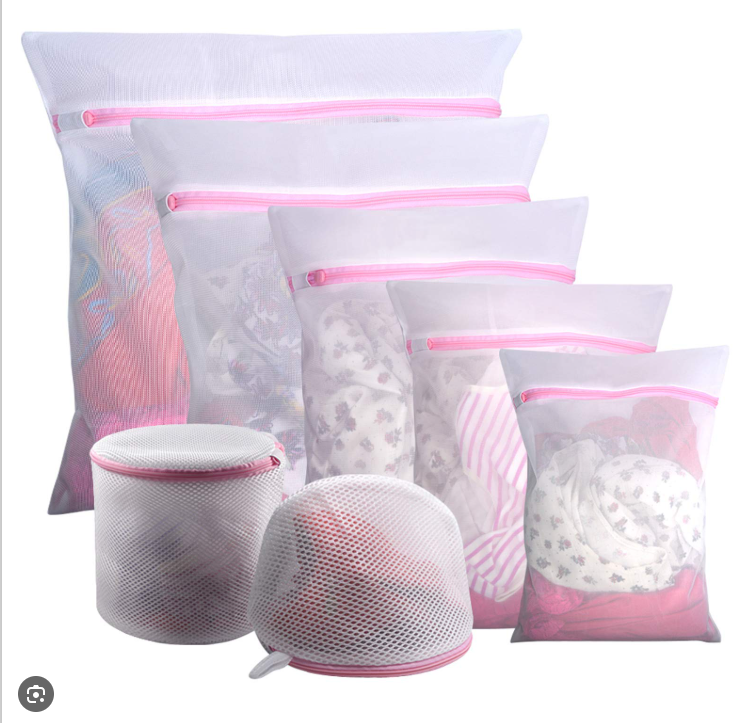
This is usually a smaller bag designed to go inside the washing machine.
Typical items include:
- Bras
- Underwear
- Socks
- Baby clothes
- Delicate garments
- Knitwear
- Small accessories
- Some washable shoes
The bag keeps these items separated from the rest of the load while still allowing wash water to circulate.
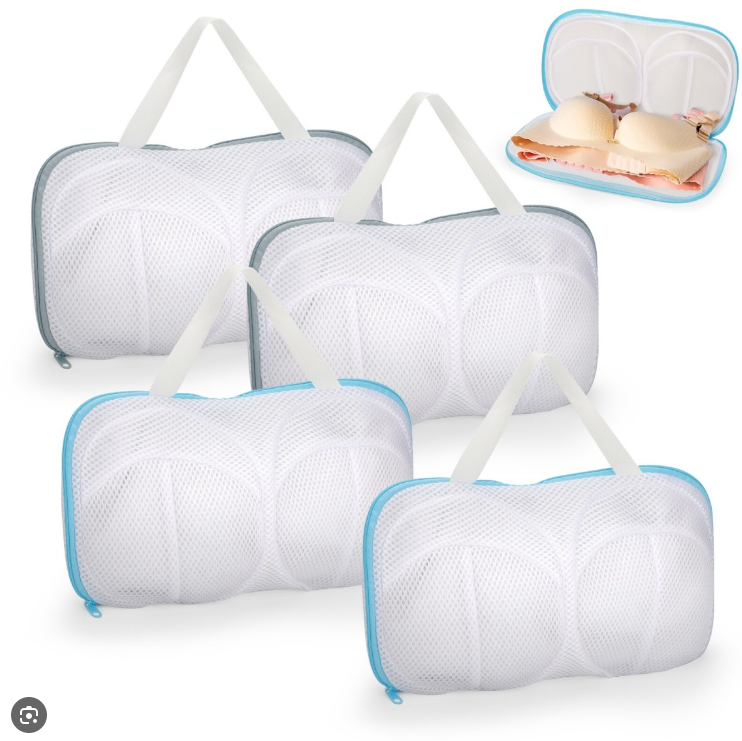
INITIGIFT's current Laundry Bag range includes cylindrical bra wash bags, drawstring mesh wash bags and other mesh structures designed around this function.
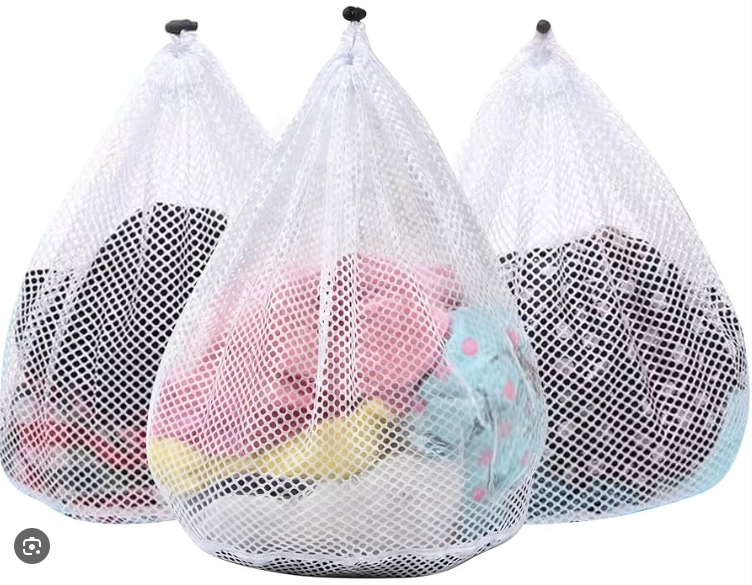
A larger mesh bag may be used mainly for:
- Dirty-clothing collection
- Dormitories
- Sports kits
- Travel
- Hotels
- Laundry sorting
It may never enter a washing machine.
Its main advantage is ventilation.
This distinction is important because a product described simply as a mesh laundry bag could refer to either one.
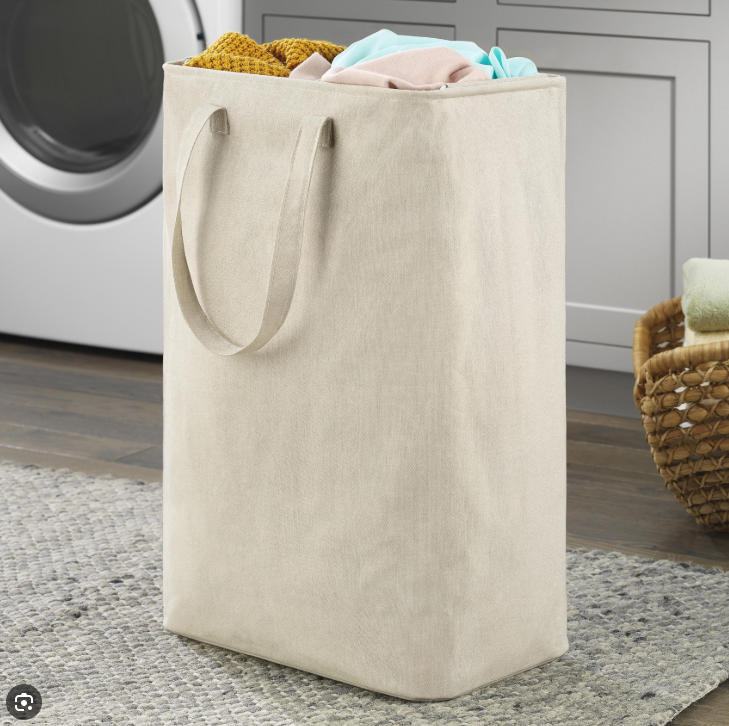
A fabric laundry bag normally has a solid or relatively closed textile body.
Common designs include:
- Cotton drawstring laundry sack
- Canvas laundry bag
- Polyester laundry sack
- Oxford fabric laundry bag
- Travel laundry pouch
- Hotel laundry bag
- Foldable laundry hamper
Instead of allowing maximum airflow, the fabric creates a more enclosed space.
That gives it advantages in:
- Privacy
- Carrying
- Branding
- Appearance
- Structure
It is usually more of a storage or transport product than a wash bag.
The Biggest Difference: Can You Wash Clothes Inside It?
This is where mesh has the clearest advantage.
A proper mesh wash bag allows water and detergent to move through the openings and reach the garments inside.
This makes it useful for separating delicate or small items without completely isolating them from the wash cycle.
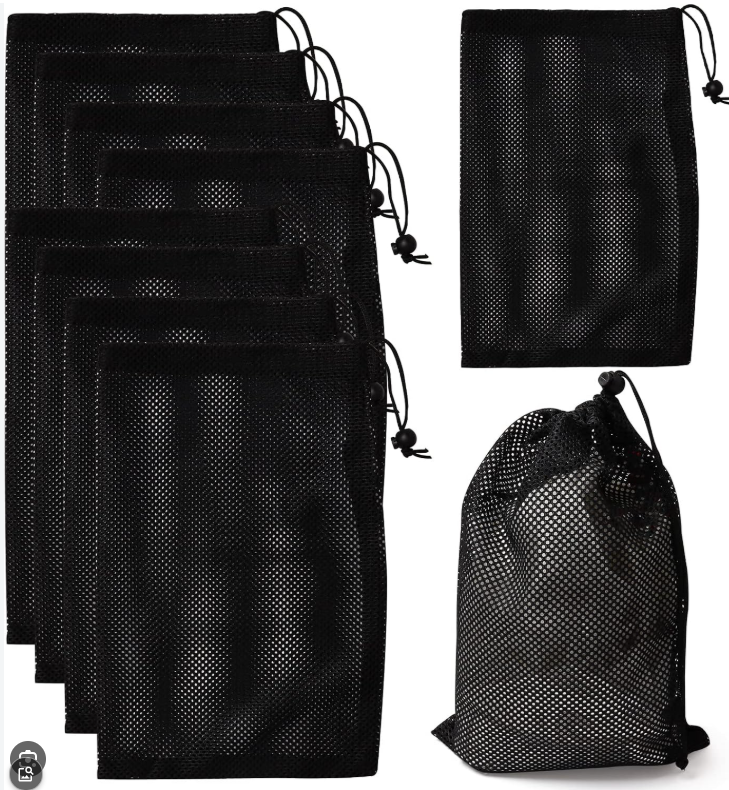
INITIGIFT's current drawstring mesh laundry bag uses breathable polyester or nylon mesh specifically so water and detergent can circulate through the bag during washing.
A solid cotton or canvas laundry sack does not provide the same circulation.
Even if it is technically machine washable, that does not mean it is suitable for washing a full load of clothes inside the bag.
Why Not Wash Clothes Inside a Solid Fabric Bag?
Imagine putting several shirts inside a tightly woven cotton sack and placing the entire sack in the washing machine.
The detergent and water can still reach the contents to some extent, but the outer material limits circulation.
Garments may:
- Move less freely
- Rinse less efficiently
- Remain bunched together
- Dry more slowly afterward
The bag itself also absorbs water.
For washing clothes inside a protective bag, mesh is usually the more logical construction.
Why Use a Mesh Bag in the Washing Machine?
The goal is not to stop water reaching the clothes.
It is to reduce unwanted contact.
A mesh wash bag can help keep garments away from:
- Zippers on other clothes
- Hooks
- Velcro
- Rough fabrics
- Excessive tangling
It is especially useful for smaller garments that can become twisted around larger laundry.
Does a Mesh Laundry Bag Completely Protect Delicate Clothes?
No.
It reduces exposure, but it cannot make an unsuitable wash cycle safe.
A delicate garment can still be damaged by:
- Excessive heat
- Aggressive detergent
- High spin speed
- Incorrect washing program
- Overloading
- Its own hooks or hardware
Mesh provides physical separation, not complete protection from every washing condition.
INITIGIFT makes the same limitation clear on its mesh wash products: mesh can reduce friction and tangling, but fragile garments still require appropriate washing instructions.
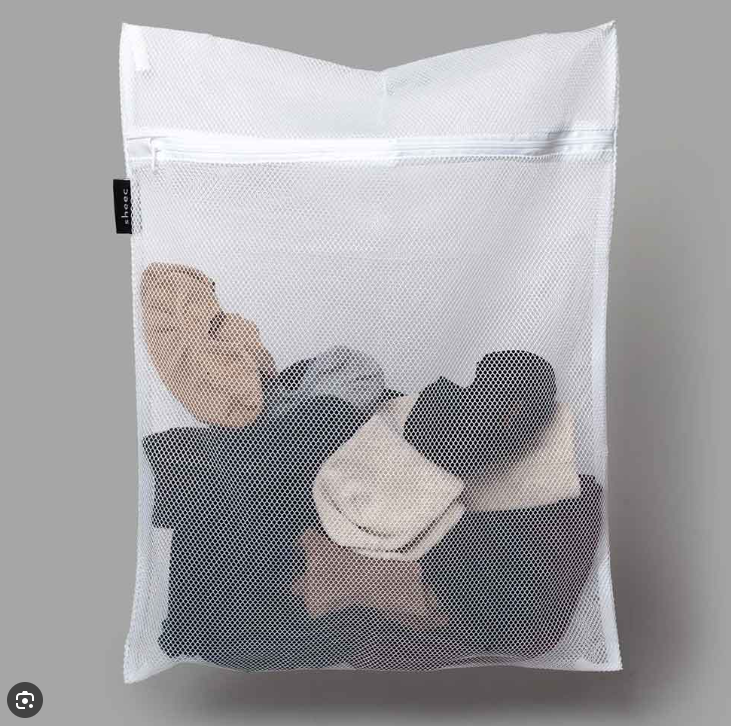
Fine Mesh vs Large-Hole Mesh
Not all mesh laundry bags have the same hole size.
This changes how the bag behaves.
Fine Mesh
Fine mesh has smaller openings.
It works well for:
- Bras
- Lace
- Underwear
- Socks
- Baby clothes
- Delicate knitwear
Why?
Because a finer surface creates more separation between the garment and the rest of the wash.
Small hooks and straps are also less likely to protrude through the openings.
Medium Mesh
This is a good general-purpose option.
It can work for:
- T-shirts
- Shirts
- Socks
- Travel clothes
- General laundry sorting
It balances:
- Water flow
- Airflow
- Protection
Large-Hole Mesh
Larger openings maximize circulation.
They may be useful for:
- Shoes
- Towels
- Larger clothing
- Sportswear
- Laundry collection
But large openings provide less surface separation for delicate items.
So:
More airflow does not automatically mean better garment protection.
The mesh density should match the contents.
Mesh Is Better for Damp or Sweaty Clothing
This is one of the most practical differences outside the washing machine.
Suppose you finish:
- A gym session
- Football training
- Swimming
- A run
and put damp clothing into a laundry bag.
A mesh bag allows more air to move around the contents.
That can help reduce the warm, enclosed environment created by a completely closed bag.
For short-term storage or transport of:
- Sportswear
- Damp towels
- Swimwear
mesh generally makes more sense.
Travel guides similarly favor mesh when airflow and quick drying matter, while solid fabric bags are better when privacy and enclosed storage are priorities.
But Mesh Does Not Make Wet Clothes “Safe to Store”
Ventilation helps, but damp clothes should still not sit inside any laundry bag for long periods.
Even a mesh bag cannot prevent:
- Odor
- Bacterial growth
- Mildew
if wet textiles remain packed together for too long.
The best solution is still to dry or wash damp items as soon as practical.
Which Bag Dries Faster?
Usually mesh.
There are two reasons.
First, the open structure holds less material overall.
Second, air can pass through both sides more easily.
Synthetic mesh—particularly polyester—also absorbs relatively little moisture.
That is why polyester mesh is common in repeatedly washed laundry accessories. It dries quickly and generally maintains its dimensions well.
Cotton Fabric Behaves Differently
Cotton absorbs moisture into the fiber.
A cotton laundry sack therefore:
- Becomes heavier when wet
- Takes longer to dry
- May shrink depending on construction and washing
- Needs to dry completely before being stored
That does not make cotton a poor choice.
It simply makes it better suited to different uses.
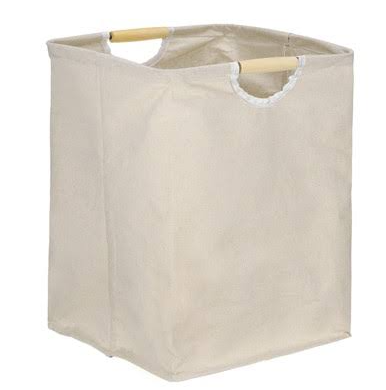
Where Does Cotton Fabric Make More Sense?
Cotton is attractive for:
- Home laundry storage
- Dormitory bags
- Guest-room laundry bags
- Travel organization
- Natural-fiber retail products
It offers:
- Soft hand feel
- Natural appearance
- Good printing
- Good branding area
For dry laundry collection, these may matter more than fast drying.
Which One Offers More Privacy?
Solid fabric wins easily.
A mesh bag allows users to see at least part of what is inside.
That is fine for:
- Household washing
- Sports clothing
- Laundry rooms
but may be less suitable for:
- Underwear collection
- Hotel guest laundry
- Shared dormitories
- Travel
- Public transport
A cotton, polyester or Oxford laundry bag conceals the contents.
This can make the product feel more appropriate outside the laundry room.
Which Is Better for Travel?
Both can be useful—but for different things.
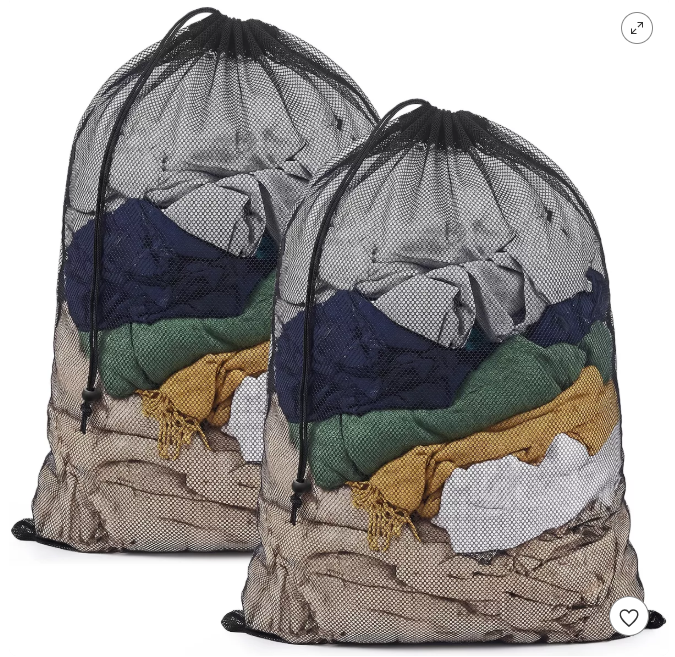
Works well for:
- Worn sportswear
- Damp swimwear
- Quick sorting
- Lightweight packing
Advantages:
- Lightweight
- Foldable
- Breathable
- Easy to see contents
Works well when you want:
- Privacy
- Odor separation
- Cleaner appearance
- More structured packing
It can keep dirty clothes visually separated from the rest of a suitcase.
Some travelers therefore use both:
mesh for damp or ventilated items
and
solid fabric for general dirty clothing.
Which Is Better for Hotels?
This depends on the hotel workflow.
A solid fabric bag may provide a better experience.
Why?
It offers:
- Privacy
- Cleaner visual appearance
- Larger logo area
- More premium feel
Cotton or polyester fabric can also coordinate with:
- Hotel colors
- Bedding
- Amenity packaging
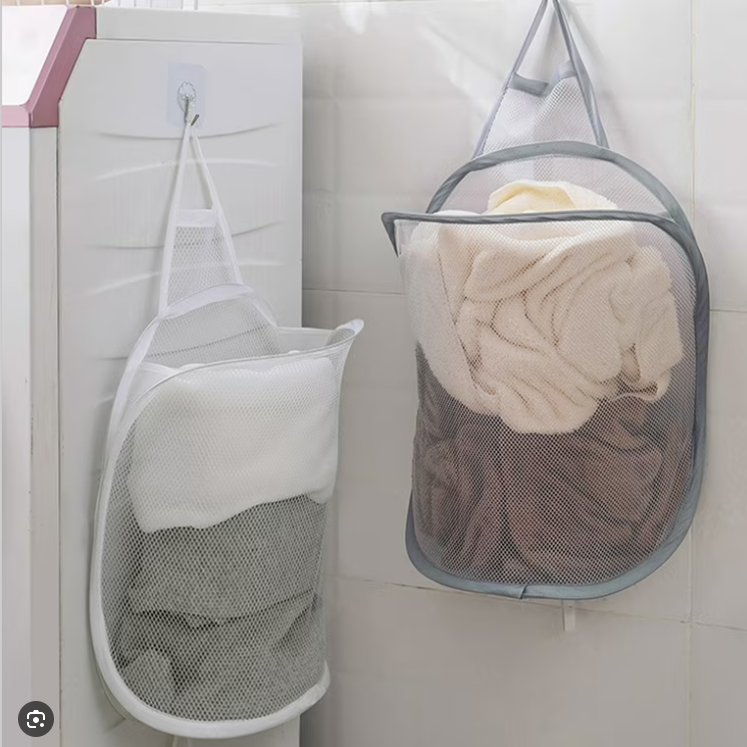
Mesh can become more practical.
Staff may need:
- Quick visibility
- Ventilation
- Color coding
- Lightweight handling
For internal linen movement, the bag's function matters more than its appearance.
Which Is Better for Dormitories?
Again, both work.
A large mesh bag is useful when students need:
- Ventilation
- Low weight
- Easy carrying
- Visible contents
A solid fabric laundry bag is better when they want:
- Privacy
- Better room appearance
- Printed design
- A bag that doubles as storage
A backpack-style laundry sack can also make carrying clothes to a shared laundry room easier.
Which Is Better for Gyms and Sports Clubs?
Mesh usually has an advantage.
Sports laundry often includes:
- Sweaty shirts
- Shorts
- Socks
- Towels
- Training gear
Airflow is useful before these items reach the washing machine.
Large mesh sacks can also help separate:
- Team uniforms
- Training bibs
- Towels
A solid fabric bag can still be useful for members who carry dry clothing to and from the gym.
So the distinction can be:
Mesh = dirty / damp sports laundry
Fabric = clean clothes / general transport
Which Is Better for Home Laundry?
The answer depends on where in the laundry process the bag is used.
Inside the Washing Machine
Choose mesh.
Laundry Hamper or Bedroom Collection
Either can work.
Delicate Garment Protection
Choose fine mesh.
Carrying Laundry to Another Room
A stronger fabric sack may be more comfortable.
Storing Clean Textiles
Solid fabric provides greater dust and visual protection.
One household can easily use several different laundry bag types because they solve different problems.
Which Material Is Most Common for Mesh Laundry Bags?
Polyester is one of the most common choices.
Why?
It provides a practical combination of:
- Low moisture absorption
- Quick drying
- Dimensional stability
- Durability
- Cost efficiency
INITIGIFT currently offers polyester mesh across several laundry wash bag structures.
Nylon Mesh
Nylon is another option.
It often provides:
- Flexible hand feel
- Good abrasion resistance
- Good strength
It can be used for:
- Fine wash bags
- Repeated handling
- More flexible mesh constructions
However, “nylon” alone does not prove that the bag will last longer.
Mesh density, yarn thickness, seam strength and heat setting still affect performance.
Cotton Mesh
Cotton can also be made into mesh.
This is an important point because mesh does not automatically mean synthetic.
Cotton mesh is popular for:
- Natural-fiber product lines
- Travel organizers
- Storage
- Light-duty laundry products
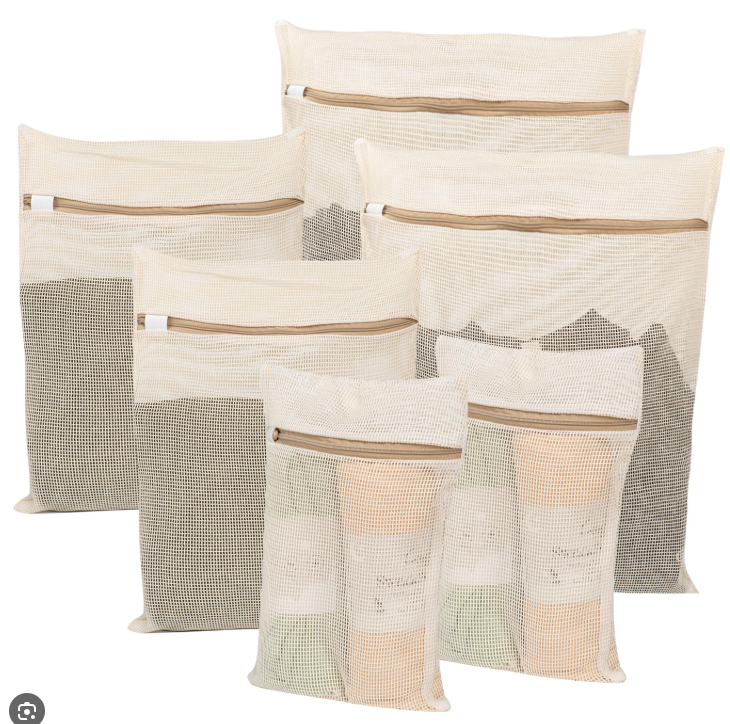
INITIGIFT's Laundry Bag category currently includes an Organic Cotton Mesh Zipper Laundry & Travel Organizer Set.
Cotton mesh provides excellent airflow and a softer, more natural appearance.
But compared with polyester mesh, it generally:
- Absorbs more water
- Dries more slowly
- Requires more shrinkage control
So it should not automatically be treated as a direct performance substitute for polyester mesh in frequent machine-wash applications.
What Materials Are Used for Solid Fabric Laundry Bags?
The range is broader.
Cotton
Useful for:
- Home storage
- Hotels
- Dormitories
- Travel
- Retail products
Advantages:
- Natural appearance
- Soft feel
- Good printing
Limitations:
- Absorbs moisture
- Can shrink
- Takes longer to dry
Canvas
Canvas is heavier and more structured.
It works well for:
- Large laundry sacks
- Home storage
- Premium retail laundry bags
- Heavy loads
It provides a stronger visual and tactile impression than lightweight cotton.
But heavy canvas becomes much heavier when wet.
It is therefore more suited to carrying dry or slightly used laundry than being used as a wash bag.
Polyester Fabric
Solid polyester can provide:
- Low weight
- Good color stability
- Quick drying
- Large print area
- Relatively low moisture absorption
It is practical for:
- Hotel laundry bags
- Travel pouches
- Promotional laundry bags
- Foldable bags
Oxford Fabric
Oxford fabric is useful when the laundry bag needs more structure and strength.
It may be made from:
- Polyester
- Nylon
- RPET polyester
Coated Oxford can provide increased resistance to moisture passing through the fabric.
That can be useful for travel, but there is a trade-off:
A highly coated bag also reduces ventilation.
Does a Waterproof Laundry Bag Make Sense?
Sometimes.
A waterproof or strongly water-resistant lining can be useful when carrying:
- Wet swimwear
- Damp towels
- Used gym clothing
because it helps isolate moisture from the rest of the luggage.
But the same closed environment can trap:
inside.
So a waterproof laundry bag is useful for short-term containment, not necessarily for long-term storage of wet clothing.
INITIGIFT's current Laundry Bag category includes a foldable laundry basket with waterproof lining, showing how a closed fabric structure can serve a different function from breathable mesh.
Zipper vs Drawstring: Does the Closure Change the Choice?
Yes.
The fabric receives most of the attention, but the closure changes how the bag performs.
This is the classic choice for:
- Bras
- Underwear
- Delicates
- Small garments
A zipper keeps small items securely contained during tumbling.
Useful details include:
- Hidden zipper
- Zipper cover
- Elastic zipper garage
These help reduce contact between hard zipper parts and:
- Other garments
- Washing-machine drum
INITIGIFT's cylindrical bra laundry bag uses a secure zipper and reinforced structure for this reason.
Better for:
- Larger clothing
- Shoes
- Travel laundry
- Laundry collection
It is:
- Flexible
- Lightweight
- Easy to adjust
For machine washing, however, the loose drawstring should be managed carefully so it does not tangle.
INITIGIFT's current drawstring wash bag uses a stopper plus a tie-and-hide rope design to reduce this issue.
This is one of the simplest solid-fabric structures.
It works well for:
- Hotels
- Travel
- Dormitories
- Home organization
The large solid surface also provides ample room for:
- Printed logos
- Instructions
- Decorative graphics
Does Mesh Offer Better Garment Protection?
For machine washing, usually yes—but the answer depends on mesh density.
Fine mesh can reduce direct rubbing between delicate clothes and the rest of the wash.
It can also help contain:
- Bra straps
- Hooks
- Small socks
A large-hole mesh sack is less protective.
Its main benefit is airflow and separation.
So there is a difference between:
protective mesh
and
ventilation mesh.
They should not be specified in exactly the same way.
Bras are a good example.
A basic flat mesh pouch may separate the bra from other clothes, but it does not prevent the molded cups from being compressed.
A cylindrical or structured bra bag creates more internal space around the garment.
INITIGIFT's cylindrical mesh bra bag uses a three-dimensional reinforced structure specifically to reduce compression and deformation during washing.
So sometimes bag shape matters more than simply choosing mesh.
Which Is More Durable?
There is no automatic winner.
A lightweight mesh bag can tear if:
- Overloaded
- Snagged on a sharp object
- Used for heavy shoes
A heavy canvas bag may survive greater loads but can also fail at:
- Drawstring channel
- Handle attachment
- Bottom seam
Durability depends on the entire construction.
Important factors include:
- Fiber
- Mesh/fabric density
- GSM
- Yarn thickness
- Seam allowance
- Stitch density
- Reinforcement
- Closure quality
Mesh Has One Particular Vulnerability: Snagging
The open structure creates spaces where objects can catch.
Potential problems include:
- Bra hooks
- Shoe hardware
- Velcro
- Metal accessories
- Sharp garment parts
Fine mesh reduces some of this risk but does not eliminate it.
For items with aggressive hooks or hardware, the closure and internal positioning matter.
Solid Fabric Handles Rough Objects Better
A tightly woven polyester, canvas or Oxford bag has fewer open spaces to snag.
That can make solid fabric more suitable for carrying:
- Shoes
- Heavy workwear
- Bulky household textiles
when machine washing inside the bag is not required.
Which Is Better for Branding?
Solid fabric generally wins.
A continuous fabric panel provides a better surface for:
- Screen printing
- Heat transfer
- Embroidery
- Large graphics
Mesh can still be branded using:
- Woven label
- Printed binding
- Fabric patch
- Printed solid panel
but the open structure limits direct graphic detail.
For a retail product where branding is a major part of the design, a fabric panel or full solid bag may therefore be more attractive.
Which Is Easier to Fold and Pack?
Both can be compact.
Lightweight mesh has the advantage when minimum packed volume is important.
This makes it useful for:
- Travel accessory sets
- Laundry kits
- Dormitory products
- Retail multi-packs
Solid fabric can still fold efficiently, but heavier canvas or lined bags occupy more space.
For bulk orders, this can affect:
- Carton quantity
- Freight volume
- Retail packaging dimensions
Mesh vs Fabric for Different Laundry Uses
| Use |
Better Starting Point |
Why |
| Bras and lingerie |
Fine mesh |
Protection + water flow |
| Socks and small garments |
Mesh |
Keeps items together |
| Shoe washing |
Strong mesh |
Water flow + separation |
| General machine-wash sorting |
Mesh |
Allows wash circulation |
| Gym clothing |
Mesh |
Ventilation |
| Swimwear |
Mesh for ventilation / lined fabric for short transport |
Depends on wet-storage need |
| Hotel guest laundry |
Solid fabric |
Privacy + branding |
| Dormitory collection |
Either |
Airflow vs privacy |
| Home laundry hamper |
Solid fabric / basket |
Structure + appearance |
| Travel dirty-clothes bag |
Either |
Mesh for airflow; fabric for privacy |
| Clean textile storage |
Solid fabric |
Dust and visual coverage |
| Sports-team laundry |
Mesh |
Ventilation + sorting |
| Promotional laundry bag |
Solid fabric |
Better print area |
When Should You Choose a Mesh Laundry Bag?
Mesh is usually the better choice when:
- The bag will enter the washing machine
- Water and detergent need to circulate
- Clothes are damp or sweaty
- Quick drying matters
- Contents need ventilation
- Garments need to remain separated
- A lightweight travel organizer is needed
It is especially suitable for:
- Lingerie
- Socks
- Sportswear
- Baby clothes
- Delicates
- Shoes
- Travel laundry
depending on mesh density and bag structure.
When Should You Choose a Fabric Laundry Bag?
A solid fabric bag makes more sense when:
- The bag is mainly for storage or transport
- Contents should not be visible
- A large logo is important
- Heavy clothing needs to be carried
- A more premium appearance is required
- The bag should coordinate with home or hotel interiors
Common applications include:
- Hotels
- Dormitories
- Home storage
- Travel
- Guest laundry
- Promotional products
When Does a Combination Work Better?
Some laundry products combine solid fabric and mesh.
For example:
Solid lower section + mesh upper panel
can provide:
- Privacy
- Strength
- Ventilation
Another design may use:
Mesh body + solid fabric binding
to create:
- Stronger seams
- Better shape
- Branding area
This can be more useful than treating mesh and solid fabric as mutually exclusive choices.
What Should You Check When Choosing a Mesh Laundry Bag?
Mesh Density
Ask whether the bag is intended for:
- Delicates
- General clothing
- Shoes
The hole size should follow the contents.
Mesh Weight and Strength
A heavier item needs a stronger mesh.
Do not use the same lightweight lingerie mesh for heavy shoes.
Seams
Look at:
- Side seams
- Bottom seam
- Binding
Mesh can fail around stitching if the seam does not distribute the load well.
Closure
For machine washing:
- Zipper protection
- Hidden zipper
- Secure drawstring
becomes important.
Finished-Bag Washing Test
The bag should be tested as a complete product.
A strong mesh material does not help if the zipper opens halfway through the cycle.
What Should You Check When Choosing a Fabric Laundry Bag?
Fabric Type
Define whether it is:
- Cotton
- Canvas
- Polyester
- Oxford
- RPET
Fabric Weight
The bag should balance:
- Carrying strength
- Foldability
- Cost
- Drying time
Moisture Requirements
Does the bag need:
- Breathability
- Water resistance
- Waterproof lining
These are different requirements.
Handle or Drawstring Strength
For a 5–10 kg laundry load, strap and seam construction may matter more than the face fabric.
Washability
If the laundry bag itself needs repeated washing, confirm:
- Shrinkage
- Colorfastness
- Coating durability
- Print durability
Common Misunderstandings
“Mesh Is a Material”
Not exactly.
Mesh is a structure and can be made from polyester, nylon, cotton or other fibers.
“Mesh Is Always Better for Laundry”
No.
It is better for ventilation and wash-through applications.
Solid fabric can be better for carrying, privacy and storage.
“Cotton Is More Breathable Than Mesh”
A solid cotton fabric may be breathable at fiber level, but it does not provide the same open airflow as a net-like polyester mesh.
Fabric structure matters.
“Waterproof Is Better for Dirty Laundry”
Not necessarily.
Waterproof construction isolates moisture from luggage but also traps humidity inside.
It is better for short-term transport than for leaving damp clothes stored for long periods.
“Bigger Mesh Holes Wash Better”
Larger holes increase water exchange but reduce protection.
Fine mesh is often better for delicate garments.
“A Laundry Bag That Is Machine Washable Can Be Used as a Wash Bag”
These are different claims.
A solid cotton laundry sack may itself be machine washable without being designed to hold clothes during the wash cycle.
A Practical Custom Laundry Bag Specification
| Specification |
What to Define |
| Main Use |
Washing / sorting / storage / travel |
| Bag Type |
Mesh / solid fabric / combination |
| Contents |
Lingerie / shoes / clothing / towels |
| Material |
Polyester / nylon / cotton / canvas / Oxford / RPET |
| Mesh Density |
Fine / medium / large-hole |
| Fabric Weight |
GSM or custom specification |
| Size |
Width × height × depth |
| Structure |
Flat / cylindrical / gusseted / basket |
| Closure |
Zipper / drawstring / stopper |
| Reinforcement |
Binding / double stitching / reinforced bottom |
| Handle |
None / webbing / fabric / drawstring |
| Moisture Requirement |
Breathable / water-resistant / lined |
| Logo |
Label / print / embroidery / panel |
| Washing Requirement |
Household / repeated commercial / storage only |
| Packaging |
Individual / set / paper sleeve / retail box |
| Quantity |
Total quantity and size/color split |
FAQ
Is a mesh laundry bag better than a fabric laundry bag?
For washing clothes inside the bag or storing damp garments temporarily, mesh is generally better. For carrying, privacy, storage and branding, a solid fabric laundry bag may be better.
Can mesh laundry bags go in the washing machine?
Many mesh wash bags are specifically designed for machine washing, but the closure, mesh material and care instructions should be checked.
Can a fabric laundry bag go in the washing machine?
The bag itself may be washable, depending on its material. That does not necessarily mean clothes should be washed inside a solid fabric laundry bag.
What is the best mesh for delicate clothes?
Fine, soft mesh is usually a better starting point because it provides more separation from rough garments and washing-machine components.
Is polyester or nylon better for a mesh laundry bag?
Polyester is widely used because it dries quickly and maintains its dimensions well. Nylon can provide a flexible hand and good abrasion resistance. The mesh construction and bag quality matter as much as the fiber.
Are cotton laundry bags breathable?
Yes, cotton allows some moisture and air exchange, but a solid cotton fabric does not ventilate as freely as open mesh.
Which laundry bag is better for travel?
Mesh is useful for airflow and damp sportswear, while solid fabric gives better privacy and separation inside luggage. Some travelers use both.
Which laundry bag is better for hotels?
Solid fabric often works well for guest-room laundry because it provides privacy and a large branding area. Mesh may be more practical for back-of-house sorting and ventilation.
Is a drawstring or zipper better for a mesh laundry bag?
Zippers are usually better for small delicates during machine washing. Drawstrings work well for larger garments, shoes, travel and laundry collection when the rope is designed to avoid tangling.
Conclusion
Mesh laundry bags and fabric laundry bags are not really competing versions of one product.
They solve different problems.
A mesh laundry bag is strongest when the user needs:
- Water circulation
- Airflow
- Fast drying
- Garment separation
- Wash-through performance
That makes it a natural choice for:
- Delicates
- Socks
- Sportswear
- Shoes
- Machine-wash organization
A solid fabric laundry bag is stronger when the user needs:
- Privacy
- Carrying capacity
- Storage
- Large branding area
- A cleaner visual appearance
That makes it more suitable for:
- Hotels
- Dormitories
- Travel
- Home organization
- Laundry collection
And in some products, the best answer is neither one alone.
Combining mesh ventilation with solid-fabric reinforcement or panels can provide a better balance of airflow, strength and branding.
So the simplest way to choose is:
If the bag needs to work with the washing process, start with mesh.
If the bag mainly needs to hold and transport laundry, start with solid fabric.
Then decide the material, density, closure and structure around the actual contents.
Inquiry Support
For a custom laundry bag project, you can provide:
- Intended use
- Items to be stored or washed
- Estimated quantity
- Preferred size or reference dimensions
- Mesh or solid-fabric preference
- Preferred material
- Closure type
- Required colors
- Logo artwork
- Packaging requirements
If you have not finalized all details, you can first send your intended use and target quantity, and we can recommend a suitable specification.
Related Products



 Hot News