Sling Bag vs Crossbody Bag: What’s the Difference?
Search for a small hands-free bag and you will quickly run into the same problem:
One brand calls it a sling bag.
Another calls an almost identical product a crossbody bag.
A third uses both words together and sells it as a crossbody sling bag.
That is not necessarily incorrect.
Sling bags and crossbody bags overlap heavily because both normally use a single strap worn diagonally across the body. The difference is usually found in where the bag sits, how closely it follows the body, its shape, strap length and how much it is designed to carry.
In general:
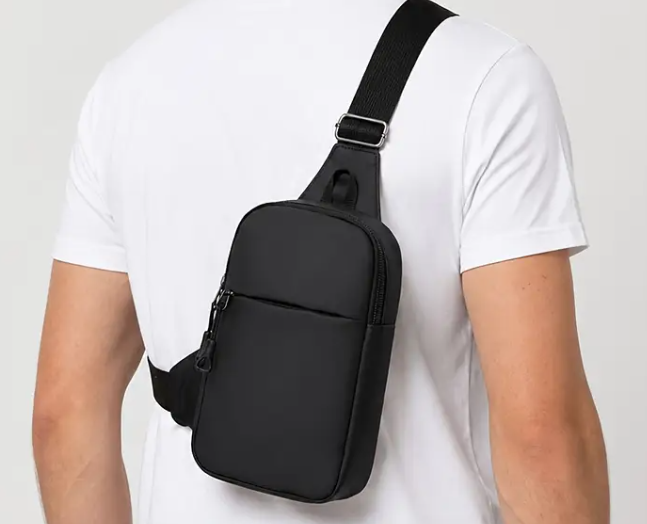
A sling bag usually sits higher and closer to the chest or back, with a compact, body-hugging shape.
A crossbody bag is the broader category and usually hangs lower toward the side or hip on a longer strap.
But this is a convention rather than a strict technical standard.
A bag with a long adjustable strap may work as a high chest sling at one setting and a lower crossbody bag at another. That is why current brands sometimes describe the exact same product using both terms.
So instead of relying only on the product name, it is more useful to compare the actual design.
Sling Bag vs Crossbody Bag at a Glance
| Feature |
Sling Bag |
Crossbody Bag |
| Typical wearing position |
High on chest or back |
Side or hip |
| Distance from body |
Close-fitting |
Usually hangs more freely |
| Strap |
Usually shorter and wider |
Usually longer, often adjustable |
| Body shape |
Compact, curved or vertical |
Very broad range |
| Capacity |
Usually small |
Small to large |
| Movement during walking |
Usually low |
Can move more freely |
| Quick access |
Excellent |
Excellent |
| Active use |
Very suitable |
Depends on style |
| Fashion range |
Casual / sporty / outdoor |
Casual to fashion / business |
| Common contents |
Phone, wallet, keys, small bottle |
Daily essentials, tablet, documents, larger items |
| Chest carry |
Very common |
Possible |
| Hip carry |
Less typical |
Very common |
| Travel use |
Excellent |
Excellent |
These are typical differences, not fixed rules.
What Is a Sling Bag?
A sling bag is generally a compact single-strap bag designed to sit relatively high and close to the torso.
It may be worn:
- Across the chest
- Across the upper back
- Over one shoulder
- Sometimes around the waist if the strap allows it
The body is usually small enough to carry only the essentials:
- Phone
- Wallet
- Keys
- Earphones
- Passport
- Power bank
- Small water bottle
Current market guides commonly describe sling bags as close-fitting, movement-oriented bags that sit higher than traditional crossbody styles.
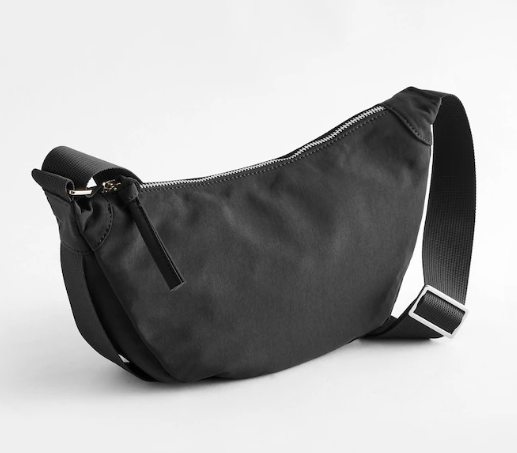
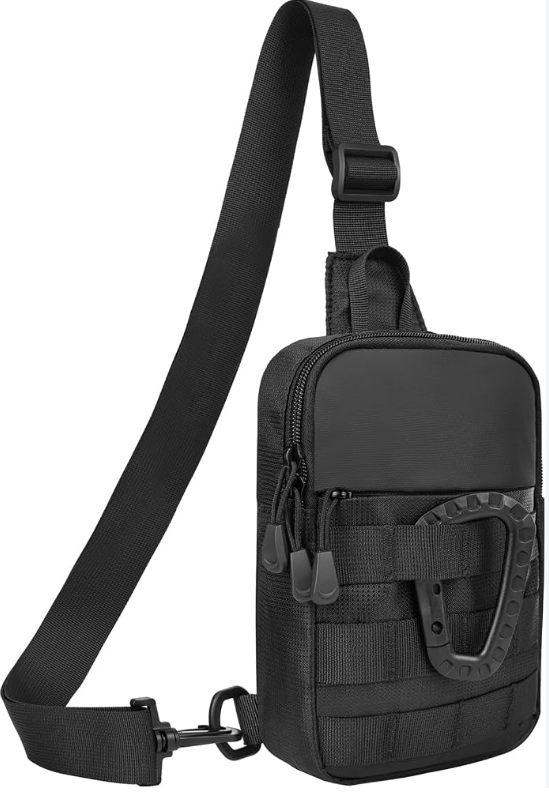
INITIGIFT's current Compact Crossbody Sling Bag is a good example of this overlap: it has a slim vertical body, wide adjustable single strap and compact storage designed for front, side or back carrying.
“Crossbody” is a much broader term.
At its most basic level, it describes how the bag is worn:
The strap passes diagonally from one shoulder across the torso, while the body of the bag rests on the opposite side.
A crossbody bag can be:
This is why saying “crossbody bag” tells you less about the exact shape than saying “sling bag.”
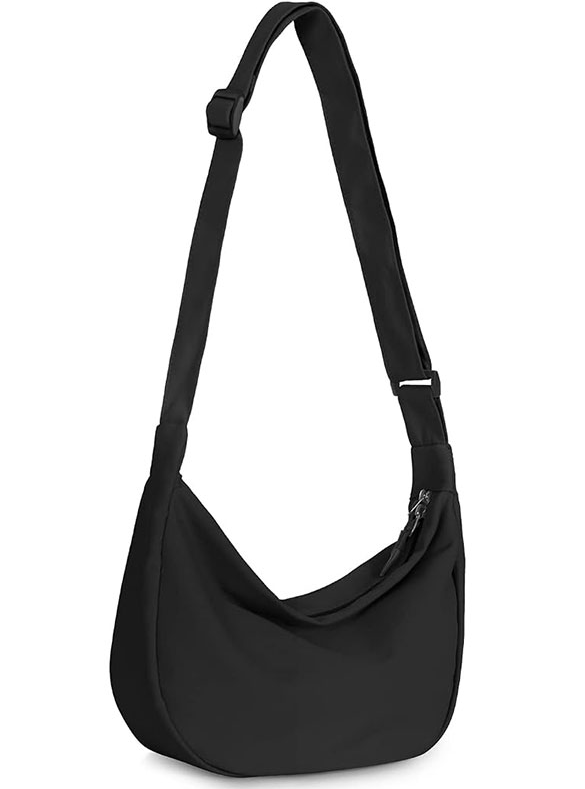
One current market explanation describes the crossbody as the wider family and sling as a more specialized body-hugging version within that family.
That is probably the most useful way to understand the relationship.
Is Every Sling Bag a Crossbody Bag?
In practical retail language, most modern sling bags can be considered a type of crossbody bag when they are worn diagonally across the torso.
But not every crossbody bag is a sling.
For example, a large canvas bag with:
- Long shoulder strap
- 18 cm gusset
- Wide opening
- Large daily capacity
may clearly be a crossbody bag but would rarely be described as a sling.
INITIGIFT currently has a Large Canvas Crossbody Bag with Wide Gusset measuring approximately 52 × 34 × 18 cm. Its large body and high capacity illustrate how broad the crossbody category can become.
Why Are the Terms So Confusing?
Because neither term describes exactly the same thing.
Crossbody mainly describes a carrying method.
Sling usually describes a combination of:
- Carrying method
- Compact size
- High position
- Close body fit
- Sporty or functional shape
Then fashion trends blurred the line further.
Belt bags began being worn diagonally across the chest.
Waist bags became “crossbody slings.”
Compact shoulder bags adopted wide utility straps.
Fashion brands started designing crescent bags that could sit either at the hip or higher on the torso.
As a result, the same physical product may now appear online as:
depending on the seller and target audience.
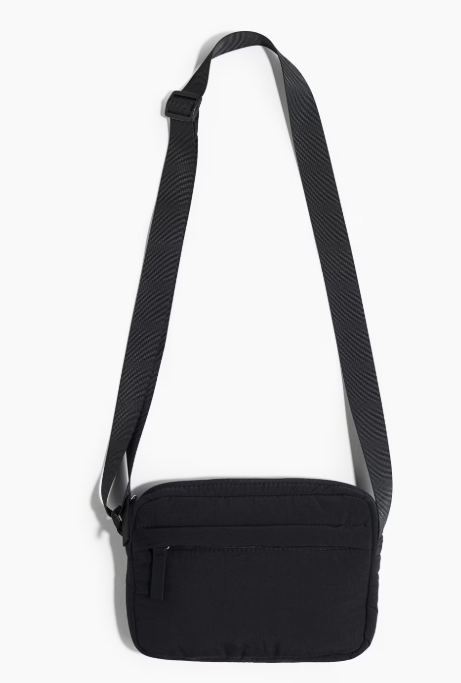
INITIGIFT's own product range reflects this real-world overlap: its multi-pocket waist bag can be worn as a waist bag, chest bag, shoulder belt bag or crossbody sling.
The Clearest Difference Is Where the Bag Sits
If you only look at one feature, look at carrying position.
Typically sits:
- Across the chest
- Across the upper back
- Around the upper torso
The strap is adjusted relatively short.
The bag stays close to the body.
Typically sits:
- Around the waist
- At the side
- Near the hip
The strap is usually longer.
The bag hangs more freely.
This difference changes how the bag feels during movement.
Why Does a Sling Sit Higher?
A high carrying position helps keep the bag closer to the body's center of movement.
When walking quickly, cycling or navigating a crowd, the bag tends to:
- Swing less
- Stay closer
- Remain easier to control
- Be easier to move from back to front
That is one reason sling bags are popular for:
- Travel
- Cycling
- Festivals
- City commuting
- Outdoor activities
Current sling guides consistently emphasize this close-to-body carrying position as one of the category's defining characteristics.
A Crossbody Bag Usually Hangs More Naturally
A conventional crossbody bag is less focused on locking the product tightly against the torso.
Instead, the bag often rests naturally at the:
This gives designers more freedom to create:
- Larger bodies
- Wider gussets
- More compartments
- Structured fashion shapes
It also makes crossbody bags suitable for carrying more than just a few essentials.
The Strap Is Usually Different
The strap tells you a lot about how the product is intended to be worn.
Sling Bag Straps
A typical sling strap is often:
- Wider
- Shorter
- More substantial
- Integrated into the bag's active appearance
Common components include:
- Polyester webbing
- Nylon webbing
- PP webbing
- Quick-release buckle
- Large adjuster
- D-ring
- Side-release buckle
A wider webbing strap can also help spread carrying pressure across a larger area.
Crossbody Bag Straps
Traditional crossbody straps can be:
- Narrow webbing
- Wide webbing
- Leather
- PU
- Fabric
- Chain
- Detachable strap
There is much more variation because crossbody bags span:
- Fashion
- Business
- Travel
- Casual
- Promotional
segments.
A small leather crossbody may use a slim strap, while a travel crossbody may use 38–50 mm webbing.
Strap Length Matters More Than the Product Name
Imagine one small bag with an adjustable strap.
At a shorter setting, the bag sits:
high on the chest → sling-style carry
Lengthen the strap and it drops:
toward the hip → crossbody carry
This is why one leather brand argues that for sufficiently adjustable designs, sling versus crossbody can sometimes be more about strap setting than two completely different products.
For flexible modern designs, that is a useful point.
The categories overlap because the user can change how the same bag sits.
Bag Shape Is Another Strong Clue
Sling Bags Often Use:
- Vertical shapes
- Teardrop shapes
- Crescent shapes
- Body-contoured panels
- Compact asymmetrical bodies
These shapes help the bag sit naturally against the torso.
Crossbody Bags Can Be:
- Rectangular
- Square
- Crescent
- Bucket-shaped
- Messenger-style
- Camera-style
- Large gusseted bags
The category is much less restricted.
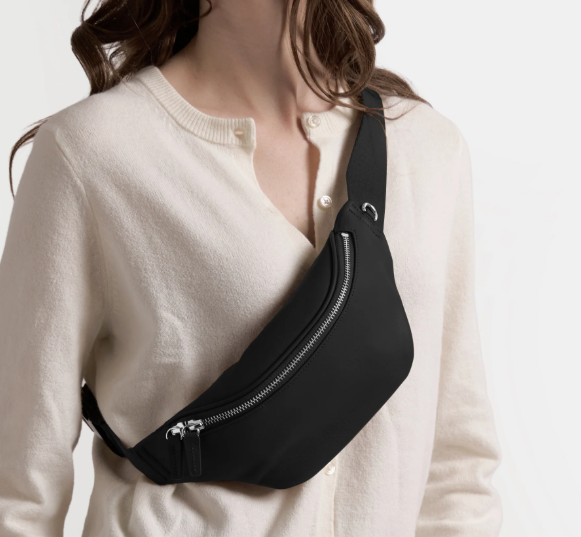
INITIGIFT's current Polyester Crescent Crossbody Bag with Adjustable Strap, for example, uses a soft half-moon silhouette rather than the compact vertical form of its crossbody sling product.
Both are crossbody products, but they create very different carrying experiences.
Which Has More Capacity?
Usually the crossbody bag.
Most sling bags are intentionally compact.
Their advantage comes partly from not carrying too much.
Common sling contents include:
- Phone
- Wallet
- Passport
- Keys
- Earbuds
- Charger
- Sunglasses
Once the contents become much larger, a close-fitting sling starts to become:
- Bulky
- Heavy
- Less comfortable
- Difficult to position against the torso
Crossbody Bags Can Scale Much Larger
A crossbody bag can still be small, but the category also supports:
- Tablets
- Notebooks
- Cosmetics
- Travel documents
- Bottles
- Cameras
- Light clothing
INITIGIFT's Lightweight Multi-Pocket Crossbody Belt Bag, for example, uses several zippered compartments and provides more organization than a basic single-compartment sling pouch.
Capacity is therefore one of the most useful practical differences.
But Bigger Is Not Always Better
The attraction of a sling bag is often precisely that it prevents overpacking.
For a user who only wants:
a large crossbody bag creates unnecessary:
A smaller sling keeps those items close without moving to a backpack.
Which Gives Faster Access?
Both are good at quick access, but in different ways.
A sling can often be rotated from the back around to the chest without being removed.
This works particularly well when:
- Walking
- Cycling
- Traveling
- Moving through airports
A traditional crossbody usually already hangs at the side, so the zipper or flap is immediately accessible.
The difference is less about access speed and more about where the bag stays while you move.
Which Feels More Secure in Crowded Places?
A front-worn sling can feel particularly controlled because it sits:
- Close to the chest
- Within the user's direct line of sight
- With relatively little swinging
This is why chest slings are popular for:
- Airports
- Public transport
- Festivals
- Busy tourist areas
A crossbody bag can also be worn in front and provides similar advantages.
So security depends more on:
- Position
- Zipper orientation
- Pocket layout
- Closure
than on the product name itself.
Zipper Position Matters
For travel-focused sling and crossbody bags, useful zipper considerations include:
- Main zipper orientation
- Whether the zipper faces outward
- Rear security pocket
- Covered zipper
- Double pullers
- Lockable pullers
A bag being called a “sling” does not automatically make it anti-theft.
That is a separate design feature.
Which Is More Comfortable?
For light contents, both can be comfortable.
The difference becomes more noticeable as weight increases.
Sling Comfort
A sling works best when the load remains relatively light.
Because it sits close to the body, a compact load can feel:
- Stable
- Secure
- Easy to control
But putting too much weight into a small one-strap bag can concentrate pressure on one shoulder.
Crossbody Comfort
A larger crossbody can use:
- Wider straps
- Shoulder pads
- Longer carrying position
but it still places the load asymmetrically across the body.
For heavier loads, a backpack generally distributes weight more evenly across two shoulders.
So neither sling nor crossbody should be treated as a replacement for a backpack when the intended load becomes substantial.
Strap Width Becomes More Important as Capacity Increases
A very small phone sling may work with relatively narrow webbing.
A larger crossbody needs more attention to:
- Webbing width
- Webbing thickness
- Hardware
- Attachment reinforcement
INITIGIFT's separate guide on shoulder-strap strength notes that strap performance should be evaluated as a complete system:
webbing + stitching + reinforcement + body material + hardware.
That applies directly to both sling and crossbody development.
Sling Bag vs Crossbody Bag Materials
Both categories can use many of the same materials.
The difference usually comes from positioning rather than technical necessity.
Polyester
Common for:
- Travel slings
- Promotional crossbody bags
- Casual everyday bags
- Sports products
Advantages include:
- Good durability
- Low weight
- Wide color range
- Good printing options
- Competitive cost
Nylon
Common in:
- Outdoor slings
- Travel bags
- Technical crossbody products
It is attractive when:
- Low weight
- Abrasion resistance
- Technical feel
matter.
RPET Polyester
Suitable for recycled-material programs.
RPET can be developed into:
- Oxford
- Ripstop
- Plain woven fabric
and used for either sling or crossbody designs.
Canvas
Canvas works particularly well for:
- Lifestyle crossbody bags
- Casual shoulder bags
- Larger crossbody styles
It creates a softer, more natural visual direction.
INITIGIFT's current large crossbody product uses canvas with a wide gusset and adjustable single strap.
PU and Leather
More common in:
- Fashion crossbody bags
- Lifestyle slings
- Premium retail products
They can create:
- Greater structure
- Refined appearance
- More formal positioning
A sling does not have to look sporty.
Modern leather slings are a good example of how the category has moved into fashion markets.
Mesh
Mesh may appear on:
- Back panels
- Shoulder areas
- Breathable sling bodies
especially where the bag sits closely against the chest or back.
INITIGIFT's Compact Crossbody Sling Bag currently uses breathable mesh and synthetic fabric in its construction.
Which Is Better for Travel?
Both are excellent travel formats.
But they solve slightly different travel needs.
Sling Bag
Better when the traveler wants:
- Passport
- Phone
- Wallet
- Boarding pass
- Power bank
kept very close.
It works especially well as a personal essentials bag.
Crossbody Bag
Better when the traveler also needs:
- Small notebook
- Cosmetics
- Camera
- Bottle
- Larger accessories
The extra capacity and organization become useful.
Which Is Better for Commuting?
It depends on how much is carried.
For:
- Phone
- Wallet
- Earbuds
- Keys
a sling is often enough.
For:
- Power bank
- Notebook
- Glasses
- Cosmetics
- Travel card
- Small umbrella
a multi-pocket crossbody may be more practical.
If a laptop is required, both categories may be too small and a backpack or laptop shoulder bag becomes more appropriate.
Which Is Better for Cycling?
A compact sling often has the advantage.
Its high position and close fit can reduce movement compared with a loose hip-level bag.
Useful features include:
- Wide strap
- Stable buckle
- Lightweight body
- Secure zipper
But a poorly fitted sling can still move during cycling.
Fit should be tested with the actual dimensions and strap range.
Which Is Better for Festivals and Events?
Sling bags are particularly popular here because they can keep essentials:
A waist bag worn diagonally across the chest can serve a very similar role.
Again, this is one area where category names overlap heavily.
Which Is Better for Everyday Fashion?
Crossbody is the broader choice.
Because it includes:
- Leather handbags
- Crescent bags
- Camera bags
- Canvas bags
- Minimal pouches
it can fit more style directions.
A sling usually communicates a more:
- Casual
- Compact
- Functional
- Contemporary
look, although leather and structured sling designs can also move into premium fashion.
Which Is Better for Promotional Programs?
Either can work.
Sling Bag
Suitable when the campaign targets:
- Travel
- Sports
- Events
- Youth
- Outdoor activities
Its modern functional appearance can feel more distinctive than a basic shoulder bag.
Crossbody Bag
Works across a wider range of programs:
- Corporate gifts
- Retail promotions
- Theme parks
- Tourism
- Lifestyle brands
- Student programs
A larger body also provides more room for:
Which Is Better for Private-Label Retail?
This depends on the target collection.
A sling can be developed around:
- Compact utility
- Travel
- Outdoor
- Streetwear
- Sport
A crossbody line can cover a much wider spectrum:
- Fashion
- Travel
- Business casual
- Canvas lifestyle
- Youth
- Sports
For a brand building several SKUs, the two categories can coexist rather than compete.
Not originally.
A belt bag or waist bag is designed to attach around the waist.
But modern users often extend the strap and wear it diagonally across the torso.
Once worn this way, it functions very much like a sling.
This is why terms such as:
frequently refer to closely related products.
The actual difference may simply be:
- Strap geometry
- Body orientation
- Intended wearing position
These terms overlap even more.
A chest bag is essentially defined by where it sits.
Many compact sling bags are worn directly across the chest and are therefore also marketed as chest bags.
INITIGIFT's Compact Crossbody Sling Bag is categorized in its specification as a:
crossbody sling bag / chest bag / single-shoulder bag.
This is a good example of how real products resist rigid naming rules.
A shoulder bag is normally carried from one shoulder without the strap necessarily crossing the torso.
A sling can also be temporarily worn on one shoulder, but its defining use is usually diagonal carrying.
So:
Shoulder bag = carried from one shoulder
Crossbody / sling = strap usually crosses the torso
Again, an adjustable product may support both.

Shape Matters More Than the Label for Product Development
Consider three products.
Product A
- 14 × 20 cm
- Vertical body
- Short wide strap
- Quick-release buckle
- Sits tightly on chest
This clearly fits the modern sling description.
Product B
- 28 × 20 × 8 cm
- Rectangular body
- Long adjustable strap
- Several compartments
- Sits around hip
This reads more naturally as a crossbody bag.
Product C
- Small crescent body
- Very wide adjustable strap
- Can sit high or low
This could reasonably be sold under either name.
That is why a product specification is more useful than arguing over terminology.
What Features Matter Most in a Sling Bag?
A good sling usually depends on:
Compact Body
Large enough for essentials without becoming bulky.
Adjustable Strap
Enough range to support different:
- Body sizes
- Clothing
- Carrying positions
Secure Closure
Usually zipper-based.
Quick-Access Pocket
Useful for:
- Phone
- Transport card
- Keys
Stable Strap Attachment
Because all of the load is carried through one strap.
Low Weight
A sling should remain easy to carry even before anything is placed inside.
What Features Matter Most in a Crossbody Bag?
A crossbody may require more attention to:
Capacity
Enough room without creating excessive bulk.
Compartment Layout
Especially when the bag carries many daily items.
Gusset Depth
This significantly affects usable capacity.
Strap Comfort
More important as size increases.
Opening Length
A wider bag needs an opening that allows practical access.
Internal Organization
Useful for:
- Phone
- Wallet
- Keys
- Travel documents
- Electronics
How Much Capacity Should a Sling Bag Have?
There is no universal capacity standard.
Many commercial sling bags fall into relatively compact formats, but size can vary significantly between brands.
What matters more is the item list.
Instead of specifying:
“3 L sling bag”
first determine whether the product must hold:
- 6.7-inch phone
- Passport
- Wallet
- Power bank
- Sunglasses case
- 500 mL bottle
A nominal volume does not guarantee that the actual shapes will fit efficiently.
Crossbody Capacity Is Even More Variable
A crossbody can be:
or
- Large 15–20 L-style casual carry bag
without leaving the broad category.
This is another reason the term alone is insufficient for manufacturing.
What About Strap Orientation?
This is especially important for sling bags.
Some slings are designed around:
- Left-shoulder carry
- Right-shoulder carry
Others use:
- Reversible attachment points
- Double lower D-rings
- Removable hooks
so the user can switch sides.
For retail programs, reversible strap orientation can make the product more universal.
Buckle Position Also Matters
Many sling bags use a quick-release buckle.
Where that buckle sits changes usability.
Possible locations include:
- Front of strap
- Side
- Near bag body
- Back section
A convenient buckle can make the sling easier to put on over:
- Jackets
- Helmets
- Large clothing
But bulky hardware can also press against the user if poorly positioned.
Hardware Becomes Part of the Design Language
Slings often use more visible functional hardware:
- Side-release buckles
- D-rings
- Tri-glide adjusters
- Utility hooks
Traditional fashion crossbody bags may instead use:
- Metal swivel hooks
- Decorative buckles
- Chain sections
- Leather tabs
So the difference is partly aesthetic as well as functional.
What Should Be Tested on Both?
Regardless of name, both depend heavily on one shoulder strap.
Useful checks include:
Strap Pull Test
Evaluate:
- Webbing
- Attachment stitching
- Reinforcement
- Hardware
Loaded Carry Test
Fill the bag with representative contents and check:
- Strap comfort
- Balance
- Body distortion
- Movement
Zipper Cycle Test
Especially important for quick-access bags opened frequently.
Hardware Cycle Test
Check repeated:
- Buckle opening
- Strap adjustment
- Hook attachment
Abrasion Testing
Useful where the bag repeatedly rubs against:
- Clothing
- Jackets
- Body
- Outdoor surfaces
Common Sling vs Crossbody Misunderstandings
“A Sling Bag Is Completely Different from a Crossbody Bag”
Not really.
The categories overlap significantly.
A sling is commonly treated as a more compact, high-carrying crossbody style.
“Every Small Crossbody Is a Sling”
No.
A small structured fashion handbag hanging at the hip is still much more naturally described as a crossbody.
“A Crossbody Bag Must Sit at the Hip”
Usually, but not always.
An adjustable crossbody can be shortened and worn much higher.
“A Sling Must Be Sporty”
No.
Modern sling bags can use:
- Leather
- PU
- Canvas
- Premium textiles
and can be fashion-oriented.
“Sling Bags Always Have Less Storage”
Usually they are smaller, but there is no formal maximum size.
“A Belt Bag Worn Across the Chest Is a Different Product”
Sometimes the only difference is how the strap is adjusted.
Many modern belt bags are intentionally designed for both waist and crossbody-sling use.
So Which Should You Choose?
Choose a sling bag when you want:
- Compact essentials storage
- High chest or back carry
- Close body fit
- Low movement
- Quick access
- Travel or active use
- Sporty or functional styling
Choose a crossbody bag when you want:
- More capacity
- More compartments
- Hip or side carrying
- Wider styling options
- Everyday versatility
- Fashion or lifestyle positioning
If the product has a wide adjustment range and compact body, it may comfortably serve as both.
In that case, there is no need to force it into only one label.
Which Style Fits Different Markets?
| Market |
Better Starting Point |
Why |
| Travel essentials |
Sling |
Compact, close to body |
| Airport / passport bag |
Sling / compact crossbody |
Quick access |
| Cycling |
Sling |
Stable high carry |
| Festivals |
Sling / belt bag |
Small essentials |
| Daily commuting |
Crossbody |
More storage |
| Student accessories |
Crossbody |
Organization |
| Fashion retail |
Crossbody |
Broader style range |
| Outdoor lifestyle |
Sling |
Functional positioning |
| Corporate gifts |
Crossbody / sling |
Depends on target audience |
| Theme parks |
Crossbody |
Versatile daily storage |
| Streetwear |
Sling |
Contemporary silhouette |
| Canvas lifestyle collection |
Crossbody |
Larger casual formats |
For Custom Development, Define the Product Instead of Only the Name
A useful sling or crossbody specification should describe:
| Specification |
What to Define |
| Carrying Position |
Chest / back / hip / multi-position |
| Body Size |
Width × height × depth |
| Shape |
Vertical / rectangle / crescent / custom |
| Capacity |
Target contents |
| Main Material |
Polyester / nylon / RPET / canvas / PU |
| Lining |
Required / none |
| Main Closure |
Zipper / flap / buckle |
| Pocket Layout |
Front / rear / internal |
| Strap |
Width + adjustable range |
| Buckle |
Quick release / metal hook / none |
| Strap Orientation |
Fixed / reversible |
| Hardware |
Plastic / metal |
| Logo |
Print / embroidery / patch / label |
| Expected Load |
Representative contents |
| Packaging |
Bulk / retail / individual |
| Quantity |
Total + color split |
This removes most of the ambiguity created by the product name.
FAQ
What is the main difference between a sling bag and a crossbody bag?
A sling bag usually sits higher and closer to the chest or back, while a traditional crossbody bag usually hangs lower around the side or hip. Sling bags are also generally smaller and more movement-oriented.
Is a sling bag a type of crossbody bag?
In modern retail usage, often yes. Many sling bags are worn diagonally across the body and can therefore be considered a specialized type of crossbody bag.
Can the same bag be both a sling and a crossbody?
Yes. If the strap adjusts through a wide range, the bag may sit high like a sling at one setting and lower like a traditional crossbody at another.
Is a sling bag the same as a chest bag?
The terms frequently overlap. Many chest bags are compact sling bags specifically designed to sit on the front of the torso.
Is a sling bag the same as a belt bag?
Not necessarily, but modern belt bags are often worn diagonally across the chest and marketed as crossbody slings.
Which is better for travel?
A sling is excellent for a phone, passport, wallet and small essentials. A larger crossbody is better when more capacity and organization are needed.
Which is better for everyday use?
It depends on how much needs to be carried. Sling bags suit minimalist daily carry, while crossbody bags offer more flexibility in capacity and style.
Which one is better for men or women?
Neither category is inherently gender-specific. Size, strap length, shape, material and styling matter more than gender labels.
What materials are common for sling bags?
Polyester, nylon, RPET, PU, leather, canvas and mesh combinations are all common.
What materials are common for crossbody bags?
Crossbody bags use an even wider range, including polyester, nylon, canvas, cotton, leather, PU, RPET and fashion textiles.
Conclusion
The difference between a sling bag and a crossbody bag is real, but it is not a rigid industry rule.
The easiest way to think about it is:
Crossbody is the broader carrying category.
Sling is usually the more compact, close-fitting and high-worn version of that idea.
A typical sling sits:
- High on the chest or back
- Close to the body
- On a shorter, often wider strap
- With relatively limited capacity
A traditional crossbody sits:
- Lower at the side or hip
- On a longer strap
- With a much wider range of shapes and capacities
But adjustable straps, belt-bag trends and modern fashion have blurred the boundary.
That is why the same product can legitimately appear as a:
sling bag + crossbody bag + chest bag
depending on how it is worn and marketed.
For users, the most useful questions are therefore not about terminology.
They are:
Where do you want the bag to sit?
How much do you need to carry?
How closely do you want it to stay against your body?
Those three answers usually make the right style much clearer.
Inquiry Support
For a custom sling or crossbody bag project, you can provide:
- Intended use
- Estimated quantity
- Preferred size or reference dimensions
- Items the bag needs to hold
- Preferred material
- Required pocket layout
- Preferred carrying position
- Strap width and adjustment requirements
- Required colors
- Logo artwork
- Packaging requirements
If you have not finalized all details, you can first send your intended use and target quantity, and we can recommend a suitable specification.
Related Products




 Hot News