Bagaimana Memilih Yang Tepat Tas Pakaian Ukuran untuk Setelan Jas dan Mantel
1. Apa Itu Ukuran Tas Pakaian dan Mengapa Hal Ini Penting
Atas Pakaian ukuran mengacu pada panjang, lebar, dan kedalaman penutup pelindung pakaian yang dirancang untuk menyimpan atau mengangkut pakaian seperti setelan jas, mantel, gaun, dan seragam .
Memilih ukuran yang tepat sangat penting karena ketidaksesuaian ukuran dapat menyebabkan:
- Kerutan akibat tekanan kompresi
- Deformasi kain selama penyimpanan
- Perlindungan yang tidak memadai untuk pakaian berukuran panjang
- Kesulitan saat bepergian atau penyimpanan dengan cara digantung
Tas pakaian dengan ukuran yang tepat memastikan pakaian mempertahankan bentuknya dan tetap terlindungi seiring berjalannya waktu.
2. Ringkasan Ukuran Tas Pakaian Standar
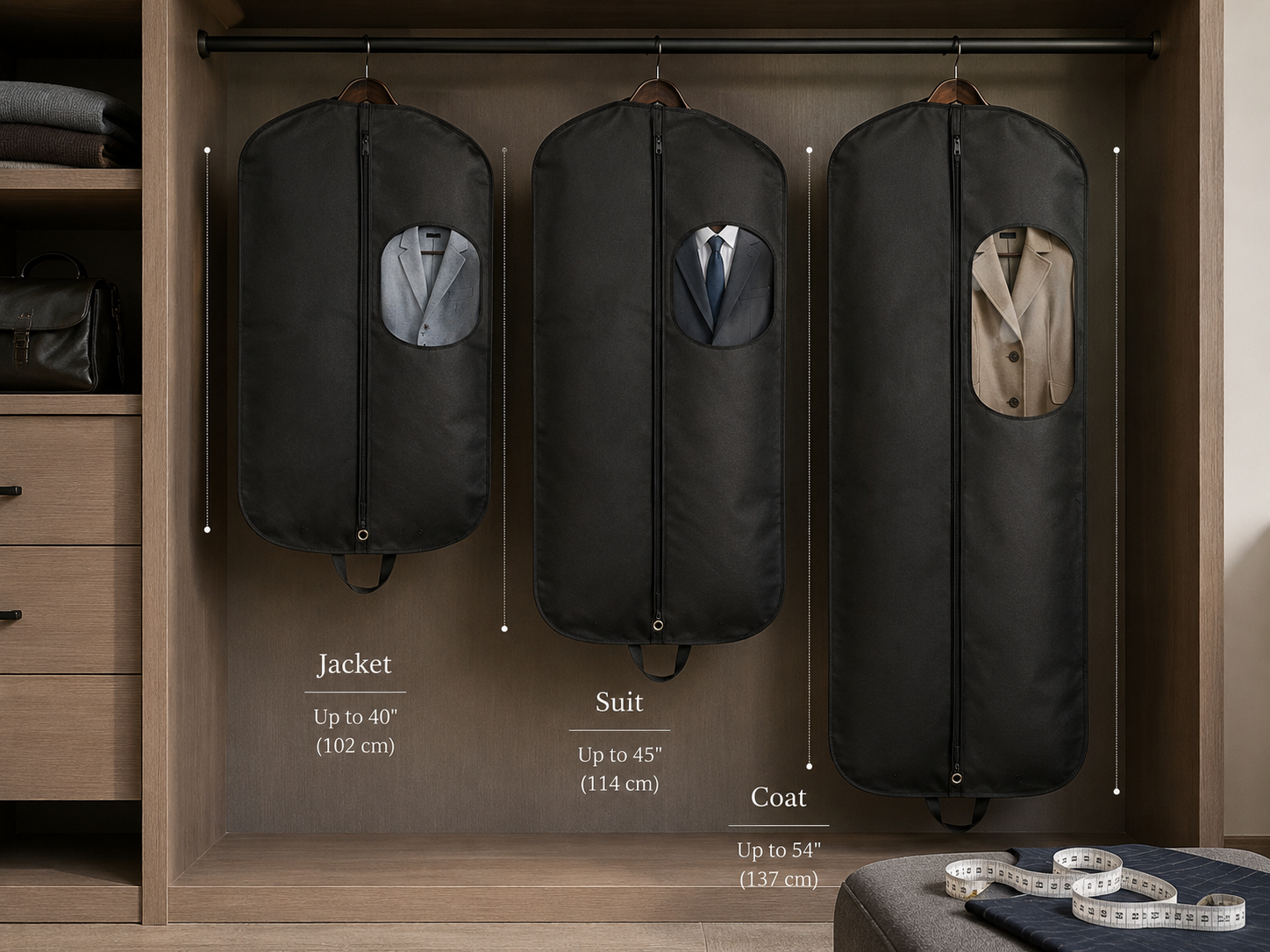
Meskipun ukuran bervariasi tergantung produsen, kebanyakan tas pakaian mengikuti standar industri umum:
| Jenis Pakaian |
Panjang Tas yang Direkomendasikan |
Penggunaan Umum |
| Jas Pendek |
90–100 cm |
Kemeja, jaket pendek |
| Jas Standar |
100–110 cm |
Jas bisnis |
| Jas Panjang / Mantel |
120–130 cm |
Mantel, mantel trench |
| Mantel Panjang Ekstra |
140–150 cm |
Mantel musim dingin, gaun |
Sebagian besar tas pakaian dirancang dengan struktur gantung universal , artinya lebar dan kedalaman dapat disesuaikan, sedangkan panjang merupakan faktor utama dalam penentuan ukuran.
3. Cara Mengukur Jas atau Mantel Anda dengan Benar
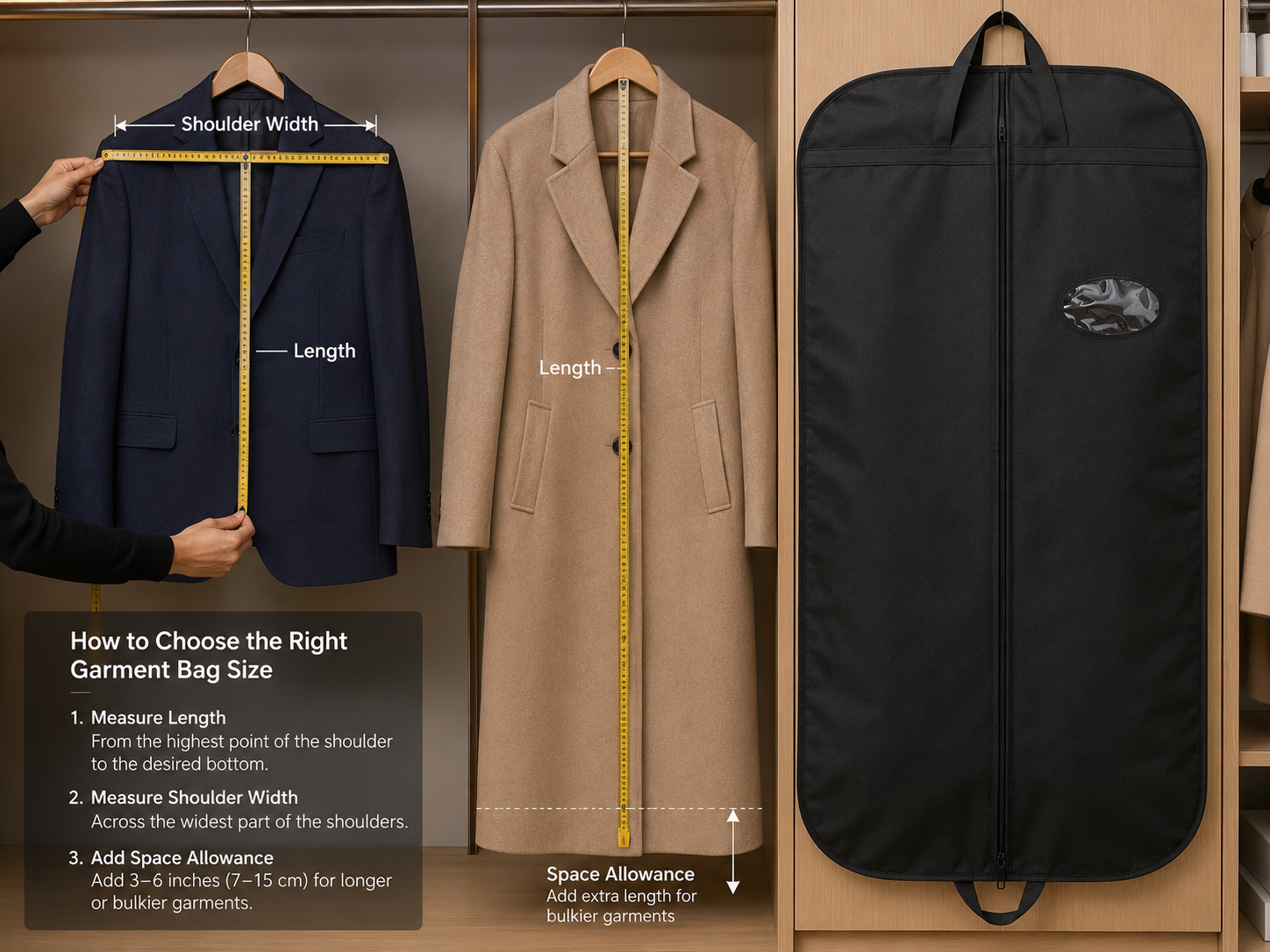
Untuk memilih ukuran tas pakaian yang tepat, ikuti langkah-langkah berikut:
Langkah 1: Ukur Panjang dari Bahu ke Ujung Bawah Pakaian
Ukur dari titik tertinggi bahu ke bagian bawah pakaian.
Langkah 2: Pertimbangkan Ruang Gantung
Tambahkan ekstra 5–10 cm untuk jarak antara gantungan dan bagian dalam tas.
Langkah 3: Periksa Ketebalan
Pakaian yang lebih tebal (mantel wol, jaket berlapis) memerlukan ruang internal yang lebih besar.
4. Jas Dibandingkan Mantel: Perbedaan Ukuran Utama
Jas dan mantel berbeda dalam strukturnya, yang secara langsung memengaruhi pemilihan tas pakaian.
Setelan
- Struktur ramping
- Panjang yang lebih pendek
- Memerlukan tas pakaian standar (100–110 cm)
Mantel
- Lebih panjang dan lebih berat
- Memerlukan tas pakaian berukuran ekstra panjang (120–150 cm)
- Membutuhkan kedalaman lebih besar untuk menampung volume kain
5. Kesalahan Umum dalam Memilih Ukuran yang Dilakukan Pembeli
Banyak pembeli memilih tas pakaian hanya berdasarkan tampilan atau harga, yang mengakibatkan berbagai masalah:
Kesalahan 1: Memilih Tas yang Terlalu Pendek
Menyebabkan tekanan pada bagian bawah dan timbulnya kerutan.
Kesalahan 2: Mengabaikan Ketebalan Mantel
Mantel musim dingin memerlukan ruang internal yang lebih besar dibandingkan setelan.
Kesalahan 3: Tidak Memperhitungkan Penggunaan Saat Bepergian
Tas travel memerlukan sedikit ruang tambahan untuk perlindungan saat bergerak.
6. Ukuran yang Direkomendasikan Berdasarkan Skenario Penggunaan
Penyimpanan Rumah Tangga
- Ukuran pas standar
- Fokus pada perlindungan dari debu
- 100–120 cm paling umum
Perjalanan Bisnis
- Tas yang sedikit lebih panjang untuk memastikan cukup ruang bagi gantungan
- Struktur tahan lama direkomendasikan
Kemasan ritel
- Ukuran terstandarisasi untuk konsistensi merek
- Desain ramping lebih disukai
Perlindungan Pakaian Mewah
- Kapasitas internal yang lebih besar
- Bahan struktural premium (poliester lebih disukai)
7. Pengaruh Bahan terhadap Pemilihan Ukuran
Bahan memengaruhi cara tas pakaian berperilaku bahkan pada ukuran yang sama:
- Kain non-anyaman → lebih lembut dan fleksibel, mungkin sedikit menyusut
- Kain poliester → lebih terstruktur, mempertahankan bentuk dengan lebih baik
- Kanvas/katun → lebih tebal, mungkin memerlukan ruang internal tambahan
Oleh karena itu, pemilihan bahan dan ukuran harus selalu dipertimbangkan secara bersamaan.
8. Opsi Ukuran Tas Pakaian Khusus
Dalam produksi OEM/ODM, ukuran tas pakaian dapat disesuaikan berdasarkan:
- Ukuran khusus jas saja
- Panjang ekstra khusus untuk mantel
- Pengemasan pakaian campuran
Posisi Pasar
- Ukuran pengemasan ritel
- Ukuran yang berfokus pada perjalanan
- Dimensi merek premium
Penyesuaian struktural
- Lebar yang dapat diperluas
- Desain Dapat Dilipat
- Posisi jendela transparan
- Desain dengan kapasitas multi-pakaian
9. Tabel Rekomendasi Ukuran Praktis
| Kasus Penggunaan |
Ukuran Direkomendasikan |
Saran bahan |
| Penyimpanan Setelan Bisnis |
100–110 cm |
Polister / Non-woven |
| Penyimpanan Mantel Panjang |
120–140 cm |
Polester |
| Untuk perjalanan |
110–130 cm |
Polister (tahan lama) |
| Kemasan ritel |
90–110 cm |
Non-woven |
| Penggunaan untuk Merek Premium |
Ukuran Kustom |
Polester / Kanvas |
10. Poin Penting
Memilih ukuran tas pakaian yang tepat bukan hanya soal panjang pakaian—melainkan soal keseimbangan:
- Jenis Pakaian
- Lingkungan penggunaan
- Durasi Penyimpanan
- Struktur material
Tas pakaian dengan ukuran yang tepat menjamin perlindungan yang lebih baik, tampilan yang lebih baik, dan masa pakai pakaian yang lebih lama.
11. Pertanyaan yang Sering Diajukan (FAQ)
P1: Apa ukuran tas pakaian ideal untuk setelan jas standar?
Untuk kebanyakan setelan jas bisnis, disarankan menggunakan tas pakaian berukuran 100–110 cm dalam panjang ukuran ini memastikan jas dapat digantung secara alami tanpa dilipat atau mengalami tekanan.
P2: Apakah satu tas pakaian bisa menampung baik jas maupun mantel?
Ya, tas pakaian universal dapat menampung keduanya, tetapi ukurannya harus minimal 120 cm atau lebih panjang untuk menampung mantel. Namun, jas di dalam tas pakaian yang lebih besar mungkin memiliki sedikit ruang gerak tambahan.
P3: Apakah mantel yang lebih tebal memerlukan ukuran tas pakaian yang berbeda?
Ya. Mantel musim dingin atau mantel berlapis memerlukan ruang internal yang lebih luas. Tas pakaian yang lebih panjang dan sedikit lebih lebar (biasanya 130–150 cm ) direkomendasikan untuk menghindari kompresi.
P4: Apakah tas pakaian berukuran lebih besar selalu lebih baik?
Tidak selalu. Tas yang terlalu besar dapat menyebabkan pakaian bergeser saat perjalanan, sehingga menimbulkan kerutan. Ukuran terbaik adalah yang sesuai secara mendekati dengan panjang pakaian, dengan sedikit ruang tambahan untuk gantungan.
P5: Apakah ukuran tas pakaian dapat dikustomisasi untuk merek tertentu?
Ya. Dalam produksi OEM/ODM, ukuran tas pakaian dapat sepenuhnya dikustomisasi berdasarkan lini produk, termasuk solusi khusus jas, khusus mantel, atau berbagai ukuran untuk ritel dan grosir pasar.
Kesimpulan: Bekerja sama dengan Produsen Kantong Pakaian Profesional
Pemilihan ukuran kantong pakaian untuk jas dan mantel bergantung pada panjang pakaian, ketebalan, serta skenario penggunaannya. Baik Anda membutuhkan ukuran kemasan ritel yang ringkas maupun kantong perlindungan perjalanan berukuran ekstra, pemilihan ukuran yang tepat secara langsung memengaruhi kinerja produk dan pengalaman pelanggan.
Sebagai produsen kantong pakaian profesional, kami menyediakan layanan lengkap Layanan kustomisasi OEM/ODM , meliputi pengembangan ukuran, pemilihan bahan, serta optimalisasi struktur untuk berbagai pasar dan aplikasi.
Kami juga menawarkan:
- Penyesuaian ukuran kantong pakaian khusus untuk jas dan mantel
- Dukungan pengambilan sampel dan pengujian bahan
- Pencetakan logo dan penyesuaian merek
- Solusi kemasan siap ekspor
👉 Hubungi tim kami untuk solusi penyesuaian ukuran kantong pakaian dan sampel gratis
Topik Terkait (Perluasan Konten)
- Tas Pakaian untuk Setelan vs Tas Penutup Mantel: Apa Perbedaannya
- Cara Mengukur Pakaian untuk Desain Kemasan
- Bahan Terbaik untuk Penyimpanan Pakaian Jangka Panjang
- Tas Pakaian Lipat untuk Penggunaan Saat Bepergian
- Kemasan Pakaian Khusus untuk Merek Fesyen


 Berita Terkini