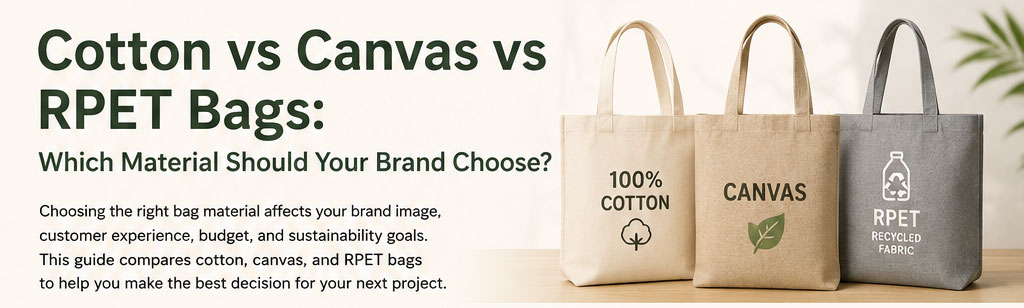
Výběr materiálu pro tašku není pouze rozhodnutím týkajícím se výroby. Ovlivňuje, jak produkt vypadá, jakou hmotnost dokáže unést, které tiskové metody lze použít, jak kompaktně lze tašku zabalit a jak zákazníci vnímají značku.
Bavlna, plátno a RPET jsou tři často požadované materiály pro individuální nákupní tašky, propagační tašky, firemní dárky, obchodní balení a kolekce pod vlastní značkou. Někdy je lze použít pro podobné výrobky, avšak výsledky jsou zcela odlišné.
Lehká bavlněná taška může být vhodná pro rozdávání na akcích. Těžší plátnová taška taška může být vhodnější pro premium řadu prodejních prostor. RPET skládací taška může být lepší volbou pro kampaně v supermarketech nebo cestovatelské programy, kde je důležitá nízká hmotnost a kompaktní uskladnění.
Tato příručka porovnává tyto tři materiály z praktického B2B nákupního hlediska.
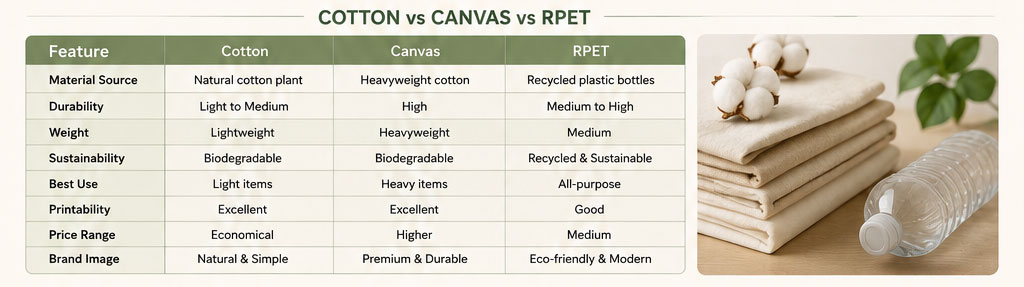
Rychlé srovnání: bavlna, plátno a RPET
| Faktor |
Bavlna |
Plátno |
Rpet |
| Typ materiálu |
Přírodní textilní vlákno |
Těžší pletená bavlna nebo směsový materiál |
Recyklovaný polyesterový materiál |
| Typický vzhled |
Měkký a přírodní |
Strukturovaný a premium |
Moderní a technický |
| Hmotnost |
Lehké až střední |
Střední až těžká |
Obvykle lehký |
| Skladatelnost |
Dobré |
Nižší u těžkých látek |
Výborné |
| Nosnou sílu |
Záleží na váze látky |
Obvykle silné |
Záleží na hustotě a konstrukci |
| Tisk |
Dobře vhodný pro potisk síťovou tiskárnou |
Vynikající pro potisk i vyšívání |
Vhodný pro více metod potisku |
| Vodní výkon |
Pohlcuje vlhkost, pokud není ošetřená |
Pohlcuje vlhkost, pokud není ošetřená |
Lze potahovat pro odolnost vůči vodě |
| Obvyklé použití |
Propagace, maloobchod, dárky |
Premium maloobchod, móda, odolné tašky |
Supermarkety, cestování, sport, kampaně |
| Pozice značky |
Přirozený a přívětivý |
Odolný a premium |
Z recyklovaného materiálu a funkční |
Neexistuje jediný nejlepší materiál. Správná volba závisí na konstrukci výrobku, cílové skupině zákazníků, předpokládané zátěži, očekávané ceně, vizuálním zaměření a udržitelnostním tvrzení.
Co je bavlněný pytel?
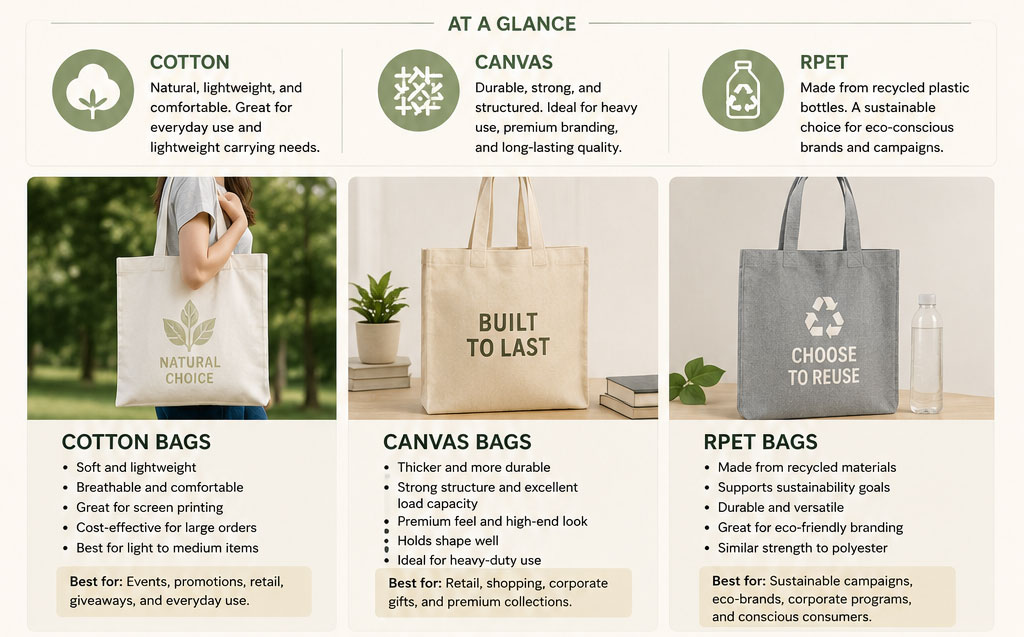
Abavlněná taška je obvykle vyroben z lehké nebo středně těžké tkaniny z bavlny. Je měkčí a pružnější než těžký plátnový materiál a široce se používá pro propagační tašky, nákupní tašky pro maloobchod, tašky na akce, balení dárků a zboží související se stylem života.
Bavlněné tašky jsou často vybírány proto, že poskytují známý textilní vzhled a relativně hladký povrch vhodný pro potisk loga.
Hlavní výhody bavlněných tašek
Měkký přirozený vzhled
Bavlna dodává taškám neformální a přátelský vzhled, který je vhodný pro:
- Značky organických a přírodních produktů
- Knihkupectví
- . Návrh kohoutku umožňuje personálu pracovat efektivněji, šetří čas i úsilí a zároveň zachovává hygienické normy.
- Muzea
- Prodejce životního stylu
- Firemní akce
- Propagační kampaně
Vhodný povrch pro potisk
Bavlna obecně umožňuje:
- Tisk síťovým tiskem
- Přenos tepla
- Digitální tisk
- Vyšívání
- Ušitých štítků
- Textilní odznaky
Jednoduchá loga, hesla, ilustrace a grafika kampaní lze obvykle jasně aplikovat.
Lehké a skládací
Lehké bavlněné tašky lze balit ploše a efektivně distribuovat na akce, veletrhy, maloobchodní kampaně a propagační programy.
Flexibilní struktura produktu
Bavlna se může používat pro:
- Rovné taštičky
- Taštičky se sbíhavými bočními stěnami (gusset)
- Váčky s tažníkem
- Sáčky na chléb
- Kosmetické taštičky
- Dárkové tašky
- Ochranné sáčky proti prachu
Omezení bavlněných taštiček
Bavlna absorbuje vlhkost, pokud nedostane speciální úpravu. Lehká bavlna může také ztratit tvar, když je prázdná, a nemusí být vhodná pro těžké výrobky bez použití pevnější látky, zesílených švů nebo širších popruhů.
Bavlna se může po praní zmenšit nebo změnit vzhled, proto by měly být pokyny k péči založeny na skutečném typu látky, barvení, potisku a konstrukci.
Co je plátněný pytel?
Plátno je těžší a hustěji pletená látka, která se obvykle vyrábí z bavlny nebo bavlněných směsí. Je obecně silnější, tužší a strukturovanější než běžná bavlněná látka.
Plátno se široce používá, pokud si zákazníci přejí opakovaně použitelný pytel s vyšším nosným výkonem a premium vzhledem textilie.
Hlavní výhody plátněných pytlů
Silnější a strukturovanější
Plátno je vhodné pro výrobky, které vyžadují:
- Lepší udržení tvaru
- Vyšší nosnost
- Vyztužené podstavce
- Širší boční kapsy
- Vnitřní kapsy
- Zipové uzávěry
- Složitější konstrukci
Premiumní vzhled pro maloobchod
Plátnové tašky se běžně používají u:
- Módní značky
- Krásné značky
- Prodejce životního stylu
- Hotely a rezorty
- Dodavatelé dárků
- Korporátní programy
- Prodejci pod vlastní značkou
Těžší látka vytváří hmotnější dotek ve srovnání s lehkým propagačním bavlněným materiálem.
Vynikající možnosti pro značkování
Plátno umožňuje:
- Tisk síťovým tiskem
- Vyšívání
- Přenos tepla
- Ušitých štítků
- Koženými nebo PU náplněmi
- Gumové nášlapné plošky
- Plnobarevný tisk na vhodný materiál
Vyšívání a nášivky jsou zvláště účinné, pokud si zákazníci přejí, aby taška vypadala jako produkt určený pro maloobchod, nikoli jako jednoduchý propagační dárek.
Vhodné pro dlouhodobé opakované použití
Správně zhotovený plátněný taštička se dá používat na nákupy, do práce, na cesty, na přepravu knih, potravin, dárků a pro každodenní nošení.
Omezení plátněných taštiček
Plátno je obvykle dražší a těžší než lehký bavlněný nebo RPET materiál. Těžké plátno také vyžaduje více místa v kartonu a může zvýšit náklady na dopravu.
Stejně jako bavlna i nepatřené plátno pohlcuje vlhkost. Tam, kde je vyžadována vyšší ochrana, lze přidat výstelku, povlak, laminovaný vnitřek nebo voskovanou úpravu.
Co je to RPET taštička?
RPET označuje recyklovaný polyethylentereftalát. V výrobě taštiček se z něj často vyrábějí recyklovaná polyesterová vlákna a látky.
RPET látka může být lehká, tkaná, odolná proti trhání (ripstop), síťová, feltovaná, laminovaná nebo povlakovaná. Používá se u nákupních taštiček, batůžků, chladicích taštiček, taštiček s šňůrkou, cestovních organizérů, kosmetických taštiček a venkovních produktů.
Hlavní výhody RPET taštiček
Pozicování jako produkt z recyklovaného materiálu
RPET umožňuje značkám používat recyklovaný polyethylentereftalát (PET) při vývoji produktů a snižovat závislost na nepřepracovaném polyethylentereftalátu.
Kupující by měli ověřit:
- Procento obsahu recyklovaného materiálu
- Zda se jedná o materiál po spotřebitelském nebo průmyslovém využití
- Které části dokončené tašky jsou vyrobeny z recyklovaného materiálu
- Zda je vyžadována certifikační dokumentace
- Zda se tvrzení vztahuje na tkaninu nebo na celý produkt
Lehký a kompaktní
Tkaniny z RPET jsou vhodné pro:
- Skládací nákupní tašky
- Tašky ze supermarketu
- Backpacky s šňůrkou
- Cestovatelské organizátory
- Sportovní tašky
- Propagační produkty
Materiál lze často zabalit do malého pytlíku, což jej činí vhodným pro distribuci vysokého objemu a prodej cestujícím.
Funkční možnosti tkanin
V závislosti na specifikaci může tkanina z RPET nabízet:
- Konstrukci typu ripstop
- Mřížková ventilace
- Rychlé sušení
- Voděodolný povrchový úprava
- Laminace
- Sublimační tisk
- Plnobarevné grafiky
Široká produkční paleta
RPET lze použít pro:
- Taštičky na nákup
- Skládací taštičky
- Batohy
- Chladicí tašky
- Kosmetické taštičky
- Sáčky na oblečení
- Úložné kocky
- Sportovní a outdoorové taštičky
Omezení taštiček z RPET
RPET neznamená automaticky, že je celý výrobek vyroben z recyklovaného materiálu. Taštička může stále obsahovat standardní zipy, výstelku z nepoužitého polyesterského vlákna, popruhy z polypropylenu (PP), pěnu, kovové součásti nebo jiné materiály.
RPET také není automaticky vodotěsné ani biologicky rozložitelné. Tyto tvrzení závisí na celkové konstrukci výrobku a podporujících důkazech.
Bavlna vs. plátno vs. RPET: Podrobné srovnání
1. Vzhled a pozicování značky
Vyberte bavlnu, pokud chcete:
- Měkký přirozený vzhled
- Jednoduché propagační produkty
- Zboží pro styl života nebo kulturní zboží
- Lehké obchodní balení
- Textilní tašky s kontrolovanými náklady
Vyberte plátno, pokud chcete:
- Premium strukturovaný vzhled
- Těžší opakovaně použitelný produkt
- Pozicování ve stylu módy nebo soukromé značky
- Vyšití a podrobná konstrukce
- Vyšší vnímanou maloobchodní hodnotu
Zvolte RPET, když chcete:
- Pozicování z recyklovaného polyesteru
- Lehké funkční tašky
- Skládací nebo cestovatelsky přívětivé produkty
- Moderní sportovní nebo outdoorový styl
- Kampaně pro obchody s potravinami a korporátní kampaně
2. Síla a nosnost
Název materiálu sám o sobě nesouvisí se sílou.
Důležité faktory zahrnují:
- Hmotnost látky
- Hustota vlákna
- Tkanina
- Šířka držadla
- Způsob stehu
- Přídavek na švy
- Konstrukce s bočním výztužným pruhem (gusset)
- Zesílení spodku
- Plánovaná nosná zátěž
Těžký plátnový pytel z bavlny může být pevnější než lehký taštičkový pytel z recyklovaného polyesteru (RPET). Zpevněný pytel z RPET Oxfordu se může chovat lépe než tenký bavlněný nákupní pytel.
Zakázníci by měli požadovat zkoušku zatížení na základě zamýšleného výrobku, nikoli pouze na základě popisu materiálu.
3. Tisk a personalizace loga
Bavlna
Nejlépe vhodné pro:
- Tisk síťovým tiskem
- Přenos tepla
- Digitální tisk
- Jednoduchá vyšívání
- Ušitých štítků
Plátno
Nejlépe vhodné pro:
- Tisk síťovým tiskem
- Vyšívání
- Látka
- Ušitých štítků
- Přenos tepla
- Premium aplikace loga
Rpet
Nejlépe vhodné pro:
- Tisk síťovým tiskem
- Přenos tepla
- Sublimace
- Digitální tisk
- Vyšívání
- Gumové nášlapné plošky
- Tisková páska
Správná tisková metoda závisí na struktuře látky, barvě, povrchovém potahu, grafickém motivu, počtu kusů v objednávce a požadované odolnosti.
4. Odolnost vůči vodě
Bavlna a plátno
Nelakovaná bavlna a plátno pohlcují vlhkost. Zakázníci mohou přidat:
- Vodoodpudivý povrch
- Polyuretanový nános
- Voskový potah
- Laminovaná výstelka
- Vodotěsný vnitřní pytlik
Rpet
RPET polyester lze vyvinout s:
- Polyuretanový nános
- Pvc nátěr
- Laminace
- Odpuzující úpravou vůči vodě
Avšak potahovaný materiál samo o sobě nezaručuje, že bude hotový pytel vodotěsný. Je nutné také zohlednit švy, zipy a otvory.
5. Skladatelnost a účinnost při přepravě
Nejlepší skladatelnost: RPET
Lehké materiály z RPET a ripstop se dají složit do kompaktních pytliků a jsou vhodné pro cestování, použití v supermarketech a propagační programy.
Střední skladatelnost: bavlna
Lehké a středně těžké bavlněné taštičky se snadno balí ploše, ale tlustší bavlna vyžaduje více místa.
Nejhorší skládání: Těžký plátnový materiál
Těžký plátnový materiál poskytuje lepší strukturu, ale zvyšuje tloušťku složeného výrobku, objem kartonu a náklady na přepravu.
U objemných propagacních zakázek je nutné potvrdit rozměry složeného výrobku a počet kusů v kartonu již v průběhu vzorkování.
6. Obraty nákladů
Konečné náklady závisí na více než pouze na základním tkaninovém materiálu.
Důležité faktory ovlivňující náklady zahrnují:
- Hmotnost látky
- Ověření materiálů
- Barvení
- Tiskové barvy
- Vyšívání
- Velikost tašky
- Výbava (podklad)
- Kapsy
- Zipy
- Kovové díly
- Zpevnění
- Balení
- Množství objednávky
Obecně:
- Lehký bavlněný materiál je často vhodný pro textilní propagaci s omezeným rozpočtem.
- Těžký plátnový materiál se obvykle zařazuje do vyšší cenové kategorie.
- Náklady na RPET silně závisí na struktuře tkaniny, dokumentaci obsahu recyklovaného materiálu a požadavcích na certifikaci.
Zákazníci by měli porovnávat úplné technické specifikace, nikoli pouze cenu materiálu.
7. Udržitelnost a marketingová tvrzení
Bavlna
Bavlna je přírodní vlákno, ale kupující by neměli předpokládat, že každý bavlněný výrobek má stejný environmentální dopad. Způsob pěstování, barvení, gramáž látky, výroba i životnost výrobku jsou všechny důležité faktory.
Plátno
Plátno (canvas) označuje konstrukci látky, nikoli kategorii udržitelnosti. Plátno může být vyrobeno z konvenční bavlny, ekologické bavlny, recyklované bavlny, směsí polyesteru nebo jiných vláken.
Rpet
RPET obsahuje recyklovaný polyester, avšak procentuální podíl recyklovaného materiálu a tvrzení na úrovni výrobku je nutné ověřit.
Zodpovědná tvrzení by měla být konkrétní, například:
- Vyrobeno z látky z recyklovaného polyesteru
- Obsahuje certifikovaný recyklovaný obsah
- Vyrobeno z ekologické bavlny
- Opakovaně použitelný tuhý plátnový taštička
Vyhněte se obecným, nepodloženým tvrzením, jako například:
- Nulový dopad
- Zcela udržitelné
- Úplně biodegradabilní
- výrobek z 100 % recyklovaného materiálu
pokud úplné složení a podporující dokumentace neodůvodňují jinak.
Doporučené výrobky podle scénáře nákupu
Supermarkety a potravinářské maloobchody
Doporučované materiály:
- RPET pro lehké skládací tašky
- Těžký plátnový materiál pro premium programy opakovaně použitelných tašek
- Bavlna pro jednoduché označené nákupní taštičky
Doporučené produkty:
- Skládací nákupní taška z RPET
- Plátnová nákupní taška s posíleným dnem
- Bavlněný nákupní pytel s bočními záhyby
- Izolovaný nákupní pytel z RPET
Propagační kampaně
Doporučované materiály:
- Lehká bavlna
- Lehký materiál RPET
- Středně těžký plátnový materiál pro premium kampaně
Doporučené produkty:
- Tisknutý bavlněný nákupní pytel
- Rpet taška s provázkem
- Skládací nákupní pytel z recyklovaného PET
- Plátnový dárkový pytel s logem
Prodej módy a životního stylu
Doporučované materiály:
- Těžká plachta
- Pražený bavlněný
- Strukturovaný materiál RPET pro technické kolekce
Doporučené produkty:
- Plátnový pytel se šňůrou na rameno
- Bavlněná módní taška
- Kviltovaná taška z RPET
- Kabelka na řemínek z plátna
Firemní dárky
Doporučované materiály:
- Premium plátno
- RPET pro programy s recyklovanými materiály
- Bavlna pro akční a uvítací sady
Doporučené produkty:
- Plátnová taška na notebook
- Batoh z RPET
- Chladicí taška z RPET
- Bavlněná konferenční taška
- Plátnový dámský dárkový pytel pro kancelář
Cestování a sport
Doporučované materiály:
- RPET polyester
- Nylon nebo směsi recyklovaného polyesteru
- Plátno pro sbírky potřeb pro cestování a životní styl
Doporučené produkty:
- Cestovní balicí sáčky z RPET
- Batoh se šňůrkou z RPET
- Plátnový kufřík na víkendové cesty
- Taštička na yoga kobereček z RPET
- Sportovní taška z RPET
Jak vybrat správný materiál
Vyberte si bavlněné taštičky, pokud:
- Potřebujete měkký, přirozený vzhled.
- Taštička bude používána pro propagaci nebo lehké obchodní nákupy.
- Je důležité jednoduché potiskování.
- Vyžaduje se nízká hmotnost a ploché balení.
- Cílový výrobek nepotřebuje těžkou konstrukci.
Vyberte plátnové tašky, pokud:
- Výrobek musí vypadat hmotně a luxusně.
- Je vyžadována vyšší nosnost.
- Chcete vyšití, nášivky, podšívku nebo kapsy.
- Taška je určena pro maloobchod, nikoli pro jednorázovou propagaci.
- Vyšší hmotnost a cena výrobku jsou přijatelné.
Vyberte tašky z RPET, pokud:
- Recyklovaný polyester je součástí strategie materiálů.
- Výrobek by měl být lehký a skládací.
- Použití zahrnuje cestování, sport, nákupy v supermarketu nebo použití venku.
- Vyžadují se povlaky, síťová struktura, ripstop nebo technické tkaniny.
- Dokumentace obsahující recyklované materiály lze správně spravovat.
Otázky, které je třeba položit před vyžádáním cenové nabídky
- Jaké výrobky bude taška přepravovat?
- Jaká je očekávaná maximální hmotnost?
- Je taška určena pro propagaci, balení nebo prodej v obchodě?
- Musí taška stát vzpřímeně?
- Je vyžadována výztuž?
- Je požadována vodotěsnost výrobku?
- Která metoda tisku nebo loga je preferována?
- Je vyžadována certifikace z recyklovaných nebo organických materiálů?
- Jaká je cílová jednotková cena?
- Jaké je očekávané množství objednávky?
- Jak budou tašky baleny a distribuovány?
- Do kterého tržního území bude výrobek dodán?
Jasná odpověď umožňuje dodavateli doporučit správnou váhu látky, konstrukci, posílení a metodu značení.
Proč si vybrat INITI ?
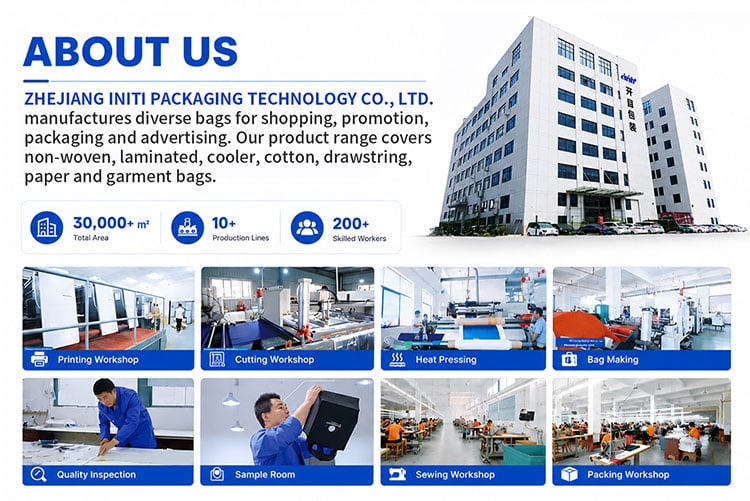
16 let výroby tašek na míru
Společnost INITI má 16 let zkušeností s vývojem tašek z bavlny, plátna, RPET, juty, nylonu, chladicích tašek, cestovních tašek, propagačních tašek a tašek pro maloobchod pro mezinárodní zákazníky.
Podporujeme projekty od výběru materiálů a vývoje konstrukce až po schválení vzorků, výrobu, kontrolu, balení a exportní odeslání.
Dvě výrobní haly a škálovatelná výroba
Naše výrobní zařízení umožňují řezání, šití, potisk, vyšívání, montáž, kontrolu a balení. Zvládneme jednoduché propagační tašky, strukturované obchodní tašky, programy z různých materiálů, objednávky v několika barvách i kolekce pod privátní značkou.
Vývoj bavlněných, plátnových a RPET materiálů
Náš tým může pomoci kupujícím porovnat:
- Hmotnost látky
- Pletení a hustotu
- Barvu a barvení
- Možnosti s obsahem recyklovaného materiálu
- Potahy a laminaci
- Konstrukce popruhů
- Výstelka a kapsy
- Metody tisku
- Formáty balení
- Cílová cena
Bezplatné návrhy designu a podpora při vývoji vzorků jsou k dispozici ještě před sériovou výrobou.
Různé možnosti tisku a značkování
K dispozici jsou následující procesy:
- Tisk síťovým tiskem
- Přenos tepla
- Sublimace
- UV tisk
- Digitální tisk
- Vyšívání
- Ušitých štítků
- Kožené a PU nášivky
- Gumové nášlapné plošky
- Jakovardové pásky
Certifikovaná kvalita a řízení výrobního závodu
Naše zkušenosti s výrobním závodem a řízením kvality zahrnují:
- SEDEX
- Disney
- GRS
- HIGG
- ISO 9001
Rozsah certifikace, deklarace materiálů a transakční dokumenty lze prodiskutovat na základě vybraného produktu a požadavků na objednávku.
Zkušenosti s podporou globálních značek a projektů chráněných duševním vlastnictvím
Náš tým má zkušenosti s projekty v oblasti vývoje přizpůsobených produktů pro uznávané mezinárodní značky a licence IP programů, včetně Disney, adidas, McDonald’s, Coca-Cola, Starbucks, Apple, Mercedes-Benz, Samsung, Nike, Marvel, Star Wars, Hello Kitty a dalších globálních značek.
Kompletní kontrola kvality
Kontrola může zahrnovat:
- Suroviny
- Hmotnost a barva látky
- Dokumentace obsahu recyklovaného materiálu
- Stříhání
- Tisk
- Vyšívání
- Stehání
- Pevnost nádobí
- Sipky a hardware
- Hotové rozměry
- Výkon za zátěže
- Balení
- Koneční kontrola kartonových krabic
Jako referenční vzorky pro výrobu se používají vzorky a specifikace schválené zákazníkem.
Často kladené otázky
1. Je plátno to stejné jako bavlna?
Ne úplně. Plátno označuje těžší tkanou konstrukci látky. Často se vyrábí z bavlny, ale může obsahovat také polyester nebo jiná vlákna.
2. Který materiál je nejpevnější?
Pevnost závisí na hmotnosti látky, typu tkaní, stehu, popruhů a posílení. Těžké plátno je často velmi pevné, ale správně zkonstruované tašky z RPET a bavlny se také mohou výborně osvědčit.
3. Který materiál je nejvhodnější pro potisk?
Bavlna a plátno poskytují vynikající povrch pro screen printing. RPET umožňuje screen printing, tepelný přenos, sublimaci a další metody potisku v závislosti na druhu látky.
4. Který materiál je nejvhodnější pro skládací tašky?
Pro kompaktní skládací nákupní tašky se nejčastěji vybírá lehký RPET.
5. Mohou být bavlna a plátno odolné vůči vodě?
Ano. Lze přidat odpuzující úpravy, povlaky a laminované výstelky.
6. Znamená RPET, že je celý pytel z recyklovaného materiálu?
Ne nutně. Vnější látka může být recyklovaná, zatímco jiné součásti jsou z konvenčních materiálů.
7. Je možné dodat certifikované materiály?
Ano. Certifikovanou bavlnu nebo recyklované materiály lze probrat s ohledem na dostupnost dodavatelů, rozsah certifikace a požadavky objednávky.
8. Je možné kombinovat různé materiály?
Ano. Pytel může kombinovat plátno s výstelkou z RPET, bavlnu s jutou nebo látku z RPET s recyklovanými popruhy.
9. Můžete vyvinout vzorky ze všech tří materiálů?
Ano. Lze vyvinout srovnávací vzorky za účelem posouzení vzhledu, hmotnosti, tisku, struktury a nákladů.
10. Který materiál je nejvhodnější pro premium prodejní prostředí?
Těžký plátnový materiál se běžně používá pro premium textilní tašky, zatímco strukturovaný RPET je vhodný pro technické nebo moderní prodejní pozicování.
11. Který materiál je nejvhodnější pro akce v supermarketech?
Skládací tašky z RPET a posílené znovupoužitelné nákupní tašky jsou často praktickými možnostmi.
12. Nabízíte výrobu dle zadání OEM a privátní značky?
Ano. Nabízíme služby OEM, ODM, privátní značku, individuální balení i velkoobchodní hromadnou výrobu.
Doporučené produkty
Související články
Výzva k akci
Porovnejte materiály před zahájením hromadné výroby
Uveďte nám zamýšlené použití, rozměry taštičky, nosnost, grafický motiv, cílovou cenu, množství objednávky a trh určení.
Náš tým vám může doporučit vhodné specifikace bavlny, plátna nebo RPET a vyvinout vzorky k porovnání ještě před sériovou výrobou.
Požádat o doporučení materiálů
Vyvinout vlastní vzorek taštičky
Získat OEM hromadnou cenovou nabídku


 Nejnovější zprávy