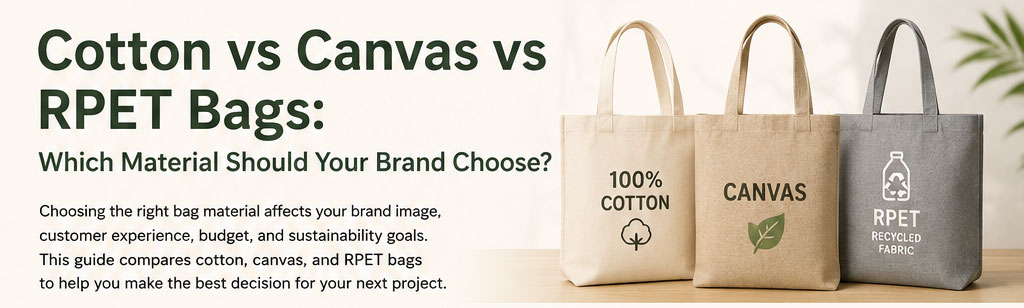
Alegerea materialului pentru o geantă nu este doar o decizie de producție. Aceasta influențează modul în care arată produsul, cât de multă greutate poate suporta, care metode de imprimare pot fi utilizate, cât de compact poate fi ambalat și cum percep cumpărătorii marca.
Bumbacul, pânza și RPET sunt trei materiale frecvent solicitate pentru personalizat geantele pentru cumpărături, geantele promoționale, cadourile corporative, ambalajele comerciale și colecțiile private. Acestea pot fi uneori utilizate pentru produse similare, dar generează rezultate foarte diferite.
O geantă ușoară din bumbac poate funcționa bine ca cadou promovat la un eveniment. O geantă mai grea geamă de pânză poate fi mai potrivită pentru o colecție premium de retail. O geantă pliabilă din RPET poate reprezenta alegerea mai bună pentru campanii în supermarketuri sau programe de călătorie, unde greutatea redusă și stocarea compactă sunt esențiale.
Acest ghid compară cele trei materiale dintr-o perspectivă practică de achiziție B2B.
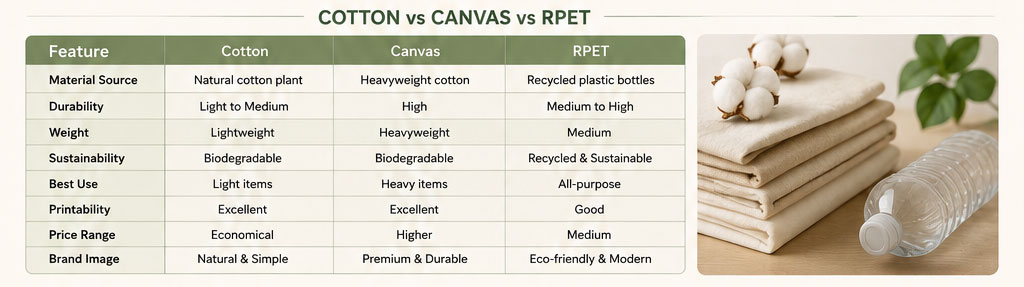
Comparare rapidă: Bumbac, Pânză și RPET
| Factor |
Bumbac |
Pânză |
Rpet |
| Tip de material |
Fibră textilă naturală |
Pânză de bumbac mai grea sau material mixt țesut |
Material din poliestru reciclat |
| Aspectul tipic |
Moale și naturală |
Structurat și premium |
Modern și tehnic |
| Greutate |
Ușor la Mediu |
Mediu la greu |
De obicei ușor |
| Capacitatea de pliere |
Bun |
Mai scăzut cu materialele grele |
Excelent |
| Rezistența la încărcare |
Depinde de greutatea materialului |
De obicei puternic |
Depinde de densitate și construcție |
| Imprimare |
Potrivit pentru imprimarea pe ecran |
Excelent pentru imprimare și broderie |
Potrivit pentru mai multe metode de imprimare |
| Performanță la contact cu apa |
Absoarbe umiditatea, dacă nu este tratat |
Absoarbe umiditatea, dacă nu este tratat |
Poate fi acoperit pentru rezistență la apă |
| Utilizări comune |
Promoții, comerț cu amănuntul, cadouri |
Comerț cu amănuntul premium, modă, saci rezistenți |
Supermarketuri, călătorii, sport, campanii |
| Poziționare Brand |
Natural și prietenos |
Durabil și premium |
Reciclat și funcțional |
Nu există un singur material cel mai potrivit. Alegerea corectă depinde de structura produsului, de cumpărătorul țintă, de sarcina prevăzută, de prețul așteptat, de direcția vizuală și de afirmația privind durabilitatea.
Ce este o pungă din bumbac?
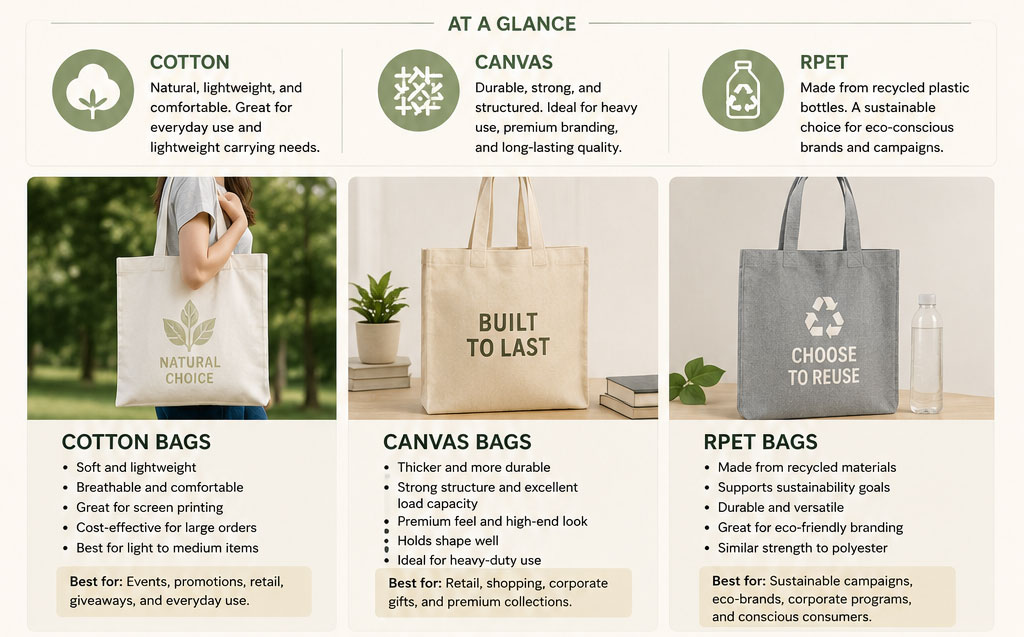
Asac din bumbac este de obicei confecționată dintr-un material textil din bumbac țesut, ușor sau de greutate medie. Este mai moale și mai flexibilă decât pânza groasă și este utilizată pe scară largă pentru pungi promoționale tip tote, pungi de cumpărături pentru magazine, pungi pentru evenimente, ambalaje pentru cadouri și produse lifestyle.
Pungile din bumbac sunt adesea alese deoarece oferă o aparență familiară de textile și o suprafață relativ netedă pentru imprimarea logo-urilor.
Principalele avantaje ale pungilor din bumbac
Aspect natural moale
Bumbacul conferă pungilor un aspect casual și prietenos, potrivit pentru:
- Mărci de produse organice și naturale
- Livrări de cărți
- Cafele
- Muzee
- Magazine de lifestyle
- Evenimente corporative
- Campanii promoționale
Suprafață bună pentru imprimare
Bumbacul susține în general:
- Tipărire serigrafică
- Transfer termic
- Imprimare digitală
- Broderia
- Etichete țesute
- Broșe textile
Logouri simple, sloganuri, ilustrații și grafică de campanie pot fi aplicate, de obicei, clar.
Ușoară și pliabilă
Pungile ușoare din bumbac pot fi ambalate plate și distribuite eficient pentru evenimente, târguri comerciale, campanii de retail și programe promoționale.
Structură flexibilă a produsului
Bumbacul poate fi folosit pentru:
- Ghiozdane plate
- Pungi de cumpărături cu pliu lateral
- Cutii cu cord de strâns
- Pungi pentru pâine
- Pungi cosmetice
- Pungi pentru cadouri
- Pungi anti-praf
Limitări ale pungilor din bumbac
Bumbacul absoarbe umiditatea, cu excepția cazului în care primește o finisare specială. Bumbacul ușor poate, de asemenea, să-și piardă forma când este gol și poate să nu fie potrivit pentru produse grele fără un material mai rezistent, cusături întărite sau manere mai late.
Bumbacul se poate șerpi sau poate schimba aspectul după spălare, așadar instrucțiunile de îngrijire trebuie să se bazeze pe materialul real, vopsirea, imprimarea și construcția.
Ce este o pungă din pânză?
Pânza este un material mai gros și mai bine țesut, fabricat în mod obișnuit din bumbac sau amestecuri de bumbac. Este, în general, mai groasă, mai fermă și mai structurată decât materialul obișnuit din bumbac.
Pânza este frecvent utilizată atunci când cumpărătorii doresc o pungă reutilizabilă cu o performanță superioară de transport și cu un aspect textil mai premium.
Principalele avantaje ale pungilor din pânză
Mai rezistentă și mai structurată
Pânza este potrivită pentru produsele care necesită:
- Păstrare Mai Bună a Formei
- Capacitate de transport mai mare
- Baze întărite
- Falduri laterale mai largi
- Buzunare interne
- Închideri cu fermoar
- Construcție mai complexă
Aspect retail premium
Sacii din pânză sunt utilizați în mod obișnuit de:
- Branduri de modă
- Mărci de produse de frumusețe
- Magazine de lifestyle
- Hoteluri și stațiuni
- Furnizori de cadouri
- Programe corporative
- Vânzători cu marcă proprie
Materialul mai greu creează o senzație tactilă mai consistentă decât bumbacul ușor pentru promoții.
Opțiuni excelente de branding
Pânza susține:
- Tipărire serigrafică
- Broderia
- Transfer termic
- Etichete țesute
- Pete din piele sau PU
- Petroane din cauciuc
- Tipărire în culori pline pe materialul potrivit
Broderia și aplicațiile sunt deosebit de eficiente atunci când cumpărătorii doresc ca sacul să arate ca un produs comercial, nu ca un simplu obiect de promovare.
Potrivit pentru reutilizare pe termen lung
Un sac tip tote din pânză, bine realizat, poate fi folosit pentru cumpărături, muncă, călătorii, cărți, produse alimentare, cadouri și transport zilnic.
Limitări ale pungilor din pânză
Pânza este de obicei mai scumpă și mai grea decât bumbacul ușor sau materialul RPET. Pânza grea necesită, de asemenea, mai mult spațiu în cutii și poate crește costurile de livrare.
La fel ca bumbacul, pânza netratată absoarbe umiditatea. În cazurile în care este necesară o protecție suplimentară, se poate adăuga un strat interior, o acoperire, un interior laminat sau o finisare cerată.
Ce este o pungă RPET?
RPET se referă la tereftalatul de polietilenă reciclat. În producția de pungi, acesta este frecvent prelucrat în fibre și materiale textile din poliester reciclat.
Materialul RPET poate fi ușor, țesut, rezistent la ruptură (ripstop), din plasă, fiert, laminat sau acoperit. Este utilizat în diverse produse, cum ar fi pungile pentru cumpărături, rucsacurile, pungile frigorifice, pungile cu cordoane de tragere, organizatoarele de călătorie, pungile pentru produse cosmetice și produsele pentru activități în aer liber.
Principalele avantaje ale pungilor RPET
Poziționarea materialelor reciclate
RPET permite brandurilor să folosească poliester reciclat în dezvoltarea produselor și să reducă dependența de materiile prime de poliester virgine.
Cumpărătorii trebuie să verifice:
- Procentul de conținut reciclat
- Dacă conținutul este post-consum sau post-industrial
- Care părți ale sacului finit sunt reciclate
- Dacă este necesară documentația de certificare
- Dacă afirmația se referă la materialul textil sau la produsul final
Ușoară și compactă
Materialele textile din RPET sunt foarte potrivite pentru:
- Sacii pliabili pentru cumpărături
- Sacuri pentru supermarket
- Rucsacuri cu funie de închidere
- Organizatori de călătorie
- Genti sport
- Produse promoționale
Materialul poate fi adesea împachetat într-un mic sac, ceea ce îl face util pentru distribuția în cantități mari și pentru comerțul de turism.
Opțiuni de materiale textile funcționale
În funcție de specificații, materialul textil din RPET poate oferi:
- Construcție tip ripstop
- Ventilație cu plasă
- Se usucă rapid
- Coating rezistent la apă
- Laminarea
- Tipărire prin sublimare
- Grafică în culori pline
Gama largă de produse
RPET poate fi utilizat pentru:
- Pungi pentru cumpărături
- Pungi pliabile
- Rucsace
- Poșete frigider
- Pungi cosmetice
- Torbe pentru haine
- Cuburi de empachetare
- Pungi pentru sport și activități în aer liber
Limitări ale pungilor din RPET
RPET nu înseamnă în mod automat că întregul produs este reciclat. O pungă poate încă include fermoare standard, bumbac polyester virgine, benzi din PP, spumă, componente metalice sau alte materiale.
RPET nu este nici pe departe impermeabil sau biodegradabil în mod automat. Aceste afirmații depind de structura completă a produsului și de dovezi susținătoare.
Bumbac vs pânză vs RPET: comparație detaliată
1. Aspect și poziționare de marcă
Alegeți bumbacul când doriți:
- O aspect natural și moale
- Produse promoționale simple
- Mărfuri legate de stilul de viață sau de cultură
- Ambalaje comerciale ușoare
- Sacuri textile cu control de costuri
Alegeți pânza când doriți:
- Un aspect premium și structurat
- Un produs reutilizabil mai greu
- Poziționare în domeniul modă sau etichetă privată
- Broderie și construcție detaliată
- Valoare comercială percepută mai ridicată
Alegeți RPET atunci când doriți:
- Poziționarea poliesterului reciclat
- Ghiozdane funcționale ușoare
- Produse pliabile sau potrivite pentru călătorii
- Stil modern sportiv sau pentru activități în aer liber
- Campanii în supermarketuri și pentru corporații
2. Rezistență și performanță la transport
Numele materialului singur nu determină rezistența.
Factorii importanți includ:
- Greutatea materialului
- Densitatea firelor
- Alte produse
- Lățimea manerelor
- Metoda de coasere
- Adaosul de cusut
- Structura laterală (gusset)
- Întărire la bază
- Încărcătura prevăzută pentru transport
O pungă din pânză de bumbac groasă poate fi mai rezistentă decât o pungă ușoară din RPET. O pungă din RPET Oxford cu armare poate oferi o performanță superioară față de o pungă subțire din bumbac pentru cumpărături.
Cumpărătorii ar trebui să solicite teste de încărcare în funcție de produsul prevăzut, nu doar să se bazeze pe descrierea materialului.
3. Imprimare și personalizare cu logo
Bumbac
Cel mai potrivit pentru:
- Tipărire serigrafică
- Transfer termic
- Imprimare digitală
- Broderie simplă
- Etichete țesute
Pânză
Cel mai potrivit pentru:
- Tipărire serigrafică
- Broderia
- Aplicuri
- Etichete țesute
- Transfer termic
- Aplicații premium de logo
Rpet
Cel mai potrivit pentru:
- Tipărire serigrafică
- Transfer termic
- Sublimare
- Imprimare digitală
- Broderia
- Petroane din cauciuc
- Banda Imprimată
Metoda corectă de imprimare depinde de textura țesăturii, culoare, acoperire, grafică, cantitatea comandată și durabilitatea necesară.
4. Rezistența la apă
Bumbac și pânză
Bumbacul și pânza netratate absorb umiditatea. Cumpărătorii pot adăuga:
- Finisare hidrofugă
- Revărsare pu
- Tratament cerat
- Înveliș laminat
- Pungă interioară impermeabilă
Rpet
Poliesterele RPET pot fi dezvoltate cu:
- Revărsare pu
- Strat PVC
- Laminarea
- Tratament hidrofob
Totuși, materialul acoperit nu face automat sacul finit impermeabil. De asemenea, trebuie luate în considerare cusăturile, fermoarele și deschiderile.
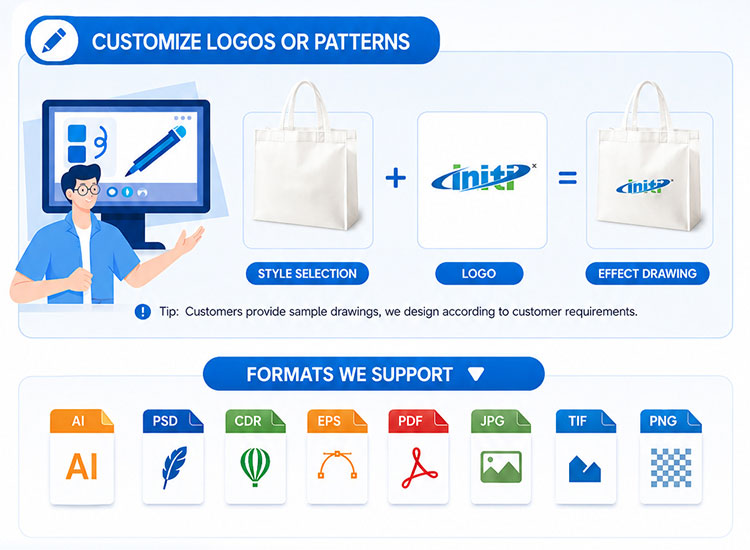
5. Flexibilitatea de îndoire și eficiența transportului
Cea mai bună flexibilitate de îndoire: RPET
Materialele ușoare din RPET și cele tip ripstop se îndoaie în pungi compacte și sunt potrivite pentru călătorii, magazine de alimente și programe promoționale.
Flexibilitate moderată de îndoire: bumbac
Sacii din bumbac ușori și de medie se ambalează ușor și plat, dar cei mai groși necesită mai mult spațiu.
Gradul cel mai scăzut de pliere: pânză groasă
Pânza groasă oferă o structură mai bună, dar crește grosimea în stare împăturită, volumul cutiei și costul de transport.
Pentru comenzile promoționale de mare volum, dimensiunile împăturite și cantitatea de produse pe cutie trebuie confirmate în faza de eșantionare.
6. Considerente de Costuri
Costul final depinde de mai mult decât doar de prețul materialului de bază.
Factorii importanți de cost includ:
- Greutatea materialului
- Certificare de material
- Vopsit
- Culori de imprimare
- Broderia
- Dimensiunea sacului
- Brosatura
- Buzunare
- Fermoare
- Componente metalice
- Reforțare
- Ambalare
- Cantitatea comandată
În general:
- Bumbacul ușor este adesea potrivit pentru promoțiile textile cu buget controlat.
- Pânza groasă este de obicei poziționată la un nivel superior de produs.
- Costul RPET depinde în mare măsură de structura materialului, documentația privind conținutul de materiale reciclate și cerințele de certificare.
Cumpărătorii ar trebui să compare specificațiile complete, nu doar prețul materialului.
7. Durabilitatea și afirmațiile de marketing
Bumbac
Bumbacul este o fibră naturală, dar cumpărătorii ar trebui să evite presupunerea că fiecare produs din bumbac are același profil ecologic. Metoda de cultivare, vopsirea, greutatea ţesăturii, procesul de producţie şi durata de viaţă a produsului sunt toate factori importanţi.
Pânză
Canvas descrie un tip de construcţie a ţesăturii, nu o categorie de sustenabilitate. Canvas-ul poate fi realizat din bumbac convenţional, bumbac organic, bumbac reciclat, amestecuri cu poliester sau alte fibre.
Rpet
RPET conţine poliester reciclat, dar procentul de material reciclat şi afirmaţia la nivelul produsului trebuie verificate.
Afirmaţiile responsabile ar trebui să fie specifice, de exemplu:
- Realizat din ţesătură de poliester reciclat
- Conţine conţinut reciclat certificat
- Realizat din bumbac organic
- Pungă tip tote din canvas rezistent, reutilizabilă
Evitaţi afirmaţii generale nejustificate, cum ar fi:
- Impact zero
- Total sustenabil
- Total Biodegradabil
- produs 100% reciclat
decât dacă întreaga compoziție și documentația de susținere le justifică.
Produse recomandate în funcție de scenariul de achiziție
Supermarketuri și retail alimentar
Materiale recomandate:
- RPET pentru saci pliabili ușori
- Pânză groasă pentru programe premium de produse reutilizabile
- Bumbac pentru toate simple personalizate cu brand
Produse Recomandate:
- Sac de cumpărături pliabil din RPET
- Toate de cumpărături din pânză cu fund refortat
- Pungă de cumpărături din bumbac cu laterale extensibile
- Pungă izolată pentru cumpărături din RPET
Campanii promoționale
Materiale recomandate:
- Bumbac ușor
- RPET ușor
- Canvas mediu pentru campanii premium
Produse Recomandate:
- Pungă de cumpărături imprimată din bumbac
- Sac rpet cu cordoane de strângere
- Sac pentru cumpărături din RPET, pliabil
- Pungă cadou din canvas cu marcă
Comerțul cu produse de modă și stil de viață
Materiale recomandate:
- Pânză groasă
- Washed Cotton
- Material RPET structurat pentru colecții tehnice
Produse Recomandate:
- Pungă de cumpărături din canvas cu bandă pe umăr
- Pungă de modă din bumbac
- Ghiozdan quiltat din RPET
- Geantă transversală din pânză
Cadouri corporative
Materiale recomandate:
- Pânză premium
- RPET pentru programele de materiale reciclate
- Bumbac pentru kituri de evenimente și de întâmpinare
Produse Recomandate:
- Ghiozdan laptop din pânză
- Rucsac din RPET
- Ghiozdan răcitor din RPET
- Ghiozdan conferință din bumbac
- Ghiozdan cadou de birou din pânză
Călătorii și sport
Materiale recomandate:
- Poliestere RPET
- Nailon sau amestecuri de poliestere reciclate
- Pânză pentru colecții de călătorii lifestyle
Produse Recomandate:
- Cuburi de împachetare pentru călătorii din RPET
- Rucsac cu funie de tragere din RPET
- Geantă de weekend din pânză
- Geantă pentru covoraș de yoga din RPET
- Geantă sport din RPET
Cum să alegi materialul potrivit
Alegeți geantele din bumbac atunci când:
- Vă dorești un aspect moale și natural.
- Sacul va fi utilizat pentru promoții sau achiziții mici la nivel de retail.
- Imprimarea simplă este importantă.
- Se cer greutate redusă și ambalare plană.
- Produsul țintă nu necesită o structură robustă.
Alegeți sacii din pânză atunci când:
- Produsul trebuie să pară substantial și premium.
- Se cere o rezistență superioară la încărcare.
- Doriți broderie, petice, căptușeală sau buzunare.
- Sacul este destinat vânzării la nivel de retail, nu unei promoții unice.
- O greutate și un cost mai mari ale produsului sunt acceptabile.
Alegeți saci din RPET când:
- Poliestrul reciclat face parte din strategia de materiale.
- Produsul trebuie să fie ușor și pliabil.
- Aplicația implică călătorii, sport, supermarketuri sau utilizare în aer liber.
- Sunt necesare straturi de acoperire, plasă, țesătură rezistentă la rupere sau structuri tehnice de țesătură.
- Documentația privind conținutul de materiale reciclate poate fi gestionată corect.
Întrebări de pus înainte de solicitarea unui preț de ofertă
- Ce produse va transporta sacul?
- Care este greutatea maximă estimată?
- Este sacul destinat promovării, ambalării sau vânzării cu amănuntul?
- Trebuie să stea verticală geanta?
- Este necesară o căptușeală?
- Produsul trebuie să fie rezistent la apă?
- Care metodă de imprimare sau aplicare a logoului este preferată?
- Este necesară o certificare pentru materiale reciclate sau organice?
- Care este prețul unitar țintă?
- Care este cantitatea estimată comandată?
- Cum vor fi ambalate și distribuite geantele?
- Pe ce piață destinatară va fi livrat produsul?
Răspunsurile clare permit furnizorului să recomande greutatea corectă a materialului, construcția, întăririle și metoda de marcare.
De ce să alegeți INITI ?
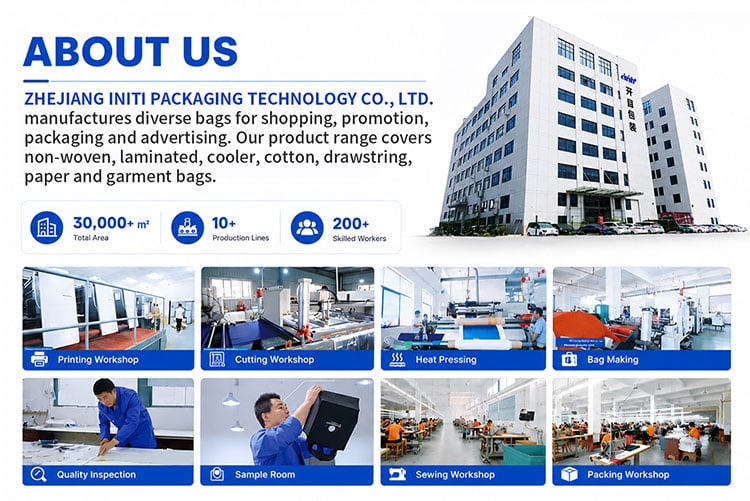
16 ani de producție personalizată de saci
INITI are 16 ani de experiență în dezvoltarea de saci din bumbac, pânză, RPET, iută, nailon, saci izolanți, saci pentru călătorii, saci promoționali și saci pentru comerțul cu amănuntul destinați cumpărătorilor internaționali.
Susținem proiectele de la selecția materialelor și dezvoltarea structurii, până la aprobarea probelor, producție, inspecție, ambalare și expediere pentru export.
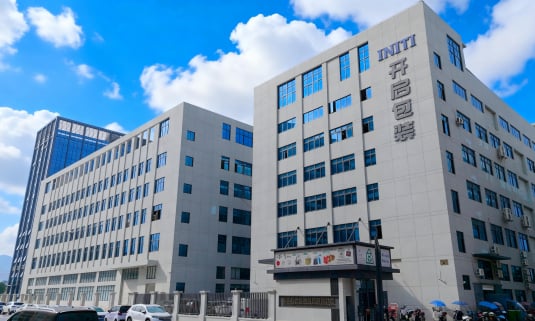
Două clădiri de fabrici și o producție scalabilă
Instalațiile noastre de producție susțin operațiunile de tăiere, coasere, imprimare, brodare, asamblare, inspecție și ambalare. Putem gestiona atât saci promoționali simpli, cât și saci pentru comerțul cu amănuntul cu structură riguroasă, programe care combină mai multe materiale, comenzi în mai multe culori și colecții sub marcă privată.
Dezvoltarea materialelor din bumbac, pânză și RPET
Echipa noastră poate ajuta cumpărătorii să compare:
- Greutatea materialului
- Țesătura și densitatea
- Culoarea și vopsirea
- Opțiuni cu conținut reciclat
- Straturi de acoperire și laminare
- Construcția mânerului
- Brosatura și buzunarele
- Metode de imprimare
- Formate de ambalare
- Prețul țintă
Sugestii gratuite de design și sprijin pentru dezvoltarea de mostre sunt disponibile înainte de producția de masă.
Capabilități multiple de imprimare și marcare
Procesele disponibile includ:
- Tipărire serigrafică
- Transfer termic
- Sublimare
- Imprimare UV
- Imprimare digitală
- Broderia
- Etichete țesute
- Etichete din piele și PU
- Petroane din cauciuc
- Webbing Jacquard
Calitate certificată și management al fabricii
Experiența noastră în domeniul fabricii și al managementului calității include:
- Sedex
- Disney
- GRS
- HIGG
- ISO 9001
Domeniul de certificare, afirmațiile privind materialele și documentele de tranzacție pot fi discutate în funcție de produsul și cerințele de comandă selectate.
Experiență în sprijinirea brandurilor globale și a proiectelor cu drepturi de proprietate intelectuală
Echipa noastră are experiență în proiecte de sprijin pentru produse personalizate destinate unor mărci internaționale recunoscute și programe de licențiere IP, inclusiv Disney, adidas, McDonald’s, Coca-Cola, Starbucks, Apple, Mercedes-Benz, Samsung, Nike, Marvel, Star Wars, Hello Kitty și alte nume globale.
Control complet de calitate
Inspecția poate acoperi:
- Materii prime
- Grosimea și culoarea materialului
- Documentație privind conținutul reciclat
- Tăierea
- Imprimare
- Broderia
- Cusătură
- Rezistența manerelor
- Șingheuri și Componente Metalice
- Dimensiunile finale
- Performanța la încărcare
- Ambalare
- Inspecția finală a ambalajelor de carton
Probele și specificațiile aprobate de cumpărător sunt utilizate ca referințe în procesul de producție.
Întrebări frecvente
este canvas-ul același lucru cu bumbacul?
Nu exact. Termenul „canvas” descrie o construcție a materialului textil țesut, mai grea. Este adesea confecționat din bumbac, dar poate conține și poliester sau alte fibre.
2. Care material este cel mai rezistent?
Rezistența depinde de greutatea materialului textil, de tipul țesăturii, de cusături, de manere și de elementele de întărire. Canvas-ul greu este adesea foarte rezistent, dar și sacii din RPET și bumbac, construiți corespunzător, pot oferi performanțe excelente.
3. Care material este cel mai potrivit pentru imprimare?
Bumbacul și canvas-ul oferă suprafețe solide pentru imprimarea serigrafică. RPET susține imprimarea serigrafică, transferul termic, sublimarea și alte metode, în funcție de tipul de material textil.
4. Care material este cel mai potrivit pentru pungi pliabile?
RPET ușor este frecvent selectat pentru pungile pliabile compacte pentru cumpărături.
5. Pot fi bumbacul și pânza rezistente la apă?
Da. Se pot adăuga tratamente hidrofuge, învelișuri și căptușeli laminate.
6. Înseamnă RPET că întreaga pungă este reciclată?
Nu neapărat. Materialul exterior poate fi reciclat, în timp ce alte componente sunt fabricate din materiale convenționale.
7. Se pot furniza materiale certificate?
Da. Bumbacul certificat sau materialele reciclate pot fi discutate în funcție de disponibilitatea furnizorului, domeniul de aplicare al certificării și cerințele comenzi.
8. Se pot combina materiale diferite?
Da. O pungă poate combina pânză cu căptușeală RPET, bumbac cu iută sau material RPET cu curele reciclate.
9. Puteți dezvolta mostre din toate cele trei materiale?
Da. Se pot dezvolta mostre comparative pentru a evalua aspectul, greutatea, imprimarea, structura și costul.
10. Care material este cel mai potrivit pentru comerțul cu amănuntul premium?
Pânza groasă este frecvent utilizată pentru pungile textile premium, în timp ce RPET-ul structurat poate fi potrivit pentru poziționarea comercială tehnică sau modernă.
11. Care material este cel mai potrivit pentru promoțiile din supermarketuri?
Pungile pliabile din RPET și pungile reutilizabile de cumpărături întărite sunt adesea opțiuni practice.
12. Acceptați comenzi OEM și private label?
Da. Ofertăm servicii OEM, ODM, etichetă privată, ambalaje personalizate și producție în cantități mari la nivel de gros.
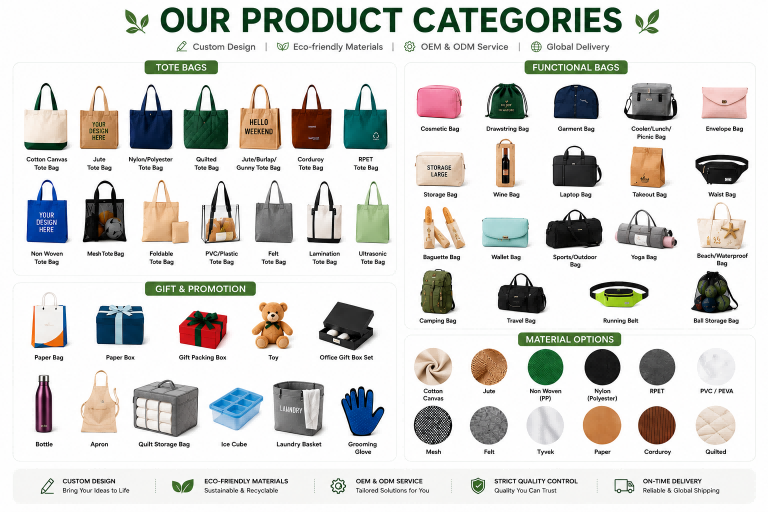
Produse recomandate
Articole conexe
Call to Action
Comparați materialele înainte de a începe producția în serie
Vă rugăm să ne indicați utilizarea intenționată, dimensiunile pungii, greutatea maximă de transport, art-work-ul, prețul țintă, cantitatea comandată și piața de destinație.
Echipa noastră vă poate recomanda specificații potrivite din bumbac, pânză sau RPET și poate dezvolta mostre pentru comparație înainte de producția de masă.
Solicitați recomandări privind materialele
Dezvoltați o mostră personalizată de pungă
Obțineți o ofertă OEM pentru comenzi în cantitate mare


 Știri importante