| Mõõtmed tollides |
Ligikaudsed mõõtmed sentimeetrites |
| 8 × 10 × 4 tolla |
20 × 25 × 10 cm |
| 10 × 13 × 4 tolli |
25 × 33 × 10 cm |
| 10 × 15 × 5 tolli |
25 × 38 × 13 cm |
| 12 × 15 × 4 tolli |
30 × 38 × 10 cm |
| 14 × 16 × 5 tolli |
36 × 41 × 13 cm |
| 16 × 20 × 6 tolli |
41 × 51 × 15 cm |
| 18 × 22 × 7 tolla |
46 × 56 × 18 cm |
| 20 × 22 × 8 tolla |
51 × 56 × 20 cm |
Need mõõdud on üldised viited, mitte universaalsed standardid.
Tegelikud ostukotiga seotud mõõdud võivad erineda koti ehituse, tootmisnõuete, toote kasutusala ja kohandamise tõttu.
Standardsete ostukottide suurused
Ühtset universaalset ostukoti suurust ei eksisteeri.
Erinevad kauplused ja ettevõtted kasutavad erinevaid mõõtmeid sõltuvalt müüdavatest toodetest. Siiski saab ostukotte üldiselt jagada väikesteks, keskmisteks, suurteks ja väga suurteks.
Väiksed ostukotid
Väikesed ostukotid sobivad, kui kantavad tooted on kompaktsete mõõtmetega ja suhteliselt kerged.
Tüüpilised mõõtmed võivad olla:
8 × 10 × 4 tolli
või sarnased proportsioonid.
Väikesed ostukotid sobivad järgmisteks otstarveteks:
- Väikeste kaupluste ostude jaoks
- Kinkid
- Tarvikud
- Väikeste pakendatud toodete jaoks
- Erikaubanduse toodete jaoks
Peamine eelis väikese ostukoti puhul on see, et see pakub piisavalt ruumi ilma liialdatud kasutamata mahtudeta.
Ettevõtetele, kes müüvad väikseid tooteid, võib väiksem koti pakkuda ka sobivamat ja professionaalsemat esitlust.
Keskmine ostukott
Keskmised ostukotid on igapäevases kaupluste kasutuses üleüldiselt kõige universaalsemad valikud.
Tüüpilise keskmise ostukoti mõõtmed võivad olla umbes:
12 × 15 × 4 tolli
kuigi tegelikud mõõtmed võivad sõltuda kannatavatest toodetest.
Keskmised ostukotid sobivad:
- Riiv
- Kingad
- Raamatud
- Üldisteks kaupluste toodeteks
- Mitme väiksema toote jaoks
Paljude kaupluste rakenduste puhul pakuvad keskmised kotid praktilist tasakaalu mahutavuse ja kandmise lihtsuse vahel.
Kui tooted on paksud või mitu eset on kokku pakkimisele pandud, siis külje- (või põhja-)laienduse suurendamine võimaldab lisamahutavust ilma laiuse ja kõrguse olulisemata suurenemiseta.
Suur ostukott
Suured ostukotid pakuvad rohkem ruumi suurematele toodetele või mitmele esemele.
Tüüpilised mõõtmed võivad olla:
16 × 20 × 6 tolli
või sarnased proportsioonid.
Suured ostukotid sobivad järgmisteks kasutusteks:
- Suuremad kaupluste ostud
- Mitme riideeseme bestellimine
- Suuremad pakendatud tooted
- Raskemad ostud
- Reklamimateriaal
Suure ostukoti valimisel on mahutavus ainult üks kaalutav tegur.
Tuleb ka hinnata oodatavat toote kaalu. Käepidemed, koti ehitus ja üldine disain peavad sobima ettenähtud koormale.
Eriliselt suured ostukotid
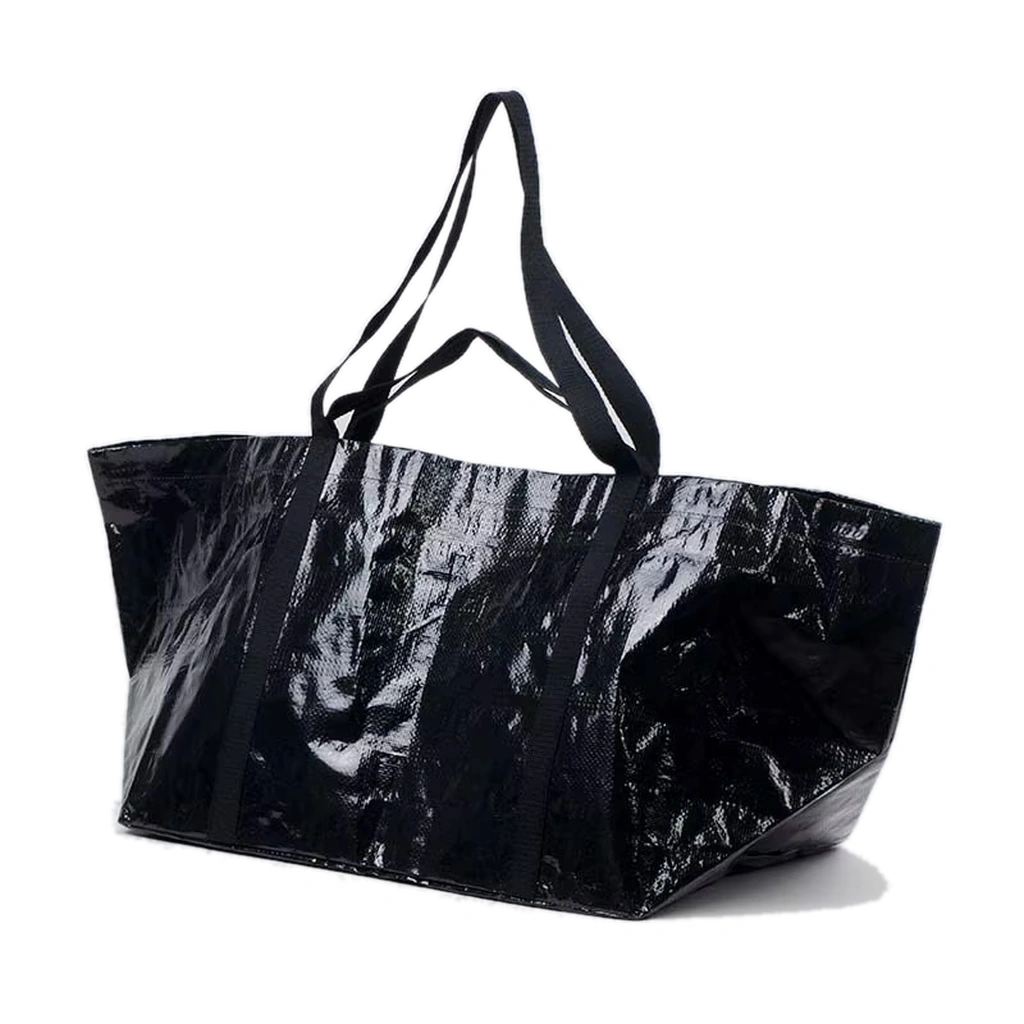
Eriliselt suured ostukotid on mõeldud toodetele või ostudele, mille jaoks on vajalik oluline sisemine ruum.
Nende mõõtmed võivad olla umbes:
20 × 22 × 8 tolli või suuremad
sõltuvalt kasutusviisist.
Eriliselt suured ostukotid võivad olla kasulikud, kui:
- Mitu toodet tuleb koos kanda
- Toodete pakend on suur
- Kliendid teevad suuremaid ostusid
- On vaja täiendavat sisemist mahutavust
Sobib kodu ümberasumiseks, pagasi sortimiseks ning erinevate esemete pakkimiseks ja käsitlemiseks
Ostukoti maht
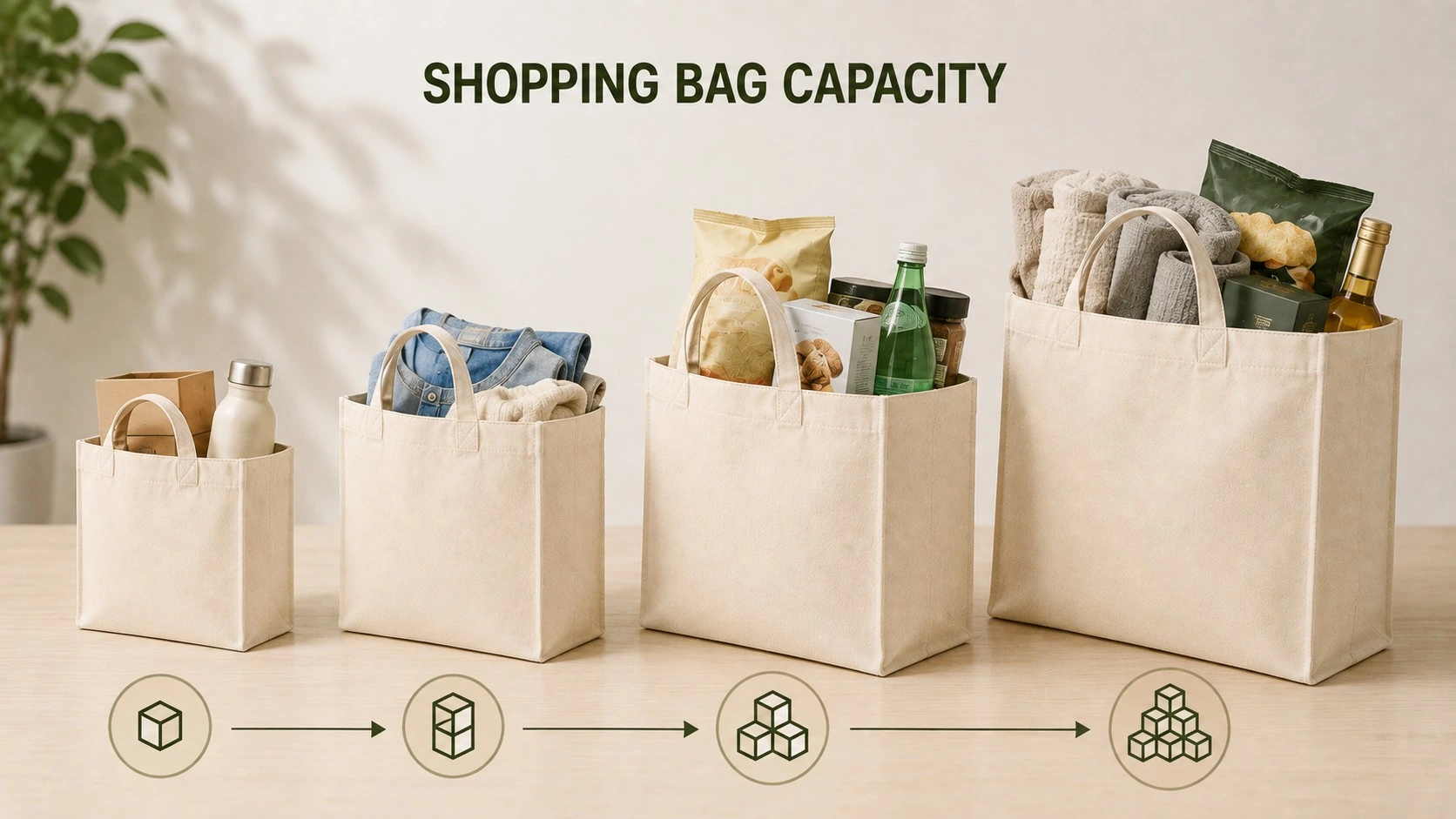
Kauplemisülevali maht määrab, kui palju ülevalt saab hoida nii ruumala kui ka kaalu poolest. Õige kauplemisülevali valimisel ei piisa ainult mõõtmetest. Tegelikult kasutatav maht sõltub ülevali laiusest, kõrgusest, põhja sügavusest, ülevali ehitusest ning kantavate toodete tüübist.
Suurem kauplemisülevali pakub tavaliselt rohkem ruumi, kuid suuruse ja mahuga seotud seos ei ole alati lineaarne. Sügavam põhi võib oluliselt suurendada saadaolevat ruumi ilma suurema laiuse või kõrguseta.
Ettevõtetele, kes valivad kauplemisülevalisid jaemüügitoodete jaoks, on kasulik kaaluda enne suuruse valikut nii ruumala kui ka kaalumahta.
Kui palju gallonit või liitrit kauplemisülevali mahutab?
Kauplemisülevali ruumala saab hinnata ülevali laiuse, kõrguse ja põhja mõõtmete põhjal. Lihtne viis ligikaudse sisemise ruumala mõistmiseks on vaadata kolmemõõtmelist ruumi, mille need mõõtmed moodustavad.
Arvutatud mahu ei tohiks käsitleda täpse kasutatava võimsusena. Õmblused, kleepad, käepidemed, tugevdamispiirkonnad ja kotti sisemise toote kuju võivad vähendada kasutamiseks vajaliku ruumi.
Üldise viite:
| Ostukotti suurus |
Kokkuvõttes tootmisvõimsus |
| Väike ostukotti |
3–4 gallonit / 11–15 liitrit |
| Keskmine ostukott |
5–6 gallonit / 19–23 liitrit |
| Suur ostukott |
7–8 gallonit / 26–30 liitrit |
| Erakorraliselt suur ostusakt |
910+ gallon / 3438+ liitrit |
Ostukottide suuruse ja mahu võrdlusgraafik
Järgmist joonistust võib kasutada üldise lähtepunktina ostukottide suuruste hindamisel.
| Ostukotti suurus |
Tüüpilised mõõdud |
Lähemalt kasutusala |
Sobivad rakendused |
| Väike |
8 × 10 × 4 tolla |
Kompaktvõimsus |
Väikesed jaemüügitooted |
| Keskmise määra |
12 × 15 × 4 tolli |
Keskmine võimsus |
Riided, raamatud, kingad |
| Suur |
16 × 20 × 6 tolli |
Suur Kapatsiteet |
Mitmed tooted |
| Eriliselt suur |
20 × 22 × 8 cm+ |
Väga suur võimsus |
Suured või suured ostud |
Need on pigem üldised suunised kui kindlad tööstusstandardid.
Tavaliste ostukottide mõõtmed peaksid põhinema tegelikel toodetel ja pakendamisnõuetel.
Kuidas valida õige ostukotti
Õige ostukottide suuruse valimine algab sellest, mida see peab kandma.
Selle asemel, et valida ainult selle järgi, mis näeb välja atraktiivne, kaaluge järgmisi tegureid.
1. samm: mõõta toodet
Mõõta toote:
- Pikkus
- Laius
- Kõrgus
- Kaalu
Kui tootel on ebatavaline kuju, mõõda maksimaalsed mõõtmed, mitte ainult väikseimad pinnad.
Samm 2: Mõõda lõplik pakend
Kui toode müüakse kastis, ümbrisel, kartonil või muus pakendis, siis mõõda lõplikult pakendatud toodet.
Ostukott peab sobima pakendatud toote mõõtmetesse, mitte lihtsalt toote enda mõõtmetesse.
Näiteks võib toode ise olla suhteliselt kompaktne, kuid selle jaemüügi kast nõuab oluliselt rohkem ruumi.
Samm 3: Kaaluge, mitu toodet mahub ühte kotisse
Mõelge tüüpilisele kliendi ostule.
Kas ostukott kannab:
- Ühte toodet?
- Kahte või kolme toodet?
- Mitme toote puhul?
- Toodete segu erinevate suurustega?
Kui mitu toodet pakitakse kokku, võib kotil olla vaja täiendavat laiust või põhja sügavust.
Samm 4: Kaaluge toote kaalu
Kaupluste kotil peab olema mitte ainult piisavalt suur – see peab sobima ka eeldatava koormusega.
Kotil, mille eesmärk on kanda mitut rasket toodet, peab olema sobiv ehitus ja käepidemed peavad olema kindlalt kinnitatud.
Tellides kohandatud kaupluste kotte, andke alati võimaluse korral teada oodatav maksimaalne kaal.
Samm 5: Valige sobiv põhi
Põhi saab eriti oluliseks siis, kui tooted on paksud, kastides või mitmes kihis pakitud.
Kui teie tootel on oluline sügavus, ei pruugi tasapinnaline koti pakkuda piisavalt mahutavust, isegi kui laius ja kõrgus näivad piisavat.
Suurem küljevarv võib pakkuda täiendavat sisemist ruumi, säilitades samas praktilised esimised mõõdud.
Samm 6: Järgige piisavalt ruumi pakkimiseks
Ärge projekteerige kaubakotti nii, et see sobiks tootele liiga kitsalt ja pakkimine muutuks keeruliseks.
Mõistlik kogus täiendavat ruumi võib muuta nii töötajatele toodete pakkimise kui ka klientidele toodete välja võtmise lihtsamaks.
Samal ajal tuleb vältida liialdatud tühjaruumi.
Ideaalne kaubakott loob tasakaalu vahel:
Toote sobivus + Mahutavus + Mugavus + Välimus + Hind
Kaupluskoti mõõtmed ja käepideme pikkus
Kaupluskoti suurust tuleb kaaluda koos käepidemete mõõtmetega.
Suurem koti võib nõuda sobivat käepideme pikkust, et kliendid saaksid seda mugavalt käsitsi või õla peale kanda, sõltuvalt disainist.
Kohandatud ostukottide arendamisel võivad ettevõtted kaaluda järgmist:
- Käe Pikkus
- Käsitsa laius
- Käepideme kinnituskoha
- Käepidemete vaheline kaugus
- Kandmise viis
Käepide peaks täiendama kogu koti mõõtmeid, mitte olema eraldi element.
Ostukottide suurused erinevatele jaemüügiettevõtetele
Erinevad ettevõtted võivad vajada erinevaid ostukottide suurusi sõltuvalt nende tavalistest toodetest:
- Mood ja rõivad: Keskmised kuni suured kotid riidele, jalanõudele ja lisavarustusele.
- Toidukaupluste ja toidu jaemüük: Keskmised kuni väga suured kotid mitmele või raskemale ostule.
- Kingitus- ja eritoote jaemüük: Väikesed kuni keskmised kotid kingitustele ja pakendatud toodetele.
- Üritused ja reklaam: Kesk- ja suurte kottide kasutamine reklaamimaterjalide või mitme eseme veomisel.
Ühtegi üleüldiselt parimat ostukotisuurust ei eksisteeri. Ideaalne suurus peaks sobima teie toodete, eeldatava koormuse ja klientide kasutusviisiga.
Kuidas tellida kohandatud ostukotte
Kui tellite kohandatud ostukotte, aitab täpse teabe esitamine tootjatel soovitud mõõtude soovitamisel.
Kaalu järgmiste andmete ettevalmistamist.
Toote mõõdud
Esitage lõplike pakendatud toodete pikkus, laius ja kõrgus.
Toote kaal
Esitage umbkaudselt kaaluväärtus toodetest, mida ühes kotis kantakse.
Toodete arv ühes kotis
Selgitage, mitu toodet paigutatakse tavaliselt ühte ostukotti.
Eelistatud mõõtmed
Kui teil on juba eesmärgiks mõõdud, esitage laius, kõrgus ja külgpapp.
Selgitage, kas kotid kasutatakse kauplustes, riideostjatena, toidukaupade ostjatena, kingitustena, reklaamüritustel või muul ostuotstarbel.
Kunstiteos ja brändimine
Kui kotid sisaldavad teie brändi logot või kunstiteost, esitage vastavad trükkimisnõuded.
Kui te ei ole kindel ideaalsete mõõtmete suhtes, saab kohandatud ostukottide tootja teie toote andmeid hindamise põhjal soovitusi sobivate mõõtmete kohta.
Kohandatud ostukottide suuruse lahendused ettevõtelt ALGUS
Ettevõttes INITI saab ostukotte kohandada teie toote mõõtmete, pakendamisnõuete ja brändimisvajaduste järgi.
Selle asemel, et piirata oma äri fikseeritud standardmõõtmetega, saate arendada ostukotte, mille mõõtmed sobivad teie tegelikule kasutusvaldkonnale.
Kohandatud valikud võivad hõlmata:
- Kohandatud laius
- Kohandatud kõrgus
- Kohandatud küljevaru
- Kohandatud käepideme pikkus
- Kohandatud käepidemete paigutus
- Kohandatud värvid
- Kohandatud trükkimist
- Kohandatud bränding
Suurte tellimuste puhul aitab õigete mõõtmete valimine enne tootmist luua teie brändile ühtlasema pakendilahenduse.
Kui te juba teate oma toote mõõtmeid, jagage toote mõõtmeid ja oodatavat koti mahutavust INITI-ga. Kui te ei ole kindel, milline suurus on kõige sobivam, saate esitada oma toote mõõtmed ja nõudmised, et saada kohandatud soovitus.
KKK
Mis on standardsete ostukottide suurused?
Ühtset universaalset ostukoti standardmõõtu ei eksisteeri. Tavalised ostukotid liigitatakse üldiselt väikesteks, keskmisteks, suurteks ja väga suurteks, kuid täpsed mõõtmed võivad erineda sõltuvalt tootest ja kasutusvaldkonnast.
Mis on kõige levinum ostukoti suurus?
Keskmise suurusega ostukotid on sageli universaalne valik üldisele jaemüügile, kuna need mahutavad laia spektri igapäevatooteid. Parim suurus sõltub siiski kantavatest toodetest.
Kuidas mõõta ostukotti?
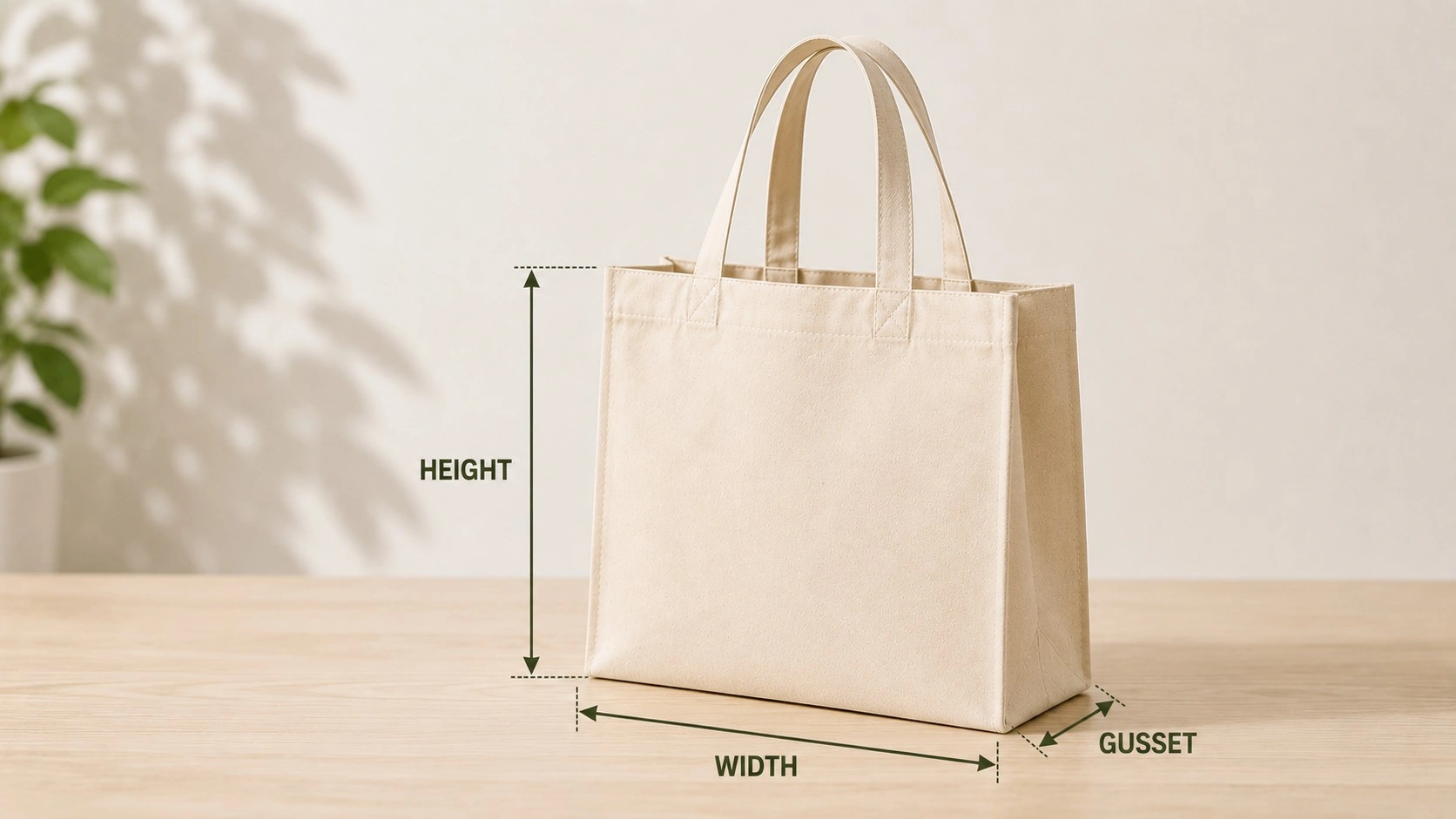
Ostukottide mõõtmed avaldatakse tavaliselt kujul Laius × kõrgus × põhja . Mõõtke koti laius ja kõrgus ning lisage külg- või põhjagaussi sügavus, kui kotil on külg- või põhjagauss.
Mida tähendab W × H × G?
W tähistab laiust, H kõrgust ja G põhja- või külgkülgede laiendust. Näiteks 12 × 15 × 4 tolli tähendab koti, mille laius on 12 tolli, kõrgus 15 tolli ja põhja- või külgkülgede laiendus 4 tolli.
Mis on põhja- või külgkülgede laiendus ostukotis?
Põhja- või külgkülgede laiendus on lisasügavus, mida loovad koti külgedele või põhjale. See võimaldab kotil mahutada paksemaid ja suuremaid tooteid.
Kuidas arvutada sobivat ostukoti suurust?
Alustage lõpliku pakendatud toote mõõtmisega. Seejärel arvestage toodete arvu kotis, toote kaalu, nõutavat mahutavust ning lisaruumi mugavaks pakkimiseks.
Milline ostukoti suurus sobib kõige paremini riidele?
Kesk- ja suured ostukotid sobivad tavaliselt riidele. Sobiv suurus sõltub riidearvust, riidete paksusest, pakendamisviisist ja kogukaalust.
Milline ostukoti suurus sobib kõige paremini toiduaineteks?
Toidukaupade jaoks mõeldud kotid peavad tavaliselt olema piisavalt suured ja vastama teatud koormuskindluse nõuetele. Ideaalne suurus sõltub sellest, kui palju tooteid, millise kujuga ja kui raskeid tooteid tavaliselt kantakse.
Kas kaupluskotid saab valmistada eripikkustes?
Jah. Erinevaid kaupluskotte saab valmistada konkreetsete laiuste, kõrgustega, külgpöördega, käepidemetega ning brändimisnõuetega.
Kas ma peaksin valima suurema kaupluskoti, et tagada suurem mahutavus?
Ei alati. Liiga suur koti võib luua tarbetut tühja ruumi, suurendada materjalikulu ja olla vähem mugav kandmiseks. Üldiselt on parem valida mõõtmed lähtuvalt tegelikest toodetest ja nende pakenditest.
Kas kaupluskoti saab kujundada minu toote mõõtmete järgi?
Jah. Kui teie esitate oma toote mõõtmed, pakendi suuruse, kaalu ja eeldatava arvu tooteid ühes kotis, saab tootja arendada teie rakendusele sobivad kaupluskoti mõõtmed.
Kohustuslik väljaandmine
Õige kaupluskoti suurus sõltub paljuski rohkem kui lihtsalt sellest, kas vajate väikest, keskmist või suurt kotit.
Kui valite ostukottide mõõtmeid, võtke arvesse:
- Laius
- Kõrgus
- Külg
- Toote mõõdud
- Pakimise mõõdud
- Toodete arv
- Toote kaal
- Nõutav mahutavus
- Käepidemete nõuded
- Kliendi mugavus
Ühtegi üleüldiselt sobivat ostukoti suurust ei eksisteeri. Väike koti võib olla ideaalne väiksemate ostude jaoks, samas kui suurema kotti võib vajada mitme või suurema tootega.
Ettevõtetel, kellel on konkreetsete toodete puhul erilised nõuded, võimaldavad kohandatud ostukottide mõõtmed paremat sobivust kui standardmõõtmed.
Valides õige kombinatsiooni laiusest, kõrgusest ja külgpöörde (gusset) suurusest, saate luua ostukotte, mis on praktilised, mugavad kandmiseks ja teie toodetele sobivalt suurused.
Seotud artikkel


 Uued uudised