A MOQ magyarázata: Mit kell tudniuk a vásárlóknak egyedi táskák rendelése előtt
A minimális rendelési mennyiség, általában MOQ rövidítéssel jelölve, az egyik első kereskedelmi feltétel, amellyel a vásárlók találkoznak beszerzés közben. egyedi kesztyűk.
Egy szállító így ajánlhatja fel:
- 500 darab tervezésenként
- 1000 darab színenként
- 3000 darab anyagonként
- 5000 darab egyedi festésű anyagból
- Kisebb rendelés plusz előkészítési díjjal
Új vásárlók számára ezek a követelmények ellentmondásosnak tűnhetnek. Egy szállító néhány száz táskát is elfogadhat, míg egy másik hasonló termék esetében több ezer darabot kér.
Az eltérés általában nem egyetlen, rögzített gyári szabály miatt keletkezik.
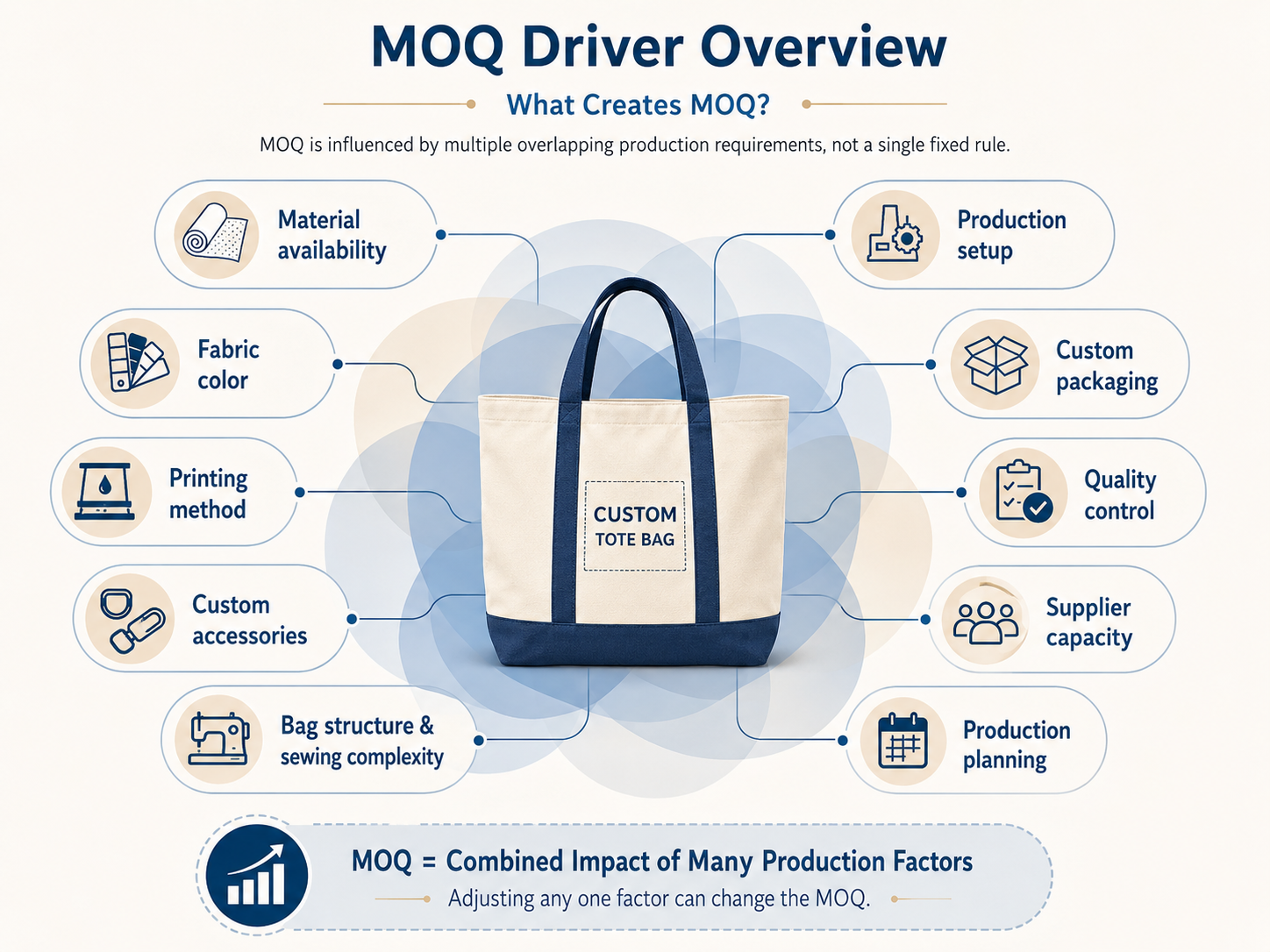
A minimális rendelési mennyiség (MOQ) függ az egész gyártási rendszertől, ideértve:
- Anyag elérhetőség
- Téglázott szín
- Nyomtatási módszer
- Személyre szabott kiegészítők
- Vágási és varrási hatékonyság
- Csomagolás
- Minőségellenőrzés
- Beszállítói kapacitás
- Termelési tervezés
Ezért a vásárlóknak nemcsak a következő kérdést kell feltenniük:
Mi a minimumparahuzamos mennyiség (MOQ)?
Hanem a következőt is:
- Melyik termékalkotó elem határozza meg a minimális rendelési mennyiséget (MOQ)?
- A minimális rendelési mennyiség (MOQ) rendelésenként, színenként, méretenként vagy dizájnonként vonatkozik?
- Több dizájn megoszthatja ugyanazt az anyagot?
- Csökkenthető-e a mennyiség készleten lévő anyag felhasználásával?
- Milyen további költség keletkezik a szokásos minimális rendelési mennyiség (MOQ) alatt?
- Kisebb rendelés esetén is ugyanazok a minőségi követelmények érvényesek?
- Lehetséges-e a termék újra megrendelése ugyanazzal az anyaggal később?
Az MOQ (minimális rendelési mennyiség) működésének megértése segít a vásárlóknak elkerülni a túlzott készletet, a pontatlan ár- és műszaki adatösszehasonlításokat, valamint a hatékony gyártásra nehezen alkalmazható specifikációkat.
Mit jelent az MOQ?
Az MOQ (minimális rendelési mennyiség) azt jelenti, hogy a szállító minimális mennyisége, amelyet egy meghatározott technikai és kereskedelmi feltételrendszer mellett hajlandó vagy képes gyártani.
A „meghatározott feltételek” kifejezés különösen fontos.
Az MOQ általában egy meghatározott kombinációra vonatkozik, például:
- Táska típusa
- Kész méretek
- Anyag
- Szövettömeg
- Test Szín
- Logó tervezés
- Nyomtatási módszer
- Belikázás
- Kiegészítők
- Csomagolás
- Tesztelési követelmények
- Szállítási ütemterv
Ha ezek közül bármelyik feltétel megváltozik, az MOQ is megváltozhat.
Például egy szállító ajánlhatja:
- 300 darabot a raktáron lévő anyagból
- 1 000 darabot egy egyedi testszínhez
- 3 000 darabot egy különlegesen előállított újrahasznosított anyagból
- 5 000 darab egyedi formázású alkatrészhez
Ezért ritkán létezik egyetlen, minden ugyanazon gyártó által készített egyedi táskára vonatkozó univerzális minimális rendelési mennyiség (MOQ).
Az MOQ általában egy adott gyártási terv szempontjából a legkisebb gyakorlatilag megvalósítható mennyiség.
Az MOQ nem azonos a rendelési mennyiséggel
Az MOQ a minimálisan elfogadható gyártási mennyiség.
A rendelési mennyiség a vevő által ténylegesen megvásárolt egységek száma.
Egy vevő rendelhet:
- Pontosan az MOQ-t
- Többet az MOQ-nál
- Próbamennyiséget az általános MOQ alatt
- Nagyobb éves mennyiség több szállításra osztva
- Több dizájn, amely ugyanazt az anyagot és a zacskó szerkezetet használja
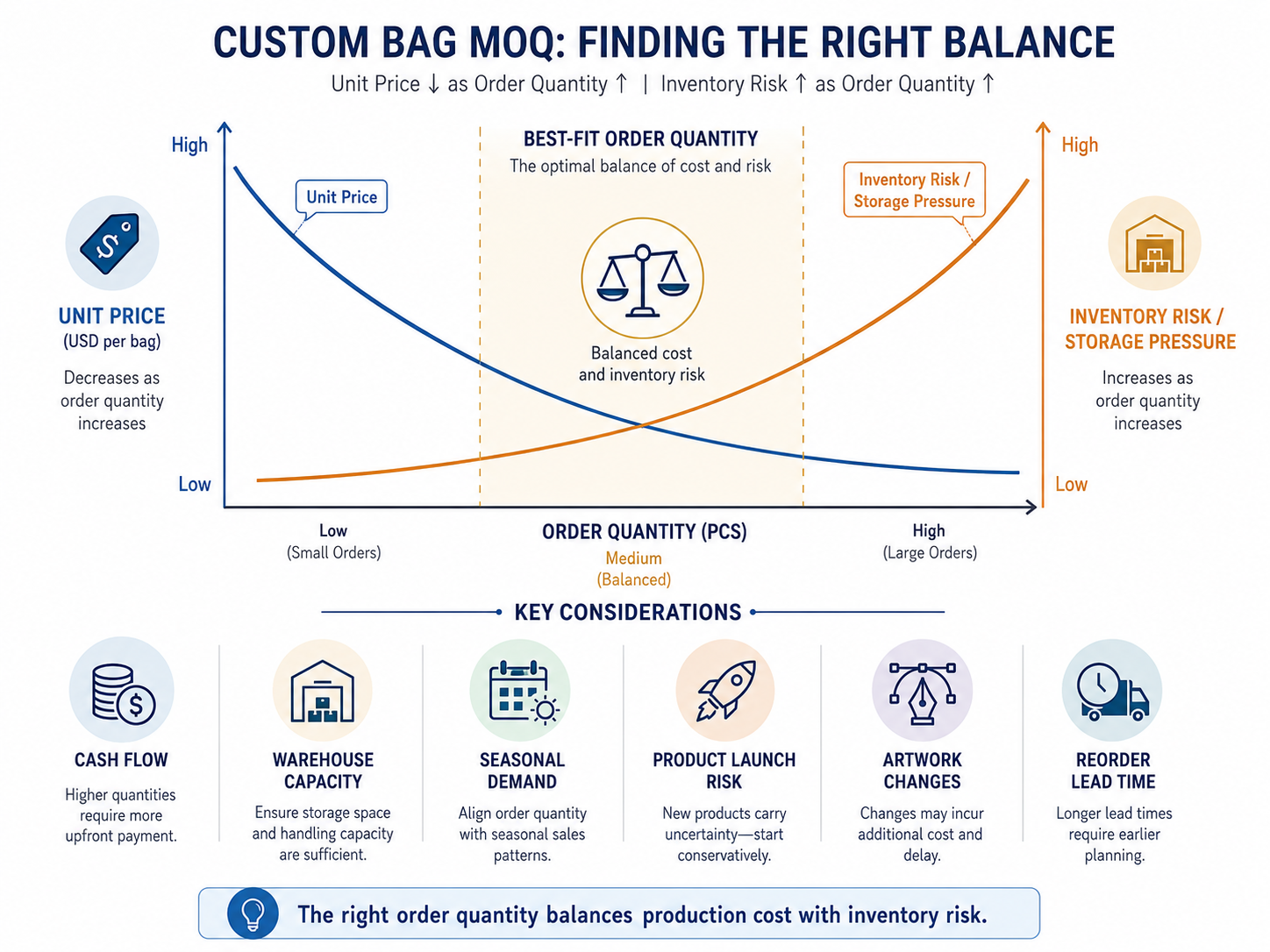
A magasabb rendelési mennyiség gyakran csökkenti az egységárakat, mert az állandó előkészítési költségek több egységre oszlanak szét.
Azonban a nagyobb mennyiségű zacskórendelés nem feltétlenül a legjobb kereskedelmi döntés.
A vásárlóknak figyelembe kell venniük még a következőket:
- Várható havi értékesítés
- Raktárkapacitás
- Pénzforgalom
- Evades igény
- Termék indítási kockázat
- Lehetséges grafikai változások
- Csomagolási frissítések
- Piaci bizonytalanság
- Újrarendelési lead time
A megfelelő rendelési mennyiség nem mindig az a mennyiség, amelynek egységára a legalacsonyabb. Ez az a mennyiség, amely kiegyensúlyozza a gyártási költségeket az állomány- és üzleti kockázatokkal.
Mi határozza meg a testreszabott táskák minimális rendelési mennyiségét (MOQ)?
A minimális rendelési mennyiség (MOQ) általában több egymást átfedő gyártási követelményből alakul ki.
1. A textil elérhetősége
A textil gyakran a legfontosabb MOQ-t meghatározó tényező.
Egy táskagyártó a textilt a következő forrásokból szerezheti be:
- Létező raktárkészletből
- Rendszeres gyártási programokból
- Egyéni festés
- Testreszabott szövésből
- Tanúsított újrahasznosított anyagot szállító cégektől
- Különleges bevonat- vagy laminálószállítók
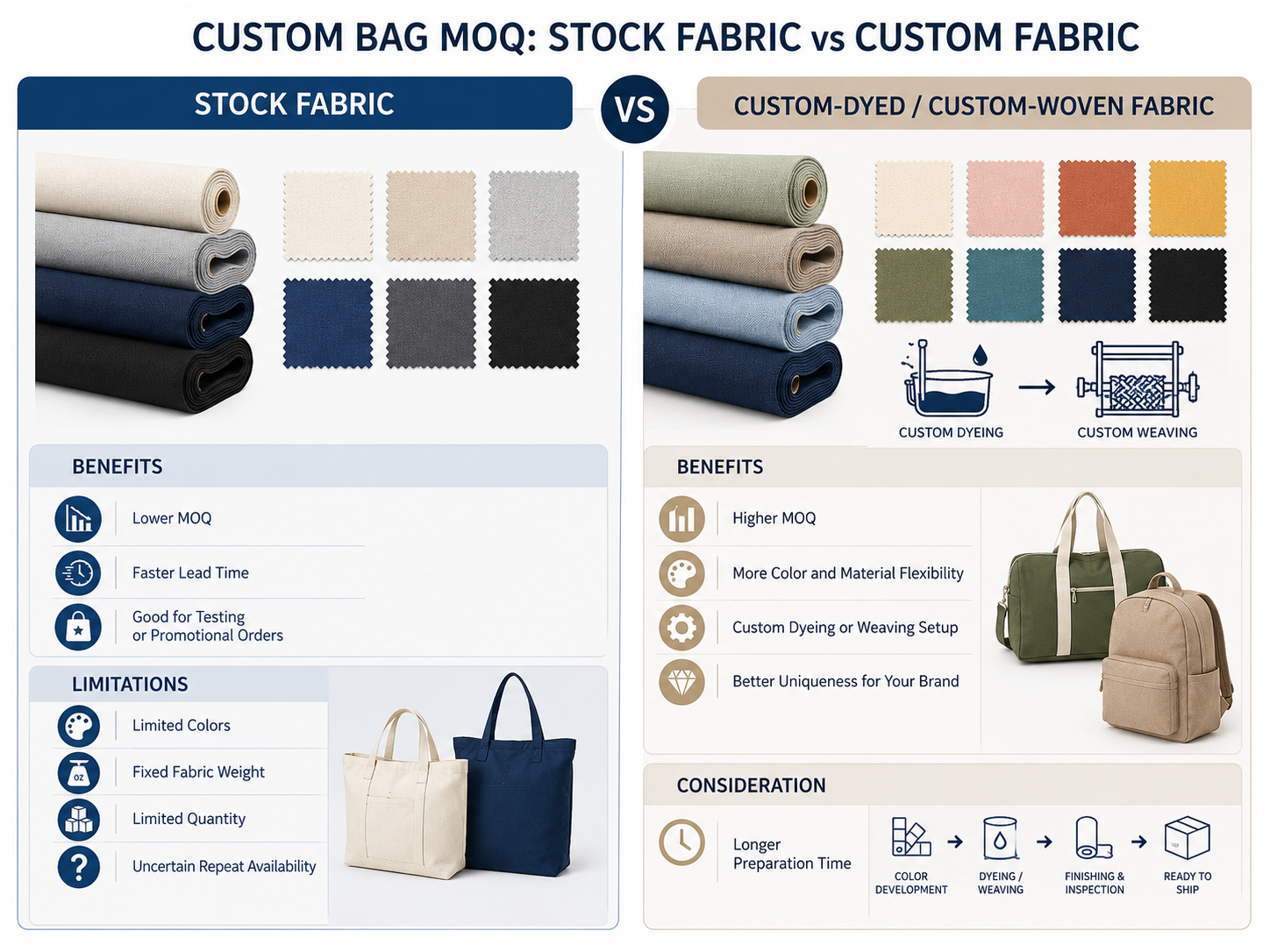
Raktáranyag
A készleten lévő anyagok általában alacsonyabb minimális rendelési mennyiséget (MOQ) támogatnak, mivel az anyagot már előállították.
Alkalmas lehet például a következőkre:
- Termék tesztelés
- Promociós kampányok
- Induló rendelések
- Alap kosárkák
- Rövid gyártási határidők
- Szabványos színprogramok
Azonban a készleten lévő anyagok korlátozásokhoz vezethetnek, például:
- Korlátozott színválasztás
- Rögzített anyagsúly
- Korlátozott elérhető mennyiség
- Nincs kizárólagos anyagmeghatározás
- Lehetséges eltérés a gyártási tételként készülő termékek között
- A ismételt rendeléseknél a rendelkezésre állás bizonytalan
A készleten lévő anyagot használó vásárlóknak ellenőrizniük kell, hogy elegendő anyag áll-e rendelkezésre a teljes megrendeléshez, valamint hogy ugyanaz a specifikáció később is beszerezhető-e.
Egyedi színre festett anyag
Az egyedi színre festett anyag általában nagyobb minimális mennyiséget igényel.
A festőüzemnek elő kell készítenie:
- Festékformulákat
- Színegyeztetés
- Gépbeállítások
- Anyagtételeket
- Mosást és felületkezelést
- Ellenőrzés
- Hulladéktartalékot
A minimális rendelési mennyiség (MOQ) színenként is érvényesülhet, nem csak a teljes rendelésre vonatkozóan.
Ezért például 3000 darab, egyetlen színben készülő zsák megrendelése könnyebben gyártható, mint ugyanennyi darab, hat különböző színre osztva.
Egyedi szövött anyag
Egyedi anyagszerkezet esetén szükség lehet:
- Speciális fonal-előkészítésre
- Minimális fonalfogyasztásra
- Szövőgép beállítására
- Minimális szövési hosszra
- Egyedi felületkezelés
- Külön ellenőrzésre
Ez általában magasabb minimális rendelési mennyiséget (MOQ) eredményez, mint amikor szokásos pamut-, vászon-, poliészter- vagy RPET-anyagot választanak.
2. Anyag színe
A minimális rendelési mennyiséget (MOQ) gyakran az anyagszínenként számítják ki.
Egy olyan árajánlat, amely 1000 darabos MOQ-ot tüntet fel, azt jelentheti:
- 1000 darab egy színben
- 1000 darab egyedi színenként
- 1000 darab szín és méret kombinációnként
Minden további szín különálló:
- Anyagbeszerzést
- Kivágási nyilvántartást
- Fonalillesztést
- Nyomtatási Beállítások
- Gyártási azonosítás
- Minőségellenőrzés
- Csomagolás-kezelés
A testszínek számának csökkentése a legegyszerűbb módja annak, hogy egy kisebb méretű egyedi megrendelés gyakorlatiasabbá váljon.
A vevő továbbra is termékvariációt hozhat létre a következők használatával:
- Különböző nyomtatott logók
- Különböző szövött címkék
- Különböző függesztőcédulák
- Különböző csomagoló hüvelyek
- Különböző régióspecifikus grafikák
miközben a táskák alapszíne és szerkezete változatlan marad.
3. Nyomtatás és logó eljárás
A különböző márkanevezési módszerek eltérő előkészítési követelményeket támasztanak.
TAMKÉPERNYŐS NYOMTATÁS
A feszített rácsos nyomtatás (selyemnyomtatás) szükségessé teheti:
- Egy-egy nyomórácsot minden nyomtatási színhez
- Festék-előkészítést
- Színegyeztetés
- Nyomtatási pozíció beállítását
- Tesztnyomtatást
- Merevítés
- Tisztítás
Egy kis, egy színes logó általában könnyebben gyártható kisebb mennyiségben, mint egy nagy, többszínű dizájn.
Hőátvitel nyomtatás
A hőátadásos nyomtatás részletes grafikát és több színt is reprodukálhat.
A minimális rendelési mennyiség (MOQ) függhet a következőktől:
- Átviteli méret
- Anyagátvitel
- Grafika összetettsége
- Szövetkompatibilitás
- Alkalmazás hőmérséklet
- Átvitel-fólia gyártási módszere
Sublimációs nyomtatás
A szublimációs nyomtatás általában megfelelő poliészter anyagokra történik.
Kis digitális feladatok technikailag lehetségesek, de teljes felületre történő nyomtatás további követelményeket támaszt a következők tekintetében:
- Nyomtatott anyag előkészítése
- Paneligazítás
- Vágási pontosság
- Színegyensúly
- Mintaillesztés
Kötésszivacs
Hímzés tartalmazza:
- Művészi munka digitalizálása
- Fonalválasztás
- Stabilizátor
- Gépbeállítás
- Öltésszám
- Gyártási idő
Kis hímzési megrendelés is lehetséges, de a beállítási és varrási költségek kevesebb táskára oszlanak el.
Szövött címkék és foltok
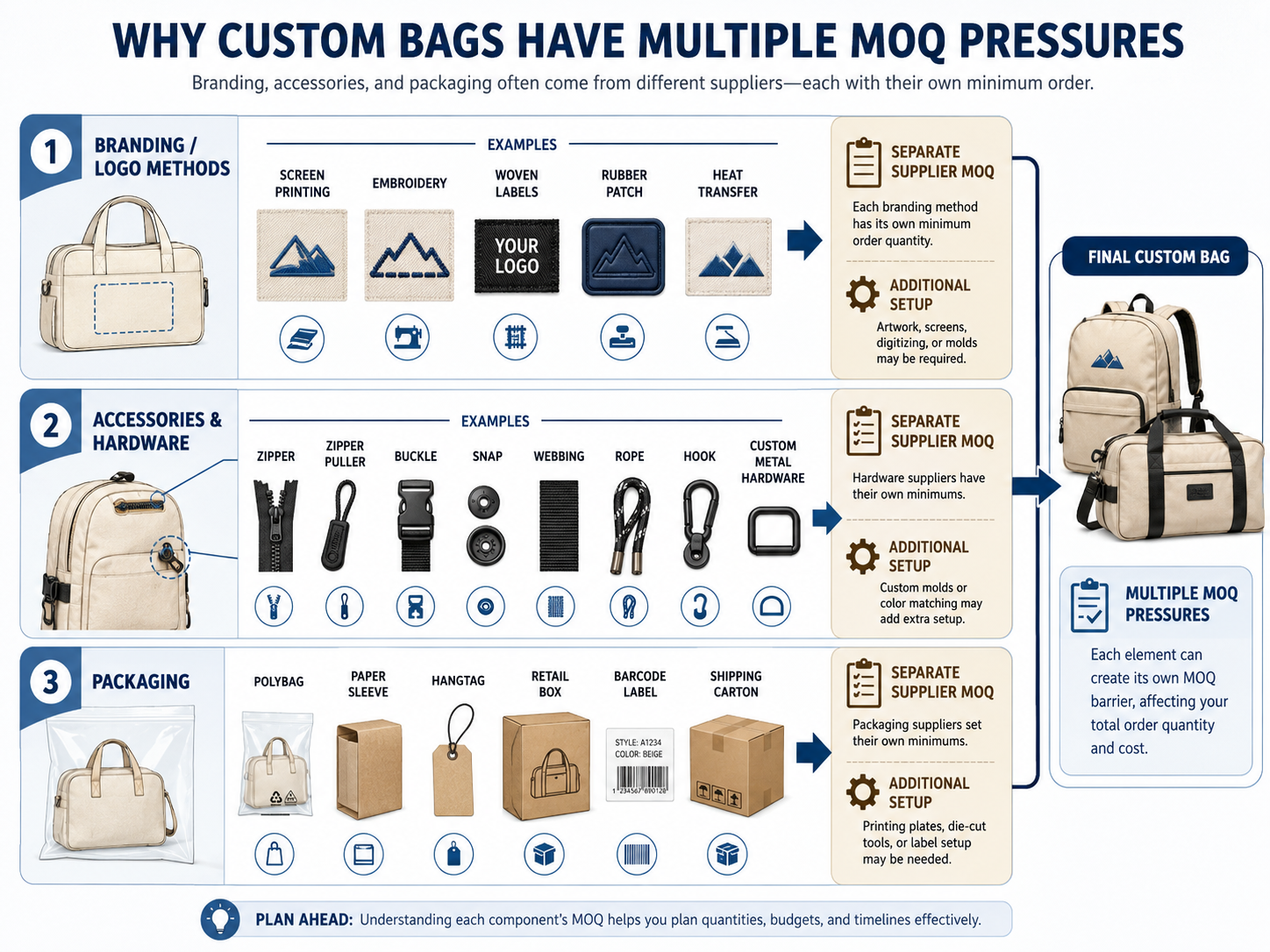
Szövött címkék, hímzett foltok, gumicímkék és műbőr foltok mindegyike külön beszállító minimális rendelési mennyiséget (MOQ) igényelhet.
Egy gyár akár 300 darab táskát is képes varrni, de a címke-szálító 1000 egyedi címkét követelhet.
A vásárlónak el kell döntenie, hogy:
- Megvásárolja az extra címkéket
- A maradék címkéket jövőbeli termelésre használja fel
- Szabványos nyomtatott címkét választ
- A komponenst közvetlen nyomtatással helyettesíti
4. Kiegészítők és felszerelés
Az egyedi kiegészítők olyan minimális rendelési mennyiséget (MOQ) eredményezhetnek, amely magasabb, mint a táska testéé.
Példák:
- Egyedi színű cipzárok
- Márkás cipzárhúzók
- Fém övcsatok
- Mágneses gombok
- Egyedi szíj
- Nyomtatott bélés
- Formált plastikos komponensek
- Gumi logófoltok
- Egyedi kapcsok
- Különleges kötél
- Egyedi gombok
A szabványos kiegészítők általában kisebb mennyiségben is könnyebben beszerezhetők.
Az egyedi formázású alkatrészekhez szükséges lehet:
- Szerszámozás
- Forma fejlesztés
- Színegyeztetés
- Minimális gyártási tétel
- Felszín készítés
- További vizsgálatok
Egy kezdeti rendelésnél a vásárlók gyakran csökkenthetik a minimális rendelési mennyiséget (MOQ) szabványos alkatrészek használatával, miközben megtartják a fő logót és a táskatervezést egyedi megrendelés szerint.
5. Táska szerkezete és varrási bonyolultsága
Egy egyszerű, lapos bevásárlótáska kevesebb műveletet igényel, mint egy hátizsák, hűtőtáska vagy merevített kozmetiktáska.
A bonyolultabb táskák a következőket is magukban foglalhatják:
- Több testpanel
- Belikázás
- Párnázás
- Zsebek
- Csillagszóró
- Kötés
- Megerősítés
- Hardver
- Különleges varrástechnikák
- Alakformázó alkatrészek
A gyártóknak elő kell készíteniük:
- Minták
- Kivágási tervrajzokat
- Varrási utasításokat
- Minta termelés
- Gépbeállítások
- Munkások képzését
- Ellenőrzési szabványok
Egy nagyon kis tétel gyártása majdnem ugyanannyi előkészítést igényelhet, mint egy nagyobb tételé.
Ezért a bonyolult tasakstruktúrák gyakran magasabb MOQ-kal (minimális rendelési mennyiséggel) vagy magasabb kisrendelési árakkal járnak.
6. Gyártási beállítás
Még egy kis méretű egyedi rendelés is gyártási előkészítést igényel.
Tipikus fix tevékenységek:
- Művészi anyagok átnézése
- Minta kialakítása
- Anyagjóváhagyás
- Nyomtatási Beállítások
- Vágási előkészítés
- Varrószalag beállítása
- Első darab ellenőrzése
- Gyártási nyilvántartások
- Végső vizsgálat
- A csomagolás elkészítése
Ezek a tevékenységek nem csökkennek arányosan a rendelési mennyiség csökkenésével.
200 darab gyártása ugyanazokat az előkészítési lépéseket igényelheti, mint 2000 darab gyártása.
Amikor az állandó költségeket kevesebb egységre osztják, az egységár emelkedik.
7. Egyedi csomagolás
A kiskereskedelmi csomagolás külön MOQ-t (minimális rendelési mennyiséget) eredményezhet.
Példák:
- Nyomtatott polietil zsákok
- Papír hüvelyek
- Fejléc-kártyák
- Feszítőlap
- Áruháziládák
- Használati útmutató kártyák
- Sávkód címkék
- Nyomtatott zsebkendőpapír
- Márkás szállítási kartonok
Egy standard átlátszó zsák vagy tömeges csomagolási módszer alacsonyabb kezdeti mennyiséget is támogathat.
Egy teljesen nyomtatott kiskereskedelmi doboz nagyobb gyártási sorozatot igényelhet, mint maga a zsák.
A vásárlóknak ellenőrizniük kell:
- A csomagolási MOQ beletartozik-e a zsák MOQ-jába
- Külön számítják-e ki a csomagolást
- Több termék megoszthatja-e ugyanazt a csomagolást
- Lehet-e az első rendelésnél szabványos csomagolást használni
- Hogyan kerül kezelésre a többletcsomagolás
8. Tanúsítás és nyomon követhetőség
Egyes egyedi műanyag zacskó-projektekhez szükséges:
- Újrahasznosított anyagok tanúsítása
- Szerves rostok dokumentációja
- Korlátozott anyagok vizsgálata
- Termékre vonatkozó specifikus vizsgálati jelentések
- Piaci megfelelőségi dokumentumok
- Ellátási lánc nyomon követhetősége
- Tranzakciós dokumentumok
Tanúsított vagy nyomon követhető anyagot esetleg egy jóváhagyott beszállítótól kell megvásárolni, amelynek saját minimális mennyiségi követelménye van.
A vásárlóknak egyértelműen meg kell különböztetniük a következőket:
- Tanúsított gyárat
- Tanúsított nyersanyagot
- Tanúsított termelési tételt
- Vizsgálati jelentést
- Termékspecifikus tanúsítványt
Ezek a dokumentumok különböző célokat szolgálnak, és eltérően befolyásolhatják a minimális rendelési mennyiséget (MOQ) és a költségeket.
Tipikus MOQ-nyomás típusonkénti zsákban
Az alábbi táblázat általános vásárlási logikát ír le, nem pedig rögzített ipari szabványokat.
| Táska típusa |
Általános MOQ-nyomás |
Fő MOQ-meghatározó tényezők |
| Alapvető pamutfűzős táskácska |
Alacsony a közepes |
Anyag színe, súlya és nyomtatása |
| Súlyos vászontáska |
Közepes |
Anyagsúly, festés és varrási idő |
| RPET bevásárlótáska |
Közepes |
Anyag elérhetősége, tanúsítványok és nyomtatás |
| Zsákzárós táskácska |
Alacsony a közepes |
Anyag, zsinór és logó alkalmazási módja |
| Összecsukható vásároltáska |
Közepes |
Pénztárcaszerkezet, gumiszalag és kiegészítők |
| Sminktáska |
Közepes |
Czipzár, bélelet, forma és logó folyamat |
| Hűtőzsák |
Közepes a magas |
Hőszigetelés, bélelet és többrétegű szerkezet |
| Hátizsák |
Közepes a magas |
Több panel, tömítés, bélelet és szerelvények |
| Párnázott táska |
Közepes a magas |
Kviltolt anyag, tömítés és szegélyezés |
| Szerkezetelt utazótáska |
Magas |
Összetett kivitelezés, szerelvények és megerősítés |
Egy egyszerű poliészter húzózárós táskának viszonylag alacsony minimális rendelési mennyiséget (MOQ) lehet megkövetelni.
Egy egyedi színű anyagból készült hátizsák, nyomtatott bélelettel, formázott cipzárhúzókkal és kiskereskedelmi csomagolással általában nagyobb mennyiséget igényel.
Miért növeli a kisebb minimális rendelési mennyiség (MOQ) az egységárát?
Egy leegyszerűsített egyedi táskákra vonatkozó költségstruktúra így érthető meg:
Egységköltség = Változó gyártási költség + Egységre jutó fix beállítási költség
A változó költségek közé tartoznak:
- Anyag
- Menet
- Kiegészítők
- Nyomtatás
- Munka
- Csomagolás
Fix költségek vagy félig fix költségek tartalmazzák:
- Minta kialakítása
- Minta előkészítése
- Nyomóképek készítése
- Színegyeztetés
- Vágóbeállítás
- Varrósor előkészítése
- Minőségellenőrzés előkészítése
- Gyártási adminisztráció
Amikor a mennyiség csökken, a darabonkénti fix költség növekszik.
Ezért egy szállító például ilyen árajánlatot adhat:
- 500 darab egy áron
- 1 000 darab alacsonyabb áron
- 3 000 darab tovább csökkentett áron
Kisebb mennyiség esetleg továbbra is a megfelelő választás, ha a felesleges készlet költsége magasabb, mint az egységár-csökkenés.
A kis minimális rendelési mennyiség (MOQ) mindig jobb a vásárlók számára?
Sorszám
A kisebb MOQ több előnnyel jár:
- Alacsonyabb kezdeti befektetés
- Csökkentett készletkockázat
- Könnyebb piaci tesztelés
- Kisebb terhelés a raktárakra
- Alacsonyabb kockázata a elavult terveknek
- Nagyobb rugalmasság az új termékek tekintetében
Ugyanakkor egy kisebb MOQ egyes esetekben hátrányos is lehet:
- Magasabb egységár
- Korlátozott anyagválaszték
- Csak szabványos színek
- Kevesebb kiegészítő választási lehetőség
- Egyszerűsített csomagolás
- Kisebb hatékonyság a szállítási költségek tekintetében egységenként
- Korlátozott áralku lehetőség
A vevőnek a megrendelés mennyiségét a projekt fázisa szerint kell kiválasztania.
Alacsonyabb minimális rendelési mennyiség (MOQ) akkor lehet megfelelő, ha:
- Új márkabemutató
- Új termék tesztelése
- Új piacra való belépés
- Korlátozott idejű eseménykampány készítése
- Korlátozott pénzforgalom kezelése
- A vásárlói kereslet megerősítése
- Szállítói kapcsolat tesztelése
Nagyobb minimális rendelési mennyiség (MOQ) akkor lehet megfelelő, ha:
- A forgalmi kereslet már kialakult
- A terméket rendszeresen újra rendelik
- A vevő egyedi anyagokat igényel
- Több értékesítési csatorna használja ugyanazt a csomagolást
- Az egységköltség-irányítás fontos
- A gyártási folyamat konzisztenciája szükséges
- Hosszú távú készlettervezés elérhető
A minimális rendelési mennyiségnek (MOQ) támogatnia kell a vevő kereskedelmi tervét, ne kényszerítse egy alkalmatlan vásárlási döntésre.
Mi az próbarendelés?
A próbarendelés egy kisebb termelési sorozat, amelyet a következők értékelésére használnak:
- Termék konzisztencia
- Szállítókkal való kommunikáció
- Csomagolás
- Termelési minőség
- Szállítási teljesítmény
- Kiskereskedelmi bemutatást
- Ügyfél Válasz
A próbarendelés nem azonos a termékmintával.
A minta megerősíti egy vagy több egység tervezését és gyártását.
A próbarendelés megerősíti, hogy a szállító képes-e egy tényleges termelési tételt konzisztensen kezelni.
A próbarendelések tartalmazhatnak:
- Magasabb egységárakat
- Készletanyagokat
- Standard tartozékok
- Korlátozott színválaszték
- Egyszerűsített csomagolás
- Különálló beállítási díjak
A vásárlóknak gondosan dokumentálniuk kell a próbarendelés műszaki leírását.
Ha egy későbbi nagyobb rendelés során a készleten lévő anyagról egyedi festésű anyagra történik áttérés, a két gyártási ciklus nem feltétlenül lesz teljesen azonos.
Hogyan csökkenthetik a vásárlók az MOQ-t?
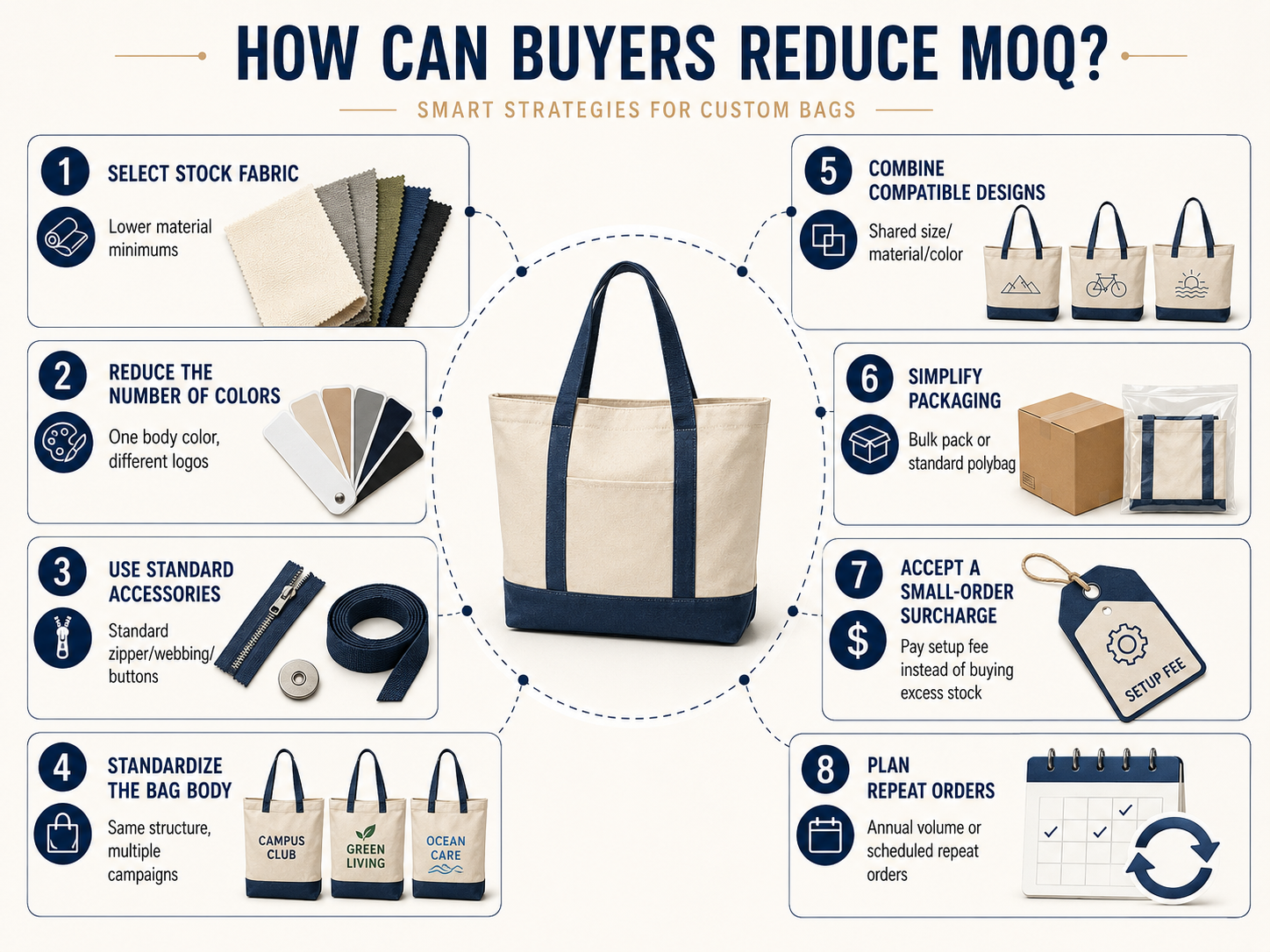
Az MOQ gyakran a specifikációk módosításával csökkenthető, nem feltétlenül közvetlen tárgyalással.
1. Készleten lévő anyag kiválasztása
A rendelkezésre álló anyag használata kizárja az egyedi festés vagy szövés minimális mennyiségének szükségességét.
A készleten lévő anyag megerősítése előtt a vásárlóknak ellenőrizniük kell:
- Elérhető mennyiség
- Anyag összetétele
- Szövettömeg
- Színegyensúly
- Szélesség
- Bevégzés
- Jövőbeli elérhetőséget
- Az anyag foglalható-e
2. Csökkentse a színek számát
Egyetlen színben történő megrendelés egyszerűbb gyártás, mint több kis színkombinációs tétel.
Például:
- 1000 darab egy színben
- 500 darab két színben
- 250 darab négy színben
Ezek a lehetőségek ugyanannyi darabszámot jelentenek összesen, de nem azonos a gyártási hatékonyságuk.
Gyakorlatias megoldás lehet egy testszín használata különböző logókkal vagy címkékkel.
3. Használjon szabványos kiegészítőket
Szabványos cziperek, szíjak, csatok és gombok alacsonyabb darabszám esetén is támogatottak.
Kiemelkedő márkajelleg továbbra is létrehozható a következők segítségével:
- Nyomtatott logók
- Kötésszivacs
- Szövetcímke
- Feszítőlap
- Csomagoló hüvelyek
- Színkombinációk
Minden kis alkatrész testreszabása növelheti a minimális rendelési mennyiséget anélkül, hogy elegendő további értéket teremtene a vásárló számára.
4. Standardizálja a táska testét
Egy táskastruktúra több célra is felhasználható:
- Kampányok
- Helyek
- Osztályok
- Termékcsaládok
- Régiós piacok
- Vállalati ügyfelek
Csak a grafikai megoldás vagy a csomagolás változik.
Ez növeli a fő táska gyártási mennyiségét, miközben megőrzi a kereskedelmi változatosságot.
5. Kombinálja a kompatibilis terveket
Egyes beszállítók lehetővé tehetik különböző logók egy közös gyártási folyamatban való gyártását, ha az alábbiak nem változnak:
- Táska mérete
- Anyag
- Téglázott szín
- Kezdelek
- Szerkezet
- Kiegészítők
Minden grafikai megoldás továbbra is külön nyomdai előkészítést, minőségellenőrzést és csomagolást igényelhet.
A vevőnek jóvá kell hagynia a műalkotásonkénti minimális mennyiséget.
6. Csomagolás egyszerűsítése
Kezdeti rendelés esetén a vevők fontolóra vehetik:
- Nagykereskedelmi csomagolás
- Szabványos polietilén zacskók
- Általános papír hüvelyek
- Felhelyezett vonalkód címke
- SZABVÁNYOS KIVITELI DOBOZOK
Az egyedi kiskereskedelmi csomagolás bevezethető, miután megerősítődött a kereslet.
7. Elfogadhat egy kisrendelési felárat
Egy szállító elfogadhatja a szokásos minimális rendelési mennyiségnél (MOQ) kisebb rendelést a következő feltételek mellett:
- Magasabb egységár
- Beállítási díj
- Alapanyag-kiegészítő díj
- Nyomtatási díj
- Kis mennyiségű rendelés kezelési díja
A magasabb egységár kifizetése még gazdaságosabb lehet, mint a felesleges készlet beszerzése.
A vevőnek össze kell hasonlítania:
- További gyártási költség
- Raktárköltség
- Készletkockázat
- Pénzügyi folyamatokra gyakorolt hatás
- Eladatlan készlet előfordulásának valószínűsége
8. Ismételt rendelések tervezése
A megbízható vásárlók megbeszélhetik:
- Éves mennyiségi kötelezettségvállalások
- Időszakos hívásra szóló rendeléseket
- Közös anyagbeszerzést
- Részleges szállításokat
- Fenntartott anyagot
- Ismétlődő gyártási időszakokat
Ezekhez az egyezményekhez pontos előrejelzések, fizetési feltételek és írásos megállapodások szükségesek.
Egy becsült éves mennyiséget nem szabad megbízott MOQ-megállapodásként kezelni, kivéve, ha mindkét fél jóváhagyja a gyártási és szállítási tervet.
MOQ tervezésenként, színenként, méretenként és SKU-nként
Az egyik leggyakoribb félreértés, hogy a MOQ (minimális rendelési mennyiség) a teljes rendelésre vagy minden változatra vonatkozik-e.
A vásárlóknak a MOQ-t négy szinten kell megerősíteniük.
MOQ tervezésenként
Minden grafikai vagy szerkezeti tervezésnek külön minimális mennyisége lehet.
MOQ színenként
Minden egyedi textílfényesség külön festési tételt igényelhet.
MOQ méretenként
Különböző méretek külön mintákat, kivágást és gyártási ellenőrzést igényelnek.
Minimális rendelési mennyiség termékkódanként
Egyetlen SKU több elemet is tartalmazhat:
- Méret
- Szín
- LOGO
- Csomagolás
- Vonalkód
Példa
Egy vásárló rendel:
- Két táskaméretet
- Három szín
- Két logótervet
Ez akár 12 darab SKU-kombinációt is létrehozhat.
Még ha a teljes rendelés 3000 darabot is jelent, az átlagos mennyiség csupán 250 darab SKU-nként.
A kombinációk számának csökkentése gyakorlatiasabbá teheti a rendelést anélkül, hogy növelné a teljes beszerzési költséget.
Hogyan befolyásolja az MOQ a mintavételt?
Az MOQ általában a tömeggyártásra vonatkozik, nem a minták számára.
Egy egyedi fejlesztési folyamat tartalmazhatja a következőket:
- Anyagválasztás
- Művészeti anyag jóváhagyása
- Prototípus-minta
- Minta módosítása
- Előtermelési minta
- Tömeges termelés
- Végső vizsgálat
- Szállítás
A minták ára általában magasabb, mint a tömeggyártás egységára, mert a minták elkészítése a következőket igényli:
- Egyedi anyagelőkészítés
- Kézi vágás
- Egységenkénti varrás
- Nyomtatási Beállítások
- Minta kialakítása
- Javítási munka
- Kurier szállítás
A minta díját nem szabad közvetlenül a tömeges termelés végső árára vonatkozó jelzőként használni.
Mi történik, ha egy rendelés az MOQ alatt van?
Több lehetséges kimenetel is előfordulhat.
A szállító elutasítja a rendelést
Ez akkor történhet, ha:
- Az anyagot nem lehet a szükséges mennyiségben beszerezni
- A kiegészítőknek magasabb a minimális mennyisége
- A szerkezet túl bonyolult
- A gyártási beállítás nem állítható helyre
- A sor nem alkalmas nagyon rövid gyártási sorozatra
A beszállító készleten lévő anyagokat használ
A vevőnek elfogadnia kell a következőket:
- Meglévő színek
- Szabványos anyagsúlyok
- Közönséges cipzárak
- Szabványos szíjak
- Általános csomagolás
A szállító felárat számít fel
A rendelés magasabb egységár vagy beállítási díj mellett is folytatható.
A vevő fizet a felesleges anyagért
Egy textilműhely vagy kiegészítő szállító több anyagot igényelhet, mint amennyit a gyártási rendelés felhasznál.
A vevőnek és a szállítónak meg kell egyezniük a következőkben:
- Kié a maradék anyag
- Hogyan tárolják
- Mennyi ideig őrzik
- Lehet-e ismételt rendeléseknél felhasználni
- Mi történik, ha az anyag minősége romlik
A gyártás egy másik rendeléssel egyesül
A szállító várhat egy másik, ugyanazzal az anyaggal vagy folyamattal készülő gyártási sorozatra.
Ez csökkentheti a költségeket, de hosszabb vagy kevésbé előrejelezhető szállítási határidőt eredményezhet.
Minimális rendelési mennyiség és gyártási idő
A kisebb mennyiség nem mindig jelent rövidebb gyártási ütemtervet.
Egy kis mennyiségű rendelés is szükségessé teheti:
- Egyéni anyag
- Szín-megfelelés jóváhagyása
- MINTA FEJLESZTÉS
- Nyomtatási Beállítások
- Kiegészítők gyártása
- Minőségellenőrzést
- Export csomagolás
Egy kis, egyedi színű rendelés hosszabb ideig tarthat, mint egy nagyobb rendelés, amely készleten lévő anyagból készül.
A vevőknek a szállítási határidőt két részre kell bontani:
- Anyagelőkészítés
- MINTA FEJLESZTÉS
- Gyártás
- Ellenőrzés
- Csomagolás
- Közlekedés
A szállítónak el kell magyaráznia, melyik szakasz határozza meg az egész ütemtervet.
Hogyan hasonlítsák össze a vásárlók az MOQ-ajánlatokat?
Két ajánlatot nem lehet pontosan összehasonlítani, ha nem azonos specifikáció alapján készültek.
Győződjön meg arról, hogy minden szállító ugyanazt az alábbiakat ajánlja:
- Kész méretek
- Az anyag összetétele
- Szövettömeg
- Test Szín
- Belikázás
- Nyomtatási módszer
- Logó mérete
- Kiegészítők
- Megerősítés
- Csomagolás
- Minőség követelmény
- Szállítási határidő
Az alacsonyabb MOQ-ajánlat készleten lévő anyagokat, standard kiegészítőket vagy egyszerűsített csomagolást tartalmazhat.
A magasabb MOQ-ajánlat egyedi színeket, tanúsított anyagokat vagy kizárólagos alkatrészeket tartalmazhat.
A legalacsonyabb ár vagy a legalacsonyabb MOQ nem feltétlenül jelenti a legjobb ajánlatot.
Először a teljes specifikációnak egyeznie kell.
Hatással van-e az MOQ a minőségre?
Az MOQ nem határozza meg közvetlenül a minőséget.
Egy kis sorozatot is jól lehet gyártani, és egy nagy mennyiséget is rossz minőségben lehet előállítani.
A minőség a következőktől függ:
- Egyértelmű specifikációkat
- Jóváhagyott minták
- Az anyagellenőrzés
- Termelésirányítás
- Varrási szabványok
- Nyomtatási vezérlés
- Folyamatbeli ellenőrzés
- Végső vizsgálat
- Beszállítói képesség
Kis mennyiségű rendelés azonban különösen kockázatos lehet:
- Rendelkezésre álló készletanyagokra való támaszkodás
- Korlátozott színegyeztetés
- Kézi gyártásból eredő eltérések
- Kiegészítő elemek helyettesítése
- Ugyanazon anyag későbbi újragyártásának nehézsége
A vevőknek ellenőrizniük kell, hogy a kis MOQ-s rendelés is megfelel az egyeztetett:
- Anyag
- Méretek
- Fűzés
- LOGO
- Tesztelés
- Csomagolás
- Ellenőrzési szabvány
Kisebb mennyiség nem jelenthet határozatlan terméket.
Minimális rendelési mennyiség és készletkockázat
A szállító árajánlata nem tartalmazza az összes, a felesleges készlet miatt keletkezett költséget.
További készletköltségek például:
- Raktár bérlési díja
- Kezelés
- Biztosítási
- Termék sérülés
- Páratartalom hatása
- Csomagolás megromlása
- Elavult márkanevek
- Eladatlan évszakos készlet
- Leszállítás
- Elhelyezés
Mielőtt növelnék a rendelési mennyiséget, a vásárlóknak a következő kérdéseket kell feltenniük:
| Kérdés |
Beszerzési relevancia |
| Hány darab táskát lehet eladni vagy használni havonta? |
Meghatározza a készlet tartósságát |
| Megváltozhat-e a logó vagy a csomagolás? |
Elavulási kockázatot teremt |
| Szezonális a kereslet? |
Korlátozza az értékesítési időszakot |
| Rendelkezésre áll raktárterület? |
Tárolási költséget jelent |
| Gyorsan tudja-e feltölteni a szállító a készletet? |
Csökkenti a biztonsági készlet igényét |
| Egyetlen tervezés szolgálhat-e több piacot? |
Javítja a készlet rugalmasságát |
| Korlátozott a pénzforgalom? |
A nagyobb rendelések lekötik a forgóeszközöket |
Egy kisebb rendelés magasabb egységáron alacsonyabb összes üzleti költséget eredményezhet.
MOQ-stratégia kezdő vállalkozásokhoz és új márkákhoz
Fokozatos megközelítéssel csökkenthető a kockázat
1. szakasz: Prototípus
Megerősítés:
- Anyag
- Méret
- Szerkezet
- LOGO
- A funkcionalitás
- Alapvető megjelenés
2. szakasz: Próbagyártás
Értékelje:
- Gyártási konzisztencia
- Csomagolás
- Ügyfélvisszajelzések
- Szállítás
- Kiskereskedelmi árak
- Beszállítói teljesítmény
3. szakasz: Első kereskedelmi megrendelés
Növelje a mennyiséget, miután a kereslet egyértelműbbé válik.
4. szakasz: Specifikáció optimalizálása
Bevezetés:
- Egyedi színek
- Személyre szabott kiegészítők
- Prémium csomagolás
- További méretek
- Nagyobb tételű gyártás
Ez a megközelítés megakadályozza, hogy a vásárlók nagy mennyiségben kötelezzék el magukat a termék specifikációjának és a piaci keresletnek a stabilizálódása előtt.
MOQ-stratégia megbízható vásárlók számára
A nagyobb vásárlók az előrejelzett mennyiséget felhasználhatják a gyártási hatékonyság javítására.
Lehetséges stratégiák:
- Éves kereslet összevonása
- Anyagok szabványosítása
- Alkatrészek megosztása termékek között
- Régiókra vonatkozó rendelések koordinálása
- Textíliák lefoglalása
- Ismétlődő gyártási folyamatok ütemezése
- Szállítások felosztása
- Egyedi SKUszámok számának csökkentése
A cél nem feltétlenül a lehető legkisebb rendelési mennyiség (MOQ) elérése.
Olyan beszerzési struktúra kialakítása, amely támogatja:
- Stabil minőség
- Előrejelzhető árképzés
- Megbízható utánpótlás
- Kontrollált készlet
- Hatékony logisztika
Gyakori MOQ-hibák
Hiba 1: MOQ kérés a termék meghatározása előtt
Anyag, méret, szín és nyomtatási részletek nélkül a beszállító csak becslést tud adni.
Hiba 2: Az MOQ teljes rendelésre vonatkozik feltételezése
Az MOQ alkalmazható színenként, méretenként, dizájn szerint vagy SKU-nként.
Hiba 3: Túl sok változat hozzáadása
Egy kis rendelés, amelyet sok színre és méretre osztanak fel, hatéktalanná válik.
Hiba 4: Különböző specifikációk összehasonlítása
Egy alacsony MOQ-val rendelkező készletanyag árajánlatát nem szabad közvetlenül összehasonlítani egy egyedi anyag árajánlatával.
Hiba 5: Túlzott készletrendelés csupán az egységár csökkentése érdekében
Az egységár-csökkenés elveszhet a tárolási költségek és az eladatlan készlet miatt.
Hiba 6: Minden alkatrész egyedi megrendelése
A textíliák, cipzárok, címke, fogyóeszközök és csomagolás mindegyike külön MOQ-t eredményezhet.
Hiba 7: A újrabestellési lehetőség figyelmen kívül hagyása
Egy készletanyag esetleg nem áll rendelkezésre a következő gyártási ciklusban.
Hiba 8: Szállító kizárólag az MOQ alapján történő kiválasztása
Mintavétel, kommunikáció, minőségellenőrzés, szállítási megbízhatóság és gyártási kapacitás ugyanolyan fontosak.
Vásárlóknak felteendő kérdések az MOQ-val kapcsolatban
A rendelés megerősítése előtt tegye fel a következő kérdéseket:
- A minimális rendelési mennyiség (MOQ) egy rendelésre, színre, méretre, dizájnra vagy termékkódra (SKU) vonatkozik?
- A javasolt anyag készleten van, vagy egyedi gyártású?
- Milyen műszaki specifikáció módosítása csökkentené a minimális rendelési mennyiséget?
- Az egyedi festés külön minimális mennyiséget igényel?
- A címkék, cipzárak vagy egyéb fogyóeszközök külön minimális rendelési mennyiséggel rendelkeznek?
- Több dizájn megoszthatja ugyanazt a csomagolási szerkezetet?
- Milyen pótdíj jár a szokásos minimális rendelési mennyiség alatti rendelések esetén?
- A megadott ár a minimális mennyiségre vonatkozik?
- A kiskereskedelmi csomagolásnak külön minimális rendelési mennyisége van?
- Lehetséges-e az első rendelésnél szabványos csomagolást használni?
- Lehet-e az éves mennyiséget több szállításra osztani?
- Hogyan kezelik a megrendelés után maradó egyedi anyagot?
- Ugyanaz az anyag elérhető lesz-e ismételt rendeléseknél?
- Kisebb rendelés esetén is ugyanolyan minőségi szabványt alkalmaznak?
- Mi a gyártási határidő a javasolt mennyiséghez?
Pontos MOQ meghatározásához szükséges információk
A gyakorlatias MOQ kiszámításához a vásárlóknak a következőket kell megadniuk:
- Táska típusa
- Hivatkozási kép vagy rajz
- Kész méretek
- Anyag
- Szövettömeg
- Testszín-variánsok száma
- Rendelési mennyiség
- Logó mérete
- Logó színek
- Nyomtatási módszer
- Belikázás
- Zsebek
- Zárás
- Kiegészítők
- Csomagolás
- Célpiac
- Szabályozási Előírások
- Célként megadott szállítási dátum
Amikor a specifikáció még nem végleges, kérje meg a beszállítót, hogy hasonlítsa össze:
- Alacsony MOQ-küszöbös készletanyag-opciót
- Szabványos testreszabott opciót
- Költséghatékony nagykereskedelmi opciót
Ez bemutatja, hogyan befolyásolják az anyag- és tervezési döntések a mennyiséget és az árat.
Hogyan támogatja az INITI az egyedi táskarendelések tervezését
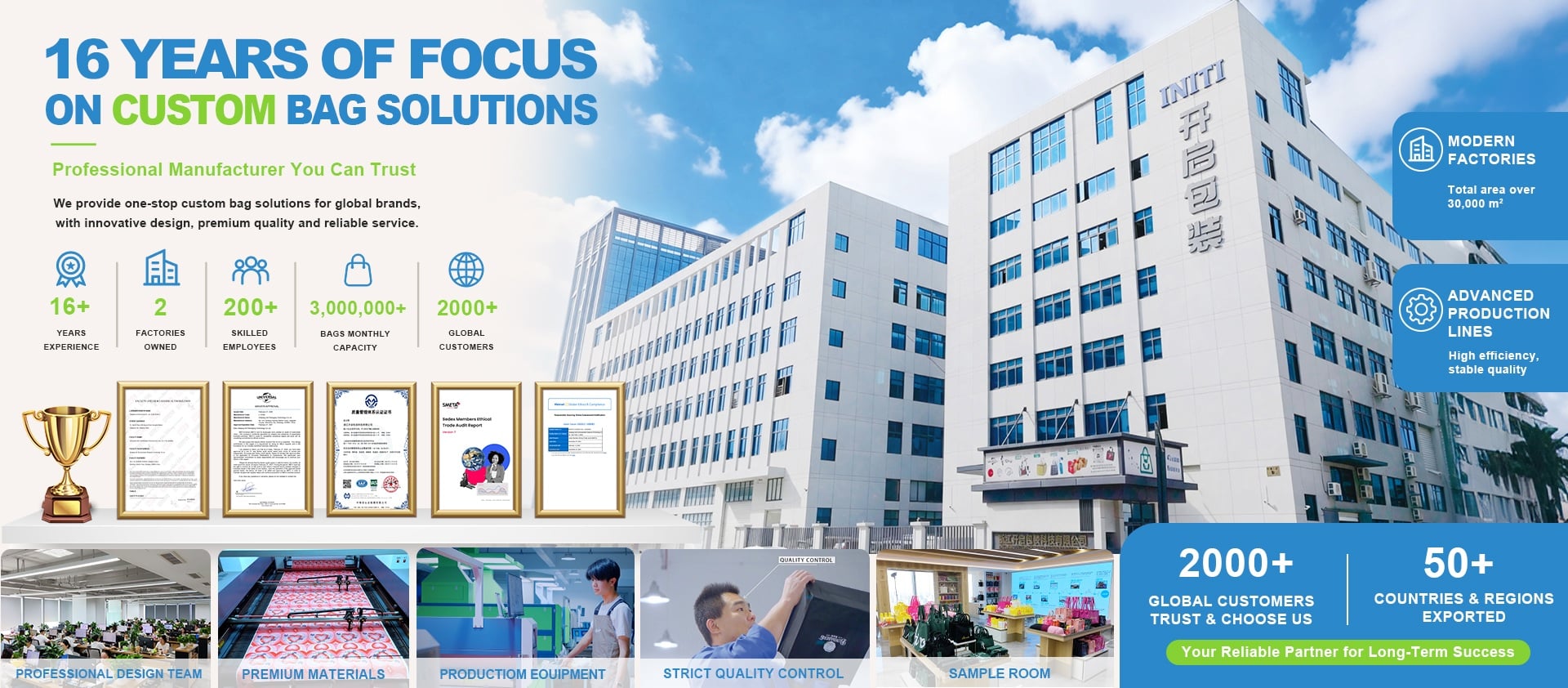
Az INITI egyedi táskákat fejleszt márkabirtokosok, kiskereskedők, szupermarketek, ajándékellátók, promóciós cégek, importőrök, disztribútorok és saját márkás vásárlók számára.
Gyártási (OEM) és fejlesztési (ODM) folyamatunk támogathatja:
- Az anyagi összehasonlítás
- Készlet- és egyedi színválasztási lehetőségeket
- Egyedi méret- és szerkezetfejlesztés
- Logó és nyomtatási lehetőségek kiválasztása
- Szabványos és egyedi kiegészítők
- Minta előkészítése
- MOQ-összehasonlítás
- Költségoptimalizálás
- Kiskereskedelmi csomagolás
- Tömeges termelés
- Minőségellenőrzést
- Export csomagolás
Kisebb mennyiségű projektek esetén át lehet tekinteni a specifikációt annak megállapítására, hogy mely alkatrészekhez használhatók elérhető vagy szabványos megoldások.
Ismétlődő vagy nagyobb mennyiségű programok esetén az anyagokat és szerkezeteket szabványosíthatják a konzisztencia, a gyártási hatékonyság és az újrarendelési tervezés javítása érdekében.
GYIK
Mi a szokásos MOQ egyedi táskák esetén?
Nincs univerzális MOQ. Ez függ a táskatípustól, az anyagtól, a színtől, a nyomtatástól, a kiegészítőktől, a csomagolástól és a beszállító gyártási rendszerétől.
Az MOQ-t színenként számítják ki?
Gyakran így van. Az egyedi festésű anyagok és a különálló termelési színek mindegyike külön minimális mennyiséget igényelhet.
Rendelhetnek-e a vásárlók MOQ alatti mennyiséget?
Néha igen. A beszállító készleten lévő anyagokat használhat, leegyszerűsítheti a specifikációt, vagy kisrendelési felárat számíthat fel.
Miért drágábbak az alacsony MOQ-os táskák?
A mintafejlesztés, a nyomtatási beállítás, a vágási előkészítés és az ellenőrzési költségek kevesebb egységre oszlanak el.
Garantálja-e a magasabb MOQ a jobb minőséget?
Nem. A minőség a specifikációktól, az anyagok ellenőrzésétől, a minták jóváhagyásától, a gyártási folyamat menedzsmentjétől és az ellenőrzéstől függ.
Kombinálhatók-e különböző logók egyetlen rendelésben?
Néha, különösen akkor, ha a táska anyaga, színe, mérete és szerkezete változatlan marad. Minden egyes logó esetében továbbra is külön beállítás és csomagolás szükséges.
Van-e külön MOQ a csomagolásra?
Az egyedi dobozok, tokok, címkék és nyomtatott táskák saját nyomdai minimummennyiséggel rendelkezhetnek.
Megoszthatják-e több méret egyetlen MOQ-ot?
Nem mindig. Különböző méretek külön mintákat, vágást és gyártási ellenőrzést igényelnek.
Az alacsony MOQ-s rendelések alacsonyabb minőségű anyagokból készülnek?
Nem feltétlenül. Azonban a kisebb rendelések gyakran az elérhető készleten lévő anyagokra és a szabványos kiegészítőkre támaszkodnak.
Mindig a legalacsonyabb MOQ-t kell-e választania egy startupnak?
A rendelési mennyiségnek tükröznie kell a várható keresletet, a pénzforgalmat, a tárolási kapacitást, az egységnyi gazdasági mutatókat és a termékfejlesztés kockázatát.
Lehet-e egy éves rendelést több szállítmányra bontani?
Lehetőség van rá, feltéve, hogy a beszállító ezt elfogadja, és figyelembe vesszük az anyagtervezést, a fizetési feltételeket és a tárolási megállapodásokat.
Hogyan kaphatnak a vásárlók pontosabb MOQ-t?
Adja meg a zsák méretét, anyagát, színválasztékát, logóját, nyomtatási módszerét, kiegészítőit, csomagolását és a becsült rendelési mennyiséget.
Összefoglalás
Az MOQ nem egyszerűen egy szám, amelyet a beszállító választ ki.
A gyakorlatilag szükséges legkisebb mennyiséget tükrözi a következők szervezéséhez:
- Alapanyag-beszerzés
- Szín-előkészítés
- Nyomtatás
- Kiegészítők
- Vágás
- Varrazás
- Minőségellenőrzés
- Csomagolás
A vásárlók gyakran csökkenthetik a minimális rendelési mennyiséget (MOQ) az alábbi módszerekkel:
- Készleten lévő anyagok használatával
- A színek számának korlátozásával
- Standard kiegészítők kiválasztásával
- A táskatest standardizálásával
- A csomagolás leegyszerűsítésével
- Összeegyeztethető dizájnok kombinálásával
- Egy ésszerű kisrendelési felár elfogadásával
- Ismételt gyártás tervezésével
Azonban a minimális rendelési mennyiség (MOQ) csökkentése nem vezethet homályos anyagmeghatározáshoz, egyenetlen minőséghez vagy ellenőrizetlen anyagcserékhez.
A legmegfelelőbb rendelési mennyiség az alábbi tényezők kiegyensúlyozását jelenti:
- Egységár
- Készletkockázat
- Pénzforgalom
- Piachiganás
- Gyártás megbízhatósága
- Újrarendelési követelmények
Egy gondosan megtervezett próbarendelés több kereskedelmi értéket teremthet, mint egy nagyobb rendelés, amelyet kizárólag alacsonyabb egységár elérése érdekében helyeznek el.
Érdeklődési támogatás
Pontos egyedi táskákra vonatkozó minimális rendelési mennyiség (MOQ) meghatározásához adjon meg: a táska típusát, méreteit, az előnyben részesített anyagot, a szövet súlyát, a színeket, a logó grafikáját, a nyomtatási módszert, a kiegészítő elemeket, a csomagolást, a becsült rendelési mennyiséget, a célpiacon és a szükséges szállítási időpontot.
Az INITI összehasonlíthatja a raktáron lévő anyagokból, a szabványos-egyedi és a nagyüzemi gyártási lehetőségekből álló opciókat, hogy segítsen a vásárlóknak egy gyakorlatias egyensúlyt találni az MOQ, az egységár, az egyedi igények és a készletkockázat között.
Kapcsolódó termékek
Kapcsolódó blogbejegyzések


 Friss hírek