Get a Free Quote

Our representative will contact you soon.
Email
Name
Company Name
Message
0/1000
global luggage materials and environmental trends briefing july 1226 2026-0

Packaging Trends

Home >  BLOG / INSIGHTS >  Packaging Trends

Global Luggage, Materials, and Environmental Trends Briefing July 12–26, 2026

Jul 28, 2026

Global Bags, Sustainable Materials and Packaging Procurement Biweekly Update

Observation Period: July 12–26, 2026

This biweekly update covers regulatory, material and packaging developments directly related to custom bags, textile accessories, retail packaging and B2B procurement.


Global Bags, Sustainable Materials and Packaging Procurement Biweekly Update

1) EU Ban on Destroying Unsold Apparel and Accessories Takes Effect

Industry Observation Published: February 9, 2026
Effective Date: July 19, 2026
Region: European Union
Source: European Commission — Ecodesign for Sustainable Products Regulation

What Happened

From July 19, 2026, large companies operating in the EU are prohibited from destroying certain unsold apparel, clothing accessories and footwear.

Companies are encouraged to use alternatives such as resale, donation, refurbishment, remanufacturing, reuse or recycling. Destruction remains permitted only under defined circumstances, including safety issues, legal non-compliance, intellectual-property concerns or severe product damage.

Impact on Sellers

Brands and retailers will need better control over production quantities, returns, unsold stock and product disposal records.

For custom bag suppliers, this increases the importance of offering:

  • Controlled trial orders
  • Repeatable materials
  • Standardized bag structures
  • Multiple logos using one base product
  • Clear treatment of leftover materials
  • More realistic MOQ options

Producing excess inventory solely to obtain a lower unit price may create additional compliance and disposal risks.

Impact on Buyers

Buyers should evaluate total inventory risk rather than unit price alone.

Before placing an order, they should consider:

  • Expected sales period
  • Number of colors and SKUs
  • Possibility of design changes
  • Reorder lead time
  • Warehouse capacity
  • Options for reusing or remarketing unsold bags

Global Bags, Sustainable Materials and Packaging Procurement Biweekly Update

2) EU Digital Product Passport Registry Goes Live

Industry Observation Published: July 20, 2026
Launch Date: July 20, 2026
Region: European Union
Source: European Commission — Digital Product Passport Registry

What Happened

The European Commission launched the Digital Product Passport Registry together with a testing environment.

The registry supports the registration of unique product identifiers and associated metadata. Detailed product information remains stored through decentralized systems managed by the responsible economic operator or service provider.

The launch does not mean that every textile bag immediately requires a Digital Product Passport. Product-specific obligations will be introduced progressively.

Impact on Sellers

Bag manufacturers and exporters serving European customers should begin improving how they record:

  • Main fabric composition
  • Recycled-material percentage
  • Lining composition
  • Coating and lamination
  • Handle and accessory materials
  • Manufacturing location
  • Production batch
  • Certification documents
  • Repair, reuse and disposal information

General claims such as “eco-friendly” or “made from recycled material” may not provide enough information for buyers with advanced traceability requirements.

Impact on Buyers

Buyers should begin requesting structured product data during sampling and quotation, rather than collecting it after production.

For example, an RPET bag specification should identify whether the recycled content applies to:

  • Main fabric only
  • Lining
  • Handles
  • Sewing thread
  • Reinforcement
  • Packaging

This will make future compliance, reporting and product-data management easier.


Global Bags, Sustainable Materials and Packaging Procurement Biweekly Update

3) EU PPWR Enters Its Final Preparation Period

Industry Observation Published: July 21, 2026
General Application Date: August 12, 2026
Region: European Union
Source: European Commission — PPWR; Reuters Sustainability

What Happened

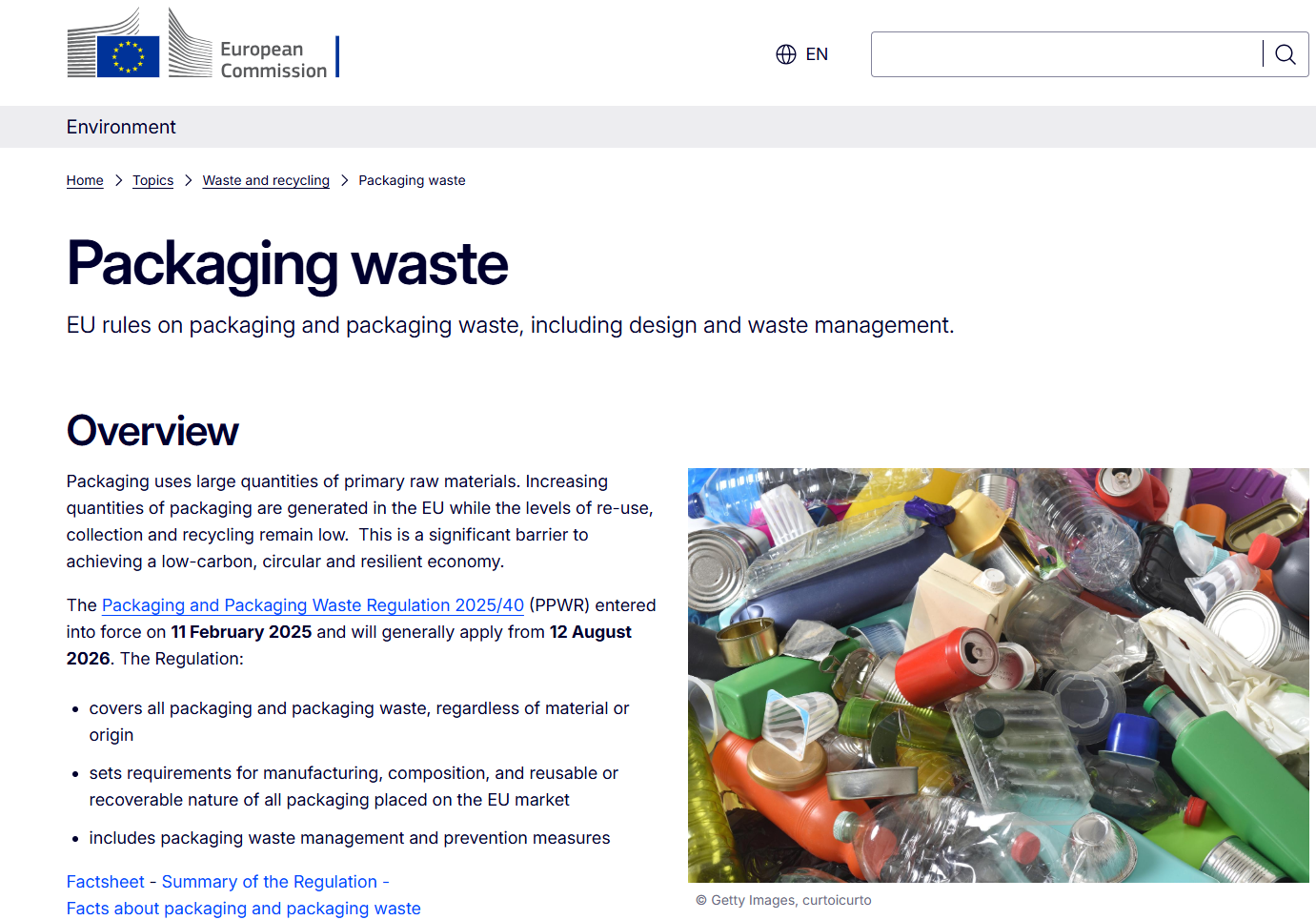
The EU Packaging and Packaging Waste Regulation entered into force on February 11, 2025 and will generally apply from August 12, 2026.

The regulation covers packaging and packaging waste regardless of material or origin. It introduces requirements relating to packaging composition, waste prevention, recyclability, reuse and recoverability.

The final preparation period is increasing pressure on companies to review packaging structures before new orders are placed.

Impact on Sellers

Packaging and custom bag suppliers should prepare clearer information about:

  • Material composition
  • Plastic coatings
  • Lamination
  • Recycled content
  • Packaging weight
  • Separability of components
  • Reuse potential
  • Packaging reduction options

Suppliers should avoid describing paper packaging as automatically recyclable when it contains plastic films, foil, adhesives or difficult-to-separate components.

Impact on Buyers

Buyers should review whether their packaging includes unnecessary:

  • Plastic windows
  • Laminated surfaces
  • Decorative inserts
  • Oversized boxes
  • Individual plastic wrapping
  • Mixed-material accessories

The priority should be to reduce unnecessary material while maintaining the required product protection, presentation and transport performance.


Global Bags, Sustainable Materials and Packaging Procurement Biweekly Update

4) Syntetica Raises US$30 Million to Scale Nylon Recycling

Industry Observation Published: July 16, 2026
Funding Announcement Date: July 16, 2026
Region: France and Europe
Source: Syntetica; Michelin; TechCrunch

What Happened

French recycling company Syntetica raised US$30 million in Series A funding to scale its nylon-recycling technology.

The company is developing a process designed to recover Nylon 6 and Nylon 6,6 from mixed textile waste. The funding will support movement from laboratory development toward industrial production.

Syntetica is also working with Michelin’s Center for Sustainable Materials to install its process in an industrial demonstration environment in France.

Impact on Sellers

Custom bag suppliers should begin monitoring recycled nylon as a potential material for:

However, recycled nylon should not yet be treated as a direct replacement for RPET in every project.

Availability, certification, coating, color MOQ and pricing may remain more restrictive.

Impact on Buyers

Buyers considering recycled nylon should ask:

  • Is the material Nylon 6 or Nylon 6,6?
  • Is the source pre-consumer or post-consumer?
  • What is the recycled-content percentage?
  • Is certification available?
  • Is the fabric coated?
  • What is the MOQ per color?
  • Can the same material be reordered?
  • How does the cost compare with virgin nylon and RPET?

RPET may remain more practical for many price-sensitive projects, while recycled nylon may be more suitable for performance-oriented products.


Global Bags, Sustainable Materials and Packaging Procurement Biweekly Update

5) Recycled Paperboard Supply Expands While Prices Increase

Industry Observation Published: July 13, 2026
Price Changes Effective: July 6 and July 13, 2026
Region: North America
Source: Graphic Packaging; Greif

What Happened

Graphic Packaging launched PaceSetter Ridgeline, marking its entry into the uncoated recycled paperboard market.

The material is intended for applications including folding cartons, laminations, edge protection, tubes, cores and other specialty products.

At the same time, Greif implemented a US$60-per-short-ton increase for uncoated recycled paperboard and a minimum 6.5% increase for selected converted paperboard products.

The company attributed the increases to stronger demand, higher material costs, adhesive costs and transportation expenses.

Impact on Sellers

Packaging suppliers may receive more recycled-paperboard options, but expanded supply does not guarantee lower prices.

Sellers should:

  • Avoid fixing long-term prices without confirming material validity
  • Review paperboard thickness and yield
  • Reduce unnecessary board usage
  • Improve box dimensions
  • Consider uncoated structures where suitable
  • Explain price changes transparently

Impact on Buyers

Buyers should not assume that recycled paperboard is always less expensive than virgin material.

Quotation comparisons should include:

  • Recycled-content percentage
  • Board thickness
  • Stiffness
  • Surface quality
  • Printing performance
  • Protective performance
  • Packing efficiency
  • Material-price validity

A lower-cost board may require additional material or reinforcement, reducing the expected saving.


Global Bags, Sustainable Materials and Packaging Procurement Biweekly Update

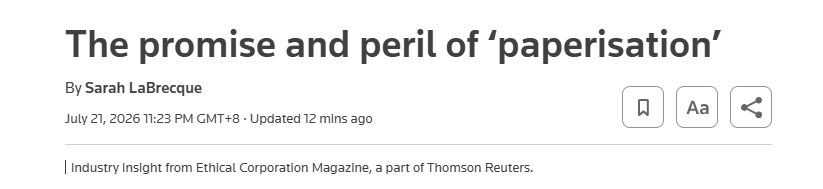
6) Paper Packaging Growth Faces Coating and Recycling Challenges

Industry Observation Published: July 21, 2026
Region: Europe and Global Markets
Source: Reuters Sustainability

What Happened

Brands are increasingly replacing plastic packaging with paper-based alternatives in response to consumer demand and regulatory pressure.

However, many paper packages still require plastic-based barrier coatings, liners or adhesives to provide moisture, grease or oxygen resistance. These additions can make the completed packaging more difficult to recycle.

The use of virgin rather than recycled fibers also creates questions about sourcing, forestry impact and material efficiency.

Impact on Sellers

Packaging suppliers should avoid presenting “paperisation” as a simple material substitution.

They should provide buyers with information about:

  • Base paper composition
  • Recycled-fiber percentage
  • Barrier coating
  • Lamination
  • Adhesives
  • Separability
  • Product-protection performance
  • Recycling limitations

Where possible, suppliers should develop packaging using fewer layers and coatings.

Impact on Buyers

Buyers should evaluate the complete packaging structure rather than only the visible paper surface.

Important questions include:

  • Is the barrier coating necessary?
  • Can the coating be reduced?
  • Is the material accepted by local recycling systems?
  • Can the liner or window be removed?
  • Is recycled paper suitable for the required product?
  • Will reduced coating affect shelf life or moisture protection?

Replacing plastic with paper is only beneficial when the new structure still performs correctly and can be handled by the intended recycling system.


Key Takeaways for Custom Bag and Packaging Buyers

The main development during July 12–26, 2026 was the movement from general sustainability targets toward more measurable implementation.

Suppliers will increasingly need to provide:

  • More complete material specifications
  • Recycled-content information
  • Coating and lamination details
  • Certification scope
  • Production traceability
  • Packaging composition data

Buyers should focus on:

  • More realistic order quantities
  • Fewer unnecessary SKUs
  • Better-documented recycled materials
  • Reduced packaging complexity
  • Clearer environmental claims
  • Materials that match actual product performance

The priority is not to adopt every new material immediately. It is to improve product data, supplier communication and material selection before regulations and buyer requirements become more demanding.

1232(1).jpg

What INITI Is Preparing for Global Buyers

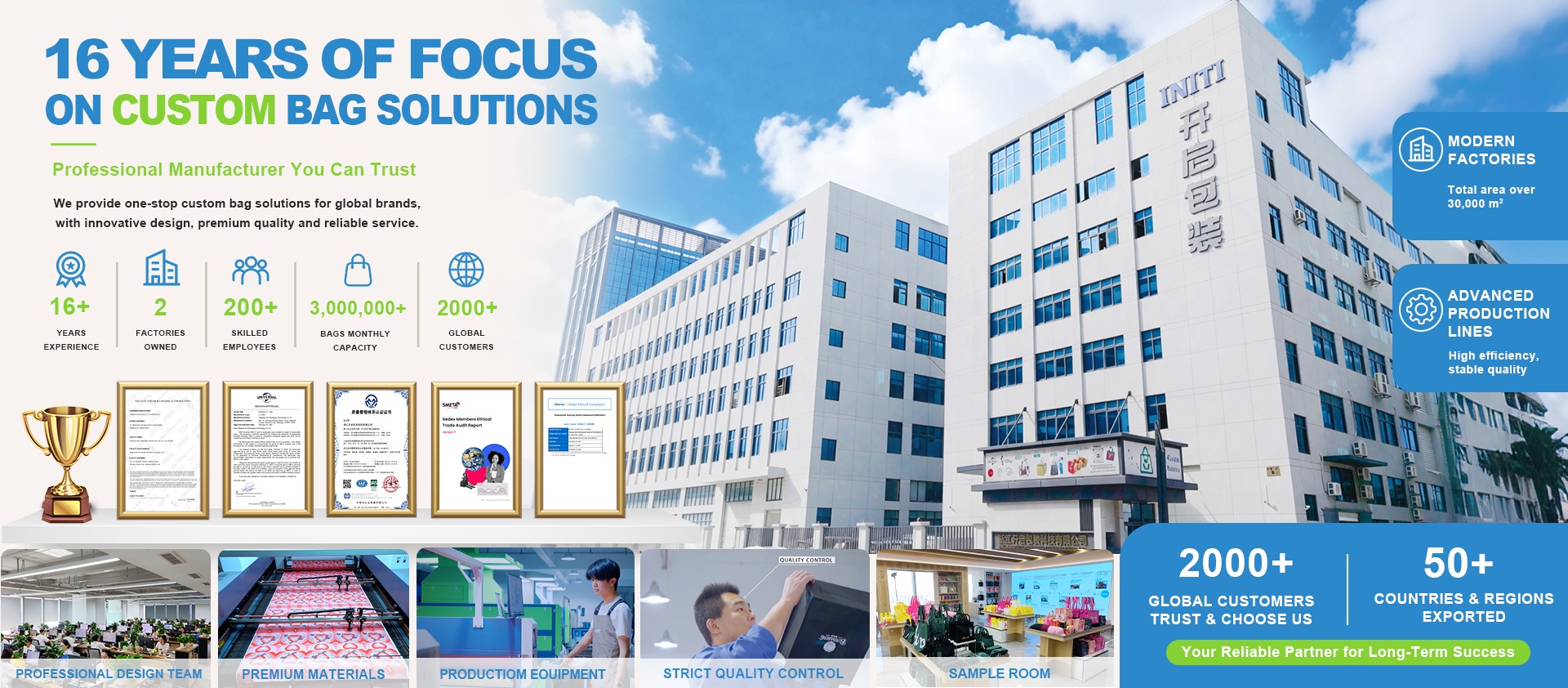
Hangzhou INITI Imp&Exp Co., Ltd. has 16 years of experience in custom bags and packaging, supported by two production facilities and management or compliance systems including SEDEX, DISNEY, GRS, HIGG and ISO9001.

Based on the developments covered in this update, INITI is continuing to strengthen its capabilities in:

  • Recycled and traceable material sourcing
  • RPET and recycled nylon evaluation
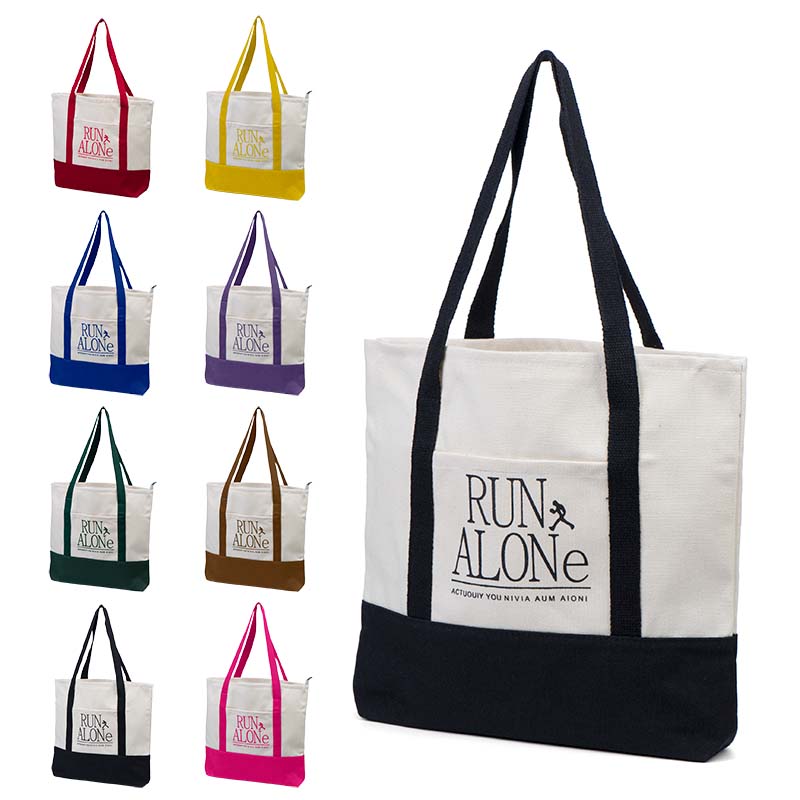
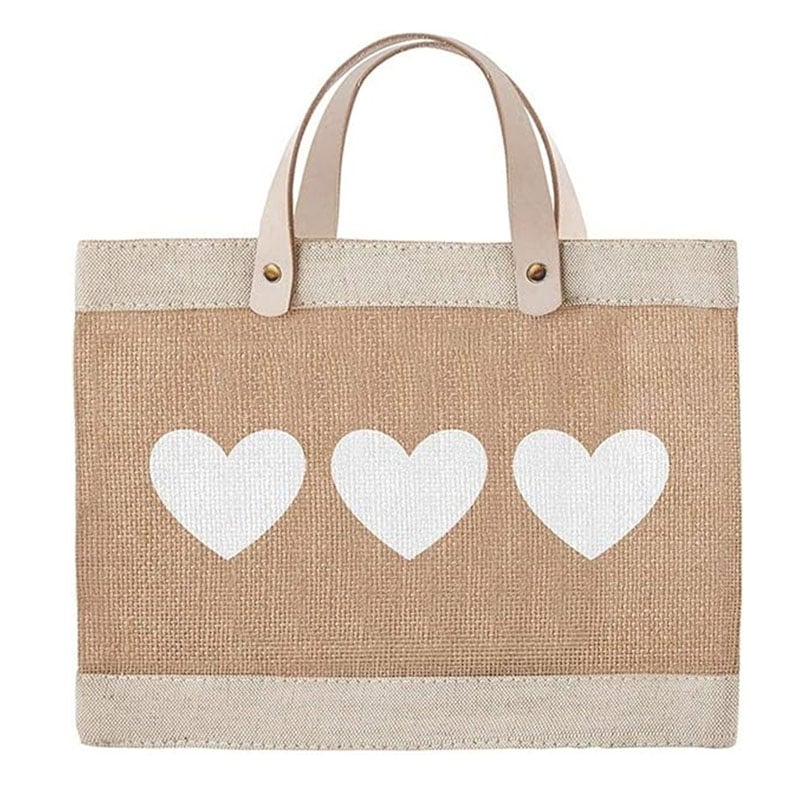
  • Cotton, canvas, jute and non-woven bag development
  • Paper bags, boxes and reduced-coating packaging
  • Material composition and recycled-content documentation
  • Custom sampling, production inspection and export packaging
  • OEM and ODM development for different destination markets

Material availability, certification scope and documentation should be confirmed according to the specific product, production batch and destination-market requirements.

Planning a Custom Bag or Packaging Project?

Buyers preparing new retail, promotional or packaging programs can contact INITI for material and specification support.

To receive a more accurate recommendation and quotation, please provide:

  • Product type and intended application
  • Target market
  • Preferred material or recycled-content requirement
  • Estimated order quantity
  • Logo and packaging requirements
  • Required certification or compliance documents

INITI can compare different materials, structures and packaging options to help buyers balance performance, cost, customization and market requirements.

Send us your project requirements to discuss sampling, MOQ, production lead time and bulk-order options.

Related Blog Articles

Related Product

Start Your Custom Bag Project Today

Tell us your product type, size, material, quantity, and logo requirements. Our team will provide free design support, custom sample development, and a tailored quotation to help turn your idea into a reliable bulk production solution.

· Free design support
· Custom samples
· OEM & ODM service
· Fast response

Contact Us

Get a Free Quote

Our representative will contact you soon.
Email
Name
Company Name
Message
0/1000
Inquiry Inquiry Email Email Tel Tel WhatsApp WhatsApp

Get a Free Quote

Our representative will contact you soon.
Email
Name
Company Name
Message
0/1000