A garment bag may look like a simple cover, but the material can change how well it protects clothing, how it feels in use, and how customers perceive the product.
Imagine two garment bags hanging side by side. One has a smooth, transparent surface that lets you see the clothing inside. The other has a soft, fabric-like appearance that feels more natural and understated. Both can protect garments from dust, but they serve different needs.
This is where the choice between PEVA and cotton becomes important.
PEVA garment bags are often selected for their moisture resistance, easy-clean surface, and visibility. Cotton garment bags are valued for their breathability, textile appearance, and suitability for reusable clothing storage.
However, the difference goes beyond simply choosing plastic or fabric. The right option depends on the type of clothing, storage environment, expected product lifespan, and how the garment bag will be used.
In this guide, we’ll compare PEVA and cotton garment bags from a practical purchasing perspective, helping apparel brands, retailers, and businesses understand which material may be more suitable for their products.
What Is a PEVA Garment Bag?
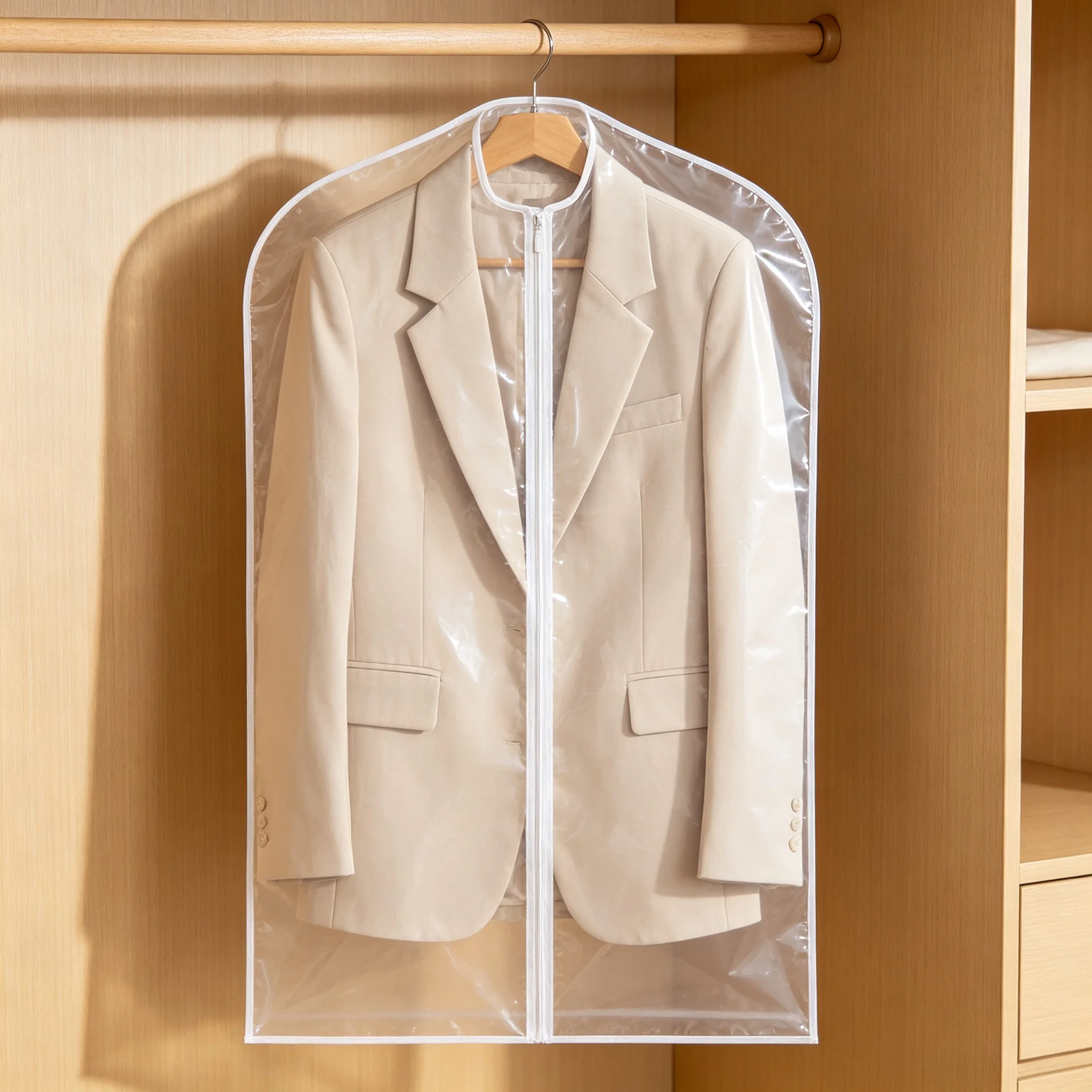
PEVA stands for polyethylene vinyl acetate. It is a flexible, non-chlorinated plastic material commonly used in products that require a smooth, flexible, and moisture-resistant surface.
In garment bags, PEVA is often used as a transparent or semi-transparent protective cover. Its appearance makes it easy to identify the clothing inside without opening the bag.
Unlike woven fabrics, PEVA does not have a traditional textile structure. It forms a continuous film that helps protect clothing from dust, splashes, and direct contact with external moisture.
Key Characteristics of PEVA Garment Bags
Moisture resistance
PEVA film generally provides a water-resistant barrier, making it useful when clothing needs protection from splashes or damp external conditions.
However, water resistance does not mean that the entire garment bag is waterproof. Stitching, zippers, hanger openings, and other construction details may still allow moisture to enter.
Easy-to-clean surface
The smooth surface can usually be wiped clean with a damp cloth. This is useful for garment bags that are frequently handled in retail environments, warehouses, or during transportation.
Visibility
Transparent PEVA allows users to identify garments without opening the bag. This can be particularly useful when organizing multiple clothing items.
Limited breathability
PEVA film allows much less air exchange than ordinary cotton fabric. This can be useful for temporary protection, but it requires more care when garments are stored for extended periods.
Flexible construction
PEVA can be used in lightweight garment covers and combined with other materials to create different designs, such as clear-front garment bags or bags with fabric trim.
What Is a Cotton Garment Bag?
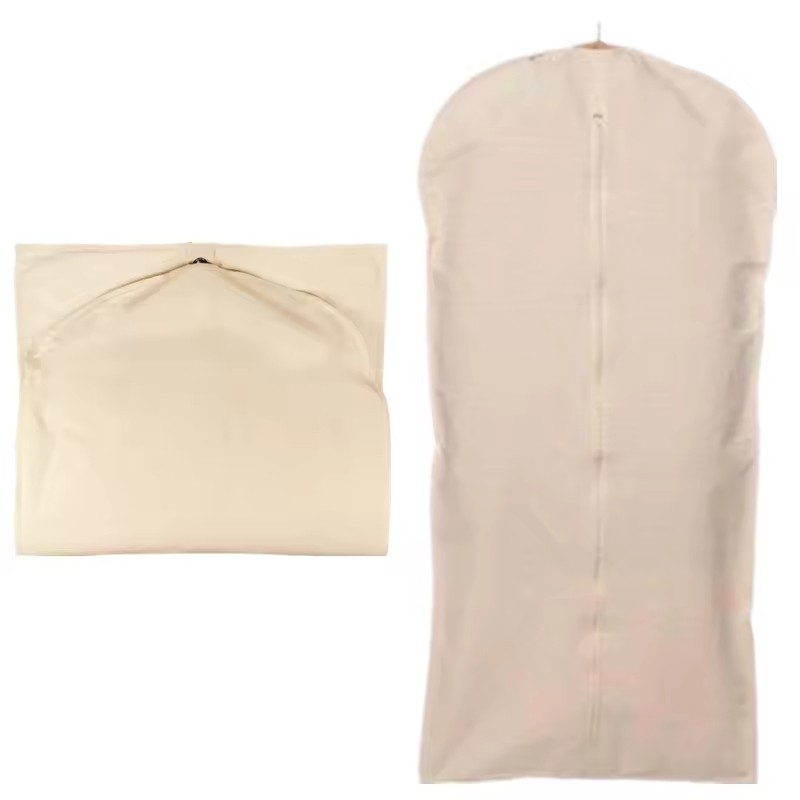
Cotton garment bags are made from cotton fabric, a natural textile fiber widely used in clothing, storage products, and reusable packaging.
Unlike PEVA film, cotton fabric has a woven or knitted structure that allows air to pass through. This makes it a practical option for clothing storage when ventilation is important.
Cotton garment bags are available in different fabric weights, weaves, and finishes. Lightweight cotton may be suitable for basic dust covers, while heavier cotton or cotton canvas can provide a more substantial appearance.
Key Characteristics of Cotton Garment Bags
Breathable fabric
Cotton fabric generally allows more air circulation than PEVA film. This can help reduce the risk of stale odors associated with poorly ventilated storage, although it does not eliminate moisture or mold risks.
Soft textile surface
Cotton has a natural fabric feel that works well with clothing-related products. It can also create a more understated and premium appearance.
Reusable construction
A well-made cotton garment bag can be used repeatedly. Its lifespan depends on fabric quality, stitching, washing, storage conditions, and how frequently it is handled.
Suitable for branding
Cotton fabric can support printing, embroidery, woven labels, and other decorative details, depending on the fabric construction and chosen production method.
Limited moisture protection
Cotton absorbs moisture rather than acting as a waterproof barrier. It is therefore less suitable when the main requirement is protecting garments from direct splashes or wet external surfaces.
PEVA vs. Cotton Garment Bags: Key Differences at a Glance
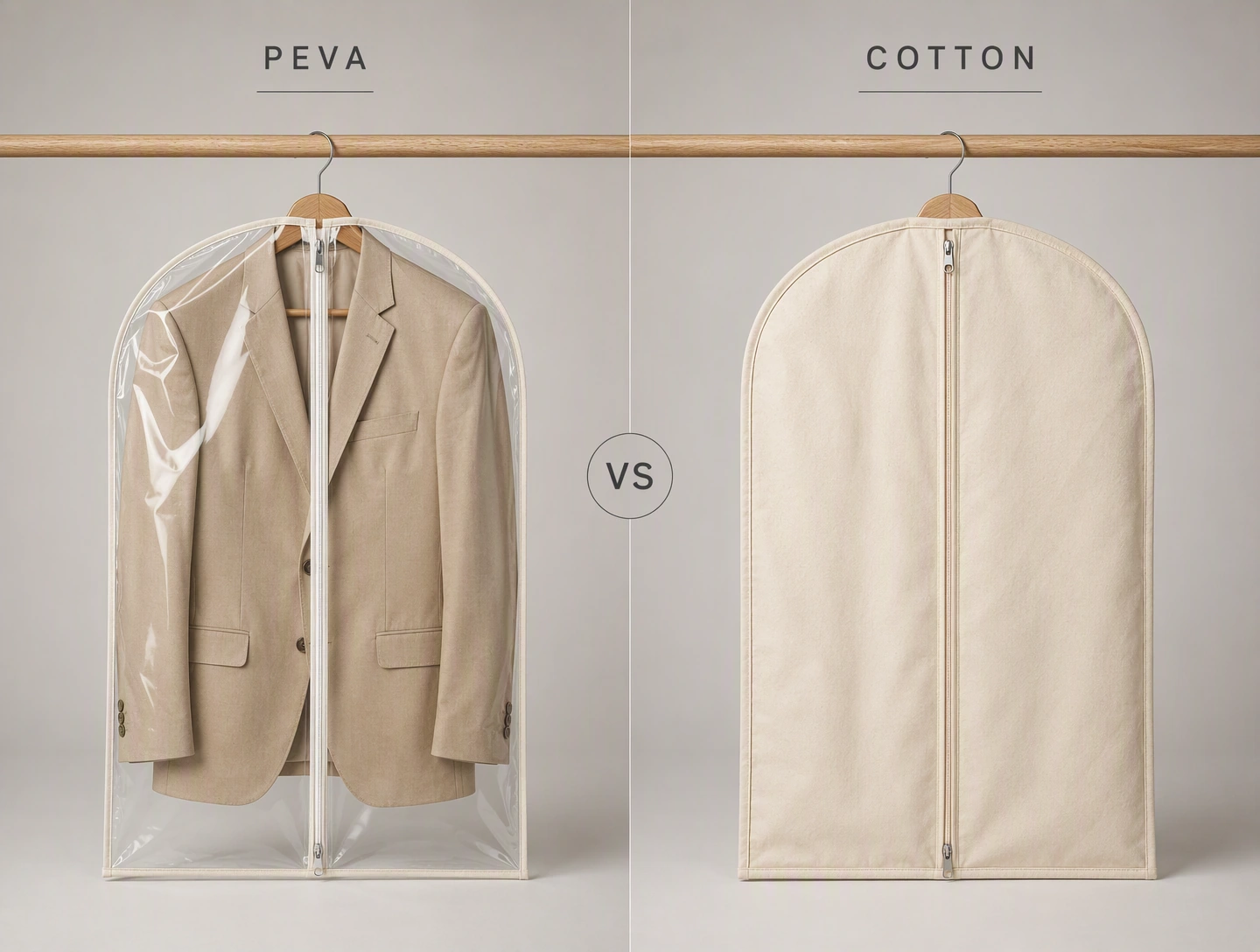
The most important difference is how each material performs in the environment where the garment bag will be used.
| Feature |
PEVA Garment Bags |
Cotton Garment Bags |
| Material type |
Flexible plastic film |
Natural textile fiber |
| Water resistance |
Generally good |
Limited |
| Breathability |
Low |
Generally good |
| Dust protection |
Good when properly closed |
Good when properly closed |
| Visibility |
Transparent or semi-transparent options |
Usually opaque |
| Surface cleaning |
Usually easy to wipe |
Depends on fabric and care instructions |
| Texture |
Smooth, plastic-like |
Soft, fabric-like |
| Long-term storage |
Requires attention to ventilation |
Often suitable when storage conditions are dry |
| Branding |
Printing and combined-material options |
Printing, embroidery, labels |
| Environmental considerations |
Plastic-based; disposal depends on local systems |
Renewable fiber; environmental impact depends on sourcing and production |
Neither material is automatically the right choice for every garment bag. PEVA emphasizes surface protection and visibility, while cotton emphasizes fabric breathability and textile presentation.
Water Resistance: Which Material Protects Clothing Better?
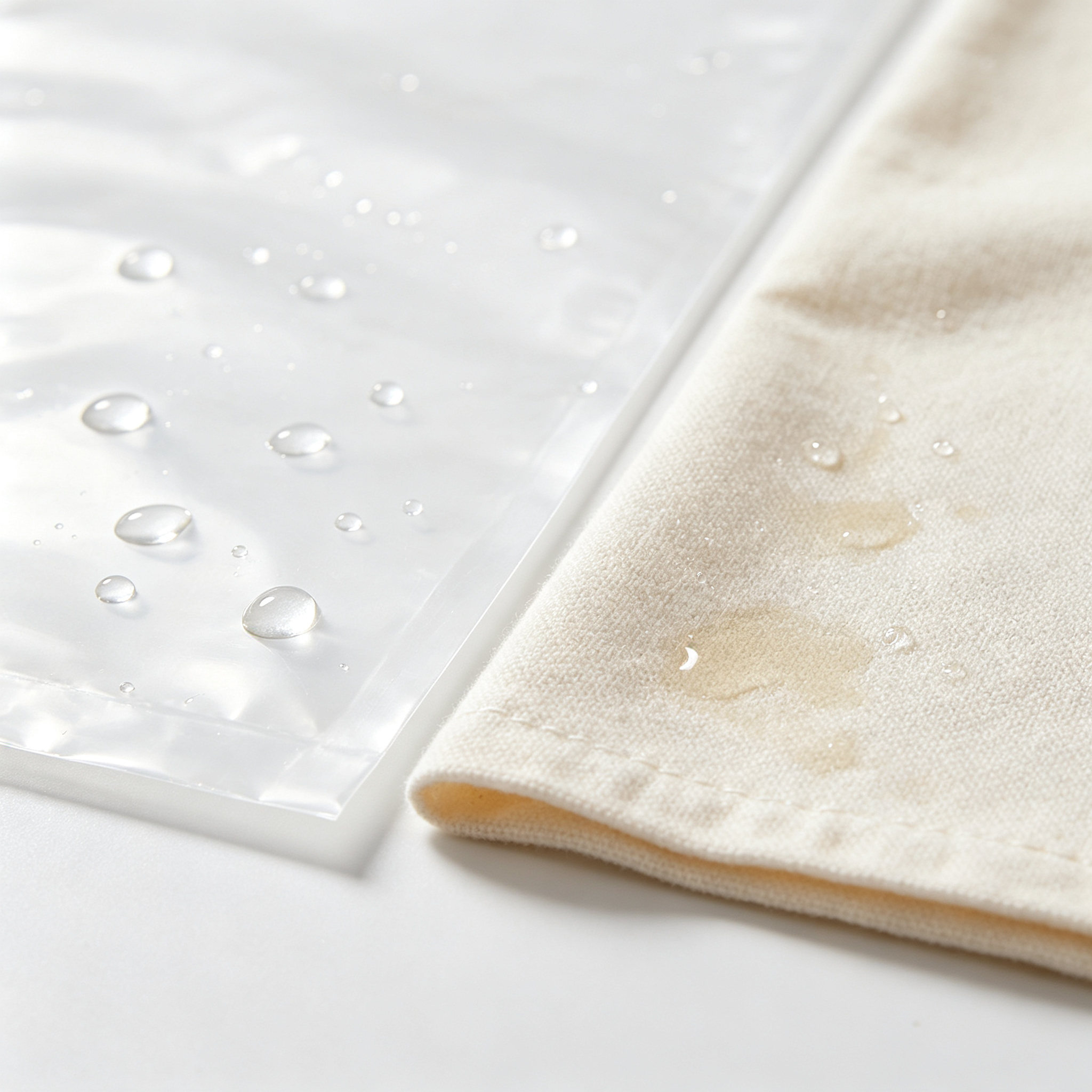
Water resistance is one of the clearest differences between PEVA and cotton garment bags.
PEVA: A Barrier Against External Moisture
PEVA film has a continuous surface that helps prevent water from passing directly through the material under ordinary splash exposure.
This can be useful when garment bags are used for:
- Temporary clothing protection during transportation
- Retail handling where bags may encounter spills
- Protecting garments from light splashes
- Covering clothing in areas where external moisture is a concern
However, PEVA should not be treated as a complete moisture-control solution.
A garment bag may still allow moisture to enter through its zipper, seams, or hanger opening. In addition, moisture already present inside the bag can become trapped if ventilation is limited.
Cotton: Absorbent Rather Than Waterproof
Cotton fabric absorbs moisture and allows air to circulate. It does not provide the same water barrier as PEVA film.
If a cotton garment bag becomes wet, the fabric may retain moisture until it dries. This is why cotton bags are generally better suited to dry indoor storage than to environments where garments may be exposed to splashes.
What Should Buyers Consider?
If the primary concern is external water exposure, PEVA may be more suitable.
If the garment bag will be used in a dry wardrobe or for routine clothing storage, cotton may provide sufficient protection against dust while allowing better air exchange.
For products requiring both moisture resistance and breathability, buyers may also consider a combination of materials rather than relying on one material alone.
Breathability and Long-Term Clothing Storage
A garment bag protects clothing from external conditions, but the environment inside the bag also matters.
This is especially important when garments are stored for weeks or months rather than being transported for a short period.
Why Breathability Matters
Clothing can retain moisture after wearing, cleaning, or exposure to humid conditions.
If a garment is placed inside a tightly enclosed cover before it is completely dry, moisture may remain trapped. Under suitable conditions, this can contribute to unpleasant odors or mold growth.
Cotton fabric allows more air exchange than PEVA film, making it a practical option for many dry, indoor storage situations.
However, cotton does not actively remove moisture from a garment or guarantee mold prevention. The clothing should still be clean and completely dry before storage.
Is PEVA Suitable for Long-Term Storage?
PEVA garment bags can be used for storage, but the storage conditions and garment type should be considered carefully.
For example, a PEVA cover may work well for temporary wardrobe protection or organizing clothing that is regularly taken out and used.
For extended storage, particularly in humid environments, buyers should consider whether the bag design provides adequate ventilation and whether the garment itself is suitable for enclosed storage.
A Practical Storage Tip
Regardless of the material, avoid sealing damp clothing inside a garment bag.
For valuable suits, wedding dresses, wool garments, or other delicate clothing, follow the garment manufacturer's storage recommendations rather than assuming that a particular bag material will prevent every type of damage.
Which Material Is Better for Different Types of Clothing?
The type of garment being stored can be just as important as the material of the garment bag.
Suits and Business Clothing
Cotton garment bags are a practical option for suits that are stored in a dry wardrobe and need regular ventilation.
PEVA covers may be useful for temporary protection during transportation or when visibility is important.
For business travel, the overall bag construction also matters. A garment bag with appropriate length, a secure closure, and a suitable hanger opening may be more useful than choosing a material based on one feature alone.
Wedding Dresses and Formalwear
Wedding dresses often require protection from dust, handling, and accidental contact with external surfaces.
Cotton garment bags can provide a fabric-based protective cover, while PEVA options may help protect against external splashes and allow the garment to remain visible.
For delicate, embellished, or high-value dresses, the garment's fabric, weight, and storage requirements should guide the decision.
A transparent cover can make identification easier, but prolonged enclosed storage should be considered carefully.
Wool and Cashmere Clothing
Wool and cashmere garments are often stored for extended periods, particularly between seasons.
A breathable cotton garment bag may be suitable for clean, dry garments stored in a stable indoor environment.
However, cotton bags do not prevent insects from entering unless the overall design and storage conditions provide additional protection.
For seasonal storage, buyers should consider garment cleanliness, pest prevention, and the condition of the storage area.
Retail Clothing and Inventory
For retailers handling multiple garments, PEVA covers can provide visibility that makes product identification easier.
Cotton garment bags may be more appropriate when the packaging is intended to become a reusable accessory for customers.
The choice depends on whether the main priority is inventory handling, presentation, garment storage, or a combination of these functions.
Appearance and Brand Presentation
For businesses, a garment bag is not always just a protective cover. It can also become part of the customer experience.
The material influences how customers perceive the product before they even open it.
PEVA: Clean, Practical, and Visible
Transparent PEVA garment bags create a functional appearance.
They allow customers to see the garment inside, making them useful for product identification, retail storage, and organized wardrobe systems.
PEVA may be suitable for brands that want a simple, modern look without adding a large amount of decorative material.
Depending on the construction, PEVA garment bags can also incorporate colored trims, printed logos, or fabric components.
Cotton: Natural and Textile-Focused
Cotton garment bags offer a softer, more traditional textile appearance.
They can complement apparel brands that emphasize craftsmanship, reusable packaging, or a natural visual identity.
Cotton also provides a surface suitable for different branding approaches, including screen printing, embroidery, and labels.
The final appearance depends on fabric weight, weave, color, finishing, and the selected decoration method.
Which Is More Suitable for Premium Packaging?
Neither material automatically creates a premium product.
A well-designed PEVA garment bag with clean finishing and carefully selected details can look professional. A cotton garment bag with poor stitching or unsuitable fabric may not deliver the intended quality.
For premium clothing packaging, buyers should consider the complete design, including material, color, logo placement, zipper quality, and overall construction.
Durability and Reusability: What Should Buyers Know?
A garment bag's lifespan depends on more than its material.
Fabric quality, thickness, seams, closures, storage conditions, and frequency of use all influence durability.
PEVA Durability
PEVA garment bags can be lightweight and flexible, but their performance depends on the film formulation and thickness.
Repeated folding, pulling, exposure to heat, or contact with sharp objects may cause damage.
For frequently used garment bags, buyers should assess the film's resistance to tearing, the strength of the seams, and the durability of the zipper or other closure.
Cotton Durability
Cotton garment bags can withstand repeated use when made with suitable fabric and construction.
Heavier cotton fabrics may provide a more substantial feel, but fabric weight alone does not determine durability.
Seam construction, stitching density, reinforcement around the hanger opening, and the quality of the closure should also be evaluated.
Cotton bags may require washing or other care, depending on how they are used.
Reusability and Total Cost
For bulk purchasing, the lowest unit price is not necessarily the lowest long-term cost.
A reusable garment bag may provide value over multiple uses, while a simpler option may be more appropriate for short-term packaging.
Buyers should compare:
- Initial purchase price
- Expected number of uses
- Cleaning and maintenance requirements
- Replacement frequency
- Storage and transportation costs
A practical evaluation should focus on the cost per use rather than the purchase price alone.
Environmental Considerations: Is PEVA or Cotton More Eco-Friendly?
Environmental impact is an important consideration for brands developing reusable garment bags.
However, it is difficult to determine which material has a lower overall environmental impact without considering sourcing, manufacturing, product lifespan, and end-of-life disposal.
PEVA and Plastic-Based Materials
PEVA is a plastic-based material and is not generally considered biodegradable.
It is often described as a PVC alternative because it does not contain chlorine as part of its polymer structure. However, being PVC-free does not automatically mean that a product is harmless, recyclable, or environmentally preferable in every situation.
Recycling options depend on the material formulation, local collection systems, and whether suitable processing facilities accept the product.
Cotton and Natural Fibers
Cotton is a renewable natural fiber and can biodegrade under suitable conditions.
However, cotton production can involve significant water, land, energy, and chemical inputs, depending on how it is grown and processed.
The environmental profile of a cotton garment bag also depends on fabric processing, dyeing, transportation, and how many times the bag is reused.
Organic cotton may be relevant for brands with specific sourcing goals, but the claim should be supported by appropriate documentation.
How Should Businesses Make an Informed Choice?
Instead of relying only on labels such as “eco-friendly” or “green,” buyers should evaluate the complete product.
Consider the following questions:
- Is the bag designed for repeated use?
- Can the material withstand the expected use conditions?
- Are recycled or certified material options available?
- What disposal or recycling options exist in the target market?
- Can environmental claims be supported by documentation?
For brands communicating sustainability benefits, clear and verifiable claims are more useful than broad statements that one material is always better for the environment.
Customization Options for PEVA and Cotton Garment Bags
For B2B buyers, material selection is only one part of product development.
The garment bag's dimensions, opening, closure, visibility, branding, and packaging can all affect its suitability for a particular market.
Customization for PEVA Garment Bags
PEVA garment bags may support:
- Transparent or semi-transparent designs
- Different film thicknesses
- Printed logos or graphic elements
- Colored fabric trims
- Zipper or other closure options
- Combined-material construction
Printing methods and achievable results depend on the film formulation and surface characteristics. Buyers should confirm compatibility and approve a production sample before placing a bulk order.
Customization for Cotton Garment Bags
Cotton garment bags may support:
- Different fabric weights and weaves
- Natural or dyed fabric colors
- Screen-printed logos
- Embroidery
- Woven labels and care labels
- Custom dimensions and closure designs
For cotton bags, fabric selection should consider both appearance and intended use. A lightweight cotton fabric may be appropriate for a simple dust cover, while a heavier fabric may be preferred for a more substantial reusable product.
Design Features Worth Considering
Hanger opening
The opening should fit the intended hanger and garment design. Reinforcement may be necessary for heavier garments or frequent handling.
Zipper quality
A zipper should open and close smoothly without catching the garment fabric. Its placement should also allow convenient access.
Transparent window
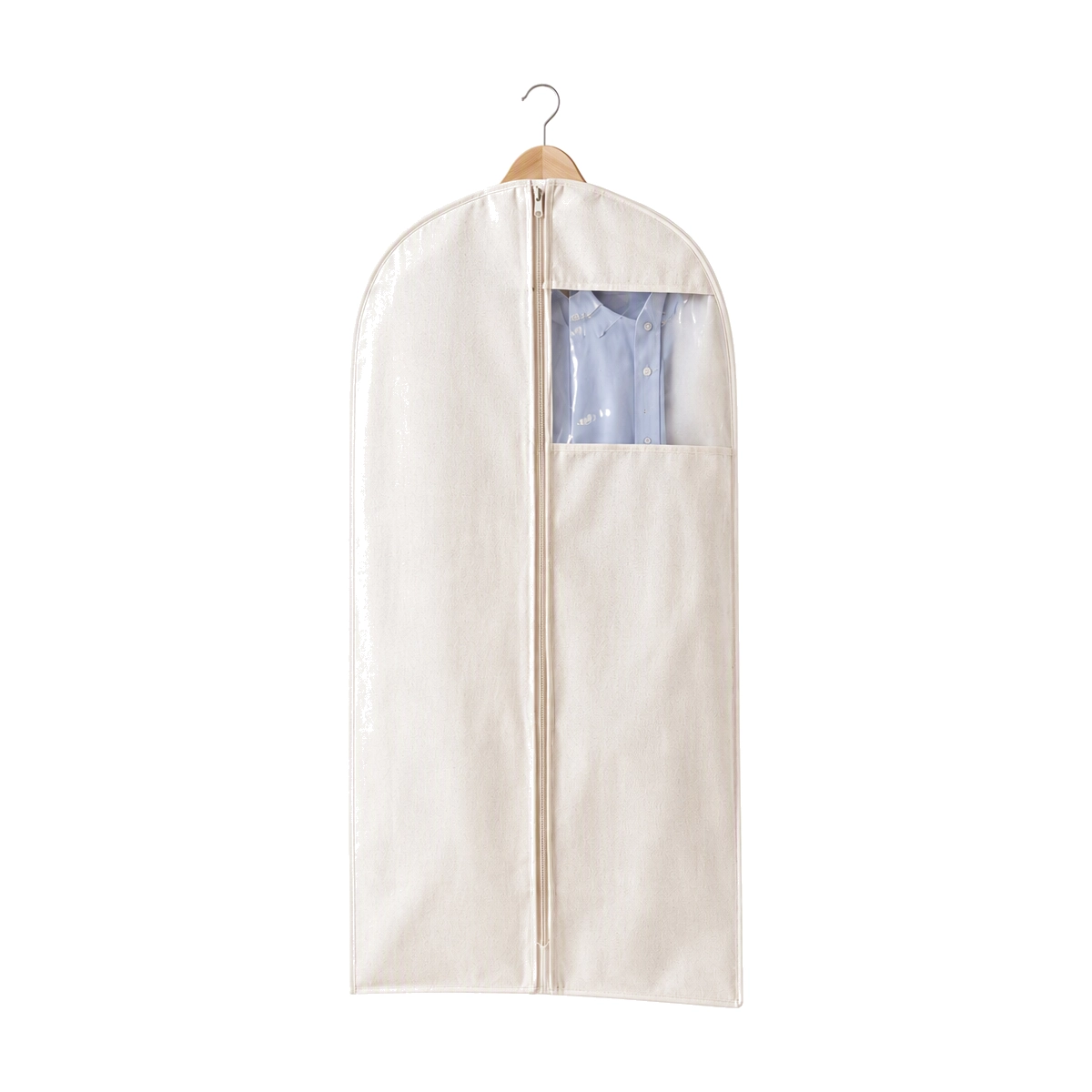
A clear window can help identify garments while retaining a fabric-based main body. The window material and size should be selected according to visibility and storage requirements.
Bag dimensions
The garment bag should provide enough room for the clothing without excessive excess material. Long dresses, suits, coats, and uniforms may require different dimensions.
Logo placement
The logo should remain visible without interfering with the bag's practical function. For transparent PEVA, placement and printing contrast are especially important.
How to Choose Between PEVA and Cotton Garment Bags for Your Business
The most useful way to select a material is to start with the product's intended use rather than the material's marketing claims.
Choose PEVA When:
- Moisture resistance is an important requirement.
- Customers need to identify garments through the cover.
- The bag will be used for temporary protection or handling.
- Easy surface cleaning is a priority.
- A lightweight, transparent design fits the product concept.
Choose Cotton When:
- Air circulation is important for the intended storage conditions.
- The bag will be used as a reusable clothing accessory.
- A natural textile appearance supports the brand identity.
- Printing or embroidery is an important design feature.
- The product is intended for dry indoor storage.
Consider a Combination When:
- You want a fabric-based bag with a transparent viewing panel.
- Visibility and textile appearance are both important.
- Different parts of the bag need different functional properties.
- The product requires a balance between protection and presentation.
A combined-material design may provide more flexibility, but it also introduces additional considerations, including material compatibility, seam construction, cost, and recyclability.
What Should Buyers Check Before Placing a Bulk Order?
Before confirming a garment bag order, buyers should translate their requirements into clear product specifications.
A sample that looks suitable in a photograph may perform differently during actual use.
Material Specifications
For PEVA, confirm the film type, thickness, transparency, and intended use.
For cotton, confirm the fabric composition, weight, weave, color, and care requirements.
If specific environmental or material claims are required, request relevant supporting documentation.
Construction and Function
Check the finished dimensions, hanger opening, zipper, seams, handles, and any additional pockets or windows.
Test the bag with the actual garment whenever possible. This helps identify issues such as insufficient length, difficult access, or excessive material around the clothing.
Sample Evaluation
A pre-production sample can help buyers evaluate:
- Appearance and hand feel
- Garment fit
- Closure operation
- Printing or embroidery quality
- Seam and reinforcement quality
- Suitability for the intended storage or transport conditions
For larger orders, agreed specifications and quality requirements should be documented before production begins.
FAQ
Are PEVA garment bags waterproof?
PEVA film is generally water-resistant and helps protect against splashes. However, the complete garment bag may not be waterproof because seams, zippers, and openings can allow water to enter.
Are cotton garment bags better for long-term storage?
Cotton garment bags can be suitable for long-term storage in dry, stable environments because they allow more air circulation than PEVA film. Garments should be clean and completely dry before storage.
Can PEVA garment bags cause mold?
PEVA does not automatically cause mold. However, because it is less breathable than cotton, moisture trapped inside a closed bag may create conditions that encourage mold growth. Properly drying garments and managing storage conditions are important.
Can cotton garment bags protect clothing from dust?
Yes. A properly designed cotton garment bag can help protect clothing from dust and everyday surface contamination. The level of protection depends on the fabric construction and how securely the bag closes.
Which material is better for custom garment bags?
PEVA may suit designs requiring transparency and moisture resistance, while cotton may suit breathable, fabric-based packaging. The best option depends on the garment, intended use, branding, and budget.
Can PEVA and cotton be combined in one garment bag?
Yes. A garment bag can combine a cotton or other fabric body with a PEVA viewing window. This allows buyers to combine a textile appearance with visibility, although construction and material compatibility should be evaluated.
Is cotton always more environmentally friendly than PEVA?
No. Cotton is a renewable natural fiber, but its environmental impact depends on cultivation, processing, and product lifespan. PEVA is plastic-based and is not generally biodegradable. A fair comparison should consider sourcing, durability, reuse, and disposal.
What information should I provide when requesting a custom garment bag quotation?
Provide the intended garment type, bag dimensions, preferred material, quantity, closure requirements, logo artwork, and any special packaging or compliance requirements. A reference image or sample can also help clarify the design.
Conclusion
PEVA and cotton garment bags serve different purposes, and the right choice depends on what your customers need from the product.
PEVA is often suitable when moisture resistance, visibility, and easy cleaning are important. Cotton is often suitable when breathability, textile appearance, and reusable clothing storage are the main priorities.
For apparel brands, retailers, promotional merchandise companies, and other B2B buyers, material selection should also take into account garment type, product design, branding, expected use, and total cost.
At INITI, we support businesses looking for customized garment bag solutions, including different materials, sizes, closures, windows, and branding options. Whether you are developing garment bags for retail packaging, wardrobe storage, or branded clothing accessories, selecting the right specifications from the beginning can help create a product that meets both practical requirements and brand expectations.
Related Products



 Hot News