

Introduction
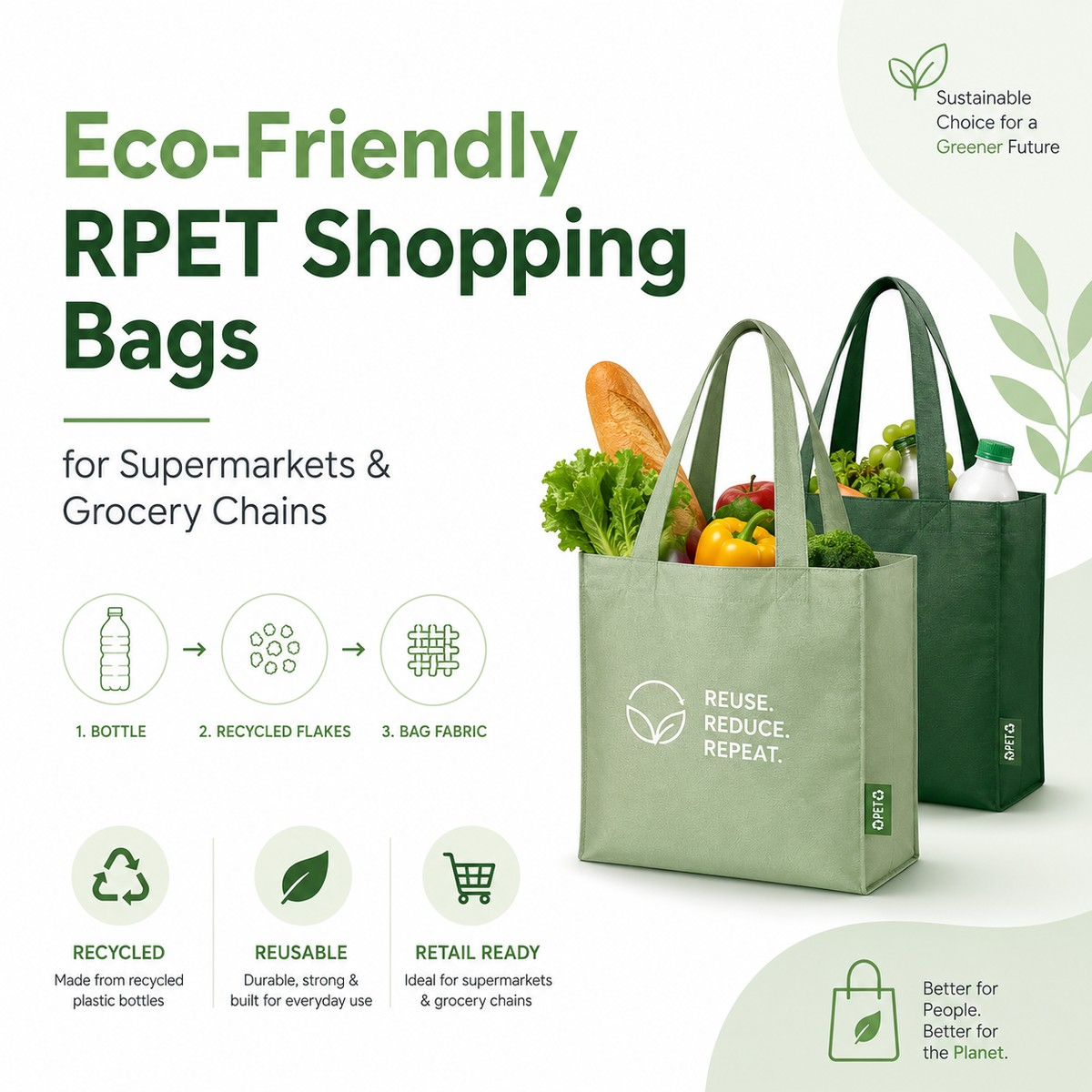
Corporate sustainability mandates and single-use plastic restrictions across North America, the European Union, and Asia-Pacific have reshaped retail packaging procurement. Commercial purchasing managers and supermarket sourcing directors frequently weigh two leading reusable substrates: Recycled Polyethylene Terephthalate (RPET) and natural cotton canvas. While end consumers value eco-conscious materials, B2B procurement teams must balance structural load capacity, unit cost, print fidelity, and verifiable chain-of-custody documentation.
Founded in 2010, Hangzhou Initi Imp&Exp Co., Ltd. (Zhejiang Initi Packaging Technology Co., Ltd.) has over 16 years of OEM and ODM bag manufacturing experience, supplying custom reusable bags to clients across 158 countries—including global retail and consumer brands such as Walmart, McDonald's, Disney, and Coca-Cola. This B2B sourcing guide compares RPET vs canvas tote bags wholesale across material structure, customization methods, and compliance verification.
Technical Comparison: Material Composition & Structural Integrity
Evaluating commercial tote bags requires matching the textile substrate to the intended retail environment. RPET fabric is produced from recycled post-consumer plastic bottles processed into filament yarns and woven or non-woven substrates (including laminated RPET, RPET Oxford, and stitch-bonded RPET). Conversely, cotton canvas is a natural woven textile graded by fabric weight (commonly specified in ounces per square yard from 6oz to 16oz, or GSM).
In supermarket and grocery environments where moisture resistance and wipe-clean hygiene are essential, laminated RPET offers an inherent hydrophobic barrier against chilled condensation and liquid spills. Cotton canvas, by contrast, provides a soft, natural hand-feel and high tear endurance suited for fashion retail, bookstores, corporate gifting, and lifestyle merchandising, and can be washed repeatedly for multi-year reuse.

Customization, Printing Techniques, and MOQ Planning
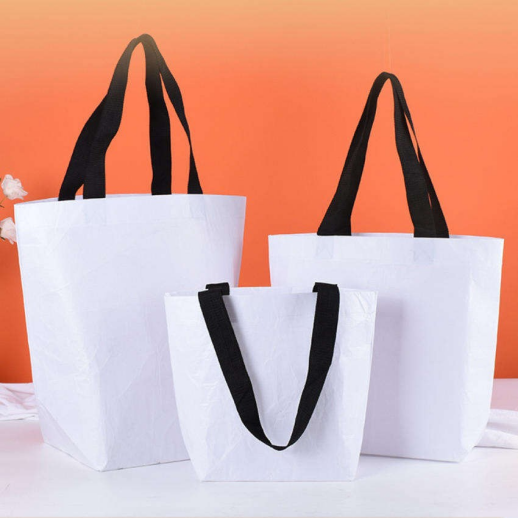
Both RPET and cotton canvas support comprehensive OEM/ODM customization at Hangzhou Initi, with standard Minimum Order Quantities (MOQs) starting from 500 pieces depending on material and structure:
1. Laminated RPET Printing (Gravure / Digital / Sublimation): Supports edge-to-edge full-color CMYK graphics, photographic retail branding, and glossy or matte film lamination.
2. Silkscreen Printing (Canvas & Non-Laminated RPET): Ideal for spot-color Pantone logos with crisp opacity and cost efficiency on bulk promotional runs.
3. Heat Transfer & Embroidery (Canvas): Delivers textured, high-perceived-value branding for boutique retail and VIP merchandise collections.
Table: Engineering & Procurement Benchmark (RPET vs Cotton Canvas)
Evaluation Dimension |
RPET Tote Bags (Laminated / Woven / Oxford) |
Cotton Canvas Tote Bags (Natural / Organic) |
B2B Procurement Recommendation |
Material Origin |
Recycled Post-Consumer PET Bottles |
Natural / Organic Woven Cotton Fibers |
RPET for plastic-diversion ESG goals; Canvas for natural fiber branding |
Standard Factory MOQ |
500 pcs (Custom OEM/ODM) |
500 pcs (Custom OEM/ODM) |
Both support trial runs and high-volume container programs |
Water & Spill Resistance |
High (with BOPP film lamination or PU coating) |
Moderate/Low (absorbs moisture unless coated) |
RPET for grocery & cold-chain retail; Canvas for dry merchandise |
Primary Printing Methods |
Gravure lamination, sublimation, screen print |
Silkscreen, heat transfer, digital print, embroidery |
RPET for full-bleed CMYK art; Canvas for tactile heritage logos |
Key Certifications |
GRS (Global Recycled Standard), REACH |
OEKO-TEX Standard 100, REACH, BSCI |
Verify batch documentation per target import market |
Sampling & Lead Time |
3–7 days sample; 15–30 days bulk production |
3–7 days sample; 15–30 days bulk production |
Confirm artwork and gusset load structure during sampling |
Regulatory Compliance & Certification Verification for Global Buyers
Deploying eco-friendly retail bags into European and North American markets requires authentic compliance documentation. Hangzhou Initi holds GRS (Global Recycled Standard) certification audited by Bureau Veritas (BVCPS), OEKO-TEX Standard 100 certification for material safety, ISO 9001:2015 quality management certification, BSCI and SEDEX social compliance audits, HIGG index participation, and REACH chemical compliance support.
When sourcing RPET bags for supermarket chains or corporate programs, buyers can specify GRS-certified materials to verify recycled content traceability, alongside OEKO-TEX Standard 100 testing to ensure fabrics are free from harmful substances.
Conclusion & Custom Sourcing Action Plan
Selecting between RPET and canvas tote bags depends on your retail channel and brand positioning. For supermarket checkout programs, grocery chains, and weather-resistant promotional totes, RPET delivers full-bleed graphic versatility and verifiable plastic recycling value. For apparel boutiques, lifestyle brands, and premium corporate events, cotton canvas offers enduring tactile appeal.
Partner with Hangzhou Initi for Certified OEM/ODM Bag Manufacturing:
Experience & Scale: Founded in 2010, 10,000㎡ automated manufacturing facility, exporting to 158 countries
Fast Prototyping: Free design support and custom sample development in 3–7 days
Authoritative Audits: GRS, OEKO-TEX Standard 100, BSCI, SEDEX, ISO 9001:2015, and Disney FAMA (FAC-048260)