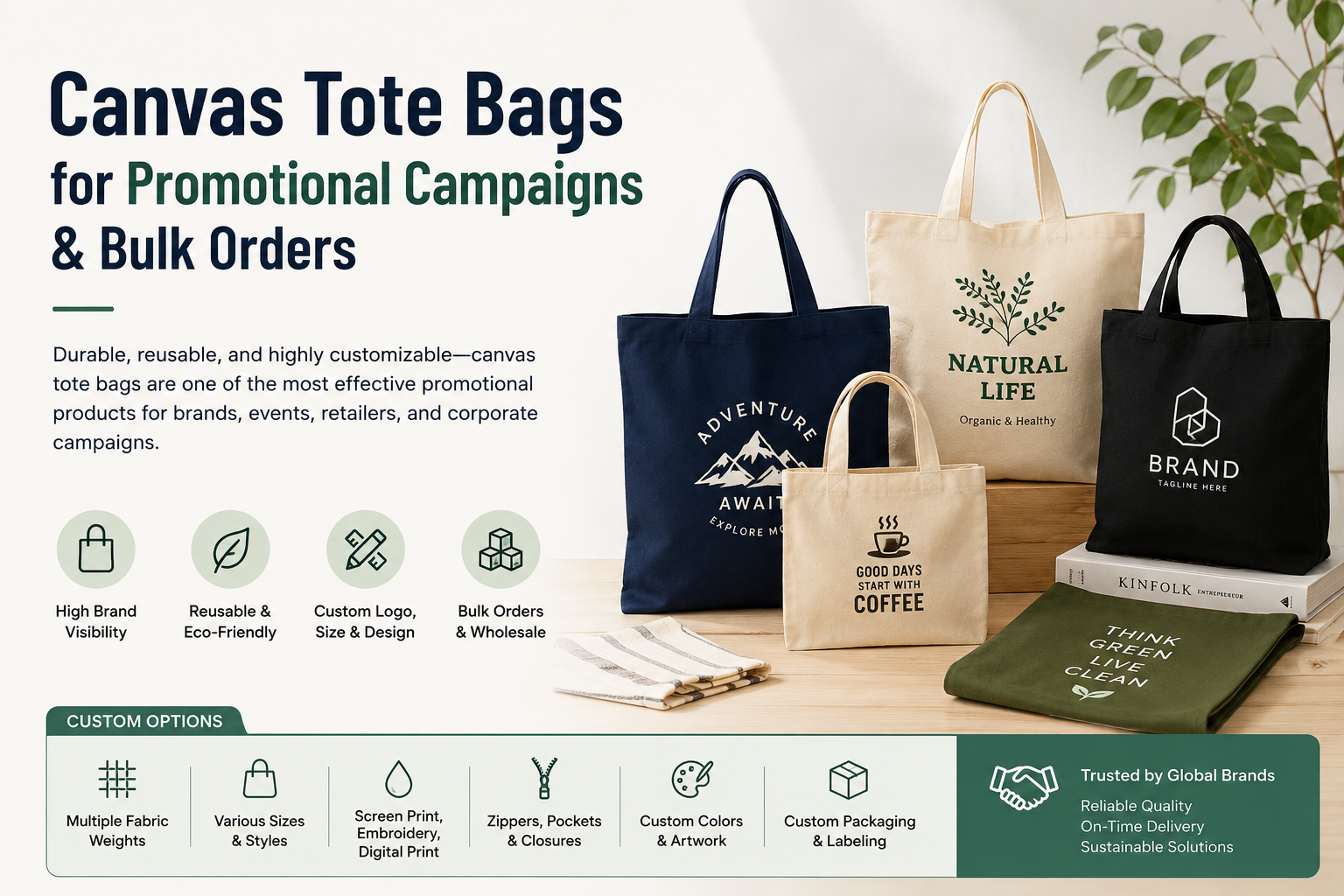
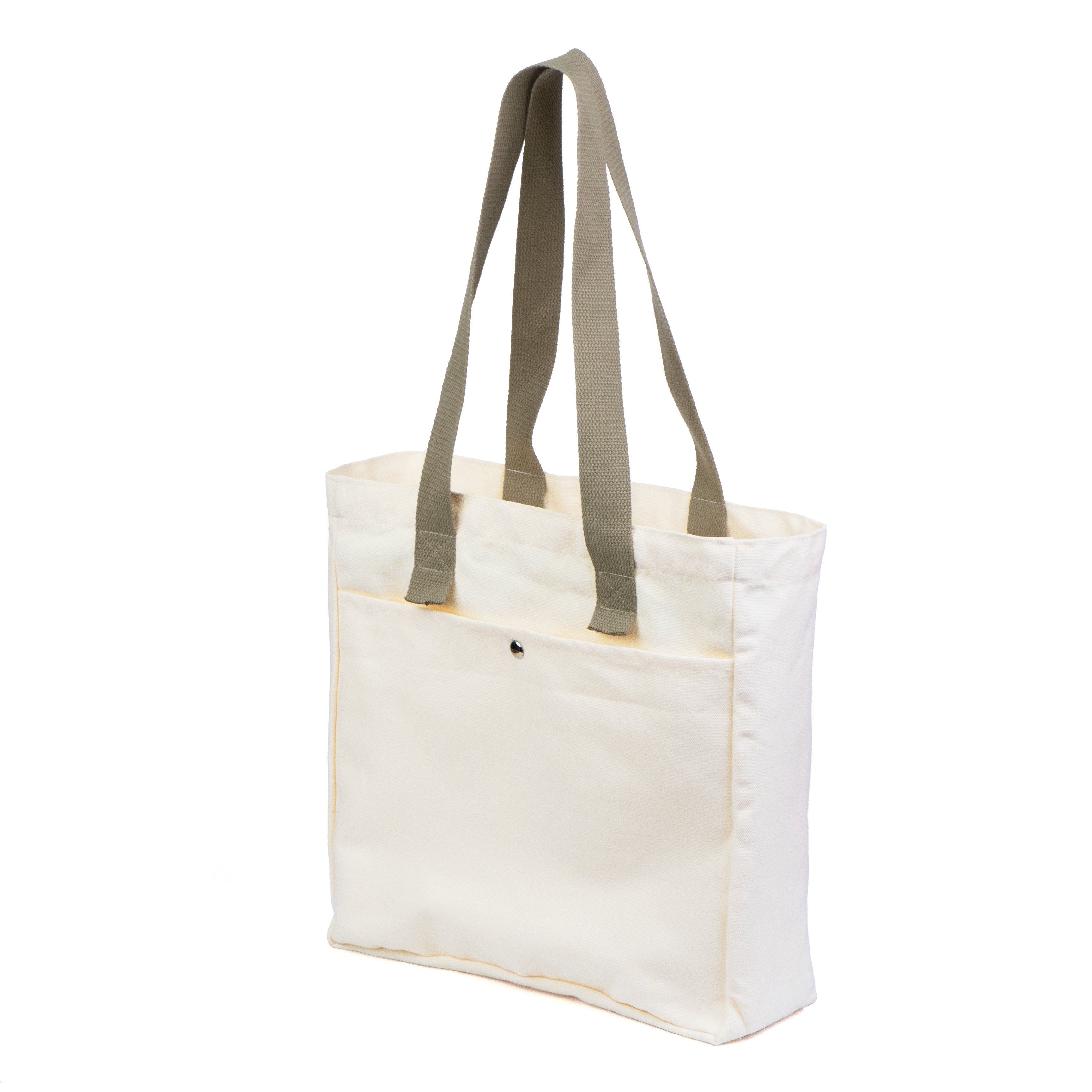
Canvas tote bags are one of the most widely used products for promotional campaigns, retail events, corporate gifts, trade shows, supermarket programs, tourism projects, and branded merchandise.
They offer several advantages for B2B buyers:
- Large printable branding areas
- Reusable daily value
- Multiple fabric weights
- Flexible handle and closure options
- Strong compatibility with logo printing
- Suitable positioning for both low-cost promotions and premium retail programs
- Easy adaptation for corporate, retail, educational, and event applications
However, not every canvas tote bag is suitable for every campaign.
A lightweight giveaway tote for a one-day exhibition has very different requirements from a heavy-duty retail bag designed to carry books, groceries, or corporate gift sets. For bulk buyers, the correct specification should balance material weight, bag structure, logo visibility, carrying strength, packaging efficiency, order quantity, and target cost.
This guide explains how to plan custom canvas tote bags for promotional campaigns and wholesale orders.
High Brand Visibility
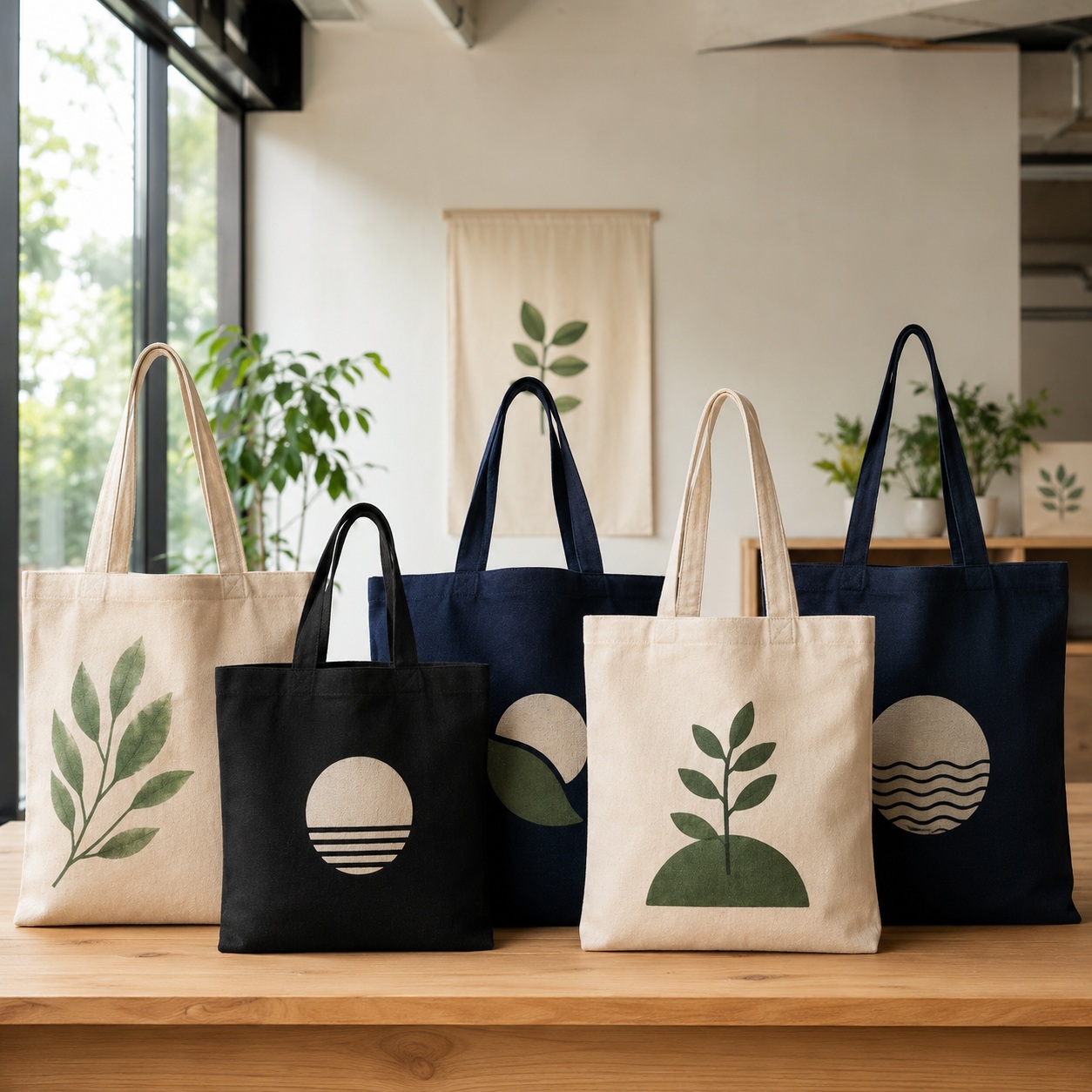
Canvas tote bags provide broad front and back panels that can display:
- Company logos
- Campaign slogans
- Event artwork
-
Product illustrations
- School or club graphics
- Retail brand identities
- Tourism and destination designs
Unlike small promotional products, a tote bag remains visible while being carried in public, allowing the logo to receive repeated exposure after the event.
Practical Reuse
A promotional item is more valuable when the end user continues to use it. Canvas totes can be reused for:
- Shopping
- Work
- School
- Books
- Groceries
- Events
- Light travel
- Daily personal items
This repeated use helps extend the life of the campaign beyond the initial distribution date.
Flexible Price Positioning
Canvas tote bags can be developed for different budgets.
A basic promotional tote may use:
- Lightweight canvas
- Simple flat construction
- Standard handles
- One-color screen printing
- Bulk carton packing
A premium retail or corporate tote may include:
- Heavier canvas
- Bottom and side gussets
- Lining
- Zipper closure
- Internal pockets
- Embroidery
- Custom hardware
- Retail-ready packaging
This flexibility makes canvas suitable for both large-volume giveaways and higher-value branded merchandise.
Common Applications for Promotional Canvas Tote Bags
Canvas tote bags are commonly used by:
- Retail chains
- Supermarkets
- Corporate gift suppliers
- Trade show organizers
- Universities
- Museums
- Bookstores
- Hotels and resorts
- Tourism boards
- Fashion brands
- Food and beverage companies
- Nonprofit organizations
- Promotional product distributors
- E-commerce sellers
- Importers and wholesalers
The final bag specification should be based on the actual campaign rather than selecting a generic tote.
For example:
| Campaign Type |
Recommended Bag Direction |
| Trade show giveaway |
Lightweight flat tote with bold logo |
| Retail merchandise |
Medium or heavy canvas with stronger construction |
| Corporate gift |
Lined tote with zipper, pocket, and premium branding |
| Supermarket campaign |
Wide gusset, reinforced handles, reusable structure |
| University event |
Book-size tote with shoulder-length handles |
| Tourism promotion |
Full-color artwork or location-based graphics |
| Eco campaign |
Natural canvas, recycled cotton, or certified material options |
Choosing the Right Canvas Weight
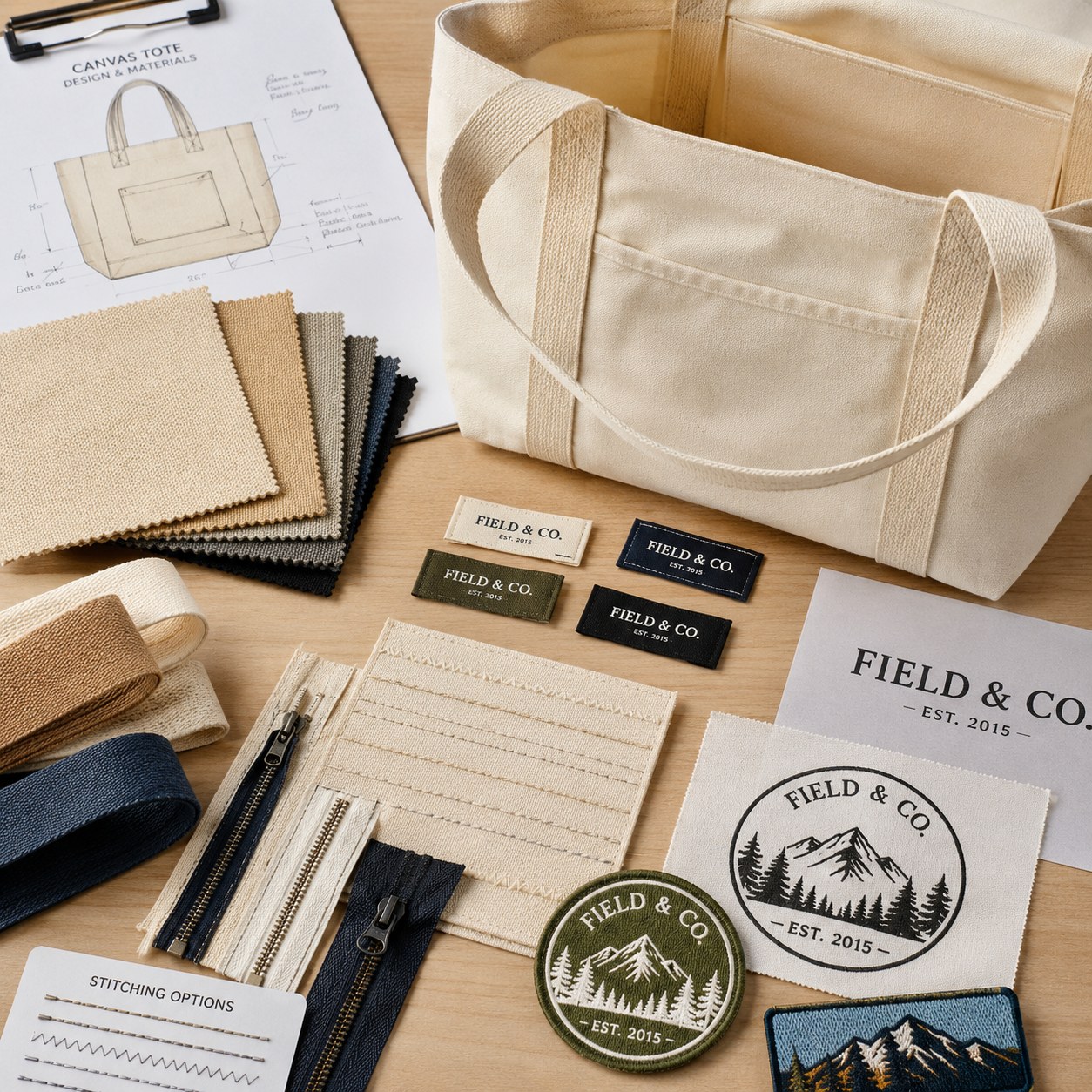
Canvas weight affects cost, appearance, structure, printing, durability, and shipping volume.
Common market descriptions may use ounces, grams per square meter, or supplier-specific fabric references. Buyers should confirm the exact specification rather than relying only on terms such as “light,” “medium,” or “heavy.”
Lightweight Canvas
Lightweight canvas is suitable for:
- Giveaways
- Conferences
- Event packs
- Lightweight retail products
- Low-cost promotional campaigns
Advantages:
- Lower material cost
- Lower shipping weight
- Easy folding
- Suitable for large distribution quantities
Limitations:
- Less structure
- Lower carrying strength
- More visible creasing
- Less suitable for heavy products
Medium-Weight Canvas
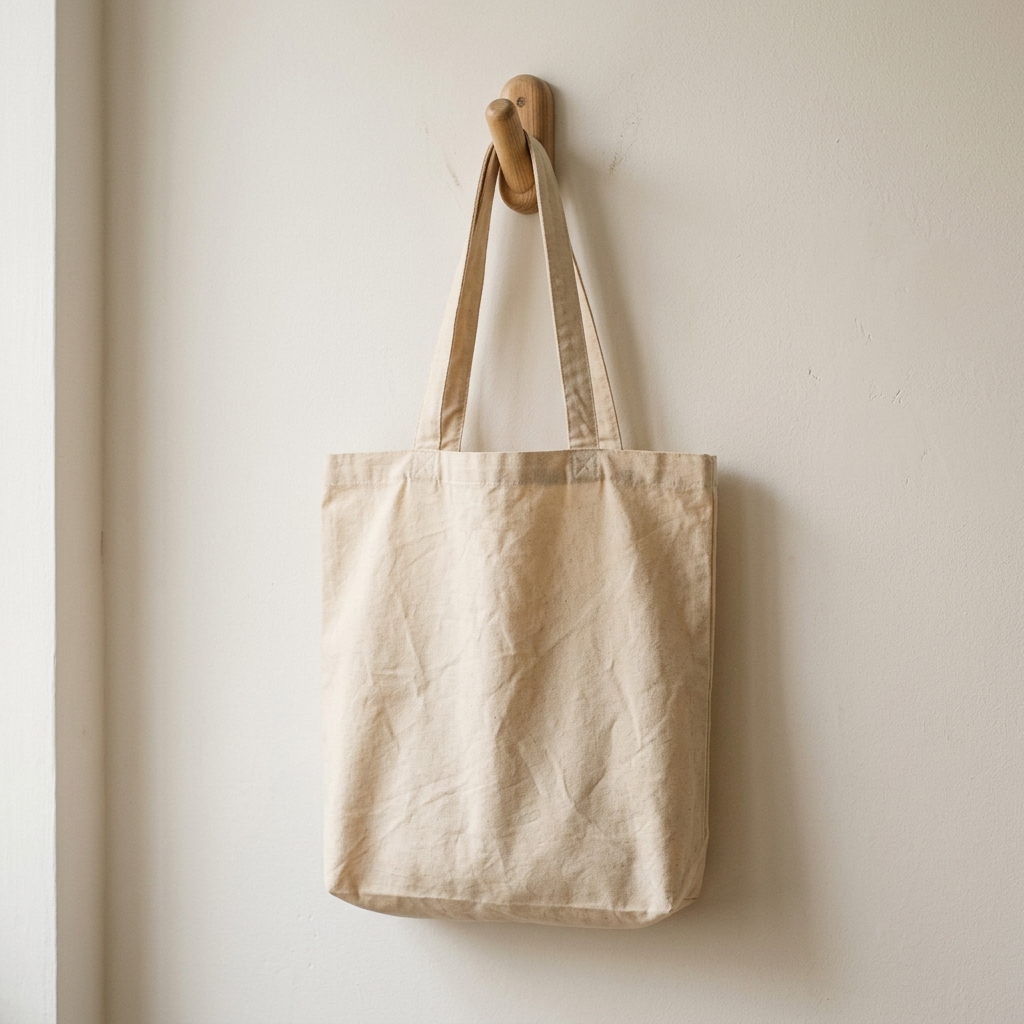
Medium-weight canvas is suitable for:
- Retail shopping
- Corporate gifts
- Books
- Daily use
- Museum merchandise
- University programs
Advantages:
- Better balance between cost and durability
- Improved print presentation
- More stable body shape
- Suitable for repeated use
Heavy Canvas
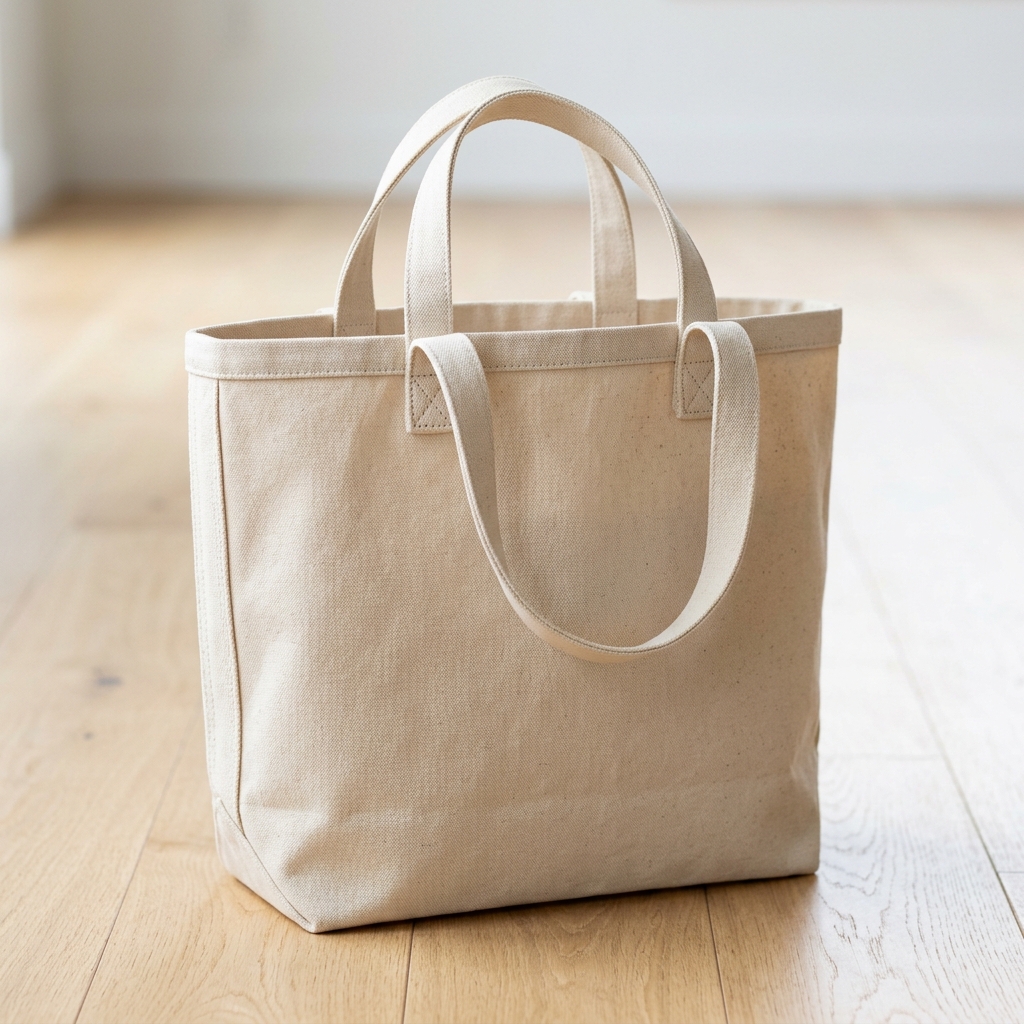
Heavy canvas is suitable for:
- Premium retail bags
- Grocery use
- Corporate gift sets
- Fashion collections
- Heavy books
- Large-capacity totes
Advantages:
- Stronger structure
- Premium hand feel
- Better shape retention
- Higher perceived value
Limitations:
- Higher cost
- Greater shipping weight
- Larger carton volume
- May require stronger sewing equipment and reinforcement
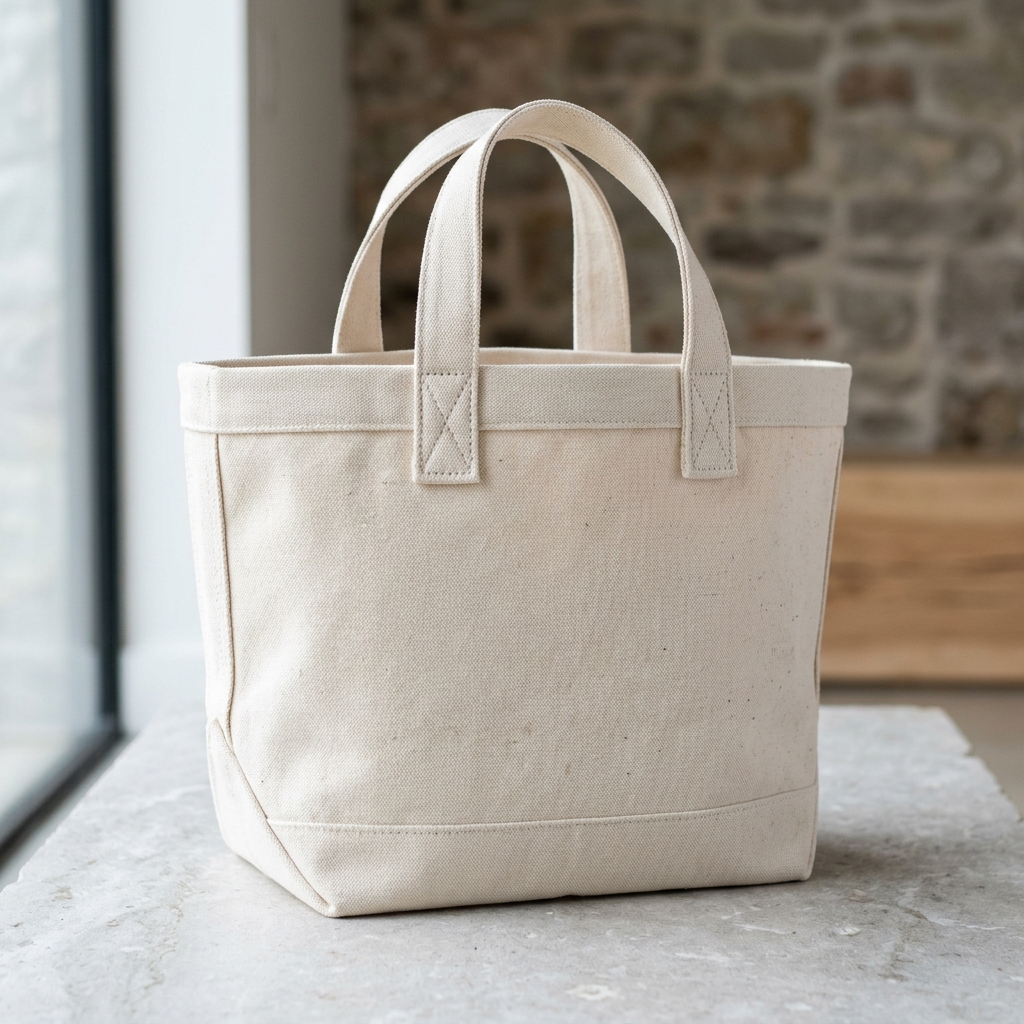
The heaviest fabric is not always the best option. Buyers should select the weight based on intended load, price target, logo method, and campaign duration.
Flat Tote or Gusseted Tote?
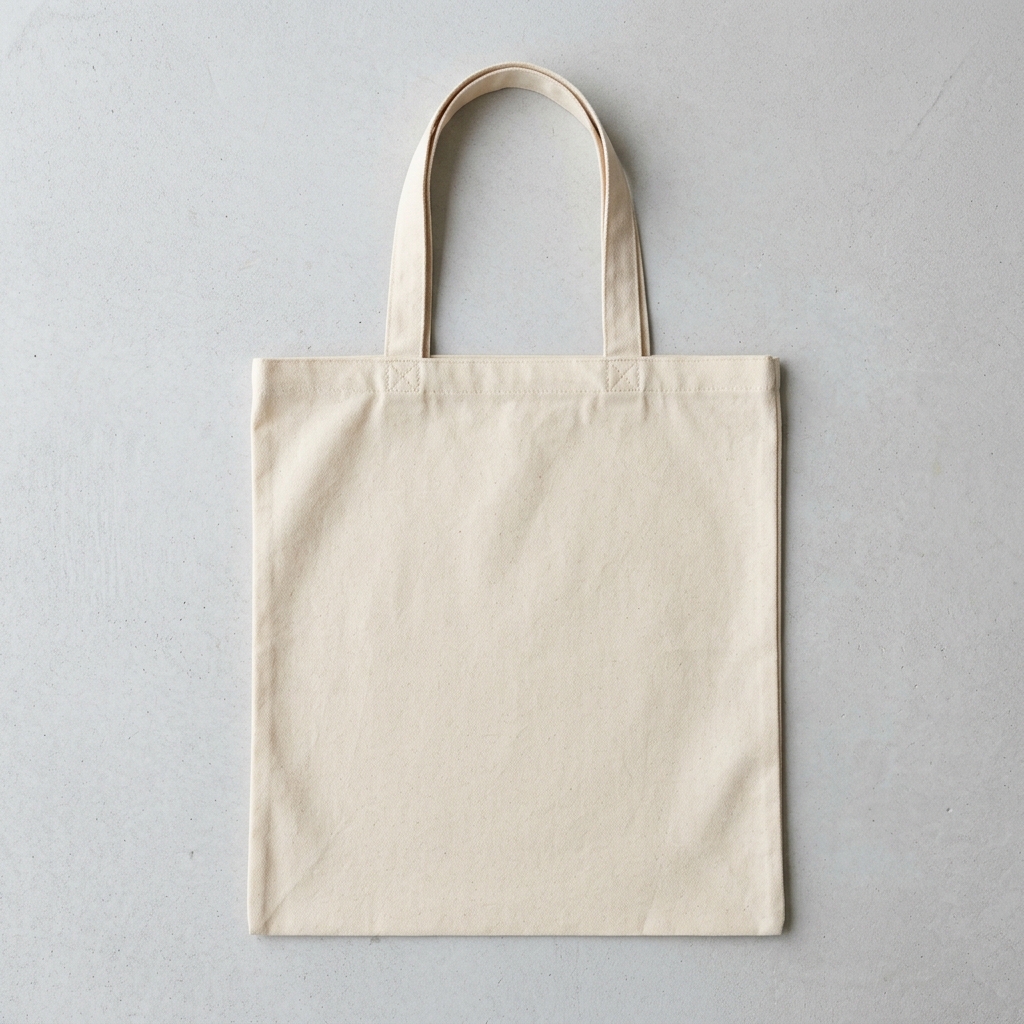
Flat Canvas Tote Bag
A flat tote has a simple two-panel structure with little or no bottom depth.
Best for:
- Documents
- Catalogs
- Flyers
- Light books
- Event materials
- Low-volume giveaways
Advantages:
- Cost-efficient
- Easy to fold
- Low shipping volume
- Large logo area
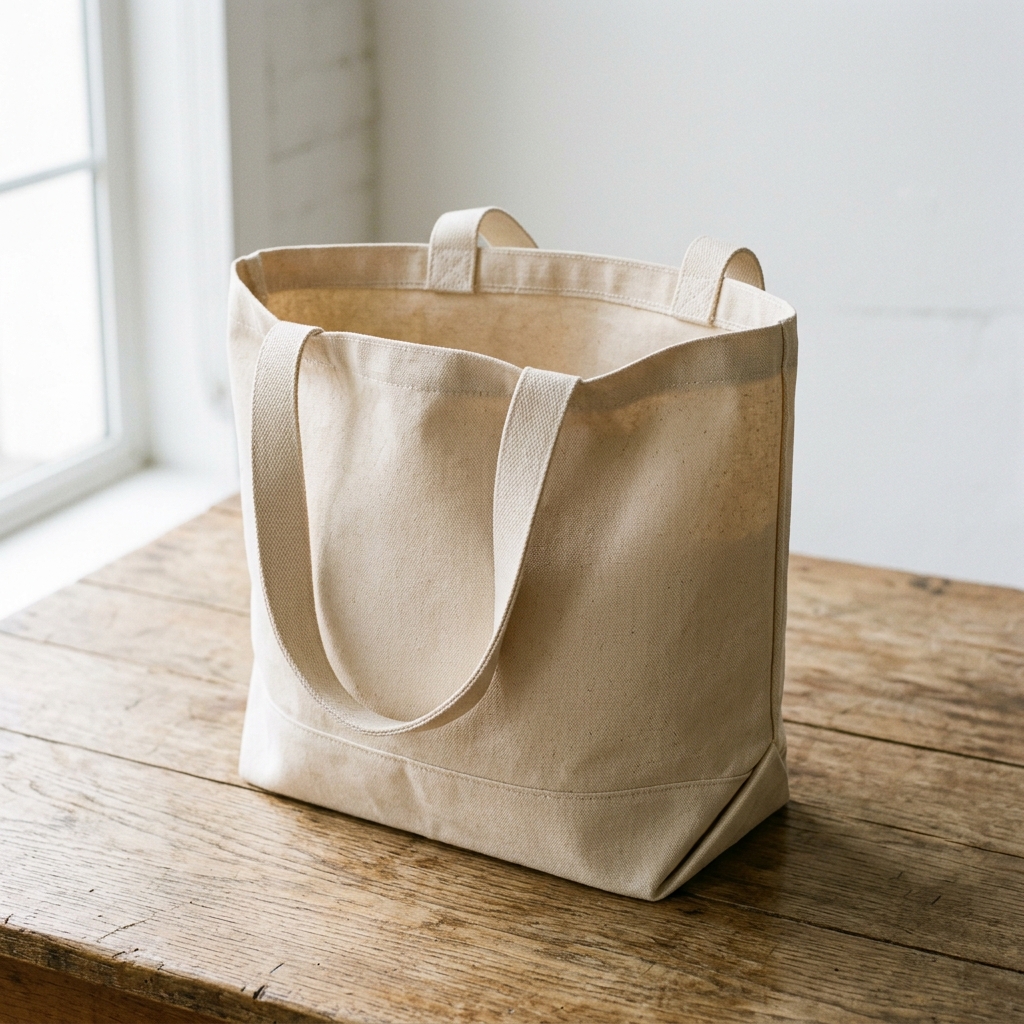
Bottom-Gusset Tote Bag
A bottom gusset adds depth and allows the bag to hold wider products.
Best for:
- Groceries
- Gift boxes
- Food products
- Clothing
- Retail purchases
- Corporate kits
Full-Gusset Tote Bag
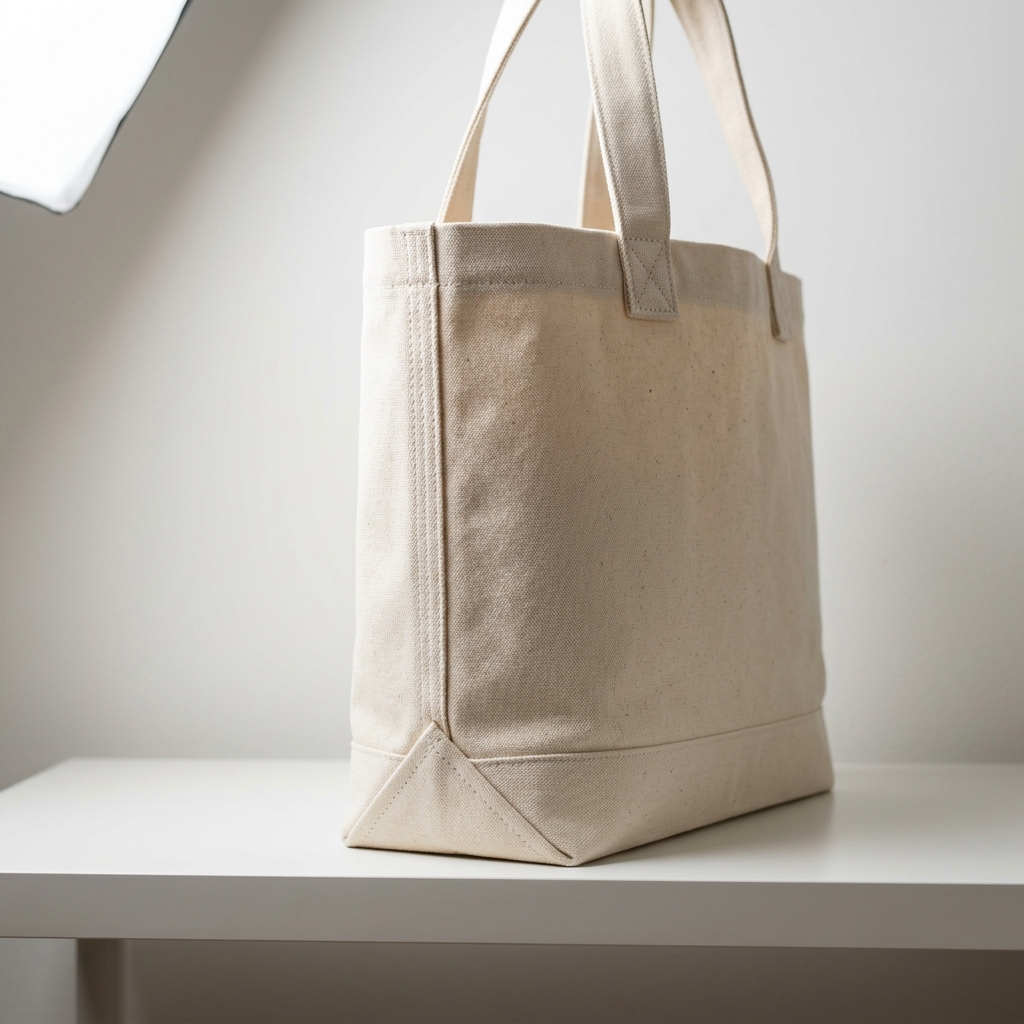
A full-gusset structure includes both side and bottom depth.
Best for:
- Supermarket programs
- Large retail products
- High-capacity shopping
- Bulky promotional kits
The gusset should be sized according to the products inside the bag. An oversized gusset may reduce shape stability, while a narrow gusset may not provide enough usable capacity.
Handle Options for Bulk Canvas Tote Bags
Handle design affects comfort, load distribution, appearance, and cost.
Short Hand Handles
Suitable for:
- Gift bags
- Food packaging
- Small retail totes
- Hand-carry promotional products
Long Shoulder Handles
Suitable for:
- Shopping
- Books
- Events
- Daily commuting
- Lifestyle merchandise
Wide Handles
Wider handles improve comfort when the bag carries heavier products.
Reinforced Handles
For heavier use, buyers can specify:
- Box-and-cross stitching
- Bar-tack reinforcement
- Webbing handles
- Extended handles running down the bag body
- Double-layer fabric handles
- Concealed reinforcement panels
Handle strength should be evaluated together with fabric weight, seam construction, and intended load.
Best Printing Methods for Canvas Tote Bags
Screen Printing
Screen printing is one of the most common methods for promotional canvas bags.
Best for:
- Simple logos
- Solid colors
- Large quantities
- Strong brand graphics
- Cost-controlled campaigns
Advantages:
- Good color coverage
- Suitable for bulk production
- Durable when correctly applied
- Cost-efficient for repeated artwork
Buyers should confirm:
- Number of colors
- Print size
- Ink type
- Fabric background color
- Artwork complexity
- Color tolerance
Heat Transfer Printing
Heat transfer is suitable for:
- Full-color graphics
- Detailed artwork
- Photographic designs
- Smaller runs
- Multi-color logos
The transfer film, pressing temperature, and fabric surface should be tested before production.
Digital Printing
Digital printing works well for:
- Detailed illustrations
- Small-batch collections
- Complex color gradients
- Fashion and tourism designs
It may not always be the most economical method for very large quantities.
Embroidery
Embroidery gives a more premium and textured appearance.
Best for:
- Corporate gifts
- Retail merchandise
- Boutique collections
- Small logos
- Premium brand programs
Large embroidery areas may increase cost, stiffness, and production time.
Woven Labels and Patches
Labels and patches are useful when:
- The fabric is textured
- A private label look is required
- The logo needs consistent clarity
- The buyer wants a more retail-oriented finish
Logo Placement and Artwork Planning
The logo should be positioned according to the bag structure.
Important factors include:
- Distance from seams
- Handle placement
- Gusset folds
- Pocket position
- Zipper location
- Curved panels
- Printing area
- Artwork orientation
A logo placed too close to the handle seam may appear visually crowded. A design extending across folds or gussets may distort when the bag is filled.
For promotional tote bags, a centered front logo is usually the safest and most visible choice.
Buyers should provide artwork in suitable formats such as:
- AI
- EPS
- PDF
- SVG
- High-resolution PNG
The supplier should confirm final artwork size, color reference, print position, and production tolerance before sampling.
Color Options for Canvas Bags
Canvas promotional bags can use:
- Natural cotton color
- Bleached white
- Black
- Navy
- Custom-dyed colors
- Printed patterns
- Contrast handles
- Two-tone panels
Natural Canvas
Natural canvas provides a casual and eco-oriented appearance.
It may show:
- Minor fiber variation
- Natural specks
- Slight shade variation
- Visible woven texture
These characteristics are normal for many untreated cotton fabrics.
Dyed Canvas
Custom-dyed canvas helps match brand colors but buyers should confirm:
- Pantone reference
- Dye lot tolerance
- Colorfastness
- Shrinkage
- Minimum dyeing quantity
- Handle and body color matching
A physical color sample is more reliable than approving colors only from a screen.
Closure and Pocket Options
Basic promotional totes are often open at the top, but additional features may improve end-user value.
Closure Options
- Open top
- Magnetic snap
- Metal snap button
- Zipper closure
- Hook-and-loop tab
- Drawstring top
Pocket Options
- Internal slip pocket
- Zipper security pocket
- Phone pocket
- Bottle pocket
- Front promotional pocket
- Key clip
- Document divider
Additional features increase cost and production time, so buyers should add only the functions that support the intended use.
How Order Quantity Affects Cost
The unit price of a custom canvas tote bag is affected by more than quantity.
Key cost factors include:
- Fabric weight
- Fabric color
- Bag dimensions
- Gusset depth
- Handle construction
- Printing colors
- Printing size
- Lining
- Pockets
- Closures
- Hardware
- Labels
- Packaging
- Testing
- Certification requirements
Larger quantities can reduce certain unit costs because printing setup, material preparation, and production planning are distributed across more units.
However, highly customized specifications may still require:
- Custom fabric dyeing
- Dedicated printing screens
- Special hardware
- Custom packaging
- Additional inspections
Buyers should request a quote based on a complete specification rather than asking only for the price of “one canvas tote bag.”
Minimum Order Quantity Considerations
MOQ may depend on:
- Stock or custom fabric
- Standard or dyed colors
- Printing method
- Number of artwork versions
- Hardware
- Packaging
- Bag complexity
- Certification
- Production line setup
A standard natural canvas tote with one logo may allow a lower MOQ than a custom-dyed bag with multiple pockets, lining, and retail packaging.
For campaigns involving multiple designs, buyers should confirm whether the MOQ applies:
- Per design
- Per color
- Per size
- Per total order
Sample Development Before Bulk Production
A physical sample helps confirm:
- Fabric weight
- Bag dimensions
- Handle comfort
- Logo size
- Printing color
- Pocket structure
- Zipper function
- Stitching
- Packaging
- Overall appearance
For major campaigns, buyers may use:
- Pre-production sample
- Revised approval sample
- Production sample
- Final inspection sample
The sample process reduces the risk of misunderstanding and gives both buyer and manufacturer a clear production standard.
Quality Control Points for Canvas Tote Bags
Fabric Inspection
Check:
- Fabric weight
- Weave consistency
- Color
- Stains
- Holes
- Surface defects
- Shrinkage
Cutting Inspection
Check:
- Panel dimensions
- Grain direction
- Pattern alignment
- Handle length
- Gusset size
Printing Inspection
Check:
- Logo size
- Position
- Color accuracy
- Ink coverage
- Edge clarity
- Adhesion
- Smudging
Sewing Inspection
Check:
- Stitch density
- Seam allowance
- Handle symmetry
- Reinforcement
- Loose threads
- Skipped stitches
- Pocket alignment
Final Inspection
Check:
- Finished dimensions
- Bag shape
- Carrying test
- Closure function
- Packaging
- Carton quantity
- Barcode and labeling
Recommended Testing for Bulk Canvas Bag Orders
Testing requirements depend on destination market, buyer standards, and product use.
Common tests may include:
- Handle pull testing
- Seam strength testing
- Repeated loading testing
- Colorfastness testing
- Fabric shrinkage testing
- Abrasion testing
- Print adhesion testing
- Zipper cycle testing
- Restricted substance testing
- Finished measurement inspection
The intended load should be agreed upon before testing. A lightweight promotional tote should not be evaluated using the same requirements as a heavy grocery bag.
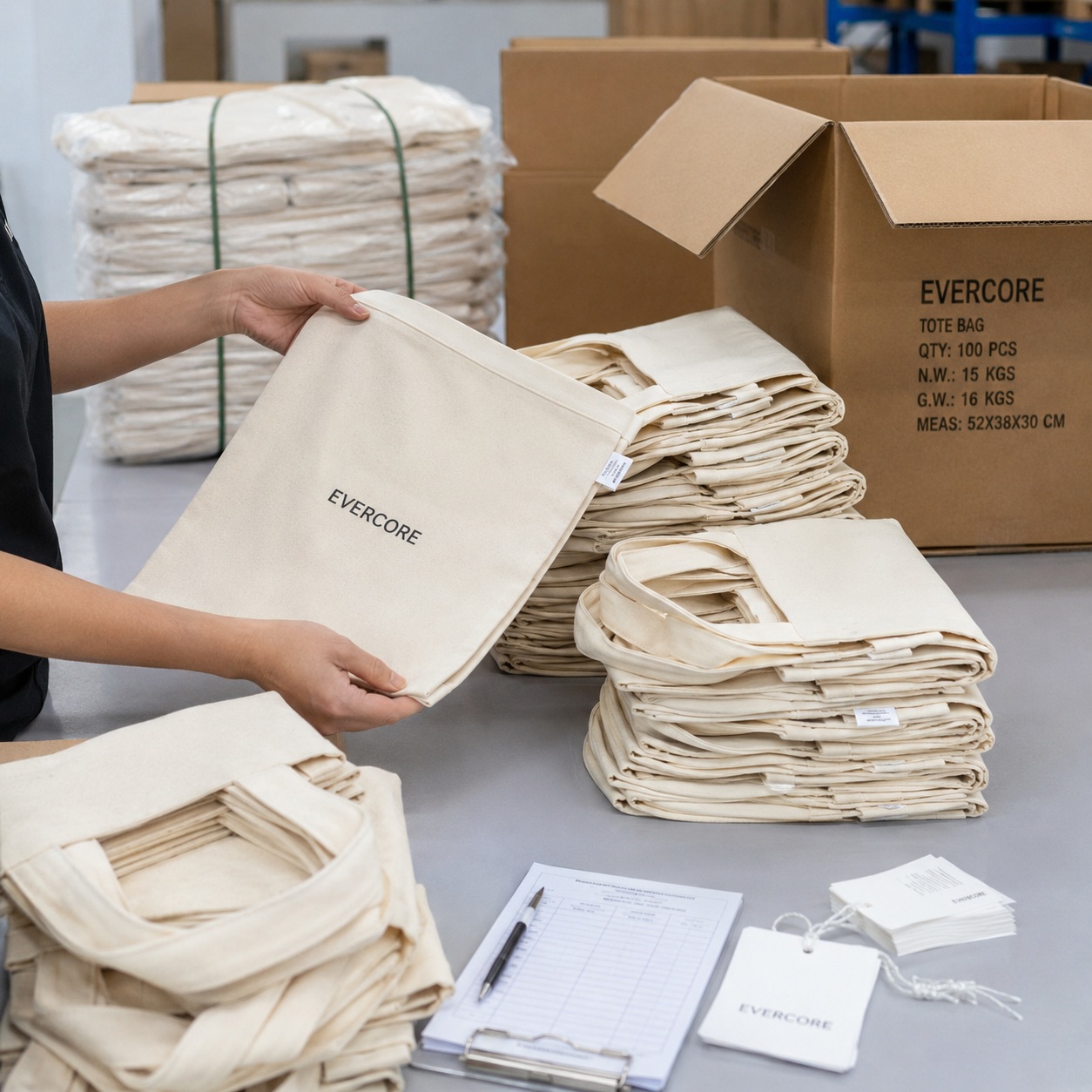
Packaging and Shipping Efficiency
Canvas tote bags are often folded flat for shipment.
Available packaging options include:
- Bulk carton packing
- Individual polybags
- Recycled paper sleeves
- Branded belly bands
- Hangtag packaging
- Gift boxes
- Retail display packaging
- Barcode labels
- Destination carton marks
Buyers should consider:
- Fold marks
- Print protection
- Carton weight
- Carton dimensions
- Quantity per carton
- Container utilization
- Warehouse handling
Heavy canvas and rigid accessories can significantly increase shipping volume.
Common Mistakes in Promotional Canvas Bag Projects
Choosing Fabric Only by Price
Very lightweight fabric may reduce cost but may not support the intended load or brand position.
Ignoring Handle Reinforcement
The handle connection is often the first area to fail under repeated use.
Using Artwork That Is Too Detailed
Fine lines and small text may not print clearly on textured canvas.
Approving Color Only on Screen
Digital displays do not accurately represent fabric and ink colors.
Adding Too Many Features
Extra pockets, zippers, lining, and hardware can move the project away from its original budget.
Skipping Physical Samples
A digital mockup cannot confirm hand feel, dimensions, carrying comfort, or print quality.
Making Unsupported Sustainability Claims
Buyers should confirm material composition, certification, and traceability before using environmental claims.
How to Select a Canvas Tote Bag Manufacturer
A suitable manufacturer should be able to support:
- Material sourcing
- Fabric-weight recommendations
- Custom dimensions
- Handle development
- Printing advice
- Sample production
- Quality control
- Packaging design
- Testing coordination
- Bulk manufacturing
- Export documentation
B2B buyers should ask:
- Can the supplier provide different canvas weights?
- Can the supplier recommend printing methods?
- How are handle connections reinforced?
- What quality inspections are performed?
- Can packaging be customized?
- Are samples available?
- Can the supplier support private label production?
- What certifications or audits are available?
- How are color tolerances managed?
- How are production delays handled?
A supplier should help the buyer develop the correct specification rather than simply quoting the lowest-cost bag.
Why Canvas Tote Bags Remain Effective Promotional Products
Canvas tote bags combine practical use, visible branding, flexible customization, and broad market acceptance.
They can be developed as:
- Cost-efficient giveaways
- Corporate gift bags
- Retail merchandise
- Supermarket shopping bags
- Exhibition bags
- Tourism products
- Educational program bags
- Premium lifestyle accessories
The most successful projects start with a clear understanding of the campaign, audience, budget, load, artwork, distribution method, and expected product lifespan.
Why Work with INITI for Custom Canvas Tote Bags
INITI provides OEM and ODM development for promotional canvas tote bags, retail shopping bags, corporate gift bags, supermarket totes, and private label collections.
Our services include:
- Cotton and canvas material selection
- Fabric-weight recommendations
- Bag structure development
- Custom size and handle design
- Printing and embroidery
- Sample development
- Logo placement support
- Private label service
- Packaging customization
- Quality inspection
- Wholesale production
- Bulk order support
Our production and quality-management systems are supported by certifications including SEDEX, DISNEY, GRS, HIGG, and ISO9001.
We work with retailers, promotional companies, corporate clients, importers, distributors, e-commerce sellers, and design agencies to develop custom canvas bags for global B2B markets.
FAQ
1. What canvas weight is best for promotional tote bags?
Lightweight canvas is suitable for giveaways, while medium and heavy canvas are better for retail, books, groceries, and repeated use.
2. What is the best printing method for canvas bags?
Screen printing is commonly used for simple logos and bulk orders. Heat transfer, digital printing, embroidery, and labels are suitable for other artwork requirements.
3. Can the canvas color be customized?
Yes. Natural, bleached, dyed, and printed fabrics are available. Custom dyeing may require a higher MOQ.
4. Can the handles be reinforced?
Yes. Box stitching, cross stitching, bar tacks, webbing, and extended handle structures can be added.
5. Can pockets and zippers be added?
Yes. Internal pockets, front pockets, zipper closures, magnetic snaps, and other structures can be customized.
6. Can recycled cotton be used?
Yes. Recycled cotton and recycled-blend fabrics can be discussed according to certification and performance requirements.
7. Do you provide samples before bulk production?
Yes. Samples can be developed to confirm fabric, dimensions, handles, printing, structure, and packaging.
8. What factors affect the MOQ?
MOQ may depend on fabric, color, printing, bag structure, accessories, packaging, and number of designs.
9. Can different logo designs be produced in one order?
Yes, but the MOQ and setup cost may apply per artwork. This should be confirmed before production.
10. Do you support private label and wholesale orders?
Yes. We provide OEM, ODM, custom branding, retail packaging, private label service, and bulk wholesale production.
Bottom Internal Links
Related Products:
Cotton Canvas Tote Bags | Promotional Bags | Shopping Bags | RPET Bags | Jute Bags | Foldable Tote Bags | Drawstring Bags | Gift Bags
Applications:
Retail Promotions | Corporate Gifts | Trade Shows | Supermarket Campaigns | University Programs | Tourism Merchandise | E-commerce Sellers | Importers & Distributors
Custom Services:
OEM/ODM Manufacturing | Canvas Weight Selection | Custom Logo Printing | Sample Development | Private Label Service | Packaging Customization | Quality Inspection | Bulk Order Support