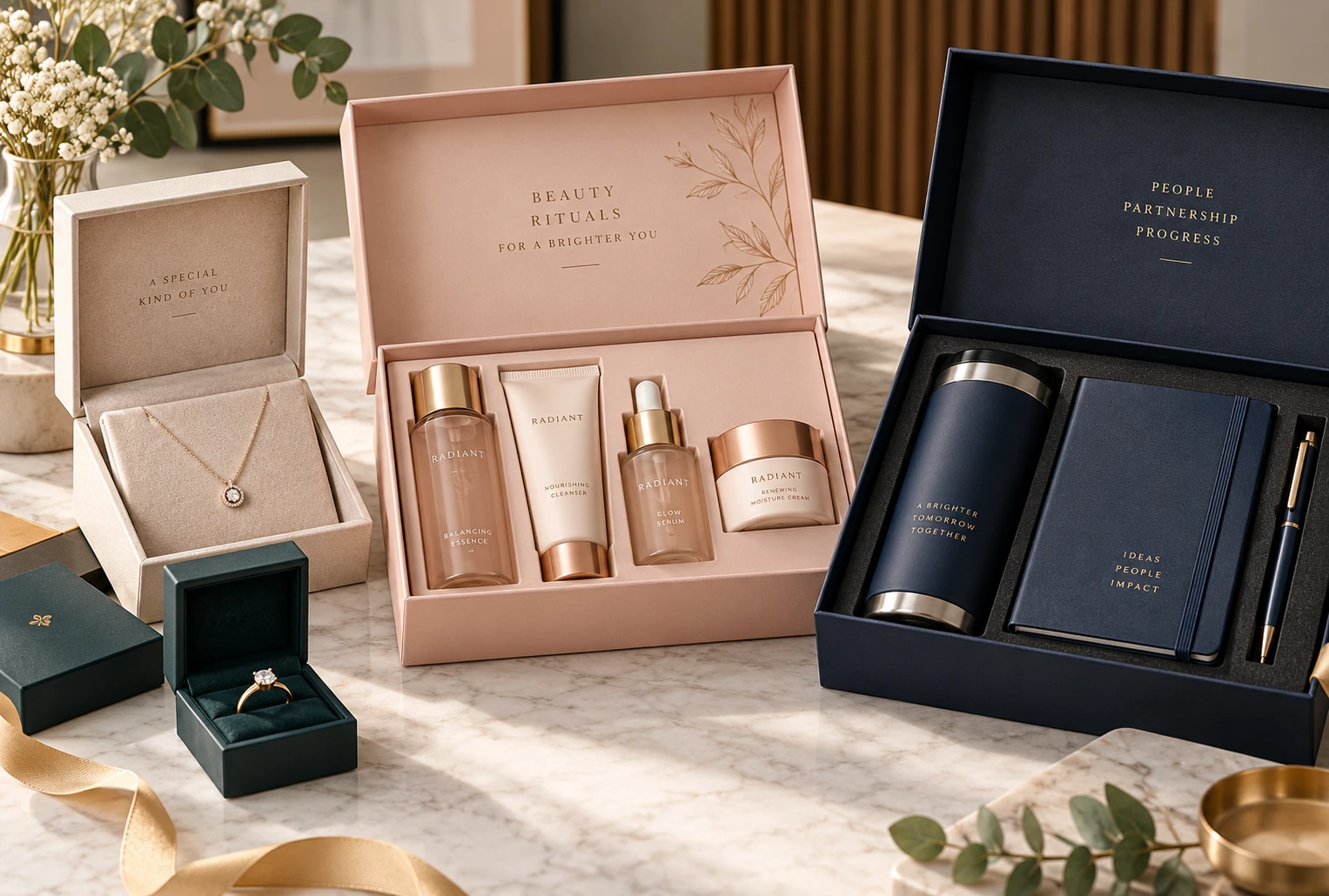
Rigid Gift Boxes for Jewelry, Beauty & Corporate Gift Programs
A rigid gift box is most effective when it feels like it was made for the products inside.
That sounds obvious, but many packaging projects start in the opposite direction: a buyer selects a box style first, then tries to fit jewelry, skincare bottles or corporate gifts into the available space.
The result may still look attractive from the outside, but inside there can be too much empty space, unstable products, oversized inserts or a box that costs far more to ship than expected.
For jewelry, beauty and corporate gift programs, the box should be developed around three things from the beginning:
what goes inside, how it should be presented, and how the complete set will be distributed.
INITI supports custom rigid gift box projects with different box structures, wrapped surfaces, inserts, ribbons, branding methods and packing options. The same basic rigid-box construction can be adapted very differently depending on whether the project contains a necklace, a skincare collection or a tumbler-and-notebook gift set.
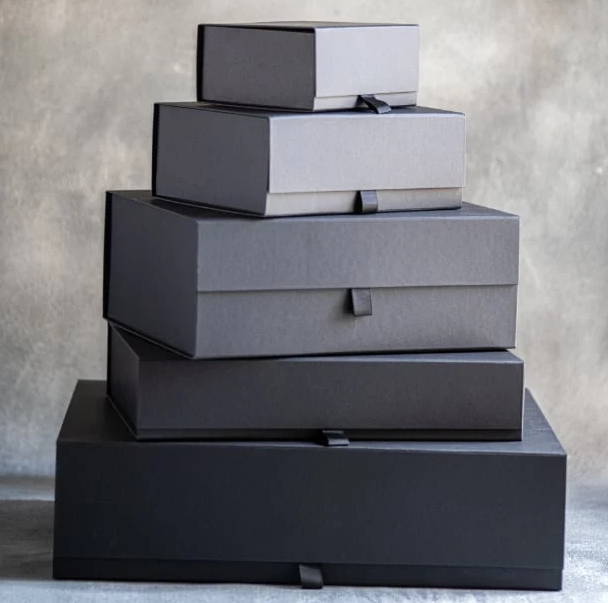
A rigid gift box normally uses a thick paperboard structure wrapped with decorative paper or another finished surface.
Unlike a standard folding carton, the main box body keeps its shape after assembly.
That gives the box:
Rigid boxes are commonly used when packaging is expected to remain part of the gift experience rather than simply protect the product until purchase.
The structure can take several forms, including lid-and-base boxes, magnetic-closure boxes, drawer boxes, ribbon boxes and collapsible rigid boxes.
Each has a different effect on cost, packing volume and customer experience.
Choose the Box Structure Before Choosing the Finish
Foil stamping, embossing and special paper can improve appearance, but the box structure has a much larger impact on how the product is used.
A large corporate gift set and a small jewelry box should not simply be scaled versions of the same design.
The structure should follow the contents.
Jewelry packaging has a particular challenge: the product is small, but the presentation carries a large part of the perceived value.
A ring or pendant may occupy only a few centimeters, yet the box has to hold it securely, protect the surface and create the right presentation when opened.
Start with the Jewelry Type
A jewelry box should be developed around whether it will hold:
| Jewelry |
Typical Internal Requirement |
| Ring |
Ring slot or padded holder |
| Earrings |
Pierced card, padded insert or dedicated recess |
| Necklace |
Necklace hooks, chain channel or shaped insert |
| Bracelet |
Wider recess or cushion |
| Watch |
Pillow or structured holder |
| Mixed jewelry set |
Multiple sections with controlled spacing |
Using one generic foam cavity for every product usually creates compromises.
A necklace needs different support from a ring, and a watch requires a completely different depth and opening.
The Insert Matters More Than the Outer Size
For jewelry, the insert is often the most important part of the packaging.
Possible insert materials include paperboard, foam, EVA-type material, velvet-covered structures and other soft-lined constructions.
The insert should be developed according to:
Product dimensions
Weight
Surface sensitivity
Display angle
Removal method
Shipping movement
A product should feel secure without being difficult for the customer to remove.
Too loose and the jewelry moves during transport.
Too tight and the customer may have to pull or bend the product to take it out.
Interior Finish
Jewelry packaging often benefits from a softer interior because polished metal surfaces can show scratches or fingerprints easily.
Velvet or microfiber-style linings can create a softer presentation, but the buyer should still check:
The box should be inspected with the actual jewelry inside rather than approved empty.
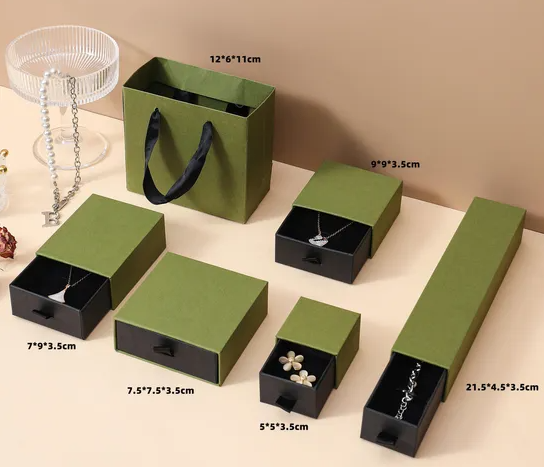
Beauty gift packaging has a different problem: products vary greatly in shape and height.
A skincare set may contain a tall toner bottle, a short cream jar, a serum bottle and a flat beauty tool.
Putting these products into one large open compartment rarely produces a clean presentation.
Develop the Box Around the Complete Set
Before determining the box size, the products should be arranged in the desired opening presentation.
For example:
| Product |
Packaging Question |
| Serum bottle |
Should it stand upright or lie flat? |
| Cream jar |
Does it need a circular recess? |
| Toner bottle |
Is the box deep enough? |
| Tube |
Can it sit beside taller products? |
| Beauty tool |
Does it need its own section? |
| Information card |
Should it sit above or below the products? |
This arrangement becomes the starting point for the insert and outer dimensions.
Product Spacing
More empty space does not automatically make a gift box feel more premium.
Excess spacing can make a beauty set look underfilled.
On the other hand, placing products too close together can make the insert difficult to manufacture and products difficult to remove.
A balanced layout should give each product a clear position while keeping the overall box reasonably compact.
Inserts for Beauty Sets
Beauty projects may use:
The right choice depends on the product value, packaging appearance, budget and whether the insert needs to hold heavy glass containers.
For many projects, a well-designed paperboard insert can provide enough organization without adding unnecessary material complexity.
Think About Leakage and Surface Contact
If the box contains liquid skincare or cosmetics, the presentation box should not be treated as the only transport protection.
Caps, pumps and primary product packaging still need to prevent leakage.
Where leakage risk exists, the buyer should consider how easily the insert or wrapped paper surface could be stained.
The rigid gift box is presentation packaging. It should not be expected to compensate for inadequate primary product packaging.
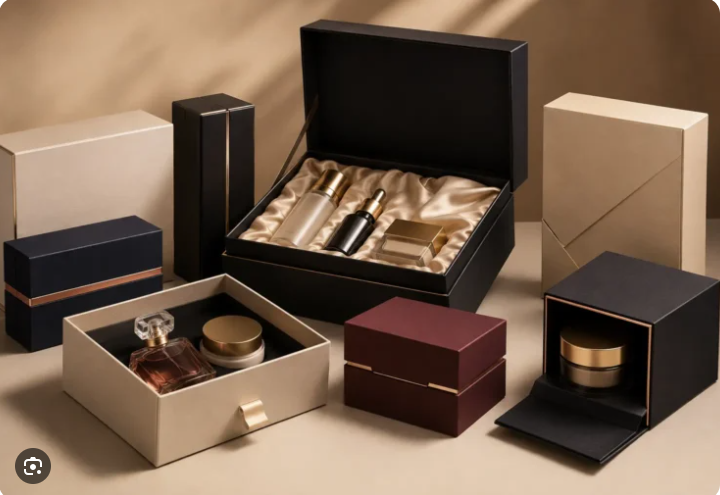
Corporate gift sets tend to contain larger and more varied products than jewelry or beauty packaging.
A typical program might combine:
Tumbler
Notebook
Pen
Electronics accessory
Textile product
Food item
Company card
The challenge is making different products feel like one coordinated gift rather than several items placed in a box.
Start with the Product Combination
The buyer should first confirm which products are definitely included.
This sounds simple, but corporate gift programs often change during development.
For example, a buyer may replace a 350 ml tumbler with a larger bottle after the box sample has already been made.
That one change can affect:
Insert dimensions
Box depth
Total weight
Shipping carton
Carrying strength
Freight cost
The gift set contents should therefore be reasonably stable before the final box structure is approved.
Fitted Insert or Flexible Filler?
A fitted insert creates a cleaner presentation and keeps each product in a defined position.
It works well when the gift set will remain unchanged across a large order.
Loose paper filler or a less rigid internal arrangement provides more flexibility when:
Contents vary between recipients
Several product combinations use one box
The program includes regional differences
Final products may change close to production
Neither method is inherently better.
A fixed corporate gift program benefits from a fitted layout. A flexible seasonal gifting program may need more adaptable packing.
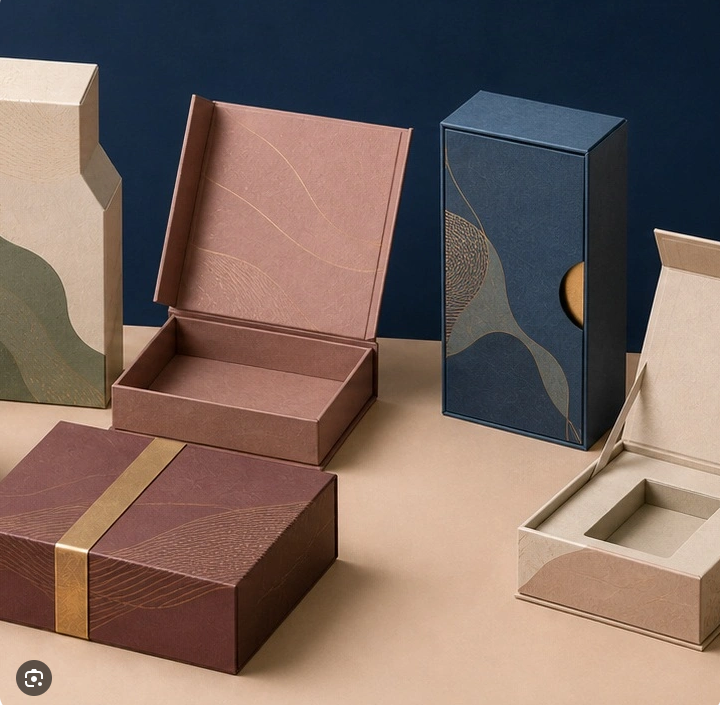
How Much Structure Does the Box Need?
Rigid does not mean every box needs the maximum possible board thickness.
The correct structure depends on:
Box dimensions
Product weight
Insert
Opening design
Shipping method
Expected reuse
A small jewelry box and a 30 cm corporate presentation box carry very different loads.
For larger boxes, the buyer should pay particular attention to:
The approved sample should be loaded with the real gift set before bulk production.
Wrapped Paper and Surface Finish
The outer wrapped surface determines much of the visual character of a rigid box.
Possible directions include smooth coated paper, kraft-style paper, textured paper, colored specialty papers and printed wrapping materials.
The choice should follow the brand rather than simply selecting the most expensive finish.
Jewelry
Often works well with restrained colors, textured surfaces, foil logos and subtle branding.
Beauty
May require more accurate brand colors, printed graphics, matte surfaces or coordinated seasonal artwork.
Corporate Gifts
Usually benefit from clear brand identification and a finish that works across a broad recipient group.
For a corporate program, a neutral box with controlled logo placement may remain useful after the event, while a very large promotional graphic can make the box feel disposable.
Branding Methods
Rigid gift boxes support several branding techniques.
Foil Stamping
Useful for small logos, lettering and decorative details.
Gold and silver are common, but foil color should be chosen according to the brand rather than applied automatically.
Embossing and Debossing
Adds physical depth without requiring a large printed graphic.
This works particularly well for restrained premium packaging.
Printing
Suitable for larger graphics, full-color artwork and seasonal collections.
Spot UV
Can highlight selected areas of a printed surface.
Ribbon
Ribbon can become part of the brand system through color, width and placement.
It can also be printed where the project requires stronger branding.
The important point is consistency.
A box does not need foil, embossing, ribbon, UV and multiple printed surfaces all at once.
Too many finishes can make the packaging more expensive without making it look more refined.
Magnetic Closure vs Lid-and-Base
These are two common choices for premium gift programs.
A lid-and-base box is straightforward.
The customer lifts the top away from the bottom to reveal the product.
It works well for:
Jewelry
Beauty sets
Seasonal gifts
Corporate gift sets
It also allows the lid and base to use different colors or surface treatments.
A magnetic box creates a more controlled opening experience and can remain attached when opened.
It works particularly well for:
However, the structure contains more components and may occupy more shipping volume unless it is designed as a collapsible box.
The choice should therefore consider both the customer experience and logistics.
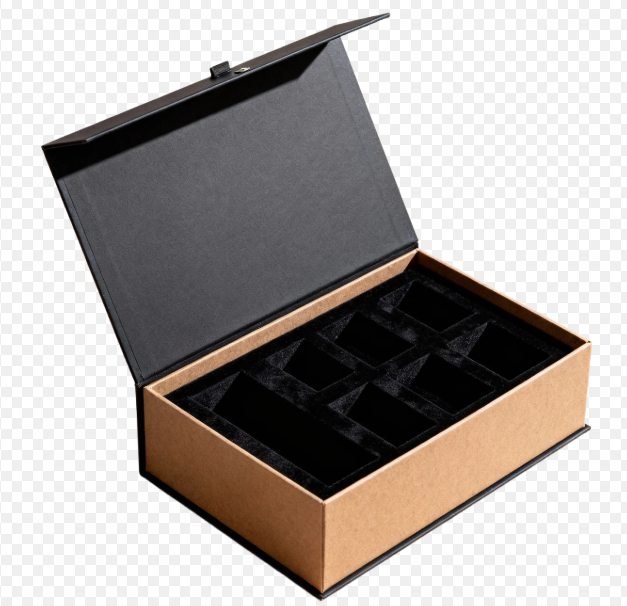
Collapsible Rigid Boxes for Larger Programs
Rigid boxes can become expensive to ship when they are delivered fully assembled because most of the carton volume is empty space.
For larger gift programs, a collapsible rigid structure can reduce storage and freight volume.
This can be especially relevant for:
However, a collapsible box introduces additional construction points.
The buyer should check:
The sample should be assembled several times before approval.
Gift Box Size and Shipping Cost
Box size affects more than paper consumption.
A few centimeters added to each side may increase:
Unit material use
Insert size
Finished weight
Carton size
Pieces per carton
Freight volume
Warehouse space
This is especially important for corporate sets and large beauty boxes.
A box should have enough space to present the products well, but unnecessary air inside the package is still something the buyer pays to store and transport.
Before finalizing dimensions, it is worth checking the complete packed box rather than only the unfilled sample.
Presentation Packaging Is Not Shipping Packaging
This distinction prevents many avoidable problems.
A beautiful rigid gift box may not be strong enough to travel through an international courier network without additional protection.
Depending on the project, the complete packing system may include:
| Layer |
Function |
| Product container |
Protects the actual product |
| Insert |
Holds products in position |
| Rigid gift box |
Presentation and branding |
| Protective sleeve or bag |
Protects box surface |
| Shipping carton |
Transport protection |
| Master carton |
Bulk export shipment |
For e-commerce programs, the buyer should test the gift box together with the outer shipping packaging.
A presentation box arriving with crushed corners or surface scratches defeats the purpose of using premium packaging.
Small jewelry boxes may need additional protection against:
Corner compression
Surface rubbing
Moisture
Product movement
A compact outer mailer or protective carton can protect the presentation box without requiring excessive filler.
Because jewelry boxes are relatively small, the shipping package should also be designed to avoid unnecessary parcel volume.
Beauty sets tend to be heavier and may include glass.
The outer shipping carton and internal product protection should therefore be evaluated separately from the rigid presentation box.
Drop testing or project-specific transport testing can be considered where required.
Packaging for Corporate Distribution
Corporate gifts may be sent:
These distribution models require different packing.
A box suitable for palletized delivery to one corporate headquarters may not be appropriate for individual courier shipment.
The distribution method should be confirmed during the quotation stage, not after the boxes have already been produced.
How to Control Cost Without Losing the Premium Feel
A rigid gift box does not need every premium finishing process.
Cost can often be controlled more intelligently through the structure.
For example, a project may use:
| Higher-Cost Approach |
More Controlled Alternative |
| Several foil areas |
One small foil logo |
| Complex custom hardware |
Standard magnetic closure |
| Heavy foam throughout |
Product-specific insert only where needed |
| Oversized box |
Dimensions matched closely to contents |
| Multiple paper colors |
One shared brand color |
| Fully assembled shipping |
Collapsible structure where suitable |
| Custom box for every SKU |
Shared outer box with different inserts |
The objective is not to make the box cheaper at any cost.
It is to spend the packaging budget on the details the customer actually notices.
Sample the Complete Gift Set
An empty rigid box can look excellent and still fail once products are added.
Before approval, the sample should be checked with the actual contents.
For jewelry, check whether the product stays in position and can be removed easily.
For beauty, check bottle height, jar fit, product spacing and box depth.
For corporate gifts, check total weight, insert support and whether each product remains in position when the box is carried.
The packaging should also be closed, reopened and repacked several times.
This often reveals problems that are not visible during a simple visual inspection.
Quality Points for Bulk Production
Rigid boxes are visually unforgiving.
Small differences can be obvious because customers naturally look at the edges, corners and surface when opening a gift.
Important checks include:
| Area |
What to Check |
| Box shape |
Squareness and consistent dimensions |
| Corners |
Clean wrapping and alignment |
| Surface |
Marks, bubbles, scratches or glue |
| Lid |
Correct fit and opening |
| Magnetic closure |
Alignment and holding position |
| Drawer |
Smooth movement |
| Ribbon |
Length, position and attachment |
| Insert |
Accurate product fit |
| Logo |
Position, foil/print quality and consistency |
| Interior |
Cleanliness and finishing |
| Packing |
Surface and corner protection |
The approved sample should be used as the reference for both appearance and construction.
Developing a Gift Box Collection
Brands do not always need a completely different box for every product.
A more efficient system may use several standard box footprints with different:
Heights
Inserts
Colors
Sleeves
Labels
Ribbons
For example, a beauty brand could use the same rigid-box exterior across three skincare sets while changing only the insert.
A jewelry brand could keep one paper color and logo treatment across ring, necklace and bracelet boxes.
A corporate gift supplier could use one presentation style across several gift combinations.
This creates stronger visual consistency and can simplify purchasing.
Custom Development Process
1. Confirm the Contents
Provide the product dimensions, quantity, weight and preferred presentation.
2. Arrange the Products
Determine how each item should appear when the box is opened.
3. Select the Box Structure
Choose lid-and-base, magnetic closure, drawer, ribbon or collapsible construction.
4. Develop the Insert
The insert is designed around the real product dimensions.
5. Confirm the Surface and Branding
Paper, color, printing, foil, embossing, ribbon and other visible details are finalized.
6. Produce the Sample
A complete physical box is made.
7. Pack the Real Products
The buyer checks fit, opening experience, weight and presentation.
8. Confirm Shipping Protection
Individual and master-carton packing are reviewed according to the distribution method.
9. Approve Bulk Production
The approved sample and written specification become the production reference.
Why Work with INITI?
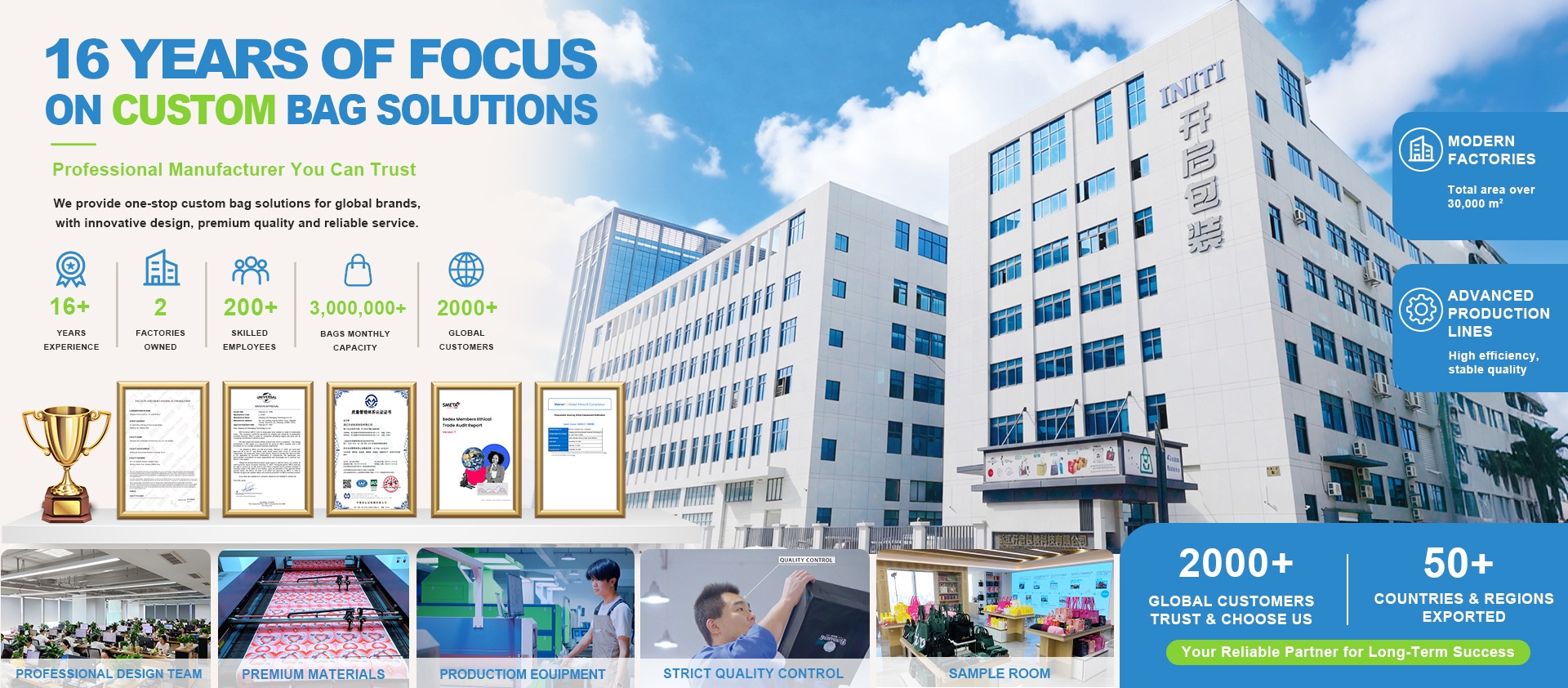
Hangzhou INITI Imp&Exp Co., Ltd. supports custom gift packaging projects for brands, retailers, importers, promotional companies and corporate buyers.
With more than 16 years of customization experience and two production facilities, INITI supports OEM and ODM projects from design and sampling through bulk production, inspection and export packing.
Our gift and promotional range extends beyond standard bags and includes paper packaging, rigid gift boxes and corporate gift sets. This makes it possible to develop the presentation box together with related bags, gift components and branded packaging when a project requires a coordinated solution.
For rigid-box projects, the priority is to build the package around the actual product rather than selecting an oversized standard box and filling the remaining space afterward.
Frequently Asked Questions
What is the difference between a rigid gift box and a folding carton?
A rigid box uses a thicker structural board and normally keeps its shape after assembly. A conventional folding carton is made to fold flat and relies more heavily on the folded paperboard structure itself.
Can rigid gift boxes be customized to fit jewelry?
Yes. The outer box and internal insert can be developed around rings, earrings, necklaces, bracelets, watches or mixed jewelry sets.
Can you make inserts for skincare bottles and jars?
Yes. Insert layouts can be developed according to the actual bottle, jar, tube and accessory dimensions.
Are magnetic gift boxes suitable for corporate gifts?
Yes. They work well for many presentation sets, especially where the box is expected to remain part of the gift. For larger programs, shipping volume should also be considered.
Can rigid boxes be made collapsible?
Certain rigid-box structures can be designed to fold or collapse for storage and shipment. The final assembled appearance and construction should be checked during sampling.
Which branding method is best for a premium gift box?
There is no single best method. Foil, embossing, debossing, printing and ribbon can all work well. The most suitable option depends on the brand style, paper surface, artwork and budget.
Do we need to send the actual products for sampling?
Exact physical products are ideal when the insert fit is critical. If they are not available, accurate dimensions, weights, photographs or dummy samples can be used during early development.
Can the same box be used for several gift sets?
Often yes. A shared outer box can sometimes use different inserts, sleeves or labels for different products. This should be planned during development because product dimensions still need to fit the common structure.
Inquiry Support
If the box structure has not been finalized, you can first provide the products, quantity and intended gift program. A suitable box and insert structure can then be recommended around the actual contents.
Related Products