Jute Bag vs Canvas Bag: Which Is Better for Reusable Shopping?
Jute and canvas are both widely used for reusable shopping bags, but they create very different products.
A jute bag is usually firmer, more textured and more structured. It works particularly well for groceries, food retail, gift packaging and brands that want a natural, rustic appearance.
A canvas bag is usually softer, more flexible and smoother. It is easier to fold, more comfortable for everyday carrying and better suited to detailed printing.
Neither material is automatically better.
For reusable shopping, the choice depends on what the bag will carry, how often it will be reused, how it needs to look and whether it will be washed regularly.
Jute vs Canvas at a Glance
| Feature |
Jute Bag |
Canvas Bag |
| Surface |
Coarse, textured |
Smooth, tightly woven |
| Structure |
Usually firmer |
Soft to structured |
| Folding |
Bulkier |
Easier to fold |
| Printing |
Better for simple graphics |
Better for detailed artwork |
| Repeated washing |
Usually not preferred |
More practical, depending on finish |
| Moisture exposure |
Needs care |
Generally easier to manage |
| Grocery use |
Very suitable |
Very suitable |
| Everyday tote use |
Good |
Excellent |
| Natural appearance |
Strong |
Clean, textile appearance |
| Large gusseted bags |
Very common |
Very common |
| Embroidery |
Possible but less common |
Very suitable |
| Premium fashion use |
More limited |
More versatile |
The exact result still depends on fabric weight, weave, lining, coating, handles and construction.
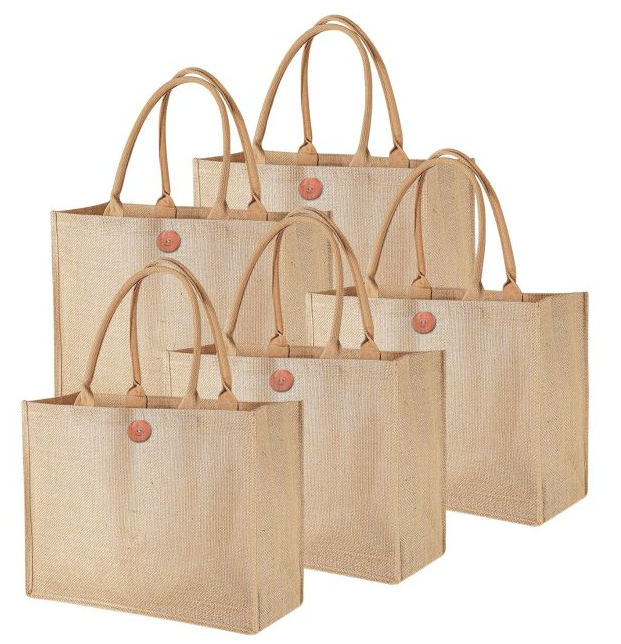
Jute is a natural bast fiber with a coarse, recognizable texture.
For shopping bags, it is commonly woven into relatively firm fabric that holds its shape better than lightweight cotton.
This makes jute especially suitable for bags with:
- Wide side gussets
- Flat bottoms
- Large grocery capacity
- Reinforced handles
- Structured rectangular shapes
A jute shopping bag often stands more upright when loaded, which can be useful for:
- Groceries
- Bottles
- Packaged food
- Gift sets
- Retail purchases
The texture is also part of the product's appearance. Jute is often selected specifically because it looks natural rather than smooth or highly finished. Current market comparisons consistently describe jute as coarser and more structured than cotton canvas.
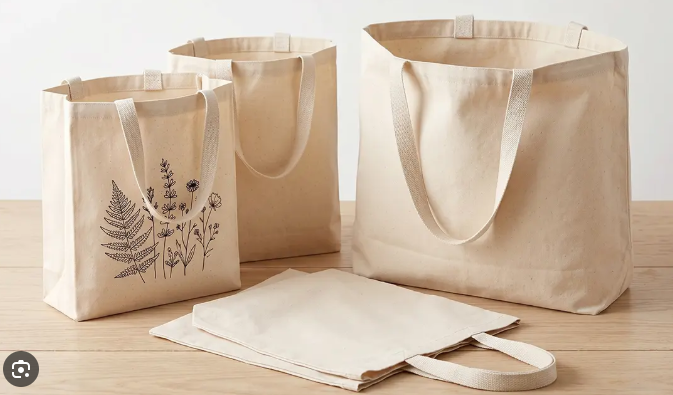
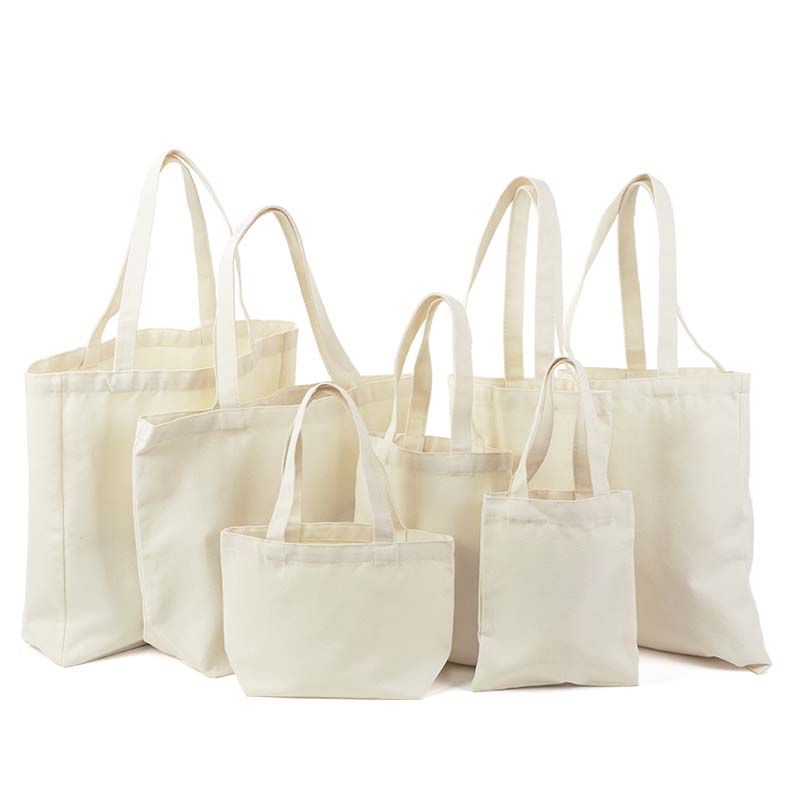
Canvas is a tightly woven fabric commonly made from cotton, although blended and other canvas constructions also exist.
Compared with jute, it normally has:
- A smoother surface
- Greater flexibility
- Softer hand feel
- Better foldability
Canvas can range from relatively light tote fabric to heavy material used for structured bags.
That gives it a wider visual range.
The same general material can be used for:
- Lightweight promotional totes
- Grocery bags
- Book bags
- Fashion totes
- Heavy reusable shopping bags
Fabric weight and construction therefore matter considerably.
Which Is Stronger for Shopping?
Both can carry substantial loads when the bag is properly constructed.
Jute fiber has good tensile strength and works well in structured grocery bags.
Canvas is also durable and has the advantage of being more flexible under repeated use.
In practice, shopping-bag strength is not determined by the face fabric alone.
The first weak point is often:
- Handle attachment
- Bottom seam
- Side seam
- Gusset corner
A heavy jute body with poorly reinforced handles may fail earlier than a lighter canvas bag with better stitching.
The same applies in reverse.
So instead of asking only:
Is jute stronger than canvas?
look at the complete bag:
fabric + seams + handles + reinforcement + expected load.
Which Is Better for Heavy Groceries?
Jute is particularly well suited to large grocery-style bags.
Its relatively stiff fabric works well with:
- Wide gussets
- Rectangular shapes
- Flat bases
That helps when carrying:
- Bottles
- Jars
- Fruit
- Vegetables
- Packaged groceries
The bag can remain relatively open and structured while items are loaded.
This is one reason jute continues to appear frequently in reusable food and grocery packaging.
Canvas can also carry groceries very well, especially when a heavier fabric and reinforced handles are used.
The difference is more about handling and shape:
Jute tends to feel more like a structured shopping carrier.
Canvas tends to feel more like a flexible tote.
Which Is Better for Everyday Carry?
Canvas usually has the advantage.
A canvas tote is easier to:
- Fold
- Place inside another bag
- Carry against the body
- Use for books or daily items
- Reuse outside grocery shopping
Its softer construction makes it easier to move between different uses.
A customer might use the same canvas tote for:
- Shopping
- Work
- Library books
- Travel
- Daily errands
Jute is reusable too, but a large structured jute bag can be less convenient when it is empty because it takes up more space.
Which Is Easier to Fold?
Canvas.
A normal cotton canvas tote can usually be folded relatively flat.
Jute fabric is often stiffer, and large jute shopping bags frequently include:
- Laminations
- Reinforced trims
- Structured gussets
which make them bulkier when stored.
If shoppers are expected to carry the reusable bag inside a handbag, backpack or vehicle compartment until needed, canvas is generally more convenient.
If the bag mainly moves between:
home → supermarket → home
the larger folded volume of jute may matter less.
Which Is Better in Wet Conditions?
Neither untreated jute nor untreated cotton canvas should be treated as waterproof.
But they behave differently around moisture.
Jute readily absorbs moisture and should be dried properly after getting wet. Repeated damp storage is not desirable for a natural jute bag.
Cotton canvas also absorbs water, but it generally tolerates everyday washing and handling better when the fabric and decoration are designed for it.
Both materials can also be:
to change their water resistance.
Once that happens, however, the bag is no longer behaving like untreated natural fabric.
For example, a laminated jute grocery bag can handle surface moisture differently from plain jute.
Not exactly.
Lamination can provide:
- Greater shape stability
- Improved resistance to surface moisture
- Easier cleaning
- Smoother interior or exterior surfaces
But it also changes the material system.
A laminated jute bag may contain:
- Jute
- Plastic film
- Synthetic handles
- Thread
- Other reinforcement
So claims such as:
natural
biodegradable
plastic-free
should be based on the actual complete construction, not simply on the fact that the main visible fabric is jute.
Which Is Easier to Clean?
Canvas is generally more practical when repeated cleaning is expected.
Some cotton canvas bags can be washed, although the correct method depends on:
- Fabric treatment
- Printing
- Dye
- Lining
- Handles
- Shrinkage allowance
Jute is usually better cleaned with:
- Spot cleaning
- Light brushing
- Careful drying
rather than frequent full washing.
A jute bag that becomes fully saturated may:
- Distort
- Become stiff after drying
- Develop uneven texture
- Lose some of its original shape
So for shopping programs where consumers are likely to wash the bag frequently, canvas usually makes more sense.
Which Material Is Better for Printing?
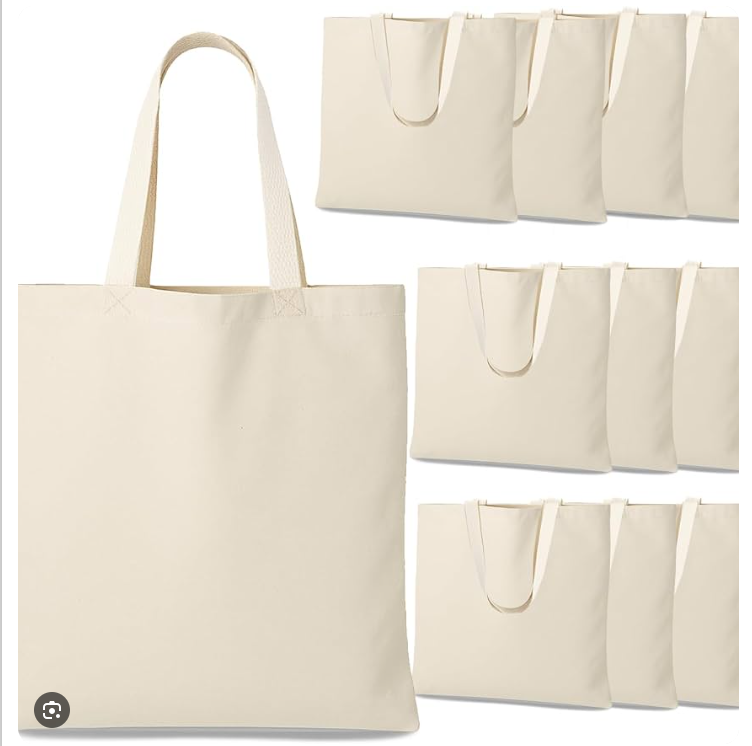
Canvas has the clearer advantage.
Its smoother and tighter surface supports cleaner reproduction of:
- Text
- Fine lines
- Illustrations
- Detailed logos
- Multi-color artwork
This makes canvas especially useful for:
- Fashion retail
- Museum shops
- Bookstores
- Event merchandise
- Branded lifestyle products
Current market comparisons consistently highlight print clarity as one of canvas's main advantages over coarse jute.
Can Jute Bags Be Printed?
Yes.
Jute works very well with the right artwork.
Good jute designs usually use:
- Bold logos
- Large text
- Simple shapes
- Limited fine detail
The coarse weave becomes part of the visual result.
That can work especially well for:
- Organic products
- Farm shops
- Coffee brands
- Wine retailers
- Natural food brands
- Gift packaging
Trying to reproduce extremely fine graphics directly on coarse jute is usually less effective than simplifying the artwork or adding a smoother panel.
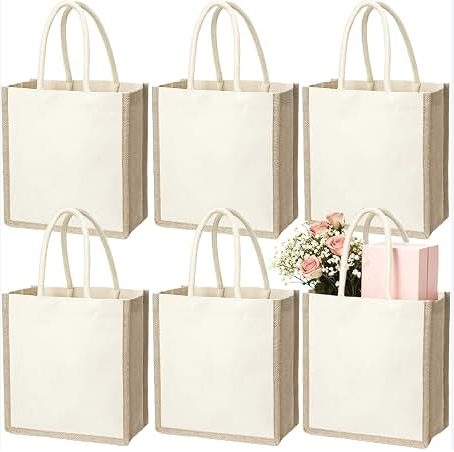
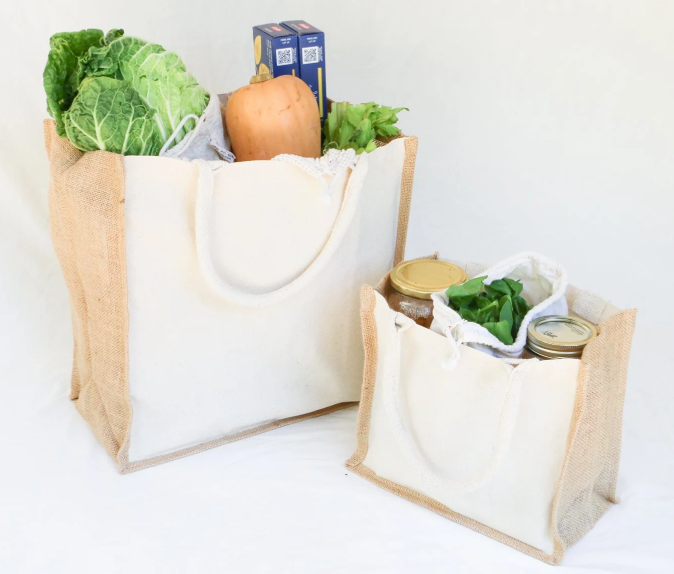
Why Combine Jute and Canvas?
This is actually a useful option when neither material alone gives the desired result.
A bag can use:
jute for the main body
and
canvas for handles, trim or printing panels.
The jute keeps the natural structured appearance.
The canvas provides:
- Smoother branding area
- Softer handles
- Reinforced edges
- Visual contrast
This type of mixed construction is common in higher-positioned reusable jute bags.
Which Material Feels More Premium?
That depends on the brand.
Canvas often feels more refined in:
- Fashion
- Lifestyle
- Corporate merchandise
- Premium promotional programs
because of its smoother surface and cleaner printing.
Jute can feel more premium when the brand identity is built around:
- Natural ingredients
- Handmade products
- Organic retail
- Gourmet food
- Wine
- Rustic gift packaging
A high-quality jute bag is not automatically less premium than canvas.
It simply communicates a different visual language.
Which Is Better for Supermarkets?
Both can work.
Jute makes sense when the retailer wants:
- Large grocery capacity
- Structured bag shape
- Natural appearance
- Wide gussets
Canvas makes sense when the retailer wants:
- Softer reusable totes
- Easy folding
- More detailed graphics
- Greater use beyond grocery shopping
For high-volume supermarket projects, price, packed volume and bag weight also matter.
A beautiful heavy bag may be less practical if:
- Freight cost becomes too high
- Customers do not want to carry it when empty
- The bag takes up too much checkout space
Material selection should therefore include logistics as well as appearance.
Which Is Better for Fashion and Lifestyle Retail?
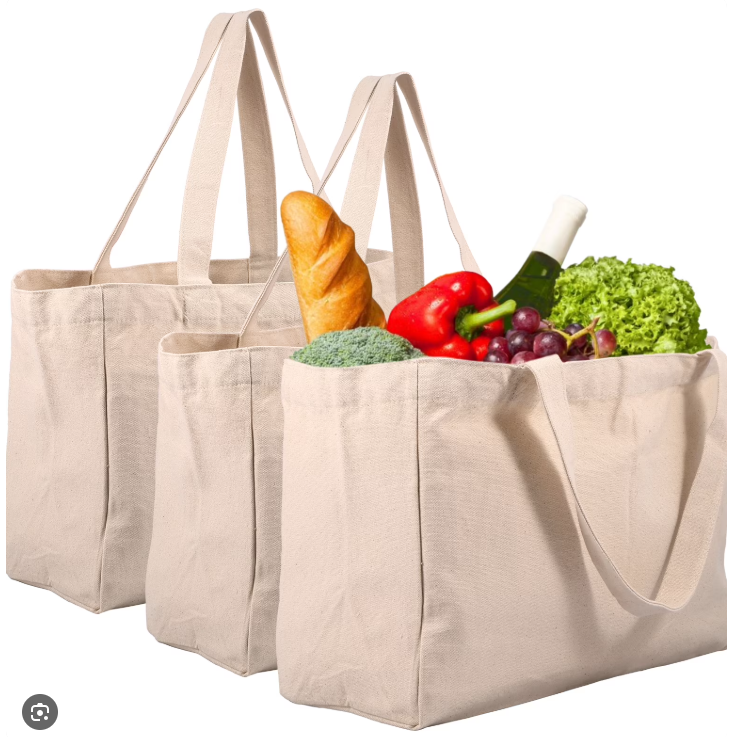
Canvas usually fits this market better.
It supports:
- Detailed graphics
- Embroidery
- Labels
- Multiple colors
- Different fabric weights
- Soft or structured shapes
A canvas tote can become merchandise in its own right rather than simply packaging for another purchase.
Jute is more distinctive but fits a narrower design language.
Which Is Better for Food and Organic Retail?
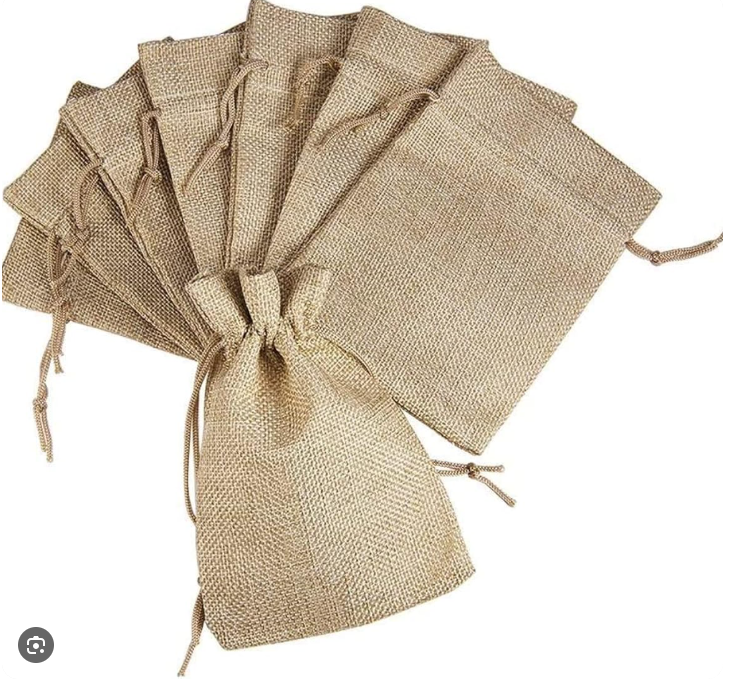
Jute often fits naturally.
Its texture works well with brands selling:
- Organic food
- Coffee
- Wine
- Farm products
- Handmade products
- Gourmet gifts
The bag reinforces the visual association with natural materials.
Canvas can also work, particularly when the retailer prefers a cleaner or more modern aesthetic.
What About Handles?
The handle can change how either material performs.
Common options include:
Jute Handles
Maintain a consistent natural appearance but can feel relatively coarse.
Cotton Webbing
Common on both jute and canvas bags.
It provides a softer grip and can carry substantial loads when properly attached.
Self-Fabric Canvas Handles
Common on canvas totes and easy to integrate into the bag construction.
PU Handles
Sometimes used on structured jute bags for a more polished retail appearance.
Regardless of material, heavier shopping loads require good reinforcement at the handle attachment.
Long Handles or Short Handles?
This depends more on intended use than on jute versus canvas.
Short handles work well for hand carrying.
Longer handles allow the bag to sit on the shoulder.
For large grocery loads, very narrow shoulder straps can become uncomfortable.
Handle width should therefore increase as expected carrying weight rises.
Does GSM Tell You Which Bag Is Better?
No.
GSM measures fabric mass per square meter.
It can be useful when comparing similar materials, but it does not tell the entire story.
A heavier fabric often provides more:
- Structure
- Substance
- Abrasion resistance
but performance also depends on:
- Fiber
- Weave
- Yarn
- Finishing
- Lamination
- Sewing
Jute bags are also frequently specified differently from cotton canvas, so comparing GSM numbers directly may not always be meaningful.
What About Environmental Claims?
This comparison needs care.
Both jute and cotton canvas can be used to make reusable bags, but it is too simplistic to say:
jute is always greener
or
canvas is always more sustainable because it lasts longer.
The environmental result depends on factors such as:
- Fiber cultivation
- Processing
- Dyeing
- Fabric weight
- Finishing
- Lamination
- Transport
- Number of reuses
- End-of-life handling
A heavy bag that is used only twice may not deliver the same practical benefit as a lighter bag reused regularly.
For brands, the safer approach is to make specific, supportable claims about:
- Material composition
- Recycled content
- Certification
- Reusability
rather than broad claims such as “100% sustainable.”
Jute vs Canvas for Different Shopping Uses
| Use |
Better Starting Point |
Main Reason |
| Large grocery shopping |
Jute |
Structure and wide gussets |
| Everyday errands |
Canvas |
Foldability and comfort |
| Fashion retail |
Canvas |
Printing and appearance |
| Organic food retail |
Jute |
Natural textured look |
| Bookstore tote |
Canvas |
Flexible daily carry |
| Wine / gourmet gifts |
Jute |
Structured presentation |
| Event merchandise |
Canvas |
Detailed branding |
| Farmers' market |
Either |
Depends on brand style |
| Supermarket reusable bag |
Either |
Structure vs foldability |
| Premium lifestyle tote |
Canvas |
Softer and more versatile |
| Natural gift packaging |
Jute |
Distinctive material texture |
When Should You Choose Jute?
Jute is a strong choice when the bag needs:
- A structured grocery shape
- Natural texture
- Wide gussets
- Strong visual connection with food or organic products
- Simple logo printing
- Gift-ready presentation
It is particularly suitable for reusable shopping bags that are expected to carry relatively bulky packaged goods.
When Should You Choose Canvas?
Canvas is usually the better choice when the bag needs:
- Frequent everyday reuse
- Easy folding
- Comfortable carrying
- Detailed printing
- Embroidery
- Repeated cleaning
- Fashion or lifestyle positioning
It also offers more flexibility when the same tote needs to function both as shopping packaging and as a daily bag.
Common Misunderstandings
Is Jute Always Stronger Than Canvas?
No.
Both can be strong. Finished-bag strength depends on fabric specification, seams, handles and reinforcement.
Is Canvas Waterproof?
No.
Untreated cotton canvas absorbs water. Coating or treatment is required if meaningful water resistance is needed.
Is Jute Waterproof?
No.
Plain jute absorbs moisture. Laminated jute behaves differently, but then the laminate becomes part of the material construction.
Can Jute Be Printed?
Yes.
Simple, bold graphics generally work better than very fine designs because of the coarse surface.
Can Canvas Be Washed?
Many canvas bags can be cleaned or washed, but the correct method depends on dye, printing, lining and finishing. Washability should be confirmed for the finished product.
Is Jute More Eco-Friendly Than Canvas?
There is no universal answer for every finished bag. Material source, processing, bag weight, coatings and actual reuse all affect environmental impact.
Conclusion
For reusable shopping, jute and canvas are both good materials, but they suit different habits and brand styles.
Jute works particularly well when you want:
- A firm, structured shopping bag
- Large grocery capacity
- Natural texture
- Rustic or food-oriented presentation
Canvas works particularly well when you want:
- A softer everyday tote
- Easy folding
- More detailed branding
- Greater versatility outside shopping
If the customer will mostly use the bag for weekly grocery trips, a structured jute bag can make a lot of sense.
If the customer is expected to carry the same bag for shopping, work, travel and everyday errands, canvas is usually easier to live with.
The better material is therefore not simply the stronger or more natural-looking one.
It is the one the customer is most likely to keep using.
Inquiry Support
For a custom reusable shopping bag project, you can provide:
- Intended use
- Estimated quantity
- Preferred size or reference dimensions
- Jute or canvas preference
- Expected contents
- Handle length
- Required colors
- Logo artwork
- Lining or lamination requirements
- Packaging requirements
If you have not finalized all details, you can first send your intended use and target quantity, and we can recommend a suitable specification.
Related Products



 Hot News