

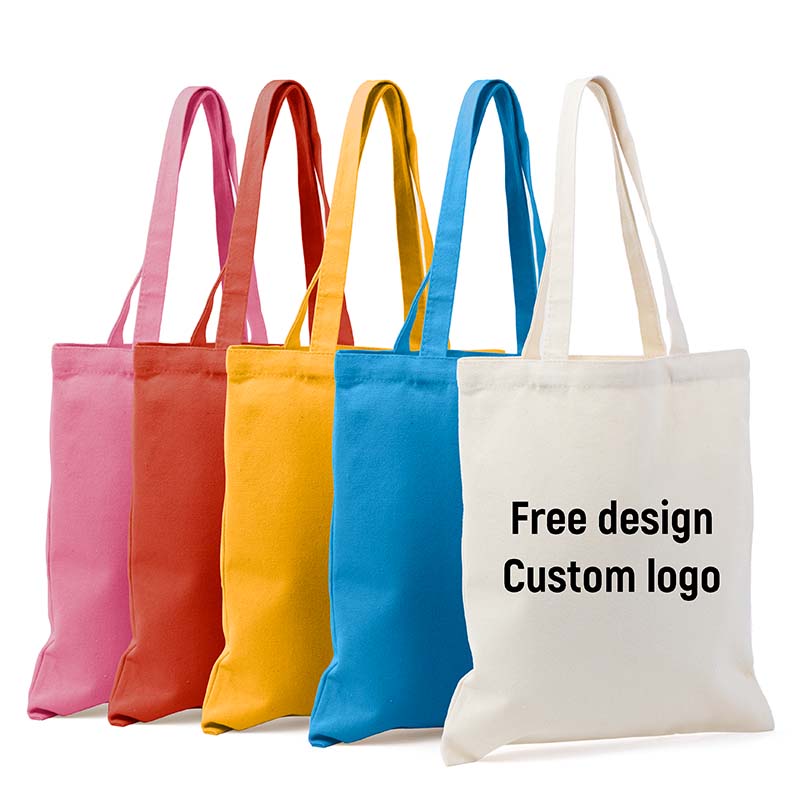
When selecting a cotton bag for everyday carrying, retail packaging, promotional use, or industrial storage, two technical factors consistently determine whether it will perform as expected: fabric weight and weave structure. These are not merely aesthetic considerations. They define how much load the bag can bear, how long it will last under repeated use, how it will feel in a customer's hand, and whether it suits the intended application. Understanding these two variables before purchasing or sourcing a cotton bag is essential for making a decision that truly serves the end use.
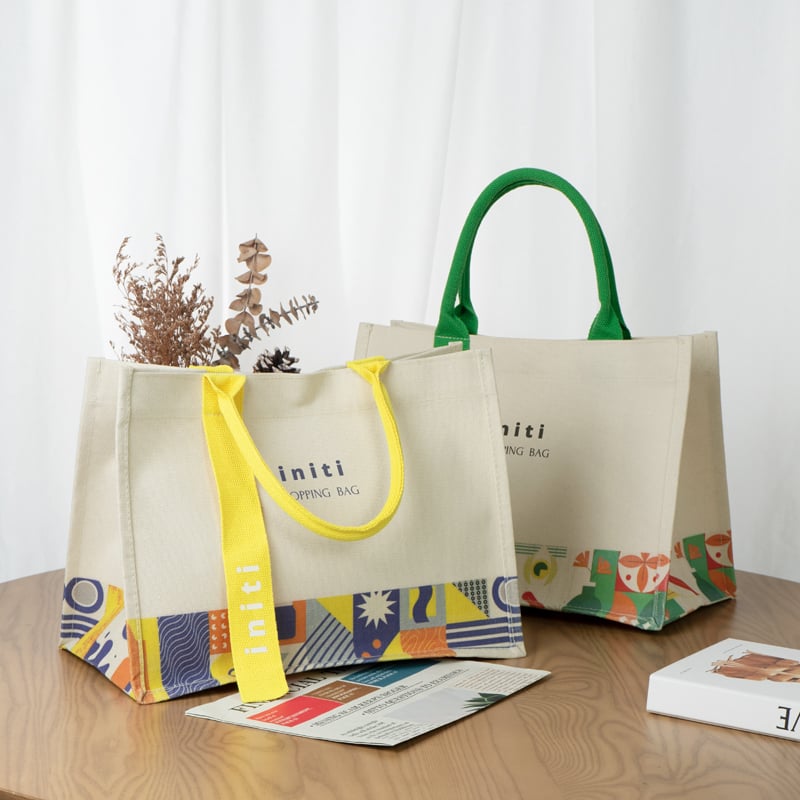
A cotton bag is not simply a bag made from cotton. It is a product whose performance profile is entirely shaped by how the fibers have been spun, how the yarn has been woven, and how heavy the resulting fabric is per square meter. From a lightweight drawstring bag used in retail gifting to a thick canvas tote designed to carry heavy groceries, every variation in weight and weave produces a different use-case fit. This article explores how these two technical dimensions interact and what practical implications they hold for buyers, brands, and procurement teams.
Understanding Fabric Weight in Cotton Bags
What GSM Means and Why It Matters
Fabric weight in a cotton bag is measured in GSM, which stands for grams per square meter. This single number tells you how dense and substantial the fabric is, and it serves as one of the most reliable predictors of a bag's durability, rigidity, and load-bearing capacity. A low GSM cotton bag will feel thin and lightweight, while a high GSM cotton bag will feel substantial, almost stiff, and noticeably more rugged.
For general reference, a cotton bag fabric below 150 GSM is considered lightweight and best suited for promotional giveaways, light retail shopping, or packaging applications where carrying weight is minimal. Fabrics in the 200 to 280 GSM range represent the mid-weight segment and are popular for branded totes, grocery bags, and everyday carry scenarios. Anything above 350 GSM enters heavy canvas territory, where the cotton bag is expected to handle significant loads, rough handling, and long-term repetitive use.
The practical implication is direct: if you need a cotton bag that will carry books, tools, produce, or heavy retail merchandise, the fabric weight must be appropriate. Choosing too low a GSM for a demanding application results in torn seams, distorted handles, or complete structural failure. Choosing too high a GSM for a light packaging task increases cost unnecessarily and may make the bag feel cumbersome to the end user.
How Weight Affects Handle and Seam Performance
The weight of the fabric in a cotton bag directly influences how the handles and seams behave under stress. Heavier fabric provides a more stable base for stitching, meaning that reinforced seams hold more securely and are less likely to unravel under tension. Handle attachment points, which are typically the highest-stress areas of any cotton bag, benefit significantly from higher GSM fabric because the stitches have more material to grip.
In contrast, a cotton bag made from lightweight fabric may have perfectly executed stitching, yet the fabric itself can tear around the thread lines when substantial weight is placed inside. This is why the relationship between GSM and stitching style must be considered as a system. A heavy-duty cotton bag requires both high GSM fabric and reinforced multi-row stitching at the handle junction to deliver reliable performance.
For brands that use a cotton bag as a customer-facing product, handle strength is also a matter of brand experience. A bag that fails under normal use creates a negative impression. Selecting the right fabric weight eliminates this risk before the product is even produced.
The Role of Weave Structure in Cotton Bag Function
Plain Weave and Its Common Applications
Plain weave is the most common structure found in a cotton bag. In this configuration, each warp thread passes alternately over and under each weft thread, creating a symmetrical, balanced interlacing pattern. The result is a fabric that is uniform in both directions, relatively flat, and easy to print on. Plain weave cotton fabrics are widely used in promotional tote bags, event giveaways, and retail shopping bags precisely because their flat surface accepts screen printing and heat transfer designs with high fidelity.
Plain weave cotton bag fabric also tends to be breathable and lightweight when produced at lower GSM, making it a natural fit for food-safe applications such as bread bags, produce bags, and farmers' market totes. The open structure allows air circulation, which is a functional requirement in these use cases. However, plain weave fabric at low GSM offers limited structural resistance, meaning it is not appropriate for heavy-load applications without reinforcement.
When plain weave is produced at higher GSM — often referred to as canvas — the cotton bag gains considerable strength and body. A high-GSM plain weave canvas cotton bag is capable of holding several kilograms without distortion, making it one of the most versatile and widely recognized formats in the market today.
Twill and Duck Weave for Structural Demands
Twill weave introduces a diagonal rib pattern by passing the weft thread over multiple warp threads before going under one. This offset interlacing creates a fabric that is more pliable, more resistant to tearing, and generally stronger than a plain weave of equivalent GSM. When a cotton bag is expected to handle rough conditions — such as tool carrying, agricultural storage, or industrial sample transport — twill weave fabric offers a practical advantage in tear resistance and drape.
Duck weave is a tightly packed plain weave variant that achieves extremely high density and stiffness. A cotton bag made from duck weave fabric feels almost rigid when new and softens with use. It is commonly used in work bags, heavy-duty totes, and applications where shape retention under load is important. Duck canvas cotton bag products are particularly valued in trade and craft contexts where abrasion resistance and structural integrity are non-negotiable.
For procurement teams and brand managers sourcing a cotton bag at scale, understanding these weave differences allows for much more precise specification writing. Rather than simply requesting a 'canvas tote,' buyers can specify GSM, weave type, and thread count to ensure the product they receive consistently meets performance expectations across production batches.
How Weight and Weave Interact to Define Use Cases
Matching the Combination to the Application
No single GSM or weave choice works universally across all cotton bag applications. The practical performance of any cotton bag is the outcome of how weight and weave interact together. A lightweight plain weave cotton bag is ideal for promotional packaging, branded gifting, and light retail shopping. A mid-weight plain weave or twill cotton bag covers the broad range of everyday tote, grocery, and branded merchandise applications. A heavy canvas duck weave cotton bag handles industrial, agricultural, or sustained daily use scenarios.
This interaction also affects how the cotton bag ages. Higher GSM fabrics, particularly in twill and duck weave formats, tend to develop a worn-in character with use, which many consumers associate with quality and authenticity. Lighter plain weave fabrics may show wear more quickly, but when intended for single-use or short-term promotional purposes, this is not a disadvantage.
The print surface quality also varies by this combination. A tightly woven, high-GSM cotton bag provides a dense print substrate that produces cleaner, more detailed graphic reproduction. A loosely woven, low-GSM cotton bag may allow ink to absorb unevenly, which affects branding quality. If print precision is a priority for your application, specifying a mid-to-high GSM plain weave cotton bag is the most reliable approach.
Seasonal and Environmental Considerations
The weight and weave of a cotton bag also become relevant when considering the environments in which the bag will be used. In warmer climates or seasons where breathability is valued, a lighter open-weave cotton bag performs better from a user comfort standpoint. The fibers allow moisture and air to pass through, preventing heat buildup and keeping contents at ambient temperature.
In cooler or wetter environments, a heavier and more tightly woven cotton bag offers better resistance to moisture penetration, though it should be noted that cotton in its untreated form is not waterproof. For applications where moderate moisture resistance is needed alongside structural strength, a waxed or coated finish applied to a heavy canvas cotton bag may be the most appropriate solution.
Understanding these environmental fit factors ensures that the cotton bag selected will remain functional and comfortable throughout its intended service life. This kind of detail is especially important for brands that distribute cotton bags across diverse geographies or seasons as part of a promotional or retail program.
Sustainability and Weight-Weave Tradeoffs
Durability as a Sustainability Driver
One of the most cited reasons for choosing a cotton bag over single-use plastic alternatives is sustainability. However, sustainability benefit in a cotton bag is directly tied to how many times it is actually used. Life cycle assessment studies consistently show that a cotton bag needs to be used dozens to hundreds of times before it offsets the environmental cost of its production, which includes water consumption, land use, and processing.
This means that a heavier, more durably constructed cotton bag — one with higher GSM and a tightly interlaced weave — delivers a greater sustainability return per unit simply because it lasts longer. A cotton bag that fails after ten uses does not deliver the same environmental value as one that serves reliably for years. Choosing the right weight and weave is therefore not only a practical decision but also a responsible one from a sustainability perspective.
Brands that communicate sustainability as a value point should ensure their cotton bag specifications reflect that commitment through genuine durability rather than material labeling alone. A well-specified, high-durability cotton bag is a more honest representation of sustainable intent than a thin promotional bag that ends up discarded after minimal use.
Weight, Weave, and Cost Efficiency in Bulk Orders
For businesses ordering a cotton bag in bulk, fabric weight and weave also carry direct cost implications. Higher GSM fabrics use more raw material per unit area and typically require more complex weaving processes, both of which increase unit cost. However, over the functional life of the product, a heavier cotton bag often delivers lower cost per use because it does not need to be replaced as frequently.
Procurement teams should evaluate their cost calculations on a total-use basis rather than a per-unit basis. For a promotional campaign where the cotton bag is a one-time giveaway, optimizing for lower GSM to reduce budget spend is reasonable. For a retail product, a branded tote, or a reusable shopping bag that will represent the brand across many customer interactions, investing in higher-quality fabric weight and weave is a sound commercial decision.
Understanding these tradeoffs allows sourcing teams to make informed decisions about where to position their cotton bag on the weight-weave spectrum based on actual business requirements rather than assumptions or lowest-price logic.
FAQ
What GSM is recommended for a cotton bag used in daily grocery shopping?
For daily grocery use, a cotton bag in the range of 220 to 300 GSM is generally the most practical choice. This weight range provides sufficient strength to handle moderate loads, offers good handle stability, and is durable enough to withstand regular washing and repeated use without losing its structural integrity. A plain weave or twill construction at this weight range is the most common format found in quality grocery tote applications.
Does weave type affect how well a cotton bag can be printed on?
Yes, weave type has a direct impact on print quality. A tightly woven plain weave cotton bag provides a smoother and more uniform surface for screen printing, digital printing, and heat transfer methods. Loosely woven or heavily textured weaves can cause ink to absorb inconsistently, resulting in less defined graphics. If branding clarity and print detail are priorities, specifying a plain weave cotton bag with a moderately high GSM is the recommended approach.
Is a heavier cotton bag always more durable than a lighter one?
Higher GSM generally correlates with greater durability, but it is not the only factor. Weave structure, thread count, yarn quality, and stitching construction all contribute to the overall durability of a cotton bag. A high-GSM loosely woven cotton bag may be less durable than a mid-GSM tightly woven one in certain stress conditions. The best durability outcome comes from matching appropriate GSM with the right weave structure and quality stitching for the intended load and use frequency.
Can the weight and weave of a cotton bag affect its suitability for food contact applications?
Yes, particularly for food contact use cases such as produce bags or bread bags. A lightweight, open-weave plain cotton bag made from unbleached natural fibers is typically the preferred option for food contact, as it allows breathability and is free from chemical treatments that denser or finished fabrics might carry. Heavier, treated, or dyed cotton bag fabrics may not be appropriate for direct food contact without specific food-safe certifications, so it is important to confirm material specifications with your supplier when food safety is a requirement.