

Every time a consumer picks up a shopping bag and loads it with goods, they are placing trust in the material that holds everything together. Whether the bag is expected to survive a single grocery run or hundreds of reuse cycles, the material it is made from is the single most decisive factor in determining how long it will last, how much weight it can bear, and how it will hold up under real-world stress. For retailers, brand owners, and procurement professionals, understanding this relationship between material choice and durability is not a minor detail — it is a core business decision that affects cost efficiency, customer satisfaction, and brand perception.
A shopping bag is not just a carrier — it is a functional product that must perform reliably across multiple conditions including load stress, moisture exposure, temperature variation, and repeated use. Each material brings a unique profile of strengths and weaknesses to these demands. Some materials are engineered for maximum tensile strength, while others prioritize lightweight flexibility or water resistance. By examining how different materials interact with durability factors, buyers and designers can make informed choices that align with their specific application needs and long-term value goals.
The Core Relationship Between Material Composition and Bag Longevity
How Fiber Structure Drives Mechanical Strength
The internal structure of a shopping bag material — whether it is woven, knitted, laminated, or nonwoven — directly governs how the bag responds to physical stress. Woven materials, for instance, distribute tensile forces across interlocked fibers, which prevents localized tearing from propagating across the entire surface. This structural logic is why a polypropylene woven shopping bag tends to outlast a simple laminated paper version when carrying heavy or dense items repeatedly.
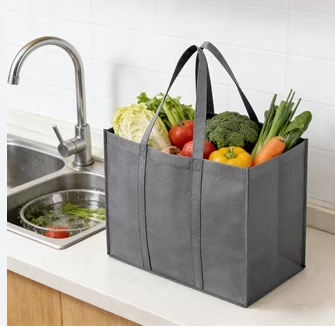
In contrast, nonwoven fabrics bond fibers through heat or chemical processes rather than mechanical interlocking. While this approach is cost-efficient and produces lightweight bags, the bond points between fibers are more vulnerable to shear stress and repeated bending cycles. Over time, these stress concentrations cause the material to weaken at seams and fold lines, shortening the useful life of the shopping bag significantly.
Understanding the fiber architecture of any shopping bag material means understanding how the bag will age under real use conditions. Mechanical interlocking in woven structures creates redundancy — if one fiber strand weakens, adjacent strands continue to carry the load. This redundancy is what makes woven materials the durability benchmark against which other shopping bag materials are often measured.
Polymer-Based Materials and Their Resistance Properties
Polypropylene (PP) and polyester are the two most widely used polymer-based materials in modern shopping bag production. Both offer excellent resistance to moisture, mold, and UV degradation compared to natural fiber alternatives. A polypropylene shopping bag, particularly when woven into a flat or tubular fabric, combines high tensile strength with low density, making it exceptionally well suited to heavy-load retail applications.
Polyester shopping bag fabric, on the other hand, offers slightly better resistance to abrasion and retains color vibrancy longer under sunlight exposure. This makes polyester a popular choice for promotional or branded shopping bag products where visual appeal must be maintained over hundreds of uses. However, polyester tends to be heavier per unit area than polypropylene, which affects the bag's overall weight and the cost per unit for bulk orders.
The chemical stability of polymer-based fibers also means that a properly manufactured shopping bag made from these materials will not degrade due to humidity or incidental water exposure — a significant durability advantage over paper or cotton alternatives in outdoor or mixed-environment retail settings.
How Weave Density and Lamination Affect Structural Durability
The Role of Weave Tightness in Load Bearing
In a woven shopping bag, the density of the weave — measured in threads per square inch — directly affects how much load the fabric can support before deformation begins. A tighter weave creates more contact points between warp and weft yarns, distributing applied loads across a larger number of interlocking fiber segments. This results in a shopping bag that resists elongation and distortion even under sustained heavy loading.
Looser weave constructions reduce material cost and weight but sacrifice the load distribution advantage. Under heavy loads, a loosely woven shopping bag will experience progressive fiber slippage at the weave intersections, which causes the bag to stretch unevenly and lose its original shape. Over repeated use cycles, this slippage leads to permanent deformation and, eventually, structural failure at high-stress points such as handle attachment zones.
For high-volume retail applications, specifying an appropriate weave density is essential. Procurement teams sourcing woven polypropylene shopping bag products should evaluate the grams per square meter (GSM) rating of the fabric, as this metric is a reliable proxy for both weave density and the overall weight-bearing capacity of the finished shopping bag.
Lamination and Its Effect on Surface Durability
Lamination is a secondary process applied to many woven and nonwoven shopping bag products to enhance their surface resistance properties. A thin layer of polypropylene or polyethylene film is bonded to one or both faces of the base fabric, creating a barrier against moisture ingress, surface abrasion, and contamination. This laminated surface also provides a smoother printing substrate, which supports high-quality branding applications on the finished shopping bag.
From a durability standpoint, lamination adds meaningful protection at the surface level, particularly for shopping bag products used in wet markets, grocery environments, or outdoor promotional events. However, the laminate layer itself introduces a new potential failure mode: delamination. If the adhesion between the laminate and the base fabric is inadequate — due to inferior bonding agents or substandard manufacturing processes — the surface coating can begin to peel under repeated flexing, heat exposure, or washing.
Quality-controlled lamination that uses appropriate bonding chemistry for the base material type is therefore a key specification point when evaluating a shopping bag for durability-sensitive applications. A well-laminated polypropylene woven shopping bag will outperform an unlaminated version in wet and abrasive conditions, but only if the lamination process meets the correct technical standards.
Natural Fiber Materials and Their Durability Trade-Offs
Cotton and Canvas Shopping Bag Performance
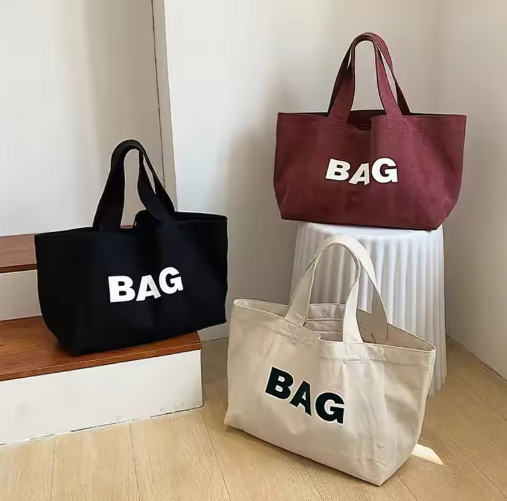
Cotton and canvas shopping bag products occupy a strong position in the premium and eco-conscious market segments. Natural cotton fibers are inherently breathable, soft to the touch, and capable of carrying moderate loads when properly woven into a dense canvas structure. A heavy-duty canvas shopping bag with double-stitched seams and reinforced handles can achieve durability levels that rival many synthetic options for everyday retail use.
However, natural cotton fibers are significantly more vulnerable to moisture and microbial degradation than polymer-based alternatives. A cotton shopping bag that is repeatedly exposed to damp conditions without adequate drying will develop mold and mildew, which weakens the fiber structure and accelerates deterioration. Color fastness is also a concern, as natural dyes and some reactive dyes used on cotton shopping bag products can fade substantially after repeated washing and UV exposure.
For indoor retail environments and moderate-use scenarios, a well-made cotton shopping bag remains a durable and sustainable choice. For high-frequency, high-load, or outdoor use cases, however, the moisture sensitivity of natural cotton represents a genuine durability limitation that buyers must factor into their sourcing decisions.
Jute and Natural Woven Fiber Limitations
Jute is another natural fiber commonly used in shopping bag production, valued for its biodegradability and rustic aesthetic appeal. Jute fibers have reasonable tensile strength in dry conditions, and a coarsely woven jute shopping bag can handle substantial loads in controlled environments. However, jute is highly hygroscopic — it absorbs moisture from the air readily — and this characteristic accelerates fiber degradation significantly.
When a jute shopping bag is exposed to repeated moisture cycles, the cellulose structure of the jute fibers weakens progressively, leading to brittleness and eventual fiber breakage. The handles, which experience the most concentrated stress, are typically the first point of failure in a jute shopping bag under moderate to heavy use. This is why many premium jute bag designs incorporate cotton rope or synthetic webbing handles to extend the overall service life of the shopping bag.
Understanding these inherent limitations does not disqualify jute as a valid material choice — it simply defines the appropriate use context. A jute shopping bag performs best in low-frequency, light-load, and dry-environment applications where its environmental credentials and visual appeal are the primary value drivers rather than industrial durability.
Stitching, Handle Construction, and Seam Integrity
Why Seam Quality Is a Durability Multiplier
Even the most durable base material in a shopping bag can be undermined by poor seam construction. The seams of a shopping bag are the points where multiple material panels are joined, and these joints are subjected to peel forces, shear forces, and repeated flexing throughout the bag's service life. A shopping bag with tight, even, double-stitched seams using appropriate thread weight will retain structural integrity far longer than a bag with loose or single-stitched construction, regardless of material quality.
Thread selection also plays a role in seam durability. Polyester thread is commonly used in shopping bag manufacturing because it resists moisture, UV degradation, and breakage better than cotton thread. In a polypropylene woven shopping bag, using matching polyester thread creates a chemically consistent seam that expands and contracts at a similar rate to the base fabric, reducing the risk of seam stress cracking under temperature variation.
For procurement teams evaluating shopping bag samples, examining seam quality under magnification and performing simple pull-test assessments can reveal significant differences in manufacturing quality that may not be visible in standard product photography or specification sheets.
Handle Attachment as a Critical Durability Point
The handle attachment zone is consistently the highest-stress area in any shopping bag design. All of the vertical load force is transferred through the handle-to-body junction every time the bag is lifted. This concentration of stress means that how the handle is attached — and what reinforcement is used at the attachment point — has a disproportionately large impact on the overall durability of the shopping bag.
Reinforcing patches, bartack stitching, and handle web extensions that distribute the load further into the bag body are all techniques used to extend the service life of a shopping bag at this critical point. In high-quality woven polypropylene shopping bag designs, the handle webbing is often sewn through multiple layers of base fabric and a reinforcing insert, creating a load path that prevents any single stitch line from becoming an isolated failure point.
Evaluating handle attachment design alongside material selection gives a complete picture of how durable a shopping bag will actually be in use — because a bag with premium fabric but poorly engineered handle attachment will fail at the handle long before the base material reaches its structural limits.
FAQ
Which shopping bag material offers the best balance of durability and reusability?
Polypropylene woven fabric is widely regarded as offering the best balance of durability and reusability in the shopping bag market. Its combination of high tensile strength, moisture resistance, light weight, and resistance to UV degradation allows a well-made woven PP shopping bag to withstand hundreds of use cycles across a wide range of retail environments. When laminated and properly seam-finished, a PP woven shopping bag delivers excellent long-term value for both retailers and end consumers.
Does lamination always improve the durability of a shopping bag?
Lamination improves specific aspects of shopping bag durability — particularly surface abrasion resistance and moisture protection — but it does not universally improve all durability dimensions. If lamination is applied with insufficient adhesion, it can peel away under repeated use, reducing the bag's aesthetic quality and exposing the base fabric to direct wear. Quality-controlled lamination using compatible bonding chemistry for the base material is the key differentiator between lamination that enhances durability and lamination that creates a new failure mode.
How does handle design affect how long a shopping bag lasts?
Handle design has a critical influence on shopping bag longevity because the handle attachment zone is where the highest concentration of load stress occurs. Reinforced handle attachment using bartack stitching, multi-layer panel overlap, or webbing extensions that distribute force into the bag body dramatically extends service life. A shopping bag with well-engineered handle attachment will typically outlast a bag with inferior handle construction by a significant margin, even if both bags are made from identical base materials.
Are natural fiber shopping bags less durable than synthetic ones?
In most practical applications, natural fiber shopping bags are more sensitive to environmental conditions — particularly moisture, mold, and UV exposure — than their synthetic counterparts. Cotton and jute shopping bag products perform well in dry, moderate-use conditions but degrade faster in high-humidity, high-frequency, or outdoor environments. Synthetic materials such as polypropylene and polyester offer more consistent durability across a wider range of conditions, making them the preferred choice for high-volume retail and industrial shopping bag applications where long service life is a priority.