Gift bags do more than hold products. For retailers, promotional gift companies, event organizers, and private-label brands, they are part of the product presentation, customer experience, and overall brand identity. The right combination of material, bag style, construction, and customization can make a gift feel more valuable while keeping packaging practical and cost-effective.
However, choosing gift bags for commercial use involves more than selecting an attractive color or printing a logo. A bag designed for a lightweight jewelry gift may not work for a boxed candle, a clothing set, or a corporate welcome kit. Similarly, a premium-looking bag may be unsuitable for a high-volume promotion if its material, finishing, or assembly requirements push costs beyond the project budget.
This guide explores the most common gift bag materials and styles, explains how their construction affects performance, and provides practical advice for selecting, customizing, and sourcing gift bags in bulk. Whether you are developing retail packaging, preparing seasonal gift sets, or creating branded giveaways, understanding these differences will help you make more informed purchasing decisions.
What Is a Gift Bag?
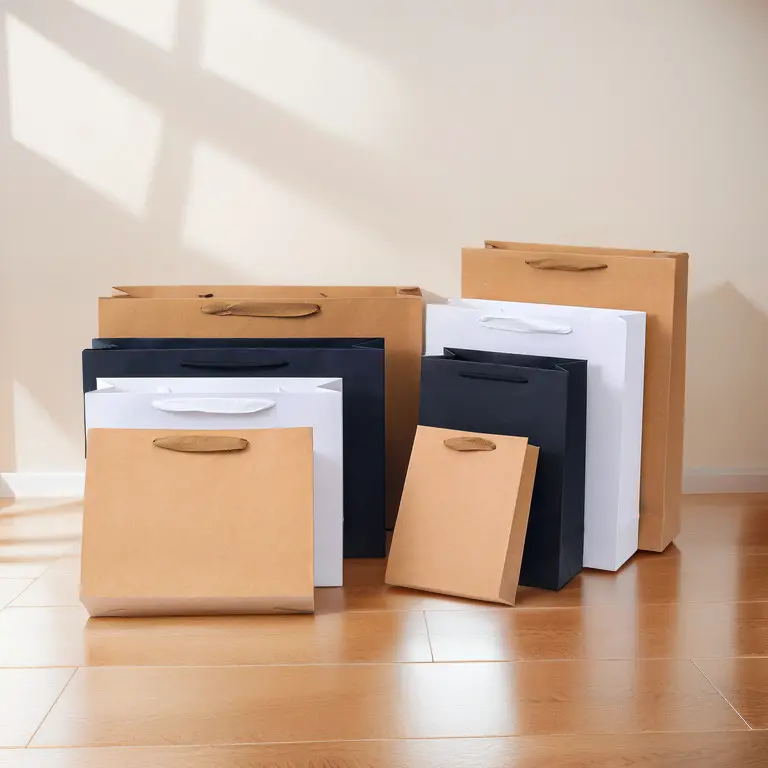
A gift bag is a type of packaging designed to hold and present one or more items in a way that is convenient, attractive, and appropriate for the occasion. Unlike ordinary shopping bags, gift bags often place greater emphasis on presentation, decorative details, and the experience of receiving the product.
Gift bags can be made from paper, cotton, canvas, non-woven polypropylene, polyester, jute, and other materials. They may feature simple open tops, drawstring closures, ribbon handles, reinforced bases, or more specialized structures designed for particular products.
In commercial applications, gift bags generally serve four functions:
- Product presentation: Gift bags make products look organized and ready to give, reducing the need for additional wrapping. The choice of material, color, shape, and finish can influence how the gift is perceived, from simple and practical to premium and sophisticated. A well-sized bag also helps present the product neatly without leaving excessive empty space or making the contents difficult to remove.
- Protection and handling: Gift bags help keep products and accessories together during storage, transport, and handover. Depending on the material and construction, they can reduce exposure to dust and minor surface damage while making items easier to carry. Handle strength, bottom support, material thickness, and seam quality are important considerations.
- Brand communication: Printed logos, brand colors, patterns, and finishing details help create a recognizable brand experience. Gift bags can reinforce brand identity across retail packaging, corporate gifts, promotional campaigns, and special events. The material and printing method should be selected together to ensure that the design remains clear, consistent, and suitable for the intended audience.
- Additional usefulness: Reusable gift bags can continue to serve as shopping bags, storage pouches, cosmetic bags, or everyday carry bags after the original gift has been received. This extended use may provide lasting value for recipients and additional brand exposure for businesses. To encourage reuse, buyers should consider practical factors such as durability, capacity, handle comfort, and whether the bag suits everyday needs.
The Three Layers of Every Gift Bag
Every gift bag is the result of three separate decisions stacked on top of each other, and once you can see the three layers, catalogues become much easier to read.
The body is what the bag is made from: paper, fabric, non-woven polypropylene, film. This decides how the bag feels, how much it weighs, whether it can be printed in photographic detail, and what happens to it after the gift is opened.
The build is how the panels are cut, folded and joined: a flat bag, a gusseted bag, a turned-top shopper, a board-sided bag, a drawstring pouch. This decides how the bag holds its shape, what it can accept, and how it behaves when loaded.
The finish is what has been done to the surface: uncoated, matte film, gloss film, soft-touch film, foil stamping, embossing, spot UV. This decides how the bag looks under light, how it resists scuffing, and whether it can be recycled.
Almost all confusion in this category comes from collapsing those three layers into one. A "matte gift bag" and a "glossy gift bag" are not two types of bag. They are the same bag with two different films on it. A "luxury gift bag" is not a material either; it is a price position that can be reached with thick board and foil, or with a thin non-woven and a very good print. A "kraft bag" describes the fiber and the color, and says nothing about whether the paper is 120 gsm or 250 gsm.
That is why two bags can look identical online and feel completely different in person: the photograph captures the finish, and the finish is the layer that photographs best. The body and the build — the two layers that decide how the bag behaves — are exactly the two that a photograph cannot show.
Common Gift Bag Materials
Material selection affects the appearance, structure, printing options, durability, and unit cost of a gift bag. It also influences how easily the bag can be stored, packed, transported, and reused.
There is no universally best material. The right option depends on the gift itself, the expected level of presentation, the quantity required, and the intended use after the gift is opened.
一、Paper Gift Bags: The Everyday Standard
Paper is the default gift bag material, and for good reasons. It prints beautifully, it folds flat for shipping, it holds a shape once folded, it accepts an enormous range of surface treatments, and it carries credible recycling and certification stories. It is also the material with the widest quality range: the difference between a good paper bag and a poor one is usually invisible until you pick it up.
Four paper families cover almost everything sold as a paper gift bag.
Kraft paper is unbleached paper made from wood pulp, and its brown color comes from the fiber itself rather than from dye. It has a natural, slightly rough surface, a warm tone, and an honesty that suits food, artisan products, plants, and brands that do not want to look corporate. It is also the most forgiving material to print on in one or two colors, because a solid logo on brown kraft reads clearly without any white base coat. What it cannot do is reproduce a photograph: the surface absorbs ink unevenly, so gradients turn muddy and fine type fills in. Kraft is also available bleached to a pale cream or white, which keeps the matte texture but allows cleaner color.
Coated art paper is paper with a thin mineral coating that creates a smooth, sealed surface. This is the material behind most premium retail gift bags, and the reason is simple: it holds detail. Four-color artwork, fine serif type, skin tones in a photograph, a gradient sky — all of it reproduces cleanly on a coated sheet and none of it reproduces well on uncoated kraft. The trade-off is that the coating makes the paper feel less natural and, at the heavier end, slightly stiffer and colder in the hand.
Board — white card, duplex board, or greyboard — is the material behind bags that need to stand up on their own. A board-sided gift bag uses a rigid greyboard panel wrapped in printed paper, so the walls hold their shape even when the bag is empty. This is what most people mean when they describe a bag as feeling "like a real gift bag" rather than a shopping bag. It costs more, ships with more volume, and is the right choice when the bag is part of the gift rather than a way of carrying it.
Specialty papers include textured stocks, metallic and pearlescent sheets, black card, and washable kraft paper. They exist to solve specific problems. Textured stock makes embossing and foil look richer. Washable kraft paper has a soft, leather-like drape and creases instead of tearing, which makes it popular for reusable soft gift bags and pouches. These materials are usually chosen for a particular look, and they narrow the printing options, so they work best when the design is simple.
Why recycled paper looks different, and why that is not a defect. Recycled kraft uses shorter fibers, so it is slightly weaker in tear and it varies in color from batch to batch. It also shows small specks, because the pulp contains residual fibers from printed waste. On a natural-looking bag, that variation reads as character. On a bag that was designed with a clean white field, it reads as a printing problem, and no amount of adjustment will fix a substrate that is not white.
What Paper Weight Really Means
Paper weight is stated in gsm, or grams per square meter: the weight of one square meter of that paper. It is the single most useful number in a paper bag specification, and also the most misunderstood, because it does not translate directly into stiffness.
Two papers of the same gsm can feel different because they have different caliper — thickness, measured in millimeters. A bulky uncoated kraft at 157 gsm is thicker than a dense coated art paper at the same weight, so it feels more substantial even though it is not stronger. Stiffness depends on thickness far more than on weight, which is why a small increase in caliper can change how a bag behaves much more than the number suggests.
In practice, the range for gift bags looks like this:
| Paper Weight |
What It Feels Like |
What It Suits |
Limits |
| 100 to 128 gsm |
Light, flexible, almost like a heavy envelope |
Small favor bags, low-cost promotional bags, flat formats |
Bows outward in tall bags; top edge curls |
| 157 gsm |
The standard premium feel; holds a fold crisply |
Most retail gift bags up to about 300 mm tall |
Needs a base card and a reinforced top to carry more than about 1.5 kg |
| 200 to 210 gsm |
Noticeably firmer; stands up on a table |
Larger bags, heavier contents, bags that must look structured |
Slightly harder to fold cleanly at small sizes |
| 250 gsm and above |
Stiff, board-like, closer to a box than a bag |
Large formats, hampers, luxury programs |
Cost, carton volume, and reduced flexibility in small sizes |
| 1.0 to 1.5 mm greyboard |
Rigid wall; the bag stands open by itself |
VIP gifting, reusable keepsake bags |
Highest cost; does not nest as tightly |
Height changes everything. A 128 gsm sheet is perfectly adequate for a 200 mm-tall bag holding a small item. The same sheet in a 350 mm-tall bag carrying two kilograms will bow outward, roll at the top edge, and distort the printed front panel within a day of being displayed. The paper did not change; the load and the lever arm did.
The rule of thumb that works in practice: choose paper weight from the height of the bag and the weight of the contents together, not from the weight alone. Small and light can be thin. Tall and light needs 157 gsm for the silhouette. Short and heavy needs a base card more than it needs a heavier sheet. Tall and heavy needs both, or a board-sided construction.
二、Fabric and Non-Woven Gift Bags: When the Bag Goes Home
When a gift bag is meant to leave the event and live in someone's home, the material conversation changes. Fabric is a product in its own right, and it is judged by different standards — how it feels, how it wears, whether the seams hold, whether the color survives a wash.
Fabric bags also use a different vocabulary, and three units cause most of the confusion.
Ounce (oz/yd²) is a weight per area, used for cotton and canvas. One ounce per square yard equals about 33.9 gsm, so an 8 oz canvas is roughly 271 gsm and a 12 oz canvas is roughly 407 gsm. When a supplier says "10 oz canvas", that is a weight specification, not a quality grade.
Denier describes the thickness of individual yarns, not the weight of the fabric. A 210D fabric and a 600D fabric can weigh the same per square meter but behave differently: the higher denier yarn is thicker, which usually means better abrasion resistance and a coarser hand.
Thread count, written as "T", is common in lightweight synthetics. A "190T" rPET bag is a fine, crisp taffeta, not a strong fabric. It is popular because it is cheap, folds small, and takes a bright print — not because it is durable.
With those units in hand, the main fabric families are easier to place.
1、Cotton and cotton canvas
Cotton is a natural cellulose fiber; canvas is a heavy plain weave of it, not a separate fiber. Muslin at 130 to 180 gsm is soft, light and breathable, and is the material of dust bags and small pouches. Canvas at 8 to 16 oz is dense and holds a fold, which is why it is the one fabric that looks like a gift bag rather than a tote.
Advantages: Stands upright on a table even when half empty, so the gift keeps its shape in photographs taken before it is opened; screen printing and embroidery reproduce a 40 to 80 mm logo cleanly, which is the size most gift bags actually carry; lined or self-fabric finished, the interior still looks deliberate at the moment of opening; softens with use, so the bag becomes the thing the recipient keeps rather than discards; no plasticizer or synthetic odor next to candles, chocolate or cosmetics.
Limitations: Absorbs water and dries slowly, so it stains and can develop odor if packed damp; untreated cotton can shrink a few percent on the first wash and may crock on dark shades; heavy per unit, which raises freight more than it raises material cost; barely compresses, so carton counts are low.
Best for:Corporate gift sets and employee welcome kits;Premium promotional merchandise;Retail purchases that include several products;Apparel, books, and lifestyle accessories;Reusable gift bags designed for continued everyday use.
2、Jute
A coarse bast fiber with a visible weave and a dry, almost woody hand. Its value in gifting is that the texture looks chosen rather than supplied.
Advantages: Stands unaided on a table, which suits hampers and produce-led gifts; the coarse weave gives a woven label or stitched patch a crisp edge, so a small logo reads clearly without direct printing; rigid enough that a boxed item does not slump sideways; strong association with farm, garden and artisan positioning.
Limitations: Sheds short fibers onto clothing and dark surfaces; direct print breaks up across the weave, so small logos need a label or a laminated panel instead.
Best for: hampers, grocery-adjacent gifting and artisan brands where the texture is part of the message.
3、Non-woven polypropylene (PP)
Bonded plastic fibers rather than woven yarn, which gives it a paper-like stiffness, a slightly fuzzy surface and a low cost per unit. It is the material behind most promotional "reusable" bags.
Advantages: Lowest cost of any reusable-looking option; water-resistant; accepts screen print and heat transfer; heat-seals and stitches quickly, so seams are cheap; available in a wide range of stock colors.
Limitations: Creases permanently, and the crease cannot be pressed out; machine washing degrades the fiber bond and the print; UV exposure makes it brittle and it begins to flake; the reusable claim only holds if the bag is genuinely reused many times, which is rarely the case for event giveaways.
Best for: conference, event and volume gifting where the bag is a message carrier rather than a keepsake
4、Woven polypropylene
Extruded PP tapes woven into a fabric, usually laminated on one face. It is the material of supermarket totes and heavy hampers.
Advantages: Carries a five-kilogram hamper without the base rounding, which paper cannot do; the laminated face prints a sharp, full-color logo; the base stays flat when the bag is set down, so the gift does not lean; reusable afterwards as a grocery bag, so it is genuinely kept.
Limitations: The tarp-like sheen reads as utility, not gifting; lamination delaminates along folds and edges, leaving white lines across a dark print; stiff and bulky before the event, so storage space becomes a planning problem.
Best for: heavy hampers, household gift sets and programs where the bag doubles as a practical object.
5、rPET (recycled polyester)
Polyester made from recycled feedstock, usually post-consumer bottles. As a bag material it behaves like ordinary polyester: light, water-resistant and good at holding bright color.
Advantages: Real recycled content with a traceable supply chain when certified; excellent print brightness and detail, including photographic heat transfer; low weight and small packed volume; resists water and stains; available from fine taffeta to 600D oxford, so one material covers several price points.
Limitations: Recycled content does not make the finished bag recyclable;Taffeta has no structure, so the bag collapses when set down and the gift inside slumps sideways; the sheen highlights every crease picked up in storage; fine grades at 50 to 70 gsm snag on box corners and jewelry clasps, and a pulled thread is permanent; the recycled claim invites scrutiny and collapses if the bag also carries film lamination and metal eyelets.
Best for: print-led brand gifting at volume, where artwork quality matters more than structure.
6、Velvet and microfiber suede
The materials of small, intimate gift bags: jewelry pouches, watch rolls, dust bags for leather goods. Velvet is usually polyester these days; microfiber suede is a non-woven or woven synthetic with a brushed nap.
Advantages: The interior is the experience, which is exactly what a gift bag is opened to reveal; soft against metal and leather, so the gift is not scratched by its own packaging; sits flat inside a presentation box without adding bulk; the pouch is kept for storage, extending brand contact well beyond the gift.
Limitations: the nap catches lint, glitter and fiber from tissue paper; dark dyes transfer onto pale leather in humid storage; most versions cannot be washed without flattening the pile.
Best for: jewelry, watches, small leather goods and premium unboxing where the pouch is kept.
7、Satin and organza
Satin is a smooth, lustrous weave with a float face; organza is a stiff, sheer weave of fine filament yarn, typically 20 to 40 gsm.
Advantages: Satin reads as expensive at a very low unit cost, which is what a table of wedding favors needs; sheer organza lets the gift be seen without being opened, so the bag works as display as well as packaging; both pack almost flat, so a thousand favors fit in a small carton; heat-sealed edges avoid stitching on a surface that would show every needle hole.
Limitations: Satin snags on jewelry clasps and on the gift's own hardware, and the pull is permanent; organza tears at the drawstring channel when it is pulled hard, which is how guests open it.
Best for: wedding favors, confectionery and small cosmetics, where cost per unit and table presentation outweigh longevity.
8、Tyvek
A spun-bonded polyethylene that looks like paper, resists tearing and water, and takes screen printing well.
Advantages: Very high tear and water resistance for its weight; folds and creases like paper without tearing along the fold; printable in solid colors and simple graphics; lightweight, so freight is low.
Limitations: has no drape, so it does not feel like a textile; edge finishing is visible unless heat-sealed.
Best for: Technical, outdoor and design-led brands that want something between paper and fabric.
The honest trade-off. Fabric wins on reuse, hand feel and the impression that the bag is part of the gift. Paper wins on print fidelity, cost and shipping volume: a stack of nested paper bags occupies a fraction of the space of the same number of canvas bags. If the program is a one-off event with a short life, paper usually serves the gift better. If the bag is meant to be kept and used, fabric justifies its cost.
Choose by the moment that matters most in the program, then accept the limitation that comes with it.
The Styles: Ten Ways a Gift Bag Is Built
Style, in this category, is not a matter of taste. Each style is a different answer to the same question: how should the panels be cut and joined so that the bag can hold this particular gift, be carried comfortably, and still look right?
The ten constructions below cover almost everything sold as a gift bag. They are not variations on a theme; each one trades something for something else.
1. The Flat Bag
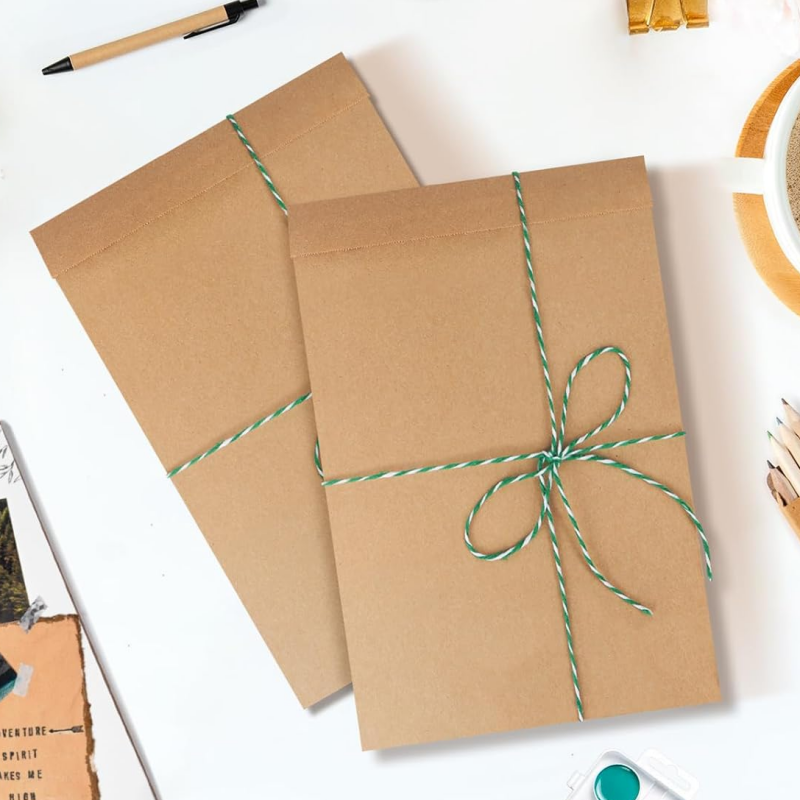
Flat gift bags have little or no bottom depth. They are designed primarily for thin, lightweight items that do not need a large internal volume.
Typical applications include greeting cards, invitations, small prints, gift vouchers, lightweight accessories, and flat promotional materials.
Their main advantages are efficient storage and straightforward packaging. Flat bags can often be stored in compact stacks, making them useful for businesses that need large quantities without dedicating much warehouse space.
However, their limited depth makes them unsuitable for bulky gifts. A product that is too thick may stretch the side panels, distort the bag, or prevent the opening from closing neatly.
Flat bags are best selected when the gift's shape naturally fits a shallow package. If the product includes a box, a bottle, or several items bundled together, a gusseted design is usually more practical.
2. The Side-Gusseted Bag
A side gusset is a fold that lets the bag expand in one direction only: the sides open out while the front and back stay flat. This is the construction behind most bottle bags, boxed cosmetic bags and book bags, because it accepts depth without turning the bag into a box.
The gusset depth is the number that matters. Under about 40 mm, a side gusset does very little — it allows a box to slide in but does not give the bag any real volume. At 80 to 100 mm, the bag can hold a bottle or a substantial box and still close visually at the top. Beyond that, the bag starts to behave like a full-gusset bag and needs the base reinforcement to match.
Side-gusseted bags also fold flat along the gusset lines, which keeps shipping volume low.
3. The Full-Gusset Bag
A full-gusset bag expands in both directions, with a rectangular base panel. This is the construction that turns a bag into a container: it can hold a hamper, a set of several items, a bulky garment, or anything whose footprint is genuinely three-dimensional.
The base is where the engineering sits. A full-gusset bag carries its load on four corner folds and a base panel, and without a base card those folds round under weight, the bag lists to one side, and the printed front distorts. Above roughly two kilograms, a base card is not an upgrade; it is part of the construction.
Full-gusset bags use more material per unit than flat or side-gusseted bags, and they take more folding, so they cost more to make. They also stack less neatly, because the base panel does not compress as flat as a single fold.
4. The Turned-Top Shopper
The turned-top shopper is the classic premium retail gift bag: a paper body with the top edge folded over and glued, usually with a board insert, and a handle anchored into that folded hem. It is the construction most people picture when they think of a gift bag.
The turned top does three jobs at once. It stiffens the opening so the bag can be loaded one-handed. It provides the double thickness of material into which paper and ribbon handles are glued. And it hides the raw edge of the paper, which is what separates a finished bag from a folded one.
A 35 mm fold with a 350 to 400 gsm board insert costs a few cents and changes the perceived quality of a 157 gsm bag more than moving up a paper weight does. A 22 mm fold without board costs less and produces exactly the floppy, curling opening that people describe as cheap without being able to say why.
5. The Die-Cut Handle Bag
Instead of a separate handle, a die-cut bag has the handle punched out of the bag's own front and back panels, usually as an arch or a rounded rectangle. It is the cheapest handle solution because it eliminates both the handle material and the gluing step.
Die-cut handles are fine for light contents: cosmetics, small clothing items, takeaway food, promotional giveaways under about a kilogram. The limit is the panel itself. The handle is only as strong as the paper around it, the cut edge concentrates stress, and a loaded die-cut bag will eventually tear from the top of the arch downward. A folded reinforcement patch glued behind the handle area extends the life considerably and is worth asking for.
6. The Rope and Ribbon Handle Bag
Rope, cord, ribbon and webbing handles are what separate a mid-range gift bag from a luxury one. The handle is no longer part of the paper; it is a separate component attached through the top hem, and that changes both the look and the load path.
Ribbon handles — satin or grosgrain — are wide, flat and elegant, and they spread load along the hem rather than concentrating it at two points. They suit cosmetics, bridal and VIP gifting. Their weak point is the glue line: in humid storage, a poorly bonded ribbon can lift away from the paper before the bag is ever used.
Rope handles pass through metal eyelets and are knotted or toggled inside. The eyelet distributes the load into the panel and allows a much higher carrying weight — typically three to six kilograms — which is why rope handles appear on board-sided and heavy-duty bags. The detail to check is the washer or reinforcement behind the eyelet; without it, the eyelet can pull through a thin sheet.
7. The Board-Sided Gift Bag
A board-sided bag has rigid greyboard panels in the front, back and base, wrapped in printed paper. The sides fold flat along score lines, so the bag ships flat and pops open when filled, but the walls themselves do not bend.
This is the construction that reads as a keepsake rather than packaging. It stands open on a table, it holds its shape when empty, it protects its contents better than any paper bag, and it survives being carried in a car or a courier parcel. It is also the most expensive common construction, because the board, the wrapping and the hand assembly all add cost.
The number to check is wall caliper. Below about 1.0 mm, the bag loses the rigid impression and starts to feel like heavy paper rather than board. Above 1.5 mm, the bag becomes heavy and the folded thickness starts to affect carton counts.
8. The Window Bag
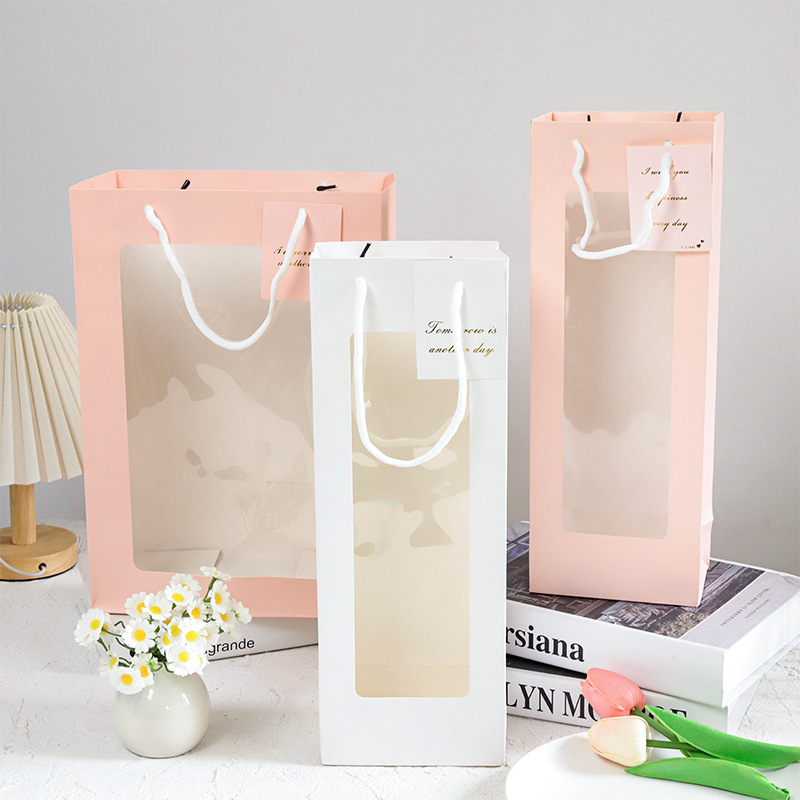
A window bag has an opening in the body — covered with clear film or left as a die-cut aperture — so the product inside is visible. It is a merchandising tool as much as a gift bag: bath sets, candles and gift sets sell themselves when the recipient can see them.
The construction is only as good as the window. Film-to-paper adhesion fails in humidity, and a wrinkled or lifting window reads as a defect even when the rest of the bag is perfect. A die-cut window with no film avoids that problem but leaves the contents exposed to dust and handling, which is acceptable for boxed items and not for anything soft or light-colored.
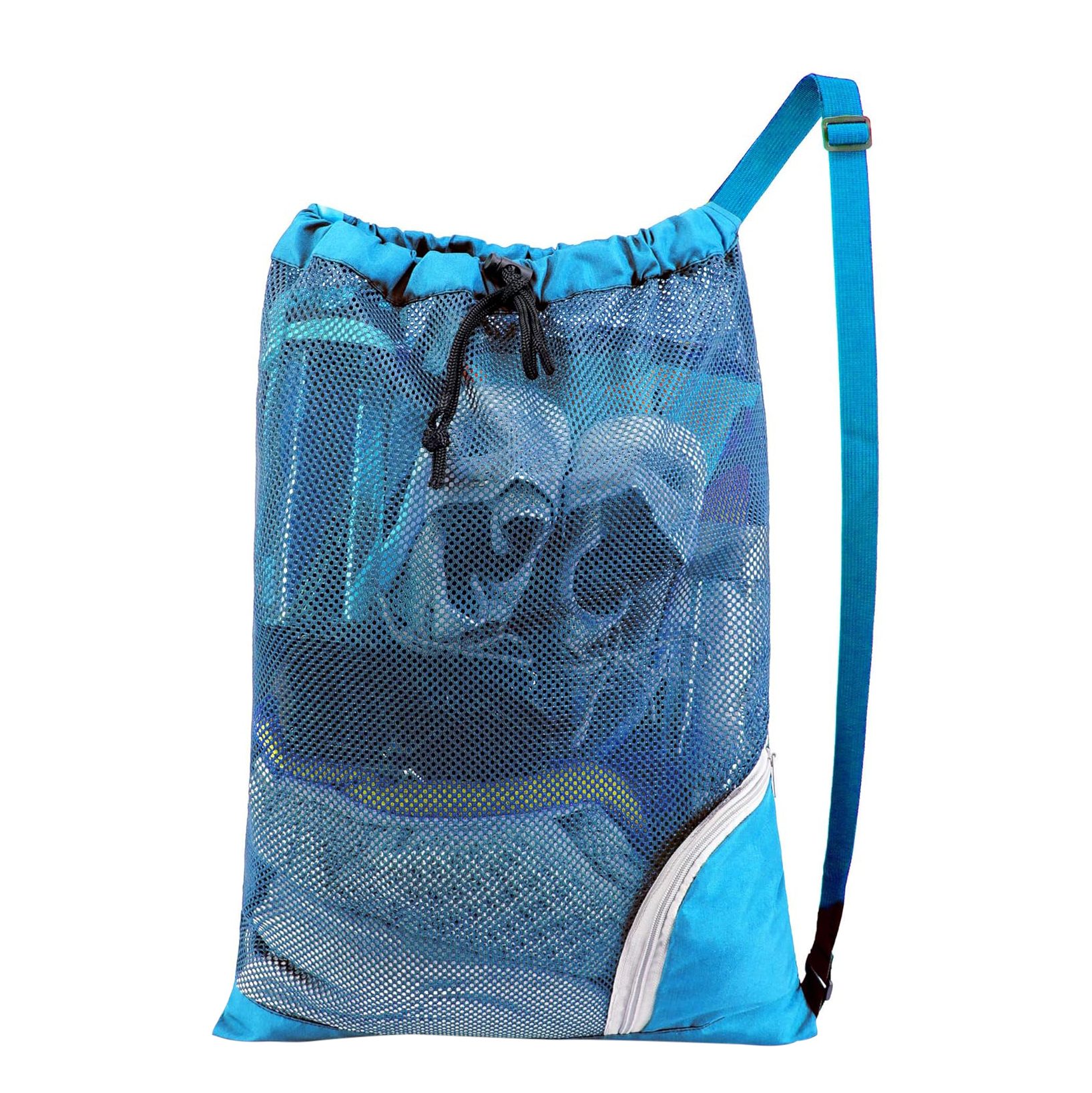
9. The Drawstring Pouch
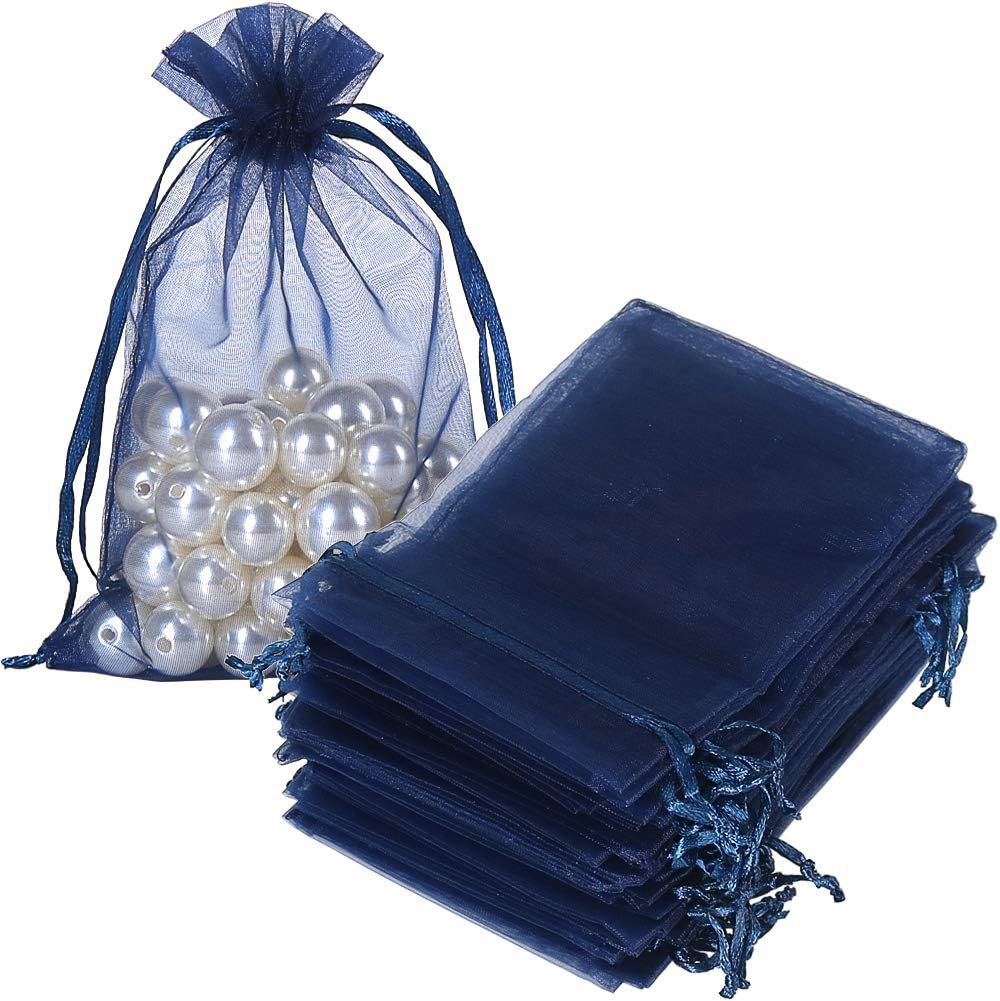
A drawstring pouch is a tube of fabric gathered at the top by a cord running through a channel. It has no rigid base and no handles; the cord is both the closure and the carry loop.
This is the oldest gift packaging form and still the most efficient one for small items: jewelry, watches, small leather goods, loose tea, wax melts, wedding favors. A pouch in velvet or microfiber suede doubles as a storage bag, which is why premium brands use it inside their boxes.
The details that decide quality are the channel width, the cord ends, and whether the base is flat or rounded. A pouch with a narrow channel binds and will not close fully; a pouch with a flat base stands up when filled; a pouch with a rounded base collapses into a soft shape that looks intentional in silk and shapeless in heavy cotton.
10. The Bottle Carrier
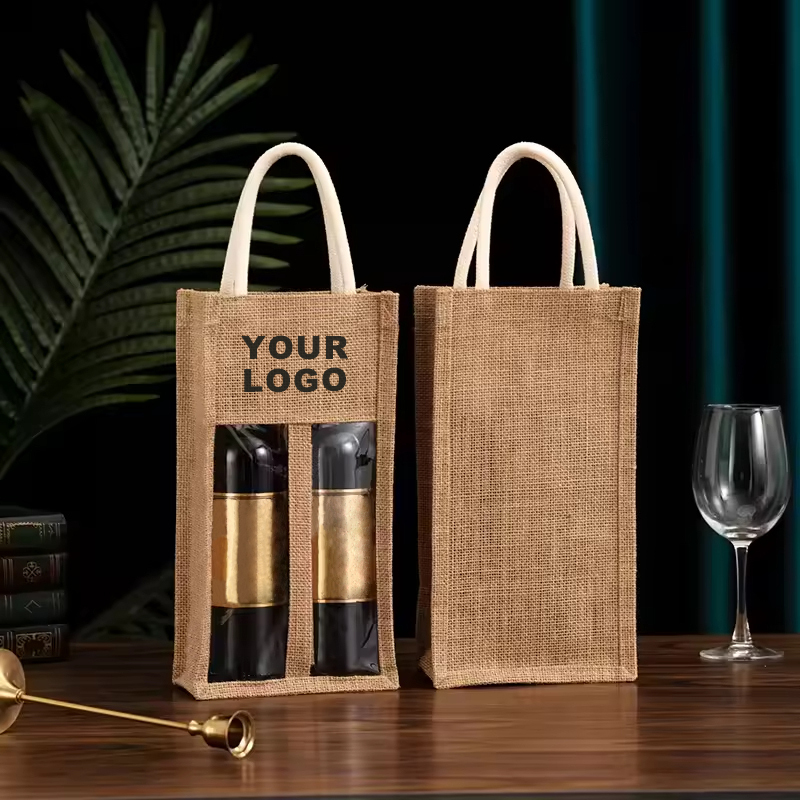
A bottle carrier is a specialized side-gusseted or full-gusset bag sized to a bottle, often with a divider for two bottles or a molded insert for six. It is the construction with the highest load concentration in the category: a single bottle of wine is 1.2 to 1.5 kilograms resting on a base that may be only 90 mm wide.
That geometry explains its specification. Bottle carriers use 210 to 250 gsm paper at minimum, a board-reinforced base, and a rope or ribbon handle rather than a twisted paper one. A two-bottle carrier needs a divider, because the divider — not the paper — is what prevents bottle-to-bottle impact. A jute or felt carrier adds insulation and a more premium hand feel, at the cost of bulk.
Where Gift Bags Are Used
The same construction behaves differently depending on who fills the bag, how it travels, and what the recipient does with it afterwards. These are the combinations that hold up in practice.
| Setting |
Typical Bag |
Why It Works There |
| Boutique retail |
157 to 210 gsm coated paper, turned-top shopper, ribbon or twisted handle |
Prints the brand at high fidelity, nests flat behind a counter, stacks neatly |
| Beauty and cosmetics |
157 gsm art paper or 100 gsm non-woven, side-gusseted or flat, ribbon handle |
Small formats need crisp print more than load strength |
| Corporate and VIP gifting |
Board-sided 1.2 mm, rope handle through eyelets |
Freestanding, reusable, survives a courier parcel |
| Hotels and hospitality |
210 gsm with aqueous varnish, turned-top shopper, flat paper handle |
Trolley handling scuffs film; uncoated or varnished surfaces age better |
| Wine and spirits |
210 to 250 gsm with board base, or jute, rope handle |
Narrow base and dense load need reinforcement |
| Jewelry and watches |
Velvet, microfiber or satin drawstring pouch |
The pouch is kept and reused inside a box |
| Hampers and gift sets |
Board-sided or 250 gsm with 1.0 mm base insert |
Wall stiffness resists bowing at five kilograms and above |
| Events and weddings |
Organza, satin or small kraft, drawstring or flat |
Cost per unit and pre-filling speed dominate |
| Food and bakery |
Uncoated kraft, flat or side-gusseted, twisted paper handle |
Grease resistance and food-contact compliance matter more than print coverage |
| Subscription boxes |
157 gsm paper or 10 oz canvas, side or full gusset |
Recurring programs need repeatable packing and predictable carton counts |
How to Choose the Right Gift Bag Size and Capacity
Material and style selection will not solve the problem if the bag is the wrong size. A bag that is too small can damage the product or make packing difficult. One that is too large can look poorly proportioned, allow the contents to move around, and increase material and shipping costs.
For B2B buyers, sizing should be based on the actual product or complete gift set, not only on a general size label such as small, medium, or large.
Measure the Gift Before Selecting the Bag
Start with the item, not the bag. Measure the item at its widest, deepest and tallest points, including any box, wrap or tissue it will sit in. Then add clearance.
- Width: item width plus 10 to 20 mm. Less than 10 mm and the item drags against the sides; more than 20 mm and it slides, which reads as an oversized bag.
- Depth: item depth plus 5 to 10 mm. The gusset folds outward, so it needs less clearance than the width.
- Height: item height plus 25 to 40 mm for tissue, or 40 to 60 mm if the item sits in a retail box whose lid should stay hidden.
Standard size reference
| Size |
Dimensions: mm (in) |
Capacity |
Typical Contents |
Paper and Handle |
| Extra small |
120 x 80 x 150 (4.7 x 3.1 x 5.9) |
1.4 L |
Jewelry boxes, single cosmetics, wax melts, gift cards |
128 to 157 gsm; flat paper or ribbon handle |
| Small |
180 x 100 x 230 (7.1 x 3.9 x 9.1) |
4.1 L |
Mugs, candles, small boxed sets, baby items |
157 gsm; twisted paper or ribbon handle |
| Medium |
250 x 110 x 320 (9.8 x 4.3 x 12.6) |
8.8 L |
Folded apparel, boxed cosmetics, books, standard retail gifting |
157 to 210 gsm; twisted paper or rope handle |
| Large |
320 x 120 x 410 (12.6 x 4.7 x 16.1) |
15.7 L |
Coats, shoe boxes, multi-item sets |
210 to 250 gsm; rope handle through eyelets |
| Extra large |
400 x 150 x 450 (15.7 x 5.9 x 17.7) |
27 L |
Gift sets, light hampers, homeware |
250 gsm with base card, or board-sided |
| Oversized |
450 x 180 x 500 (17.7 x 7.1 x 19.7) |
40 L |
Bulky textiles, duvets, multi-part hampers |
Board-sided 1.0 to 1.2 mm; rope or webbing handle |
| Single bottle |
95 x 95 x 350 (3.7 x 3.7 x 13.8) |
3.2 L |
One 750 ml wine or spirits bottle |
210 to 250 gsm with board base; ribbon or rope handle |
| Double bottle |
190 x 100 x 350 (7.5 x 3.9 x 13.8) |
6.6 L |
Two bottles with divider |
250 gsm with board base; rope handle |
| Hamper |
430 x 330 x 300 (16.9 x 13.0 x 11.8) |
42 L |
Food hampers, corporate gift sets up to 5 kg |
Board-sided 1.2 mm; rope or webbing handle |
Consider Weight as Well as Volume
Two gift sets with similar dimensions may have very different weights. A box containing clothing is generally different from a similarly sized box containing glass bottles or metal products.
The expected load affects the required fabric, paper construction, handle design, stitching, reinforcement, and base support.
For reusable textile bags, buyers should specify the intended load and use conditions rather than relying on the material name alone. For paper bags, handle attachment and bottom construction are especially important.
A sample should be tested under conditions representative of actual use. If the bag will carry several products together, test the complete set rather than a single item.
Gift Bag Handles, Closures, and Construction Details
A gift bag's smaller components often determine whether the finished product feels convenient and well made. Handle type, opening design, bottom reinforcement, and stitching can affect both appearance and practical performance.
Twisted Paper Handles
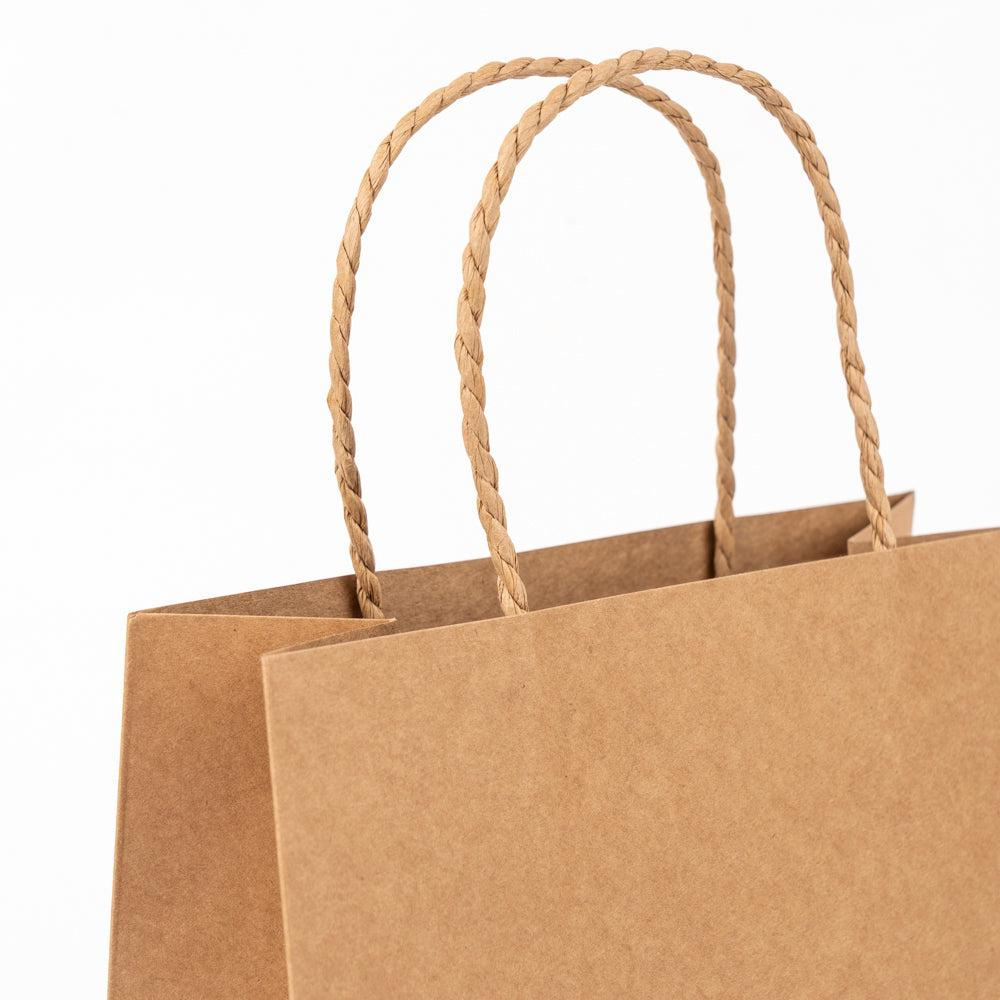
Twisted paper handles are commonly used on paper gift bags. They provide a familiar retail appearance and can be coordinated with the bag's color.
They are often suitable for everyday retail packaging and lightweight to moderately weighted gifts, provided the paper, handle construction, and attachment points are appropriate.
For larger bags or heavier contents, buyers should request a design with suitable reinforcement and verify that the handle attachments can withstand the expected load.
Ribbon Handles
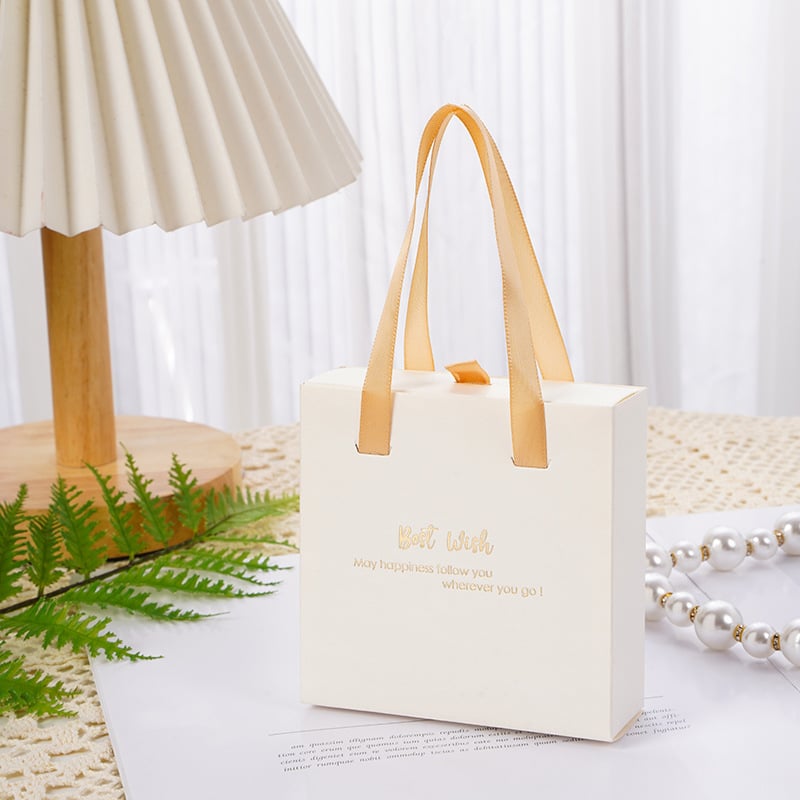
Ribbon handles can create a more decorative appearance, making them useful for premium retail packaging, weddings, and special-occasion gifts.
However, appearance should not be the only selection criterion. Ribbon width, material, attachment, and handle length influence comfort and performance.
A narrow ribbon may look elegant but can be less comfortable when carrying a heavier bag. If the bag will hold substantial weight, buyers should verify the complete handle assembly rather than assuming that a decorative ribbon is sufficiently strong.
Cotton Rope and Cord Handles
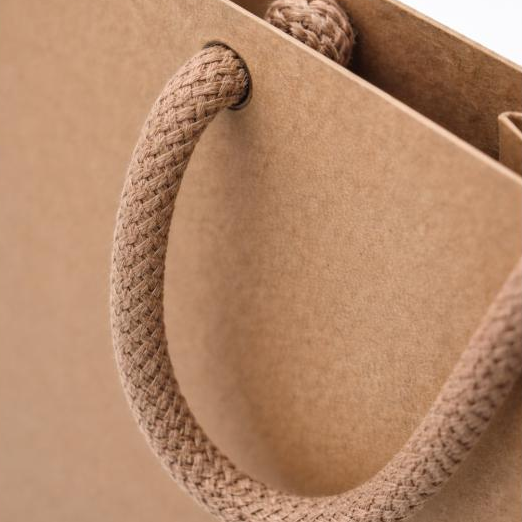
Cotton rope handles are often used on structured paper bags and selected textile bags. Their thicker profile can create a more substantial appearance than a narrow ribbon or basic paper handle.
They may suit corporate gifts, boutique retail, and premium presentation packaging.
The attachment method matters. Handles may pass through reinforced holes, be secured through the top edge, or use another construction method depending on the design.
Buyers should check whether the handle material, attachment points, and bag body are suitable for the expected load. A thick rope does not compensate for weak paper or poor attachment.
Drawstring Closures
Drawstring closures are useful for pouches and soft gift bags because they allow the opening to be gathered without requiring a separate ribbon or adhesive seal.
When specifying this style, confirm the cord length, opening size, number of drawstrings, and how easily the bag opens and closes.
For small pouches, a simple drawstring may be sufficient. For larger bags, the cord and channel construction need to be appropriate for the material and intended use.
Reinforced Bottoms and Top Edges
Reinforcement can help a bag maintain its shape and distribute the load more effectively.
A bottom insert may support boxed products, while a folded or reinforced top edge may help improve handle attachment on selected paper bags. Textile bags may use additional stitching or fabric reinforcement at high-stress points.
However, reinforcement should be designed around the complete bag. Adding a stronger base will not solve problems caused by weak side seams, unsuitable handles, or an incorrect bag size.
For procurement, the best approach is to identify where the bag will experience the greatest stress and ensure the sample reflects those requirements.
Gift Bag Customization: Printing, Colors, and Finishes
Customization allows a gift bag to communicate brand identity, support a campaign, and create a more coordinated presentation. For B2B buyers, the challenge is choosing a customization method that delivers the desired appearance without creating unnecessary cost or production risk.
Logo Printing
Logo printing is one of the most common forms of gift bag customization.
The appropriate printing method depends on the material, artwork, order quantity, number of colors, and desired finish.
Customization method |
Common applications |
Main consideration |
Screen printing |
Cotton, canvas, selected non-woven and other suitable surfaces |
Best evaluated against fabric texture, artwork, and color count |
Digital printing |
Selected textile and paper applications |
Suitability depends on the equipment, material, and required finish |
Offset printing |
Many paper gift bags with detailed graphics |
Often suited to larger production runs |
Heat transfer |
Selected textile bags |
Requires compatibility with the fabric and transfer system |
Foil stamping |
Suitable paper surfaces and selected finishes |
Adds a metallic accent but requires appropriate tooling and material |
Embossing or debossing |
Suitable paper and specialty surfaces |
Creates texture and depends on the substrate and design |
These methods are not interchangeable. A printing process that works well on smooth coated paper may not reproduce fine details consistently on coarse jute.
Before requesting a quotation, prepare the logo artwork and confirm its intended size, placement, colors, and background. Ask the supplier which production method is most appropriate for the selected material.
Color Matching and Design Consistency
Color consistency matters when gift bags form part of a larger brand presentation.
A logo may look different depending on the material, print method, surface texture, and lighting. A color that appears bright on a computer screen may be more muted on an uncoated paper or textured fabric.
For important brand colors, buyers should provide clear color references and review a production-representative sample where appropriate.
It is also useful to keep the design aligned with the product packaging. The bag does not need to duplicate every color or graphic on the product, but the overall presentation should feel intentional.
Matte, Glossy, and Decorative Finishes
Finishes can change how a gift bag looks and feels without changing its basic structure.
Matte surfaces often create a restrained, contemporary appearance. Glossy finishes can make colors look more vivid and reflective. Textured papers, metallic accents, and selected decorative techniques can create a more distinctive presentation.
However, additional finishing can increase production costs and may affect durability, surface resistance, or recyclability.
The best finish is not necessarily the most elaborate one. If the product's branding is already strong, a simple bag with accurate printing and clean construction may be more effective than a bag with several competing decorative features.
What Affects the Cost of Custom Gift Bags?
The unit price of a gift bag depends on more than its material. Size, construction, printing, finishing, order quantity, and packing requirements can all influence the quotation.
Understanding these cost drivers helps buyers make adjustments that preserve the most important features while controlling the overall budget.
Material and Fabric Weight
Different materials have different costs, and the amount required depends on the bag's dimensions and construction.
A larger bag generally uses more material than a smaller one of the same design. A heavier canvas fabric may cost more than a lightweight cotton fabric, while a specialty paper with a decorative finish may cost more than a standard kraft paper.
The right comparison is therefore not simply between material names. Buyers should compare complete specifications for bags intended to perform the same function.
Bag Size and Structure
Increasing the width, height, or depth can increase material consumption and may require stronger construction.
A structured bag with reinforced panels, a bottom insert, or additional internal components may also require more production steps than a simple flat bag.
When controlling costs, start by checking whether the requested capacity is necessary. Reducing excess dimensions can sometimes save material without compromising the gift presentation.
However, reducing the size too much may make packing difficult or damage the contents. The final dimensions should always be tested with the intended product.
Printing and Finishing
A single-color logo may be more economical than a complex multicolor design, depending on the material and printing method.
Specialty finishes, custom colors, metallic details, embossing, and additional decorative components can increase setup or processing costs.
To control expenses, prioritize the elements that contribute most to brand recognition. A well-placed logo and a consistent brand color may achieve the desired result without requiring several finishing techniques.
Order Quantity and Minimum Order Requirements
Many manufacturers price custom gift bags according to order quantity because setup, material purchasing, and production processes have fixed or semi-fixed costs.
Larger orders may reduce the unit cost, but they also increase the total investment and the risk of holding excess inventory.
Buyers should compare the unit price with the quantity they can realistically use. A lower price per bag is not necessarily better if the order leaves a substantial quantity unused.
For seasonal products, consider expected demand, storage capacity, and the possibility of design changes before committing to a large order.
Packing, Shipping, and Storage
The finished bag's packing format can affect logistics costs.
Flat paper bags may be relatively compact, while certain finished or structured bags may occupy more space. Fabric bags may be folded or packed in different configurations depending on their construction.
Ask suppliers how the bags will be packed and whether the quoted dimensions and weights reflect the final shipment.
For international orders, landed cost is more useful than factory unit price alone. Depending on the purchase arrangement, the total may include freight, duties, taxes, inspection, and other applicable charges.
A practical quotation comparison should use the same bag specification, order quantity, packing assumptions, and delivery terms for each supplier.
How to Source Custom Gift Bags for Bulk Orders
For B2B buyers, a successful order depends on more than selecting an appealing design. The supplier must be able to manufacture the bag consistently, meet the required specifications, and deliver within the project's schedule.
A clear sourcing process helps prevent misunderstandings and reduces the likelihood of costly changes after production begins.
Step 1: Prepare a Clear Product Brief
Before contacting suppliers, define the main requirements.
Your brief should include the intended use, gift contents, approximate dimensions, material preference, bag style, logo artwork, expected quantity, target delivery date, and budget range where available.
You do not need to finalize every detail before requesting advice. However, identifying the essential requirements helps suppliers recommend suitable options rather than quoting products that are difficult to compare.
If you are uncertain about the material, describe the intended appearance and performance. For example, explain that the bag should hold a boxed skincare set, have a premium matte finish, and remain useful after the gift is opened.
This gives the supplier a practical basis for recommending a construction.
Step 2: Compare Complete Specifications
When requesting quotations, ask suppliers to quote against the same specification.
Important details include:
- Material type and weight or thickness, where applicable.
- Finished dimensions and gusset depth.
- Handle material, length, and attachment.
- Printing method, colors, and logo placement.
- Reinforcement, lining, or other structural components.
- Individual packing and carton requirements.
- Order quantity, lead time, and delivery terms.
Without these details, one quotation may cover a simpler bag while another includes features that materially affect the cost.
The cheapest quotation is not necessarily the best value if it does not meet the intended requirements.
Step 3: Request and Evaluate Samples
Samples help buyers check material feel, dimensions, print quality, and construction before committing to mass production.
Whenever possible, evaluate the sample using the actual gift items. Confirm that products fit comfortably, the opening is practical, and the bag can support the expected load.
For branded bags, check the logo's position, color, clarity, and appearance on the selected material.
A sample made from a standard material may not accurately represent a custom production run. If the material, print, or structure is important, ask the supplier how closely the sample reflects the final specification.
Record any changes required and obtain confirmation before approving production.
Step 4: Confirm Production Details in Writing
Before placing the order, confirm the approved dimensions, material, artwork, construction, quantity, packing method, and delivery schedule.
It is useful to identify which elements may change only with approval. This is particularly important for custom colors, handle construction, reinforcement, and printing placement.
If the supplier provides a pre-production sample or proof, review it against the agreed specifications rather than relying on memory or informal discussions.
A documented specification gives both parties a clear reference during production and inspection.
Step 5: Plan Quality Checks
Quality control should reflect the bag's intended function.
For a lightweight paper bag, checks may focus on dimensions, printing, handle attachment, and visible defects. For a reusable textile bag, seam quality, stitching, fabric consistency, and load performance may require greater attention.
For bags carrying heavier products, define an appropriate test method and acceptance criteria before production. Avoid relying on vague terms such as "strong" or "premium" without specifying what they mean for the project.
Where the order is commercially significant, buyers may also consider a pre-shipment inspection or an agreed sampling procedure.
Common Mistakes to Avoid When Choosing Gift Bags
Even a carefully designed gift bag can underperform if key practical details are overlooked.
Choosing Based on Appearance Alone
A bag may look attractive but fail to accommodate the product or support its weight.
The solution is to evaluate the complete bag, including its dimensions, opening, handles, base, and intended load. Samples should be tested with the actual contents whenever possible.
Treating All Materials Within a Category as Equal
Not all paper, cotton, canvas, or non-woven bags have the same performance. Differences in material grade, thickness, construction, and finishing can affect both appearance and durability.
Buyers should request specific material and construction details rather than relying on broad labels alone.
Overcomplicating the Design
Too many colors, finishes, accessories, or decorative components can increase costs without improving the customer's experience.
Start with the brand's main objective. If the priority is a clean retail presentation, accurate printing and well-finished handles may matter more than multiple decorative additions.
Ignoring Packing and Shipping
A bag that works well in a showroom may be difficult to pack efficiently or costly to ship in large quantities.
Consider storage space, packing format, carton dimensions, and the total landed cost before finalizing the design.
Making Unsupported Sustainability Claims
A natural-looking bag is not automatically organic, recyclable, or environmentally preferable in every situation.
Define the required environmental attributes clearly and request supporting documentation when necessary.
Skipping Sample Approval
Small differences in color, dimensions, handle length, and print placement can become significant across a large order.
A documented sample approval process helps clarify expectations before mass production and gives the buyer a reference for quality checks.
FAQ
What is the best material for gift bags?
There is no single best material for every application. Paper is a practical choice for many retail gifts, cotton and canvas suit reusable textile bags, jute provides a natural textured appearance, and non-woven PP can be useful for cost-conscious promotional campaigns. The best choice depends on the gift's weight, presentation requirements, budget, and intended use.
What Is the Difference Between a Gift Bag and a Shopping Bag?
A shopping bag is designed to carry a purchase home, so it prioritises load capacity, stacking and cost. A gift bag is designed to present a gift, so it prioritises surface, proportion and the moment of opening. The same size can serve both roles, but a gift bag usually has a deeper top fold, a finer finish and a lighter load rating.
Can gift bags be customized with a logo?
Yes. Depending on the material, gift bags can be customized through screen printing, digital printing, offset printing, heat transfer, foil stamping, embossing, and other suitable methods. The appropriate technique depends on the artwork, material surface, order quantity, and required finish.
What should I consider when ordering custom gift bags in bulk?
Confirm the material, dimensions, construction, handle type, printing, order quantity, packaging, and delivery requirements. Compare quotations against the same specification, request samples where appropriate, and agree on quality standards before mass production.
Are reusable fabric gift bags always more sustainable than paper bags?
Not automatically. The overall impact depends on material sourcing, manufacturing, transport, durability, reuse frequency, and end-of-life options. A reusable bag provides a potential benefit when it is used repeatedly, but broad environmental claims should be supported by evidence relevant to the specific product.
Conclusion
Choosing the right gift bag means balancing appearance, material performance, construction, cost, and the intended experience of the recipient. Paper, cotton, canvas, jute, non-woven PP, and polyester each offer different advantages, while styles such as gusseted bags, pouches, and structured bags address different packaging needs.
A gift bag does not need to be complicated to be effective. When the material, construction, and design work together, it can present the gift professionally, support the brand's identity, and provide practical value without unnecessary cost.
For customized gift bag projects, INITI can be a starting point for discussing material options, bag styles, branding requirements, and bulk-order specifications.
Related Products
Related Article



 Hot News