Heavy-Duty Reusable Grocery Bags: Specifications Required by Major Supermarket Chains
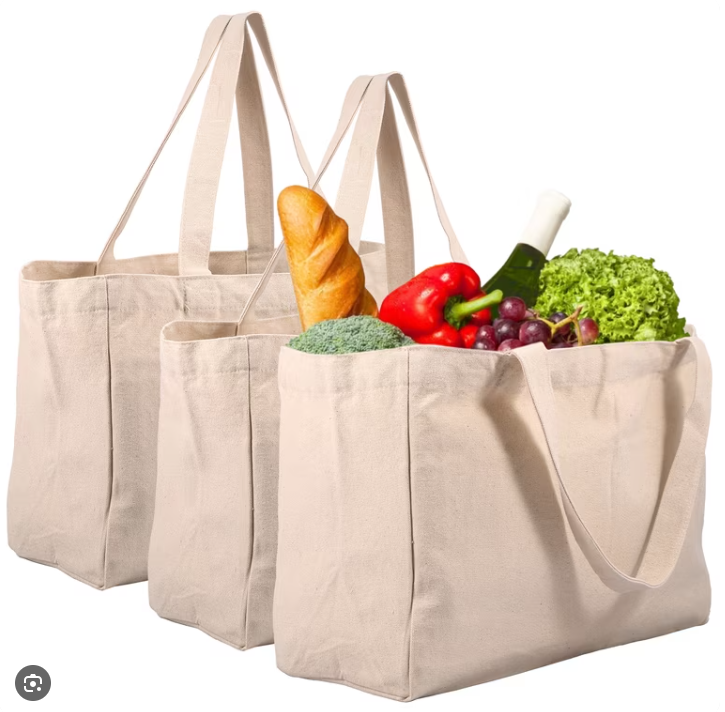
A reusable supermarket bag is not simply a promotional tote made with heavier fabric.
In real grocery use, it may repeatedly carry bottled drinks, canned food, frozen products, produce, household liquids and irregularly shaped packages. The load moves while the shopper walks, moisture can collect around refrigerated products, and the bag may need to fit an existing checkout bagging system.
For supermarket sourcing teams, the specification therefore needs to define the complete retail-use system:
material + dimensions + load target + handles + bottom structure + repeated-use testing + moisture handling + checkout compatibility + compliance + bulk QC
There is no single global specification used by every supermarket chain. The useful approach is to define measurable requirements for the individual retail program instead of relying on vague terms such as heavy-duty, 120 GSM or reusable.
Key Takeaways for Retail Buyers
GSM is a material-control parameter, not a finished-bag load rating.
Handles, handle attachments, bottom seams and gusset corners are often more critical than the center body fabric.
Static loading should be supplemented with repeated-lift or dynamic fatigue testing where repeated grocery use is expected.
For chilled and frozen groceries, condensation and drying behavior should be considered separately from load strength.
If bags will be supplied directly at checkout, confirm compatibility with the retailer's bag rack, carousel or dispensing setup.
Recycled-content documentation, factory compliance and physical bag testing solve different procurement questions and should be specified separately.
Quick Supermarket Specification Framework
| Area |
What the Buyer Should Define |
| Use |
Checkout, weekly grocery use, membership program, retail merchandise |
| Dimensions |
Width × height × gusset |
| Contents |
Typical grocery mix and expected load |
| Material |
PP woven, RPET, stitch-bond, non-woven, polyester, cotton, etc. |
| Material Control |
GSM / denier / construction / tolerance |
| Handles |
Material, width, drop and attachment |
| Bottom |
Gusset, reinforcement or insert |
| Performance |
Static load + repeated-use / dynamic test |
| Moisture |
Drying, wipe-clean or moisture-resistant requirement |
| Checkout Compatibility |
Bag rack, handle spacing, optional hang loop / hook point |
| Printing |
Method, colors and durability |
| Recycled Content |
Percentage and documentation requirement |
| Compliance |
Market and retailer requirements |
| QC |
Golden sample, inspection plan and acceptance criteria |
| Packing |
Folding, units/carton and carton limits |
Pillar 1: Structural & Load Engineering
Start with the Grocery Load, Not the GSM
A supermarket bag carrying bread and vegetables does not experience the same stress as one carrying:
Milk bottles
Canned food
Rice
Detergent
Beverage multipacks
The first question should therefore be:
What is the realistic working load, and what type of products will create it?
Only after that is defined should the factory recommend the material and reinforcement.
A specification such as:
120 GSM RPET bag, heavy-duty
is incomplete.
A stronger specification defines:
material construction + bag dimensions + handle structure + working load + test protocol
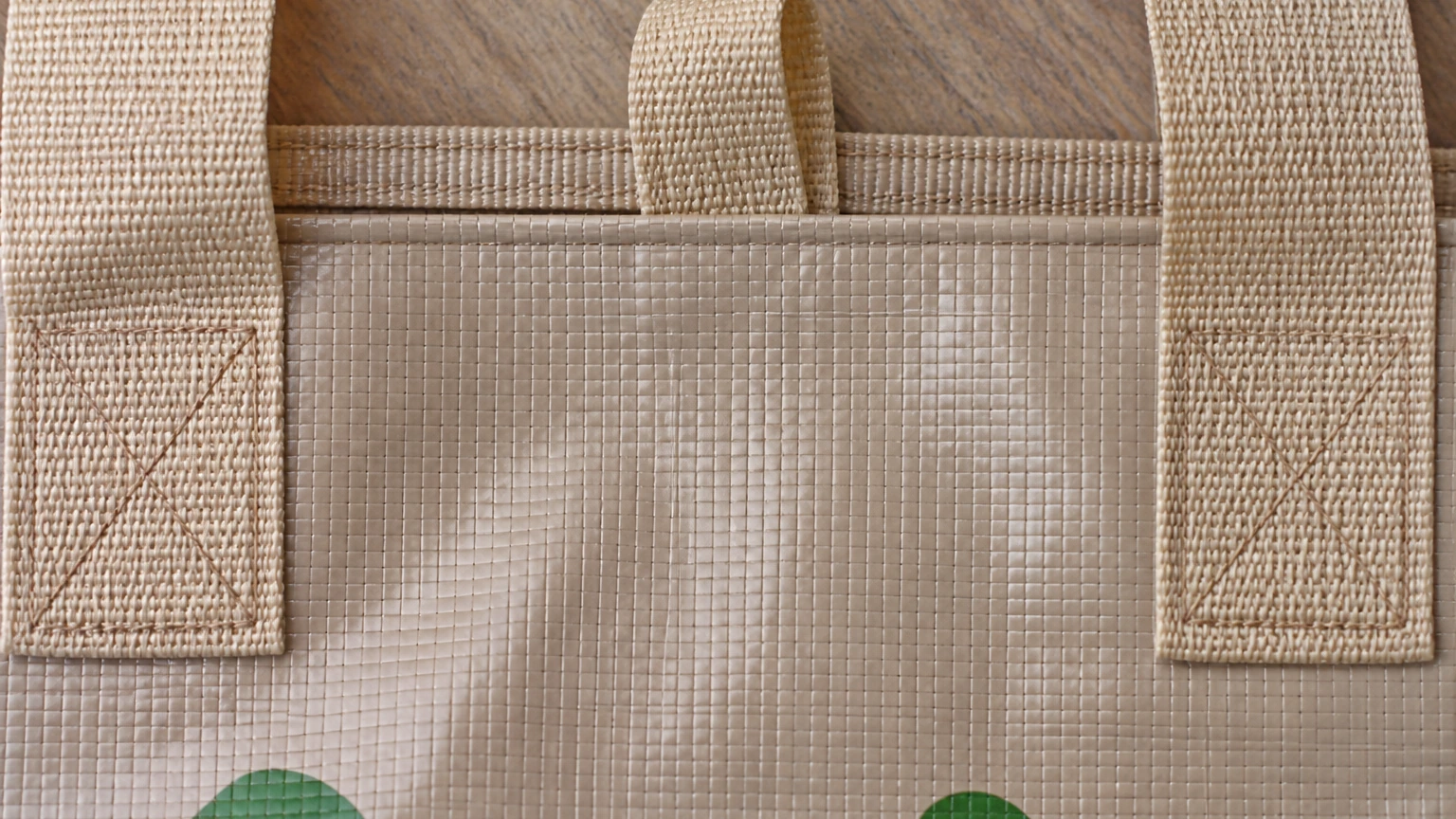
Handle Construction Is Part of the Load Path
The body fabric may be strong while the handle attachment remains weak.
A handle specification should consider:
Handle material
Width
Drop
Attachment depth
Stitching
Backing reinforcement
Body-fabric strength
For higher-load supermarket bags, possible constructions include:
Full-wrap handles can distribute force over a larger area, but they are not necessary for every supermarket bag. The structure should match the expected load and bag size.
Bottom and Gussets Need Separate Attention
Large grocery bags gain capacity through side and bottom gussets, but these areas also create additional stress concentration.
Inspect:
For heavier programs, possible solutions include:
A strong handle does not solve a weak bottom seam.
Static Load vs Dynamic Fatigue Testing
A static load test answers:
Can the bag hold a defined weight for a specified period?
That is useful, but real shoppers do not carry bags motionlessly.
Actual use involves:
Lifting
Lowering
Walking
Swinging
Setting the bag down
Picking it up again
For reusable supermarket projects, the buyer may therefore add a repeated lifting, handle-jerk or dynamic fatigue test.
The terminology varies between buyer and laboratory protocols, but the principle is the same: a loaded finished bag is repeatedly subjected to controlled movement so progressive weakness around handles, seams and the bottom becomes visible.
A Useful Dynamic Test Protocol Should Define
| Test Variable |
What to Fix |
| Load |
Total test weight |
| Load Distribution |
Even or representative grocery arrangement |
| Movement |
Lift, jerk, swing or controlled vertical movement |
| Distance / Amplitude |
Defined machine or manual movement |
| Cycle Count |
Buyer-defined repetitions |
| Inspection Points |
Handles, stitching, seams, gussets, bottom |
| Pass Criteria |
No separation, tearing or unacceptable deformation |
Do not specify only:
“Pass dynamic test.”
The load, movement, cycles and pass criteria need to be written down.
Uneven Grocery Loads Matter
Groceries rarely distribute weight evenly.
A shopper may place:
This can reveal problems that an evenly distributed laboratory load misses.
For large supermarket programs, at least one representative uneven-load condition is worth checking for:
Bottom distortion
Handle imbalance
Corner tearing
Local seam stress
Checkout Compatibility Is Part of the Bag Design
For bags distributed or sold directly at checkout, the design should also consider how staff will:
Store the bags
Pick them up
Open them
Hold them during loading
Modern checkout systems use dedicated bagging areas and bag racks, so a bag that works well once filled may still be inconvenient for the cashier if the handle spacing or hanging method does not fit the retailer's station.
Depending on the retailer's setup, the specification may need to define:
Handle spacing
Bag-mouth opening
Center hang loop
Hook loop
Hanging point
Folding orientation
A center hang loop should be treated as a retailer-specific option, not a universal supermarket requirement.
For chain projects, ask:
Will this bag need to fit an existing checkout bag rack or dispenser?
That question is often more useful than discussing handle style in isolation.
Pillar 2: Material Science, GSM & Moisture Realities
Common Materials for Supermarket Programs
| Material |
Typical Strengths |
Main Point to Check |
| PP Woven |
Structured, high-capacity, suitable for large graphics |
Lamination, seams, handles |
| RPET Polyester |
Textile feel, recycled-content options |
Fabric construction and traceability |
| RPET Stitch-Bond |
Lightweight with mechanical reinforcement |
GSM, stitch direction, handles |
| Non-Woven PP |
Cost-efficient for high volumes |
Fabric weight and handle attachment |
| Polyester / Nylon |
Flexible, foldable structures |
Denier, weave, seams |
| Cotton / Canvas |
Textile appearance, premium positioning |
Shrinkage, drying and freight weight |
No material is automatically “supermarket grade.”
Suitability depends on the complete bag construction.
GSM Does Not Equal Load Capacity
GSM describes how much a square meter of material weighs.
It can help control:
Material consistency
Hand feel
Opacity
Stiffness
Cost
But it does not directly tell you how much the finished bag can carry.
Two 120 GSM materials may perform differently because of:
Fiber structure
Weave
Stitch density
Lamination
Directional strength
Finishing
The same material may also perform differently in a small tote and an oversized grocery bag.
For supermarket sourcing, use:
material construction + GSM tolerance + finished-bag performance
rather than GSM alone.
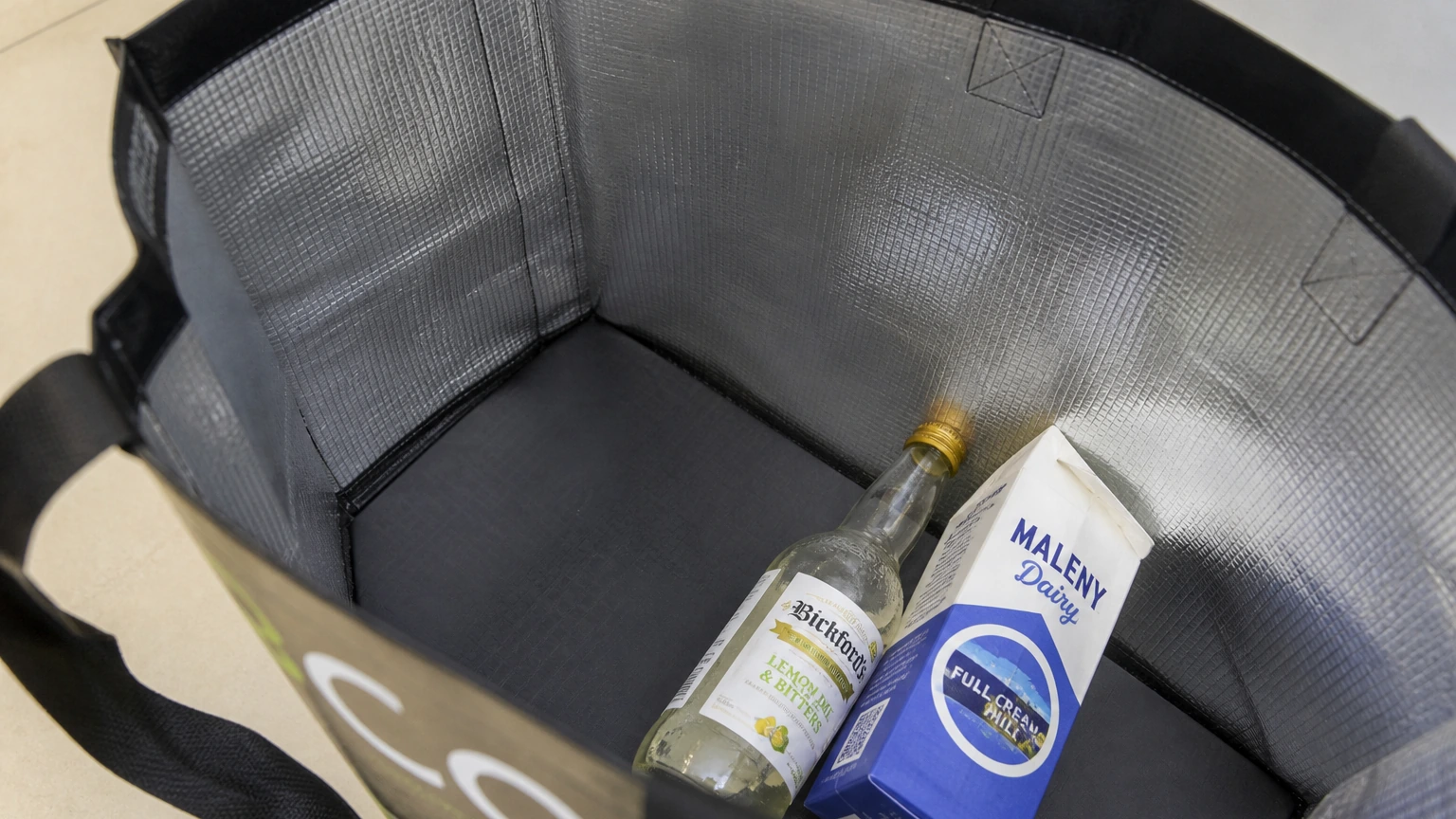
Moisture & Condensation from Chilled Groceries
This is an easy specification point to miss.
Refrigerated milk, frozen meat, ice cream, frozen pizza and other chilled products can develop condensation after leaving refrigerated storage.
That moisture may end up:
Different materials respond differently.
Absorbent Textile Bags
Cotton and other absorbent fabrics may remain wet longer after carrying chilled products.
The main concerns are not simply “strength when wet,” but:
Laminated or Coated Structures
Laminated PP woven and some coated synthetic constructions can provide surfaces that are easier to wipe clean.
However, a coated fabric does not automatically make the finished bag waterproof. Seams, bindings and bottom construction still matter.
What Supermarket Buyers Should Specify
For programs where chilled and frozen groceries are common, define whether the bag needs:
The correct requirement is:
How should the complete bag behave after repeated exposure to condensation?
not simply:
“Use waterproof fabric.”
Printing Must Match the Reuse Cycle
A supermarket bag is also a long-term branding surface.
Artwork may include:
Corporate colors
Campaign graphics
Sustainability messages
Reuse instructions
QR codes
Barcodes
Approve printing on the actual production material rather than relying only on a digital proof.
Depending on the structure, evaluate:
Color consistency
Registration
Rub resistance
Lamination adhesion
Cleaning durability
Cleaning Requirements Should Be Defined Early
Reusable grocery bags may be:
Machine washable
Hand washable
Wipe-clean only
The care instruction must match the actual construction.
For example, cotton may require evaluation of:
Shrinkage
Color change
Print durability
Drying time
A laminated PP woven bag may be better suited to wiping rather than conventional machine washing.
Do not add a generic “machine washable” claim unless the complete finished bag has been developed for that care method.
Pillar 3: Compliance & Environmental Traceability
Separate Product Performance, Recycled Content and Factory Compliance
These answer three different questions.
Product Performance
Does the finished bag meet:
Recycled Material
Can the supplier document the claimed recycled content?
Factory / Vendor Compliance
Does the supplier meet the retailer's audit and quality requirements?
A bag can pass a load test without being made from recycled material.
A factory can pass an audit while producing a poorly reinforced bag.
These requirements should therefore not be reduced to:
“Does the supplier have certificates?”
RPET Claims Need Component-Level Clarity
A bag described as an “RPET bag” may still contain:
PP or polyester webbing
Sewing thread
Lamination film
Plastic bottom board
Hardware
The buyer should clarify whether the recycled-content claim applies to:
the main fabric
or
the finished product.
For GRS-related projects, documentation requirements should be established before material ordering.
Regulations Change
Destination-market rules need to be checked for every program.
California is a useful example. Its earlier SB 270 reusable grocery bag requirements were repealed, and from January 1, 2026, covered stores generally may provide only qualifying recycled paper carryout bags at checkout. Consumers may still bring their own reusable synthetic or cotton bags.
So older statements such as:
“California requires all reusable checkout bags to meet the old SB 270 reusable-bag specification”
are no longer current.
The procurement lesson is simple:
Do not copy a previous retailer or regulatory specification into a new market without checking whether it is still valid.
Compliance Support for Retail Programs
Depending on the project, sourcing requirements may involve:
The relevant requirement should be selected according to the product, buyer and destination market.
Pillar 4: Production QC, Testing & Global Logistics
Approve a Golden Sample
Before bulk production, approve a physical reference covering:
For repeat programs, this becomes the practical reference when written specifications leave room for interpretation.
Performance Testing and AQL Inspection Are Different
Performance Testing
Answers:
Does the design work?
Examples:
These should be completed on production-equivalent samples before design approval.
AQL / Lot Inspection
Answers:
Does this production lot match the approved standard?
ISO 2859-1 provides AQL-indexed sampling procedures for lot-by-lot inspection by attributes. It is an acceptance-sampling framework; it does not define how much weight a grocery bag should carry.
A final inspection may cover:
Dimensions
Sewing defects
Handle position
Printing
Color
Labels
Packing
Carton marks
Do not use AQL inspection as a substitute for validating the bag structure.
Packing Matters at Supermarket Scale
At large quantities, carton efficiency affects the landed cost.
Define:
Folding method
Units per pack
Units per carton
Carton dimensions
Carton weight
Barcode
Shipping marks
This is particularly important for:
Large gusset bags
Laminated woven bags
Bags with bottom boards
Structured totes
Aggressive folding may save CBM but can also create:
Permanent creases
Distorted gussets
Lamination marks
Packing should therefore be approved with the bag.
Common Failure Modes
| Failure |
Likely Cause |
Better Control |
| Handle tears from body |
Small attachment area / weak backing |
Reinforcement + finished-bag test |
| Bottom seam opens |
Concentrated grocery load |
Bottom redesign + load test |
| Bag stays damp |
Absorbent structure / poor drying |
Moisture and cleaning specification |
| Checkout loading is awkward |
Bag does not fit bag rack |
Confirm checkout compatibility |
| Bulk feels weaker than sample |
Material / GSM drift |
BOM + tolerance + incoming QC |
| Print rubs or lifts |
Wrong process / lamination issue |
Production-material print test |
| RPET evidence is missing |
Requirement defined too late |
Confirm traceability before sourcing |
| Lot looks good but fails in use |
AQL substituted for testing |
Separate performance and lot QC |
Supermarket RFQ / Tender Checklist
A buyer preparing an RFQ should ideally provide:
| Area |
Information |
| Product |
Bag dimensions and intended use |
| Quantity |
Initial quantity and expected annual volume |
| Grocery Load |
Typical contents and working load |
| Material |
Preferred material or target performance |
| Material Control |
GSM / denier / construction |
| Handles |
Width, length, drop and attachment |
| Bottom |
Gusset / reinforcement requirement |
| Checkout Compatibility |
Rack / carousel fit, handle spacing, optional hang loop |
| Moisture |
Chilled/frozen grocery use, wipe-clean or drying requirement |
| Performance |
Static + dynamic test protocol |
| Printing |
Artwork, colors and durability |
| Recycled Content |
Percentage and documentation |
| Compliance |
Market and retailer requirements |
| Inspection |
Golden sample, AQL and test plan |
| Packing |
Units/carton, carton limits and labeling |
If these points are defined before sampling, suppliers can quote against the same product rather than interpreting “heavy-duty” differently.
FAQ
What GSM should a heavy-duty supermarket bag use?
There is no universal GSM. The appropriate material depends on the fabric construction, bag dimensions, handles, reinforcement and required working load.
What is a dynamic or jerk test for a grocery bag?
It is a repeated-load test in which a weighted finished bag is lifted or subjected to controlled movement to evaluate fatigue around handles, seams and the bottom. The load, motion, cycle count and pass criteria should be defined in the buyer's test protocol.
Should reusable grocery bags be water-resistant?
Not every program requires this, but bags regularly carrying chilled or frozen groceries should have a defined moisture and cleaning requirement. Wipe-clean or moisture-resistant internal surfaces may be useful in those applications.
Does a supermarket bag need a center hang loop?
Not always. Some checkout systems may benefit from a center loop, hook point or specific handle spacing, while others do not. Confirm the retailer's bag rack or dispensing setup before finalizing the structure.
Does GRS mean the whole bag is recycled?
Not automatically. Recycled-content claims depend on the certified materials and components included in the specific order.
Conclusion
For major supermarket programs, the most useful specification is not:
heavy-duty
reusable
120 GSM
It is a controlled system covering four areas:
Structural & Load Engineering
Material, GSM & Moisture Performance
Compliance & Traceability
Testing, QC & Logistics
The finished grocery bag should be treated as part of a real retail operation.
That means considering not only how much it carries, but also:
How it behaves under repeated movement
How it handles chilled-food condensation
How quickly it dries
How staff load it at checkout
How it is inspected and packed at scale
Those details are what turn a reusable tote into a supermarket-ready product.
Preparing a Supermarket Bag RFQ?
If you are preparing a supermarket reusable-bag tender or defining a new retail program, send INITI:
Bag dimensions or reference sample
Estimated quantity
Target market
Intended grocery load
Preferred material, if known
Chilled / frozen product requirements
Checkout-rack requirement, if applicable
Printing artwork
Recycled-content requirements
Audit or certification requirements
Packing requirements
Email [email protected] to request a Supermarket Reusable Bag Specification Checklist and discuss suitable materials, testing directions and physical swatches before sampling.
Related Products
Related Blog Articles




 Hot News