Custom Cosmetic Bags for Beauty Brands
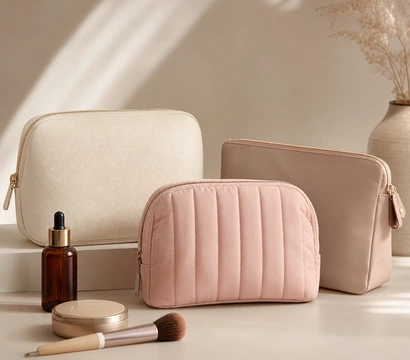
INITI develops custom cosmetic bags for beauty brands, private-label collections, retailers and promotional gift programs. Product options include zipper makeup pouches, PU cosmetic bags, quilted pouches, clear PVC bags and multi-compartment organizers, with customization available for materials, dimensions, linings, branding and packaging.
For beauty brands, the main challenge is not simply choosing an attractive bag. The design must fit the actual cosmetics, match the intended retail positioning, meet relevant material requirements and remain consistent during bulk production.
Whether you are developing a retail makeup collection, a gift-with-purchase (GWP) campaign or a skincare gift set, the most effective starting point is to define the products the bag needs to hold and the experience it should deliver.
Choose a Cosmetic Bag for Your Beauty Program
Different beauty projects require different constructions. A simple promotional pouch may not need the same features as a retail makeup organizer.
| Beauty Program |
Suitable Bag Types |
Main Considerations |
| Retail makeup collections |
PU makeup bags, quilted cosmetic pouches |
Appearance, durability and branding |
| GWP beauty gift sets |
Flat or gusseted cosmetic pouches |
Unit cost, product fit and packing efficiency |
| Skincare and fragrance sets |
Structured cosmetic bags, gusseted pouches |
Bottle dimensions, lining and internal space |
| Makeup tools and brushes |
Brush bags, multi-compartment organizers |
Brush length, holders and easy access |
| Travel beauty products |
Toiletry bags, padded makeup bags |
Capacity, portability and cleaning |
| Promotional campaigns |
Printed cosmetic pouches, clear bags |
Logo visibility, target cost and delivery schedule |
For example, a gift set containing a lipstick, compact and fragrance sample may fit into a compact gusseted pouch. A skincare set containing several bottles and cream jars may require a deeper structure or separate compartments.
The goal is to select the simplest construction that meets the actual product requirements.
Select the Right Custom Cosmetic Bag Structure
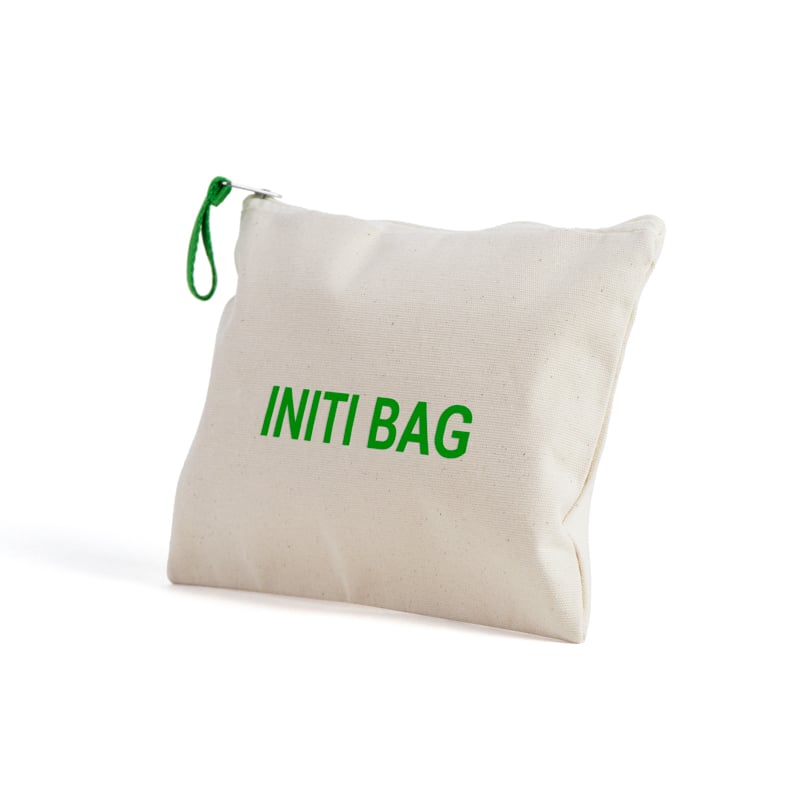
Flat and gusseted zipper pouches are suitable for makeup, skincare samples and promotional gift sets.
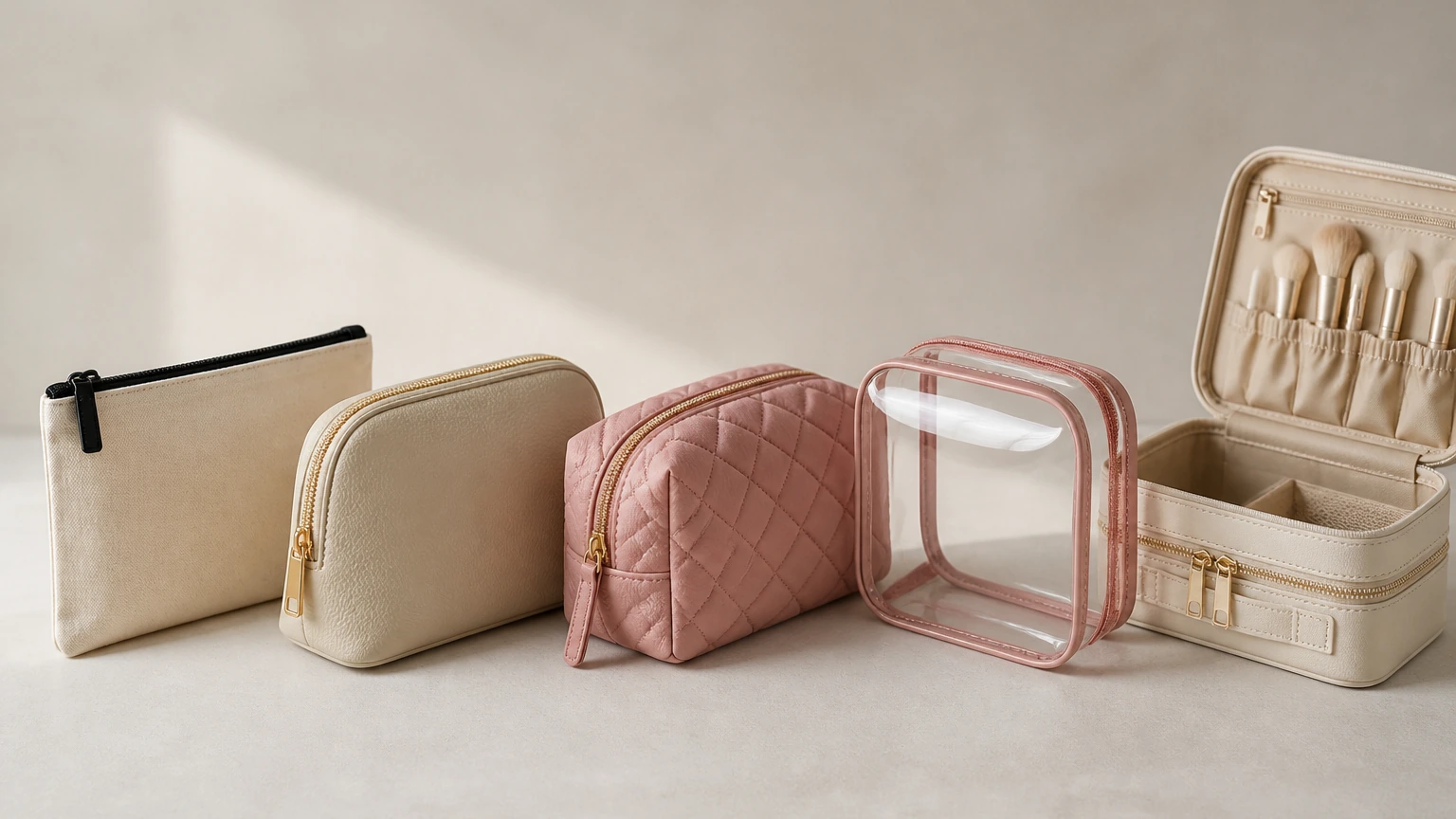
A flat pouch works well for slim products such as lipstick and mascara. A gusseted cosmetic pouch provides additional depth for compacts, tubes and small bottles.
Customization can include dimensions, zipper style, lining, fabric color, logo and packaging. For high-volume GWP programs, a straightforward structure can help control material use and sewing costs.
PU makeup bags offer a smooth surface and a more defined appearance for retail collections, fragrance promotions and premium-looking beauty gift sets.
Depending on the material and design, branding options include debossing, embossing, printing and labels.
The PU thickness and top-edge construction should be evaluated together. Multiple thick layers around a zipper or spring-frame opening can make the finished bag unnecessarily stiff.
Quilted cosmetic bags provide a softer appearance and additional body. They can suit seasonal collections, skincare gifts and lifestyle-oriented beauty products.
The quilting pattern, padding thickness and finished dimensions affect both appearance and packing volume. More padding is not automatically better; it should provide the desired shape without making the bag unnecessarily bulky.
Clear cosmetic bags allow users to see the contents without opening the pouch. They can work well for visible-product gift sets and selected travel or promotional collections.
Buyers should review transparency, flexibility, seam construction, zipper quality and material odor during sample approval. Material selection should also account for the applicable chemical requirements of the destination market.
When a beauty collection contains several products, a more organized interior may be useful.
Possible features include brush holders, mesh pockets, elastic loops, inner zip pockets and removable dividers. These features should be based on actual storage needs rather than added simply to make the bag appear more elaborate.
For more detailed internal layouts, see Cosmetic Organizer Bags for Beauty Brands & Skincare Gift Sets.
Choose Materials According to Use, Appearance and Cost
No single material is best for every custom cosmetic bag. The right choice depends on the product, target price and intended use.
| Material |
Suitable Applications |
Points to Check |
| Polyester |
Printed makeup pouches, promotional bags, lightweight collections |
Fabric weight, surface finish and lining |
| PU |
Structured makeup bags, retail collections, beauty gifts |
Texture, flexibility, odor and edge finishing |
| Cotton / Canvas |
Textile-style beauty collections, lifestyle gifts |
Absorbency, shrinkage and cleaning |
| Quilted Fabric |
Padded makeup bags, seasonal collections |
Padding consistency and packing volume |
| PVC / TPU |
Clear cosmetic bags and visible-product sets |
Transparency, flexibility, seams and material requirements |
For a promotional project, a lightweight polyester pouch may be sufficient. A retail collection may justify a more structured PU or quilted design.
Material selection should consider the finished bag rather than the fabric alone. The lining, zipper, printing, adhesives and hardware can all affect the final product.
Wipe-Clean Linings: Make Cosmetic Spills Easier to Manage
Cosmetic bags regularly come into contact with foundation, lipstick, serum and cream. When these products spill, an absorbent lining can be difficult to clean.
Depending on the construction, buyers can consider:
PEVA lining: A flexible option for an inner surface that can be wiped clean.
TPU film or lining: Suitable for selected flexible, moisture-resistant constructions.
PU-coated lining: Can improve surface cleanability and resistance to moisture.
Polyester lining: A practical option for many lightweight makeup pouches.
The correct choice depends on the intended use and the required level of moisture resistance.
Wipe-clean does not automatically mean leakproof. Liquid may still escape through seams, zipper openings or other construction points. If the project requires leak containment, the complete finished bag should be evaluated against that requirement before a leakproof claim is made.
For a GWP set containing liquid foundation or skincare products, it is worth confirming the lining specification before sampling rather than treating it as a finishing detail.
Control Material Odor and Chemical Compliance
For beauty products, the bag's material quality affects more than appearance.
A strong plastic or adhesive odor can be particularly noticeable when a cosmetic pouch is packed alongside perfume, skincare or other scented products. For PU and PVC cosmetic bags, buyers can request suitable low-odor material options and evaluate the finished sample before approval.
The following points should be confirmed according to the project:
Material and component specifications
Odor of the finished product
Applicable chemical restrictions
Required laboratory testing
Buyer-specific restricted-substance requirements
Relevant factory audit or material documentation
For US-bound products, California Proposition 65 requirements may be relevant depending on the chemicals involved and the applicable exposure conditions. For EU-bound products, applicable REACH substance restrictions may need to be addressed.
These are not interchangeable, universal product certifications. The required assessment depends on the materials, components, destination market and buyer specifications.
INITI can discuss and coordinate relevant testing or documentation according to the agreed project requirements. Claims such as phthalate-free or lead-free should be supported by appropriate documentation or test results.
Develop the Bag Around the Actual Cosmetics
One common development mistake is choosing a bag size first and checking product fit afterward.
Consider a skincare gift set containing three bottles and one cream jar. The nominal volume of the pouch does not tell you whether the bottles will fit upright, whether the jar can pass through the opening or whether the zipper will close comfortably.
Before finalizing the dimensions, identify:
The tallest bottle
The widest jar or compact
The number of products in the set
Whether bottles need to remain upright
Whether separate compartments are required
How easily the products need to be accessed
If the products are already finalized, their dimensions and intended arrangement provide a useful starting point for the first sample.
For GWP programs, this can help avoid a pouch that looks correct but cannot comfortably hold the complete gift set.
Coordinate Branding and Gift Packaging
Branding should match the material and construction.
Depending on the bag, options may include printing, embroidery, woven labels, debossing, embossing and custom zipper pullers.
For multi-style beauty collections, consistent colors, lining, labels or hardware can create a coordinated appearance without requiring every bag to use the same structure.
Packaging also needs to be considered early. A cosmetic bag may be sold individually, placed inside a gift box or packed with several beauty products.
Confirm the finished bag dimensions before finalizing the box or insert. Otherwise, the pouch may fit poorly or increase the overall package size.
What to Check Before Bulk Production
The approved sample should represent the actual material, construction and branding intended for production.
| Quality Check |
What to Confirm |
| Dimensions |
The bag fits the intended cosmetics |
| Material |
Color, texture and thickness match the approved specification |
| Lining |
Cleaning and moisture-resistance requirements are met |
| Closure |
Zipper or spring-frame closure works properly |
| Construction |
Seams, handles and attachment points are secure |
| Branding |
Logo position, size and finish are correct |
| Odor |
The finished product meets the agreed acceptance criteria |
| Compliance |
Required documentation and applicable test results are confirmed |
| Packaging |
The bag fits the planned gift set or retail package |
For multi-SKU orders, the approved sample and written specifications should be used as the production reference. Changes to material, color, hardware or packaging should be confirmed before implementation.
Information Needed for a Custom Cosmetic Bag Project
For an initial quotation or development discussion, the following information is useful:
Project type: retail collection, GWP campaign, skincare gift set or private-label line
Estimated order quantity
Product dimensions or reference images
Preferred bag style and material
Required lining or cleaning performance
Logo artwork and color requirements
Target market and applicable testing requirements
Packaging needs and target launch date
If the design is not finalized, the intended use, target quantity and product references are enough to start discussing possible structures.
Hangzhou INITI Imp&Exp Co., Ltd. has more than 16 years of custom bag manufacturing experience and supports OEM/ODM development, sampling, quality inspection and export packaging. Available compliance documentation and project-specific testing can be discussed according to the product and buyer requirements.
For a project review, email [email protected] with your product dimensions, estimated quantity and reference design.
FAQ
Can custom cosmetic bags be developed for GWP campaigns?
Yes. Flat pouches, gusseted bags, quilted cosmetic bags and other suitable structures can be developed around the products in the campaign. Unit cost, packing efficiency and the intended use should be considered together.
Can you provide wipe-clean or leak-resistant cosmetic bag linings?
Depending on the design, PEVA, TPU and PU-coated lining options can be considered. Wipe-clean performance should be distinguished from complete leakproof construction, which requires evaluation of the finished bag.
Can cosmetic bags be tested for US and EU chemical requirements?
Relevant testing can be coordinated according to the destination market and buyer requirements. The test scope depends on the materials, components, applicable restrictions and project specifications.
Can you help control odor in PU or PVC cosmetic bags?
Low-odor material options can be discussed. The finished sample should be evaluated before bulk approval, particularly when the bag will be packed with fragrance or skincare products.
What information is needed for a bulk quotation?
Estimated quantity, intended use, reference images, approximate dimensions, preferred materials and branding requirements are useful starting points. If the design is still being developed, the intended use and product dimensions can be provided first.
Related Products
Related Application Pages
Related Blog Articles