A weekender bag is designed for short trips when a suitcase feels too bulky but an everyday bag cannot hold everything you need. It offers enough room for clothing, toiletries, shoes, and travel essentials while remaining easy to carry between home, the airport, the hotel, and other destinations.
However, not all weekender bags serve the same purpose. Some prioritize a lightweight construction for spontaneous getaways, while others feature separate shoe compartments, structured bases, luggage sleeves, or a more polished appearance for business travel. Material selection also makes a difference, affecting the bag’s weight, durability, maintenance requirements, and overall style.
For travelers, choosing the right weekender bag means balancing capacity, comfort, organization, and appearance. For retailers, promotional product companies, and private-label brands, the decision involves additional considerations, including target customers, manufacturing specifications, customization options, and quality control.
This guide explains what weekender bags are, the most common designs and materials, the features worth considering, and the key decisions involved in choosing or sourcing a bag for different applications.
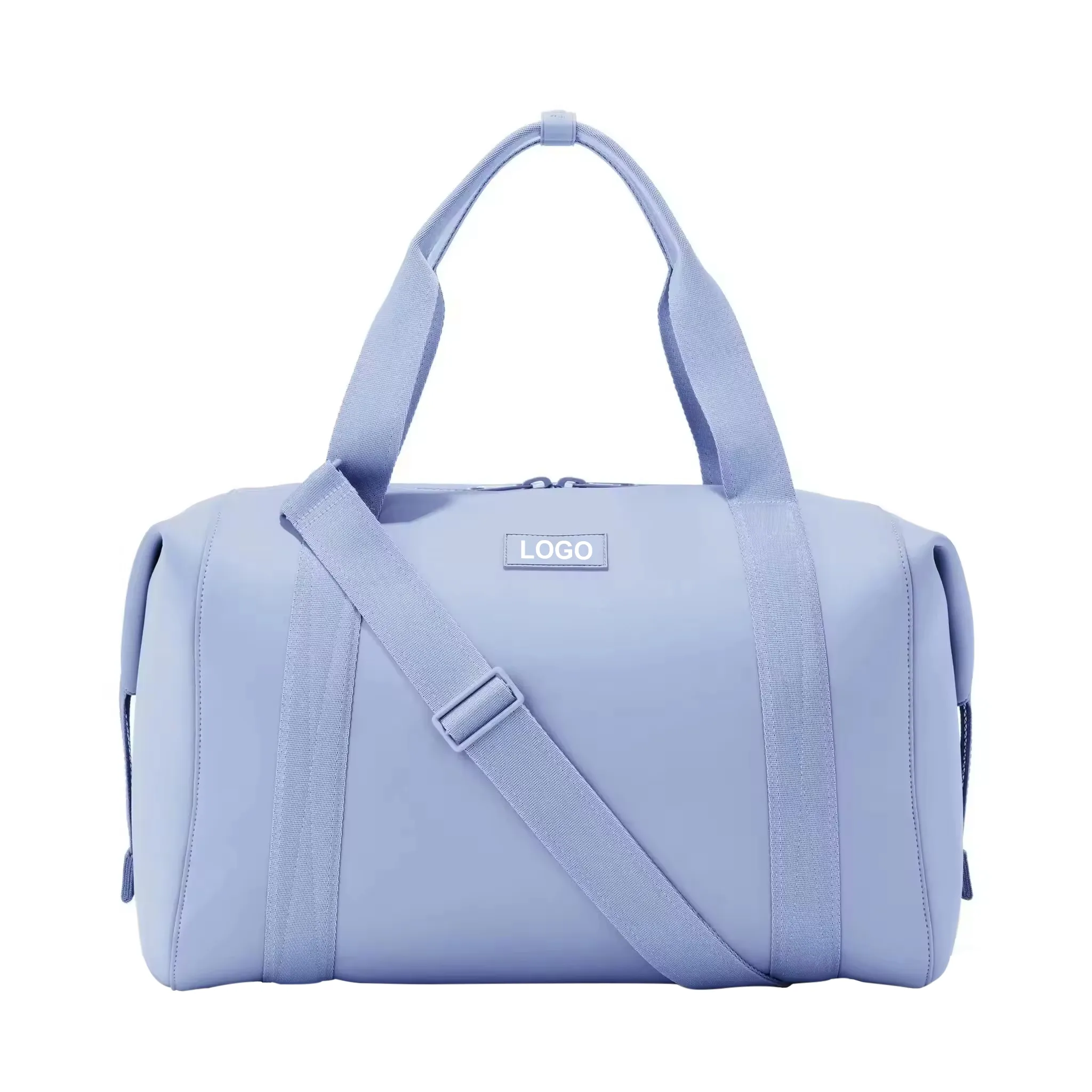
A weekender bag is a travel bag designed primarily for overnight stays and short trips, typically lasting one to three nights. It generally has a roomy main compartment, a soft or semi-structured body, and carry handles, with some designs also including a detachable shoulder strap.
Unlike a traditional suitcase, a weekender bag is usually lightweight, flexible, and easy to store when not in use. Unlike a small everyday tote, it is designed to accommodate multiple changes of clothing and additional travel essentials.
Common characteristics include:
- A spacious main compartment: Provides room for clothing, toiletries, accessories, and other personal belongings.
- Portable construction: Usually features top handles and may include a shoulder strap for hands-free carrying.
- Flexible storage: Soft-sided construction allows the bag to accommodate items of different shapes.
- Travel-oriented organization: Depending on the design, the bag may include internal pockets, exterior compartments, or a separate shoe section.
- Versatile styling: Weekender bags range from casual canvas duffels to structured bags suitable for business travel or premium retail collections.
The term weekender bag describes the intended use rather than one fixed shape. A duffel, tote, or structured travel bag can all function as a weekender if the design offers suitable capacity and portability.
How Is a Weekender Bag Different from Other Travel Bags?
The term weekender bag describes a bag's intended use rather than a single, standardized design. Depending on its shape and features, a weekender may look similar to a duffel bag, a travel tote, or an overnight bag. The main differences lie in capacity, organization, carrying style, and the type of trip each bag is designed to support.
Duffel Bags: A More General-Purpose Design
Duffel bags typically feature a spacious main compartment and an elongated or cylindrical shape. They are commonly used for gym sessions, sports, outdoor activities, and travel. A weekender bag may use the same basic construction, but it is generally designed around the needs of short trips, such as carrying clothing, toiletries, and travel accessories.
The two categories overlap considerably. A medium-sized duffel with a secure closure and comfortable carrying options can work well as a weekender.
Travel Totes: Easy Access and Everyday Versatility
Travel totes usually have a more open, upright structure with two handles and a wide top opening. They are convenient for carrying items that need to remain accessible, such as documents, a water bottle, a tablet, or personal accessories.
Weekender bags tend to prioritize enclosed storage for clothing and other belongings needed for an overnight stay or short getaway. Some tote-style weekenders combine both functions by adding a zippered top, a wider base, and a detachable shoulder strap.
A travel tote may be the better choice for light packing and everyday use, while a weekender is often more suitable when the main priority is carrying enough clothing and essentials for a short trip.
Overnight Bags: Compact Storage for Short Stays
Overnight bags are generally intended for brief trips, often involving just one night away. They may be smaller and simpler than weekenders, although there is no universal size boundary between the two categories.
A compact weekender can serve as an overnight bag, while a larger overnight bag may accommodate a longer trip for someone who packs lightly. Instead of relying on the product name alone, consider the usable capacity, the items that need to fit inside, and how comfortable the bag will be to carry.
Ultimately, these terms are not mutually exclusive. The most useful way to compare bags is to focus on their actual dimensions, internal layout, carrying options, and intended application.
Popular Types of Weekender Bags
The right design depends on how travelers carry their belongings, what they need to pack, and where they expect to use the bag. Several common styles cover most short-trip requirements.
1. Classic Duffel Weekender Bags
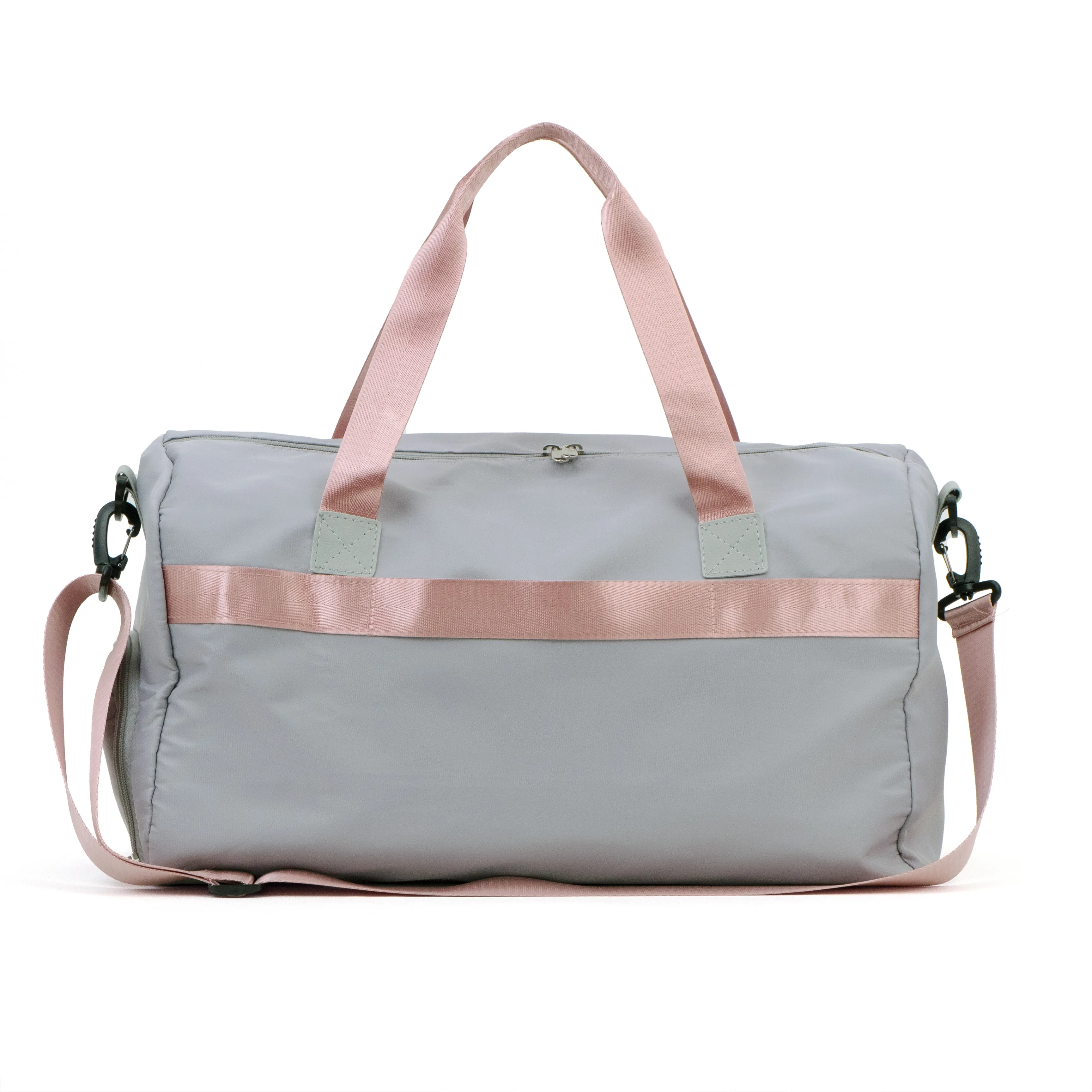
A classic duffel weekender typically features a long, soft-sided body, a large zippered opening, two top handles, and sometimes a detachable shoulder strap.
Its straightforward structure makes it suitable for clothing, toiletries, and other items that do not require extensive compartmentalization.
Advantages:
- Spacious main compartment.
- Relatively simple construction.
- Easy to pack with bulky clothing.
- Suitable for casual travel, road trips, and overnight stays.
- Flexible design that can accommodate irregularly shaped items.
Potential limitations:
- Items may move around inside without internal organization.
- A soft base may sag when the bag is heavily loaded.
- A fully packed cylindrical design can become awkward to carry.
Classic duffels are a practical choice for general travel collections, promotional programs, and customers who prioritize straightforward functionality over a highly structured appearance.
2. Weekender Tote Bags
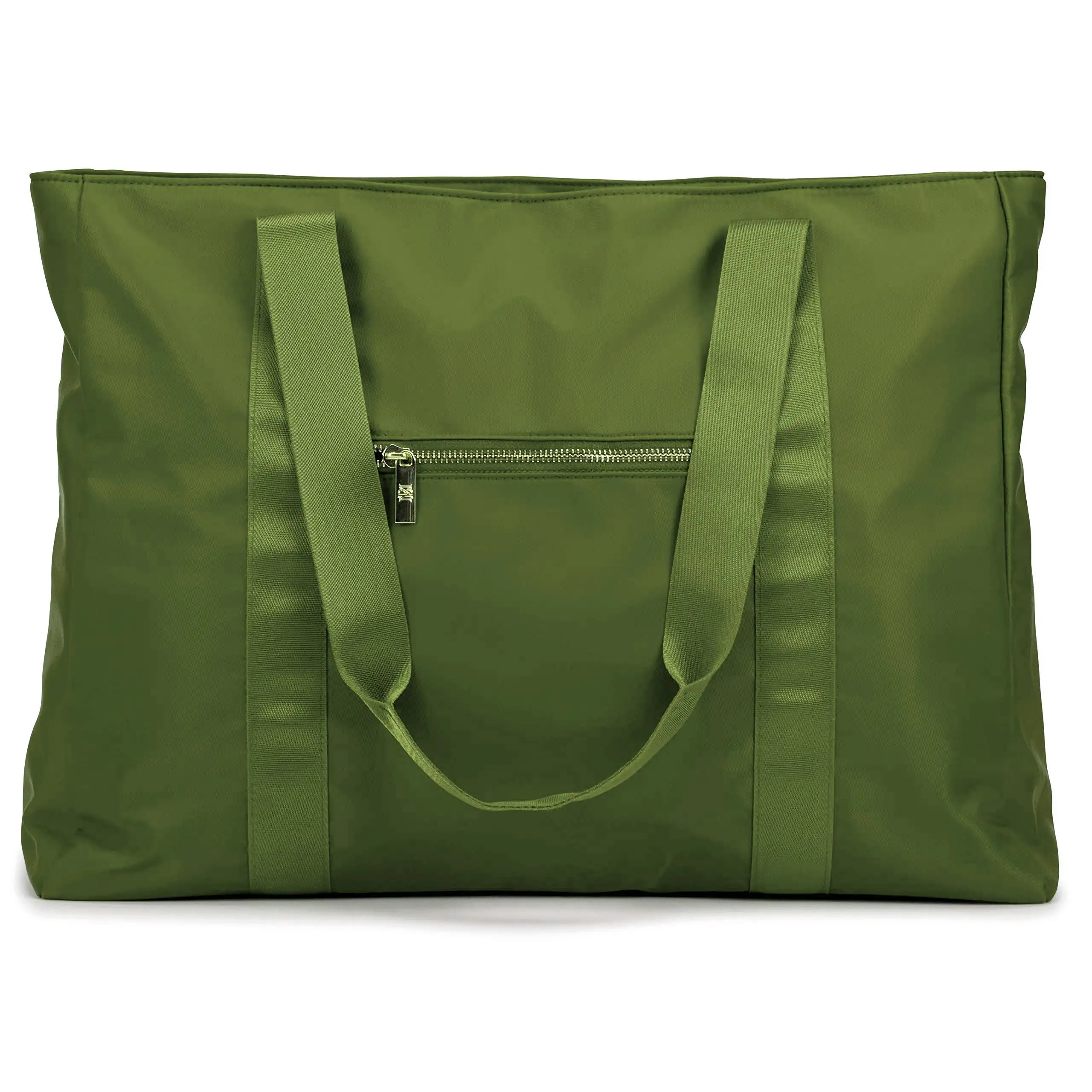
A weekender tote combines the familiar appearance of a tote with greater capacity and travel-oriented construction.
These bags usually have a wide opening, a relatively broad base, and two long handles. Some designs include a top zipper, internal organization, or a detachable shoulder strap.
Compared with a conventional duffel, a weekender tote may look more suitable for everyday use, shopping, commuting, or a short leisure trip.
It is particularly useful for travelers who want one bag to serve several purposes rather than keeping a dedicated travel bag for occasional use.
When evaluating a tote-style weekender, pay attention to handle length, the opening width, and the relationship between the bag's height and base. A bag that looks spacious on the outside may be inconvenient if its opening is too narrow or its base cannot support heavier items.
3. Structured Weekender Bags
Structured weekenders use reinforced panels, firmer bases, or carefully designed internal construction to maintain their shape.
The main benefit is organization. The bag may stand more securely when placed on a hotel floor or luggage rack, and its contents may be easier to access without the sides collapsing inward.
A structured design can also create a more polished appearance for business travel, premium retail, or coordinated luggage collections.
However, additional reinforcement may increase weight, material consumption, and production cost. It can also reduce flexibility when the bag needs to be compressed for storage.
Buyers should consider whether the improved shape retention justifies the added weight and expense for their target customers.
4. Weekender Bags with Shoe Compartments
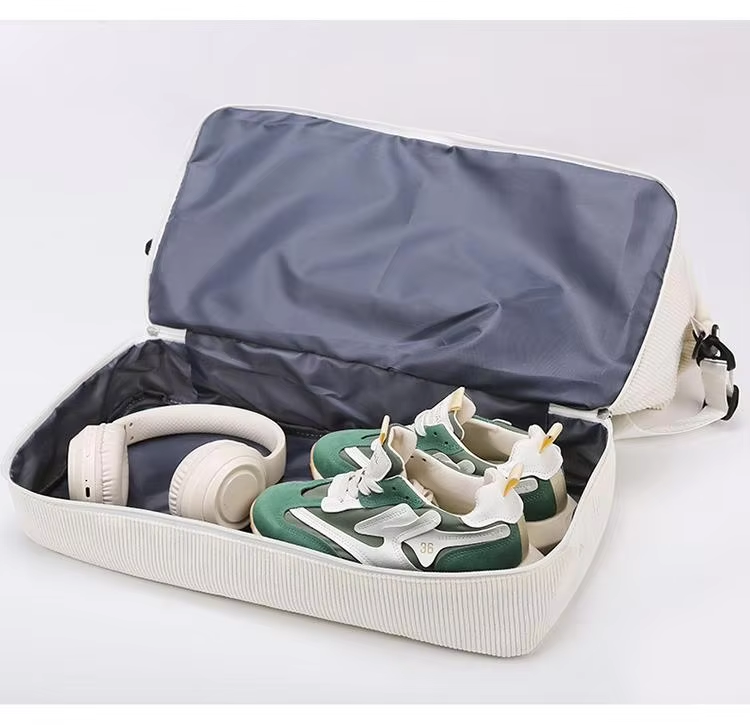
A separate shoe compartment keeps footwear away from clean clothing and other belongings. Depending on the construction, the compartment may be positioned at the side, at the bottom, or inside the main compartment.
This feature is useful for gym-to-travel bags, short business trips, sports weekends, and journeys that involve more than one type of activity.
The design needs to be evaluated as a complete storage system rather than simply by whether a shoe compartment exists.
Consider the following:
- Compartment dimensions: The space must accommodate the footwear sizes and styles expected from the target customer.
- Access: A side opening may make shoes easier to remove without disturbing the main compartment.
- Material separation: A washable or wipe-clean lining can help manage dirt and everyday moisture.
- Ventilation: Mesh panels may improve airflow where appropriate, although they do not eliminate odor or guarantee that moisture will not transfer.
- Impact on capacity: The shoe section takes up space that would otherwise be available for clothing.
A separate compartment is valuable when customers regularly carry shoes, but it may be unnecessary for a minimalist travel bag.
5. Convertible Weekender Bags
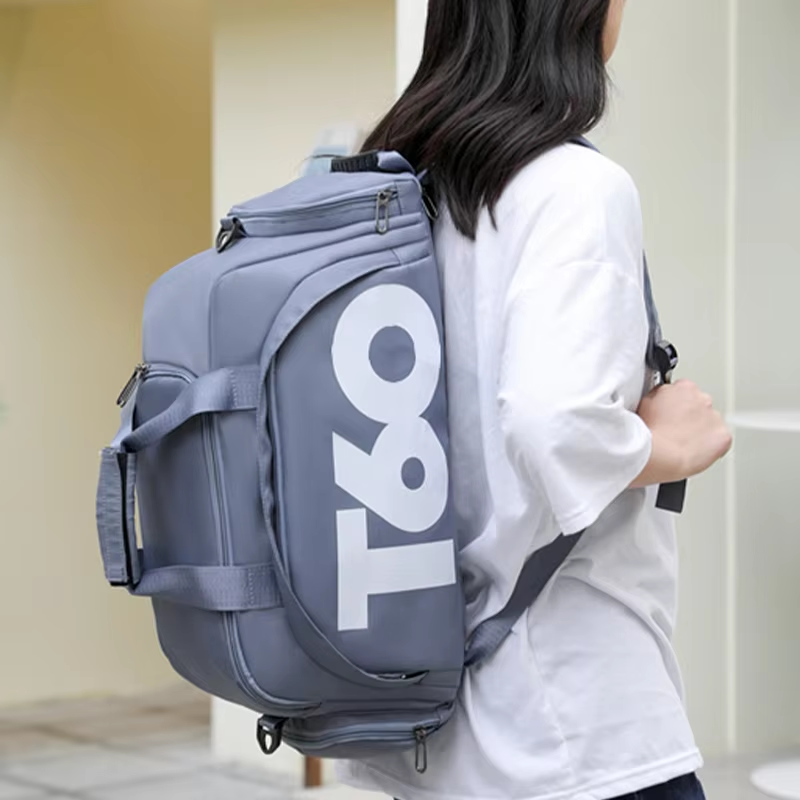
Convertible designs offer more than one carrying method or configuration. For example, a bag may include backpack straps in addition to top handles, or it may have an adjustable strap that allows it to be carried over the shoulder.
These options can be helpful when travelers move between airports, train stations, city streets, and other environments.
The main challenge is balancing versatility with simplicity. Extra straps, buckles, adjustment hardware, and attachment points can increase cost and introduce additional areas that need testing.
For a convertible design, buyers should assess whether each carrying option is comfortable and practical under realistic loads. A bag does not become more useful simply because it has more straps.
6. Lightweight and Foldable Weekender Bags
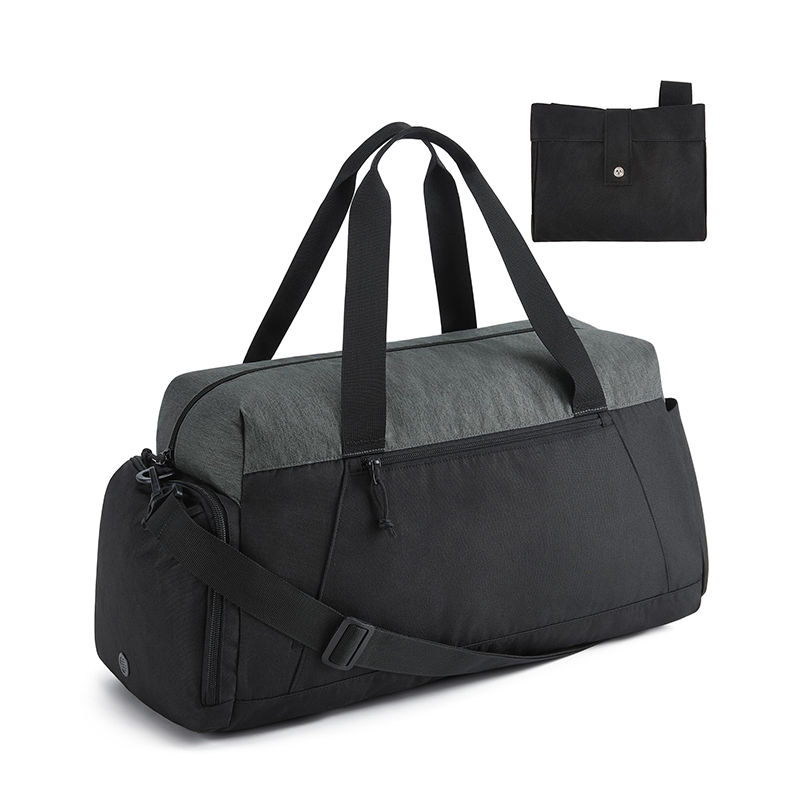
Lightweight weekenders are designed to minimize the bag's own weight. Some flexible models can also be folded or compressed for storage.
They are suitable for casual travelers, secondary luggage, souvenir storage, and situations where the bag may be carried only occasionally.
A lightweight design should still have adequate stitching, secure strap attachments, and a base appropriate for its intended load. Reducing fabric weight too aggressively can compromise abrasion resistance, shape retention, or the bag's ability to hold heavier belongings.
Foldability is also a design trade-off. Softer materials generally compress more easily, while stronger reinforcement may make the bag bulkier when stored.
7. Premium and Fashion-Oriented Weekender Bags
Premium weekenders emphasize appearance as well as function. Design elements may include a clean silhouette, coordinated hardware, contrasting trims, textured fabrics, refined handles, and a more carefully organized interior.
Materials such as canvas, nylon, leather, and leather alternatives can all be used, depending on the desired style and price positioning.
For retail brands, a premium appearance does not necessarily require the most expensive material. Consistent stitching, well-proportioned panels, clean edges, reliable hardware, and restrained branding can make a substantial difference to the finished product.
The challenge is to ensure that decorative features do not interfere with everyday use. A polished exterior is less valuable if the opening is inconvenient or the shoulder strap becomes uncomfortable when the bag is full.
What Materials Are Used for Weekender Bags?
Material selection affects weight, durability, flexibility, appearance, maintenance, and cost. The best material is not necessarily the strongest or most expensive; it is the one that matches the intended use and product positioning.
Canvas
Canvas is a woven fabric commonly made from cotton or a cotton blend. It is popular for casual and lifestyle weekenders because of its familiar texture, relatively firm hand, and versatile appearance.
Canvas works well for bags that need to look relaxed without appearing overly technical. It can be paired with webbing handles, contrasting trims, printed graphics, embroidery, or other branding methods, subject to the fabric's construction and the chosen process.
Advantages:
- Classic appearance suited to lifestyle and retail collections.
- Available in different weights, textures, and fiber compositions.
- Can support printing, embroidery, and sewn-on labels.
- Suitable for structured and unstructured designs, depending on weight and reinforcement.
Limitations:
- Cotton canvas can absorb moisture and may take longer to dry than some synthetic fabrics.
- Heavy canvas can increase the bag's overall weight.
- Color, surface texture, and finishing can affect printing results and cleaning requirements.
For a canvas weekender, buyers should specify the fabric composition, weight, color, finishing, and expected performance rather than relying on the word canvas alone.
Polyester
Polyester is widely used in travel bags because it is versatile, available in many constructions, and suitable for a broad range of price points.
It can be made into lightweight fabrics for flexible bags or heavier woven fabrics for more robust applications. Coatings and backing treatments may be added depending on the desired performance.
Polyester is often a practical option for promotional weekenders, branded travel accessories, and products that need to balance appearance, function, and cost.
Advantages:
- Broad range of fabric weights and constructions.
- Suitable for many colors and printed designs.
- Can provide a useful balance of weight, durability, and cost.
- Often easy to maintain, depending on the coating and construction.
Limitations:
- Performance varies substantially between fabric specifications.
- Lightweight polyester may lack the structure needed for a large, heavily loaded bag.
- Water resistance depends on the fabric, coating, seams, and closure design.
A polyester label alone does not tell buyers whether a bag will resist abrasion, hold its shape, or protect its contents from rain. Those properties should be evaluated through the actual fabric specification and sample.
Nylon
Nylon is commonly used in lightweight travel products where flexibility, abrasion resistance, and weight are important.
Depending on the weave and construction, nylon can work well for frequent-travel bags, compact weekenders, and functional designs with several pockets.
Some nylon fabrics have a technical appearance, while others can be finished to look relatively smooth and understated.
Advantages:
- Often provides a good strength-to-weight balance.
- Available in lightweight and more robust constructions.
- Suitable for flexible bags and designs with multiple compartments.
- Can be treated or coated for particular performance requirements.
Limitations:
- Cost and appearance vary with fabric type and finishing.
- Some lightweight constructions may need reinforcement at high-stress points.
- Water resistance should not be assumed without confirming the fabric and finished-bag specifications.
Nylon is worth considering when carrying comfort and weight are major priorities, especially for customers who travel frequently.
Oxford Fabric
Oxford fabric is a woven fabric commonly used in bags and other practical textile products. Polyester and nylon are both used in Oxford-style constructions.
Buyers may encounter specifications such as 300D, 600D, or 900D. Denier describes the linear density of the yarn, not a complete measure of finished-fabric quality. A higher denier value does not automatically guarantee better overall performance.
Oxford fabric may be appropriate for weekenders that need a more practical, durable appearance. Its performance depends on yarn, weave, coating, backing, and the way the finished bag is constructed.
When comparing options, ask for the exact material composition and test the fabric in the intended application rather than comparing denier values in isolation.
Neoprene
Neoprene is a synthetic rubber-based material often supplied in flexible sheet or laminated constructions. In bags, it is valued for its soft hand, cushioning, and distinctive appearance.
A neoprene weekender can have a more contemporary silhouette than a conventional woven-fabric duffel. The material may also help the bag maintain a soft, padded feel.
However, thickness and density can affect weight, flexibility, edge finishing, and production cost. A thicker material is not automatically the best choice for every design.
Neoprene is worth considering for lifestyle, fitness, and travel collections where appearance and a cushioned structure are important. Buyers should evaluate the actual material, lining, seam construction, and carrying comfort of the finished product.
Leather and Leather Alternatives
Leather is often associated with premium travel accessories because of its texture, appearance, and potential to develop character with use. Leather weekenders may suit business travel, gift collections, or brands that emphasize a classic style.
Leather alternatives can offer a similar visual direction with different material compositions, maintenance requirements, and price structures.
The trade-offs include weight, surface durability, maintenance, and material-specific environmental considerations. Buyers should also be clear about the terminology used in product descriptions: genuine leather, bonded leather, coated textile, and synthetic leather are not interchangeable.
For any leather or alternative-material product, evaluate the surface finish, flexibility, edge treatment, hardware compatibility, and performance after repeated handling.
How to Compare Weekender Bag Materials
| Material |
Typical strengths |
Points to consider |
Potential applications |
| Canvas |
Familiar texture, versatile styling, branding flexibility |
Moisture absorption, fabric weight, finishing |
Lifestyle bags, retail collections, casual travel |
| Polyester |
Versatility, broad price range, many constructions |
Specification and coating determine performance |
Promotional bags, general travel, branded merchandise |
| Nylon |
Potentially lightweight with good strength-to-weight performance |
Cost, weave, finishing, reinforcement |
Frequent travel, lightweight designs |
| Oxford fabric |
Practical woven construction, varied fabric options |
Denier alone is not a complete quality measure |
Utility travel bags, functional weekenders |
| Neoprene |
Soft, cushioned feel, contemporary appearance |
Thickness, weight, edge finishing, cost |
Lifestyle, fitness, modern travel collections |
| Leather or alternatives |
Premium appearance and varied surface finishes |
Weight, maintenance, material definition |
Premium retail, business travel, gifting |
No single material is best for every weekender bag. Canvas may suit a casual retail collection, nylon may be preferable for weight-sensitive travel, and polyester may offer flexibility for a promotional program. The decision should start with customer requirements and product specifications rather than material popularity alone.
Key Features to Look for in a Weekender Bag
Material is only one part of the decision. The opening, compartments, handles, strap attachments, and base construction can determine whether a bag remains convenient after repeated use.
1. Main Compartment and Opening Design
The main compartment determines how easily users can pack and retrieve their belongings.
A wide top opening can make it easier to place folded clothing, packing cubes, and toiletries inside. A long zipper may improve access across the bag, while a structured opening can help the bag remain open during packing.
When assessing an opening, consider:
- Whether clothing can be packed without excessive compression.
- Whether the zipper moves smoothly around corners.
- Whether the opening remains accessible when the bag is partly full.
- Whether the zipper ends and surrounding fabric are reinforced.
- Whether the design leaves enough room for the lining and internal pockets.
A larger opening is not automatically better. The zipper path, bag shape, and flexibility of the upper panels all affect actual usability.
2. Zippers and Closures
The closure should suit the bag's expected load and usage frequency. A weekender filled with clothing and shoes places different demands on its zipper than a small lightweight tote.
Check whether the zipper size, slider, tape, and stitching are appropriate for the bag's construction. Curved zipper paths may require particular attention because they can become difficult to operate if the panels are poorly aligned.
For products intended for frequent travel, buyers should test the zipper repeatedly on a fully loaded sample. A zipper that works well on an empty bag may behave differently when the main compartment is under tension.
3. Handles and Shoulder Straps
A weekender may be carried by hand through a hotel lobby, over the shoulder on a train platform, or for longer periods while walking.
Top handles are useful for short carrying distances, while a detachable or adjustable shoulder strap offers more flexibility.
Evaluate:
- Handle drop and whether the handles fit comfortably over the shoulder.
- Strap length and adjustment range.
- Width and padding where the strap contacts the body.
- Whether metal or plastic adjustment hardware feels secure.
- How the handles and strap anchors are attached to the bag body.
- Whether the strap interferes with pockets or openings.
Reinforcement matters most where the bag transfers its weight to the carrying system. Extra stitching, suitable webbing, and correctly designed attachment points may be more important than simply using a thicker outer fabric.
4. Reinforced Base
The base supports the bag when it is placed on a floor, car seat, or luggage rack. A reinforced base can improve shape retention and help protect the bottom from everyday abrasion.
Depending on the product, reinforcement may come from a heavier fabric, an additional panel, a removable base board, or a more structured construction.
A firmer base is particularly useful when the bag carries shoes, toiletries, or heavier accessories. However, reinforcement adds material and may reduce foldability.
For a lightweight weekender, a flexible base may be sufficient. For a structured travel bag, a more stable base may be worth the added cost.
5. Interior Pockets and Organization
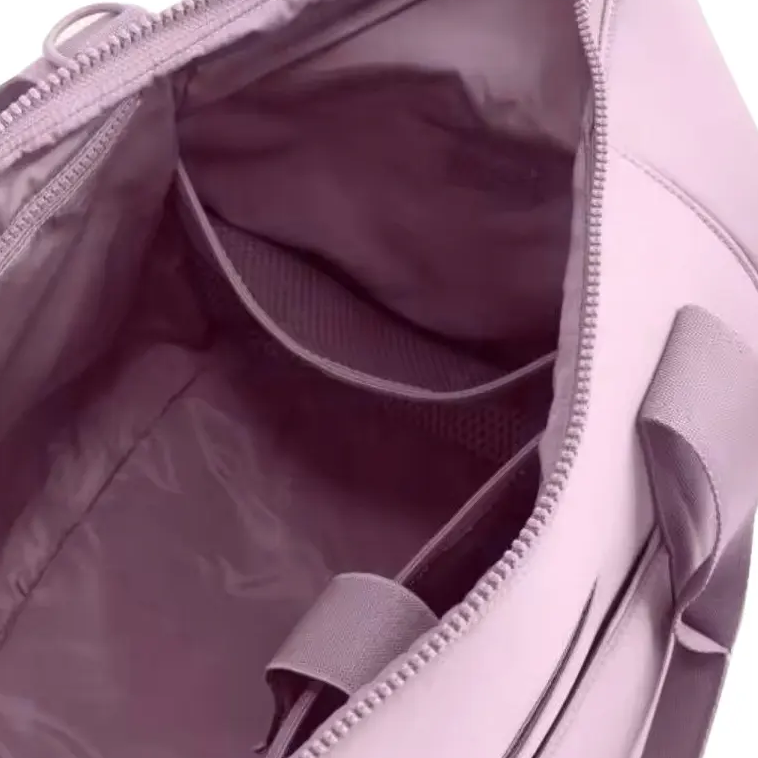
Internal pockets make small items easier to locate and can reduce the need to search through the main compartment.
Useful options include:
- Zippered pockets for valuables and small accessories.
- Slip pockets for documents or items that need quick access.
- Elastic pockets for compact bottles or accessories, where appropriate.
- Key clips for frequently used keys.
- A padded sleeve if the bag is intended to carry a tablet or laptop.
More pockets do not always mean better organization. Excessive compartments can reduce usable capacity, add weight, and make manufacturing more complicated.
A well-designed interior should reflect the items customers actually carry. For a simple leisure weekender, a few functional pockets may be sufficient. A business-oriented design may need more dedicated organization.
6. Separate Shoe or Wet-Item Storage
A separate shoe compartment is useful when travelers carry footwear that may be dirty or damp. A wet-item pocket can serve a similar purpose for swimwear or other items that need to be kept apart from dry clothing.
These features should not be treated as interchangeable. A shoe compartment may provide separation without being waterproof, while a wet-item pocket needs suitable material and construction to manage moisture.
When the bag includes either feature, buyers should confirm:
- The dimensions of the compartment.
- Whether its lining is suitable for the intended items.
- Whether moisture can leak into the main compartment.
- Whether the opening is easy to access.
- Whether the compartment reduces the capacity needed elsewhere.
A dedicated compartment is most valuable when it solves a recurring problem for the target customer.
7. Luggage Sleeve or Trolley Pass-Through
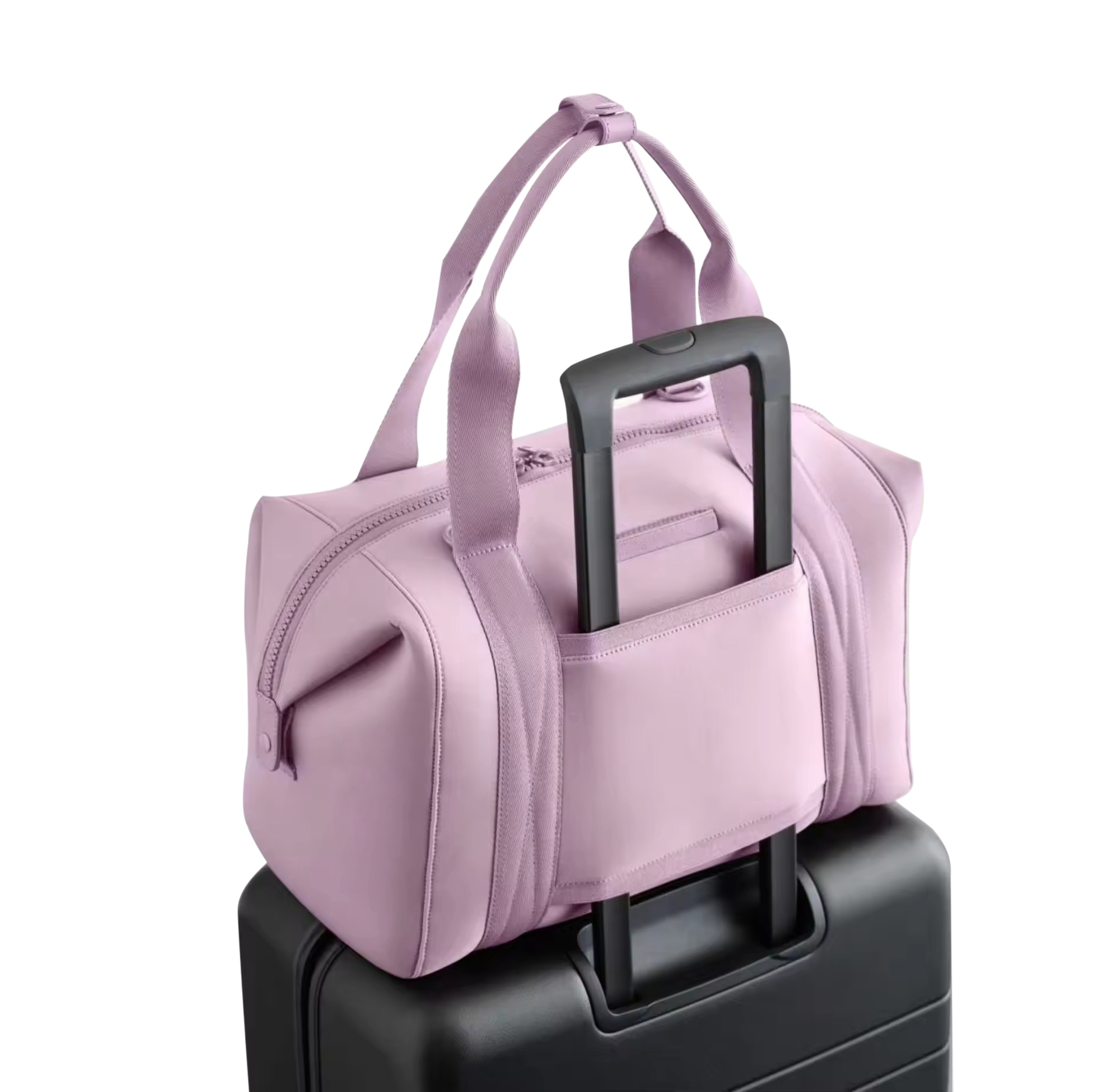
A luggage sleeve allows a weekender to slide over the telescopic handle of a rolling suitcase. It can make airport and station transfers easier by reducing the need to carry both bags independently.
The sleeve should be positioned to align with common luggage-handle configurations and should not make the bag unstable when mounted.
Buyers should check the sleeve's width, depth, stitching, and compatibility with the bag's center of gravity. A narrow sleeve that fits only a limited range of handles may be less useful than expected.
8. Water Resistance and Easy Cleaning
Water resistance can be valuable for travel, but it should be specified accurately.
A water-resistant outer fabric may help protect against light splashes or brief exposure to rain. It does not necessarily make the complete bag waterproof. Water may still enter through zippers, seams, stitching holes, or unprotected openings.
If weather protection matters, evaluate the fabric treatment, lining, seam construction, zipper design, and intended exposure together.
Easy cleaning is another practical consideration. A wipe-clean lining or surface may be useful for travel bags that carry toiletries, shoes, or gym clothing. However, cleaning instructions should reflect the actual material and finish.
9. Weight and Shape Retention
A weekender should provide sufficient capacity without becoming unnecessarily heavy before it is packed.
The bag's weight depends on the outer material, lining, reinforcement, hardware, straps, and additional compartments. A heavily structured design may look more substantial but can reduce the amount of weight available for the user's belongings.
Shape retention is also important. A bag that collapses completely may be difficult to pack, while an overly rigid bag can be inconvenient to store.
The right balance depends on whether the product is intended for occasional leisure travel, frequent business use, or a lightweight promotional application.
10. Branding and Visual Details
For retail and promotional products, the exterior also serves as a visual identity surface.
Common branding methods include screen printing, heat transfer, embroidery, woven labels, patches, and selected decorative trims. The appropriate method depends on the material, logo complexity, expected production quantity, and desired appearance.
Consider logo placement in relation to seams, pockets, handles, and curves. A logo that is technically printable may still look poorly positioned if it is too close to a zipper or distorted by a curved panel.
For a premium collection, subtle branding may be preferable. For event merchandise, a larger and more visible logo may be appropriate. The visual treatment should match the end use rather than follow one universal rule.
How to Choose the Right Weekender Bag Size
Although dimensions are only one part of choosing a weekender, capacity remains an important starting point. A bag should accommodate the items a traveler normally carries without becoming unnecessarily bulky.
The required capacity depends on trip length, clothing volume, footwear, toiletries, and whether the traveler also carries a backpack or another personal item.
Match Capacity to the Trip
The following ranges are practical starting points rather than strict rules. Actual usable capacity varies with the bag's shape, internal compartments, and packing habits.
| Trip or use |
Indicative capacity |
Main considerations |
| Overnight stay |
20–30 liters |
A change of clothing, toiletries, and essentials |
| Light two-day trip |
25–35 liters |
Compact packing and limited footwear |
| Typical weekend getaway |
30–45 liters |
Several clothing items, toiletries, and accessories |
| Longer weekend or bulky packing |
40–50 liters |
Extra footwear, jackets, or less compressible items |
| Multi-purpose travel or family use |
45 liters or more |
Additional storage, but greater weight and bulk |
These ranges overlap because there is no universal capacity standard for a weekender. A compact bag with an efficient rectangular layout may use its space differently from a rounded duffel with the same stated volume.
Consider Dimensions as Well as Capacity
Two bags with similar capacity can feel very different to use. A long, narrow bag may accommodate folded clothing but be awkward for wider objects. A taller design may be easier to pack vertically but less convenient under a seat or in a crowded luggage compartment.
Before choosing a size, consider:
- The dimensions of typical packed items.
- Whether shoes need to be stored separately.
- How the bag fits in a car trunk or overhead compartment.
- Whether the bag needs to accompany rolling luggage.
- Whether the user must carry it up stairs or over long distances.
For air travel, do not assume that a bag marketed as a weekender automatically qualifies as a carry-on or personal item. Allowances vary by airline, fare, route, and baggage category. Check the relevant airline's current rules before making a decision.
How to Choose a Weekender Bag for Different Uses
The same design will not suit every traveler. Matching the construction to the intended use helps buyers avoid paying for features that customers rarely use or overlooking features that would improve everyday convenience.
Weekend Getaways and Leisure Travel
For short leisure trips, versatility and easy packing are often the main priorities.
Look for a spacious main compartment, comfortable carrying options, and a design that works with casual clothing. Canvas, polyester, and nylon can all be suitable, depending on the desired appearance and weight.
A small number of internal pockets is usually sufficient. A separate shoe compartment may be worthwhile for travelers who bring different footwear, but it is not essential for every weekend trip.
Business Travel
Business travelers may need room for clothing, toiletries, documents, and electronic devices.
A more structured silhouette, restrained branding, and neutral colors may suit this use. A luggage sleeve can be particularly helpful when the bag is carried alongside rolling luggage.
If the bag will hold a laptop or tablet, verify that the device compartment provides suitable dimensions and padding. A general internal pocket should not be described as protective electronics storage unless its construction supports that claim.
A business-oriented weekender should also remain comfortable when carried through stations and airports. Weight, handle design, and strap adjustment matter as much as appearance.
Gym-to-Weekend Travel
Some users need one bag for workouts and overnight stays. In this case, organization becomes more important because clean clothing, footwear, toiletries, and used garments may all need to fit in the same bag.
A shoe compartment, washable lining, or separate wet-item pocket may help. The bag should also have enough structure to prevent the shoe section from consuming too much of the main compartment.
When evaluating this type of design, consider how users will clean the compartments and whether the materials are suitable for repeated contact with damp items.
Road Trips
Road-trip bags may be loaded into car trunks, moved between accommodation, and used to store a wider range of belongings.
A reinforced base, durable outer fabric, and practical pockets can be useful. Since the bag may not need to be carried over long distances, capacity and easy access may be more important than the lowest possible weight.
However, a larger bag can become difficult to lift when fully loaded. The handle construction and carrying method should still match the expected load.
Outdoor Weekends
For camping, cabin stays, or other outdoor trips, buyers should consider the expected weather, ground contact, and types of belongings carried.
A suitable outer fabric, practical closure, and easy-to-clean base can help. If exposure to rain is expected, specify the required level of water resistance rather than relying on a general product description.
A standard soft-sided weekender is not automatically suitable for prolonged outdoor exposure. The design should be assessed against the actual conditions in which it will be used.
Retail and Promotional Programs
Retailers and promotional gift companies may prioritize different features from individual travelers.
A retail brand may need a recognizable silhouette, carefully selected materials, coordinated trims, and packaging that supports its price position. A promotional program may prioritize cost control, logo visibility, practical capacity, and consistency across a large order.
For these applications, the target audience should guide the specification. A premium gift intended for executives may require a different material and finish from a lightweight event bag distributed to hundreds of attendees.
What Should Buyers Consider When Sourcing Custom Weekender Bags?
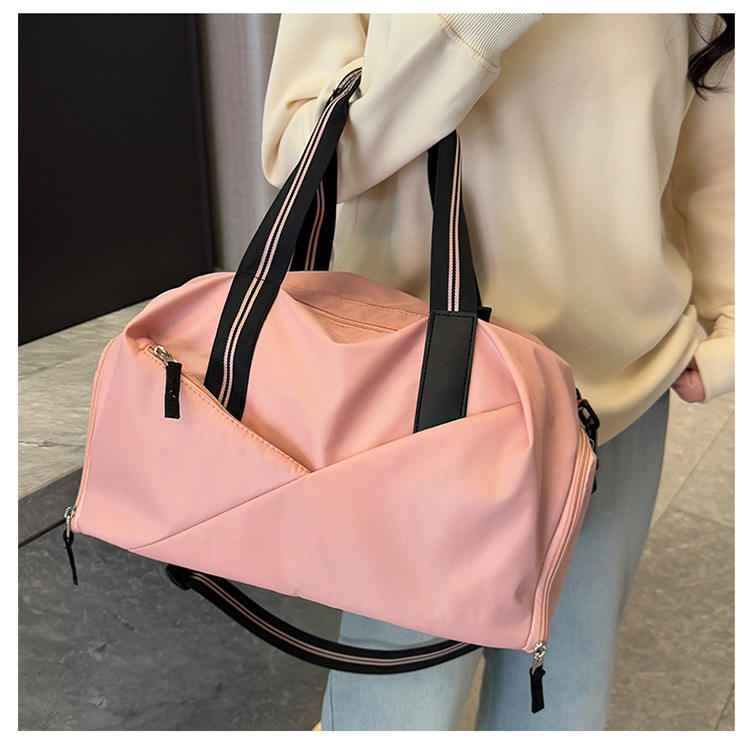
For brands, retailers, and procurement teams, sourcing a custom weekender bag involves more than choosing a reference image. The finished product must meet functional requirements, fit the target price, support the intended branding, and remain consistent across the production order.
The most efficient approach is to define the product specification before finalizing the design.
1. Define the Target Customer and Product Positioning
Start by clarifying who will use the bag and why.
A retail brand may be developing a permanent travel collection, while a promotional company may need a branded item for an event or corporate gift program. A private-label brand may need a product that can be differentiated through material, shape, pockets, or packaging.
Answering these questions helps narrow the choices:
- Is the bag intended for leisure travel, business travel, fitness, or multiple uses?
- Is it positioned as an entry-level, mid-range, or premium product?
- Will customers carry it occasionally or use it frequently?
- Is the priority a distinctive appearance, lightweight construction, or practical organization?
- What price range must the finished product meet?
A clear product position helps prevent unnecessary features from increasing cost without improving the customer's experience.
2. Confirm Materials and Construction Specifications
A product description such as “durable polyester weekender” is not detailed enough for consistent production.
The specification should identify the outer material, lining, relevant fabric weight or denier, coating where applicable, reinforcement, webbing, zipper, and hardware.
For example, two bags described as polyester may differ significantly in thickness, texture, flexibility, and surface finish. If appearance is important, a physical reference sample or approved material swatch can help reduce ambiguity.
Construction details should also be documented. Buyers should clarify the intended stitching, reinforcement at handle attachment points, base structure, seam placement, and internal compartment design.
The goal is not to specify the heaviest material or the most complex construction. It is to make the finished bag appropriate for its expected use and price.
3. Finalize Dimensions and Internal Capacity
External measurements do not tell the whole story. Lining thickness, pocket placement, reinforcement, and the shape of the bag all affect usable space.
When developing a custom design, define:
- External length, width, and height.
- Main-compartment dimensions.
- Handle drop and shoulder-strap adjustment range.
- Shoe-compartment or wet-pocket dimensions, if included.
- Internal pocket positions.
- Base reinforcement and any removable panels.
If the bag must fit a specific luggage allowance or storage space, evaluate the finished dimensions under realistic packing conditions. Soft-sided bags can expand when filled, so the nominal empty dimensions may not represent their packed shape.
4. Choose Customization Methods
Custom weekender bags can be adapted through material, color, construction, branding, and packaging.
Common options include:
- Material customization: Selecting canvas, polyester, nylon, Oxford fabric, neoprene, or another suitable material.
- Color customization: Matching the bag body, lining, webbing, zippers, and trims to a brand palette.
- Logo application: Using printing, embroidery, patches, or woven labels where appropriate.
- Structural customization: Adjusting the base, opening, pockets, shoe compartment, or luggage sleeve.
- Hardware customization: Selecting zipper pulls, buckles, adjusters, and other visible components.
- Packaging customization: Developing hangtags, labels, protective packaging, or retail-ready presentation.
Not every customization is equally suitable for every material. Embroidery may create a different appearance on a soft, flexible panel than on a firm woven fabric. Large printed areas may also require a suitable surface and production process.
Buyers should confirm the artwork, logo dimensions, placement, colors, and finishing method before approving the production sample.
5. Evaluate Samples Before Bulk Production
A sample is an opportunity to test the actual product rather than simply approve its appearance.
Inspect the bag in both empty and loaded conditions. Check whether it maintains an appropriate shape, whether the handles remain comfortable, and whether the opening is easy to use.
A practical sample review should cover:
- Overall dimensions and usable capacity.
- Fabric appearance, color, and hand feel.
- Stitching consistency and loose threads.
- Zipper movement and closure alignment.
- Handle and shoulder-strap attachment.
- Pocket placement and compartment access.
- Base support and shape retention.
- Logo position, size, and visual quality.
- Lining finish and internal cleanliness.
6. Establish Quality-Control Requirements
Quality control should focus on the features most likely to affect the user experience.
For a weekender bag, these often include seams, handles, straps, zippers, lining, and base construction. A simple visual inspection may identify defects such as uneven stitching or poor finishing, but functional checks are also necessary.
A buyer may define checks such as:
| Inspection area |
What to verify |
Why it matters |
| Dimensions |
Measurements against the approved specification |
Helps maintain product consistency |
| Fabric and color |
Material identity, surface finish, and color consistency |
Supports appearance and product requirements |
| Stitching |
Seam alignment, loose threads, and reinforcement |
Reduces construction defects |
| Handles and straps |
Attachment quality and adjustment function |
Supports carrying comfort and reliability |
| Zippers |
Smooth operation and secure installation |
Improves access and closure performance |
| Compartments |
Correct position, dimensions, and lining |
Ensures the design works as intended |
| Branding |
Position, size, color, and finish |
Maintains brand presentation |
| Packaging |
Correct labels and protection |
Helps prepare goods for shipment or retail |
If the product is expected to carry a defined load or withstand repeated use, agree on appropriate test methods and acceptance criteria before production. Do not assume that visual inspection alone proves load-bearing performance or long-term durability.
7. Understand MOQ, Lead Time, and Cost Factors
The cost of a custom weekender depends on the complete specification, not just the outer fabric.
Important factors include:
- Material type, weight, and finish.
- Bag dimensions and construction complexity.
- Number and type of compartments.
- Zipper, hardware, webbing, and reinforcement.
- Logo method and number of branding locations.
- Custom colors or specially developed materials.
- Packaging requirements.
- Order quantity, sampling, and production arrangements.
A design with multiple compartments, custom hardware, and several branding methods may cost more to develop and manufacture than a simple duffel, even if both have similar external dimensions.
Minimum order quantities and lead times depend on the supplier, material availability, customization requirements, and order details. Buyers should confirm these directly rather than assuming that every design follows the same conditions.
When comparing quotations, review the specification included in each price. A lower quotation may reflect differences in material, lining, reinforcement, accessories, packaging, or inspection requirements.
8. Prepare a Clear Product Brief
A concise product brief helps buyers and suppliers discuss the same requirements.
A useful brief should include:
- Intended use and target customer.
- Reference images or a design drawing.
- Preferred material and color.
- External dimensions and capacity requirements.
- Main compartment and pocket layout.
- Handle and shoulder-strap requirements.
- Zipper and hardware preferences.
- Logo artwork and placement.
- Packaging and labeling requirements.
- Target order quantity and expected price range.
- Any relevant testing, documentation, or delivery requirements.
If some details are not yet decided, mark them as open for discussion rather than leaving them ambiguous. A clear brief makes it easier to identify which design decisions affect function, cost, and production feasibility.
Common Mistakes to Avoid When Choosing a Weekender Bag
Even a bag with an attractive appearance can disappoint if the design does not match its intended use. The following mistakes are worth avoiding when developing a custom one.
Choosing by Appearance Alone
A polished exterior does not guarantee comfortable carrying, adequate capacity, or reliable construction.
Look beyond the product photos. Check the opening, strap attachment, base support, and interior layout. For custom orders, request a sample that can be evaluated in realistic conditions.
Assuming a Larger Bag Is Always Better
Extra capacity may be useful for some travelers, but a larger bag can become heavy and inconvenient when fully packed.
Choose the capacity based on typical trips and the items users actually carry. For retail collections, it may be more effective to offer distinct compact and standard options than to develop one oversized design for everyone.
Selecting Material Without Considering the Use Case
A material that looks appropriate in a product photo may not suit the intended conditions.
Canvas may absorb moisture, a heavily structured bag may be too bulky for light travel, and a lightweight fabric may need additional reinforcement for a heavier load.
Compare materials in the context of the complete product rather than treating one material as universally superior.
Adding Too Many Compartments
Additional pockets can improve organization, but they also consume space and increase complexity.
Each compartment should serve a clear purpose. If a shoe section or laptop sleeve is included, verify that the feature provides enough usable space and does not compromise the main compartment.
Overlooking Handle and Strap Comfort
A bag may be easy to lift when empty but uncomfortable when fully loaded.
Check handle drop, strap width, adjustability, padding, and attachment construction. For products expected to be carried over longer distances, carrying comfort should be part of the sample evaluation.
Treating Water-Resistant Fabric as a Waterproof Bag
A coated fabric does not automatically make the complete bag waterproof.
Water can enter through seams, zippers, and openings. If weather protection is an important requirement, specify the expected exposure and evaluate the finished construction accordingly.
Adding Custom Features Without Considering Cost
Custom hardware, extra pockets, unusual shapes, and multiple branding locations may improve differentiation, but each can add cost or production complexity.
Prioritize features according to customer value. A simple, well-executed weekender may be more commercially successful than a complicated design that exceeds the target price.
FAQ
What Is the Main Purpose of a Weekender Bag?
A weekender bag is designed for overnight stays and short trips, usually lasting one to three nights. It provides space for clothing, toiletries, shoes, and travel essentials without the bulk of a traditional suitcase.
Are Weekender Bags Suitable for Air Travel?
Yes, many are suitable for air travel, but acceptance depends on the bag's dimensions, packed shape, and the airline's current baggage rules. Always check the applicable carry-on or personal-item allowance before traveling.
What Is the Best Material for a Weekender Bag?
There is no single best material for every use. Canvas offers a classic casual appearance, nylon can provide a useful balance of strength and weight, and polyester offers versatility across different price points. The right choice depends on the intended use, design, and required performance.
Should a Weekender Bag Have a Shoe Compartment?
A shoe compartment is useful for travelers who carry footwear separately from clothing. It may be particularly helpful for gym-to-travel use, but it is not essential for every bag. Buyers should consider how much capacity the compartment takes away from the main storage area.
Can Weekender Bags Be Customized for Retail or Promotional Use?
Yes. Depending on the design and supplier capabilities, customization may include materials, colors, dimensions, pockets, zippers, handles, logos, labels, and packaging. The final options should be confirmed against the product requirements and production specifications.
What Should Buyers Check Before Ordering Custom Weekender Bags?
Buyers should confirm the intended use, materials, dimensions, construction, branding, sample approval, quality-control requirements, MOQ, lead time, and total cost. A written specification helps reduce misunderstandings and makes quotations easier to compare.
Is a Duffel Bag the Same as a Weekender Bag?
Not exactly. A duffel bag describes a general bag style, while a weekender describes a bag intended for short trips. A duffel can function as a weekender when its capacity, carrying options, and construction suit overnight or weekend travel.
Conclusion
A good weekender bag balances capacity, comfort, organization, material, and construction. The best design depends on the traveler's habits: a casual getaway may call for a flexible duffel, a business trip may benefit from a structured silhouette and luggage sleeve, while gym-to-weekend travel may require separate shoe or wet-item storage.
For brands and procurement teams, the same principle applies to product development. Start with the intended customer and use case, select materials and features that support those requirements, and evaluate samples before committing to bulk production.
If you are developing a custom weekender bag for a retail collection, promotional campaign, or private-label travel range, INITI can support discussions around material selection, size, color, logo application, compartments, and packaging. A clear product brief is a practical first step toward a design that fits your market and budget.
Related Products





 Hot News