When comparing bag fabrics, buyers often encounter specifications such as 210D polyester, 300D Oxford fabric, 600D polyester, and 1000D nylon. These numbers may look like simple material grades, but they describe a specific textile measurement.
Denier is particularly relevant in the bag industry because manufacturers use different yarn sizes to create lightweight linings, foldable shopping bags, cosmetic pouches, backpacks, travel bags, and heavy-duty equipment bags. However, a higher denier rating does not automatically mean a better bag. Fabric construction, fiber type, yarn quality, coating, and finished-product design all influence the final result.
Understanding denier makes it easier to compare fabric quotations, communicate product requirements, and avoid paying for material specifications that do not match the intended use.
This guide explains what denier means, how it differs from other textile measurements, what common denier ratings mean in the bag industry, and how to evaluate the right specification for a custom bag project.
What Is Denier?
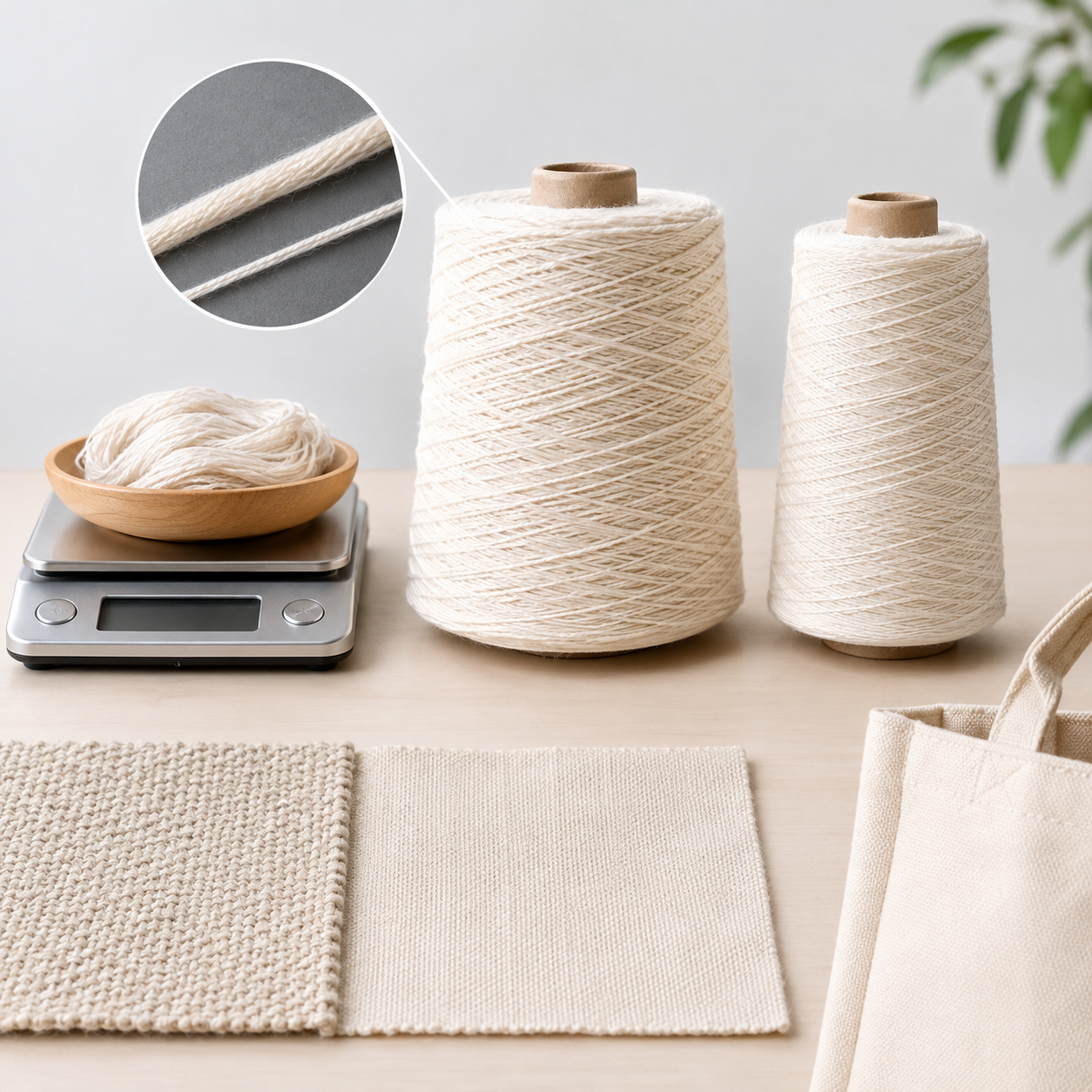
Denier, commonly abbreviated as D, is a unit of linear mass density used to describe the fineness of textile fibers and yarns. It measures the mass in grams of 9,000 meters of yarn.
The basic formula is:
Denier = Yarn mass in grams ÷ Yarn length in meters × 9,000
For example, if 9,000 meters of a yarn weighs 600 grams, its linear density is 600 denier, or 600D. If the same length of yarn weighs 300 grams, its linear density is 300D.
The higher value means that the yarn has more mass per unit length.
In practical terms, a 600D yarn is heavier per unit length than a 300D yarn. When comparable yarns are used in similar fabric constructions, the higher-denier option will often produce a more substantial material. However, the relationship between yarn size and the performance of the finished fabric is not always straightforward.
Denier describes the yarn, not the complete fabric or finished bag.
Why Is Denier Used in the Bag Industry?
Bags need to balance several requirements, including carrying capacity, abrasion resistance, weight, flexibility, appearance, and production cost. Denier provides a useful starting point for describing the yarn used to produce a synthetic woven fabric.
For example, a manufacturer may offer a lightweight polyester lining and a heavier polyester exterior for the same backpack. Both fabrics could use polyester, but their yarn specifications and fabric constructions may differ substantially.
Denier helps buyers distinguish between these material options before evaluating the complete specification.
Denier is less useful when treated as an isolated quality score. A fabric labeled 1000D is not automatically more suitable than one labeled 600D. The correct choice depends on the bag's intended use and the complete material construction.
Does Denier Measure Fiber Thickness or Yarn Thickness?
Denier is a measure of linear mass density rather than a direct measurement of physical diameter.
In commercial bag specifications, the term is commonly used to describe the yarn incorporated into the fabric. Some product descriptions also use it loosely to refer to the fabric itself, such as “600D fabric.”
This shorthand is convenient, but it can be misleading if the underlying yarn specification is unclear.
Two yarns with the same denier can have different physical diameters because they may use different polymers, filament counts, cross-sectional shapes, or yarn constructions. A multifilament yarn, for instance, consists of multiple continuous filaments grouped together, whereas a spun yarn is made from shorter fibers twisted together.
Consequently, the D number alone does not fully describe the yarn's structure.
For custom bag development, it is better to confirm the stated denier together with the fiber composition, fabric construction, finished weight, and any coating or backing.
What Do 210D, 300D, 600D and 1000D Mean?
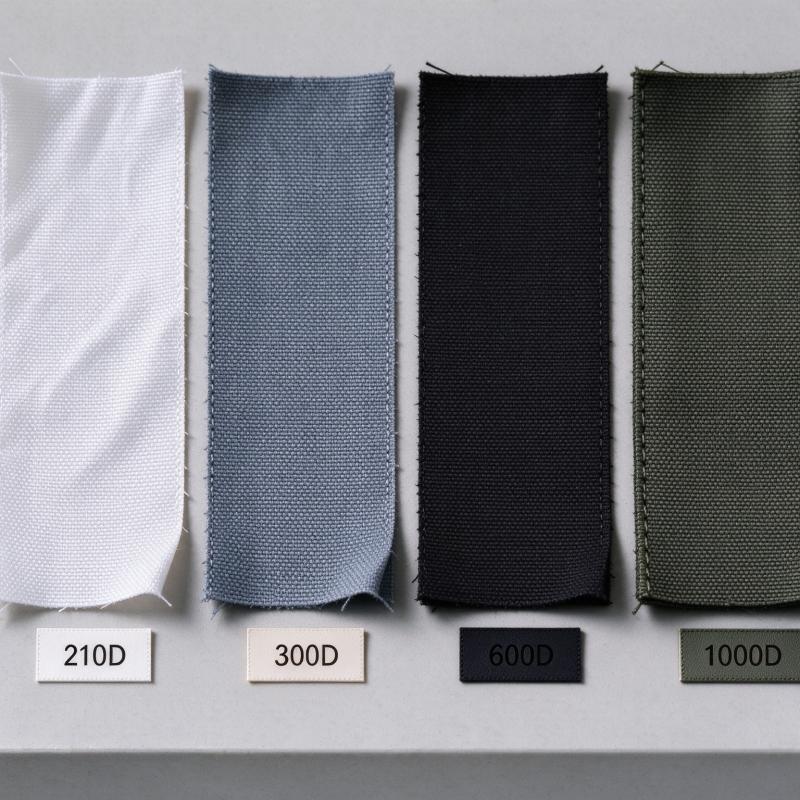
The number preceding D identifies the yarn's linear density. It does not represent the fabric's thickness in millimeters, its weight in grams per square meter, or a standardized durability grade.
The following examples illustrate how commonly encountered ratings are used in bag sourcing.
| Denier rating |
What the number means |
Common bag applications |
| 150D |
150 grams per 9,000 meters of yarn |
Lightweight linings, packable bags, and selected lightweight exteriors |
| 210D |
210 grams per 9,000 meters of yarn |
Linings, foldable shopping bags, lightweight backpacks, and pouches |
| 300D |
300 grams per 9,000 meters of yarn |
Everyday bags, promotional products, and lightweight backpack exteriors |
| 420D |
420 grams per 9,000 meters of yarn |
Selected everyday bags, backpacks, and travel accessories |
| 600D |
600 grams per 9,000 meters of yarn |
School backpacks, general-purpose travel bags, and many everyday bag exteriors |
| 900D |
900 grams per 9,000 meters of yarn |
Selected heavy-duty bag constructions and equipment bags |
| 1000D |
1,000 grams per 9,000 meters of yarn |
Rugged bags, equipment carriers, and applications requiring substantial fabric construction |
| 1680D |
1,680 grams per 9,000 meters of yarn |
Selected heavy-duty luggage, equipment bags, and ballistic-style fabric constructions |
These applications are common market examples rather than strict industry classifications. Manufacturers may offer the same bag category in several denier ratings depending on the design, target price, weight requirements, and intended service life.
A 210D fabric, for example, can work well as an interior lining or as an exterior material in a lightweight promotional product. Its suitability depends on the actual construction and the loads the bag is expected to carry.
Similarly, 600D and 1000D fabrics can both be used in travel products, but the difference in denier alone does not establish which one will perform better under a particular test.
What Is 210D Fabric?
210D is commonly associated with lightweight synthetic bag fabrics, particularly polyester and nylon constructions.
It can be suitable for lining compartments, internal pockets, foldable shopping bags, lightweight backpacks, and selected cosmetic or toiletry pouches.
Its relatively low yarn mass can help reduce material bulk and support flexible bag designs. These qualities are useful when portability matters more than a rigid appearance.
However, not every 210D fabric has the same performance. A tightly constructed 210D fabric with suitable yarn quality may behave differently from a loosely woven alternative. Coating, finishing, and the way the fabric is sewn into the bag also influence the finished product.
For procurement purposes, 210D should be treated as a starting specification rather than proof that a fabric is suitable for a particular load.
What Is 300D Fabric?
300D fabrics occupy a useful position between lightweight constructions and many heavier bag fabrics.
In the bag industry, 300D polyester is frequently offered for everyday backpacks, promotional bags, lightweight travel accessories, and products that need a practical balance between portability and material substance.
Compared with a 210D yarn, a 300D yarn has greater mass per unit length. When other relevant variables are similar, this can contribute to a more substantial fabric.
For brands developing lightweight products, 300D may be worth evaluating before moving directly to a heavier specification. The decision should be based on the required performance, appearance, and cost rather than the assumption that more denier is always preferable.
What Is 600D Fabric?
600D is one of the most familiar ratings in general-purpose synthetic bag fabrics.
It is commonly offered for school backpacks, commuter bags, travel accessories, duffel bags, storage products, and other applications where buyers want a more substantial fabric than many lightweight options provide.
600D polyester is particularly common in the market. Depending on its weave and finishing, it can provide a practical combination of material body, flexibility, appearance, and cost.
However, “600D polyester” is not a complete fabric specification. One supplier's 600D fabric may differ from another's in yarn quality, construction, weight, surface texture, and coating.
When comparing quotations, ask suppliers to identify the exact fabric construction instead of comparing the D number alone.
What Is 900D or 1000D Fabric?
900D and 1000D fabrics are often marketed for heavier-duty bag applications. They may be considered for equipment bags, rugged travel products, selected outdoor bags, and components exposed to frequent abrasion.
Their higher yarn mass can contribute to a more substantial hand feel when comparable yarn systems and fabric constructions are used.
However, a heavier rating may also increase fabric weight, stiffness, material cost, and sewing difficulty. These trade-offs are important when the bag needs to remain comfortable to carry or easy to fold.
A 1000D exterior may be appropriate for a rugged equipment bag, but it may be unnecessary for a lightweight promotional tote. For the latter, a lighter fabric that meets the expected performance requirements may be a more practical choice.
The objective is not to select the highest available rating. It is to specify the lightest, most economical construction that reliably meets the product's intended requirements.
How Does Denier Affect Bag Fabric Performance?
Denier influences material selection because yarn mass is one factor in the structure of a fabric. However, the relationship between denier and performance depends on several other variables.
Understanding these relationships helps buyers avoid both under-specifying and over-specifying a custom bag.
Fabric Weight
When yarn construction and fabric design are otherwise comparable, increasing denier generally increases the mass contributed by each unit of yarn length.
But the total weight of a square meter of fabric depends on more than yarn size.
It also depends on how many yarns are used, their arrangement, the weave structure, and any coating, laminate, or backing added during finishing.
For this reason, a 600D fabric is not necessarily heavier per square meter than every 420D fabric. A more densely constructed 420D fabric or a heavily coated 420D fabric may weigh more than a relatively open or lightly finished 600D alternative.
This distinction matters when a product specification includes both denier and GSM.
For lightweight backpacks, foldable bags, and promotional products, excessive fabric weight can make the product less convenient to carry. For rugged equipment bags, added mass may be acceptable if it supports the required construction and performance.
The correct balance should be determined by the complete fabric specification.
Abrasion Resistance
Abrasion resistance describes a fabric's ability to withstand surface wear caused by rubbing against other materials.
Bag exteriors may rub against clothing, vehicle interiors, luggage conveyors, furniture, floors, and other objects during everyday use. The degree of abrasion depends on how the bag is carried, stored, and handled.
Higher-denier yarns may contribute to a more substantial construction, but denier alone does not determine abrasion resistance.
Fiber type, yarn structure, weave, surface texture, finishing, and coating all influence how the material responds to repeated friction.
For example, a 600D fabric with a suitable construction may be adequate for a school backpack, while a different 600D fabric may show surface wear more quickly. The rating alone cannot distinguish between these outcomes.
If abrasion resistance is important, buyers should request relevant test information for the exact fabric and evaluate samples under conditions that reflect the intended use.
Tear Strength
Tear strength refers to the force or resistance associated with extending a tear that has started in a material.
A tear may begin when a bag catches on a sharp edge, when a seam concentrates stress, or when the fabric experiences an unexpected impact.
Yarn size can affect tear behavior, but it does not determine the result on its own. Fabric construction, yarn movement, fiber strength, weave structure, and finishing all play a role.
Some constructions allow yarns to redistribute stress around a tear, while others may concentrate force in a smaller area.
Ripstop fabrics illustrate the importance of construction. They incorporate reinforcing yarns at intervals to create a grid-like pattern intended to limit the spread of a tear. Their performance cannot be evaluated from the denier rating alone.
For bags expected to encounter rough handling, a useful evaluation should consider tear strength alongside abrasion resistance, seam performance, and the durability of high-stress components.
Tensile Strength
Tensile strength describes a material's response to a pulling force applied in a specified direction.
In woven fabrics, warp and weft directions may perform differently because their yarns, density, and arrangement can differ.
A higher-denier yarn does not automatically guarantee higher tensile strength. The fiber's properties, yarn construction, weave, specimen direction, and test method all affect the result.
For a finished bag, tensile performance also needs to be considered alongside handle attachment, seams, webbing, and reinforcement.
A fabric may have satisfactory tensile strength as a flat specimen but still fail around a poorly designed handle attachment when the finished bag is loaded.
For this reason, buyers developing products that carry substantial weight should evaluate both fabric performance and finished-bag construction.
Flexibility and Hand Feel
Denier can influence how substantial a yarn feels, but it is not a direct measurement of fabric softness or stiffness.
A fabric made with heavier yarns may feel firmer when other variables are comparable. Yet yarn type, weave, filament structure, coating, and finishing can substantially change the hand feel.
This is particularly important for cosmetic bags, toiletry pouches, fashion accessories, and foldable shopping bags.
A soft pouch may need to bend easily around its contents, while a structured equipment bag may benefit from a firmer exterior. Neither requirement automatically points to one denier rating.
The intended shape and user experience should guide the selection.
If a bag must fold into a small pocket, for example, a heavy, stiff fabric may undermine its purpose even if it offers ample abrasion resistance.
Shape Retention
Fabric construction influences how well a bag maintains its intended shape when empty or loaded.
A heavier yarn may contribute to a more substantial fabric, but shape retention also depends on weave density, coatings, backing, lining, interfacing, foam, and the design of the bag itself.
A structured cosmetic case may rely on padding or a support layer rather than a high-denier exterior alone. A travel bag may use reinforcement panels at selected locations instead of making every panel equally heavy.
This provides an opportunity to optimize the material specification by assigning different fabrics to different components.
The main body, lining, base panel, side pockets, and reinforcement areas do not necessarily need identical denier ratings.
Water Resistance
Denier does not tell you whether a bag fabric is waterproof.
Water resistance is influenced by the fiber's properties, fabric construction, surface treatment, coating, laminate, and the way the finished bag is assembled.
A higher-denier fabric may have a different structure from a lower-denier alternative, but the D number does not establish how much water the material will resist.
If a product needs protection against rain or spills, buyers should specify the intended level of water resistance and evaluate the relevant treatment or barrier construction.
They should also consider seams, zipper construction, closures, and openings. Even a water-resistant fabric cannot make a finished bag waterproof if water can enter through unprotected seams or openings.
Printability and Appearance
Denier can indirectly influence a bag's appearance because yarn size and fabric construction affect surface texture, flexibility, and visual character.
However, the suitability of a fabric for branding depends on more than its D rating.
Printing method, surface treatment, color, weave, coating, and artwork complexity are also important.
A promotional bag with a large logo may require a surface that supports the chosen printing process and maintains acceptable color consistency. A retail bag may place greater emphasis on texture, appearance, and how the material complements the brand.
Before approving a production fabric, buyers should review a physical sample with the intended artwork where possible. This helps confirm that the material and branding method work together.
Denier vs. GSM, Thread Count, and Fabric Thickness
Denier is often confused with other textile measurements. These terms describe different aspects of a material and should not be used interchangeably.
| Measurement |
What it describes |
Why it matters for bags |
| Denier (D) |
Linear mass density of yarn |
Helps identify the yarn specification |
| GSM |
Mass per square meter of fabric |
Helps compare the finished fabric's area weight |
| Thread count or yarn density |
Number or spacing of yarns in a specified area or length |
Helps describe fabric construction and compactness |
| Fabric thickness |
Physical thickness of the finished fabric, measured under specified conditions |
Helps evaluate bulk, fit, and material feel |
| Tensile strength |
Resistance to a specified pulling force |
Helps assess performance under tension |
| Tear strength |
Resistance to tear initiation or propagation under a specified test |
Helps assess response to tearing |
| Abrasion resistance |
Resistance to surface wear under a specified test |
Helps assess performance under repeated rubbing |
These measurements complement one another, but none replaces all the others.
Denier vs. GSM
The distinction between denier and GSM is especially important in bag sourcing.
Denier describes the mass per unit length of yarn. GSM, or grams per square meter, describes the mass of a unit area of fabric.
A fabric's GSM is influenced by yarn denier, the number of yarns used in each direction, weave structure, and the materials added during finishing.
For example, two suppliers may both quote 600D polyester, but their fabrics could have different GSM values because they use different construction densities or coatings.
Conversely, two fabrics may have similar GSM values but use different yarn sizes and constructions.
Neither measurement alone proves that one fabric will last longer. Together, however, they provide more useful information than a denier number without supporting details.
For procurement teams, a quotation that includes both the nominal denier and finished GSM is generally easier to compare than one that lists only the D rating.
The agreed measurement stage also matters. If a coating or laminate is included, clarify whether the stated GSM applies to the finished fabric or the base fabric before finishing.
Denier vs. Thread Count
Thread count or yarn density describes the arrangement and number of yarns within a specified fabric area or length. The precise reporting convention varies by textile construction.
Denier, in contrast, describes the mass per unit length of the yarn.
A fabric may use relatively fine yarns at a high density, or heavier yarns at a lower density. These constructions may produce different surface characteristics, flexibility, mass, and performance.
For woven bag fabrics, buyers should confirm how the supplier expresses construction density. Some specifications identify the number of warp and weft yarns per inch; others use different conventions.
The key point is that a D rating and a density figure answer different questions. A reliable comparison should preserve both when they are relevant to the product.
Denier vs. Fabric Thickness
Denier is not a thickness measurement.
A yarn with a higher denier has more mass per unit length, but its physical diameter depends on factors such as fiber density, filament structure, and yarn construction.
The finished fabric's thickness then depends on how the yarns interlace, the fabric's compactness, and any coating or backing.
A specification such as 600D does not mean that the fabric is 600 microns thick, nor does it establish a particular thickness in millimeters.
If a bag requires a specific thickness for structure, fit, cushioning, or compatibility with another component, thickness should be specified and checked separately.
Denier vs. Yarn Count
In textile terminology, denier is a direct numbering system: a higher number means more mass per unit length.
Cotton and some other staple-fiber yarns are often described using indirect yarn-count systems, where a higher count can indicate a finer yarn. This is one reason textile specifications need to identify the measurement system clearly.
Do not compare a cotton yarn count and a synthetic yarn denier as if they were the same scale. They use different conventions and require an appropriate conversion when a numerical comparison is necessary.
For bag buyers, this distinction is especially useful when comparing woven cotton materials with polyester or nylon fabrics. Cotton canvas is more commonly specified by fabric weight, such as ounces per square yard or GSM, rather than by the same denier shorthand commonly used for synthetic woven fabrics.
Why These Measurements Should Be Used Together
Consider two hypothetical fabrics offered for a backpack:
- Fabric A: 600D polyester with a relatively open weave and a lightweight finish.
- Fabric B: 600D polyester with a different yarn arrangement, a tighter construction, and a heavier coating.
Both carry the same denier label, but they may differ in GSM, thickness, flexibility, and water resistance.
Now consider a third fabric made with 420D yarn and a carefully engineered construction. Depending on the product requirements, it could be a viable alternative to either 600D fabric.
The point is not that one construction is universally superior. It is that the D number alone does not contain enough information to make a dependable sourcing decision.
A useful fabric specification should identify the characteristics that matter to the product rather than relying on a single shorthand label.
How Do Polyester and Nylon Denier Fabrics Differ?
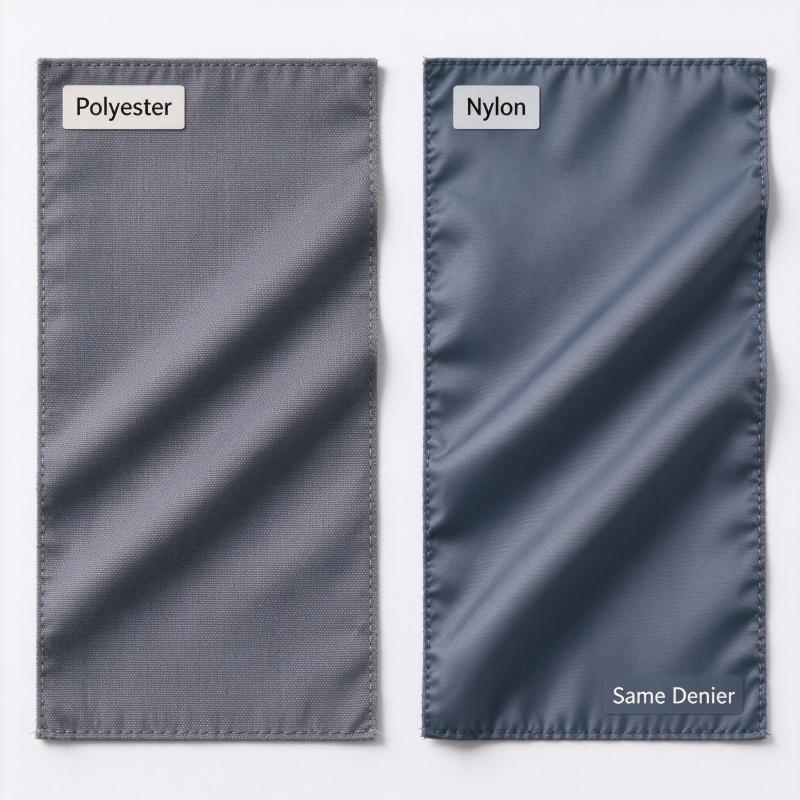
Polyester and nylon are both widely used in synthetic bag fabrics, but their properties are not identical. Denier describes yarn linear density; it does not identify the fiber chemistry.
A 600D polyester fabric and a 600D nylon fabric may use yarns with the same nominal linear density while behaving differently in use.
The distinction matters because buyers sometimes compare only the denier number and assume that the two materials are equivalent.
Polyester Fabric
Polyester is widely used in backpacks, promotional bags, cosmetic pouches, travel accessories, shopping bags, and other mass-produced textile products.
It offers a broad range of available fabric constructions and is commonly used where consistent appearance, practical durability, and cost control are important.
Polyester fabrics are available in lightweight and heavier yarn specifications, with different weaves, finishes, and coatings.
However, the word “polyester” does not define a single performance level. A lightweight polyester lining and a heavier polyester Oxford fabric can behave very differently even though both use the same general fiber type.
When evaluating polyester bags, buyers should confirm the yarn rating, construction, GSM, finish, and performance requirements appropriate to the intended application.
Nylon Fabric
Nylon is another common choice for backpacks, travel bags, outdoor equipment, and applications that may require a particular combination of strength, abrasion resistance, and weight.
Its performance depends on the specific nylon type, yarn quality, construction, and finishing process.
Nylon fabrics can be produced in lightweight constructions for packable equipment or in heavier constructions for demanding applications. As with polyester, the denier rating does not provide a complete performance profile.
Nylon may be the right choice for one project, while polyester may be more appropriate for another. The decision should reflect the required performance, appearance, cost, and manufacturing constraints.
Can You Compare Polyester and Nylon at the Same Denier?
Yes, but only as a controlled comparison of specified constructions.
The shared denier value establishes a nominal yarn linear density. It does not establish that the fabrics have equal tensile strength, tear strength, abrasion resistance, water resistance, or service life.
Same denier rating, same yarn denier, identical weave density & fabric structure, same coating/finishing, consistent testing environment — only fiber material differs.
Tensile & Tear Strength: Nylon outperforms polyester. At the same denier, nylon yarn delivers higher breaking strength and superior tear resistance. It works better for high-stress areas prone to snags, such as bag corners and strap attachment points.
Note: Abrasion depends on the full finished fabric including coating. Bare nylon yarn has better abrasion resistance, but polyester with proper PU/PVC coating may match or exceed regular nylon fabric in final abrasion performance.
Abrasion Resistance (Bare Yarn): Nylon Polyester Nylon fiber features better toughness against repeated rubbing. However, once coated, coating quality usually has a larger impact on abrasion than whether the base fiber is nylon or polyester.
Weight: With identical denier and weave: Nylon is slightly heavier than polyester. Denier measures the weight of 9,000 meters of filament. Nylon has lower fiber density, so yarn of the same denier number is physically thicker. The finished fabric will have a marginally higher GSM for nylon.
Hand Feel & Flexibility: Nylon is softer and more flexible; it does not easily turn brittle after repeated folding. Polyester feels crisper and stiffer, and becomes more rigid under low temperatures.
Water Absorption & Wet Strength
- Nylon: Absorbs water. Its strength drops roughly 10–20% when wet. It performs well when dry but loses part of its load capacity in humid conditions; strength recovers after drying.
- Polyester: Virtually non-absorbent. Tensile performance stays nearly unchanged wet or dry, offering better stability in moist environments.
UV / Weather Resistance: Polyester Nylon Nylon ages, fades and loses strength faster under outdoor sunlight. Polyester maintains more stable properties under long-term UV exposure and is preferred for outdoor applications.
Color Fastness: Polyester is dyed with high-temperature disperse dyes and generally achieves better color fastness. Nylon is more susceptible to color bleeding during washing or exposure to perspiration.
Cost: For fabric with the same denier and construction: Nylon costs significantly more than polyester.
For a meaningful comparison, confirm:
- The exact fiber type and, where relevant, polymer specification.
- The yarn denier in the warp and weft directions.
- The yarn construction and relevant filament characteristics.
- The weave structure and yarn density.
- The finished fabric GSM and thickness, where required.
- The coating, laminate, backing, or surface treatment.
- The test methods and performance results relevant to the bag's intended use.
- The finished sample's appearance, flexibility, and construction.
This information helps buyers compare the actual candidate fabrics rather than two marketing descriptions.
How to Choose Denier for Different Types of Bags
The appropriate denier rating depends on the product's use, design, expected load, handling conditions, and price position. The following examples provide a starting point for material evaluation.
They are not universal specifications. Buyers should confirm the available constructions and approve samples against the requirements of the finished product.
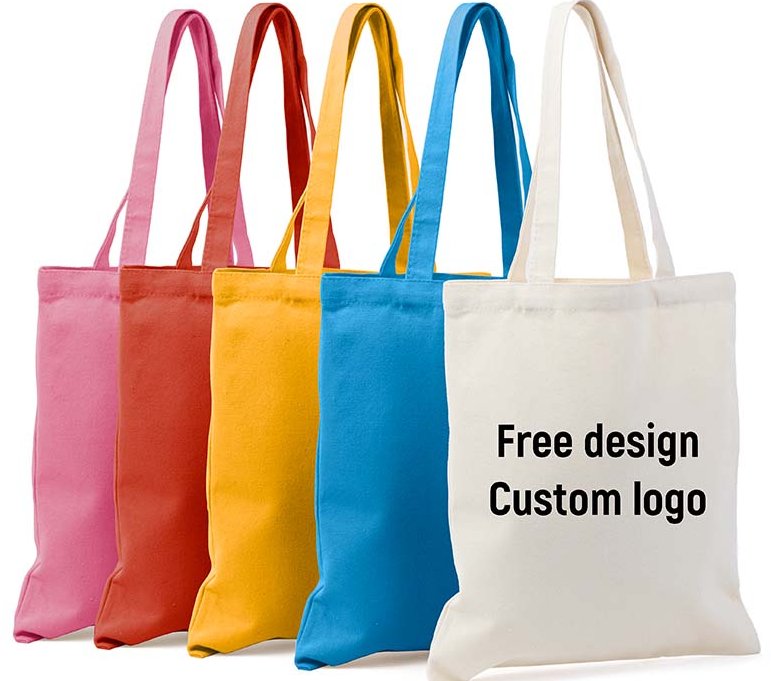
Tote bags and shopping bags range from lightweight promotional giveaways to reusable carriers designed for repeated shopping trips.
For a lightweight synthetic tote, a 150D–300D fabric may be worth evaluating, depending on the design and expected load. A more substantial polyester construction may be appropriate when the bag needs a firmer body or greater resistance to everyday wear.
However, many tote bags are made from cotton canvas, non-woven polypropylene, or other materials that are not normally specified using the same synthetic woven-fabric denier shorthand.
For these products, denier should not replace the material-specific measurements and performance checks relevant to the chosen fabric.
Buyers should consider:
- The expected contents and maximum working load.
- Whether the bag is intended for one campaign or repeated reuse.
- Handle width, attachment design, and reinforcement.
- Bottom construction and gusset dimensions.
- Printing requirements and the desired surface appearance.
- Foldability, storage volume, and shipping weight.
- Relevant load and durability tests for the finished bag.
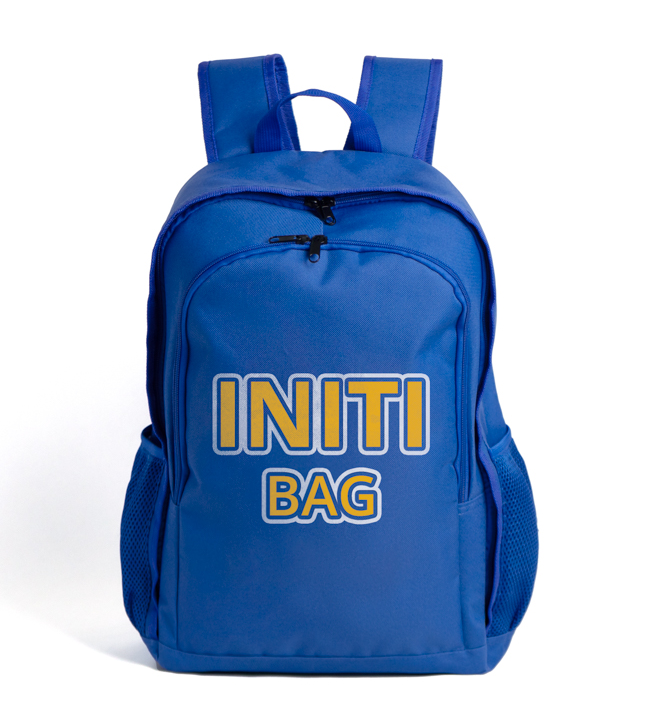
Backpacks experience repeated loading, rubbing, and stress around straps, zippers, and attachment points. Their fabric selection therefore needs to account for more than the exterior panel's denier.
Lightweight daypacks may use lower-denier fabrics, while general-purpose school and commuter backpacks frequently use mid-range synthetic constructions. More demanding outdoor or equipment applications may require heavier fabrics or specialized constructions.
For a school backpack, a 300D or 600D candidate could be considered depending on the intended use and budget. The exact construction should be tested and approved rather than selected by rating alone.
For outdoor products, abrasion, tear propagation, exposure conditions, and the weight carried become especially important.
Backpack development should also consider:
- Strap and webbing strength.
- Reinforcement at strap attachment points.
- Zipper quality and zipper-end construction.
- Bottom-panel wear.
- Seam strength and stitch quality.
- Comfort and finished-product weight.
- Water resistance where the use case requires it.
A higher-denier body cannot compensate for an inadequately reinforced strap attachment. Material and construction should be assessed as one system.
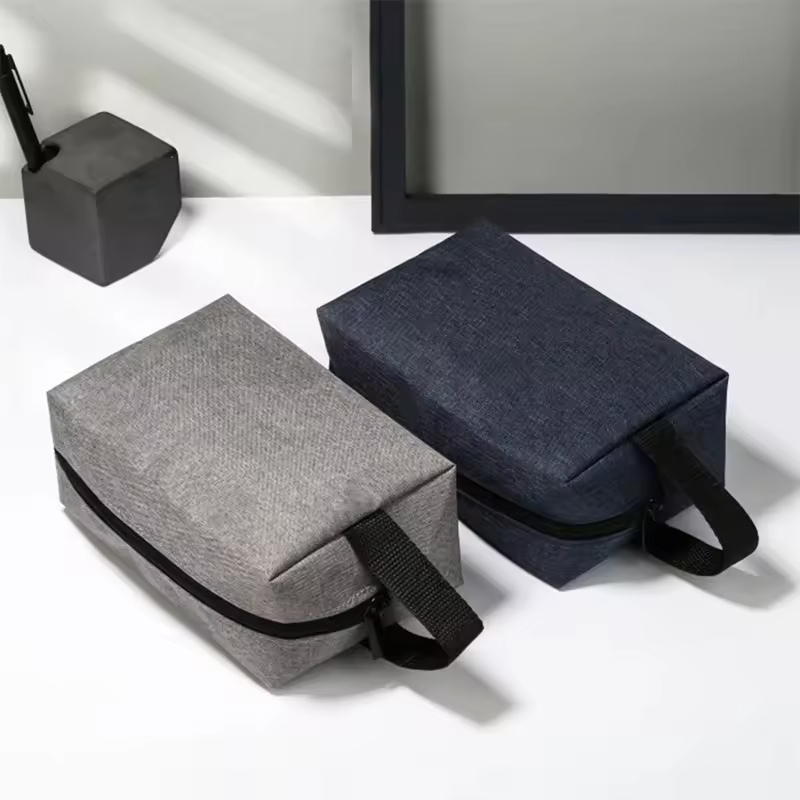
Cosmetic bags and toiletry pouches have different requirements from large backpacks.
Some designs need a soft, flexible body that fits easily into luggage. Others need a more structured exterior to maintain shape and protect their contents.
A lightweight synthetic fabric may suit a soft pouch, while a heavier construction may be appropriate for a more substantial travel organizer. Neither option is automatically better.
The choice depends on the product's size, closure, lining, internal compartments, intended retail position, and target price.
For cosmetic bags, buyers should also consider whether the exterior will be printed, coated, quilted, padded, or combined with other materials.
If the pouch must contain liquid products, the lining and closure design may be more important to leakage performance than the exterior denier rating.
Relevant checks include seam quality, zipper operation, surface abrasion, print appearance, and the durability of any coated or laminated layers.
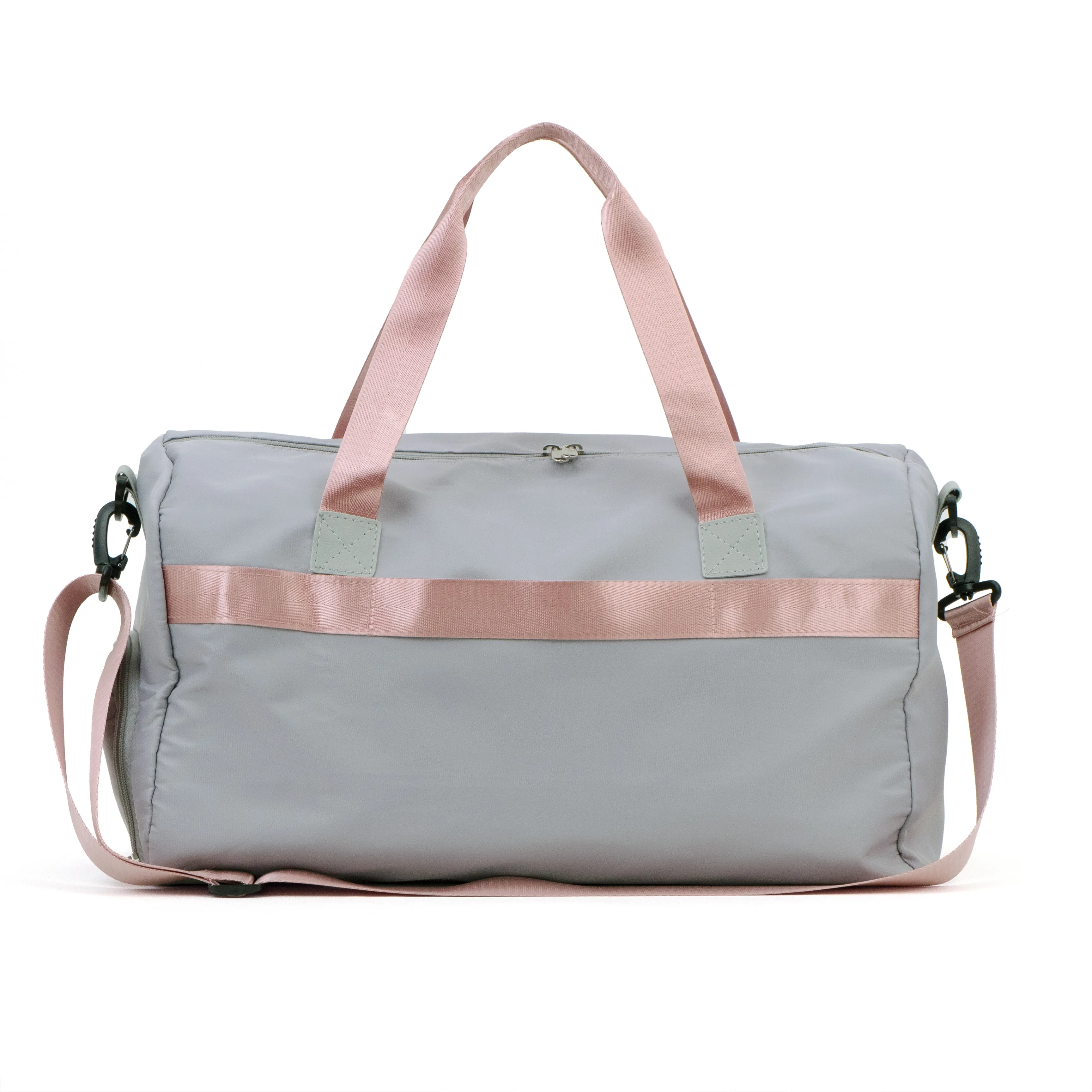
Travel bags and duffel bags may experience repeated lifting, compression, abrasion, and handling during transport.
Their exterior fabric must work with the dimensions, load, base construction, handles, straps, and hardware.
A mid-range fabric may be adequate for a lightweight weekend bag, while a heavier construction may be considered for a bag designed to carry bulky or heavy equipment.
However, the appropriate denier cannot be determined by bag size alone. A large lightweight duffel and a compact equipment carrier can have very different performance requirements.
Buyers should evaluate the base panel separately because it may experience more abrasion than the sides. Reinforced corners, webbing, and suitable seam construction can also influence durability.
A heavier exterior fabric may be useful, but using the same heavy material for every panel may increase weight and cost without providing an equivalent benefit across the entire product.
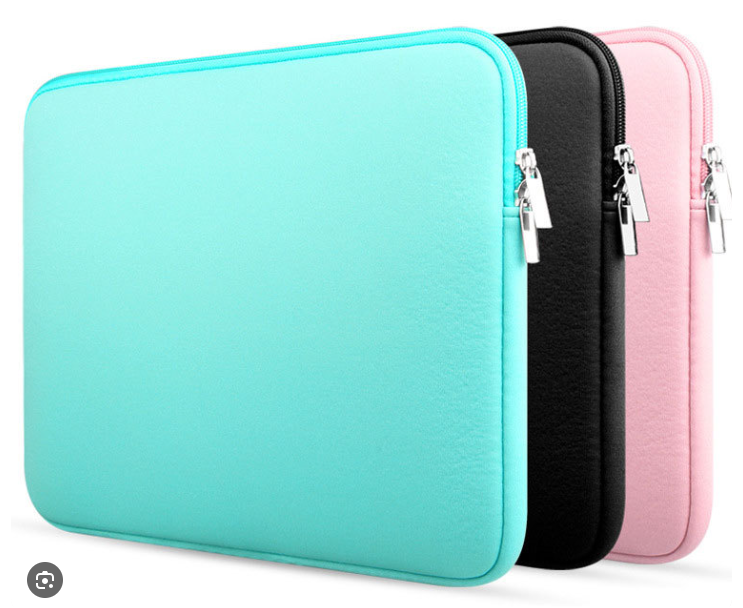
Laptop bags need to balance appearance, protection, carrying comfort, and structural performance.
The exterior fabric must support the intended style, while padding, lining, dividers, and the overall compartment design help protect the contents.
A denier rating alone cannot establish how well a laptop compartment protects a device. Padding thickness, foam properties, compartment clearance, seam construction, and closure design also matter.
For a slim business bag, an excessively heavy fabric may undermine the intended profile. For a more rugged equipment case, a heavier exterior may be worth evaluating.
Buyers should review the complete product construction, including:
- The exterior fabric and finish.
- The padded compartment structure.
- The lining and internal dividers.
- Handle and shoulder-strap attachment points.
- Zipper opening dimensions.
- Protection at corners and the base.
- Finished weight and carrying comfort.
The right specification is the one that supports the desired level of protection and appearance while meeting the product's weight and cost targets.
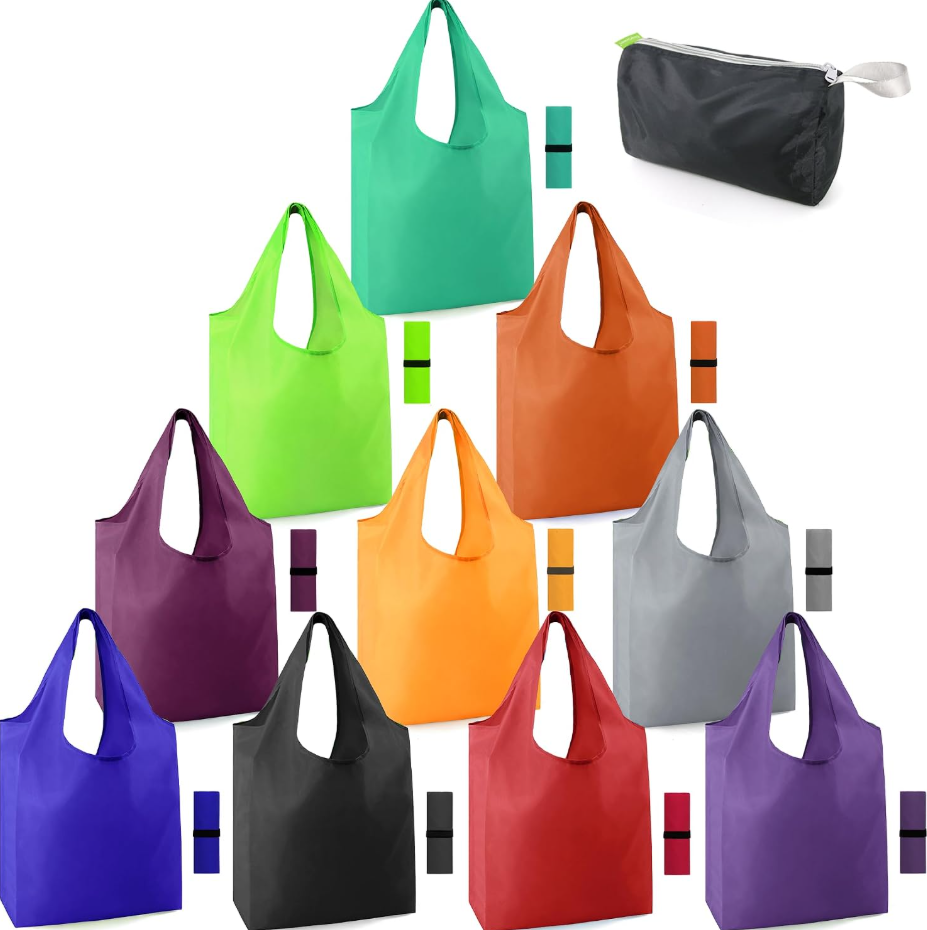
Foldable shopping bags are designed to become compact when not in use. Their material selection must therefore account for packability as well as repeated handling.
A lightweight fabric may be appropriate when the bag needs to fold into a small integrated pouch or pocket. But the fabric still needs to meet the expected carrying and reuse requirements.
Choosing a heavier material solely because it appears more durable may make the bag difficult to fold or unnecessarily bulky.
For this category, evaluate the complete fabric construction alongside the folding method, stitching, handles, and storage system.
Useful checks include repeated folding, seam condition, handle attachment, print durability, and performance under the intended load.
Equipment and Heavy-Duty Bags
Equipment bags may be exposed to abrasive surfaces, repeated loading, and more demanding handling conditions than everyday promotional bags.
Higher-denier fabrics can be candidates for these applications, but the required performance should be defined first.
A bag carrying tools, sports equipment, or specialized accessories may need stronger bottom panels, reinforced seams, protective padding, or abrasion-resistant components. A single denier rating cannot satisfy all these requirements automatically.
Buyers should identify the expected load, contact surfaces, environmental exposure, and likely failure points before approving the material.
Where performance is critical, request relevant test results for the exact fabric and conduct finished-bag testing against agreed acceptance criteria.
Quick Reference: Matching the Fabric to the Product
| Bag category |
Initial material direction |
Main considerations |
| Lightweight promotional bag |
Evaluate lightweight synthetic fabrics |
Cost, print appearance, foldability, and expected load |
| Everyday backpack |
Compare suitable lightweight and mid-range constructions |
Abrasion, seams, straps, and finished weight |
| School backpack |
Evaluate general-purpose exterior fabrics |
Repeated use, bottom wear, handle and strap attachments |
| Cosmetic pouch |
Choose according to flexibility and structure |
Surface appearance, lining, zipper, and cleaning needs |
| Travel duffel |
Compare mid-range and heavier constructions |
Base wear, carrying load, handles, and weight |
| Laptop bag |
Balance exterior fabric with padding and compartment design |
Device protection, comfort, and professional appearance |
| Foldable shopping bag |
Prioritize packability alongside required durability |
Repeated folding, seams, handles, and load |
| Equipment bag |
Evaluate heavier or reinforced constructions when justified |
Abrasion, tear performance, load, and component reinforcement |
The table is a material-selection starting point, not a substitute for product-specific testing.
How Do Weave, Coating, and Finishing Affect Denier Fabric?
Two fabrics with the same denier can have noticeably different performance because the yarn is only one part of the finished material.
For bag buyers, understanding the main construction variables is useful when a quotation lists a D rating but leaves other details unclear.
Weave Structure
The weave determines how warp and weft yarns interlace to form the fabric.
Plain weave, Oxford-style constructions, twill, ripstop, and other structures arrange yarns differently. These differences influence surface appearance, flexibility, yarn movement, and how the fabric responds to stress.
Oxford fabric is a familiar term in bag sourcing, but it does not identify one universal specification. Oxford fabrics can vary in yarn size, construction, fiber type, density, and finishing.
A quotation for “600D Oxford” therefore provides more information than a generic fabric description, but it may still be incomplete.
Buyers should ask for the actual construction details and compare physical samples.
Coatings and Laminates
Coatings and laminates can alter a fabric's surface, hand feel, water resistance, stiffness, and overall mass.
Depending on the design, a bag fabric may use a PU coating, PVC coating, TPU laminate, or another specified finish.
These options are not interchangeable, and their suitability depends on the product's requirements.
A coated fabric may behave differently from an uncoated fabric made with the same yarn rating. The coating can also contribute to the finished GSM and thickness.
When water resistance or easy cleaning matters, buyers should specify the intended performance and confirm the coating or laminate construction.
The D number alone cannot establish the result.
Yarn Density and Fabric Construction
The number of yarns in the fabric and their spacing influence how the finished material behaves.
A construction using more yarns per unit area may have a different appearance, mass, and resistance to deformation than a more open construction using the same nominal denier.
This is why denier and yarn density should be considered together when the construction requires closer control.
If a project depends on a particular fabric feel, thickness, or performance level, a physical swatch and a clear technical specification are more reliable than a generic rating.
Backing, Padding, and Reinforcement
Some bag designs use backing layers, foam, padding, or reinforcement fabrics to achieve the required structure and protection.
These components affect the finished product but do not change the meaning of the base yarn's denier rating.
For example, a padded laptop bag may use a moderate-denier exterior with an internal foam layer. An equipment bag may use additional reinforcement at the base or corners.
These design decisions can improve functional performance without requiring the entire bag to use the heaviest available exterior fabric.
The most effective construction depends on where the product needs support and how the bag will be used.
How to Specify Denier When Sourcing Custom Bags
A denier number is useful only when both parties understand what it refers to and how the finished material will be evaluated.
For bulk orders, an incomplete fabric description can lead to differences between the approved sample, the production material, and the buyer's expectations.
The following steps can help procurement teams create a clearer specification.
Step 1: Define the Intended Use
Start with the product rather than the fabric rating.
Describe what the bag will carry, how frequently it will be used, and the conditions it is expected to withstand.
A giveaway tote designed to hold brochures has different requirements from a travel bag that carries heavy items every week.
Specify the expected working load, handling conditions, desired weight, and any special requirements such as foldability, water resistance, or abrasion resistance.
These requirements provide the basis for selecting candidate fabrics.
Step 2: Identify the Fiber and Yarn Specification
Confirm whether the fabric is made from polyester, nylon, recycled polyester, or another material.
Then identify the denier rating and clarify which yarn direction or yarn system it describes.
For woven fabrics, warp and weft may use the same nominal denier, but that should not be assumed without confirmation.
If the supplier uses a commercial shorthand such as “600D Oxford,” ask for the technical details needed to identify the actual construction.
This is particularly important when multiple suppliers quote the same nominal rating.
Step 3: Request the Finished Fabric Weight
Ask for the GSM of the finished fabric where appropriate.
Clarify whether the measurement includes coatings, laminates, backing, or other finishing layers.
This helps buyers compare material mass and detect differences that are not visible in the denier label.
GSM should be considered alongside the product's weight target. A heavier fabric may be suitable for one application but unnecessary for another.
Step 4: Confirm the Weave and Finish
Record the weave structure, coating, laminate, backing, and relevant surface treatment.
For example, two 600D polyester fabrics may differ significantly if one is uncoated and the other has a specified coating.
If the fabric needs to resist water, clarify the intended level of protection and the applicable test method rather than relying on descriptions such as “waterproof fabric.”
Likewise, if a particular hand feel, surface texture, or finish is important, include a reference swatch or approved sample.
Step 5: Agree on Performance Requirements
Choose the tests that correspond to the actual product risks.
Depending on the bag, these may include:
- Tensile strength.
- Tear strength.
- Abrasion resistance.
- Colorfastness to rubbing or washing, where relevant.
- Water resistance or hydrostatic performance, where required.
- Seam strength.
- Handle attachment or finished-bag load testing.
- Zipper and closure durability.
Not every product requires every test. A lightweight promotional tote and a rugged equipment bag should not automatically have identical test requirements.
The important point is to define the required result, test method, and acceptance criteria before production.
Step 6: Approve a Traceable Physical Sample
A physical sample helps confirm material appearance, flexibility, color, thickness, and overall suitability.
Where possible, identify the approved fabric by supplier reference, construction, finish, and sample date. Retain a reference sample for comparison during production.
If the supplier changes the yarn, weave, coating, or other significant construction detail, the revised material should be reviewed before being treated as equivalent.
A matching D number does not guarantee that a replacement fabric is identical to the approved material.
Step 7: Evaluate the Finished Bag
The finished product needs to be evaluated as a complete construction.
A suitable fabric may still be used in a bag with weak stitching, inadequate reinforcement, poorly attached handles, or unsuitable closures.
For this reason, sample approval should include the complete bag wherever practical.
Check whether the fabric, lining, seams, hardware, and reinforcement work together under the intended conditions.
This process helps reduce the risk of approving a fabric that looks correct on a swatch but does not meet the finished product's requirements.
Common Mistakes When Choosing Denier for Bags
Several recurring mistakes can create unnecessary cost or lead to material choices that do not match the finished product.
Mistake 1: Assuming Higher Denier Always Means Better Quality
A higher D rating indicates greater mass per unit length of yarn, not a universal improvement in quality.
If the product only carries light items, a high-denier fabric may add weight and cost without delivering a meaningful benefit.
For more demanding products, the relevant question is whether the proposed construction meets the required performance criteria.
Choose the specification based on use, testing, and design rather than the largest available number.
Mistake 2: Treating Denier as a Complete Fabric Specification
A quotation that says “600D polyester” does not necessarily identify the fabric's GSM, weave density, coating, thickness, or test performance.
Without these details, two suppliers may be offering materially different constructions under the same shorthand description.
Request the information needed to compare the actual fabrics.
Mistake 3: Confusing Denier with GSM
Denier describes yarn linear density, whereas GSM describes fabric mass per unit area.
The two measurements are related through the fabric construction, but they are not interchangeable.
A buyer who specifies only one may leave important aspects of the material uncontrolled.
Where relevant, record both and clarify how the fabric weight is measured.
Mistake 4: Assuming a Higher D Rating Makes Fabric Waterproof
Water resistance depends on the complete material construction and the finished bag.
A high-denier fabric may still allow water to pass through if its construction and finishing do not provide the required barrier.
Coatings, laminates, seams, closures, and openings must be considered according to the intended level of protection.
Mistake 5: Ignoring the Rest of the Bag
Fabric is only one part of a bag's durability.
Handles, webbing, zippers, stitching, seam allowances, reinforcement, and pattern design can all influence the finished product's performance.
A fabric upgrade will not necessarily solve a weakness caused by a poorly designed attachment point or an inadequate seam.
Review the complete construction before deciding which specification needs to change.
Mistake 6: Comparing Suppliers by D Number Alone
When suppliers quote the same denier rating, it can be tempting to select the lowest price.
However, differences in yarn construction, GSM, coating, finish, and manufacturing consistency may affect the final product.
Ask each supplier to quote against the same specification and evaluate the samples against the same criteria.
This makes the comparison more meaningful and reduces the risk of choosing a cheaper but unsuitable construction.
FAQ
What does D mean in bag fabric?
D stands for denier, a unit of linear mass density. It measures the mass in grams of 9,000 meters of yarn. In bag descriptions, 210D, 600D, and 1000D commonly refer to the nominal yarn rating used in a fabric construction.
Is 600D fabric good for bags?
600D fabric is commonly used in backpacks, school bags, travel accessories, and other general-purpose products. Whether it is suitable depends on the fiber, weave, GSM, coating, expected load, and finished-bag construction.
Is 1000D stronger than 600D?
A 1000D yarn has greater mass per unit length than a 600D yarn when the ratings refer to comparable yarn systems. However, this does not prove that every 1000D fabric is stronger than every 600D fabric. Strength depends on the fiber, yarn construction, weave, finishing, and test method.
What is the difference between 300D and 600D polyester?
The nominal yarn linear density is different: 600D is twice the stated denier of 300D. This does not mean that the finished 600D fabric is twice as strong, twice as thick, or twice as durable. Those properties depend on the complete construction.
Does higher denier mean thicker fabric?
Not necessarily. Higher denier means more yarn mass per unit length. Physical yarn diameter and finished fabric thickness depend on additional variables, including fiber properties, yarn construction, weave, and finishing.
Is denier the same as GSM?
No. Denier measures yarn linear density, while GSM measures fabric mass per square meter. Both can be useful when specifying synthetic woven bag fabrics, but they describe different characteristics.
Is 600D polyester waterproof?
Not automatically. Polyester fabric may require a suitable coating, laminate, or other construction to meet a defined water-resistance requirement. Seams, zippers, and openings also affect the finished bag's ability to protect its contents from water.
Can 210D fabric be used for a bag exterior?
Yes. A 210D fabric can be suitable for selected lightweight bags and exteriors when its construction meets the intended requirements. Its suitability should be evaluated through the actual fabric specification and finished-product sample rather than the D number alone.
Does denier affect the price of a custom bag?
It can. Higher-denier materials may involve more yarn mass per unit length and may be associated with different fabric constructions or finishing requirements. However, price also depends on fiber type, fabric weight, coating, order quantity, design, workmanship, and other production factors. A higher rating does not automatically mean that the final bag will cost a particular amount more.
Can two fabrics with the same denier perform differently?
Yes. They may differ in fiber type, yarn construction, weave density, GSM, coating, backing, and finishing. These differences can affect the fabric's weight, flexibility, abrasion resistance, tear strength, and water resistance.
Should every part of a bag use the same denier?
No. Depending on the design, the main body, lining, pockets, base, and reinforcement panels may use different materials or constructions. Using a heavier fabric only where the product needs additional support can be worth evaluating when weight and cost are important.
Conclusion
Denier is a useful starting point for understanding synthetic bag fabrics, but it should never be treated as a complete measure of fabric quality.
The D rating tells buyers about the linear mass density of the yarn. It does not independently establish the finished fabric's weight, thickness, strength, abrasion resistance, water resistance, or service life.
For a more reliable material decision, consider denier alongside fiber type, weave, yarn density, GSM, coating, finishing, and the requirements of the finished bag. Then evaluate a traceable sample and confirm that the complete product meets the agreed specifications.
Whether you are developing promotional bags, cosmetic pouches, backpacks, travel bags, or equipment carriers, the objective is the same: choose a material construction that meets the product's functional requirements without unnecessary weight or cost.
At INITI, defining the intended application and material requirements at the beginning of a custom bag project helps create a clearer basis for sample development, specification approval, and bulk production.
If you are planning a custom bag project, prepare the intended bag type, target dimensions, expected use, material preferences, and estimated order quantity before requesting a quotation. These details make it easier to evaluate suitable fabric options and develop a product around your actual requirements.
Related Article


 Hot News