What Is a Corduroy Bag: Fabric Structure, Durability and Uses
A corduroy bag is a bag made from corduroy, a woven fabric recognized by its parallel raised ribs and soft, velvet-like surface. The material is commonly used for casual tote bags, shoulder bags, fashion accessories, cosmetic pouches and other everyday products.
Corduroy has a long history in clothing and workwear, but its textured appearance has also made it relevant to vintage-inspired and contemporary bag design.
Not all corduroy bags perform alike. A lightweight fine-wale shoulder bag may feel soft and flexible, while a wide-wale tote with a reinforced base can have a more substantial appearance. Neither construction is automatically more durable.
The differences come from fiber composition, fabric weight, rib structure, pile quality and the way the finished bag is made.
This guide explains where corduroy came from, why its appearance remains popular, how the fabric is constructed and what buyers should check when choosing a corduroy bag.
1. Where Did Corduroy Come From?
Corduroy developed from earlier fustian-type textiles and became associated with Britain's textile industry, particularly the manufacturing regions of Lancashire and Manchester.
Fustian was a broad historical category of woven fabrics. Its history is connected with earlier textile production and trade, but this does not mean that modern ribbed corduroy was invented in ancient Egypt.
By the late 18th century, corduroy was already identified in English textile terminology. Its woven construction and raised surface later became familiar in trousers, jackets and workwear.
Is Corduroy Really French for "The King's Cord"?
One of the most persistent stories claims that corduroy comes from the French phrase corde du roi, meaning "the king's cord."
This explanation is widely repeated but is not supported by documented historical French textile usage.
Etymological sources have proposed an English formation involving cord and an older fabric name, duroy. Other explanations have also been suggested, and the precise origin of the word remains uncertain.
The important distinction is that the familiar French explanation should not be presented as an established historical fact.
From Workwear to Everyday Fashion
Corduroy became associated with practical clothing, including garments worn by people performing physical work.
Suitable constructions offered substantial woven fabric, while the raised ribs gave the surface its characteristic appearance.
Over time, corduroy also became associated with casual clothing, collegiate style, 1970s fashion and later vintage-inspired collections.
Its historical workwear use helps explain its image as a practical textile, but it does not prove that every modern corduroy fabric has high abrasion resistance.
That depends on the actual material specification and construction.
2. Why Is Corduroy Still Popular in Bag Design?
Corduroy's appeal comes partly from a surface texture that is immediately recognizable.
Unlike smooth polyester or flat canvas, its raised ribs create variation in color, light reflection and touch.
This makes corduroy useful for products where the fabric itself is an important design feature, even without complicated printing or hardware.
Fashion coverage in autumn 2026 has again highlighted corduroy in clothing and seasonal collections, particularly its association with vintage styling and tactile fabrics.
This supports its relevance to contemporary design, but it does not establish a sales ranking for corduroy bags.
Vintage, Casual and Collegiate Styles
Corduroy works naturally with relaxed shoulder bags, oversized totes, compact crossbody bags and bookstore or campus merchandise.
Its textured appearance also complements casual fashion collections, independent retail merchandise and lifestyle accessories.
For brand buyers, these are useful design directions rather than guaranteed best-selling product categories.
Earthy and Vintage Color Palettes
Corduroy is often developed in colors that complement its raised texture.
For example:
| Color Direction |
Typical Visual Character |
Potential Applications |
| Camel / Tan |
Warm, understated, classic |
Everyday totes, bookstore merchandise |
| Terracotta |
Rich, earthy, vintage-inspired |
Fashion shoulder bags, seasonal gifts |
| Forest Green |
Deep, natural-looking color |
Campus accessories, lifestyle retail |
| Espresso Brown |
Dark, understated, retro |
Crossbody bags, boutique collections |
| Cream / Oatmeal |
Soft, minimal, neutral |
Cosmetic pouches, casual accessories |
These are practical design options, not a ranking of the highest-selling corduroy bag colors.
The final shade should be checked on the actual fabric because pile direction and surface texture affect how color appears.
Fine-Wale Corduroy Beyond Autumn and Winter
Wide-wale corduroy is often associated with more pronounced vintage styling.
Fine-wale and needlecord fabrics offer a subtler texture and can be developed into compact handbags, cosmetic pouches and lighter everyday accessories.
However, finer ribs do not automatically mean thinner or lighter fabric.
Fiber composition, fabric weight and the ground weave must also be considered.
Corduroy can therefore be used beyond autumn and winter when the selected fabric and bag construction suit the intended season and application.
3. What Is Corduroy Fabric Made Of?
Corduroy is a woven cut-pile fabric.
Its recognizable texture comes from additional weft yarns incorporated into a ground fabric. Selected yarn floats are cut and finished to form raised ribs, known as wales.
This distinguishes genuine corduroy from fabrics that simply have a printed or embossed rib pattern.
Understanding Wale Count
Wale count refers to the number of ribs per inch of fabric.
A lower count means wider ribs. A higher count means narrower ribs.
| Wale Type |
Appearance |
Common Bag Design Direction |
| Wide-wale |
Large, prominent ribs |
Relaxed totes, vintage-style shoulder bags |
| Medium-wale |
Balanced, visible texture |
Everyday bags, casual retail |
| Fine-wale / Needlecord |
Narrow, closely spaced ribs |
Compact handbags, cosmetic pouches, small accessories |
For example, 5-wale corduroy has wider ribs than 14-wale corduroy.
Wale count describes the surface pattern. It is not a measure of tensile strength, abrasion resistance or overall fabric quality.
Is Corduroy Always Cotton?
No.
Corduroy is commonly made with cotton, but polyester, cotton-polyester blends and other suitable fiber combinations are also available.
A cotton corduroy and a polyester-blend corduroy may look similar while behaving differently during cleaning, dyeing, drying or repeated use.
For custom orders, fiber composition, wale count and fabric weight should be specified separately.
Why Does Pile Direction Matter?
Corduroy has a directional pile, also called nap.
The surface may look lighter or darker depending on how the raised fibers are oriented and viewed.
If two bag panels are cut in opposite pile directions, they may appear to have different shades even when they come from the same roll.
For retail production, the cutting specification should define the intended pile direction across major panels and visible pockets.
4. Are Corduroy Bags Durable?
Corduroy can perform well in everyday applications, but durability depends on the selected fabric and finished-bag construction.
Its raised pile creates wear characteristics that are different from those of smooth woven fabrics.
Abrasion and Surface Wear
The raised ribs are exposed to friction during carrying and handling.
Repeated contact with clothing, furniture and other surfaces may gradually flatten the pile or change its appearance.
Common high-contact areas include the bag's bottom corners, handle attachments, edges and the side that rubs against the wearer's clothing.
A thicker-looking rib does not necessarily mean better abrasion resistance.
Pile Crushing and Pressure Marks
Corduroy's pile can become compressed under sustained pressure.
Tightly folded bags, heavy stacking or unsuitable carton packing may create visible marks.
Some marks may improve after gentle brushing, while others can remain visible depending on the fabric and finish.
For retail orders, the appearance of the bag after unpacking is therefore worth checking.
Color Transfer and Rubbing Fastness
Corduroy bags may come into repeated contact with clothing.
If the selected dyed fabric has inadequate rubbing fastness, color transfer can occur, especially under wet friction.
Dry and wet rubbing fastness can be evaluated using ISO 105-X12.
The appropriate acceptance requirements depend on the buyer's specifications and intended use.
Which Tests Are Relevant?
| Concern |
Relevant Verification |
| Rubbing colorfastness |
ISO 105-X12 |
| Fabric abrasion |
Appropriate ISO 12947 method |
| Pilling, fuzzing or matting |
Relevant ISO 12945 method |
| Handle and seam strength |
Agreed finished-bag testing |
| Pile appearance |
Inspection after handling and packing trials |
These standards provide testing methods rather than one universal pass level for all corduroy bags.
A fabric should be selected against the required performance, not only because it is described as heavy or durable.
5. What Types of Bags Can Be Made From Corduroy?
Corduroy can be used across multiple bag categories.
The appropriate fabric weight, wale size and reinforcement depend on the actual product.
| Bag Type |
Main Design Features |
Common Uses |
| Corduroy tote bag |
Spacious body, carry handles, optional gusset |
Shopping, books, everyday carry |
| Corduroy shoulder bag |
Relaxed or structured shape, long straps |
Casual fashion, commuting |
| Corduroy crossbody bag |
Compact body, adjustable strap, secure closure |
Personal accessories |
| Corduroy cosmetic bag |
Zipper pouch with suitable lining |
Makeup, skincare, travel |
| Corduroy backpack |
Reinforced straps and back structure |
Campus and casual travel |
| Corduroy mini pouch |
Small zipper or drawstring construction |
Gifts and accessory storage |
Tote and Shoulder Bags
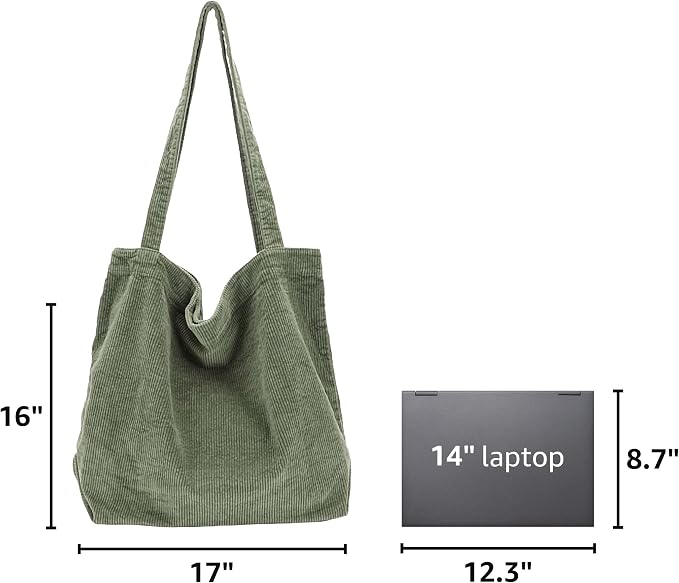
Corduroy totes can provide an informal, textured alternative to plain canvas bags.
Soft, unstructured versions suit casual daily use. Designs with gussets, lining and closures can provide a more defined shape and organized storage.
For heavier contents, handle attachments and base reinforcement matter more than the visual thickness of the ribs.
Cosmetic Bags and Small Pouches
Corduroy can give small cosmetic bags a distinctive exterior appearance.
However, its raised pile is not as convenient to wipe clean as a suitable smooth lining.
A cosmetic pouch can therefore combine corduroy on the outside with an interior selected for easier cleaning.
Structured designs may also require additional reinforcement or foam panels.
Crossbody Bags and Backpacks
Compact corduroy crossbody bags can combine a textured exterior with practical compartments.
Backpacks require more attention to shoulder straps, back panels and carrying loads.
In both cases, corduroy is an exterior material choice, not a substitute for structural reinforcement.
Gift and Lifestyle Accessories
Small corduroy bags can also be used for branded merchandise, retail gifts and accessory collections.
They are particularly relevant when texture and color contribute to the product's presentation.
The design should still reflect the target contents, cleaning requirements and expected frequency of use.
6. Corduroy vs Canvas and Polyester: Which Should You Choose?
Corduroy, canvas and polyester fabrics are not direct substitutes in every bag project.
| Material |
Main Characteristic |
Key Consideration |
| Corduroy |
Soft raised ribs and directional pile |
Pile wear, pressure marks, color consistency |
| Cotton canvas |
Relatively flat woven surface |
Fabric weight, stiffness, shrinkage, construction |
| Polyester |
Wide range of constructions and finishes |
Actual weave, coating and required performance |
Corduroy is often selected for appearance and texture.
Canvas may be more appropriate when a flatter surface is needed for certain print methods.
Polyester can offer different weight and finishing options for projects with specific functional requirements.
The choice should be made from actual fabric specifications and finished samples rather than from material names alone.
For a dedicated tote selection guide, see The Corduroy Tote Bag Buying Guide: Trends, Fabrics & How to Choose.
7. How Should Corduroy Bags Be Cleaned and Stored?
Corduroy's raised pile requires more careful handling than many smooth fabrics.
The appropriate care method depends on fiber composition, dyeing, lining, interlining and hardware.
For many corduroy bags, basic precautions include:
- Remove loose dust and lint with a suitable soft brush.
- Avoid aggressive scrubbing that may flatten or disturb the pile.
- Test any cleaning method on an inconspicuous area first.
- Allow damp areas to dry appropriately without excessive heat.
- Avoid storing structured bags tightly compressed under heavy objects.
Machine washing should not be assumed suitable simply because the outer material contains cotton.
Care instructions should be based on the complete finished product.
Are Corduroy Bags Waterproof?
Not inherently.
Untreated cotton corduroy can absorb moisture.
Some finishes or linings may improve water resistance, but water can still enter through seams, closures and openings.
A waterproof claim should only be made when supported by the finished-bag construction and appropriate testing.
8. What Should Buyers Check When Customizing Corduroy Bags?
For custom corduroy bag development, fabric appearance and product construction should be approved together.
| Customization Area |
What to Confirm |
| Fabric |
Fiber composition, wale count, GSM, pile direction, color |
| Dimensions |
Width, height, gusset, handle drop |
| Bag structure |
Lining, pockets, closure, base reinforcement |
| Handles |
Material, length, attachment and intended load |
| Logo |
Embroidery, woven label, patch or suitable printing |
| Packing |
Folding method, units per carton, carton dimensions |
| Quality |
Colorfastness, pile appearance, seams and finished-bag performance |
Which Logo Methods Work Best?
Because corduroy has a raised surface, fine printing may not reproduce as evenly as on smooth fabric.
Depending on the artwork, embroidery, woven labels, patches or separate flat fabric panels can provide a clearer result.
Embroidery should be sampled with suitable stabilization to avoid distortion or loss of fine details within the pile.
Managing Color and Pile Direction
For bulk production, the approved sample should establish color and pile direction requirements.
The same fabric can show apparent shade differences when panels are cut in different directions.
This is particularly important for multi-panel bags and repeat orders.
Packing and Freight Considerations
Soft corduroy totes may be folded for carton packing, but excessive compression can leave pressure marks in the pile.
Structured designs with reinforcements may require more space.
Before approving bulk packing, buyers should confirm the packed sample, units per carton, carton volume (CBM) and the bag's appearance after unpacking.
The most compact packing method is not necessarily the best if it damages the finished product.
9. Frequently Asked Questions
Q1. What makes a bag a corduroy bag?
A corduroy bag uses corduroy fabric, recognizable by its raised parallel ribs or wales. The term describes the fabric rather than a particular bag shape.
Q2. Is fine-wale corduroy stronger than wide-wale corduroy?
Not necessarily. Wale count describes rib width, not overall strength. Durability depends on fiber composition, ground fabric, pile construction and finishing.
Q3. Are corduroy bags suitable for everyday use?
Yes, when the selected fabric and bag construction suit the intended contents. Buyers should consider rubbing, pile wear, handle strength and cleaning requirements.
Q4. Are corduroy bags only suitable for autumn and winter?
No. Wide-wale fabrics are often associated with vintage and seasonal styling, while selected fine-wale fabrics can be used for lighter everyday accessories throughout the year.
Q5. Can corduroy bags be customized with logos?
Yes. Common options include embroidery, woven labels, patches and suitable printing. The method should be selected and sampled according to the fabric's raised texture.
Conclusion
A corduroy bag is distinguished by its woven ribbed surface rather than a particular shape or size.
The material has historical connections with practical clothing and later became associated with casual, vintage and collegiate fashion.
Today, corduroy can be used for tote bags, shoulder bags, cosmetic pouches, crossbody bags and other accessories.
Its appearance is influenced by wale size, pile direction, fiber composition and color. Its durability depends on the fabric structure and complete bag construction.
For buyers, the most reliable approach is to choose the fabric and bag design together, balancing visual style, everyday function and the required quality standards.
Recommended Products: Corduroy Bags for Everyday and Retail Use
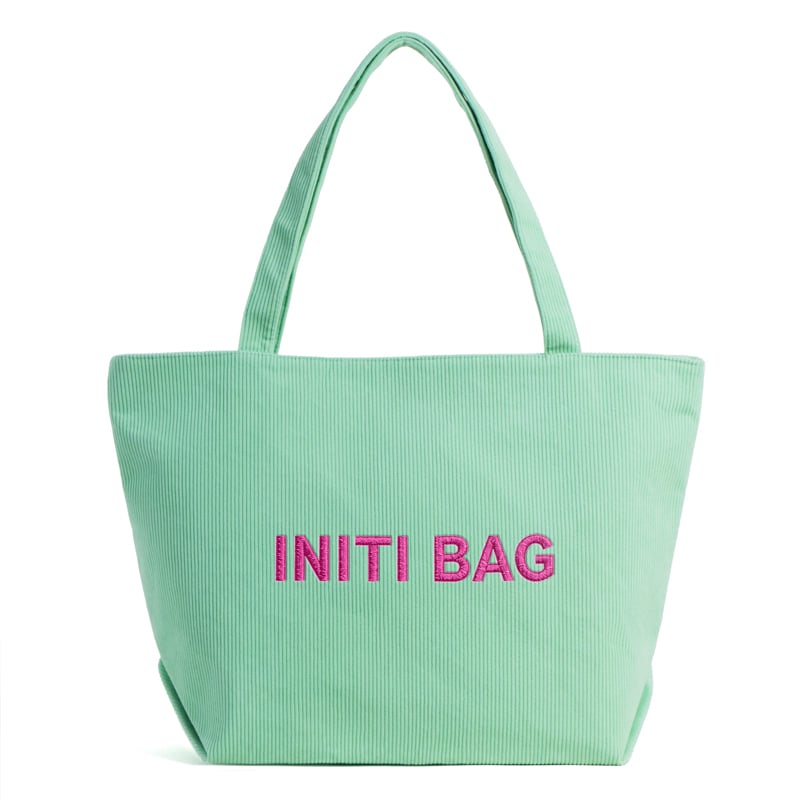
The following INITI products illustrate different corduroy bag structures for retail and custom development.
1. Custom Corduroy Zipper Tote Bag with Inner Pocket
A spacious corduroy tote with a wide gusseted base, full top zipper, lining and inner zipper pocket.
The reference size is approximately 34 × 34 × 18 cm.
Suitable for: Lifestyle retail, commuting, shopping and private-label collections.
Key customization points: Wale size, fabric color, lining, zipper, handle length and logo application.
View Custom Corduroy Zipper Tote Bag with Inner Pocket
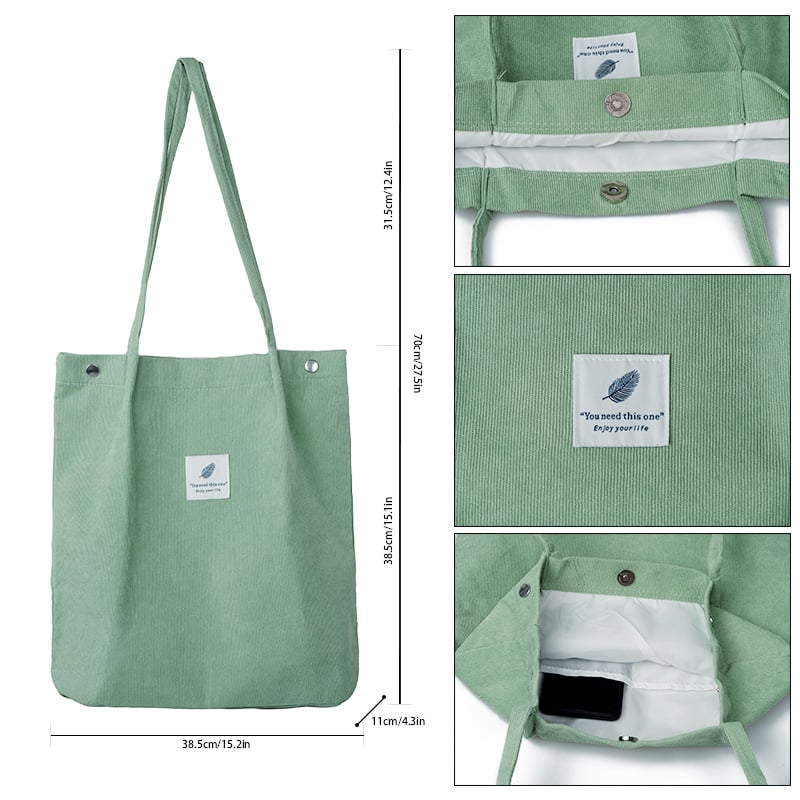
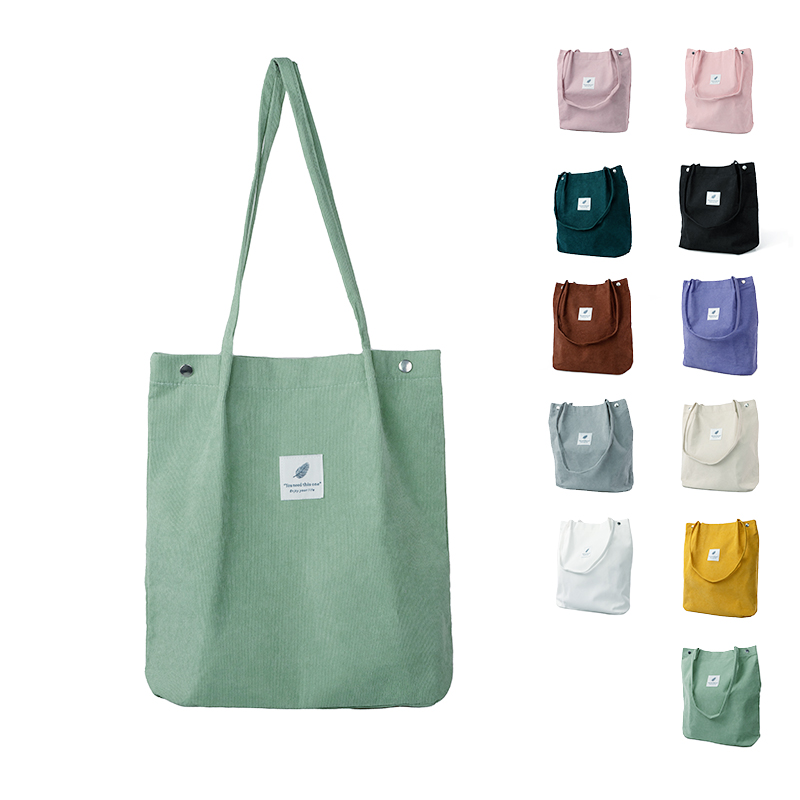
2. Corduroy Shoulder Tote Bag with Inner Pockets
An oversized, soft corduroy shoulder tote with long reinforced straps and two interior pockets, including one zipper pocket.
Suitable for: Campus merchandise, bookstores, daily fashion and casual retail.
Key customization points: Dimensions, fabric texture, straps, pockets, color and branding.
View Corduroy Shoulder Tote Bag with Inner Pockets
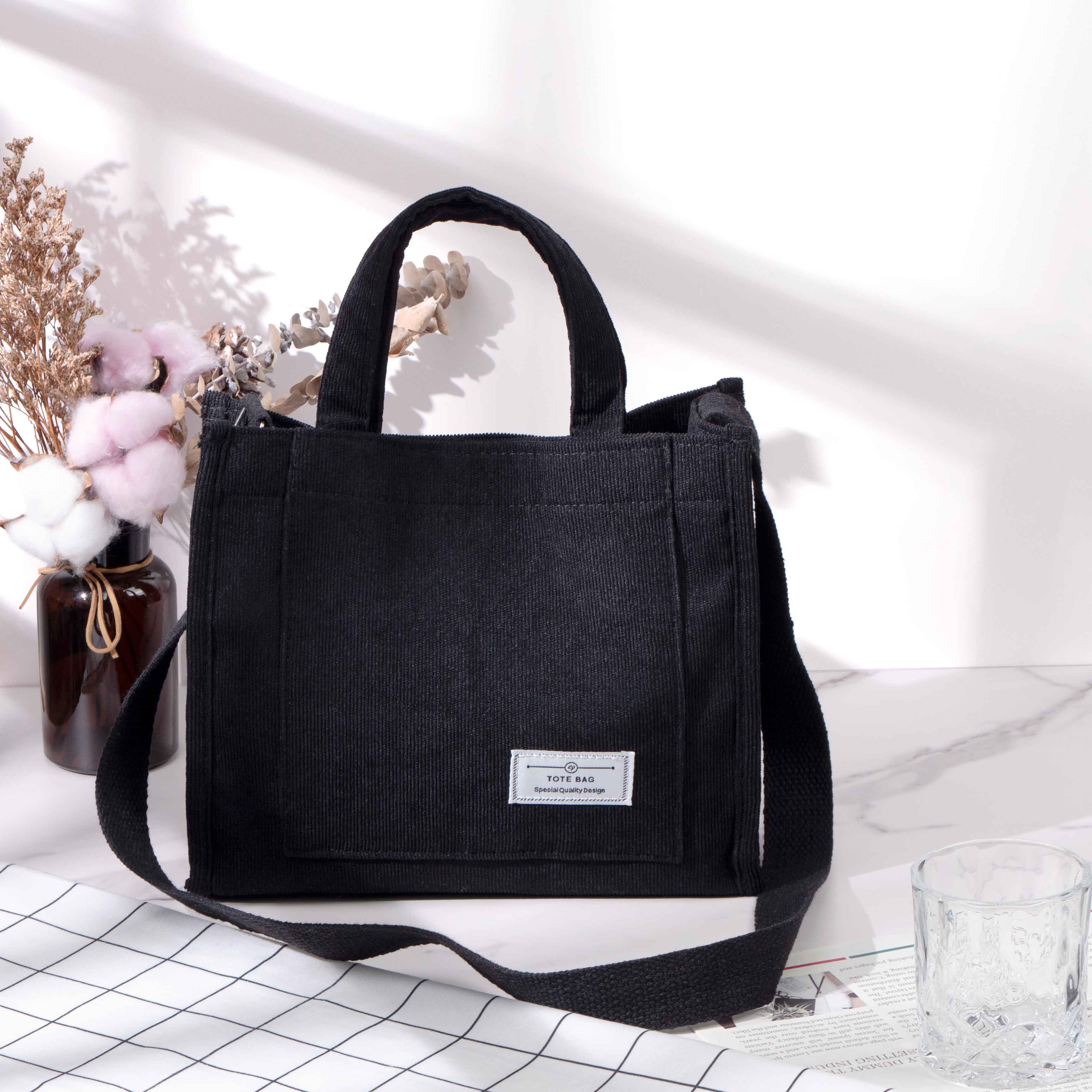
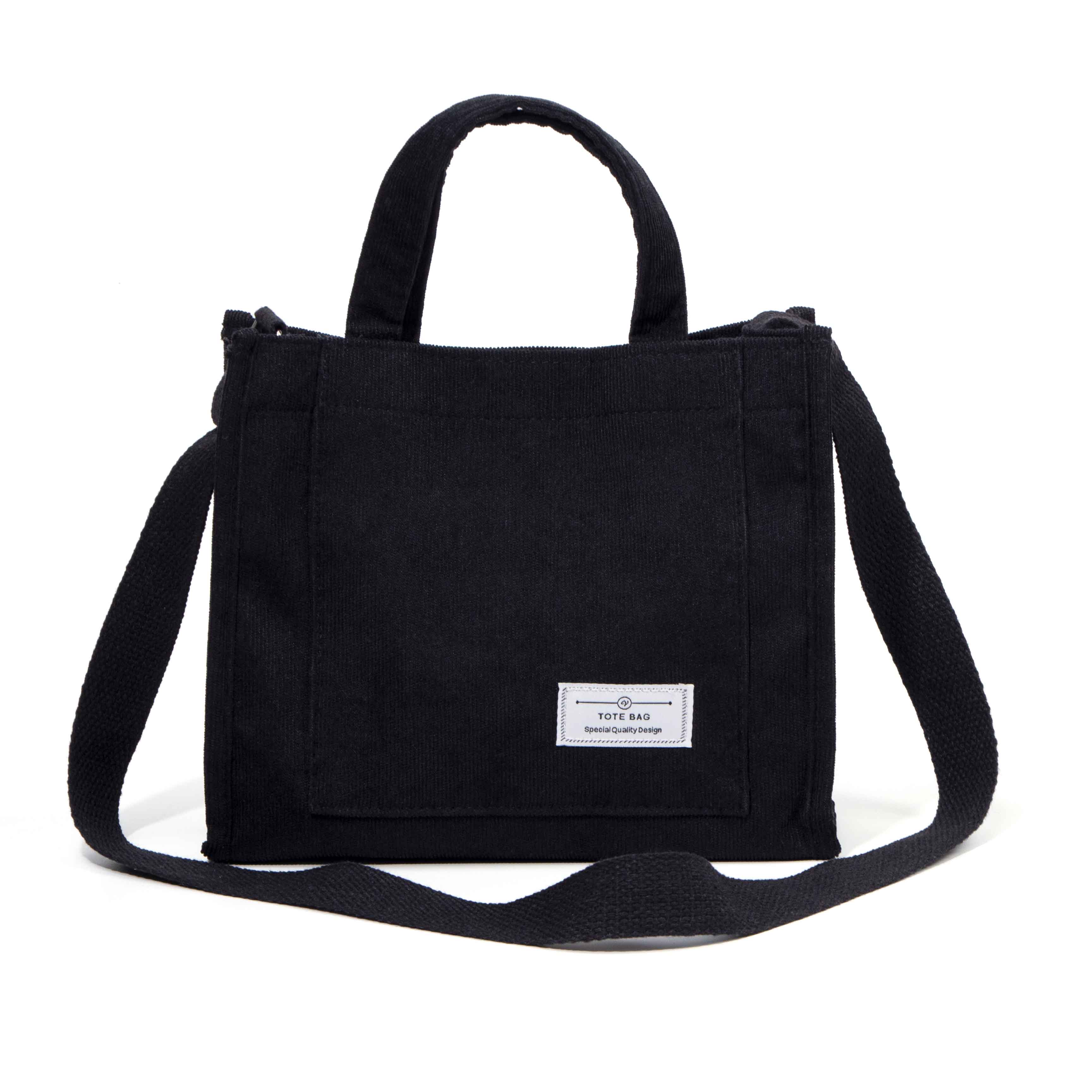
3. Corduroy Tote Shoulder Bag
A compact everyday corduroy bag with short carry handles, a longer shoulder strap, front pocket and magnetic snap closure.
Suitable for: Casual fashion, boutique merchandise, promotional collections and everyday accessories.
Key customization points: Carrying straps, lining, pockets, closure, fabric color and logo.
View Corduroy Tote Shoulder Bag
For more styles, browse the Corduroy Tote Bag Collection.
Inquiry Support
INITI has over 16 years of experience in OEM and ODM custom bag manufacturing.
For custom corduroy bag projects, INITI can assist with fabric selection, bag construction, sampling, free design support and bulk production.
Email [email protected] with your bag type, dimensions, fabric requirements, logo artwork, estimated quantity and destination market for a fast quotation.
Related Articles
References


 Hot News