What Is a Jute Bag: Types, Uses and Customization Guide
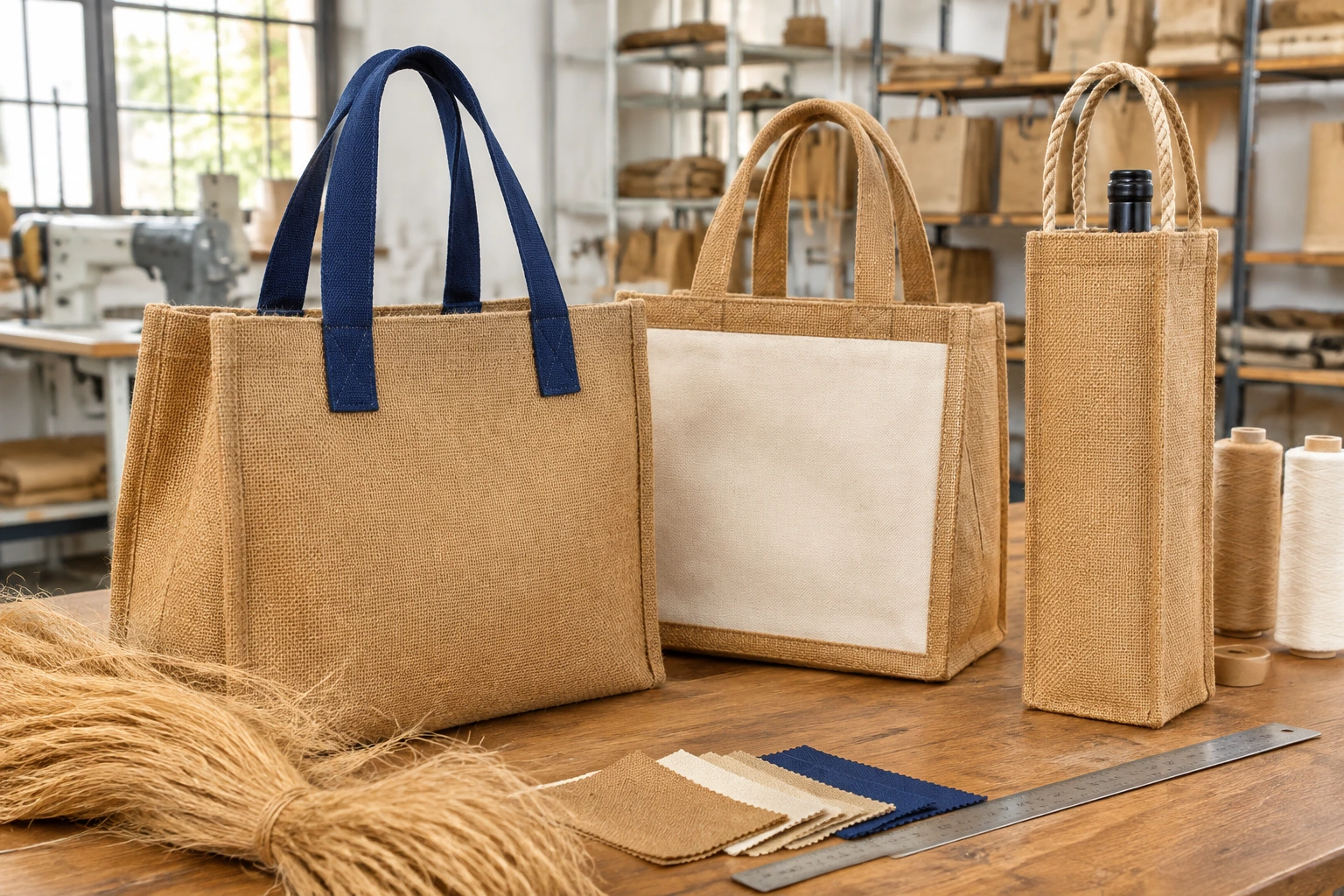
A jute bag is a bag made from woven jute fiber, a natural plant material known for its coarse texture, relatively firm structure and distinctive golden-brown appearance. Jute bags are commonly used for grocery shopping, retail packaging, wine gifts, promotional merchandise and agricultural products.
However, not all jute bags are made in the same way.
A simple unlined jute tote is different from a laminated shopping bag, a structured gift carrier or a jute bag combined with cotton canvas. Their appearance may be similar, but they differ in flexibility, moisture resistance, printing quality and carrying performance.
For buyers choosing or developing custom jute bags, understanding these differences is more useful than treating every natural-looking burlap bag as the same product.
This guide explains the main types of jute bags, their common uses, construction options and the details worth confirming before customization or bulk purchasing.
1. What Is a Jute Bag Made Of?
Jute is a natural bast fiber obtained from plants belonging to the Corchorus genus. After extraction and processing, the fibers are spun into yarn and woven into fabric.
Jute fabric generally has a coarser surface and firmer hand feel than lightweight cotton fabric. Its visible weave is a major reason it is selected for shopping bags, gift packaging and natural-style retail merchandise.
The finished bag may also contain other materials, such as cotton handles, polyester webbing, plastic lamination, lining fabric or metal hardware.
Jute, Burlap and Hessian: Are They the Same?
These terms are closely related but do not always mean exactly the same thing.
- Jute refers to the plant fiber itself.
- Burlap commonly refers to coarse, loosely woven fabric often made from jute, particularly in North American usage.
- Hessian is another common name for woven jute-type fabric, especially in British English.
- Gunny bag usually describes a coarse woven sack used for agricultural goods or bulk materials.
In commercial bag descriptions, jute bag and burlap bag are frequently used interchangeably.
However, a burlap-style appearance does not guarantee that the fabric is made entirely from jute. Some products contain blended fibers or synthetic look-alike materials.
For wholesale orders, the fiber composition should be confirmed rather than assumed from the product name.
2. What Are the Different Types of Jute Bags?
Jute bags can be classified by construction, finish and intended use. Some designs combine several features, such as a laminated shopping tote with cotton handles.
| Jute Bag Type |
Main Characteristics |
Common Uses |
| Plain jute tote bag |
Natural woven body, simple handles, minimal lining |
Shopping, markets, promotional gifts |
| Laminated jute shopping bag |
Jute fabric with a backing or laminated layer |
Grocery retail, reusable shopping programs |
| Jute and canvas tote bag |
Jute combined with smoother cotton canvas panels |
Branded retail, fashion, gift sets |
| Jute wine or gift bag |
Narrow or compact structure, optional dividers or closure |
Wine, gourmet gifts, seasonal packaging |
| Jute drawstring pouch |
Small flexible body with drawstring closure |
Gift accessories, packaged products, event favors |
| Jute insulated bag |
Jute exterior with separate insulation and lining |
Lunch bags, picnic products, food gift programs |
Plain Jute Tote Bags
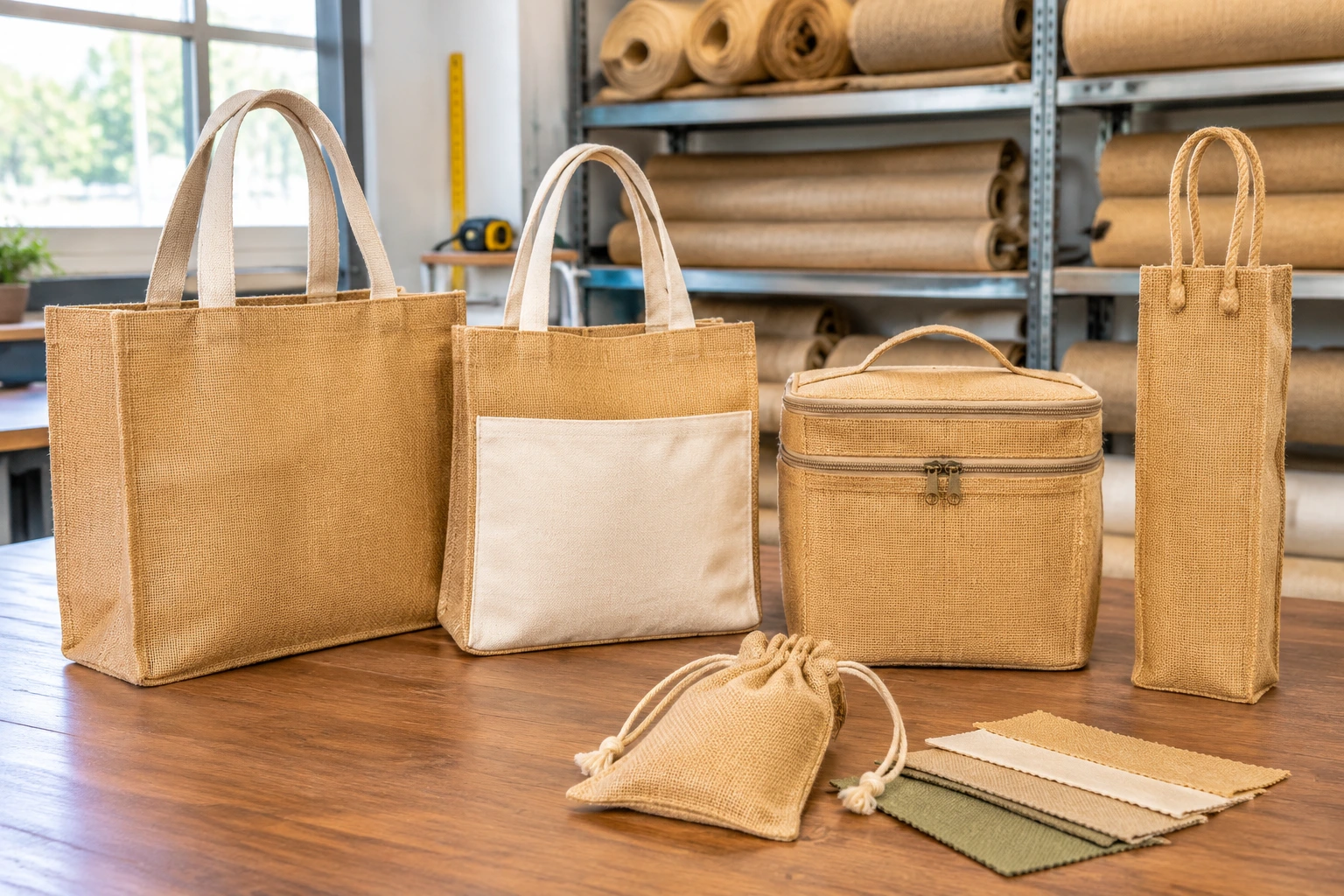
A plain jute tote typically has an open top, stitched sides and two carrying handles.
Some are flat, while others have side and bottom gussets that create additional space for groceries, books or boxed products.
Unlined construction preserves the natural texture and flexibility of the material, but it offers limited protection against moisture and fine particles passing through an open weave.
Plain jute totes are often a practical choice when the bag's natural appearance is more important than complex internal organization.
Laminated Jute Shopping Bags
A laminated jute bag uses a film or backing layer on the fabric, often on the interior surface.
Depending on the material and process, lamination can help stabilize the weave, improve wipe-clean performance and reduce moisture penetration through the fabric surface.
However, lamination does not automatically make the finished bag waterproof. Water can still enter through openings and unsealed seams.
It also changes the material composition and may affect flexibility, recyclability and end-of-life options.
For large retail shopping programs, buyers should confirm the backing material, finish and required performance instead of relying only on the term laminated jute.
Jute and Canvas Tote Bags
Combining jute with cotton canvas allows different parts of the bag to serve different purposes.
Jute can provide a distinctive natural texture around the sides or base, while smoother canvas panels offer a more predictable surface for printed graphics.
This construction is useful for retail collections where large logos, detailed artwork or contrasting colors are important.
The buyer should specify whether the canvas is used for the main body, external pockets, handles or decorative panels.
Jute Wine Bags and Gift Bags
Wine and gift bags usually focus on presentation as well as carrying function.
A single-bottle carrier needs dimensions suited to the intended bottle. Multi-bottle designs may require dividers and additional bottom support.
Small jute gift pouches commonly use drawstring closures, while larger gift carriers may have handles, zippers or structured bases.
For these products, the correct size and internal support are often more important than simply choosing a heavier fabric.
Jute Insulated Bags
Jute can also form the exterior of an insulated lunch bag or cooler bag.
In these products, the jute primarily provides the outer appearance and part of the bag structure. The thermal insulation comes from the internal insulating layers and lining system.
A jute exterior alone does not make a bag insulated.
Buyers should assess the complete construction, including insulation thickness, closure design, moisture management and the intended period of temperature retention.
3. What Are Jute Bags Commonly Used For?
Jute bags are used across retail, gifting and agricultural applications, although different uses call for different designs.
| Application |
Suitable Jute Bag |
Important Considerations |
| Supermarkets and grocery stores |
Gusseted jute shopping tote |
Capacity, handle attachment, loading performance |
| Farmers' markets |
Plain or reinforced jute tote |
Natural appearance, usable depth, repeated carrying |
| Wine and gourmet gifts |
Structured bottle or gift bag |
Bottle fit, base reinforcement, dividers |
| Fashion and lifestyle retail |
Jute-canvas tote or lined jute bag |
Print appearance, comfort, finishing |
| Corporate promotions |
Logo-printed jute bag or gift pouch |
Artwork, size, packing and presentation |
| Coffee and agricultural goods |
Application-specific jute sack or outer gift bag |
Moisture, hygiene, contamination and packaging role |
| Picnic and food promotions |
Insulated jute bag |
Lining, insulation, cleaning and closures |
Grocery and Supermarket Shopping
Jute shopping bags often use a rectangular body with side and bottom gussets. The expanded base makes it easier to carry boxed products, bottles and groceries without forcing everything into a flat compartment.
For repeated grocery use, handle reinforcement and base construction should be considered alongside bag capacity.
Retail and Gift Packaging
The distinctive woven texture of jute can complement products with a natural, handmade or rustic presentation.
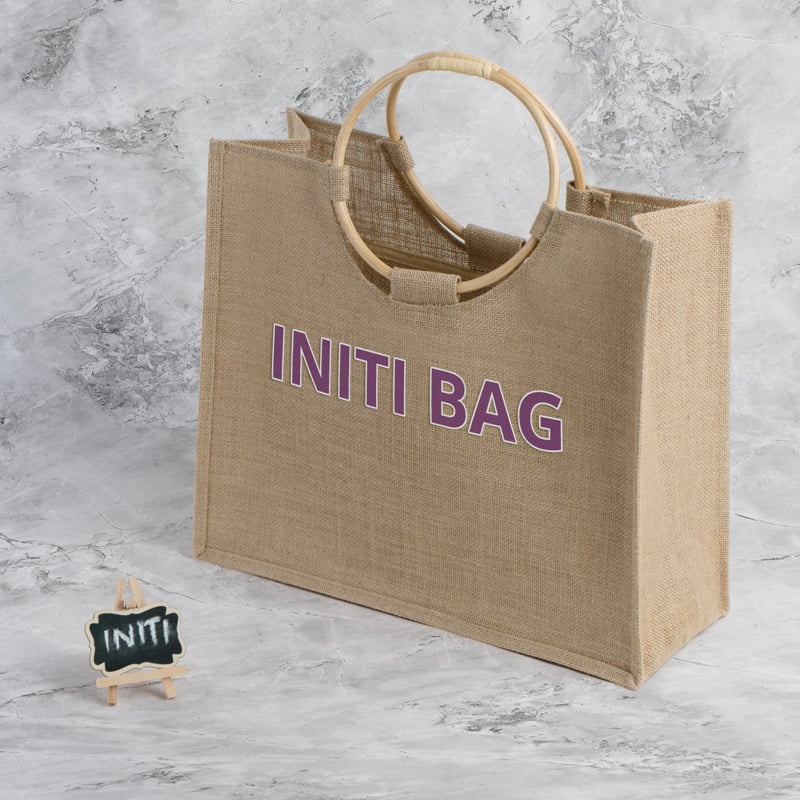
Gift packaging may use wooden handles, contrasting fabric panels, matching pouches or simple printed logos.
The most appropriate design depends on the product being packaged and whether the recipient is expected to reuse the bag.
Coffee and Agricultural Products
Traditional jute sacks have long been used for the movement and storage of agricultural commodities.
However, an industrial coffee sack and a decorative jute bag carrying a sealed coffee gift package have different requirements.
For food-contact applications, the complete packaging system and applicable food-contact requirements must be assessed. Natural fiber content alone does not demonstrate food-contact suitability.
4. How to Choose the Right Jute Bag Size and Construction
There is no universal standard that defines every jute bag as small, medium or large.
The right dimensions depend on what the bag needs to carry.
For a structured tote, the main measurements are:
- Width: The horizontal dimension across the front.
- Height: The vertical dimension of the bag body.
- Gusset or depth: The space created by the side and bottom panels.
- Handle drop: The distance from the top of the bag to the highest point of the handle when extended.
Flat Bags vs Gusseted Jute Bags
Flat jute bags are suitable for relatively thin products and simple promotional packaging.
Gusseted designs provide additional depth for groceries, boxes and gift sets. Wide bottom gussets can also help the bag stand more steadily when filled, depending on the stiffness and base construction.
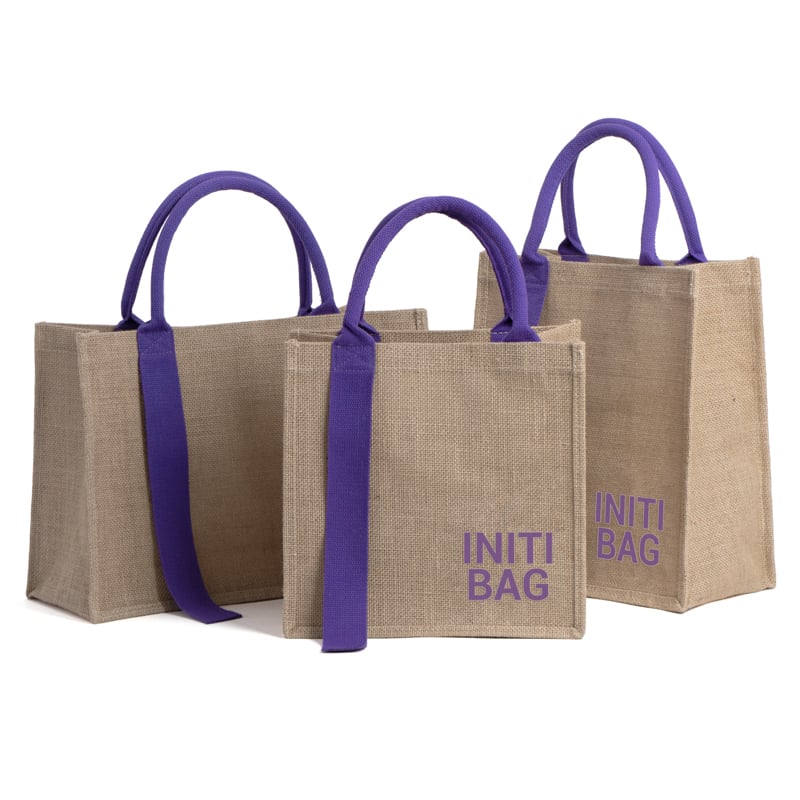
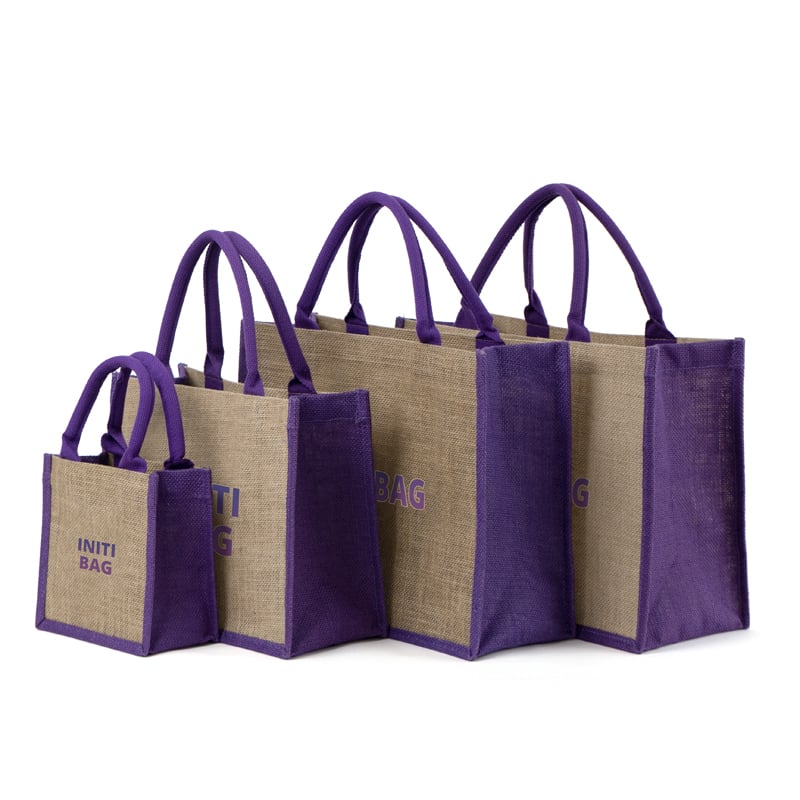
As a real product reference, INITI's Contrast Webbing Jute Tote Bag is available in three shown dimensions:
| Reference Size (W × H × D) |
Format |
| 26 × 26 × 18 cm |
Compact, square-format gusseted tote |
| 26 × 31 × 16 cm |
Taller gusseted tote |
| 37 × 26 × 13 cm |
Wider horizontal gusseted tote |
These are examples of actual product configurations, not universal jute bag size standards.
For custom orders, buyers should confirm dimensions using the intended contents. A wine bottle, retail gift box and grocery assortment may require very different proportions.
Handle Construction Matters
Common handle options include cotton webbing, jute rope, wrapped fabric handles, wooden handles and PU leather handles.
The decision should consider carrying comfort, expected weight, appearance and attachment strength.
A heavier fabric does not automatically create a stronger finished bag. Handle stitching, seam construction and reinforcement at stress points can be just as important.
5. Plain vs Laminated Jute: Which Material Should You Choose?
The choice between plain and laminated jute affects more than appearance.
| Feature |
Plain Woven Jute |
Laminated Jute |
| Surface appearance |
Natural, coarse woven texture |
Natural exterior with added backing |
| Breathability |
Generally more breathable |
Reduced through the laminated area |
| Moisture resistance |
Limited |
Can be improved, depending on construction |
| Flexibility |
Depends on weave and fabric weight |
May become stiffer |
| Cleaning |
Usually spot cleaning and dry maintenance |
Interior may be easier to wipe |
| End-of-life considerations |
Depends on all components |
Added layers complicate material assessment |
Plain jute is suitable when natural texture and a relatively simple construction are priorities.
Laminated jute may be more practical where the buyer needs a more stable bag body or an easier-to-clean internal surface.
Neither choice is automatically superior.
Moisture and Export Storage
Jute is a moisture-sensitive natural fiber. Prolonged damp storage can lead to odor, staining, mildew or deterioration.
For bulk export orders, the condition of the jute fabric and finished bags should be checked before packing.
Cartons should be kept dry, and bags should not be sealed for shipment while damp.
The appropriate moisture acceptance criteria depend on the material specification, packaging method and storage or shipping conditions. A single universal moisture-content limit should not be assumed for every jute product.
For shipment planning, buyers should also confirm the folded bag dimensions and carton packing arrangement. Structured bases, wooden handles and rigid inserts may require more carton space than simple flat jute bags, increasing the shipping volume per unit.
6. How Can Jute Bags Be Customized?
Custom jute bags can be developed for specific products, retail collections or promotional programs.
The most useful customization options are those that improve the bag's suitability for its intended purpose.
| Customization Area |
Available Options |
What Buyers Should Confirm |
| Bag dimensions |
Width, height, gusset and base shape |
Actual contents and carrying capacity |
| Fabric |
Jute weight, weave, color, blends |
Texture, strength, shade consistency |
| Handles |
Cotton webbing, rope, wooden, PU or wrapped handles |
Length, comfort and attachment |
| Lining or lamination |
Unlined, laminated or fabric-lined |
Cleaning, moisture exposure and intended use |
| Closure |
Open top, drawstring, snap or zipper |
Access, security and construction |
| Logo |
Screen print, woven label, patch or suitable embroidery |
Artwork detail and surface compatibility |
| Accessories |
Pockets, dividers, base inserts, hangtags |
Functional need and additional cost |
| Packing |
Bulk folded, individual packing, retail labels |
Carton volume and distribution requirements |
Screen Printing on Jute
Screen printing is commonly used for simple logos, text and bold graphics.
However, jute has an uneven woven surface. Fine lines, small lettering and detailed multicolor artwork may not reproduce as sharply as they would on smooth cotton canvas.
The result also depends on the fabric weave, ink system and print setup.
For important branding projects, a printed sample should be approved before production.
Woven Labels, Patches and Mixed-Material Panels
Woven labels and stitched patches can be useful when a logo includes small details or requires more consistent edges.
Another option is to add a smooth canvas panel and print the artwork on that surface.
Embroidery may be possible with suitable backing and construction, but direct embroidery on coarse jute should be sampled to assess distortion and surface stability.
Colors and Finishes
Natural jute commonly shows variations in shade and texture.
Dyed jute and contrasting trims are possible, but exact color appearance should be checked on the selected fabric rather than judged only from a digital color reference.
For multi-batch orders, buyers should agree on an approved sample and acceptable shade variation.
7. Are Jute Bags Biodegradable and Sustainable?
Jute fiber is plant-based and can biodegrade under appropriate conditions. However, this does not mean every finished jute bag is fully biodegradable or compostable.
A commercial jute bag may contain:
- Plastic lamination or coating
- Synthetic sewing thread
- Polyester or polypropylene handles
- PU trim, adhesives or other components
- Metal fittings and printed decoration
These components can change the environmental characteristics of the finished product.
A natural jute exterior does not establish that the complete bag is plastic-free, biodegradable, compostable or recyclable.
For environmental claims, buyers should consider the complete construction and obtain evidence supporting the specific claim.
The actual environmental impact also depends on production, transport, repeated use and end-of-life management.
For US and UK markets, environmental marketing guidance emphasizes that claims such as "eco-friendly," "biodegradable" and "compostable" must be accurate and substantiated.
Describing the verified fiber composition and intended reuse is generally more informative than making broad, unsupported environmental promises.
8. What Should Buyers Check Before Ordering Jute Bags in Bulk?
Before approving a custom jute bag, the buyer should make sure that the sample represents the intended production specification.
The most useful checks include:
Fabric and appearance: Confirm fiber composition, fabric weight, weave, color range and visible imperfections.
Dimensions and construction: Measure the finished bag, gussets, handle drop and opening against the approved specification.
Carrying performance: Check the handles, seams and base using a load and testing procedure appropriate to the intended contents.
Logo and finishing: Review print registration, color, clarity, labels, trims and any lamination or lining.
Packing and transport: Confirm folded dimensions, units per carton, carton measurements and protection against moisture during storage and shipment.
Applicable compliance: Determine whether material testing, chemical compliance, food-contact documentation or environmental-claim evidence is needed for the intended market.
A well-defined sample and written specification reduce disputes over what was approved, particularly for repeat retail orders.
9. Frequently Asked Questions
Q1. Is a jute bag the same as a burlap bag?
Often, yes, in everyday product descriptions. Jute refers to the fiber, while burlap generally describes a coarse woven fabric commonly made from jute. The actual fiber composition should be checked for wholesale purchasing.
Q2. Are jute bags waterproof?
Untreated woven jute is not waterproof. Lamination or lining can improve moisture resistance, but complete waterproof performance depends on the entire bag construction, including seams and closures.
Q3. Can jute bags be printed with a custom logo?
Yes. Screen printing works well for many simple logos. Woven labels, patches and smooth fabric panels can be used when artwork requires finer detail.
Q4. Can jute bags be machine washed?
Machine washing is generally not recommended unless the finished product has been specifically designed and tested for it. Jute can absorb moisture, distort or shrink, and added trims may have different care requirements. Spot cleaning and thorough drying are usually more appropriate.
Q5. Are all jute bags biodegradable?
No. The natural jute fiber may biodegrade under suitable conditions, but lamination, synthetic handles, adhesives and other components affect the complete product. Whole-bag biodegradability or compostability claims require appropriate supporting evidence.
Conclusion
Jute bags are woven natural-fiber bags used for shopping, retail packaging, gifts and selected food or agricultural applications.
Their main differences come from construction rather than the word jute alone.
A plain tote offers a simple natural appearance. A gusseted shopping bag provides more usable space. Laminated, lined and mixed-material designs address different requirements for handling, branding and presentation.
For custom jute bag projects, dimensions, fabric construction, handles, printing and moisture protection should be confirmed together. The right specification is the one that suits the products being carried and the way the bag will actually be used.
Recommended Products: Jute Bags for Retail, Shopping and Gifting
The following INITI products illustrate different jute bag constructions for custom retail and packaging projects.
1. Contrast Webbing Jute Tote Bag
A natural jute shopping tote with wide gussets, soft wrapped handles and contrasting webbing details. Available in three reference dimensions.
Suitable for: Grocery shopping, retail merchandise, boxed gifts and branded shopping programs.
Key customization points: Dimensions, gusset depth, handle colors, logo printing and optional lining.
View Contrast Webbing Jute Tote Bag
2. Custom Jute Gusset Tote Bag with Canvas Panels
A large open-top tote combining natural jute side and bottom panels with smoother cotton canvas front and back panels.
Suitable for: Retail shopping, large gift sets, promotional merchandise and projects requiring a clearer branding surface.
Key customization points: Jute and canvas proportions, printed panels, bag size, shoulder handles and packaging.
View Custom Jute Gusset Tote Bag with Canvas Panels
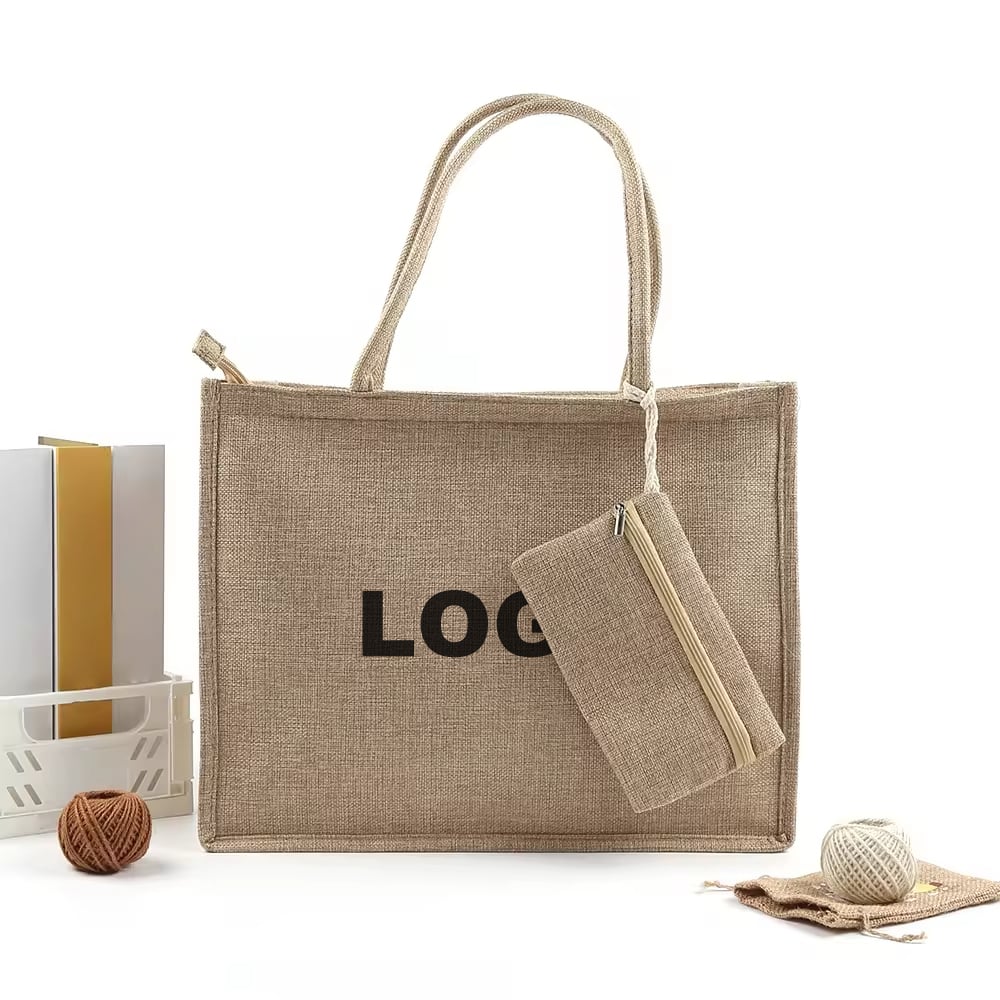
3. Custom Burlap Tote Bag with Zipper and Matching Pouch
A rectangular burlap-style tote with a top zipper, soft double handles and a matching small zipper pouch.
Suitable for: Lifestyle merchandise, boutique retail, promotional gifts and reusable shopping collections.
Key customization points: Fabric specification, zipper, pouch, logo, handles, lining and size.
View Custom Burlap Tote Bag with Zipper and Matching Pouch
4. Custom Two-Tier Jute Insulated Cooler Bag
A structured cooler bag featuring a jute exterior, separate upper and lower zippered compartments, insulated lining and adjustable shoulder strap.
Suitable for: Picnic collections, packaged food gift programs, promotional food and beverage products, and retail cooler bags.
Key customization points: Insulation specification, compartment dimensions, closures, shoulder strap and exterior branding.
View Custom Two-Tier Jute Insulated Cooler Bag
For additional designs, browse the Jute/Burlap/Gunny Tote Bag Collection.
Inquiry Support
INITI has over 16 years of experience in OEM and ODM custom bag manufacturing, including jute shopping bags, mixed-material totes and retail gift packaging.
For custom jute bag projects, we provide material and construction recommendations, sampling, free design support and bulk production services.
Email [email protected] with your intended use, preferred dimensions, material requirements, logo artwork, estimated quantity and destination market for a fast quotation.
Related Articles
References


 Hot News