Corduroy tote bags are taking over accessory trends in 2026, blending nostalgic vintage charm with everyday practicality. While canvas, leather and recycled‑fabric totes have long dominated the market, corduroy options have surged in popularity for fall‑winter wardrobes, bringing soft texture, warm tones and relaxed quiet‑luxury aesthetics to daily carry.
If you've landed here wondering whether a corduroy tote is the right buy — or which one to choose — you're in the right place, this buying guide breaks down what defines corduroy totes, their pros and cons, popular styles, real‑world use cases, key buying criteria, and care tips to help you pick your perfect match.
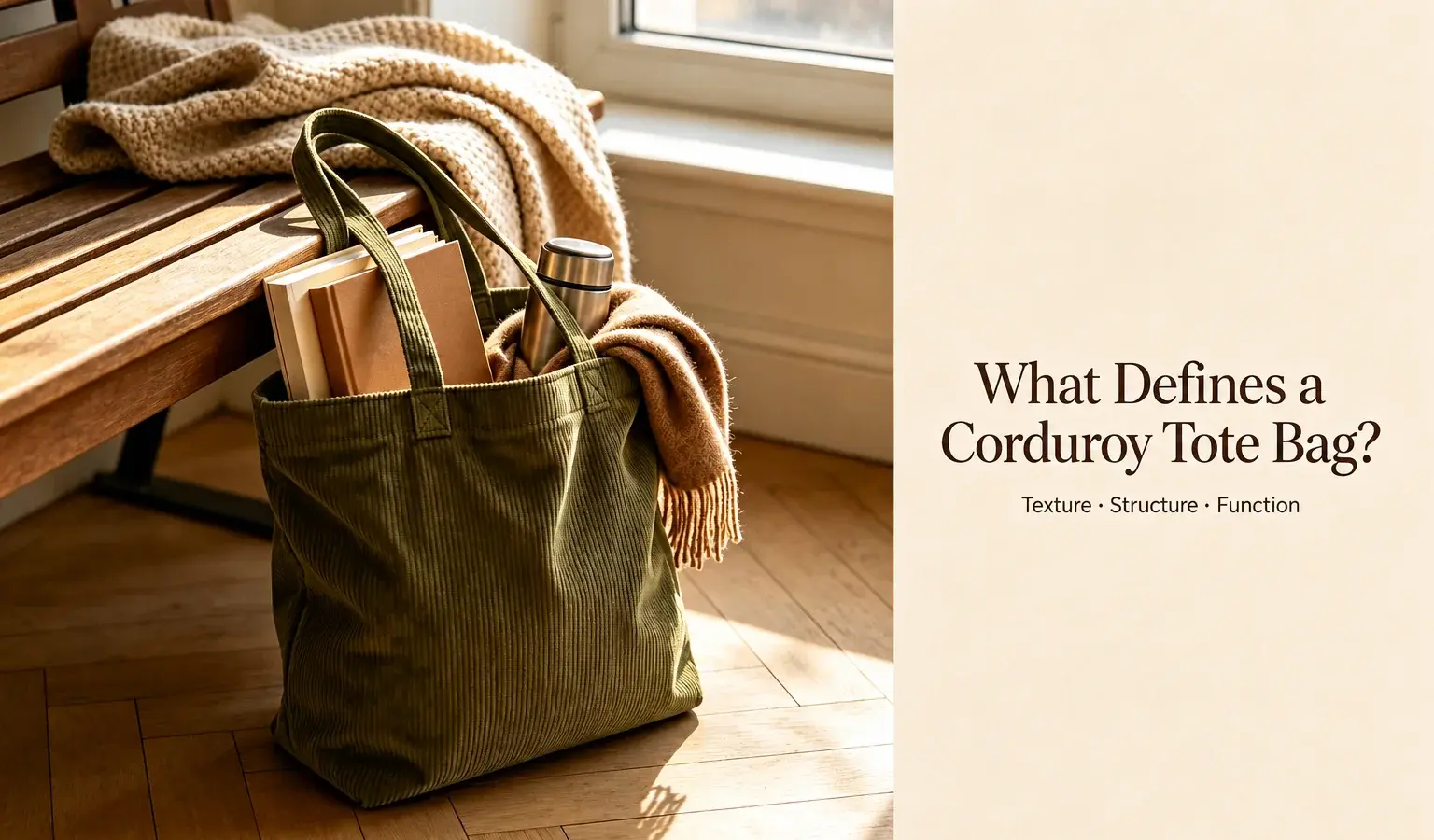
A corduroy tote follows the core definition of a classic tote bag: a spacious carry‑all equipped with two parallel top handles for shoulder or hand‑held wear, often with optional cross‑body straps. Its defining difference is the corduroy shell — a ridged, ribbed woven fabric delivering soft, tactile texture and timeless retro styling.
Unlike crisp canvas or smooth leather, corduroy brings visual warmth. It pairs seamlessly with knit sweaters, coats, denim and casual office outfits. Modern iterations range from minimalist open‑top everyday models to structured zipper‑closure versions with internal pockets, balancing vintage vibe with modern‑day functionality.
Key Characteristics
- Textured vertical ribs ("wales"): Corduroy's signature ridges run vertically down the fabric. The wale count determines everything from the feel to the formality of the bag.
- Soft but sturdy: Corduroy is a cut-pile cotton fabric — soft to the touch on the surface, but dense and abrasion-resistant underneath. It carries heavy loads without the flimsy feel of thin canvas.
- Heavier than standard canvas: Most corduroy weighs in around 200–400 GSM (grams per square meter). That weight gives the bag structure and premium drape, but it also means a corduroy tote is a bag you notice on your shoulder.
- Seasonal appeal: Corduroy is inherently an autumn/winter texture. It pairs naturally with knits, wool coats and boots.
Why Corduroy Totes Are Trending
If you're reading this in the second half of 2026, the timing is not accidental. Several converging trends explain why corduroy totes are suddenly everywhere.
1. Vintage‑revival & quiet‑luxury trend
Consumers crave low‑key, textured accessories instead of flashy logo‑heavy designer goods. Corduroy’s retro heritage fits perfectly into this relaxed aesthetic.
2.Season‑adaptable practicality
Thick yet lightweight corduroy performs excellently in cooler autumn and winter months. Neutral earth‑tone colorways (coffee, olive, cream, deep forest green) align with popular Muted & Mocha‑latte color palettes of recent seasons.
Many shoppers are swapping thin canvas totes for corduroy alternatives that feel cozier for cold‑weather commutes, weekend outings and campus life.
Types of Corduroy Tote Bags
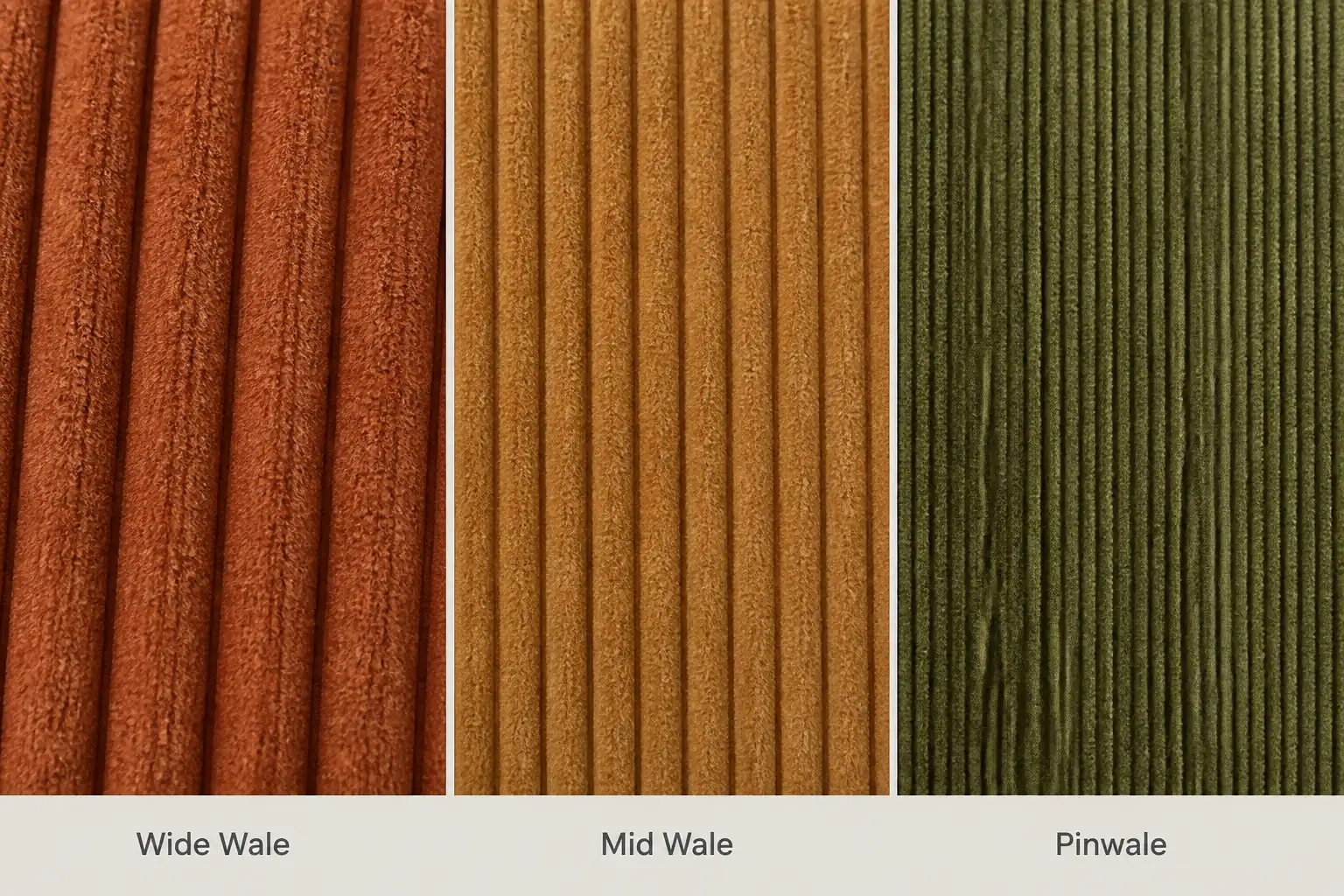
Not all corduroy is created equal. The biggest variable is the wale count — the number of ridges per inch — followed by the bag's construction. Here's how to tell them apart.
By Wale Width
| Type |
Wale count (approx.) |
Look & feel |
Market positioning |
| Wide wale (jumbo cord) |
4–6 per inch |
Chunky, coarse, highly textured |
Trend-led statement pieces, casual brands |
| Mid wale (standard) |
8–12 per inch |
Balanced texture, classic corduroy look |
The retail bestseller — broadest audience |
| Pinwale (needlecord) |
16+ per inch |
Fine, smooth, almost velvet-like |
Premium and work-oriented lines |
Main Types of Corduroy Tote Bags
Corduroy totes vary by fabric weight, structure, closure and strap configuration. Below are the most common categories, with clear pros and cons for each.
1. Light‑Weight Unstructured Corduroy Totes
These soft‑bodied models use thin‑to‑medium‑weight corduroy, with minimal internal reinforcement.
Pros
- Ultra‑lightweight, easy to fold for storage
- Affordable price range
- Soft slouchy silhouette for casual looks
Cons
- Prone to sagging when heavily loaded
- Less protection for laptops or fragile items
- Open‑top versions offer limited anti‑theft security
Best for: grocery runs, campus class days, casual short trips.
2. Heavy‑Weight Structured Corduroy Totes
Crafted from high‑density thick corduroy, with bottom inserts or lining to hold the bag’s boxy shape.
Pros
- Maintains neat shape even fully packed
- Higher durability, resists excessive wrinkling
- Suitable for work commutes to fit laptops and notebooks
Cons
- Slightly heavier than unstructured styles
- Higher price point than thin corduroy options
Best for: office commuting, weekend getaways, daily heavy‑load use.
3. Zipper‑Closed Corduroy Crossbody Totes
Upgraded designs add full‑zip closure plus detachable adjustable cross‑body straps, building on classic corduroy bodies.
Pros
- Enhanced security for city commuting and travel
- Multiple carrying modes: shoulder‑carry, hand‑held, crossbody
- Many styles include internal slip pockets for organization
Cons
- Slightly higher cost than basic open‑top totes
- Zippers add minor weight
Best for: urban commuters, frequent travelers, anyone prioritizing safety.
4. Sustainable Recycled‑Fiber Corduroy Totes
Eco‑conscious options made from recycled cotton or blended recycled textile corduroy.
Pros
- Lower environmental footprint
- Retains classic corduroy soft texture
Cons
- Limited color selection on some eco‑lines
- Quality varies widely between manufacturers
Best for: eco‑minded shoppers building sustainable accessory collections.
Core Pros & Cons of Corduroy Tote Bags
Before purchasing, weigh the unique strengths and weaknesses of corduroy as a bag material.
Pros
- Rich retro aesthetic: vertical rib texture delivers distinct visual character canvas cannot match
- Soft hand‑feel: comfortable resting against shoulders or arms
- Great seasonal fit: warm visual texture complements fall and winter outfits
- Wide price spectrum: budget‑friendly casual styles up to premium designer pieces
- Versatile styling: works with casual, smart‑casual and campus‑wardrobe aesthetics
Cons
- Lint & pet‑hair attraction: Un‑treated corduroy easily catches dust and loose fibers
- Water vulnerability: absorbs moisture; water spots can mark the ribbed surface, not ideal for heavy‑rain days
- Wear risks: low‑quality corduroy may develop flattened ribs, pilling, or fabric creasing with heavy friction
- Less formal than polished leather: rarely fits strict corporate formal dress codes
Common Real‑World Uses for Corduroy Tote Bags
Just like traditional totes, corduroy carry‑alls are multi‑purpose, though they shine in specific scenarios:
Work & Smart‑Casual Office
Structured zipper‑style corduroy totes can fit 13‑14 inch laptops, notebooks and charging accessories. Earth‑toned corduroy works beautifully with blazers and knit office attire for smart‑casual work environments.
Note: Not recommended for ultra‑formal corporate settings where leather briefcases are expected.
Campus & Daily Errands
Light‑weight corduroy totes are student favorites. They hold textbooks, water bottles, lunch containers and stationery. For grocery shopping and local errands, the generous capacity removes reliance on disposable shopping bags.
Weekend Travel & Day Trips
Medium‑to‑large structured corduroy totes function as compact carry‑on companions. Stow toiletries, a change of clothing and small electronics for day excursions or short overnight trips.
Casual Outings & Picnics
Perfect for fall park picnics, coffee meet‑ups and seasonal outdoor activities.
Tip: Keep a small wipe handy, as crumbs and dirt can settle within corduroy’s rib grooves. Avoid heavy‑rain outdoor plans.
How to Choose the Right Corduroy Tote Bag: Key Buying Criteria
Use these four critical factors to narrow down your selection when shopping.
1. Fabric Composition and GSM
Specify the fiber content in writing. Quality corduroy totes use 80–100% cotton; small polyester blends add wrinkle resistance but reduce breathability. GSM is the main quality and cost lever: 250–300 GSM suits everyday retail, 300+ GSM suits heavyweight work and corporate programs. Ask the supplier for exact composition and GSM.
2.Size & Structure
- Large unstructured: For shopping, picnics, maximum packing volume — expect soft slouch.
- Medium structured: Most versatile all‑round size; fits laptops, everyday essentials, maintains neat silhouette.
- Small compact corduroy tote: Ideal for city outings, carrying phone, wallet and cosmetics only.
3.Closure & Security
- Open‑top: Fast access for groceries, campus use, low‑risk environments.
- Full‑zip closure: Recommended for busy city commutes and travel, preventing items from spilling out and deterring pick‑pockets.
- Magnetic snap: Middle‑ground option for quick access plus basic security.
Many shoppers opt for zipper closure for urban daily life, while open‑top works fine for low‑stress local activities.
4.Straps, Hardware & Extra Features
- Handle length: Confirm shoulder handles are long enough to slip comfortably over winter coats and thick sweaters. Detachable cross‑body straps add huge wearing flexibility.
- Internal pockets: Slip pockets or zippered interior compartments help organize phones, keys and pens instead of rummaging inside one large cavity.
- Stitching reinforcement: Check stress points where handles attach to the bag body — reinforced stitching extends service life significantly.
Customization and Wholesale Programs
For retailers and brands, corduroy totes are also a high-margin custom category.
What Can Be Customized
- Color: custom Pantone matching across earth tones and the standout 2026 shades (bordeaux, mustard, cobalt, orange)
- Wale width: wide, mid or pinwale per your design direction
- Branding: embroidery, screen printing, woven labels or heat-transfer logos
- Construction: custom lining, internal pockets, hardware, zippers and strap types
- OEM/ODM: produce from your tech pack, or develop from a reference sample
Essential Corduroy Tote Care & Maintenance Guide
Corduroy requires simple special care to keep its rib texture intact:
- Cleaning: Hand‑wash or gentle cold‑cycle machine wash for washable‑labeled pieces. Turn the bag inside‑out before washing to reduce pilling and rib flattening. Do NOT tumble dry; air‑dry in shade only.
- Lint removal: Use a lint roller regularly to pick up pet hair and dust that sticks to the ribbed surface.
- Water protection: Avoid heavy rain. If dampened, air‑dry slowly in shade; never apply high heat from hair dryers.
- Storage: Store in a dry space. Do not over‑stuff when long‑term storing to prevent permanent creases and flattened corduroy ribs.
Summary: Building Your Corduroy Tote Program
Corduroy totes combine a fabric with centuries of history, a demand cycle currently at its peak, and a category growing steadily through 2034. The sourcing fundamentals are straightforward: specify cotton quality and GSM in writing, choose your wale deliberately, secure the closures, reinforce the handles, and settle the compliance and labeling plan before production.
If you are planning a corduroy tote program — private label, custom development or bulk wholesale — we would be glad to review your specs and provide samples, pricing and lead time.
FAQs
1.What is the lead time for a custom corduroy tote bag order?
Sample development usually takes 7–15 days, and bulk production 25–45 days depending on quantity and season.
2.Can you develop OEM/ODM designs from our own specifications?
Yes. We produce from your own tech pack or develop from reference samples, including custom Pantone colors, wale widths, lining, hardware and branding methods such as embroidery, screen printing or woven labels.
3.Which certifications can be provided for corduroy tote bags?
Common certifications include GOTS for organic cotton, GRS for recycled content, OEKO-TEX Standard 100, REACH compliance for the EU, CPSIA and Prop 65 compliance for the US, plus PPWR-compliant packaging for EU-bound orders.
4.How do we evaluate corduroy quality in a sample?
Check fiber composition and GSM, wale consistency, pile crush resistance, seam and handle reinforcement, zipper quality, lining and colorfastness. Always request an approved pre-production sample before bulk production.
5.Which wale width sells better in retail?
Mid-wale corduroy (8–12 wales per inch) is the versatile bestseller across retail channels. Wide wale (4–6) drives trend-led statement sales, while pinwale (16+) suits premium and work-oriented positioning. The right mix depends on your target market and price point.
Related Products


 Hot News