
Carton Drop Testing & Export Packaging Standards for Transpacific Shipping
A master carton can leave a bag factory in good condition but arrive at a US distribution center with crushed corners, split seams or damaged retail packaging.
The cause is not always insufficient cardboard strength.
During transpacific shipping, cartons may be handled repeatedly, stacked for extended periods and exposed to vibration, temperature changes and moisture. The risks also depend on whether cargo is floor-loaded, palletized or transferred through additional distribution networks.
For bag importers, packaging failures can affect more than the outer carton.
A compressed carton may deform structured handbags, leave visible creases on certain PU surfaces or damage decorative gift boxes. Poor internal packing can allow metal zipper pulls and other accessories to mark adjacent products. In insulated bags, excessive compression may affect the intended shape, foam insulation or liner construction.
These problems require different solutions.
A stronger carton cannot always compensate for poor internal packing. Similarly, passing a drop test does not prove that a carton can withstand prolonged stacking loads or exposure to high humidity.
This guide explains how to select carton drop testing procedures, assess corrugated board strength, manage moisture during ocean freight and develop packaging around the actual products inside.
It also covers the inspection records importers should request and the corrective actions to take when packaging fails.
1. What Can Damage Export Cartons During Transpacific Shipping?
A shipment from an Asian manufacturing location to a US warehouse normally involves more than the ocean voyage itself.
Depending on the route, cargo may pass through a factory warehouse, trucking operation, export terminal, container vessel, import terminal, inland transportation network and distribution center.
Each stage introduces different packaging risks.
Repeated Handling and Impact
Master cartons can experience impacts during manual loading, unloading, sorting and warehouse operations.
A carton may survive one impact but develop damage after repeated handling, particularly if its contents can move inside.
Corner damage is especially important when the products have rigid components or individual retail boxes.
Stacking and Compression
Cartons near the bottom of a stack support the weight of the cartons above them.
The risk increases when boxes have insufficient compression strength, are stacked unevenly or experience prolonged loading under unfavorable environmental conditions.
A box may pass a short drop test and still collapse during extended storage or transit.
Vibration and Internal Movement
Road, rail and other distribution movements can cause products to shift inside their master cartons.
Repeated contact can create scratches, abrasion and pressure marks even when the outer carton remains intact.
The internal arrangement of the products is therefore part of the protective packaging design.
Humidity and Container Condensation
Changes in temperature and humidity can cause moisture to condense inside freight containers.
Moisture may come from the cargo, packaging materials, pallets or conditions during loading.
High humidity can reduce the compression performance of corrugated packaging and may contribute to mold or product damage under unsuitable conditions.
The degree of deterioration depends on the paperboard, exposure conditions and duration. There is no fixed percentage that applies to every shipment.
2. Which Carton Drop Testing Standard Should Importers Use?
Different packaging standards evaluate different hazards.
The first step is to identify the distribution route and the unit being tested.
A factory master carton moving inside a container is not necessarily exposed to the same conditions as a parcel shipped directly to an individual consumer.
ISTA 1A: Basic Packaging Integrity Testing
ISTA Procedure 1A covers individual packaged products weighing 150 lb (68 kg) or less.
It is a non-simulation integrity procedure that can help identify weaknesses in a product-and-package combination.
It is useful for preliminary packaging screening and comparing proposed designs.
However, ISTA 1A is not a complete simulation of transpacific ocean freight.
A package that passes ISTA 1A may still require additional evaluation for compression, humidity, distribution vibration or other hazards.
ISTA 3M: International Direct Import Shipments
ISTA introduced Test Project 3M in 2026 for packaged products moving from Asia-Pacific manufacturing sites to US distribution centers or retailer fulfillment centers.
The procedure addresses relevant inbound distribution hazards, including different loading configurations, handling operations, environmental exposure and inland transportation.
It covers both floor-loaded and palletized shipment configurations.
This makes ISTA 3M particularly relevant when importers want to evaluate export packaging designed for international direct-import distribution.
However, ISTA states that 3M does not represent air freight environments or specific events occurring aboard an ocean vessel between ports.
It should not be presented as a guarantee against every possible ocean-shipping hazard.
ASTM D5276 and ISO 2248: Controlled Drop Tests
ASTM D5276 provides a method for evaluating loaded containers under free-fall impact.
ISO 2248 addresses vertical impact testing of complete, filled transport packages by dropping.
These standards describe testing methods. They do not independently establish one universal drop height, sequence or acceptance criterion for every export master carton.
Those conditions need to be selected through the applicable packaging program or an agreed buyer specification.
ASTM D4169: Distribution Performance Testing
ASTM D4169 provides a framework for evaluating shipping units against selected distribution hazards.
It can be considered when buyers need a broader distribution-testing approach rather than a standalone drop test.
Practical Standards Comparison
| Standard |
Main Purpose |
Typical Use |
| ISTA 1A |
Basic packaged-product integrity screening |
Preliminary packaging development |
| ISTA 3M |
General simulation of Asia-Pacific-to-US direct-import distribution |
Export packaging for applicable international direct-import routes |
| ISTA 3A |
Parcel-delivery distribution simulation |
Individually shipped parcels |
| ASTM D5276 |
Free-fall drop impact |
Controlled carton impact evaluation |
| ISO 2248 |
Vertical impact by dropping |
Filled transport-package drop evaluation |
| ASTM D4169 |
Distribution performance testing framework |
Agreed multi-hazard transport evaluation |
| ASTM D642 |
Compression resistance |
Carton and unit-load compression evaluation |
| ASTM D4332 |
Conditioning before packaging tests |
Specified temperature and humidity exposure |
The test procedure should match the actual transportation and distribution environment.
A retailer may also have its own packaging specification, which should be confirmed before testing.
3. How Should a Master Carton Drop Test Be Performed?
A meaningful carton drop test begins with an agreed test plan, not a randomly chosen drop height.
The actual package used during testing should represent the production shipment.
Step 1: Test the Complete Packed Carton
Use the intended:
- Corrugated master carton
- Actual product quantity
- Internal packing and dividers
- Individual retail packaging
- Sealing tape or closure system
- Finished gross weight
If the shipping design contains 40 folded tote bags, a partially filled carton does not represent the production pack.
For a structured handbag order, the test should include the actual internal supports and product orientation.
Step 2: Confirm the Test Conditions
Before testing, agree on:
- Applicable standard and edition
- Carton dimensions and gross weight
- Sample preparation and conditioning
- Drop height or applicable test level
- Drop orientations and sequence
- Number of samples
- Pass/fail criteria
Which Carton Faces and Corners Should Be Tested?
Depending on the selected procedure, a test plan may include impacts on:
- Corners
- Edges
- Bottom face
- Side faces
- Top face
The actual sequence must follow the selected standard or buyer-approved test protocol.
An improvised corner-and-face sequence should not be labelled as an official ISTA test unless it matches the applicable requirements.
Step 3: Inspect the Contents, Not Just the Carton
After testing, inspect the shipping carton, retail packaging and products separately.
| Inspection Level |
What to Check |
| Master carton |
Tears, burst seams, opened flaps and excessive structural damage |
| Internal packing |
Collapsed dividers, displaced supports and excessive movement |
| Retail packaging |
Broken corners, crushing, scuffs and presentation defects |
| Finished bags |
Permanent creases, deformation, scratches and component damage |
| Product count |
Missing or displaced units |
| Labels |
Damage that makes required identification unreadable |
Minor outer-carton creasing may be acceptable in some distribution programs if the package remains functional and the products are undamaged.
However, unacceptable product deformation, damaged retail packaging or loss of containment can constitute failure even when the carton remains closed.
Acceptance criteria should be agreed before testing.
Problem: The Carton Passes, but the Bags Inside Are Scratched
Possible cause: Internal product movement or insufficient separation between hardware and adjacent surfaces.
Corrective action:
- Identify which product surfaces came into contact.
- Check the actual packing sequence.
- Separate exposed metal accessories or zipper pulls.
- Adjust individual sleeves, dividers or positioning.
- Repeat the test using the revised complete pack.
Increasing carton strength alone will not necessarily correct internal abrasion.
4. ECT vs BCT: How Strong Should an Export Carton Be?
ECT and BCT are related, but they measure different properties.
What Is ECT?
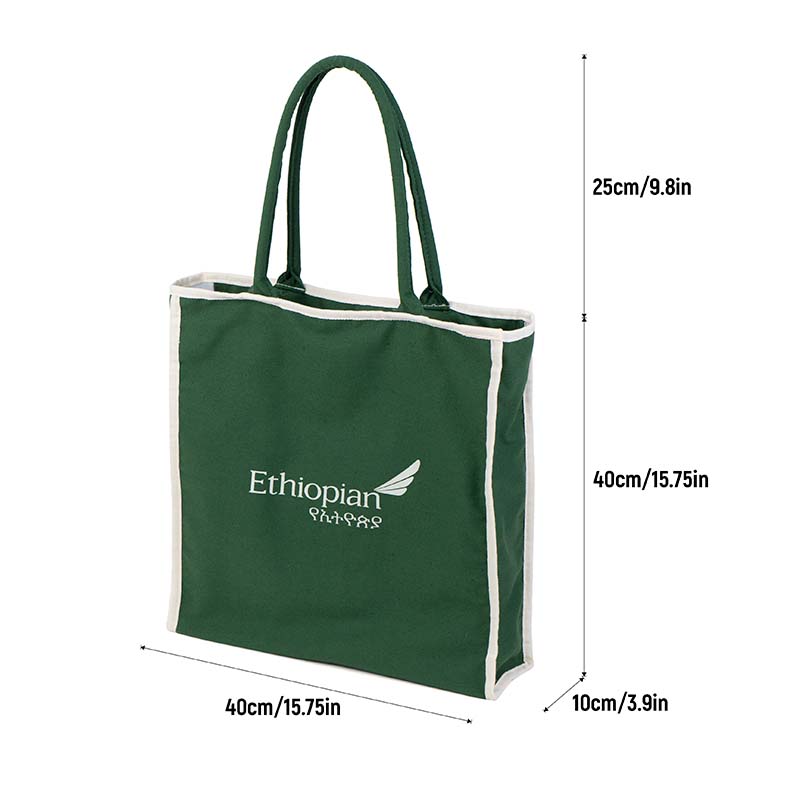
Edge Crush Test (ECT) measures the edgewise compressive resistance of corrugated fiberboard.
In North American specifications, ECT may be expressed in pounds-force per inch.
For example, buyers may encounter a 32 ECT board specification.
However, an ECT rating alone does not define the compression performance of a completed box.
What Is BCT?
Box Compression Test (BCT) evaluates the compressive resistance of the assembled shipping container under defined conditions.
ASTM D642 provides a recognized compression test method.
The result is affected by more than the board's ECT rating.
Relevant factors include:
- Carton length, width and height
- Corrugated board structure and thickness
- Flute orientation
- Manufacturer's joint and score-line quality
- Carton openings and cutouts
- Product support inside the box
- Stacking arrangement
- Temperature and humidity
- Time under load
Why Does ECT Alone Not Prevent Carton Collapse?
A carton may be made with board that meets the specified ECT but still have weak corners, poor joints or unsuitable dimensions.
Likewise, uneven stacking can reduce the effective support provided by the carton walls.
ASTM D5639/D5639M addresses the selection of corrugated board and box construction based on performance requirements.
The carton should be selected for the intended distribution conditions, rather than using one ECT rating for every product.
How Does Stacking Height Affect the Bottom Carton?
Consider an illustrative stack of eight identical cartons, each with a gross mass of 12 kg.
The bottom carton supports the static weight of the seven cartons above it:
7 × 12 kg = 84 kg of overlying mass, corresponding to approximately 824 N of static gravitational load.
This is only an illustrative calculation. It is not a recommended BCT acceptance value.
A proper compression specification must consider the intended stacking configuration, time under load, environmental conditions, load distribution and an appropriate design allowance.
Problem: The Carton Collapses Even Though the ECT Report Passes
Possible causes: Inadequate finished-box compression strength, excessive stacking, unfavorable geometry, weak carton joints or humidity-related strength loss.
Corrective action:
- Confirm the delivered carton matches the approved board specification.
- Inspect board thickness, flute condition, joints and score lines.
- Review carton weight, dimensions and stacking height.
- Check whether the carton was exposed to excessive moisture.
- Conduct appropriate finished-box compression testing.
- Revise the carton construction, loading arrangement or both.
Switching to a higher ECT grade may help in some cases, but it is not a universal solution.
5. Humidity, Container Rain and Corrugated Box Strength
Moisture is one of the most important additional risks in long-distance container shipping.
The phenomenon commonly called container rain occurs when moisture condenses on interior container surfaces and may drip onto cargo.
The risk depends on moisture sources, temperature changes, container conditions and packing arrangements.
Where Does the Moisture Come From?
Potential sources include:
- Materials loaded with excessive moisture
- Wet or insufficiently dry pallets
- Damp corrugated cartons
- Cargo loaded during rain
- Moisture in other packing and securing materials
- Condensation caused by changing environmental conditions
How Does Humidity Affect Export Cartons?
Corrugated fiberboard is moisture-sensitive.
Higher humidity can reduce its strength and stiffness, affecting stacking performance.
The amount of reduction varies with the board composition, exposure duration and environmental conditions.
A carton tested only under standard laboratory conditions may not represent its behavior after extended exposure to moisture.
ASTM D4332 provides a framework for specified conditioning atmospheres before packaging tests.
For moisture-sensitive export programs, buyers should consider appropriate conditioning and subsequent compression evaluation.
How Can Container Rain Be Reduced?
A practical prevention program includes:
Dry packing materials
Avoid loading wet cartons, damp wood or other materials carrying unnecessary moisture.
Container inspection
Check that the container is clean, dry and free from visible water intrusion or significant structural defects.
Suitable moisture-management measures
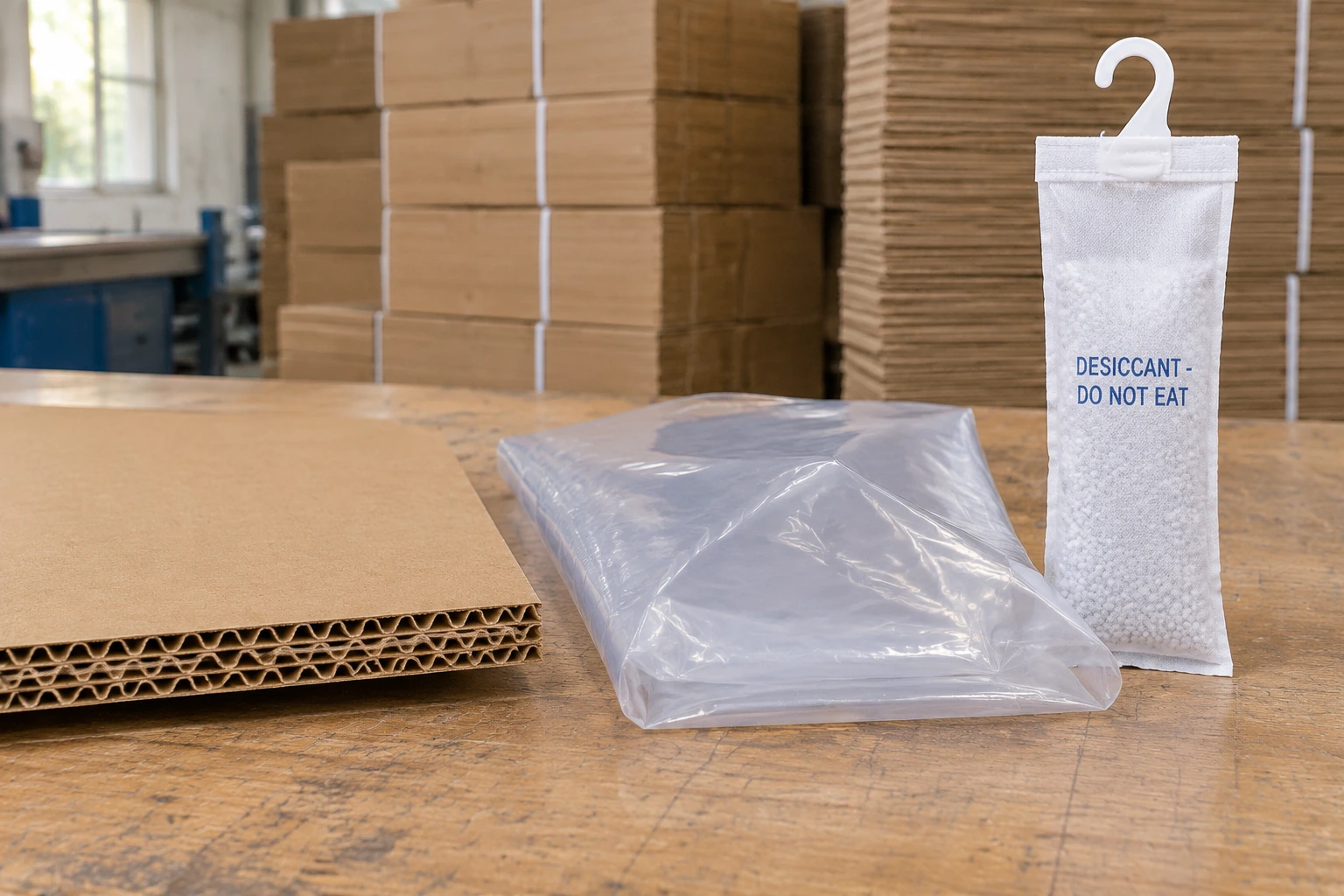
Where justified, use appropriate moisture-control products or protective barriers.
The amount and placement of desiccants should be based on the cargo, container, expected conditions and supplier recommendations.
Careful floor and wall protection
Use suitable protective materials or separation where cartons might contact damp surfaces.
Correct loading conditions
Avoid loading cartons during active rain without suitable protection.
Can Plastic-Wrapping Every Carton Prevent Moisture Damage?
Not necessarily.
Plastic wrapping may reduce external moisture contact in some situations, but it can also trap moisture already present inside the packaging.
For PU products, textile bags and printed gift packaging, trapping moisture may create additional risks.
The packaging arrangement should be evaluated for both external water protection and moisture release.
Problem: Cartons Arrive Damp or Products Develop Mold
First distinguish between external water entry and moisture condensation.
Corrective action:
- Record the location and pattern of moisture damage.
- Check whether the container had visible leakage.
- Review cargo, pallet and carton conditions at loading.
- Examine whether moisture was trapped by liners or wrapping.
- Investigate the use and placement of moisture-control materials.
- Revise the packing and container-loading procedure.
- Revalidate the affected packaging arrangement before the next shipment.
If products show mold, isolate the affected goods and determine their suitability through appropriate inspection and corrective procedures. Drying the outer cartons alone does not establish that the products are acceptable.
6. Export Packaging for Different Bag Types
Different bag constructions require different internal packing methods.
This is particularly important for wholesale shipments containing custom bags, accessories and retail packaging.
Cotton Canvas and Non-Woven Tote Bags
Many unstructured tote bags can be folded or packed flat when their construction and decoration permit it.
Main risks:
- Excessive carton weight
- Uneven packing density
- Permanent fold marks on sensitive prints or finishes
- Moisture and odor exposure
Practical packing approach:
Use a consistent folding method, control the quantity per carton and avoid excessive compression that damages decoration.
Confirm whether individual polybags, grouped packing or an alternative arrangement is appropriate for the buyer's requirements.
Structured PU Handbags and Cosmetic Bags
Certain structured PU bags can develop visible pressure marks or unwanted deformation during compressed packing.
Main risks:
- Body and corner deformation
- Handle and strap creasing
- Hardware impressions
- Surface scratches
- Retail presentation defects
Practical packing approach:
Consider internal shape supports where necessary.
Protect metal accessories from contacting finished surfaces.
Use suitable sleeves or dividers, and test the packed arrangement after storage and handling.
Increasing the carton grade cannot compensate for excessive pressure directly applied to a structured bag.
Insulated Cooler Bags
Soft cooler bags may contain foam insulation, internal liners, welded or stitched seams and zippers.
Main risks:
- Excessive compression of the intended structure
- Creasing or damage to selected liner materials
- Distortion around the base and lid
- Damage to retail presentation
Practical packing approach:
Determine whether flat packing, controlled folding or shape retention is suitable for the specific cooler design.
Inspect liner surfaces and seams after the proposed compression and transport tests.
A temporary change in shape after folding is not automatically a defect, but permanent distortion or functional damage may be unacceptable.
For more detail on insulation and liner construction, see Custom Cooler Bag Specification Guide.
Drawstring Bags and Lightweight Promotional Bags
These products are often relatively flexible and can be packed efficiently.
However, densely packed cartons can create handling and stacking problems if gross weight becomes excessive.
Check printing, drawcord positioning, quantities and carton closure.
Gift Sets and Bags with Rigid Retail Boxes
For promotional kits and cosmetic gift sets, the retail packaging may be more vulnerable than the fabric bag itself.
Main risks:
- Crushed rigid-box corners
- Damaged printed surfaces
- Movement of multiple items
- Missing accessories
- Damage to internal product trays
Practical packing approach:
Use appropriate separation and support for each retail unit.
Ensure the master carton prevents unacceptable movement without crushing the retail package.
Verify the complete gift set after drop and compression testing.
For a related product-development example, see Custom Makeup Bags for Promotional Gifts.
Packing Comparison by Product Type
| Bag Type |
Main Packaging Risk |
Recommended Focus |
| Cotton tote bag |
Excessive density, print damage |
Folding, carton weight and moisture |
| Non-woven promotional bag |
Creases, compressed print surfaces |
Packing quantity and print protection |
| Structured PU handbag |
Permanent shape deformation |
Supports, individual separation and handling |
| Cosmetic pouch with hardware |
Surface scratches |
Hardware protection and product orientation |
| Cooler bag |
Insulation and liner deformation |
Controlled compression and liner inspection |
| Multi-item gift set |
Rigid retail-box damage |
Internal support, dividers and drop protection |
7. Container Loading, Pallets and Cargo Securing
A suitable master carton can still be damaged by poor container loading.
For ocean and inland transport, the packing plan should account for cargo weight, distribution, movement and the strength of the packaging.
The IMO/ILO/UNECE Code of Practice for Packing Cargo Transport Units, known as the CTU Code, provides internationally recognized guidance on packing and securing cargo in transport units.
It is a non-mandatory code of practice rather than a universal carton certification requirement.
Floor-Loaded vs Palletized Cartons
Floor loading may provide efficient use of container volume, depending on the cargo.
However, manual handling, stack arrangement and available support must be considered.
Palletized loading can make handling and unit-load organization easier, but pallets and securing materials consume space and add cost and mass.
The best method depends on the distribution plan and the buyer's receiving requirements.
Prevent Carton Overhang and Uneven Loads
When palletizing, assess whether cartons are adequately supported.
Overhang, misalignment or inconsistent stacking can increase localized loading and reduce effective compression performance.
Stretch wrap can help stabilize a pallet load, but it is not a substitute for an appropriate load-securing design.
Control Movement Inside the Container
Cargo should be appropriately blocked, braced or secured according to the actual arrangement.
Unrestrained gaps can permit movement during transport.
Heavy goods should not be arranged in ways that create unstable loads or exceed the container's permitted loading conditions.
Container packing should follow applicable safety requirements and the actual transport plan.
ISPM 15: When Does Wood Packaging Need Treatment?
ISPM 15 addresses specified wood packaging materials used in international trade.
For shipments entering the United States, relevant solid-wood pallets and dunnage generally need compliant treatment and marking.
Packaging made wholly from qualifying processed wood materials, such as plywood or oriented strand board, is generally excluded from the standard's treatment requirements.
Ordinary corrugated master cartons do not require ISPM 15 treatment merely because they are exported.
Importers should confirm wood-packaging requirements for the actual destination and packaging materials.
8. Amazon FBA and Other Retailer Packaging Requirements
A shipment destined for Amazon or another retailer may face additional receiving, labeling and packaging rules.
These should be considered separately from the ocean-transport packaging test.
Master Carton vs Retail Unit vs Consumer Delivery Packaging
Master carton: Protects and groups products during factory shipment and inbound distribution.
Retail unit: Contains the individual product or merchandise set sold to the customer.
Consumer delivery packaging: Protects the product during its final shipment to the customer.
One carton may serve more than one purpose in certain programs, but the requirements must be confirmed.
Does Every Amazon FBA Carton Require the Same ISTA Drop Test?
No.
Amazon's ordinary inbound FBA box requirements and its Ships in Product Packaging (SIPP) program have different purposes.
SIPP involves specific package performance verification for eligible consumer-delivery packaging. Its testing requirements should not be automatically applied to every factory master carton.
For inbound shipments, confirm the current Seller Central instructions for carton size, weight, labels, packing information, product preparation and shipping method.
Amazon may reject, return or repackage inadequately prepared goods under its applicable rules, but carton deformation does not automatically trigger a universal chargeback.
Practical Advice for FBA Importers
Before mass production, confirm:
- Whether the shipment is FBA, a retailer DC order or another distribution program
- Whether cartons are shipped by parcel, LTL or FTL
- Whether units are individually packaged
- Whether sets must remain together
- Which carton labels and identification are required
- Whether a dedicated packaging certification is applicable
Do not manufacture all export cartons according to a generic “Amazon-approved” specification without checking the actual receiving requirements.
9. Packaging Failure Troubleshooting: Problems and Corrective Actions
When a shipment fails, the visible damage is not always the root cause.
| Observed Problem |
Possible Cause |
First Corrective Action |
| Carton corners collapse |
Impact or insufficient corner support |
Review drop history and corner construction |
| Bottom cartons buckle |
Insufficient compression resistance, moisture or excessive stacking |
Check BCT, stacking and environmental exposure |
| Carton seams split |
Weak joint, closure or excessive internal pressure |
Inspect carton construction, tape and packing density |
| PU bags show marks |
Excessive compression or hardware contact |
Revise product supports and individual separation |
| Retail gift boxes crush |
Insufficient internal protection |
Add or redesign protective positioning |
| Cooler bag liner deforms |
Inappropriate folding or compression |
Reassess packing shape and inspect functional components |
| Cartons arrive damp |
Condensation, container leak or wet packing materials |
Investigate moisture source and loading conditions |
| Cartons shift in transit |
Inadequate blocking or unit-load stability |
Revise stowage and cargo securing |
| Test sample passes but bulk shipment fails |
Packaging change or production inconsistency |
Compare approved samples, lots and packing records |
What If a Carton Drop Test Fails During Sample Approval?
Do not automatically upgrade to thicker corrugated board.
First determine whether the damage came from:
- Carton wall or closure failure
- Inadequate internal cushioning or separation
- Product movement
- Unsuitable carton dimensions
- Incorrect packing sequence
- An unrealistic or mismatched test plan
Then revise the specific failure mechanism.
For example, if metal accessories scratch a PU cosmetic pouch, changing the ECT rating may have little effect.
If the outer carton bursts at its manufacturer's joint, internal bubble wrap may do nothing to resolve the carton weakness.
What If Bulk Cartons Are Different from the Approved Sample?
Hold the affected packaging lot and compare:
- Corrugated board specification
- Carton dimensions
- Flute and thickness
- Joint construction
- Adhesive or closure tape
- Packing quantity
- Gross weight
- Internal packing arrangement
Evaluate whether the change requires new testing.
Do not rely on a previous drop-test report if the packaging design has materially changed.
10. What Inspection Records Should Importers Request?
Packaging control should be documented from sample approval through shipment.
A useful export packaging file may include:
| Record |
Purpose |
| Approved carton drawing |
Confirms dimensions, style and closure |
| Corrugated board specification |
Identifies construction and ECT or other agreed characteristics |
| Approved packing instruction |
Shows product quantity, folding and internal placement |
| Gross/net weight and carton dimensions |
Supports handling and shipment planning |
| Packaging test plan and report |
Documents tested configuration, method and outcome |
| Compression or conditioning report |
Supports agreed stacking and environmental requirements |
| Sample approval record |
Identifies the approved packaging version |
| Incoming carton inspection |
Checks production cartons against approved specifications |
| Packing-line inspection |
Verifies correct quantity and placement |
| Container loading photographs |
Records loading conditions and arrangement |
| Carton and shipment identification |
Supports lot and claim traceability |
Not every order requires every possible laboratory test.
The appropriate level of testing and documentation depends on product value, distribution hazards, customer requirements and prior damage history.
11. What Should Buyers Do When Shipping Damage Is Discovered?
If damaged cartons arrive at a warehouse, evidence should be collected before the packaging is discarded or the goods are mixed with undamaged stock.
Record the Damage
Photograph the affected cartons before and after opening.
Record visible moisture, dents, crushing, broken seals, product damage and carton identification.
Separate Affected Goods
Identify damaged cartons by shipment, pallet, container and production lot where possible.
Inspect the goods inside rather than assuming the outer-carton condition accurately represents the product condition.
Notify the Appropriate Parties
Follow the carrier, freight forwarder, insurer and buyer's claim-notification requirements.
Deadlines and documentation requirements depend on the transport contract and insurance arrangements.
Investigate the Root Cause
Compare the actual damaged cartons with the approved packaging specification.
Review:
- Test reports
- Production packing records
- Loading photographs
- Distribution handling information
- Moisture evidence
- Receiving inspection findings
Update the Next Shipment
Agree on corrective actions before repeating the same packing method.
If the design changes materially, retest the revised packaging.
A successful compensation claim does not itself correct the packaging problem.
12. Carton Drop Testing and Export Packaging RFQ Checklist
An importer should provide more than a requested carton dimension.
| RFQ Item |
Information to Provide |
| Product type |
Tote, backpack, cosmetic bag, PU handbag, cooler bag or gift set |
| Product dimensions |
Packed dimensions and shape requirements |
| Packing quantity |
Units per inner pack and master carton |
| Packaging protection |
Individual sleeves, supports, dividers or retail boxes |
| Master carton |
Required dimensions, gross weight and style |
| Corrugated board |
Required ECT, flute, board structure or performance target |
| Distribution route |
Manufacturing origin, destination and delivery model |
| Loading method |
Floor-loaded or palletized |
| Stacking conditions |
Maximum planned stack and storage assumptions |
| Testing |
ISTA, ASTM, ISO or buyer-specific protocol |
| Acceptance criteria |
Permitted carton damage and unacceptable product defects |
| Environmental requirements |
Expected moisture exposure and any conditioning test |
| Receiving requirements |
Retailer, warehouse or FBA packing and label rules |
| Packaging documentation |
Drawings, packing instructions, test reports and inspection records |
| Order information |
Estimated quantity, SKUs and shipment schedule |
Before final approval, the buyer and supplier should agree on both packaging cost and acceptable product protection.
Reducing carton volume may improve shipping efficiency, but excessive compression can increase product damage.
The correct packaging design balances carton utilization, handling requirements, freight cost and the product's actual sensitivity.
Why Choose INITI for Export Packaging and Custom Bags?
Hangzhou INITI Imp&Exp Co., Ltd. has over 16 years of experience in custom bags and packaging, supported by two production facilities and OEM/ODM development capabilities.
Our product range includes cotton and non-woven bags, structured cosmetic bags, travel bags, insulated cooler bags and customized promotional merchandise.
These products require different approaches to folding, internal protection, carton selection and shipment preparation.
INITI supports packaging specification development, sample evaluation, packing-method coordination, quality inspection and export carton arrangements according to project requirements.
For orders requiring specific carton drop, compression or environmental testing, the relevant methods and acceptance criteria can be established with the buyer and appropriate testing providers.
We can also support coordinated custom retail and gift packaging programs.
Our focus is to develop packaging that suits the actual product and distribution route, rather than simply increasing board thickness or making unsupported claims about damage-free shipping.
INITI provides fast quotations and free design support for OEM/ODM bag and packaging projects.
FAQ
1. Is carton drop testing mandatory for every transpacific shipment?
No. There is no single universal requirement that every ordinary export carton must pass the same drop test. The applicable test depends on buyer specifications, distribution requirements and the selected packaging program.
2. Is ISTA 1A enough for ocean freight packaging?
ISTA 1A can be useful for basic package integrity screening. More comprehensive evaluation may be necessary for stacking, moisture, handling or distribution hazards. ISTA 3M is relevant to specified Asia-Pacific-to-US direct-import distribution routes.
3. Does a higher ECT rating guarantee that cartons will not collapse?
No. Finished-box compression also depends on carton dimensions, construction, load distribution, stacking and environmental conditions. Compression testing may be needed.
4. How can importers prevent moisture damage during sea freight?
Use dry materials, inspect containers, control loading conditions and select appropriate moisture-management and protection methods. The correct measures depend on the cargo and expected transport conditions.
5. Can INITI develop custom export packing for different bag products?
Yes. INITI supports custom bag and packaging projects, including packing methods, protective accessories, carton specifications, sampling and testing coordination according to the buyer's requirements.
Conclusion
Successful transpacific export packaging requires more than a strong corrugated carton.
Drop resistance, compression strength, moisture management, internal product protection and container loading all contribute to the outcome.
For bag importers, the most useful approach is to develop packaging around the actual products and distribution route, verify the relevant performance requirements and maintain consistent packing instructions during production.
A carton that passes one laboratory test should not be assumed to perform perfectly under every transport condition.
The objective is a packing specification that can be repeated reliably at production scale and provides the agreed level of protection without unnecessary material and freight cost.
Related Blog & Application Articles
Custom Cooler Bag Specification Guide: Insulation, Lining, Compartments and Leakage Testing
Custom Makeup Bags for Promotional Gifts
Technical and Regulatory References
- International Safe Transit Association (ISTA) — Test Procedures, including 1A, 3A and 3M: https://www.ista.org/test_procedures.php
- ISTA — New Test Procedure: ISTA 3M: https://ista.org/news_manager.php?page=32485
- ASTM D5276-19(2023) — Standard Test Method for Drop Test of Loaded Containers by Free Fall.
- ASTM D642-25 — Standard Test Method for Determining Compressive Resistance of Shipping Containers, Components, and Unit Loads.
- ASTM D5639/D5639M-20 — Standard Practice for Selection of Corrugated Fiberboard Materials and Box Construction Based on Performance Requirements.
- ASTM D4332-22 — Standard Practice for Conditioning Containers, Packages, or Packaging Components for Testing.
- ASTM D4169-23(2023) — Standard Practice for Performance Testing of Shipping Containers and Systems.
- ISO 2248:1985 — Packaging: Complete, Filled Transport Packages — Vertical Impact Test by Dropping.
- IMO/ILO/UNECE — Code of Practice for Packing of Cargo Transport Units (CTU Code): https://www.imo.org/en/ourwork/safety/pages/ctu-code.aspx
- USDA APHIS — ISPM 15-Compliant Wood Packaging Materials: https://www.aphis.usda.gov/plant-imports/wood-packaging-material/import
Recommended Products
Inquiry Support
Sourcing custom bags or export packaging for a transpacific wholesale shipment?
Send us your bag type, packed product dimensions, quantity per carton, retail packaging requirements, target market, distribution route and any required drop or compression testing standards.
Email us at [email protected] for a fast quotation, free design support and OEM/ODM bag and export packaging assistance.





 Hot News