In its simplest form, a tote bag is the most rudimentary of all bag designs: a single panel of fabric is stitched on two sides to create a bag, with looped handles secured on either side of the opening. That basic structure can be enlarged and strengthened with base panels, side gussets, interior pockets, zippers and reinforced handles — turning a humble carrier into everything from a grocery workhorse to a fashion statement.
The tote's genius is its simplicity. Its large, open aperture means it can be packed and unpacked in seconds. It can carry a laptop, a week's shopping, gym kit, beach towels or a baby's entire diaper arsenal. And because its two flat sides form a natural canvas, it doubles as a portable billboard — which is why the tote has become the world's most popular promotional product, ordered by the millions every year in custom-printed form.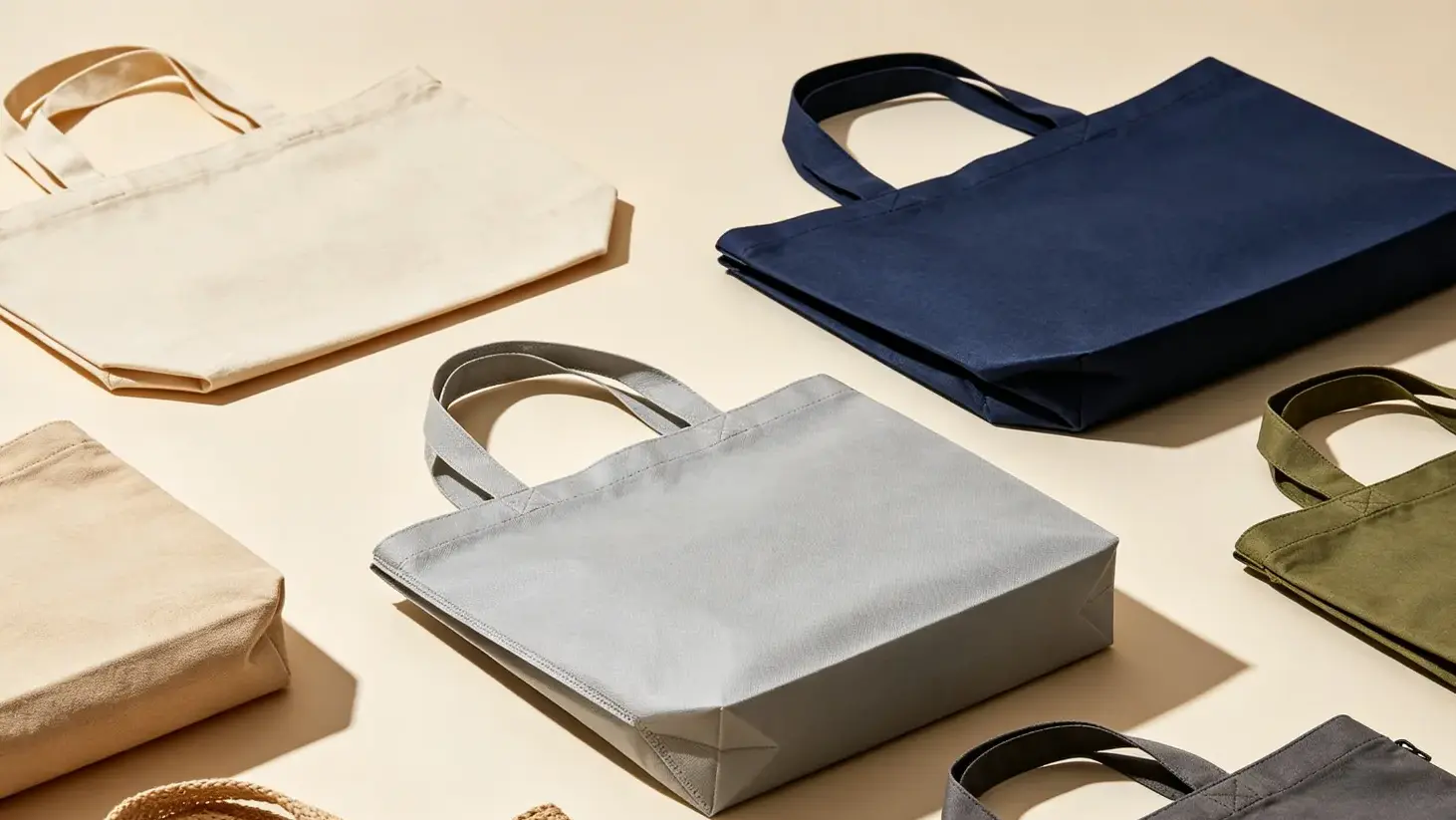
A Short History of the Tote Bag
According to the Oxford English Dictionary, "tote" is a word of American origin. Its precise roots are obscure, but linguists believe it travelled from West Africa — possibly from "tota" (to pick up) in Kikongo or "tuta" (to carry) in Swahili — brought to the American South centuries ago. It first appeared in print in 1676 as a verb meaning "to carry as a burden or load," and Washington Irving provided the first recorded example in 1807: "At Baltimore I made a stay of two days, during which I was toted about town."
It was not until the mid-twentieth century that "tote" became a noun for a bag.And when, in the 21st century, supermarkets around the world began phasing out single-use plastic bags, the tote became the obvious "bag for life" replacement.
Thanks to the large flat surface, tote bags function like portable billboards. Custom‑printed art, slogans and brand graphics have turned them into omnipresent promotional and cultural accessories worldwide.
Types, Materials and Sizes
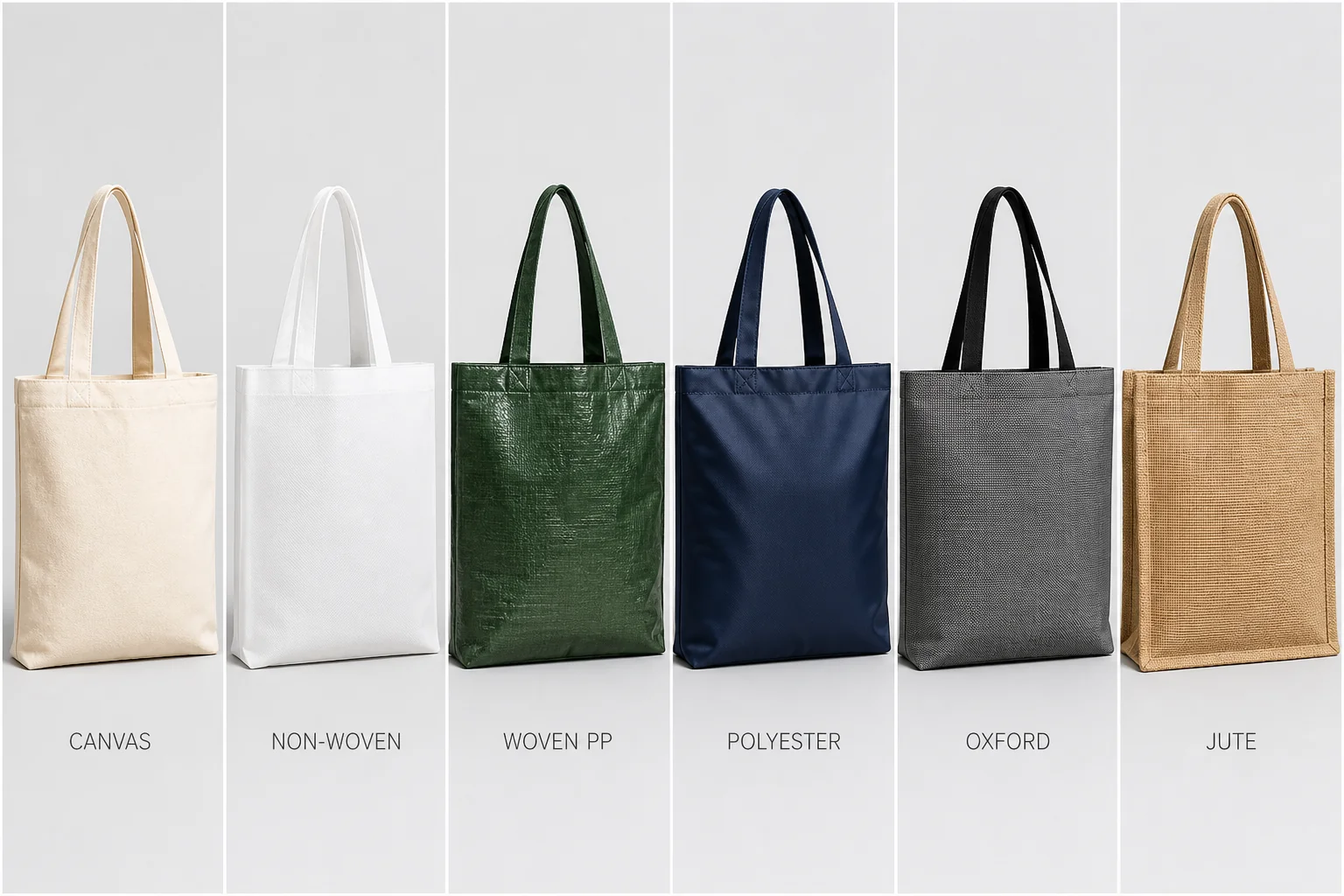
Tote bags vary enormously in construction, and the choice of material is the single most important decision a buyer or manufacturer makes. In its basic utilitarian form, a tote made from thin cotton or non-woven polypropylene can be folded and kept in a pocket for when it is needed. More substantial totes made from heavy canvas, polyester, or Oxford fabric have a rigid structure and retain their shape even when empty.
One of the attractions of the tote is that its large opening means it can be packed and unpacked quickly, and it can be used for a variety of purposes — shopping, the gym, work or school, as a laptop carrier, or as an overnight bag. The same easy accessibility can be a disadvantage because items can fall out, so fashion and premium totes increasingly incorporate top fasteners, snap closures, or interior pockets.
In its smallest form the tote becomes a purse or pouch; in its largest form, it becomes a bulk-carrying sack. The standard tote size is around 15 × 16 inches (38 × 40 cm), with handle drops of 10–12 inches, but custom dimensions are common across every material category.
Material Comparison at a Glance
The classic.Canvas is the undisputed workhorse of the tote bag world and the material most consumers picture when they think of a "tote bag." Canvas totes are woven from cotton yarn and graded by weight — typically 8oz (lightweight, casual), 10–12oz (the sweet spot for most custom printing) and 14–16oz (heavy-duty, structured). Canvas absorbs ink beautifully, making it the number-one choice for screen printing, embroidery and heat-transfer branding.
Our range: 8oz, 10oz, 12oz, 14oz and 16oz canvas; natural, black, white and custom-dyed colours; available in full-size production runs or foldable "pocket tote" formats.
Print Quality: Canvas accepts virtually every printing method — screen printing, digital direct-to-garment, heat transfer, and embroidery — with sharp, vibrant results.
Customisation Depth: Canvas can be dyed in any Pantone colour, treated with water-resistant coatings, fitted with zip closures and interior pockets, and reinforced with cross-stitched handle attachments for heavy loads.
Best for: retail carry-out bags, bookshop and boutique bags, organic/eco-branded merch, everyday fashion totes.
Strengths: premium natural feel, excellent print surface, machine-washable, ages gracefully. Unlike flimsy non-woven bags, canvas totes hold their shape, giving them a more substantial, higher-quality appearance that consumers associate with value
Watch-outs: higher unit cost and shipping weight than non-woven or polyester alternatives.
If canvas is the premium workhorse, non-woven polypropylene (NWPP) is the volume champion. Made from spun-bonded polypropylene fibres bonded together by heat, chemicals, or mechanical pressure — rather than woven or knitted — non-woven fabric is inexpensive, lightweight, water-resistant, and highly printable. It is the material behind the billions of promotional tote bags distributed at trade shows, conferences, supermarkets, and retail openings worldwide.
Our range: 60–120 gsm non-woven PP; standard sizes from 12" × 14" to 18" × 20"; heat-sealed or stitched construction; plain or printed in up to full-colour designs.
Print Quality: Non-woven fabric accepts silkscreen printing and heat transfer well, producing clean, bold logos and graphics. For simple one- or two-colour brand prints, the quality is more than adequate for promotional use.
Best for: supermarket and grocery carry-out bags, trade-show giveaways, promotional campaigns at scale, budget-conscious retail.
Strengths: lowest cost, lightweight, quick to print, available in a wide colour range, foldable.
Watch-outs: lower perceived quality than canvas; avoid for very heavy loads.
Polyester tote bags, commonly crafted from 600D or 900D‑grade polyester, are durable, water‑resistant and colourfast. The material performs excellently with dye‑sublimation printing, ideal for full‑colour custom designs, which has made these tote bags a popular option among fashion‑conscious shoppers.
The fastest-growing variant is recycled polyester (rPET), made from post-consumer plastic bottles. A standard rPET tote can incorporate the equivalent of 8–12 plastic bottles, giving brands a compelling circular-economy narrative. As corporate sustainability targets become more stringent, rPET is moving from a niche option to a mainstream specification.
Our range: 190T, 210D and 600D polyester; rPET options with GRS certification; foldable drawstring and pouch formats; edge-to-edge sublimation printing.
Best for: fashion totes, foldable "bag-for-life" carriers, sport and gym bags, vibrant full-colour brand work.
Strengths: water resistance, colourfastness, excellent print vibrancy, rPET versions support circular-economy messaging.
Watch-outs: synthetic fibre perception; ensure recycled-content claims are backed by certification such as GRS (Global Recycled Standard).
Oxford Fabric
Oxford fabric — a plain-woven textile typically made from polyester or nylon in deniers ranging from 420D to 600D — is known for its subtle texture, durability, and water resistance. It is widely used in travel accessories, laptop bags, and premium promotional totes. Oxford fabric has a more refined appearance than standard polyester and can be coated with PU or PVC for enhanced water resistance, making it suitable for outdoor and travel applications.
Our range: from 420D to 600D with coating; padded laptop compartments; inner zip pockets and magnetic closures; printed or embroidered branding.
Best for: fashion totes with structure, laptop and work totes, weekenders and travel bags.
Strengths: durable and shape-retaining, feels premium, easy to clean, takes embroidery and PU transfer prints beautifully.
Watch-outs: typically heavier; price sits above non-woven.
Jute and jute-blend totes occupy a natural-fibre niche valued for their rustic, eco-friendly aesthetic. Jute is biodegradable, highly affordable, and sufficiently durable for regular use. It is particularly popular in food retail, agricultural branding, and eco-conscious lifestyle markets.
Our range: single- and double-stitched jute totes; natural or dyed; cotton or jute webbing handles; screen-printed logos.
Best for: eco-branding, organic grocery retail, gift packaging, country-style merchandising.
Strengths: 100% biodegradable, distinctive natural texture, strong and rigid.
Watch-outs: coarse surface limits print detail; sheds fibres; not machine-washable.
| Material |
Strength |
Print Quality |
Cost |
Typical Use |
| Non-woven PP |
Lightweight, cheap |
Good |
Low |
Supermarket/promo giveaways |
| Cotton Canvas |
Premium feel, durable |
Excellent |
High |
Retail, boutiques, eco merch |
| Polyester |
Water-resistant, vivid |
Excellent |
Medium |
Fashion, foldable bags |
| Woven PP |
Maximum durability |
Good |
Low |
Heavy-duty grocery |
| Jute |
Natural, biodegradable |
Limited |
Medium |
Eco branding, gifting |
| Oxford |
Structured, premium |
Excellent |
Medium–High |
Fashion & work totes |
Tote Bag Sizes and Standard Dimensions
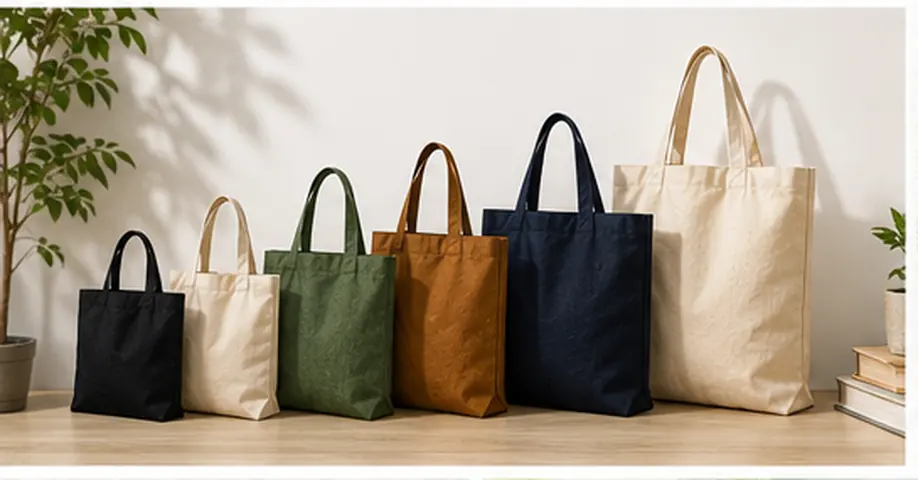
A tote can range from a tiny clutch to a giant builder's bag, but most commercial production clusters around a few standard sizes:
| Size |
Approx. Dimensions (W × H × D) |
Typical Use |
| Mini |
10" × 10" × 3" (25 × 25 × 8 cm) |
Gifts, small retail purchases |
| Standard |
15" × 16" × 5" (38 × 41 × 13 cm) |
The classic shopping tote |
| Medium |
14" × 14" × 6" (36 × 36 × 15 cm) |
Books, daily commute |
| Large |
17" × 18" × 6" (43 × 46 × 15 cm) |
Groceries, gym, beach |
| XL / Weekender |
19" × 20" × 8" (48 × 51 × 20 cm) |
Overnight, bulk carrying |
The standard tote is roughly 15 × 16 inches (38 × 41 cm) — large enough for a week's groceries, small enough to fold into a drawer. Most custom orders use one of these five templates, and factories can adjust dimensions, handle length and gusset depth.
Note:All measurements are hand‑measured, please allow a tolerance of 1‑2 cm.
Tote Bags vs Other Bag Styles
Tote vs Shoulder Bag A tote is carried by hand, so a very heavy load becomes uncomfortable quickly. A shoulder bag has longer, thicker straps designed for shoulder carry — more comfortable for heavy loads, but the load is then concentrated on one side of the body, which can strain the neck and shoulder. Toters who favour a shoulder carry often choose a mid-size tote and simply hook the handles over one shoulder.
Tote vs Backpack A tote offers casual, easy access and stays close to the body — nothing to unzip, no awkward slinging. A backpack distributes weight ergonomically across both shoulders, allowing far heavier loads in comfort, but it is unwieldy in crowded spaces and more vulnerable to pickpocketing in transit. For everyday carry, most people own both: a backpack for heavy commutes, a tote for everything else.
Tote vs Messenger / Satchel A messenger bag or satchel is designed for shoulder carry with secure flap or zipped fastenings — safer for valuables, but slower to access. If you need to reach in and out quickly — keys, phone, wallet, groceries — the tote's open mouth wins every time. The trade-off is security: an open tote is easier to dip into than a fastened satchel.
The practical takeaway: the tote's openness is both its superpower and its one weakness. Fashion totes mitigate this with top zippers, magnetic snaps and interior pockets — all options we offer in custom production.
How to Choose & Customize Tote Bags
For buyers sourcing totes at scale, here is the decision framework we use with our own customers:
1. Match material to use case.
- Budget promotional giveaways → non-woven PP
- Retail checkout bag with premium feel → 10–12oz canvas
- Heavy weekly grocery use → woven PP or 14–16oz canvas
- Fashion/laptop totes → oxford or polyester
- Eco-brand story → organic canvas, jute or rPET
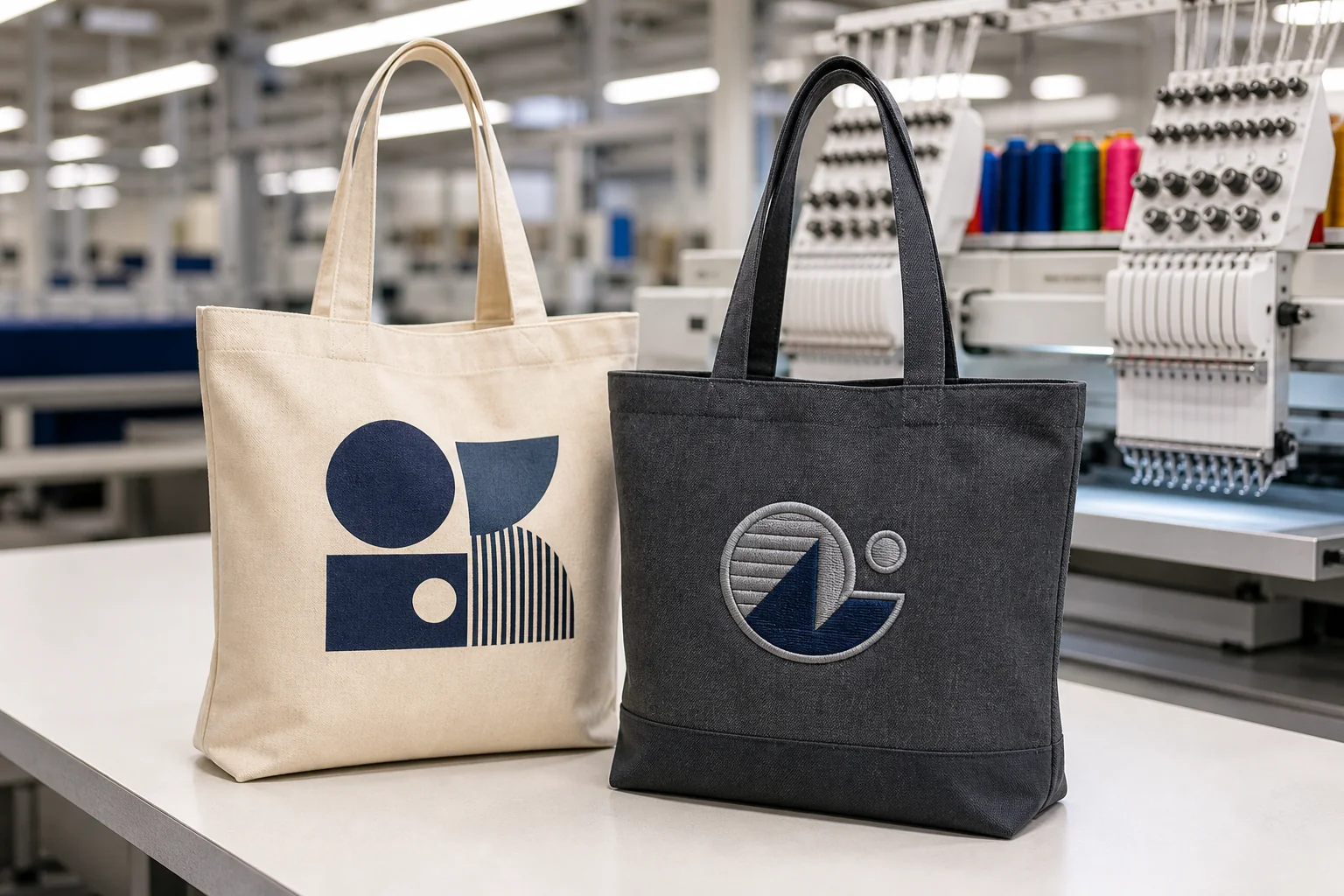
2. Choose the decoration method. Print detail, durability and cost differ dramatically:
| Printing Method |
Best For |
Color Capability |
Order Volume |
Appearance |
Cost Level |
| Screen Printing |
Simple logos and bulk orders |
Limited to moderate |
Medium to large |
Clean and bold |
Low to medium |
| Heat Transfer |
Detailed and colorful designs |
High |
Small to medium |
Sharp and modern |
Medium |
| Digital Printing |
Full-color complex artwork |
Very high |
Small to medium |
Detailed and creative |
Medium to high |
| Embroidery |
Premium logos |
Limited by thread design |
Small to large |
Textured and premium |
Medium to high |
| Woven Label |
Private-label branding |
Moderate |
Small to large |
Subtle and professional |
Medium |
3. Ask about the full package.
The best suppliers pair bags with matching custom packaging — printed kraft mailer boxes, hang tags and poly bags. If your supplier can also produce your custom paper boxes, you consolidate suppliers, save freight and keep your branding consistent end-to-end. (We do: custom packaging solutions.)
Tote Bag FAQ
Q: What is the difference between a tote bag and a shopping bag?
A: Functionally little — a shopping bag is a tote used for purchases. "Tote" describes the open-top, two-handle structure; "shopping bag" describes the use case. In industry terms, non-woven and canvas carry-out bags are usually called shopping bags, while sturdier structured versions are marketed as totes.
Q: What materials are available for custom tote bags?
A: We produce bags of various materials: cotton canvas (8–16oz), non-woven polypropylene, woven polypropylene, polyester (including GRS-certified rPET), oxford fabric and jute. Each is matched to a different price point and use case — see the material guide above.
Q: Are non-woven tote bags eco-friendly?
A: It depends on use. Non-woven PP totes are reusable, lightweight and displace single-use plastics — the EU exempts bags ≥50 microns from the SUP directive's carrier-bag rules because they are designed for reuse. For a stronger environmental story, canvas, jute and rPET options are biodegradable or recycled.
Q: What is the best material for a custom printed tote bag?
A: For print quality and premium feel, 10–12oz cotton canvas. For lowest cost at scale, non-woven PP. For durability and structure, woven PP or oxford. Choose based on your budget, brand positioning and end use.
Q: What is the MOQ for custom tote bags?
A: The MOQ is subject to flexible negotiation,depending on material and decoration method. Lower MOQs are possible for standard colours; contact us with your spec for an exact quote.
Q: Can you combine tote bags with custom packaging?
A: Yes. We produce matching printed kraft boxes, hang tags, tissue paper and poly bags, so your tote and its packaging arrive as one consistent brand experience — and you deal with a single supplier.
Conclusion
The tote bag is both timeless and timely. Its basic structure has barely changed in centuries, yet the market around it has been transformed by plastic bag bans, corporate sustainability commitments, and the tote's growing role as a mobile branding surface.
For buyers, the opportunity lies in specificity. Material choice determines durability, cost, and environmental narrative. Construction determines whether a bag lasts 50 uses or 500. Print technique determines whether a logo fades after one wash or remains crisp for years.
Inquiry Support
For a custom tote bag project, provide:
- Style — classic canvas tote, non-woven promo tote, oxford laptop tote (or attach a photo)
- Material & weight — e.g., 12oz cotton canvas / 80gsm non-woven PP / 420D oxford
- Dimensions (W × H × D) — e.g., 15" × 16" × 5" (38 × 41 × 13 cm)
- Handles — cotton webbing, PP webbing or rope; length / drop
- Extras — gusset, inner pockets, zip, magnetic closure, reinforced base
- Decoration — screen printing / embroidery / heat transfer; number of colours + Pantone codes
- Certifications required — OEKO-TEX, GRS, BSCI, REACH / Prop 65
- Packaging — poly bag, kraft box, hang tag, barcode sticker
Missing a few details? No problem — send what you have and we will recommend the gaps for you.
Related Products


 Hot News