Introduction
A promotional merchandise buyer once chose cotton bags because they "photograph well" — only to face customer complaints about fading after 12 washes by Q3. Material selection is one of the highest-stakes decisions in B2B bag procurement. This guide compares cotton, canvas, and RPET across six dimensions relevant to B2B buyers.
Understanding the Base Materials
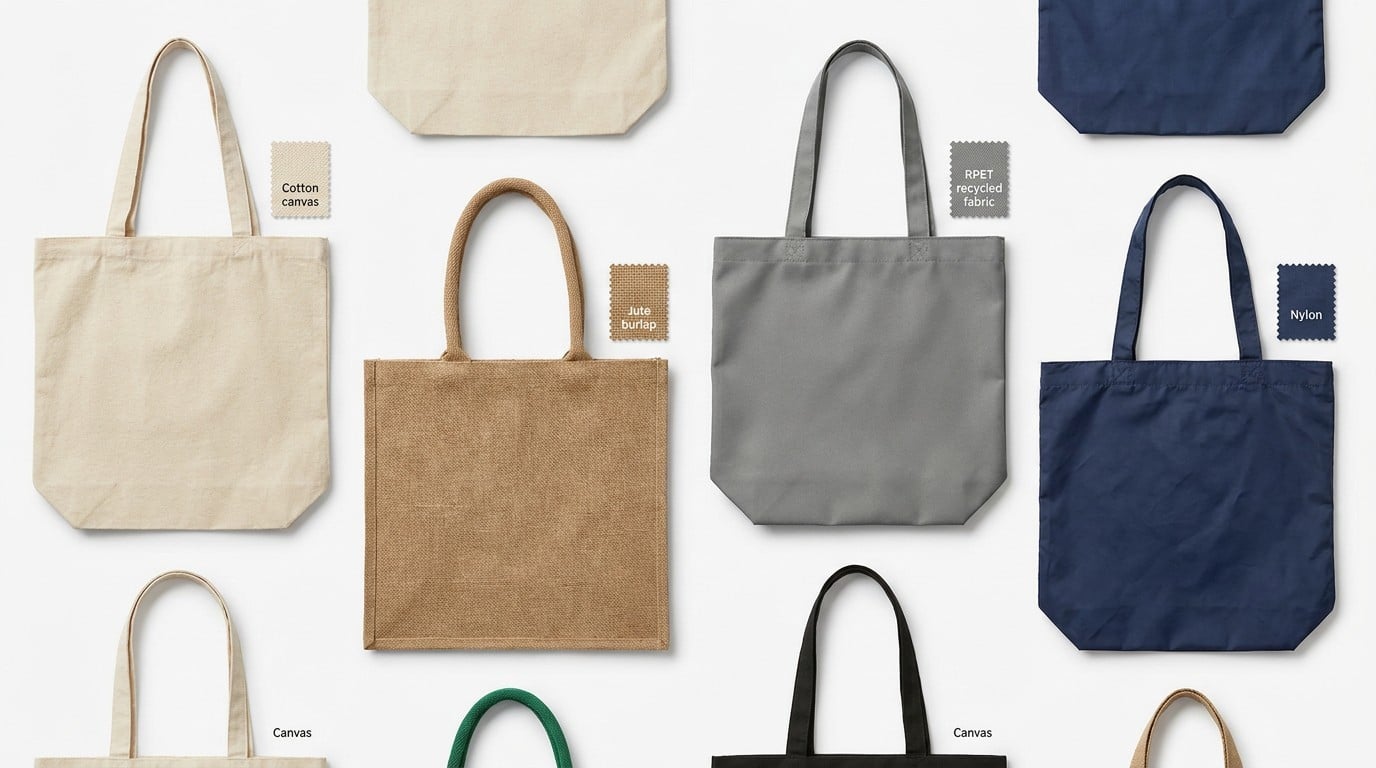
Cotton refers to woven fabric from natural fibers, typically 120–280 gsm. Canvas is a tighter-weave, heavier subcategory (280–420 gsm) offering superior durability. RPET (Recycled PET) is manufactured from post-consumer plastic bottles — approximately 5–6 bottles per bag — enabling verified sustainability claims under GRS certification.
Material Comparison Matrix
| Attribute |
Cotton (150gsm) |
Canvas (300gsm) |
RPET (80gsm) |
| Weight per bag |
~120g |
~280g |
~60g |
| Durability |
Medium |
High |
High |
| Water resistance |
Low |
Low–Medium |
High |
| Printing suitability |
Excellent (silk screen) |
Excellent (embroidery) |
Good (heat transfer) |
| OEKO-TEX eligible |
Yes |
Yes |
Separate GRS required |
| FOB cost (5,000 pcs) |
USD 0.80–1.50 |
USD 2.00–4.50 |
USD 0.90–2.00 |
| Lead time (post-sample) |
25–35 days |
30–45 days |
25–35 days |
Application Recommendations by Buyer Type
-
Supermarkets & grocery chains: Cotton 120–180 gsm for high-volume reusable shopping bags. OEKO-TEX required for food-adjacent applications.
-
Brand owners & fashion retailers: Canvas 280–400 gsm for flagship shopping bags reinforcing premium positioning.
-
Corporate gifting & promotional: RPET for sustainability-conscious brands needing verifiable recycled content claims.
- Event & trade show organizers: Cotton or non-woven for maximum cost efficiency in single-event giveaways.
Printing Method Compatibility
-
Silk screen printing: Best on cotton and canvas. Minimum 1,000 pieces per color. Best for solid-area logos.
-
Heat transfer: Compatible with RPET and synthetics. Full-color CMYK; may peel after repeated washing.
-
Sublimation: Requires 80% polyester/RPET content. Photographic-quality, wash-fast prints.
- Embroidery: Premium technique for cotton and canvas. USD 0.50–1.50 surcharge per piece.
Conclusion & Next Step
Material selection should be driven by end-use requirements, sustainability claims, and total landed cost. Cotton offers versatility, canvas delivers premium positioning, and RPET enables verified eco-credentials. Working with a single supplier capable of producing all three reduces sourcing complexity.
Need material samples and comparative FOB quotes across cotton, canvas, and RPET? Contact: [email protected]



 Hot News