Non-Woven Shopping Bags Manufacturer
Non-woven shopping bags are widely used for supermarkets, retail stores, exhibitions, promotional programs and branded packaging because they combine low material weight, flexible construction, large printing areas and efficient bulk production.
For B2B buyers, however, specifying only:
“custom non-woven shopping bag”
is not enough for an accurate quotation.
The finished product can vary significantly depending on:
At INITI, non-woven shopping bag specifications are developed around the actual contents, required appearance, target cost and production volume rather than using one standard construction for every order.
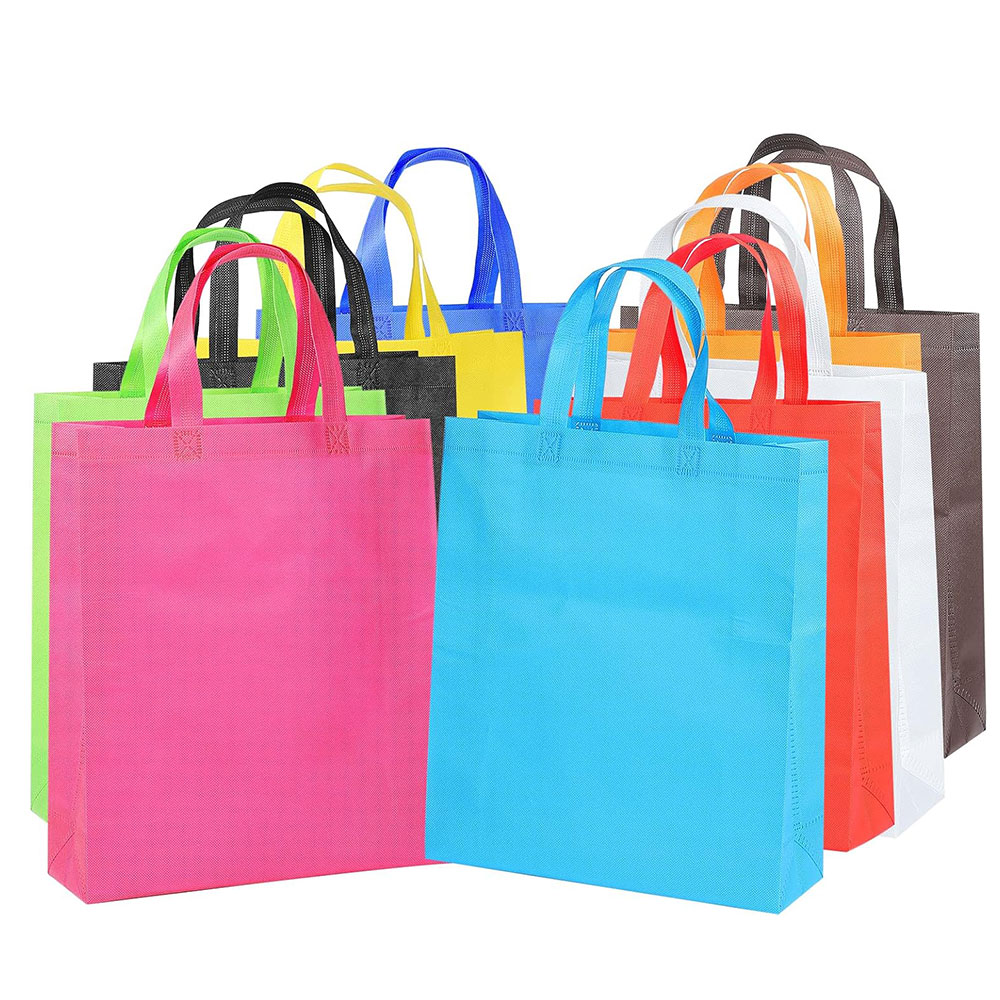
For shopping bag manufacturing, non-woven bag most commonly refers to a bag made from spunbond polypropylene, often described as:
PP non-woven
Polypropylene non-woven
Spunbond non-woven
NWPP
Unlike woven polypropylene fabric, non-woven material is formed without weaving yarns into a conventional textile structure.
It is lightweight, available in many colors and suitable for both simple promotional bags and more structured retail shopping bags.
Typical constructions include:
Flat tote bags
D-cut bags
W-cut or vest-style bags
Loop-handle bags
Gusseted bags
Box-style bags
Laminated non-woven bags
For a detailed comparison of these structures, see our guide D-Cut, W-Cut, Loop-Handle and Box Non-Woven Bags: Which Style Fits Your Order?
This page focuses instead on the material, production method, carrying performance, printing and bulk-order decisions behind the finished bag.
PP Non-Woven Fabric Weight: How Much GSM Do You Need?
Non-woven fabric is commonly specified by GSM — grams per square meter.
Higher GSM generally gives the fabric more body and increases material consumption, but GSM alone does not determine finished bag strength.
A practical reference range is:
| Fabric Weight |
Typical Direction |
Product Characteristics |
| 60–70 GSM |
Lightweight promotions and simple packaging |
Thin, light and cost-focused |
| 80–90 GSM |
Retail shopping and promotional totes |
Balanced weight and structure |
| 100–120+ GSM |
Larger or more structured bags |
Heavier hand feel and more body |
These ranges should not be treated as fixed load ratings.
An 80 GSM shopping bag with reinforced sewn handles may perform very differently from another 80 GSM bag with a die-cut handle.
The correct specification should consider:
GSM + bag size + handle + gusset + seam + intended load
together.
Bag Size and Gusset Structure
Bag dimensions affect:
Capacity
Material consumption
Finished shape
Packing volume
Carrying performance
Common constructions include:
Flat structure
Side gussets
Bottom gusset
Side and bottom gussets
Box-style construction
Flat Bags
Flat bags are simple and space-efficient.
They are suitable for relatively thin contents such as:
Gusseted Bags
Adding depth increases usable volume and helps the bag accommodate three-dimensional products.
Common applications include:
Grocery items
Shoe boxes
Apparel
Gift boxes
Packaged merchandise
Multiple retail products
For quotation, dimensions should normally be specified as:
Width × Height × Gusset
rather than only “small,” “medium” or “large.”
Handle Construction and Load Performance
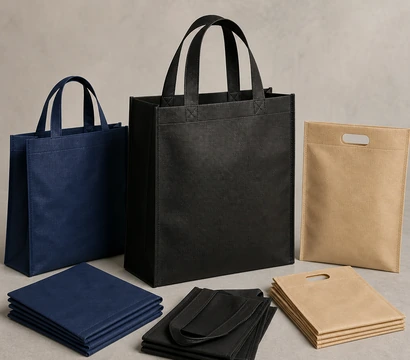
Handle design is one of the most important structural factors in a non-woven shopping bag.
Common options include:
Die-Cut Handle
The handle is cut directly into the bag body.
This keeps the structure simple and reduces components, but the carrying force is concentrated around the opening.
It is generally better suited to lighter loads.
Loop Handle
A separate handle is attached to the bag body.
This provides more flexibility in:
Handle width
Handle length
Carrying comfort
Attachment position
Reinforced Sewn Handle
For larger bags or projects with higher expected loads, handles can be sewn over a wider area or combined with reinforcement.
For load-bearing applications, buyers should not evaluate a bag based on GSM alone.
Handle attachment, bottom structure and seam quality can be just as important as the fabric weight.
Sewing vs Ultrasonic Bonding
Non-woven shopping bags can be manufactured through different production methods.
The right method affects:
Cost
Production speed
Structural flexibility
MOQ economics
Design limitations
Ultrasonic or Heat-Bonded Production
Automated ultrasonic production can bond compatible non-woven materials without conventional stitching.
It is particularly suitable for standardized constructions and high-volume programs.
Potential advantages include:
High production efficiency
Consistent repetitive construction
Lower labor input per unit
Good suitability for large retail or promotional programs
However, automated production works best when:
Bag dimensions are standardized
Construction matches machine capability
Handle structure is compatible
Production quantity justifies setup
Design changes are limited
Automated ultrasonic production is generally most efficient for standardized high-volume programs, because machine setup and tooling costs can be spread across a larger quantity.
For repeat supermarket, retail or promotional orders involving tens of thousands of units, a machine-compatible construction can significantly improve production efficiency and unit-cost control.
Cut-and-Sewn Production
Sewn production provides greater structural flexibility.
It is more suitable when buyers require:
Cut-and-sewn manufacturing normally involves more manual operations, but allows greater customization.
The actual break-even quantity between the two methods depends on:
Bag structure
Tooling
Printing
Material
Handle design
Production setup
Order repeatability
For this reason, the most economical process should be evaluated according to the specific project rather than using one fixed MOQ rule.
Printing Options for Custom Non-Woven Shopping Bags
One of the main advantages of non-woven bags is the large printable surface.
The appropriate printing method depends on:
Artwork complexity
Number of colors
Printing coverage
Material surface
Order quantity
Required appearance
Screen Printing
Commonly used for:
Logos
Text
Simple graphics
Limited-color artwork
It is suitable for many retail, promotional and supermarket projects.
Other Direct Printing Methods
Additional methods may be possible depending on:
Fabric specification
Artwork
Production equipment
Quantity
Color requirements
The print method should be selected after reviewing the actual artwork.
Laminated Full-Color Printing
For projects requiring:
a printed film can be laminated onto the non-woven substrate.
This creates a substantially different product from a basic directly printed non-woven bag.
Buyers should clearly specify whether they require:
direct printing on non-woven fabric
or
laminated full-color construction.
Laminated vs Unlaminated Non-Woven Bags
Lamination changes both appearance and structure.
Unlaminated Non-Woven
Typical characteristics include:
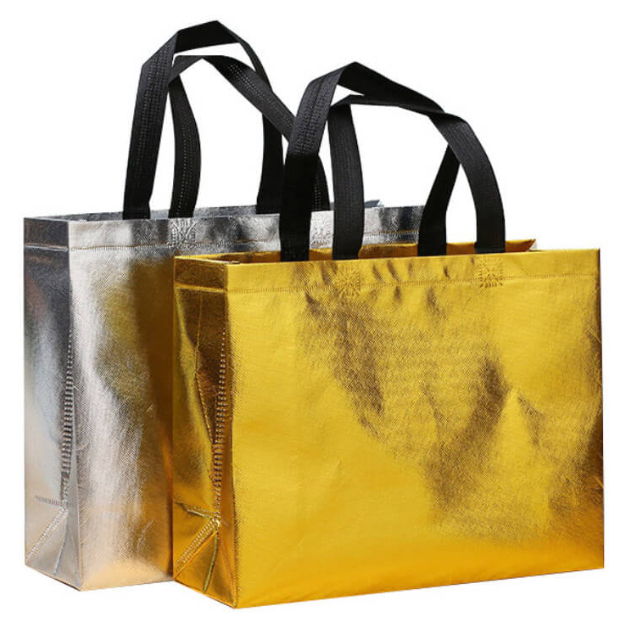
Laminated Non-Woven
Lamination can provide:
Smoother surface
Greater stiffness
Better surface resistance to moisture
Full-color graphic capability
Gloss or matte appearance
However, lamination also adds:
Material
Processing
Cost
Structural complexity
It may also affect the recyclability of the finished product depending on the material combination and local recycling infrastructure.
Lamination should therefore be selected because the project requires its visual or functional characteristics rather than simply as an “upgrade.”
There is no reliable universal rule such as:
80 GSM = X kg
or
100 GSM = Y kg.
Finished load performance depends on the complete bag structure.
Important variables include:
A large shopping bag carrying several boxed products places different stress on the handles and bottom than a smaller bag carrying the same total weight.
For projects where carrying capacity matters, buyers should specify a target load requirement.
A practical approval process can include:
Load the sample with representative contents.
Carry or suspend the bag under the agreed test condition.
Inspect the handles, seams and bottom.
Confirm acceptable deformation or failure criteria before bulk production.
This provides a more meaningful quality standard than GSM alone.
Key Quality Checks Before Bulk Production
For large non-woven bag orders, quality control should cover more than logo appearance.
Material
Confirm:
Material type
GSM
Color
Surface consistency
Lamination if required
Dimensions
Check:
Width
Height
Gusset
Handle size
Handle position
Dimensional variation can affect whether the intended products fit correctly.
Handles
Inspect:
Length
Width
Position
Attachment
Reinforcement
Load performance
Seams or Bonding
Check for:
Printing
Confirm:
Logo size
Position
Color
Registration
Surface adhesion
Artwork orientation
Packing
For high-volume orders, also confirm:
Pieces per inner pack
Pieces per carton
Carton dimensions
Gross weight
Folding method
Packing configuration can significantly affect storage and freight volume.
Custom Non-Woven Shopping Bag Options
| Specification |
Custom Options |
| Material |
PP non-woven or project-specific material |
| GSM |
Lightweight to heavier structures |
| Size |
Custom width, height and gusset |
| Shape |
Flat, gusseted, box, vest or custom |
| Handle |
Die-cut, loop, hand-carry or shoulder |
| Printing |
Logo, text or custom artwork |
| Lamination |
Unlaminated or laminated |
| Color |
Standard or project-specific colors |
| Reinforcement |
Handle or structural reinforcement |
| Closure |
Open top or selected custom closure |
| Packing |
Bulk, individual or retail packing |
Not every combination is suitable for every manufacturing process.
For large orders, the structure and production method should be confirmed before artwork and dimensions are finalized.
Why Design Choices Matter More at Large Quantities
Non-woven bags are commonly used for programs where production quantity is large.
At higher volumes, relatively small specification changes can have a significant impact on the total project cost.
Increasing GSM
Changes:
Material consumption
Fabric body
Finished weight
Packing volume
Adding a Gusset
Improves capacity but increases material usage and construction complexity.
Changing From Die-Cut to Loop Handles
Can improve carrying comfort but adds handle material and attachment operations.
Adding Lamination
Changes:
Printing route
Surface appearance
Material structure
Cost
Adding Reinforcement
May improve load performance but also adds production operations.
For a 500-piece project, a small construction change may have limited total impact.
For a multi-store or supermarket program involving tens of thousands of bags, the same change can materially affect the total purchasing budget.
This is why large-volume sourcing should be based on the full specification rather than only the bag dimensions and GSM.
Packing Volume and Freight Considerations
For export orders, the bag itself is not the only cost.
Buyers should also consider:
Folding method
Individual packing
Pieces per carton
Carton dimensions
Shipment CBM
Carton weight
A lightweight bag with unnecessarily bulky packing can increase logistics cost.
For large-volume programs, packaging should therefore be evaluated together with the product specification.
This is especially relevant for:
Sustainability Claims: Use Precise Language
PP non-woven shopping bags are often marketed as “eco-friendly,” but this wording should be used carefully.
Polypropylene is a plastic material.
A standard PP non-woven shopping bag should not automatically be described as:
Biodegradable
Compostable
Plastic-free
without supporting evidence.
A more accurate sustainability assessment should consider:
If recycled content is required, buyers should specify:
rather than assuming all non-woven bags contain recycled material.
What Buyers Should Send for a Quote
For an accurate quotation, provide:
| Requirement |
Information |
| Intended Use |
Retail, supermarket, promotion, event or packaging |
| Bag Size |
Width × height × gusset |
| Contents |
What will be carried |
| Target Load |
Expected carrying performance |
| Material |
PP non-woven or specified alternative |
| GSM |
If already determined |
| Handle |
Die-cut, loop, hand-carry or shoulder |
| Printing |
Artwork, colors and coverage |
| Lamination |
Required or not |
| Quantity |
Initial and expected repeat volume |
| Packaging |
Bulk or individual packing |
If the specification is not finalized, the most useful starting information is:
contents + approximate size + quantity + artwork + target cost
The material and structure can then be developed around those requirements.
Why Work With INITI for Custom Non-Woven Bags?
INITI manufactures custom bags and packaging for B2B projects, including non-woven shopping bags for retail, promotional and large-volume programs.
Available customization includes:
PP non-woven fabric selection
Different GSM options
Custom dimensions
Flat and gusseted structures
Different handle constructions
Logo and artwork printing
Laminated bag development
Sewn and suitable machine-made constructions
Custom packing
OEM and ODM development
Depending on the project and target market, INITI can also support applicable:
Our manufacturing and quality systems are supported by certifications and audits including SEDEX, GRS, HIGG and ISO 9001.
For high-volume programs, the goal is not simply to produce the lowest-priced bag.
The specification should balance:
material + structure + load + printing + manufacturing efficiency + packing
so the product remains practical when moved from sample stage to bulk production.
FAQ
What GSM is best for a non-woven shopping bag?
There is no single best GSM. Lightweight promotional bags may use lower GSM material, while larger retail bags may require heavier fabric. Size, handles, gussets and expected load should be evaluated together.
What is the difference between non-woven PP and woven PP bags?
PP non-woven is produced as a bonded fiber sheet, while PP woven fabric is made from interlaced polypropylene tapes. They differ in surface appearance, structure, strength and manufacturing method.
Can non-woven shopping bags be fully customized?
Yes. Size, GSM, color, handles, gussets, printing, lamination, reinforcement and packing can be customized according to production feasibility.
Can non-woven shopping bags carry heavy groceries?
They can be designed for different load requirements, but performance should not be judged from GSM alone. Handle attachment, seams, gussets, dimensions and reinforcement all affect carrying capacity.
Are PP non-woven shopping bags recyclable?
PP non-woven material may be recyclable where suitable polypropylene recycling systems are available. Printing, lamination, mixed materials and local collection systems can affect recyclability of the finished bag.
Conclusion
A non-woven shopping bag may appear simple, but small specification differences can significantly affect:
Cost
Carrying performance
Printing quality
Production efficiency
Packing volume
Finished appearance
For B2B sourcing, buyers should define more than:
size + GSM + logo
The complete product should be evaluated through:
material + bag structure + gusset + handle + target load + production method + printing + lamination + quantity + packing
This is particularly important for supermarket, retail and promotional programs where the same design may eventually be produced in very large quantities.
Inquiry Support
For a custom non-woven shopping bag project, you can provide:
If you have not finalized all details, you can first send your intended use and target quantity, and we can recommend a suitable specification.
Email [email protected] to request material options, samples or a quotation for your custom non-woven shopping bag project.
Related Products
Non-Woven Tote Bag
Large Gusseted RPET Stitch-Bond Shopping Bag
Large Laminated PP Woven Shopping Tote
Related Blog Articles
D-Cut, W-Cut, Loop-Handle and Box Non-Woven Bags: Which Style Fits Your Order?
Non-Woven Bag Specifications: GSM, Handle Strength, Seams and Lamination



 Hot News