Drawstring Backpack vs Regular Backpack: Which Type Should Buyers Choose?
Drawstring bags and conventional backpacks both provide hands-free carrying, but they are designed around very different levels of load, comfort, organization and cost.
For B2B buyers, the right choice usually depends on a few practical questions:
What will users carry?
How heavy will the contents be?
How long will the bag normally be worn?
Is the product primarily promotional or functional?
How much organization is required?
Does the project involve thousands of units that need efficient packing and distribution?
What target cost does the program need to meet?
A basic drawstring bag is often more suitable for promotional campaigns, events and lightweight sports use. A conventional backpack becomes more appropriate when users need better carrying comfort, multiple compartments and repeated daily use.
The better option is therefore determined by the project rather than by the bag type alone.
Drawstring Bag vs Backpack: Quick Comparison
In this guide, drawstring bag refers mainly to the wearable drawstring backpack, also commonly called a cinch bag, cinch sack, gym sack, or string backpack, where the cords function as both the closure and shoulder straps.
| Factor |
Drawstring Bag / Cinch Sack |
Conventional Backpack |
| Structure |
Simple and lightweight |
More structured |
| Main Closure |
Drawstring |
Usually zipper |
| Shoulder Straps |
Cords or simple straps |
Wider adjustable straps |
| Compartments |
Usually limited |
One or multiple compartments |
| Carrying Comfort |
Best for lighter loads |
Better for longer carrying periods |
| Packing Volume |
Very compact |
Higher |
| Branding Area |
Usually large front panel |
Depends on pocket layout |
| Production Complexity |
Relatively low |
Moderate to high |
| Typical Unit Cost |
Lower |
Higher |
| Best Fit |
Promotions, events, gyms, light sports |
School, commuting, travel, sports, retail |
The exact cost and performance still depend on fabric, dimensions, accessories, printing and construction.
1. Carrying Comfort and Load
Carrying comfort is one of the clearest differences between a cinch sack and a regular backpack.
A traditional drawstring backpack uses cords running from the top opening to attachment points near the bottom corners.
This keeps the construction light and simple, but the cords are much narrower than conventional backpack straps.
As the contents become heavier, pressure becomes concentrated on a smaller area of the shoulders.
Basic drawstring bags are therefore better suited to lighter contents such as:
Sportswear
Small towels
Event materials
Promotional merchandise
Lightweight shoes
Personal accessories
Small daily items
Reinforced corners and wider cords can improve performance, but they do not provide the same load distribution as padded backpack straps.
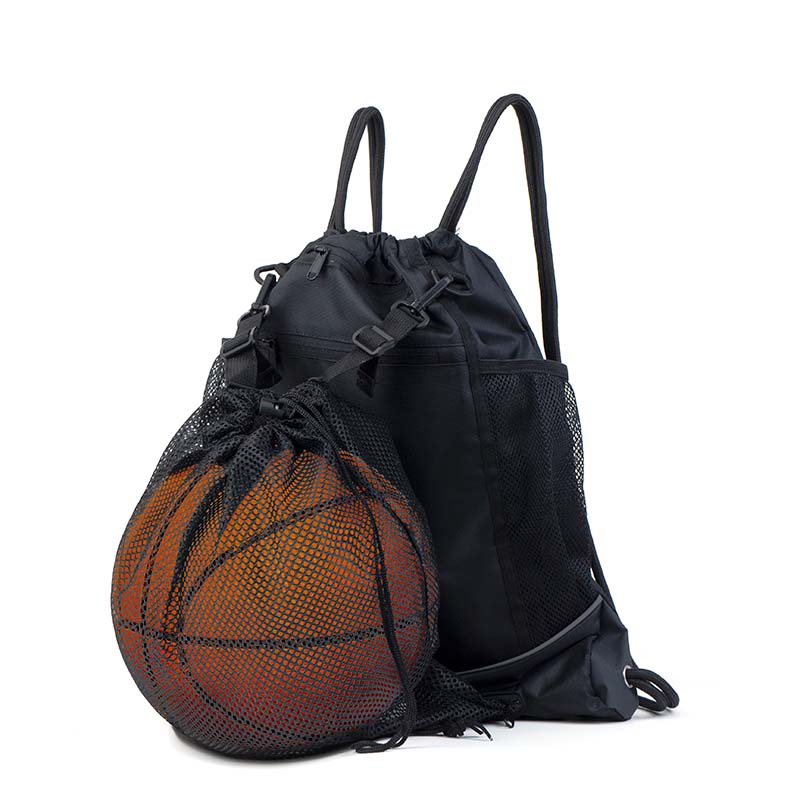
Backpack
A conventional backpack normally distributes weight through wider shoulder straps.
Depending on the product, buyers may also specify:
This makes backpacks more suitable for heavier contents or longer carrying periods.
Buyer takeaway:
If users are carrying lightweight items for a short period, a drawstring bag is usually sufficient. If comfort under load matters, a conventional backpack is normally the better starting point.
2. Storage and Organization
A basic drawstring bag usually has one main compartment.
For many promotional and sports programs, that simplicity is enough.
Optional additions can include:
Front zipper pocket
Internal pocket
Side mesh pocket
Shoe compartment
Small valuables pocket
However, each additional pocket increases fabric consumption, cutting, sewing and assembly requirements.
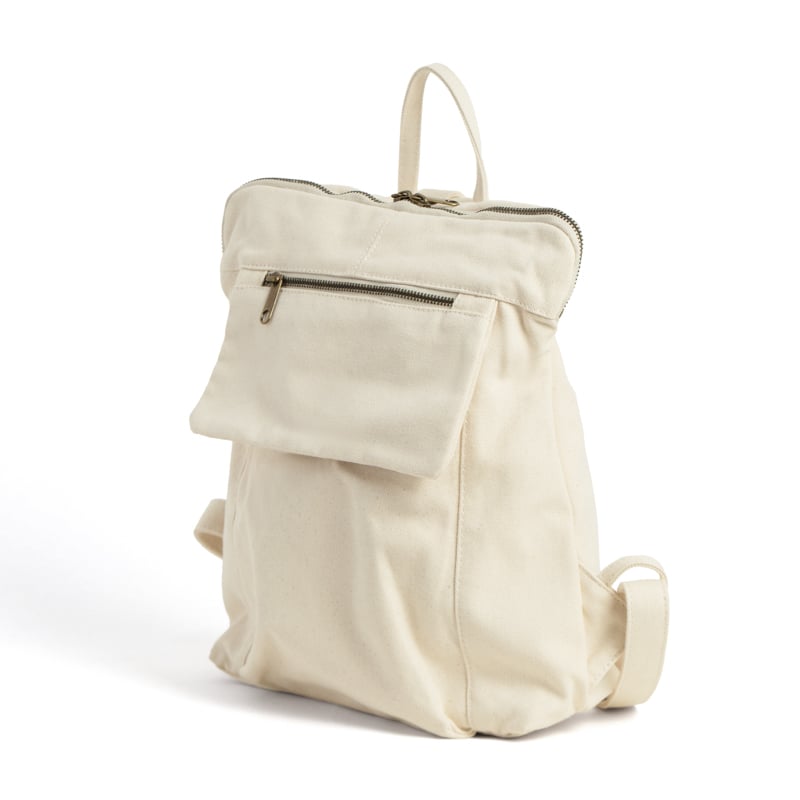
A conventional backpack provides much greater flexibility.
Possible structures include:
For buyers developing a product where organization is part of the selling point, a backpack usually provides a stronger platform.
3. Cost and Construction Complexity
This is where the difference becomes particularly important for large-volume buyers.
From a manufacturing standpoint, the cost gap mainly comes from construction complexity.
A basic single-layer drawstring bag may consist of only:
A functional backpack can require dozens of cut and assembled components, including:
Outer fabric panels
Lining
Foam padding
Zipper tracks
Webbing
Shoulder straps
Buckles
Pockets
Reinforcement pieces
Internal dividers
This difference increases:
Material consumption
Cutting requirements
Sewing time
Assembly time
Accessory cost
Inspection points
Production complexity
For promotional programs involving thousands or tens of thousands of units, simplifying the bag structure can therefore have a substantial effect on both unit cost and production efficiency.
This is one reason a basic cinch bag is frequently selected for mass event distribution.
A backpack costs more not simply because it is larger, but because considerably more work is built into its structure.
For retail products, school bags or long-term-use programs, that additional cost may be justified.
4. Branding and Promotional Value
Drawstring bags work particularly well when the bag itself needs to function as a large branding surface.
The front panel is normally relatively uninterrupted, allowing space for:
Common applications include:
Marathons
Sports events
Corporate campaigns
Exhibitions
School activities
Gym promotions
Charity events
Membership gifts
A conventional backpack can also provide strong branding opportunities, but front pockets, zippers and panel seams may reduce the available continuous print area.
On the other hand, a backpack generally creates higher perceived product value.
That can make it more appropriate for:
For promotional buyers, the question is therefore not simply which bag has more logo space, but what level of product value the campaign needs to communicate.
5. Packing and Distribution
For large orders, packing efficiency can have a direct impact on logistics.
A basic gym sack or cinch bag normally contains:
As a result, it can usually be packed relatively flat.
This is particularly useful for:
A structured backpack normally occupies more carton volume, especially when it includes padding, multiple compartments or reinforced panels.
Buyers comparing quotations should therefore look beyond unit price.
Useful information includes:
For high-volume programs, a small difference in packed volume per unit can become significant across the entire shipment.
6. Durability: Which One Lasts Longer?
A backpack is not automatically more durable than a drawstring bag.
Durability depends on the complete specification.
Key Stress Points on Drawstring Bags
Buyers should pay particular attention to:
Lower cord attachment
Drawstring channel
Side seams
Eyelets
Fabric loops
Reinforcement patches
The lower cord attachment is especially important because this area receives repeated pulling force while the bag is being carried.
Key Stress Points on Backpacks
For conventional backpacks, important areas include:
A properly constructed polyester drawstring backpack with reinforced corners can outperform a poorly specified backpack.
The more useful question is therefore:
Does the construction match the actual load and expected frequency of use?
7. Material Options
Both product types can be made from a wide range of materials.
Common Materials for Drawstring Bags
Polyester
A common choice for promotional, sports and event programs because it is lightweight and available in many specifications.
Nylon
Suitable for projects requiring a lightweight synthetic fabric with a softer or more technical feel.
Cotton
Often selected for promotional, gift and lifestyle projects requiring a natural textile appearance.
Canvas
Heavier and more structured than lightweight cotton fabric. It can be useful when buyers want a more substantial reusable product.
RPET Polyester
Suitable for projects specifying recycled polyester content. Recycled percentage and documentation requirements should be confirmed before production.
Mesh
Useful when ventilation, visibility or drainage is required, particularly for sports and swimming applications.
Common Backpack Materials
Backpacks frequently use:
Polyester
Nylon
RPET polyester
Oxford fabric
Canvas
Mesh
Coated synthetic fabrics
Because backpack construction is more complex, buyers also need to specify components such as:
Lining
Foam
Webbing
Mesh
Zippers
Buckles
Reinforcement
Material selection should therefore consider the complete bag rather than only the exterior fabric.
When Should Buyers Choose a Drawstring Bag?
A drawstring bag generally makes more sense when the project prioritizes the following factors.
Promotional Giveaways
Simple construction helps control cost while providing a large area for branding.
Marathons and Sports Events
A lightweight gym sack can carry participant T-shirts, towels, bottles and other lightweight event items.
Trade Shows and Exhibitions
Drawstring bags can be packed flat, transported efficiently and distributed quickly.
Gym and Membership Programs
They work well for lightweight clothing, towels and personal accessories.
School Activities
A basic string backpack can be suitable for sports days, camps and event kits where students are not carrying heavy books.
High-Volume Programs
When tens of thousands of bags may be required, eliminating unnecessary pockets, padding and accessories can materially reduce production complexity.
When Should Buyers Choose a Backpack?
A regular backpack is generally more appropriate when the project requires:
Better Carrying Comfort
Wider adjustable straps distribute load better than thin drawstrings.
More Compartments
Backpacks are more suitable when users need to separate laptops, bottles, shoes, clothing and accessories.
Daily School Use
Books, stationery and other items normally create higher and more sustained loads.
Commuting
Laptop storage, internal organization and back-panel comfort become more important.
Retail Products
A structured backpack provides more opportunities to differentiate the product through fabrics, hardware, pockets and functional details.
Travel and Outdoor Use
Users carrying products for longer periods generally benefit from improved straps, padding and organization.
Gym Sack vs Backpack: Which Is Better for Sports Projects?
For sports programs, both formats can work.
A gym sack is normally better when users carry:
T-shirt
Shorts
Small towel
Lightweight shoes
Personal accessories
It is particularly useful for:
Running events
Team giveaways
Fitness campaigns
Participant kits
Promotional merchandise
A backpack becomes more appropriate when users need to carry:
If footwear needs to remain separate from other contents, buyers can either specify a backpack with a shoe compartment or develop a more functional drawstring backpack.
Can a Drawstring Bag Be Made More Like a Backpack?
Yes.
There is a useful middle ground between a basic cinch sack and a conventional backpack.
A functional drawstring backpack can include:
This format retains the quick drawstring opening while providing more organization and carrying comfort.
However, buyers should pay attention to cost.
Once a drawstring design receives:
Multiple zipper pockets
Wide straps
Lining
Reinforcement
Shoe storage
Additional hardware
its production complexity begins to approach that of a conventional backpack.
At that point, buyers should compare both formats rather than assuming the drawstring version will automatically remain cheaper.
Drawstring Bag vs Backpack by Project Type
| Project |
Recommended Starting Point |
Main Reason |
| Promotional giveaway |
Drawstring bag |
Cost and branding area |
| Marathon participant kit |
Drawstring bag |
Lightweight and easy distribution |
| Gym membership gift |
Drawstring bag |
Simple sports use |
| School activity bag |
Drawstring bag |
Lightweight contents |
| School book bag |
Backpack |
Load and organization |
| Laptop commuting |
Backpack |
Protection and compartments |
| Travel merchandise |
Backpack |
Comfort and functionality |
| Premium corporate gift |
Backpack |
Higher perceived value |
| Sports bag with shoe storage |
Functional drawstring backpack or backpack |
Better organization |
| Large event program |
Drawstring bag |
Efficient packing and bulk distribution |
| Retail sports collection |
Depends on positioning |
Features and target price determine format |
This should be treated as a sourcing starting point rather than a fixed rule.
What Buyers Should Specify Before Requesting a Quote
A clear specification makes quotations easier to compare.
For Drawstring Bags
Confirm:
For Backpacks
Also confirm:
Two backpacks that look similar in a product photo can have very different production costs when their internal construction is different.
Quality Checks Before Bulk Production
Physical samples should be tested with contents similar to those expected in actual use.
Drawstring Bag Checks
Review:
Drawstring movement
Opening and closing
Cord comfort
Corner reinforcement
Seam strength
Logo position
Loaded bag shape
Backpack Checks
Also review:
Shoulder strap comfort
Strap attachment
Zipper operation
Pocket usability
Padding
Compartment dimensions
Loaded balance
Carry-handle strength
Testing the loaded product is more useful than evaluating an empty sample alone.
FAQ
Is a cinch sack the same as a drawstring backpack?
In most promotional and sports contexts, yes. Cinch bag, cinch sack, gym sack and drawstring backpack are commonly used for lightweight wearable bags where the drawstrings also function as shoulder straps.
Which is cheaper: a drawstring bag or backpack?
A basic drawstring bag is generally less expensive because it uses fewer panels, accessories and sewing operations. The exact difference depends on material, size, printing, pockets, straps, order quantity and packaging.
Is a gym sack better than a backpack for sports?
A gym sack is usually sufficient for lightweight clothing, towels and event items. A backpack is more suitable when users carry heavier loads, shoes, bottles or equipment for longer periods.
Can drawstring backpacks have shoe compartments and pockets?
Yes. Functional drawstring backpacks can include zipper pockets, mesh bottle pockets, shoe compartments and wider adjustable straps. Buyers should compare the resulting cost and structure with a conventional backpack before finalizing the design.
Can a drawstring bag carry heavy items?
Basic string backpacks are better suited to lighter loads because narrow cords become uncomfortable as weight increases. Heavier applications normally require stronger fabric, reinforced attachment points, wider straps or a conventional backpack.
Conclusion
The main difference between a drawstring bag and a backpack is not simply the closure.
They represent two different levels of product complexity.
Choose a drawstring bag, cinch sack or gym sack when the project requires:
Choose a conventional backpack when the project requires:
For projects sitting between these two requirements, a functional drawstring backpack can provide a useful middle option.
For B2B sourcing, the most effective approach is to start with the contents, expected load, carrying time, required functions, order quantity and target cost, then build the bag specification around those requirements.
Inquiry Support
For a custom drawstring bag or backpack project, you can provide:
If you have not finalized all details, you can first send your intended use and target quantity, and we can recommend a suitable specification.
Email [email protected] to request material options, samples or a quotation for your custom bag project.
Related Products
RPET Drawstring Backpack with Shoe Pocket
Custom Sports Backpack
Custom Sports Drawstring Backpack with Front Zipper Pocket
Related Blog Articles
What Is a Drawstring Bag: Types, Materials and Uses



 Hot News