Introduction
Global jute fiber production exceeds 3 million metric tons annually, with India and Bangladesh accounting for over 95% of output. Jute bags carry strong sustainability credentials and natural aesthetic appeal, but sourcing consistency requires careful supplier qualification. This guide covers what wholesale buyers need to know before placing a jute or burlap bag order.
Jute, Burlap, and Gunny: Understanding the Terminology
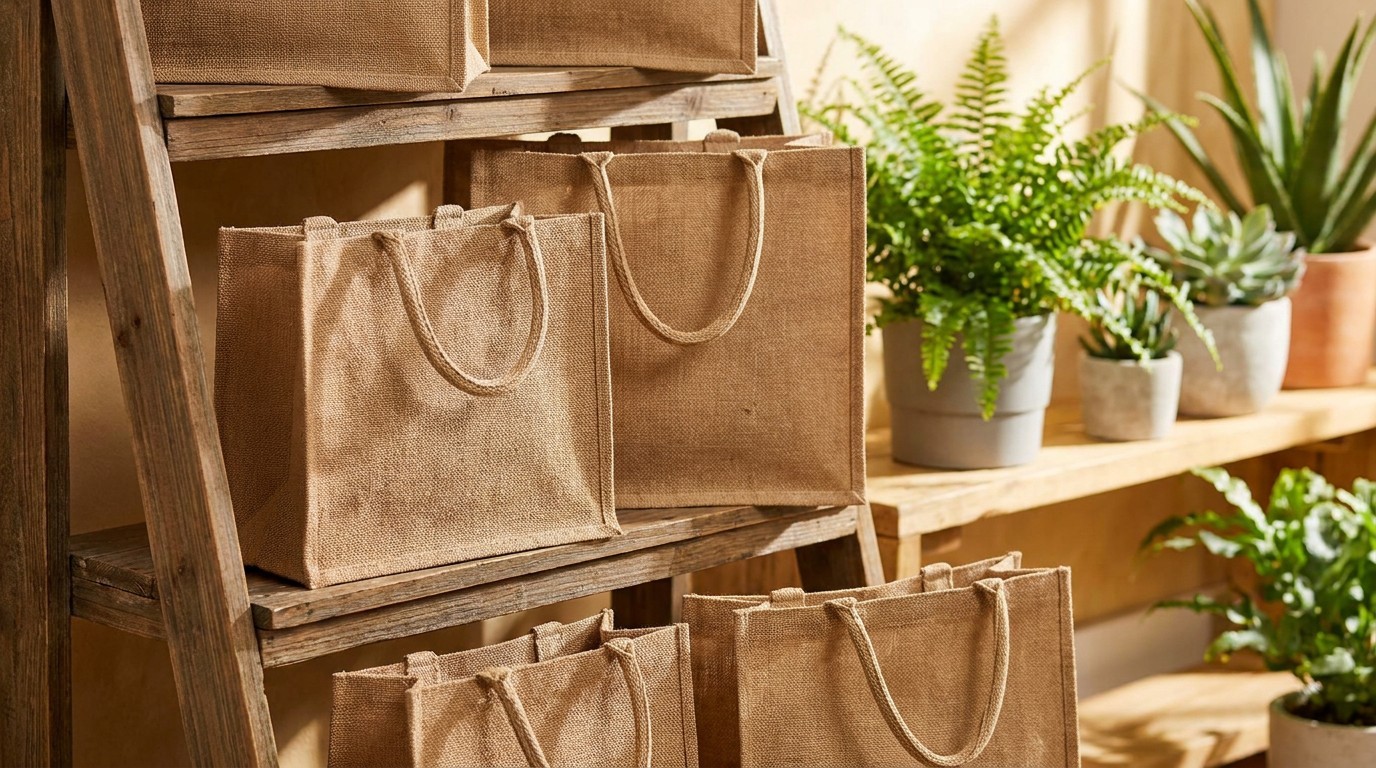
Jute, burlap, and gunny are three names for the same raw material — woven fibers from the Corchorus plant. Jute is the industry term; burlap the North American retail term; gunny the South Asian trade term for heavy agricultural-grade sacking. For B2B buyers, "jute bags" typically refers to 200–400 gsm fabric for shopping, wine, and gift bag applications.
Jute Bag Specifications Reference
| Specification |
Standard Range |
Premium Range |
| Fabric weight |
200–270 gsm |
300–400 gsm |
| Handle material |
Natural jute rope |
Cotton webbing or leather strip |
| Lining |
Unlined or cotton lining |
Full cotton or PE lining |
| Printing method |
Silk screen (1–4 colors) |
Sublimation or embroidery |
| Common size (W×H×G) |
35×40×10 cm |
38×45×15 cm custom |
| MOQ (standard) |
500 pieces |
300 pieces with custom print |
| Lead time |
20–30 days |
30–40 days |
Applications by Buyer Segment
-
Grocery retailers: Unlined/cotton-lined jute tote bags for produce and shopping. Biodegradable — EU EPR sustainability credential.
-
Wine & spirits distributors: Jute wine bags (single or double bottle) with cotton rope handles and printed branding.
-
Gift & packaging companies: Jute gift bags in multiple sizes for seasonal packaging. Ribbon or cotton handle finishes.
- Agricultural & food brands: Gunny-style bags for farm-to-table branding, coffee packaging, and artisanal food products.
Printing on Jute: What Works
-
Silk screen: Most cost-effective for 1–4 color logos. Registration accuracy ±2mm due to texture; vector designs with clean edges work best. Avoid serif fonts below 12pt.
-
Heat transfer: Full-color printing; test durability across 20+ wash cycles.
- Cotton-lined option: The cotton side can receive sublimation printing with superior resolution.
Quality Inspection Criteria
When conducting pre-shipment inspection, prioritize fabric uniformity (check for knots or gaps), handle attachment strength (5 kg pull test), color consistency vs. golden sample under D65 lighting, and lining adhesion where applicable.
Conclusion & Next Step
Jute bags combine natural fiber credentials, rustic visual appeal, and competitive FOB pricing. Key sourcing decisions center on fabric weight, handle type, lining specification, and printing method.
Sourcing custom jute or burlap bags? Contact [email protected] for samples and bulk quotes.


 Hot News