What Are the Different Types of Custom Bags?
Custom bags are not one single product category.
A custom bag can be a simple printed cotton tote, a padded laptop backpack, an insulated cooler bag, a small cosmetic pouch or a structured travel duffel.
What makes it “custom” is that one or more parts of the product are developed for a particular brand, retailer, event or application.
That can include:
Size
Shape
Material
Color
Logo
Printing
Handles
Shoulder straps
Pockets
Lining
Zippers
Padding
Packaging
The main types of custom bags include:
Tote and shopping bags
Backpacks
Drawstring bags
Crossbody and sling bags
Duffel, gym and sports bags
Cooler and lunch bags
Cosmetic and toiletry bags
Laptop bags and sleeves
Garment bags
Shoe bags
Storage and laundry bags
Wine and bottle bags
Beach and outdoor bags
Gift and promotional bags
Paper shopping bags
The right category depends first on what the bag needs to do.
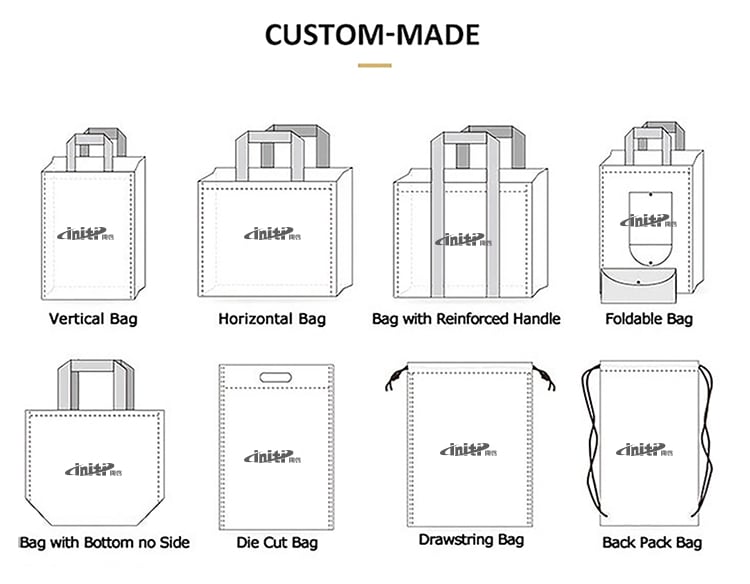
Custom Bag Types at a Glance
| Bag Type |
Common Uses |
Typical Materials |
Main Design Priority |
| Tote Bag |
Shopping, retail, events |
Cotton, canvas, jute, RPET, polyester |
Capacity and handles |
| Backpack |
School, work, travel |
Polyester, nylon, RPET, canvas |
Comfort and organization |
| Drawstring Bag |
Sports, events, gifts |
Polyester, cotton, mesh, nonwoven |
Simple closure and portability |
| Crossbody Bag |
Travel, daily carry |
Nylon, polyester, canvas, PU |
Compact organization |
| Duffel Bag |
Gym, sports, travel |
Polyester, nylon, canvas |
Capacity and strap strength |
| Cooler Bag |
Food, drinks, delivery |
Polyester, Oxford, RPET |
Insulation and lining |
| Cosmetic Bag |
Beauty, gifting |
Polyester, PU, TPU, PVC, cotton |
Organization and cleaning |
| Toiletry Bag |
Travel, hotels |
Polyester, nylon, TPU, PU |
Compartments and moisture handling |
| Laptop Bag |
Office, corporate gifts |
Polyester, nylon, felt, canvas, PU |
Padding and device fit |
| Garment Bag |
Suits, dresses, travel |
Nonwoven, polyester, PEVA |
Garment protection |
| Shoe Bag |
Travel, sports |
Polyester, nylon, mesh, cotton |
Separation and ventilation |
| Storage Bag |
Home organization |
Cotton, polyester, felt, nonwoven |
Capacity and structure |
| Wine Bag |
Gifts, retail |
Jute, cotton, felt, paper |
Bottle fit and presentation |
| Beach Bag |
Resort, summer retail |
Mesh, canvas, polyester, PVC |
Capacity and wet-use practicality |
| Paper Bag |
Retail and gifts |
Kraft paper, coated paperboard |
Printing and presentation |
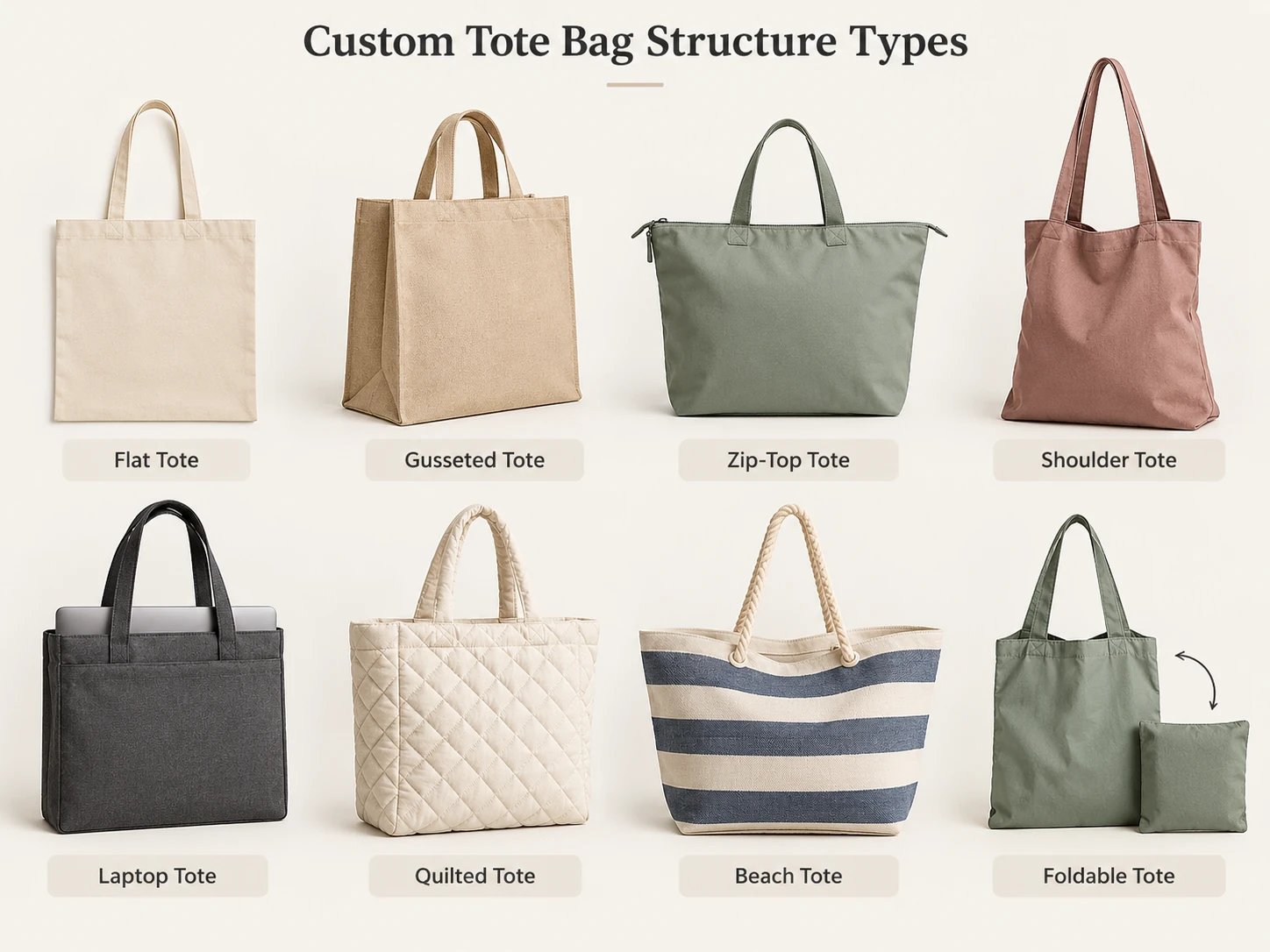
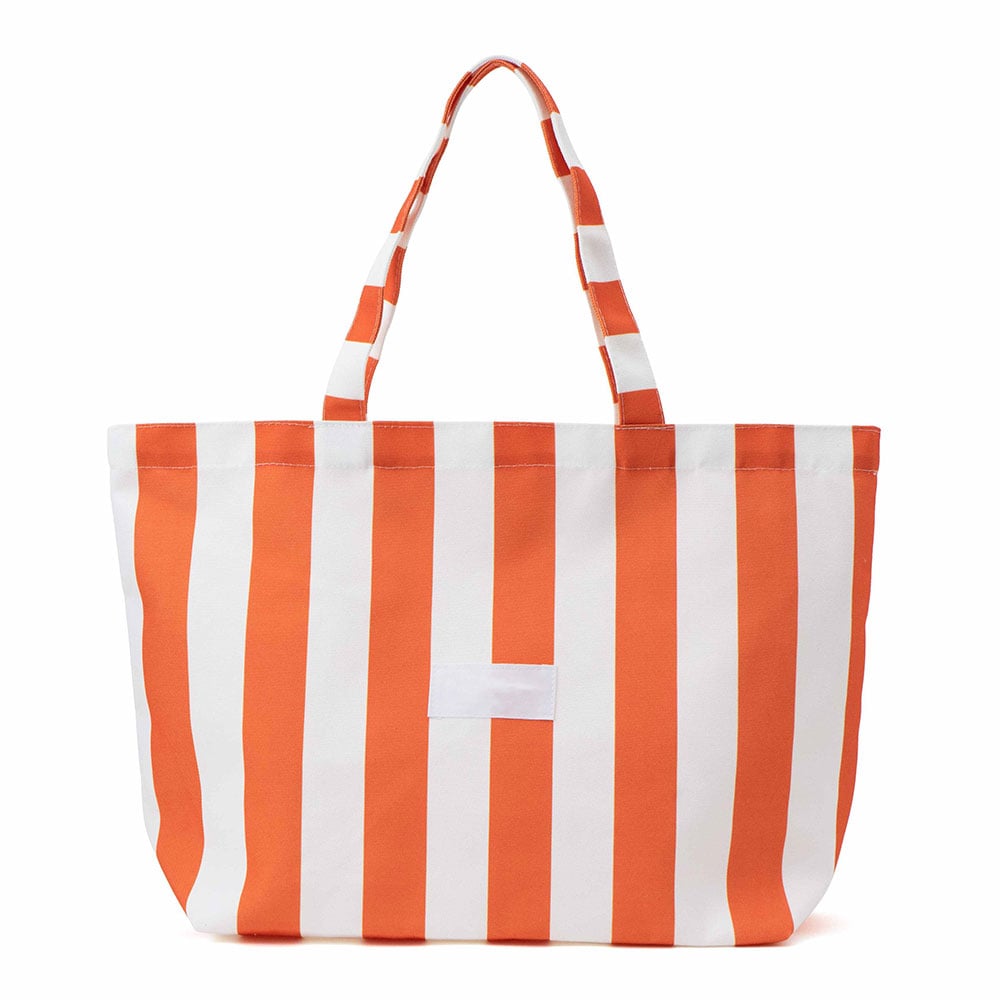
Tote bags are one of the broadest custom bag categories.
The basic structure normally includes:
From there, the design can become almost anything.
Common versions include:
Tote bags are used heavily for:
Retail
Supermarkets
Trade shows
Corporate gifts
Museums
Fashion merchandise
Hotels
Lifestyle brands
The category can also use an unusually wide range of materials. Current custom tote ranges include cotton canvas, RPET, nylon/polyester, quilted fabric, jute, corduroy, nonwoven PP, mesh, PVC and felt.
When a Tote Bag Makes Sense
Choose a tote when the user needs:
For heavy products, handle width, attachment reinforcement and bottom construction become more important than appearance alone.
Backpacks are better suited to hands-free carrying and longer periods of use.
They can range from a basic promotional backpack to a highly structured travel or outdoor product.
Common custom backpack types include:
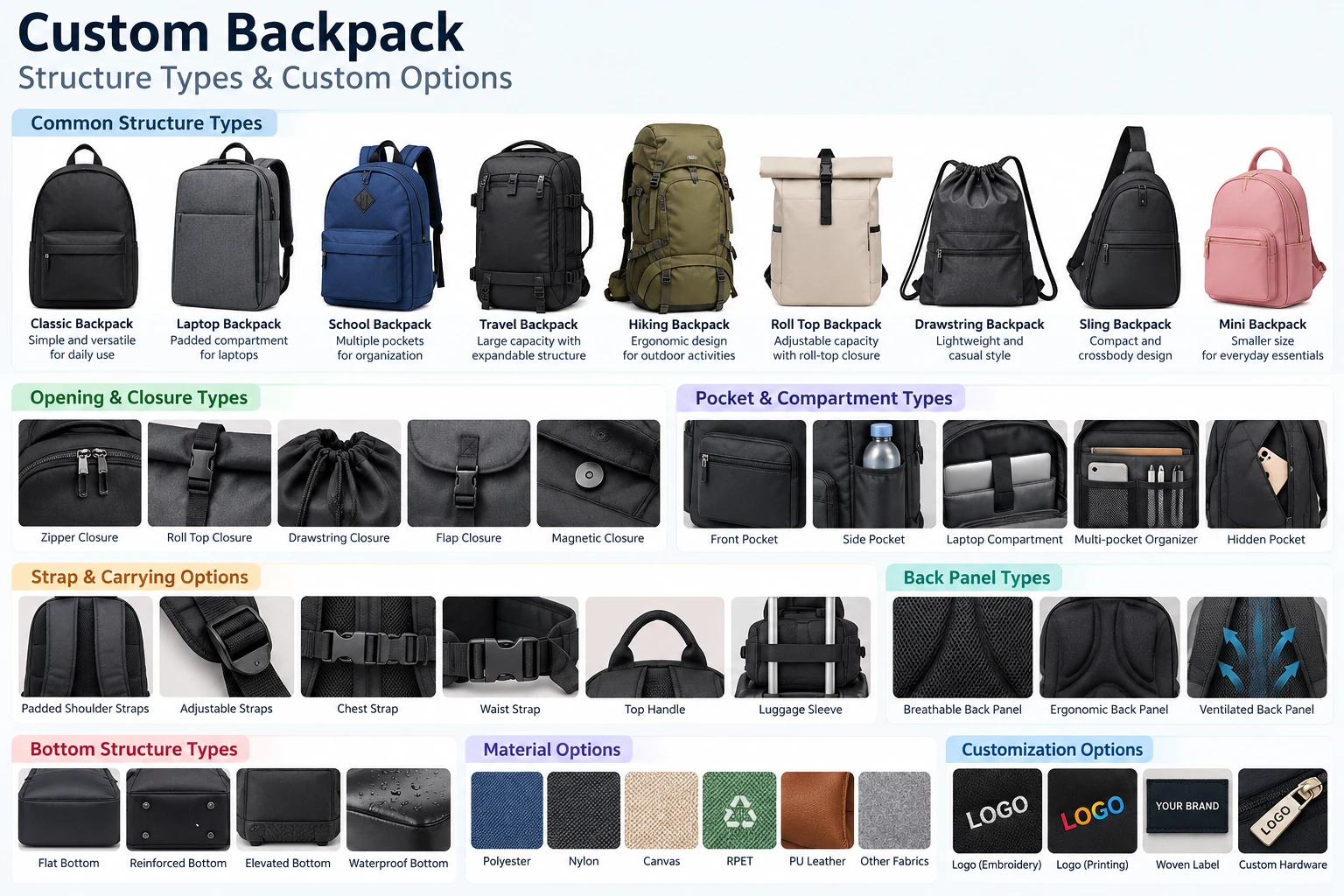
Typical materials include:
Polyester
Nylon
RPET polyester
Canvas
PU
A backpack requires more engineering than a basic tote because the load is transferred through:
Shoulder straps
Upper strap attachment
Back panel
Bottom
Zippers
Current custom-bag manufacturers generally separate backpacks from simpler tote and drawstring categories because they require different load, comfort and compartment considerations.
When a Backpack Makes Sense
Choose a backpack for:
School
Commuting
Laptops
Travel
Outdoor activities
Employee work kits
The heavier the expected load, the more important:
Strap construction
Padding
Back panel
Reinforcement
become.
A drawstring bag closes when one or more cords are pulled around the opening.
That simple closure can be used in very different products.
Common types include:
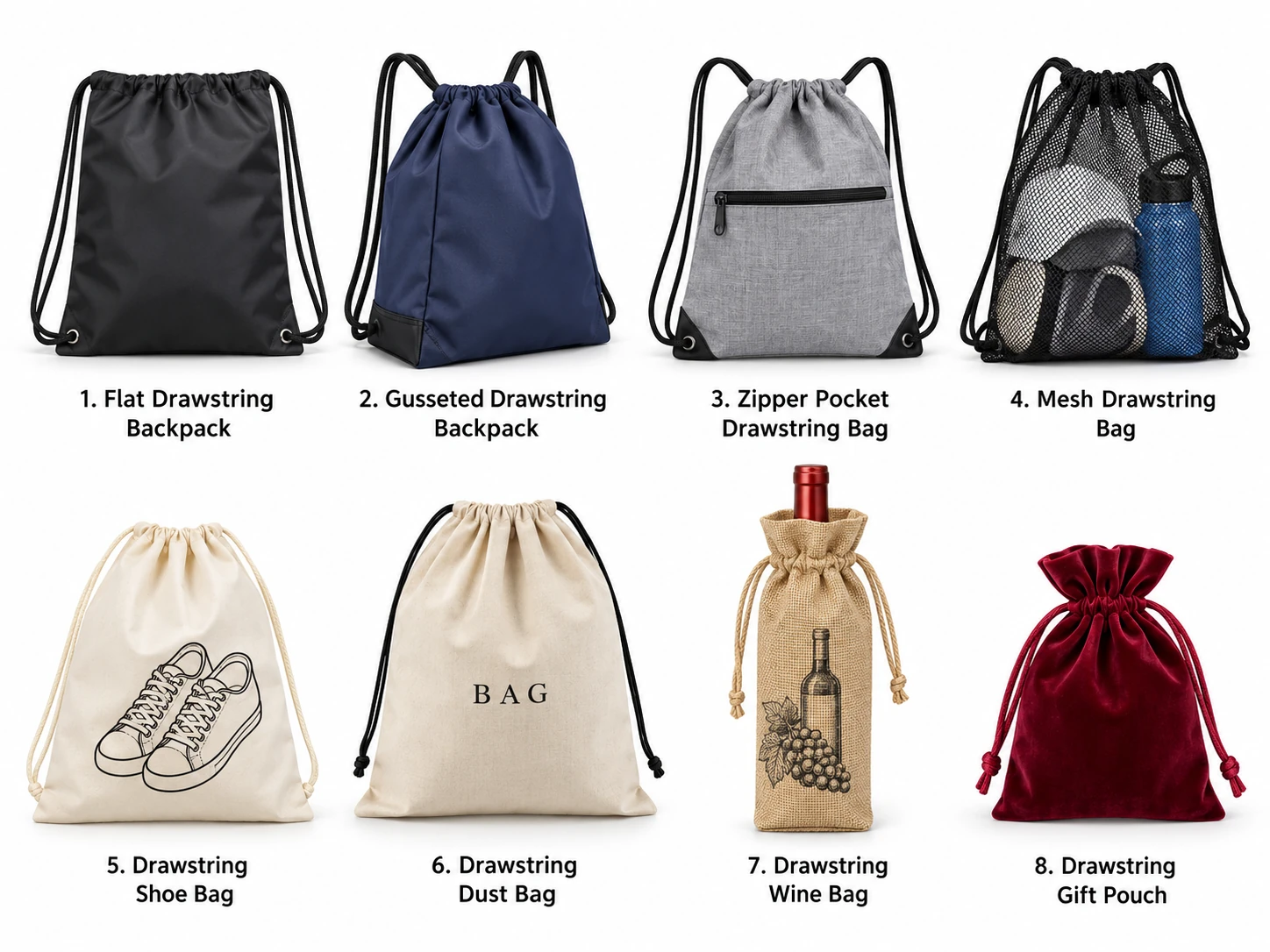
Typical materials include:
Polyester
Nylon
Cotton
Canvas
Mesh
Jute
Nonwoven PP
A lightweight polyester drawstring backpack works well for an event.
A cotton drawstring pouch works better for gifts or retail packaging.
A mesh drawstring bag makes more sense when airflow is important.
The closure may be similar, but the applications are completely different.
When a Drawstring Bag Makes Sense
Choose one when you need:
Crossbody bags are designed to be carried across the body using a longer strap.
They are usually smaller than backpacks and focus on easy access to essentials.
Common versions include:
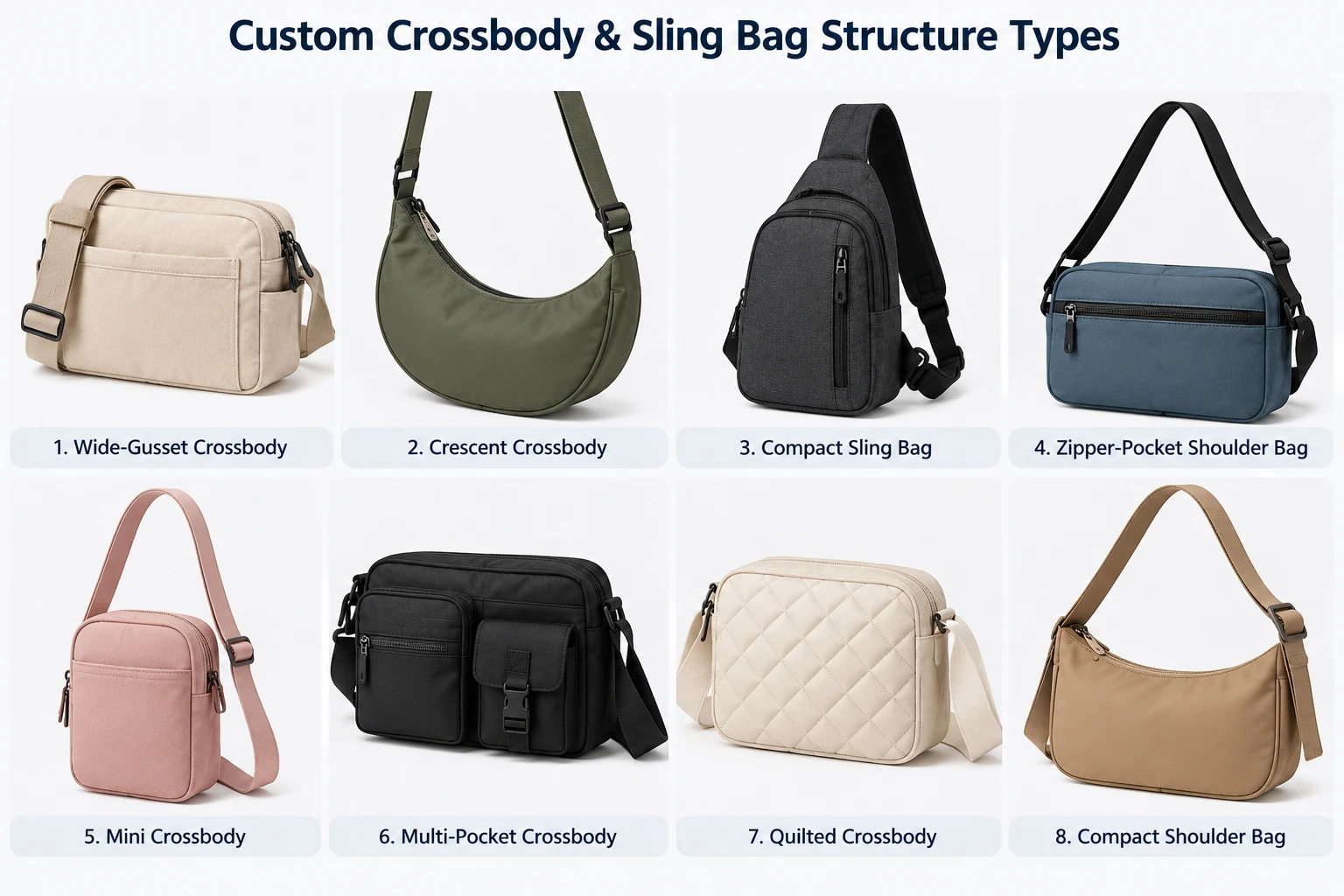
Typical contents include:
Phone
Wallet
Passport
Keys
Power bank
Small accessories
Common materials include:
Nylon
Polyester
RPET
Canvas
Corduroy
PU
When a Crossbody Bag Makes Sense
Choose one when the user wants:
For travel-oriented products, zipper layout and strap attachment deserve more attention than simply adding more pockets.
Duffel bags are designed around larger carrying capacity.
They are commonly used for:
Gym
Sports
Teams
Weekend travel
Fitness
Corporate retreats
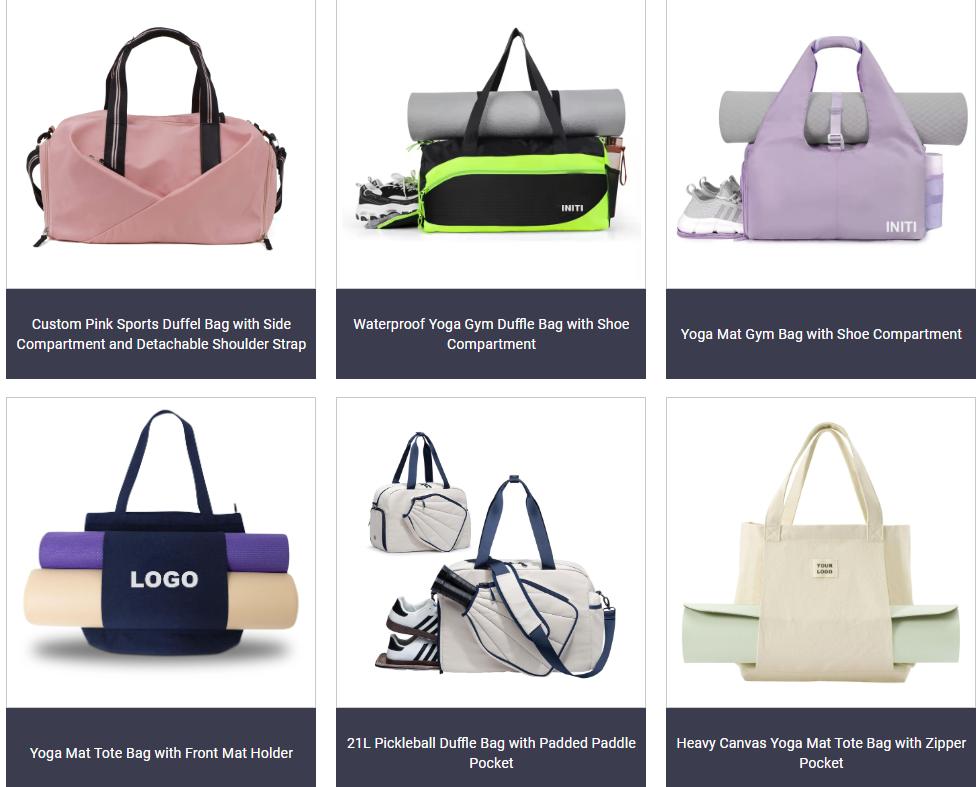
Typical structures include:
More developed designs may include:
Shoe compartment
Wet compartment
Side pockets
Internal organizer
Reinforced base
Common fabrics include:
Polyester
Nylon
RPET
Canvas
Current promotional bag guides commonly group duffels with sports and travel applications rather than everyday totes because load and strap requirements are substantially different.
When a Duffel Makes Sense
Choose a duffel when:
Capacity matters more than compactness
The user carries clothing or sports equipment
Separate shoe storage is useful
The bag needs both hand and shoulder carry
Cooler bags are not simply normal bags with a shiny lining.
They use multiple layers to slow heat transfer.
A typical construction may include:
Outer fabric
Insulating foam
Inner lining
Common outer materials include:
Polyester
Oxford fabric
RPET polyester
Common lining systems may use:
Cooler bags can include:
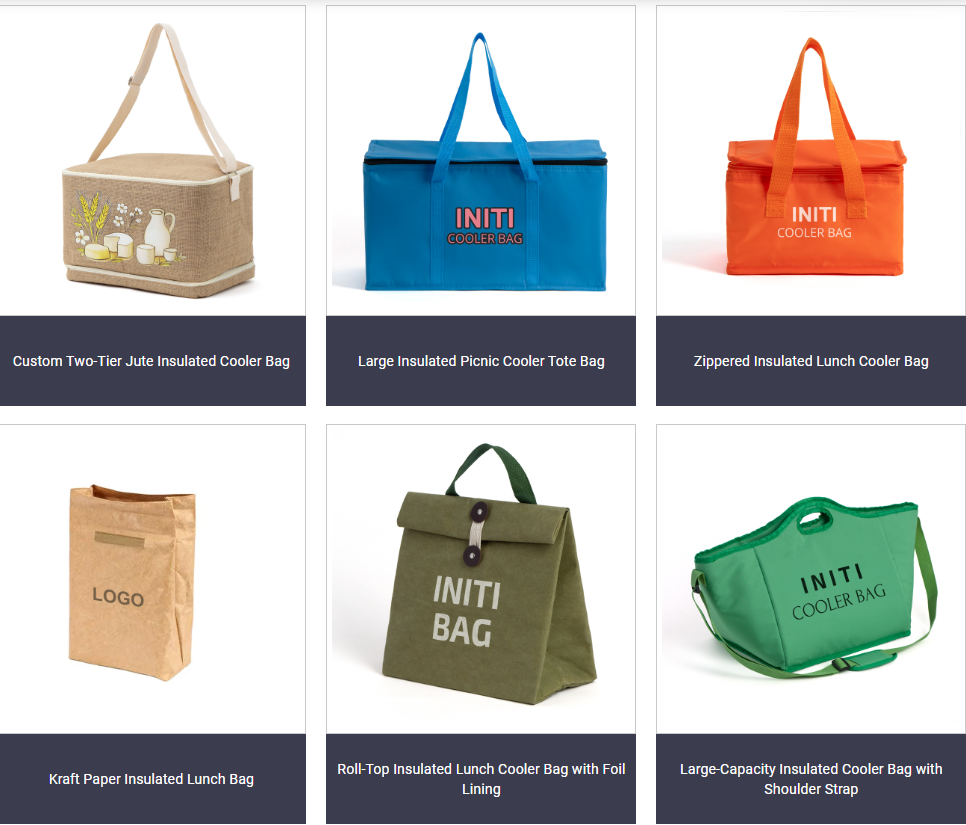
When a Cooler Bag Makes Sense
Choose one when the contents need temporary temperature control.
The important specification is not only the outer appearance.
Consider:
Insulation thickness
Lining construction
Zipper opening
Bag volume
Cooling media
Intended transport time
A cooler bag slows temperature change; it does not generate cold by itself.
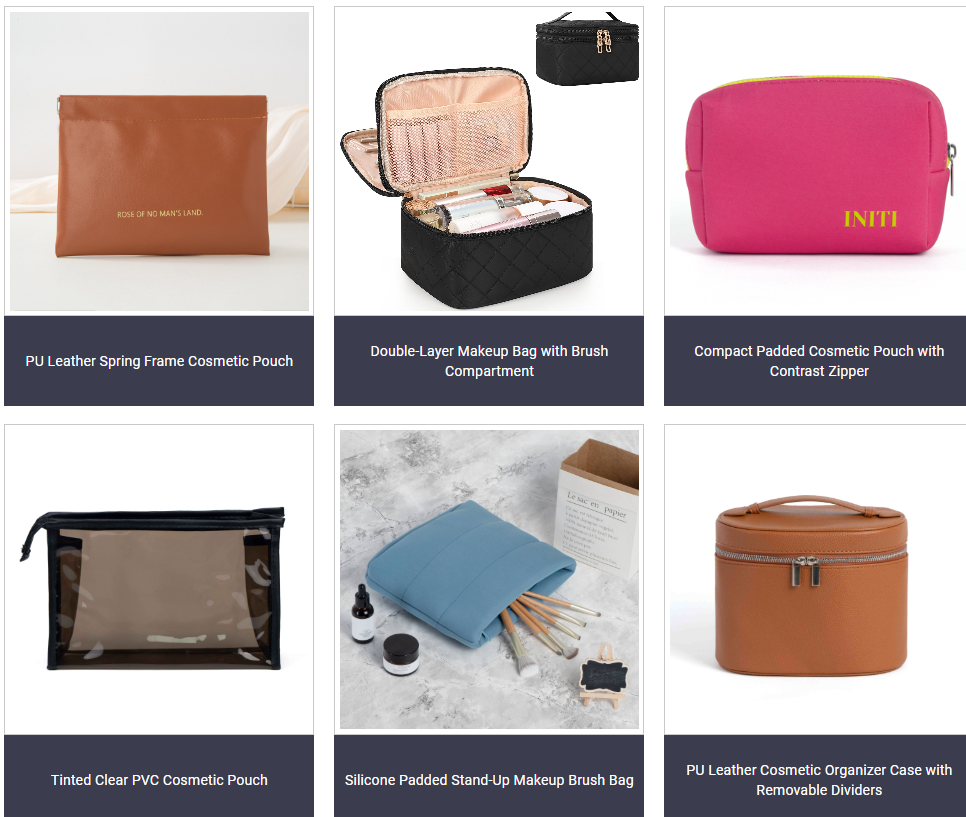
Cosmetic bags range from very simple zip pouches to multi-compartment organizers.
Common types include:
Materials may include:
Polyester
Nylon
PU
Cotton
Canvas
PVC
TPU
Quilted fabric
The correct material depends on whether the priority is:
Appearance
Easy cleaning
Transparency
Structure
Fashion styling
When a Cosmetic Bag Makes Sense
Choose one for:
Beauty brands
Cosmetic gift sets
Retail promotions
Travel products
Subscription boxes
For products likely to encounter makeup residue or liquid spills, lining and cleanability matter more than decorative exterior fabric alone.
A toiletry bag overlaps with a cosmetic bag, but it is generally developed around travel and personal-care products.
It may carry:
Shampoo
Toothbrush
Razor
Deodorant
Skincare
Travel bottles
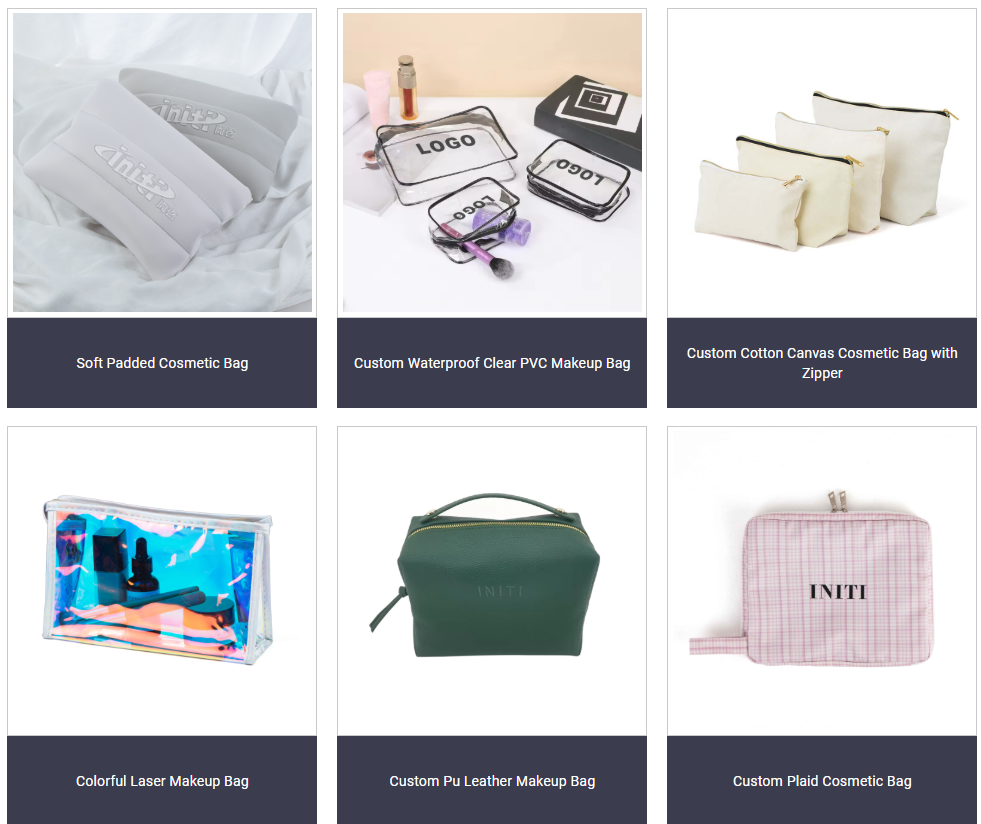
Common versions include:
Dopp kits
Hanging toiletry bags
Travel organizers
Wet/dry toiletry bags
Useful features can include:
When a Toiletry Bag Makes Sense
Choose one for:
Travel brands
Hotels
Airlines
Men's grooming
Beauty programs
Corporate gifts
The structure should follow the actual contents rather than simply adding as many compartments as possible.
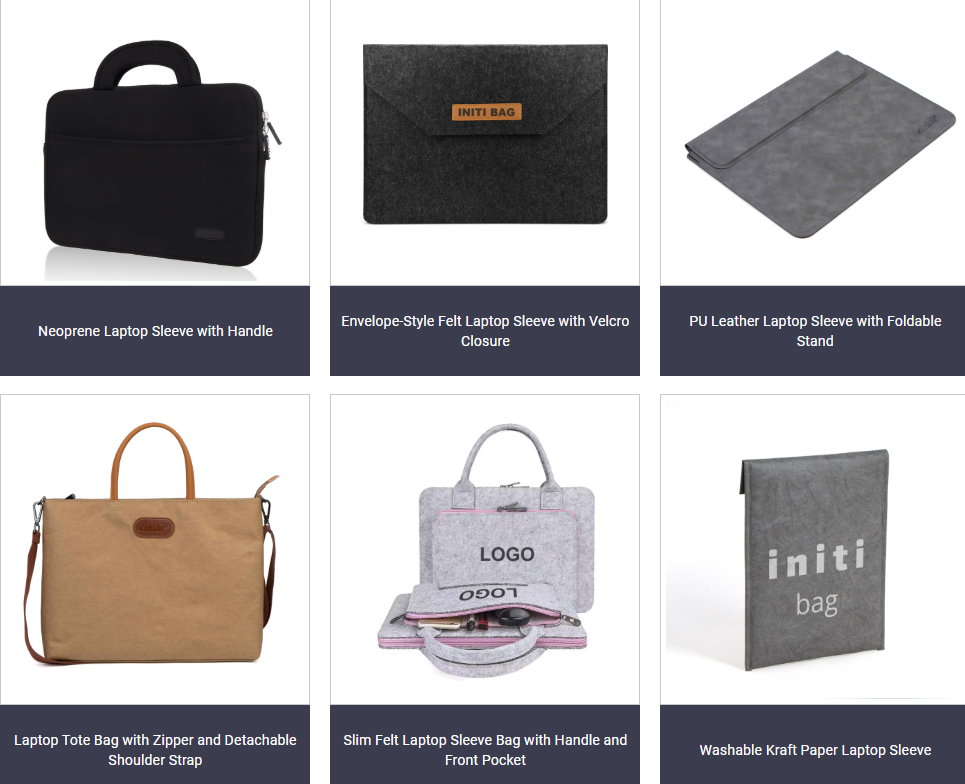
Laptop products can be divided into two broad groups.
A close-fitting protective layer around the device.
A larger carrying product with space for:
Laptop
Charger
Documents
Mouse
Personal items
Common materials include:
Nylon
Polyester
Felt
Canvas
PU
Neoprene
The important details are:
Device dimensions
Padding
Bottom protection
Fit
Zipper position
A 15.6-inch label alone is not enough because laptops with the same screen size can have different external dimensions.
When Laptop Bags Make Sense
They work well for:
Employee gifts
Technology companies
Offices
Universities
Business travel
Garment bags are designed to store and transport hanging clothing.
Common contents include:
Suits
Jackets
Dresses
Uniforms
Formalwear
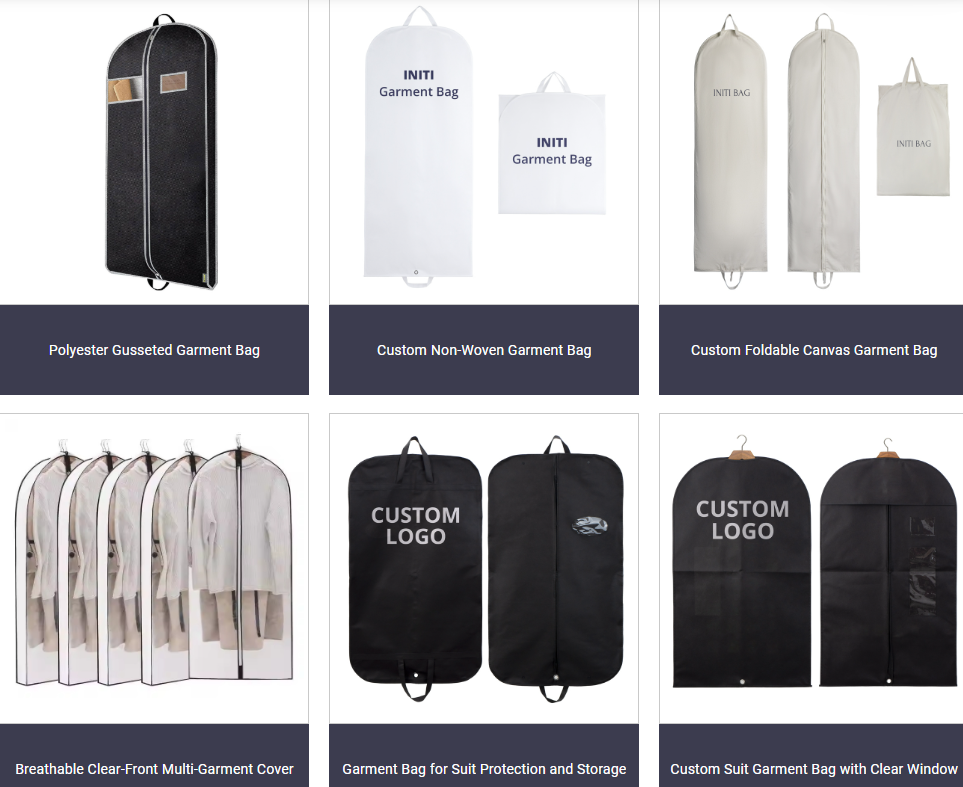
Typical structures include:
Full-length garment bag
Foldable garment bag
Suit carrier
Garment duffel
Common materials include:
Nonwoven PP
Polyester
PEVA
Nylon
Canvas
Useful features may include:
Hanger opening
Full-length zipper
Carry handles
Shoe pocket
ID window
When a Garment Bag Makes Sense
Choose one when reducing unnecessary folding and keeping garments separated matters more than general luggage capacity.
Shoe bags keep footwear separate from:
Clothing
Luggage
Other equipment
Common types include:
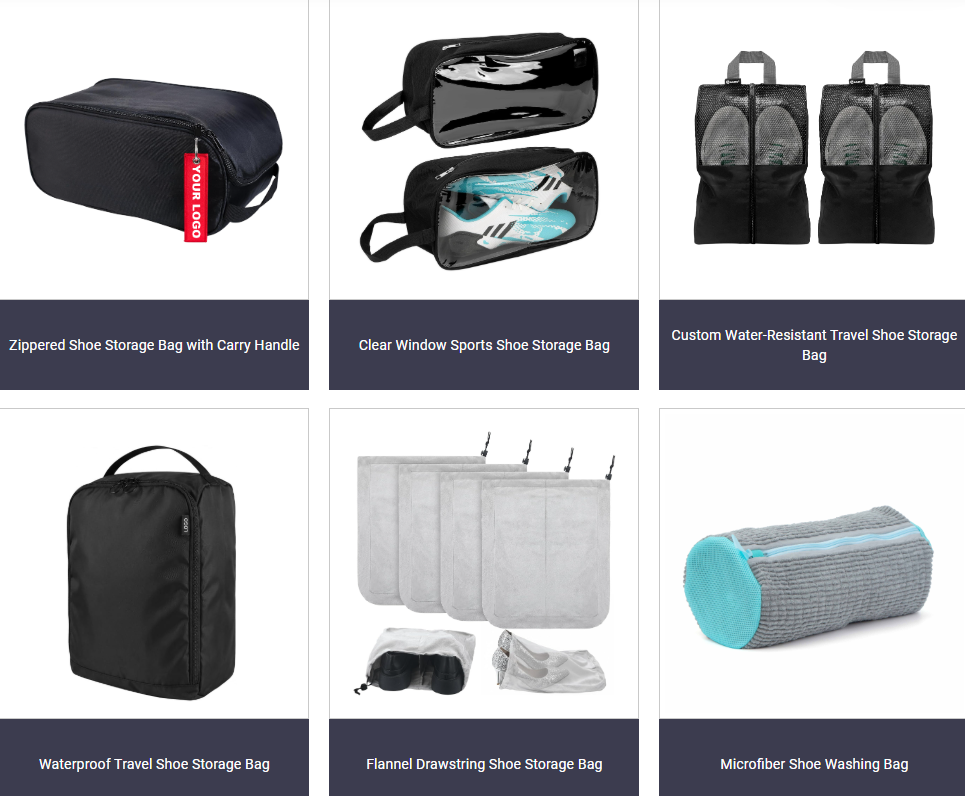
Materials may include:
Nonwoven fabric
Polyester
Nylon
Mesh
Cotton
The right material depends on whether the bag is being used for:
Retail packaging
Storage
Travel
Washing
A shoe wash bag and a luxury shoe dust bag solve very different problems.
Storage bags cover a broad range of home and travel organization products.
They can include:
Common materials include:
Polyester
Cotton
Canvas
Felt
Nonwoven PP
Mesh
Large storage bags need attention to:
Handle strength
Seam construction
Bottom reinforcement
because their contents may be bulky even when they are not especially heavy.
Wine bags are designed around bottle dimensions and gift presentation.
Common versions include:
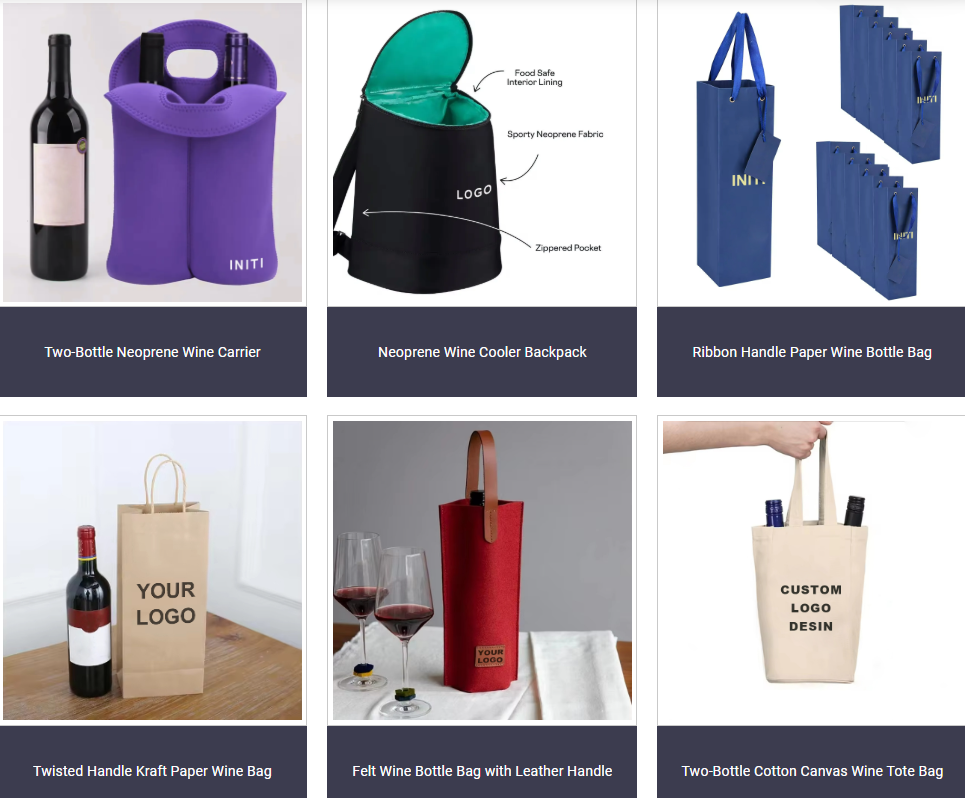
Materials include:
Jute
Cotton
Canvas
Felt
Paper
For multi-bottle bags, dividers help prevent bottles from knocking directly against each other.
When a Wine Bag Makes Sense
Choose one for:
Wineries
Hotels
Restaurants
Corporate gifts
Holiday gifting
Retail packaging
The bottle dimensions and quantity should be confirmed before developing the bag.
Beach bags generally prioritize:
Large capacity
Lightweight construction
Easy cleaning
Sand or water handling
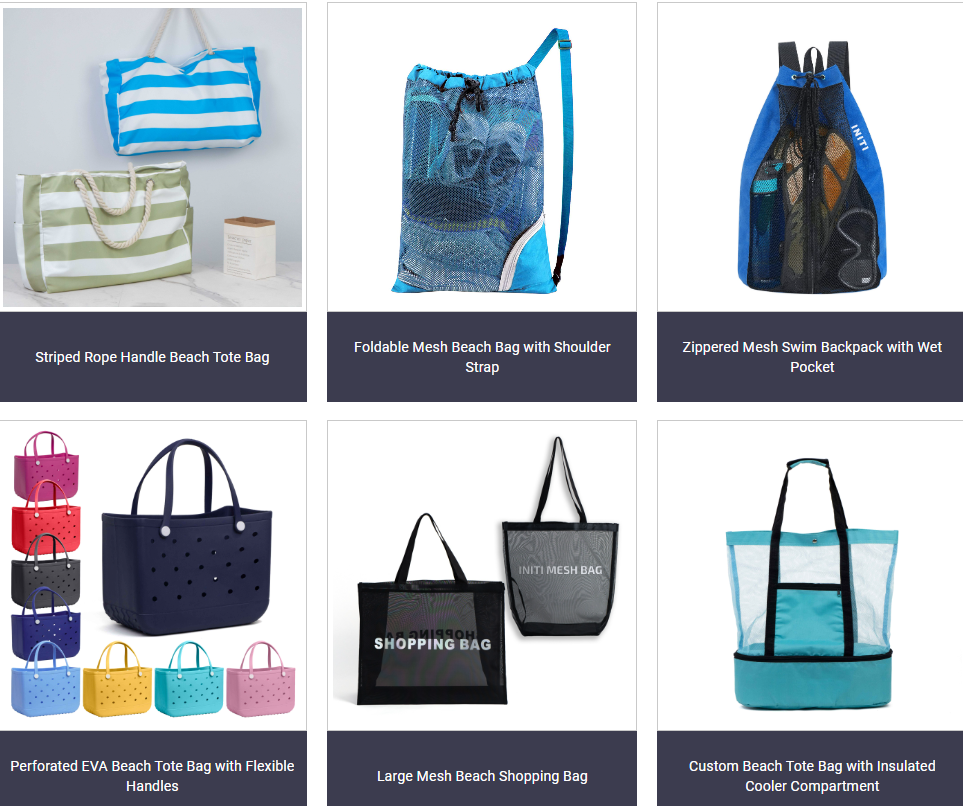
Common materials include:
Mesh
Polyester
Nylon
Canvas
PVC
TPU
EVA-type constructions
Mesh works well when:
Sand drainage
Ventilation
matter.
Canvas creates a more lifestyle-oriented appearance.
Synthetic materials are often more practical when repeated exposure to moisture is expected.
When a Beach Bag Makes Sense
Typical applications include:
Resorts
Hotels
Pool clubs
Summer retail
Travel brands
“Promotional bag” is not one fixed bag type.
It describes how the bag is being used.
A promotional program might use:
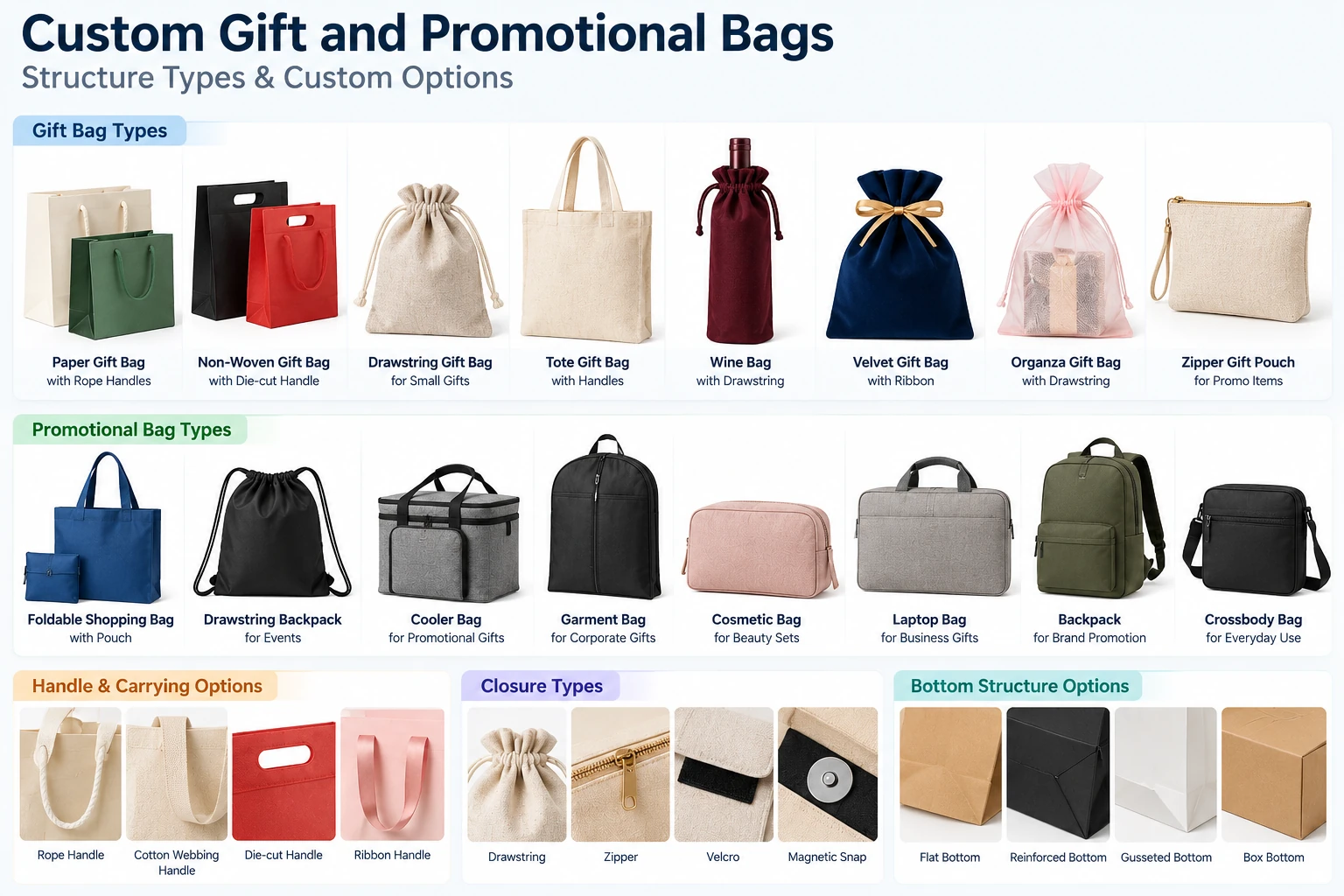
For high-volume giveaways, simpler bags often work better because they provide:
Lower unit complexity
Good logo visibility
Easier distribution
For premium gifts, buyers may choose:
Backpack
Laptop bag
Travel bag
Structured cosmetic set
Current promotional suppliers similarly span tote, drawstring, backpack, pouch, cooler, laptop and travel categories depending on the campaign rather than treating “promotional bag” as one construction.
Not every custom bag needs to be reusable textile packaging.
Paper bags remain important for:
Fashion retail
Gifts
Food
Beauty
Jewelry
Events
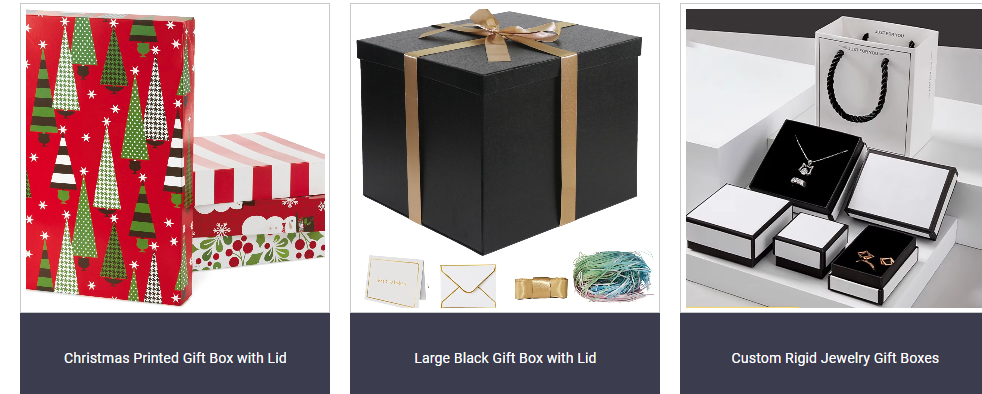
Common types include:
Current paper-bag sourcing guides commonly distinguish these styles by handle and construction because those details substantially change cost and use.
The right paper bag depends on:
Product weight
Brand presentation
Printing
Handle style
Reinforcement
A simple kraft takeaway bag and a laminated premium gift bag should not be treated as the same product.
How Are Custom Bags Different from Standard Bags?
Customization can happen at several levels.
Logo Customization
The simplest level.
A standard bag structure is decorated with:
Printing
Embroidery
Label
Patch
This is suitable when the existing size and construction already meet the project requirements.
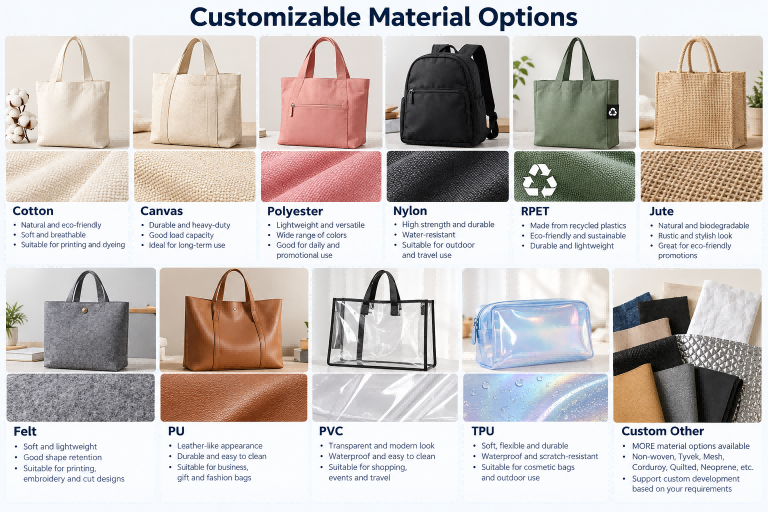
Material Customization
The same bag shape can be developed in:
Cotton
Canvas
Polyester
Nylon
RPET
Jute
Felt
PU
PVC
TPU
Material changes can affect:
Appearance
Weight
Flexibility
Printing
Cleaning
Cost
Structural Customization
The product itself can also be changed.
Examples include:
Different dimensions
Wider gusset
Additional zipper
Longer handle
Adjustable strap
Laptop compartment
Shoe compartment
Insulation
Reinforced bottom
This is where custom manufacturing moves beyond simply printing a logo on a stock bag.
Which Custom Bag Type Should You Choose?
Start with the intended use.
Retail Shopping
Good starting points:
Tote
Shopping bag
Foldable bag
Paper bag
Corporate Gifts
Consider:
Backpack
Laptop bag
Tote
Cosmetic bag
Travel bag
Events and Promotions
Consider:
Drawstring bag
Tote
Foldable bag
Lightweight backpack
Sports and Fitness
Consider:
Duffel
Drawstring backpack
Shoe bag
Sports backpack
Travel
Consider:
Backpack
Duffel
Crossbody
Toiletry bag
Shoe bag
Garment bag
Beauty
Consider:
Cosmetic bag
Toiletry bag
Pouch
Gift bag
Food and Beverage
Consider:
Cooler bag
Lunch bag
Takeaway bag
Wine bag
Home Organization
Consider:
Storage bag
Laundry bag
Organizer
The bag type should follow the job it needs to do.
Material Comes After Bag Type
One common mistake is starting with:
“I want a canvas bag.”
before deciding what the bag actually needs to be.
Canvas can be used for:
Tote bags
Backpacks
Cosmetic bags
Wine bags
Shoe bags
Storage bags
but that does not mean it is the best material for all of them.
A better sequence is:
application → bag type → size → structure → material → branding
For example:
Need a reusable supermarket bag carrying boxed groceries.
That might lead toward:
gusseted tote → reinforced handles → canvas / PP woven / RPET
Another project might be:
Need a lightweight giveaway for a charity run.
That may lead toward:
drawstring backpack → lightweight polyester → screen-printed logo
The material decision becomes much easier once the use is clear.
What Information Is Needed for a Custom Bag Project?
A useful starting brief includes:
| Item |
Information to Provide |
| Intended Use |
Shopping, travel, gift, sport, storage, etc. |
| Bag Type |
Tote, backpack, crossbody, etc. |
| Quantity |
Estimated order volume |
| Size |
Dimensions or product being carried |
| Material |
If already decided |
| Expected Load |
Approximate contents and weight |
| Compartments |
Required pockets or separation |
| Closure |
Zipper, drawstring, snap, open top |
| Carry Method |
Hand, shoulder, crossbody, backpack |
| Colors |
Required fabric colors |
| Branding |
Logo and artwork |
| Packaging |
Bulk or individual packaging |
You do not need to finalize every technical detail before requesting a quotation.
What matters most at the beginning is:
what the bag is for + what goes inside it + how many you need.
Common Mistakes When Choosing a Custom Bag
Choosing by Appearance Alone
A bag can look right and still have the wrong:
Capacity
Strap
Opening
Material
for the intended use.
Starting with Material Instead of Function
“Canvas bag” is not a complete specification.
Neither is:
Nylon bag
RPET bag
Cotton bag
First decide what type of bag is needed.
Adding Too Many Features
More:
Pockets
Zippers
Hardware
Padding
increase:
Weight
Cost
Production complexity
Only add features that solve a real problem.
Ignoring Expected Load
A lightweight event bag and a reusable grocery bag need different:
Fabric
Seams
Handles
Reinforcement
Choosing Size from a Generic Chart
When the bag is designed around a specific product, use the actual product dimensions.
Treating Every Custom Bag as a Promotional Bag
Some bags are primarily:
Packaging
Retail products
Travel equipment
Storage products
Fashion accessories
The branding should match the role.
FAQ
What are the most common types of custom bags?
The most common categories include tote bags, backpacks, drawstring bags, crossbody bags, duffel bags, cooler bags, cosmetic bags, toiletry bags, laptop bags, garment bags and storage bags.
What type of custom bag is best for promotions?
Tote bags and drawstring bags are common choices for high-volume promotional programs because they are relatively simple, easy to distribute and provide visible branding areas. More premium programs may use backpacks, laptop bags or travel products.
What is the best custom bag for retail?
It depends on the product. Totes and paper shopping bags work well for general retail, cosmetic bags suit beauty products, wine bags suit bottles, and reusable textile bags can work as both packaging and merchandise.
Which custom bags are best for corporate gifts?
Common options include backpacks, laptop bags, totes, cooler bags, travel bags and cosmetic/toiletry sets. The right choice depends on budget and how useful the product will be to the recipient.
Can custom bags be made from recycled materials?
Yes. RPET polyester is widely used for tote bags, backpacks, drawstring bags and other styles. Recycled content should be specified and supported by relevant documentation when it is part of the product claim.
Can the size and structure of a bag be customized?
Yes. Custom projects can adjust dimensions, gussets, handles, shoulder straps, pockets, lining, closures and other structural details according to the intended use.
Conclusion
There are many types of custom bags because bags solve very different problems.
A tote works well for shopping.
A backpack makes more sense when hands-free carrying and comfort matter.
A drawstring bag works for lightweight sports, events and packaging.
A cooler bag needs insulation.
A laptop bag needs padding.
A garment bag protects hanging clothing.
A cosmetic bag focuses on small-item organization.
So the first question should not be:
What material do I want?
It should be:
What does this bag need to do?
Once the application is clear, the next decisions become much easier:
bag type → size → structure → material → branding.
That produces a more useful custom product than choosing a material or shape simply because it looks good.
Inquiry Support
For a custom bag project, you can provide:
Intended use
Estimated quantity
Preferred bag type
Preferred size or reference dimensions
Expected contents
Preferred materials, if already decided
Required colors
Logo artwork
Pocket or compartment requirements
Packaging requirements
If you have not finalized all details, you can first send your intended use and target quantity, and we can recommend a suitable specification.
Related Blog Articles





 Hot News