PEVA vs Aluminum Foil Lining for Insulated Bags
PEVA and aluminum foil are two common inner-lining options for insulated lunch bags, cooler bags and thermal food carriers.
At first glance, the choice seems simple:
- PEVA provides a smooth, flexible and easy-to-clean interior.
- Aluminum foil laminate provides a reflective metallic surface and is commonly used in economical insulated bags.
But lining material alone does not determine how long a cooler bag keeps food cold.
A typical insulated bag usually contains three functional layers:
- Outer fabric — polyester, Oxford fabric, RPET, non-woven or another textile.
- Middle insulation — usually EPE/PE foam or another insulating material.
- Inner lining — PEVA, aluminum foil laminate or another wipe-clean material.
The middle foam layer usually provides much of the resistance to conductive heat transfer, while the inner lining mainly affects moisture handling, cleaning, durability, radiant heat reflection and construction method.
For B2B buyers, PEVA vs aluminum foil should therefore be treated as a complete construction decision, not simply a question of which lining “keeps food colder.”
PEVA vs Aluminum Foil: Quick Comparison
| Specification |
PEVA Lining |
Aluminum Foil Lining |
| Surface |
Smooth, plastic-like |
Reflective metallic |
| Flexibility |
Generally good |
Depends on laminate; thin foil can crease |
| Radiant heat reflection |
Limited |
Better reflective surface |
| Cleaning |
Easy to wipe |
Wipeable, but thin foil can be damaged by aggressive cleaning |
| Moisture resistance |
Good |
Foil surface resists moisture |
| Leak resistance |
Can be very good with sealed seams |
Often limited when seams are stitched |
| Puncture resistance |
Generally better for repeated use |
Thin foil laminate can puncture or scratch |
| Folding durability |
Generally good |
Repeated folding may crease the foil layer |
| Appearance |
Clean, smooth interior |
Traditional “thermal” appearance |
| Typical positioning |
Daily-use / mid-range / premium cooler bags |
Promotional / value-oriented insulated bags |
| Cost |
Usually higher |
Usually lower for basic constructions |
Actual performance varies according to material thickness, laminate structure, foam, seam construction and manufacturing quality.
What Is PEVA Lining?
PEVA is a flexible polymer-based film commonly used as the internal surface of lunch bags and soft coolers.
In an insulated bag, PEVA is normally used as the inner contact layer, while foam behind it provides the main thermal insulation.
Its main advantages are not that PEVA itself is a powerful insulation material, but that it creates a practical internal surface.
Main Advantages of PEVA
PEVA is commonly selected because it provides:
- Smooth interior surface
- Good flexibility
- Moisture resistance
- Easy wiping and cleaning
- Better resistance to repeated folding than very thin foil laminates
- Compatibility with sealed lining constructions
This makes it suitable for products that may regularly experience:
- Condensation
- Small food spills
- Melted ice packs
- Daily cleaning
- Frequent opening and closing
For lunch bags and frequently reused cooler bags, this usability can be more important than having a metallic-looking interior.
What Is Aluminum Foil Lining?
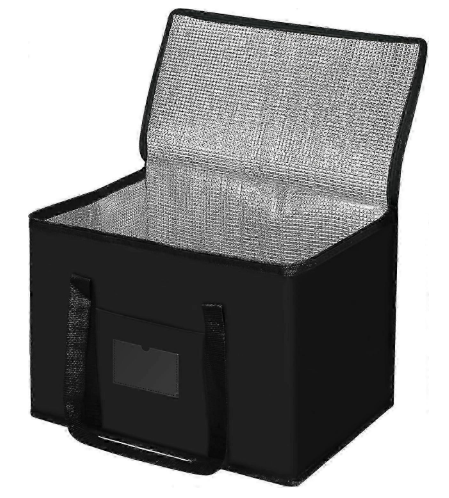
In cooler bags, “aluminum foil lining” usually means a thin foil or metallized laminate combined with another backing material, rather than a thick sheet of household aluminum foil.
It is often laminated to:
- EPE foam
- Bubble insulation
- PE film
- Other supporting materials
The shiny surface can reflect part of the radiant heat reaching the inside of the bag.
However, the visible foil should not be confused with the main insulation layer.
A cooler bag with:
thin foam + aluminum foil
may perform worse than a bag using:
thicker foam + PEVA lining
because foam thickness, density, zipper closure and overall construction have a major effect on temperature retention.
Which Lining Provides Better Insulation?
This question needs to be divided into two parts.
Aluminum Foil Helps With Radiant Heat
The reflective surface of aluminum foil can reduce radiant heat transfer.
This can be useful when the insulated bag is exposed to:
- Sunlight
- Hot vehicles
- Outdoor environments
- Warm surrounding surfaces
This is one reason reflective foil is common in cooler bags.
However, radiant heat is only one pathway through which heat enters the bag.
Foam Does Most of the Thermal Work
Heat also moves through the walls by conduction.
For this reason, insulation performance depends heavily on:
- Foam type
- Foam thickness
- Foam density
- Side-wall construction
- Bottom insulation
- Lid insulation
- Zipper gaps
- Bag dimensions
- Amount of empty air inside
- External temperature
- Use of ice packs
Therefore:
Aluminum foil lining does not automatically mean better overall insulation than PEVA.
When comparing supplier quotations, buyers should ask for the entire insulation structure, for example:
600D polyester + 5 mm EPE foam + PEVA lining
rather than simply:
PEVA cooler bag
or:
foil insulated bag.
Which Is Better for Leak Resistance?
For leak resistance, construction matters more than the lining material name.
PEVA has an important advantage because suitable PEVA liner constructions can be produced with sealed seams, reducing the number of needle holes through the liner.
This can help create a more water-resistant internal compartment.
Stitched PEVA
If PEVA is simply sewn into the bag, needle holes can still allow water to pass through.
Sealed PEVA
When the liner construction uses suitable heat-sealing methods, seam leakage can be substantially reduced.
This is useful for:
- Soft coolers
- Meal-prep bags
- Grocery coolers
- Picnic bags
- Bags exposed to condensation
Aluminum Foil and Leakage
Aluminum foil itself does not absorb water.
The problem is normally the seam.
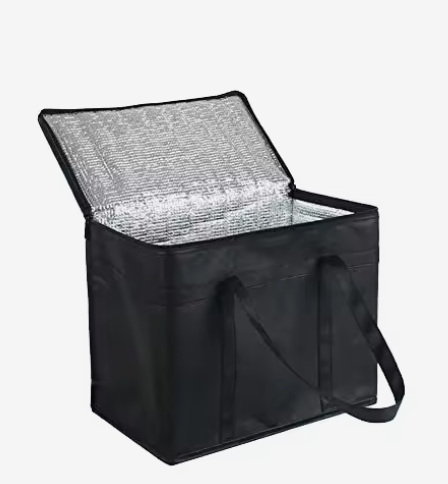
Many low-cost foil-lined bags are assembled with conventional stitching.
Once the needle penetrates the foil laminate, small openings are created along the seam.
This means a foil-lined bag can be perfectly suitable for:
- Lunch boxes
- Bottled drinks
- Gel ice packs
- Packaged food
but may still leak if users fill the compartment directly with loose ice and allow large quantities of meltwater to accumulate.
Therefore, buyers should not automatically describe a foil-lined cooler as leakproof unless the finished construction has actually passed a leakage test.
Which Lining Is More Durable?
For repeated-use insulated bags, PEVA generally offers an advantage in flexibility.
A reasonably specified PEVA lining can tolerate repeated:
- Folding
- Opening
- Wiping
- Packing
- Unpacking
without developing the same type of permanent metallic creases seen in some thin foil laminates.
Common PEVA Failure Points
PEVA can still fail because of:
- Material that is too thin
- Sharp container corners
- Poor seam construction
- Excessive pulling
- Poor-quality lamination
- Incorrect cleaning
So PEVA should not automatically be treated as heavy-duty simply because of the material name.
Common Aluminum Foil Failure Points
Thin foil laminate is more sensitive to:
- Scratching
- Punctures
- Repeated sharp folding
- Abrasion
- Delamination
- Crushing during packing
Hard food containers, metal utensils or sharp packaging corners can damage lightweight foil surfaces over time. INITIGIFT also notes puncture risk from sharp containers on its current foil-lined Oxford cooler-bag product.
For occasional promotional use, this may be acceptable.
For a cooler bag expected to be used every day for several years, lining durability deserves greater attention.
Which Is Easier to Clean?
PEVA generally has the advantage for frequent cleaning.
Its smooth surface can usually be wiped with a damp cloth after:
- Sauce spills
- Condensation
- Fruit juice
- Food residue
- Drink leakage
This makes it useful for:
Aluminum foil lining is also wipeable, but buyers should consider the thickness and surface construction.
Aggressive scrubbing can damage some lightweight foil laminates, particularly once they have developed creases or scratches.
If frequent cleaning is expected, physical samples should be tested repeatedly rather than judging the lining only from appearance.
PEVA vs Aluminum Foil for Different Applications
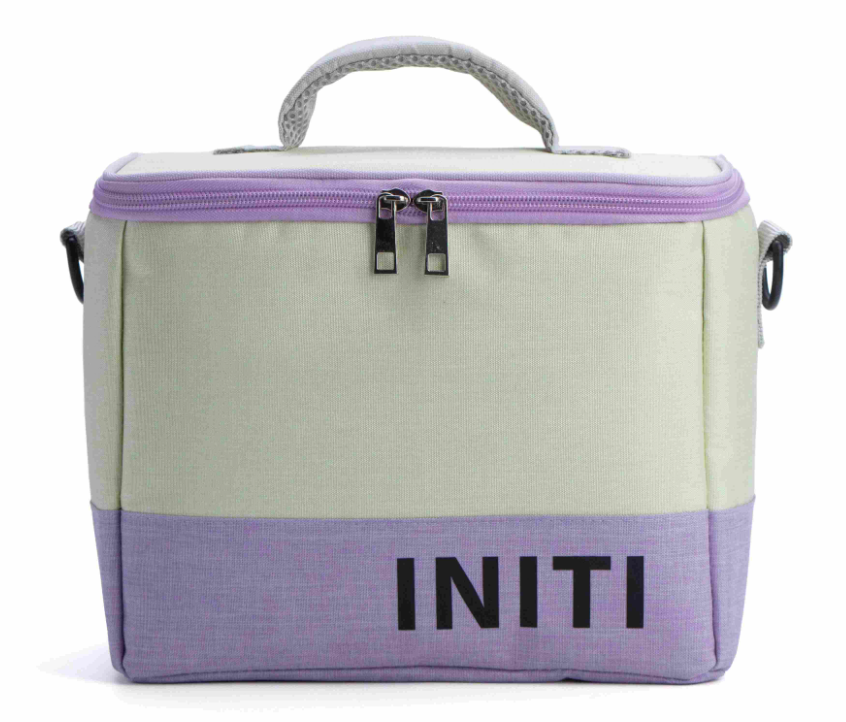
Recommended direction: PEVA or durable foil laminate
The bag normally carries sealed lunch boxes and ice packs rather than loose ice.
Important considerations include:
- Easy cleaning
- Low weight
- Compact size
- Moderate insulation
- Cost
Both materials can work.
PEVA may provide a cleaner reusable interior, while foil can be effective for price-sensitive products.
Recommended direction: aluminum foil laminate
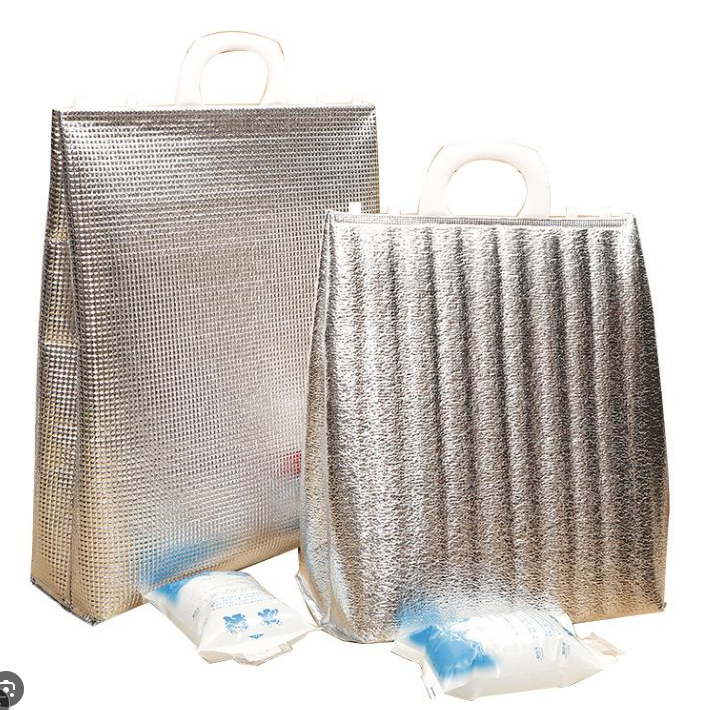
For promotional projects where:
- Unit cost matters
- Usage is relatively light
- The bag mainly carries bottled drinks or packaged food
- A visible thermal appearance is desirable
foil lining can be a practical option.
The metallic interior immediately communicates the concept of an insulated product to consumers.
Recommended direction: PEVA
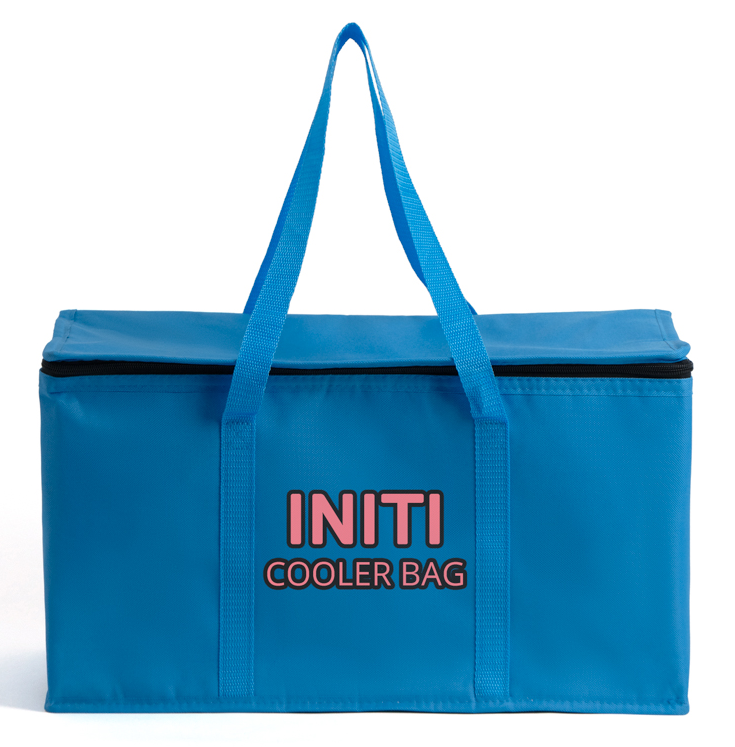
When buyers expect:
- Frequent cleaning
- Repeated folding
- Longer service life
- Better resistance to internal moisture
PEVA is often a more suitable specification.
Recommended direction: PEVA or upgraded sealed lining
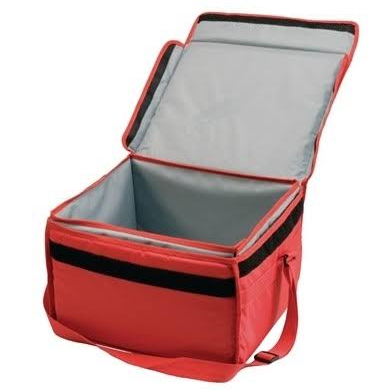
Larger cooler bags may carry:
- Drinks
- Food containers
- Ice packs
- Fruit
- Meat packaging
Condensation and accidental liquid leakage are more common.
In these applications, seam construction and cleaning become more important.
The decision should depend on the actual delivery model.
For packaged food with no loose liquid:
Aluminum foil + adequate foam can be a cost-effective option.
For frequent commercial use requiring repeated wiping and greater moisture control:
PEVA or another durable sealed lining may be preferable.
The outer structure, foam thickness and closure usually matter just as much as the visible lining.
Does PEVA Mean the Bag Is Leakproof?
No.
This is one of the most important purchasing distinctions.
PEVA material ≠ leakproof finished bag.
The buyer should check:
- Are the liner seams sewn or sealed?
- Are there needle holes?
- How are corners formed?
- Is the zipper area protected?
- Does the liner extend far enough up the sides?
- Has the finished bag passed a water leakage test?
A good specification should define the finished-bag performance rather than relying on a material name.
Does Aluminum Foil Mean Better Cold Retention?
Not necessarily.
Foil has a reflective advantage against radiant heat, but cooler-bag performance is the result of the complete construction.
Compare these two examples:
Bag A
- 600D Oxford outer fabric
- 2 mm foam
- Aluminum foil lining
Bag B
- 600D Oxford outer fabric
- 8 mm foam
- PEVA lining
- Well-insulated zipper area
Bag B may provide better overall temperature control even though it does not use aluminum foil.
Therefore, buyers should request thermal testing when temperature retention is commercially important.
What Should Buyers Specify in an Insulated Bag RFQ?
Instead of writing:
“Need PEVA cooler bag.”
provide a complete specification.
| Specification |
Information to Confirm |
| Intended Use |
Lunch / grocery / picnic / delivery |
| Outer Material |
Polyester / Oxford / RPET / custom |
| Lining |
PEVA / aluminum foil |
| Lining Thickness |
Confirm with supplier |
| Insulation |
EPE / PE foam / custom |
| Foam Thickness |
e.g. 3 mm / 5 mm / 8 mm |
| Seam Structure |
Sewn / sealed liner |
| Leak Requirement |
Standard moisture resistance / tested leak resistance |
| Capacity |
Liters or dimensions |
| Closure |
Zipper / roll-top / hook-and-loop |
| Temperature Requirement |
Target use duration and environment |
| Ice Packs |
Yes / no |
| Logo |
Printing / embroidery / label |
| Market |
US / EU / UK / other |
| Testing |
Leakage / thermal / material compliance |
This prevents two suppliers from quoting visually similar bags with completely different internal constructions.
Food-Contact Compliance
If the inner lining may directly contact unpackaged food, the buyer should confirm compliance for the destination market.
The material name alone is not sufficient.
For example, U.S. FDA requirements address substances used in food-contact materials, including packaging components, while EU food-contact rules apply to materials and articles intended to come into contact with food.
Buyers should therefore confirm:
- Exact material composition
- Applicable test standard
- Intended contact conditions
- Supplier test report
- Whether the tested material matches the production batch
A claim such as “food grade PEVA” should be supported by appropriate documentation rather than treated as an automatic property of every PEVA formulation.
The same principle applies to foil laminates, adhesives and backing films.
Which Is Better: PEVA or Aluminum Foil?
There is no universal winner.
Choose PEVA when:
- The product is intended for frequent reuse.
- Internal cleaning is important.
- Condensation or spills are common.
- Better liner flexibility is required.
- A sealed liner structure is needed.
- The product is positioned above basic promotional quality.
Choose aluminum foil when:
- Cost control is important.
- The bag is intended for light or occasional use.
- Reflective appearance is desirable.
- The contents are normally sealed.
- The product does not require high leak resistance.
- It is a promotional or entry-level insulated product.
For higher-performance cooler bags, the most important question may not be PEVA vs foil at all.
It may be:
How thick is the insulation, how is the liner sealed, and what thermal/leakage test does the finished bag need to pass?
FAQ
Is PEVA better than aluminum foil for cooler bags?
PEVA is generally better for easy cleaning, flexibility and sealed moisture-resistant constructions. Aluminum foil offers a reflective surface and is often more economical. The better option depends on the application.
Does aluminum foil keep food colder than PEVA?
Foil can help reduce radiant heat transfer, but the overall cold-retention performance depends heavily on foam thickness, closure, bag construction, ambient temperature and ice packs.
Is PEVA waterproof?
PEVA film itself can resist water, but the finished bag is not automatically leakproof. Sewn seams and zipper areas can still allow leakage.
Can aluminum foil cooler bags hold loose ice?
Not automatically. Many foil linings use stitched seams that can leak when ice melts. A finished-bag leakage test should be specified if loose ice is part of the intended use.
Which lining is better for a promotional lunch bag?
For price-sensitive promotional programs, aluminum foil laminate is often practical. For a higher-quality reusable lunch bag that requires frequent cleaning, PEVA may offer better long-term usability.
Conclusion
PEVA and aluminum foil perform different jobs inside an insulated bag.
PEVA is generally stronger in:
- Cleaning
- Flexibility
- Moisture management
- Repeated use
- Sealed liner construction
Aluminum foil is generally stronger in:
- Reflective appearance
- Radiant heat reflection
- Lightweight construction
- Cost-sensitive products
But neither lining should be evaluated separately from the foam insulation, seams, zipper and complete bag structure.
For B2B sourcing, the best approach is to define the required usage, insulation time, leakage requirement and target price first, then select the lining and insulation structure accordingly.
Inquiry Support
For a custom insulated bag project, provide:
- Intended use
- Bag dimensions or capacity
- Estimated quantity
- Preferred outer material
- PEVA or aluminum foil lining preference
- Required insulation thickness
- Leakage requirement
- Target temperature-retention expectation
- Logo artwork
- Packaging requirements
If the internal structure has not been finalized, you can first provide the intended contents, usage duration and target quantity, and we can recommend a suitable insulation and lining combination.
Related Products


 Hot News