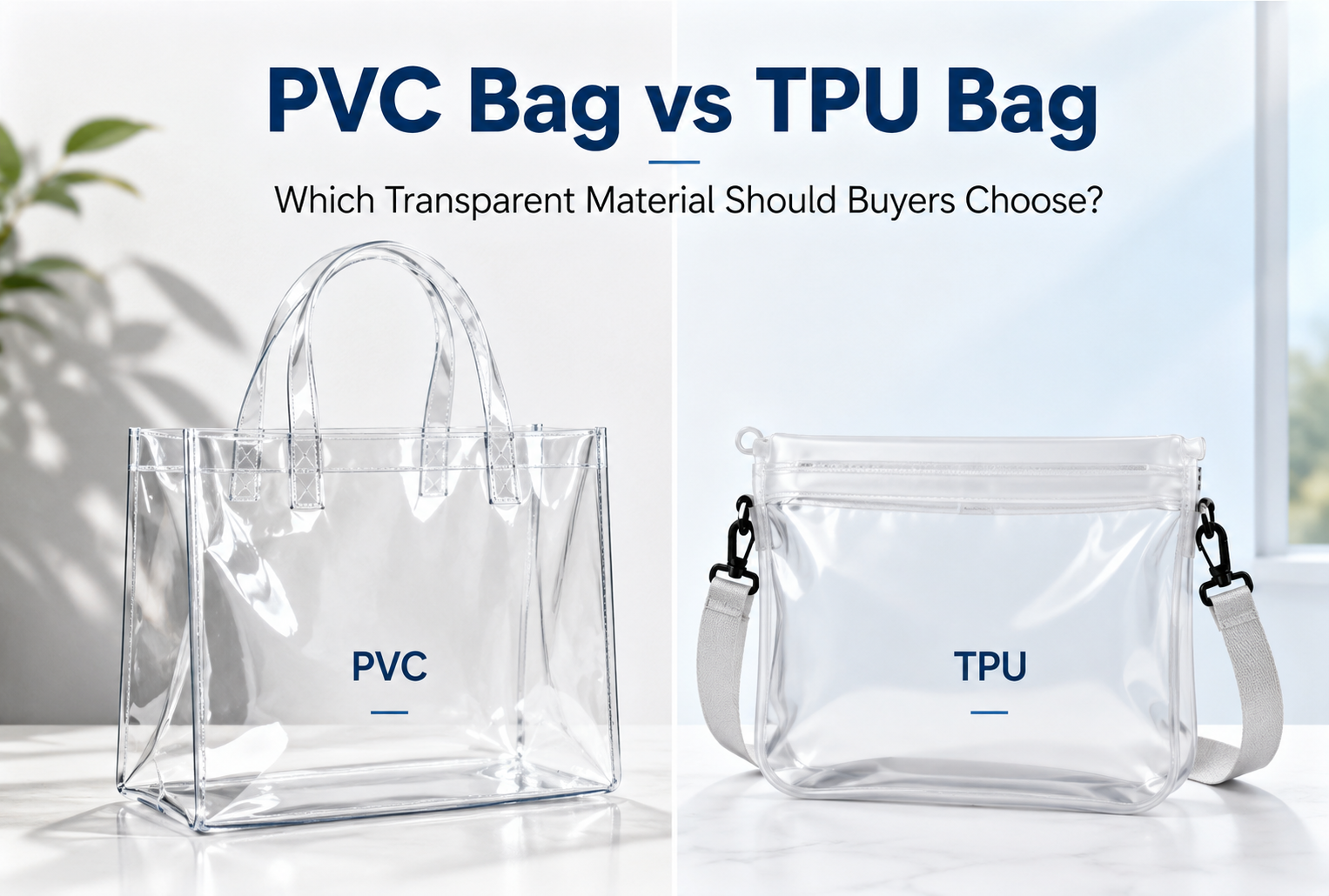
PVC Bag vs TPU Bag: Which Transparent Material Should Buyers Choose?
Transparent bags are widely used in beach, travel, cosmetic packaging, retail display, event merchandise, waterproof storage, and promotional projects. Among transparent materials, PVC and TPU are two common options for buyers who want a glossy, clear, waterproof, and modern-looking bag.
However, PVC bags and TPU bags are not the same. They differ in cost, flexibility, durability, softness, environmental positioning, transparency, odor control, and suitable applications.
For B2B buyers, choosing between PVC and TPU is not only a material decision. It affects product positioning, price level, target market, compliance requirements, and customer experience. This guide explains the key differences between PVC bags and TPU bags to help importers, distributors, retailers, promotional companies, and brand owners choose the right transparent material.
1. What Is a PVC Bag?
PVC stands for polyvinyl chloride. In bag manufacturing, PVC is often used as a transparent or semi-transparent plastic sheet material. It can be made in different colors, thicknesses, levels of transparency, and surface finishes.
PVC bags are commonly used for:
PVC has a glossy and eye-catching appearance. It is also easy to wipe clean and can provide good water resistance. Because of its cost control and visual effect, PVC is widely used in fashion retail, promotional packaging, beach products, and event bags.
The main impression of PVC is:
Glossy, transparent, cost-effective, and suitable for visual display.
2. What Is a TPU Bag?
TPU stands for thermoplastic polyurethane. It is a flexible plastic material known for softness, elasticity, abrasion resistance, and strong durability. TPU can also be transparent or semi-transparent, depending on material grade and production process.
TPU bags are commonly used for:
Compared with PVC, TPU is often positioned as a higher-performance transparent material. It usually feels softer, more flexible, and more durable, especially for products that require repeated bending or outdoor use.
The main impression of TPU is:
Flexible, durable, premium, and better for performance-focused products.
3. PVC vs TPU: Quick Comparison
| Comparison Point |
PVC Bag |
TPU Bag |
| Transparency |
Good, glossy |
Good, often softer-looking |
| Flexibility |
Medium, depends on thickness |
Better flexibility |
| Hand Feel |
Firmer, plastic-like |
Softer, more elastic |
| Water Resistance |
Good |
Excellent when properly constructed |
| Durability |
Good for regular use |
Stronger for repeated bending and outdoor use |
| Cost |
More cost-effective |
Higher cost |
| Odor Control |
Needs material control |
Usually better material feel |
| Printing |
Suitable for screen print, UV print, labels |
Suitable, but process depends on surface |
| Best Use |
Beach bags, retail bags, promotion, clear packaging |
Waterproof pouches, premium outdoor, travel, higher-end products |
| Market Positioning |
Commercial and cost-efficient |
Premium and performance-oriented |
Both materials can be used for transparent bags. The better choice depends on product use, target price, market requirements, and performance expectations.
4. Transparency and Visual Effect
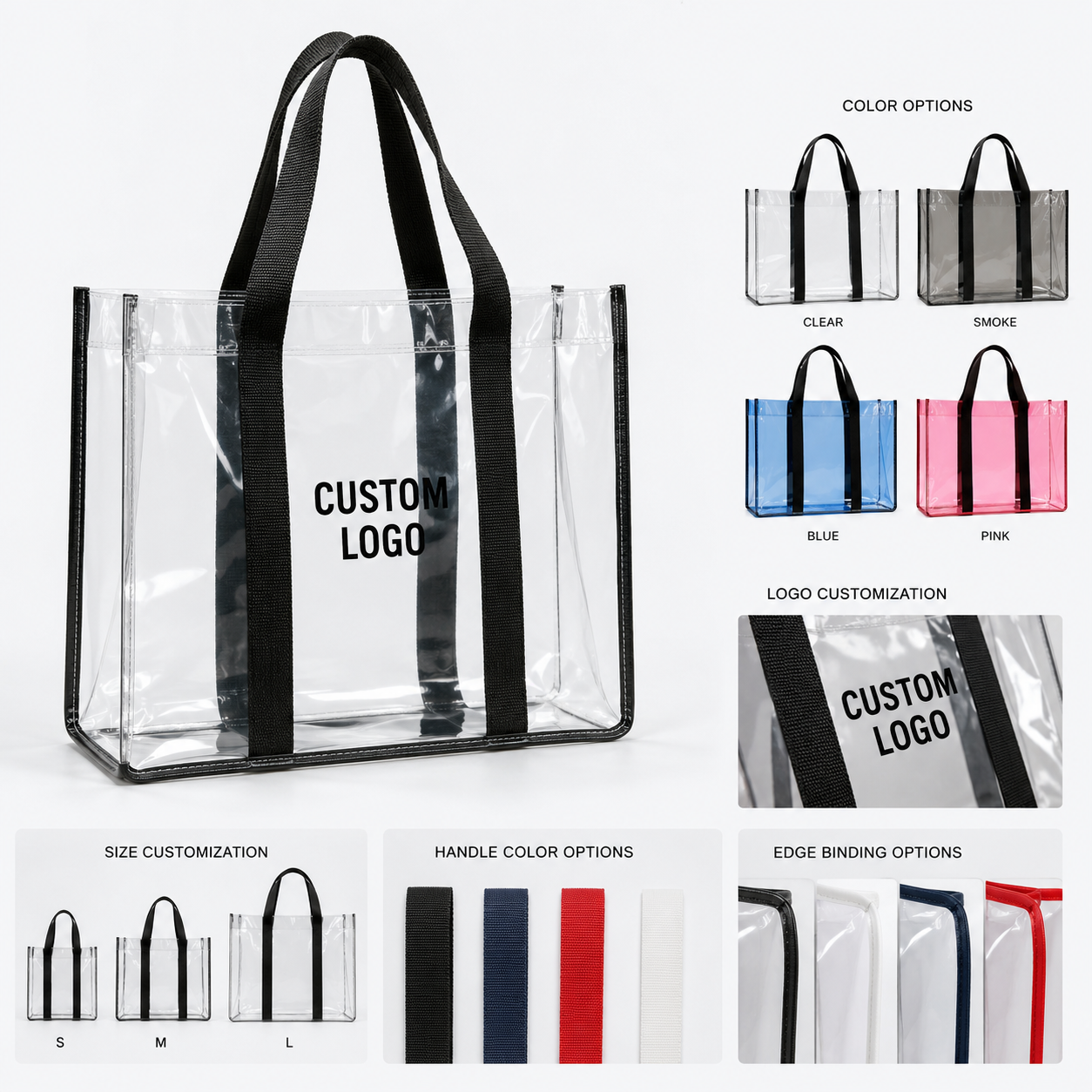
PVC is often selected when buyers want a strong glossy transparent effect. It works well for colorful transparent tote bags, fashion clear bags, beach bags, and promotional products. PVC can be produced in clear, purple, blue, yellow, black, brown, and other transparent color tones.
TPU can also be transparent, but its appearance may feel softer and more technical. It is often used when the buyer wants a premium material impression rather than a purely glossy fashion look.
If the project needs strong visual impact and cost control, PVC is usually easier to apply. If the project needs a softer and more premium transparent material, TPU can be considered.
5. Flexibility and Hand Feel
One major difference between PVC and TPU is flexibility.
PVC can be flexible, but it often feels more plastic-like. Its softness depends on thickness, formulation, and production process. Thicker PVC can provide better structure, but it may also feel stiffer.
TPU usually has better elasticity and a softer hand feel. It performs better when the bag needs to bend, fold, or move frequently. This makes TPU more suitable for waterproof pouches, outdoor products, sports accessories, and premium transparent storage products.
For a large transparent tote bag that needs shape and visual impact, PVC is often enough. For a bag that needs repeated bending, folding, or stronger flexibility, TPU may be the better choice.
6. Waterproof Performance
Both PVC and TPU can provide strong water resistance. However, waterproof performance depends not only on material, but also on structure.
Important factors include:
- Material thickness
- Sealing method
- Stitching or heat sealing
- Zipper type
- Seam construction
- Closure design
- Opening structure
- Product application
PVC bags are suitable for water-resistant shopping bags, beach totes, cosmetic bags, and transparent packaging. TPU is often used for products that require stronger waterproof or outdoor performance, such as dry bags, phone pouches, waterproof organizers, and sports accessories.
If the bag is mainly for beach, retail, shopping, or wet item storage, PVC may be suitable. If the bag needs stronger waterproof protection, TPU is usually more appropriate.
7. Durability and Long-Term Use
PVC provides good durability for regular bag applications. It is widely used in tote bags, cosmetic bags, and promotional packaging. However, buyers should pay attention to thickness, edge finishing, handle strength, and seam quality.
TPU generally performs better for abrasion resistance, flexibility, and long-term bending. It is more suitable for performance products and higher-value markets. This is why TPU is often used for outdoor waterproof accessories and protective transparent products.
For short-term promotional campaigns or fashion transparent bags, PVC is more cost-efficient. For long-term outdoor use or premium waterproof products, TPU offers stronger performance value.
8. Cost Difference
Cost is one of the most important reasons buyers choose PVC.
PVC is usually more affordable than TPU, making it suitable for:
- Large-volume promotional bags
- Clear shopping totes
- Beach bags
- Gift packaging
- Event bags
- Cosmetic bags
- Retail display bags
TPU is usually more expensive. It is better for buyers who want:
- Higher material performance
- Softer and more flexible touch
- Premium product positioning
- Stronger durability
- Outdoor or waterproof applications
- Higher-end retail products
If the project is price-sensitive, PVC is usually the practical choice. If the product needs premium performance and better material positioning, TPU can justify the higher cost.
9. Printing and Branding Options
Both PVC and TPU can be customized with logos, but buyers should choose the printing method based on material surface, transparency, thickness, and desired logo effect.
Common branding methods include:
- Screen printing
- UV printing
- Heat transfer
- Patch label
- Inner pouch branding
- Printed insert card
- Hangtag
- Embossed or molded logo
- Custom zipper puller
- Retail packaging branding
PVC usually offers strong visual logo display because of its glossy transparent surface. For transparent tote bags, large front-panel logo printing can create high brand visibility.
TPU can also be branded, but printing should be tested based on material grade and surface treatment. For higher-end products, buyers may choose subtle logo methods such as embossed details, rubber patches, woven labels, or packaging branding.
10. Compliance and Market Requirements
For international buyers, transparent plastic bag projects may require testing depending on market, product use, and customer requirements.
Buyers may need to check:
- Material safety requirements
- Phthalate-free requirements
- REACH compliance
- California Proposition 65 requirements
- Heavy metal limits
- Food-contact requirements if applicable
- Odor requirements
- Packaging and labeling requirements
PVC can meet certain requirements if the correct formulation and testing are used, but buyers should confirm the exact standard before production. TPU is often selected for markets that prefer higher-performance or more premium plastic materials.
The safest approach is to confirm target market requirements before sampling, especially for retail chains, children’s products, food-related use, or high-standard import markets.
11. Which Material Should Buyers Choose?
Choose PVC If:
- You need a cost-effective transparent bag
- The product is for beach, retail, promotion, or event use
- Glossy visual appearance is important
- The bag needs strong color transparency
- Large-volume production is required
- The project has a clear budget target
- The bag is mainly for regular daily use
Choose TPU If:
- You need better flexibility and softness
- The product is for outdoor or waterproof use
- The market requires higher material performance
- The bag needs repeated bending or folding
- The product is positioned as premium
- Stronger durability is required
- The buyer wants a higher-end transparent material option
Choose a Material After Testing If:
- The product needs special compliance
- The logo design is complex
- The bag requires strong waterproof sealing
- The product will be used in cold or hot environments
- The buyer needs a very specific transparency level
- The product is for food, cosmetics, or children-related markets
Recommended Products
Based on this PVC vs TPU material guide, buyers can consider the following product categories:
1. Transparent PVC Tote Bags
Transparent PVC tote bags are suitable for beach, shopping, retail display, travel, event merchandise, and promotional campaigns. They offer strong visual impact, waterproof performance, and flexible logo customization.
Suggested internal link: PVC / Plastic Tote Bags
2. Waterproof Beach Bags
PVC and TPU materials are both suitable for waterproof beach bags. PVC is better for colorful transparent tote styles, while TPU is better for higher-performance waterproof pouch or dry bag products.
Suggested internal link: Beach / Waterproof Bags
3. Clear Cosmetic Bags
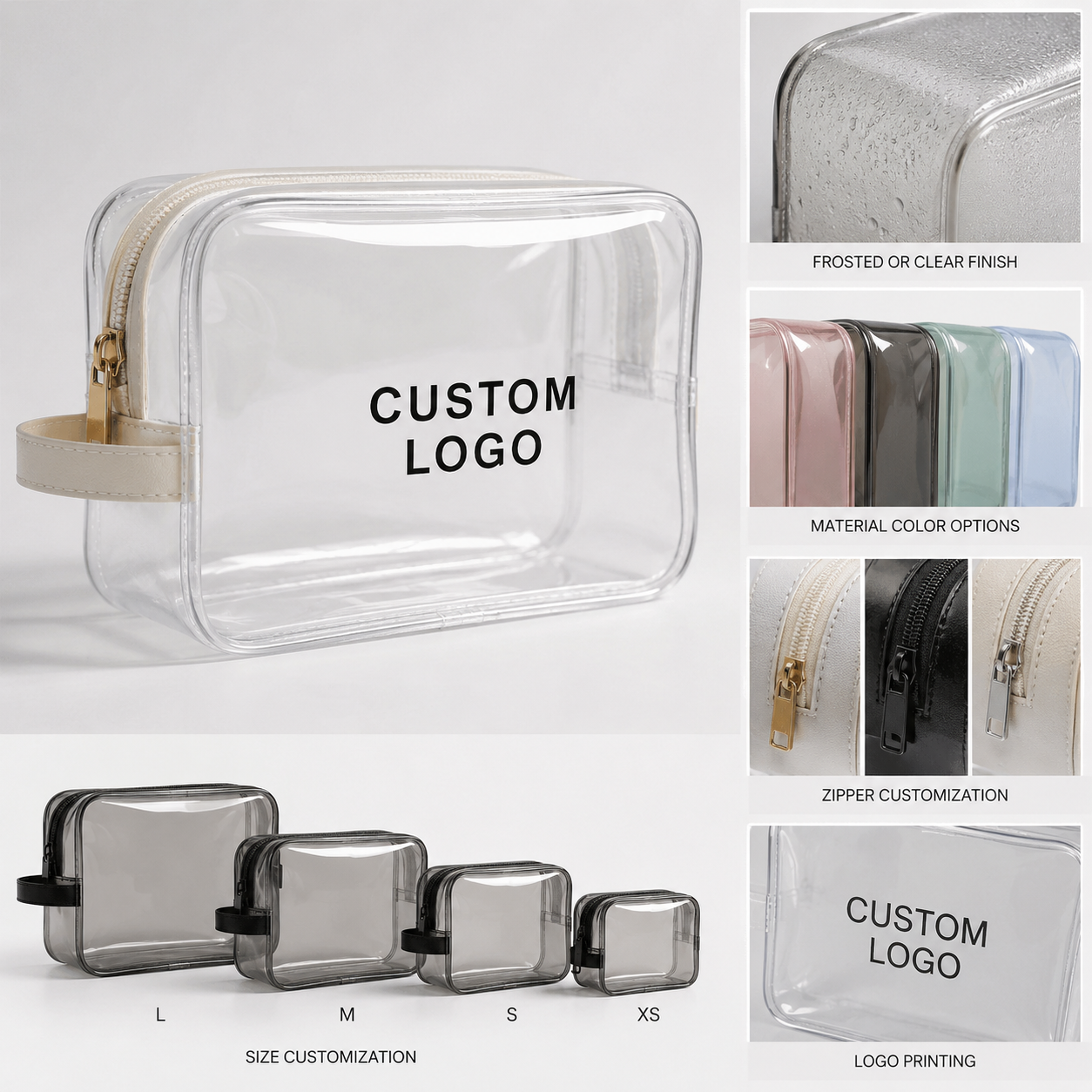
Transparent PVC cosmetic bags are widely used for beauty packaging, travel toiletry kits, gift sets, and retail displays. TPU can be considered when a softer or more premium transparent material is required.
Suggested internal link: Cosmetic Bags
4. Travel Waterproof Storage Bags
For travel accessories, PVC is suitable for clear organizers and wet item storage, while TPU is more suitable for waterproof pouches, outdoor dry storage, and premium travel products.
Suggested internal link: Travel Bags
5. Promotional Clear Bags
Transparent bags are effective for events, exhibitions, stadium use, giveaways, and promotional campaigns. PVC is commonly selected because it offers strong visibility and better cost control for volume orders.
Suggested internal link: Gift Promotional Bags
Buyer Checklist Before Ordering PVC or TPU Bags
Before confirming a transparent bag order, buyers should check the following details:
-
Material choice
Confirm whether PVC, TPU, EVA, or another transparent material is most suitable.
-
Thickness
Choose the correct thickness based on structure, softness, durability, and cost target.
-
Transparency level
Confirm clear, tinted transparent, frosted, glossy, or matte finish.
-
Color
Decide standard clear color or custom transparent color.
-
Closure
Choose open top, snap button, zipper, magnetic closure, or waterproof sealing.
-
Logo method
Confirm screen printing, UV printing, patch, label, insert card, or packaging logo.
-
Structure
Confirm gusset, handle, seam method, pouch, lining, or reinforced edge.
-
Compliance
Confirm target market standards and testing requirements before production.
-
Sample approval
Check material smell, flexibility, transparency, printing effect, edge finishing, and final packing.
Conclusion
PVC bags and TPU bags are both strong options for transparent bag projects, but they are suitable for different buyer needs.
PVC bags are usually better for cost-efficient transparent tote bags, beach bags, retail bags, cosmetic bags, event bags, and promotional packaging. They offer glossy visual appeal, strong color options, water resistance, and good branding performance.
TPU bags are usually better for premium waterproof pouches, outdoor accessories, flexible storage bags, travel products, and higher-performance transparent bags. TPU offers better flexibility, softer hand feel, and stronger durability for repeated use.
For importers, distributors, retailers, promotional companies, and brand owners, the right choice depends on product function, target price, compliance requirements, branding method, and market positioning.
As a professional custom bag manufacturer, we support OEM/ODM development for PVC bags, TPU bags, transparent tote bags, waterproof bags, cosmetic bags, beach bags, and promotional packaging. Our team can help buyers select materials, develop custom structures, confirm logo methods, create samples, and manage bulk production with stable quality control.
Contact our sales team to discuss your transparent bag project and request a custom quote or material sample.
FAQ
1. Is TPU better than PVC?
TPU is usually better for flexibility, softness, and high-performance waterproof products. PVC is better for cost control, glossy transparent appearance, and large-volume promotional or retail bags.
2. Is PVC suitable for beach bags?
Yes. PVC is widely used for beach bags because it is waterproof, transparent, easy to clean, and visually attractive.
3. Is TPU more expensive than PVC?
Yes. TPU is usually more expensive than PVC, so it is often used for premium or performance-focused products.
4. Can PVC bags be customized with logos?
Yes. PVC bags can be customized with screen printing, UV printing, heat transfer, patches, labels, hangtags, and printed packaging.
5. Which material is better for waterproof pouches?
TPU is often better for waterproof pouches that require flexibility and stronger performance. PVC can also be used for basic waterproof storage or cosmetic pouches.
6. Can transparent bag colors be customized?
Yes. Transparent colors such as clear, purple, blue, yellow, black, brown, and custom tinted colors can be developed based on buyer requirements.
7. What should buyers confirm before production?
Buyers should confirm material type, thickness, transparency, color, logo method, closure, handle structure, compliance requirements, packaging, and final sample quality.
Internal Links


 Hot News