What Is a Garment Bag Used For? Travel, Storage & Clothing Protection Guide
A garment bag is used to store, protect and transport hanging clothing such as suits, dresses, coats, uniforms and formalwear.
Unlike a suitcase, which requires most clothing to be folded or rolled, a garment bag keeps clothing hanging or extended inside a long protective cover. This helps reduce dust exposure, surface contact and excessive folding while making garments easier to handle during travel, storage or retail distribution.
Garment bags are commonly used for:
- Business and formalwear travel
- Wardrobe storage
- Suit and dress packaging
- Wedding garments
- Uniform storage and distribution
- Dry cleaning
- Apparel retail
- Hotel garment handling
The correct type depends mainly on what clothing needs to be protected and how the bag will be used.
1. Protecting Suits and Formal Clothing During Travel
One of the most common uses of a garment bag is transporting clothing that should remain as neat as possible.
Typical garments include:
- Business suits
- Blazers
- Dress shirts
- Trousers
- Formal dresses
- Evening wear
- Coats
A normal suitcase compresses clothing into layers. A garment bag allows these items to stay on hangers or remain relatively flat.
This is especially useful for:
- Business trips
- Conferences
- Weddings
- Formal events
- Corporate travel
- Performances
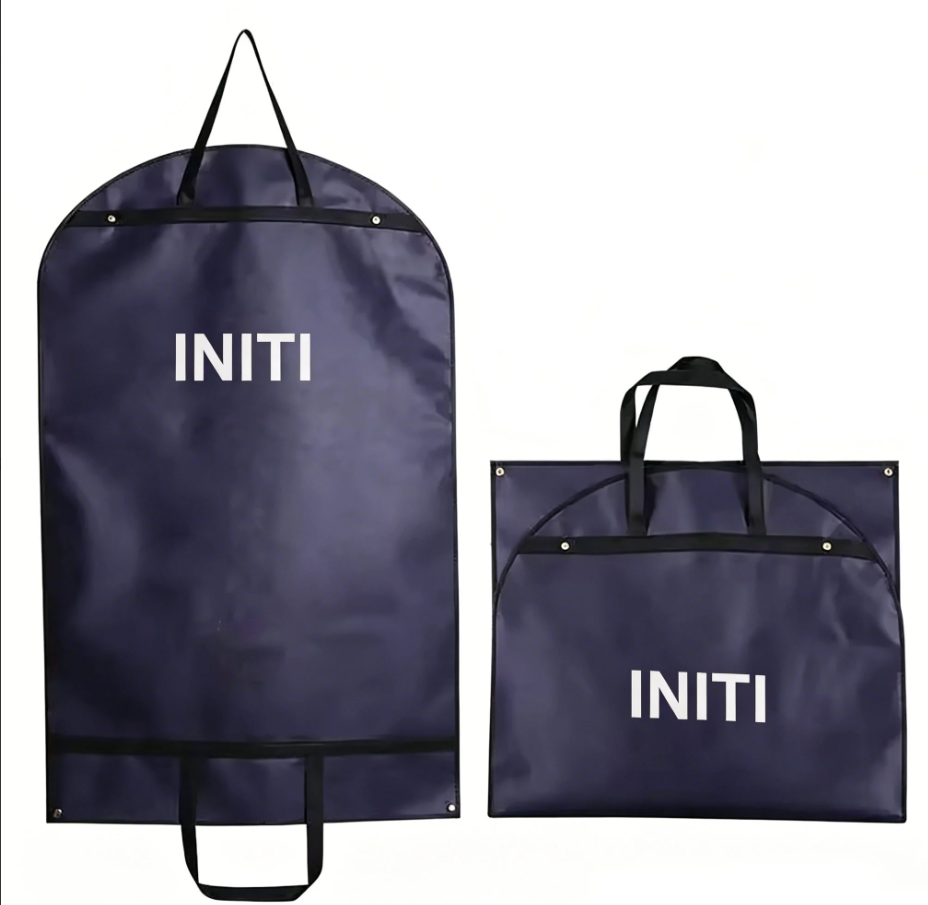
Travel garment bags may also include handles or foldable structures so that the full-length cover can be folded into a more portable carrying format.
For buyers developing a travel garment bag, the important specifications are usually:
- Garment length
- Bag width
- Folding position
- Carry handles
- Zipper length
- Hanger opening
- Closure after folding
A suit carrier and a long wedding-dress cover may therefore require very different dimensions even though both are garment bags.
2. Keeping Clothes Clean During Wardrobe Storage
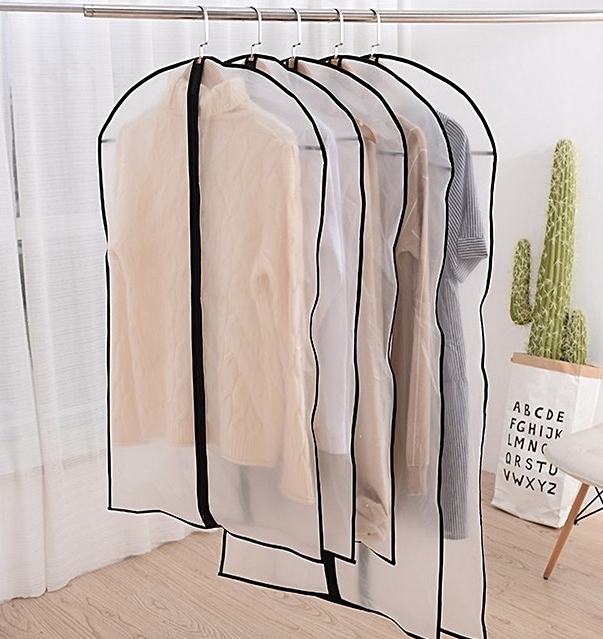
Garment bags are also widely used for clothing that remains hanging inside wardrobes for long periods.
Their main purpose in this situation is to protect clothing from:
- Dust
- Surface dirt
- Friction
- Accidental contact
- Light exposure
Common stored items include:
- Seasonal coats
- Suits
- Formal dresses
- Uniforms
- Costumes
- Occasion wear
For storage applications, the bag does not necessarily need the carrying structure required by a travel model.
Instead, buyers may prioritize:
- Full garment coverage
- Breathable material
- Transparent viewing windows
- Easy zipper access
- Multiple-garment capacity
- Identification labels
A simple full-length garment cover may therefore be more practical and economical than a heavily reinforced travel design.
3. Packaging Suits, Dresses and Premium Clothing
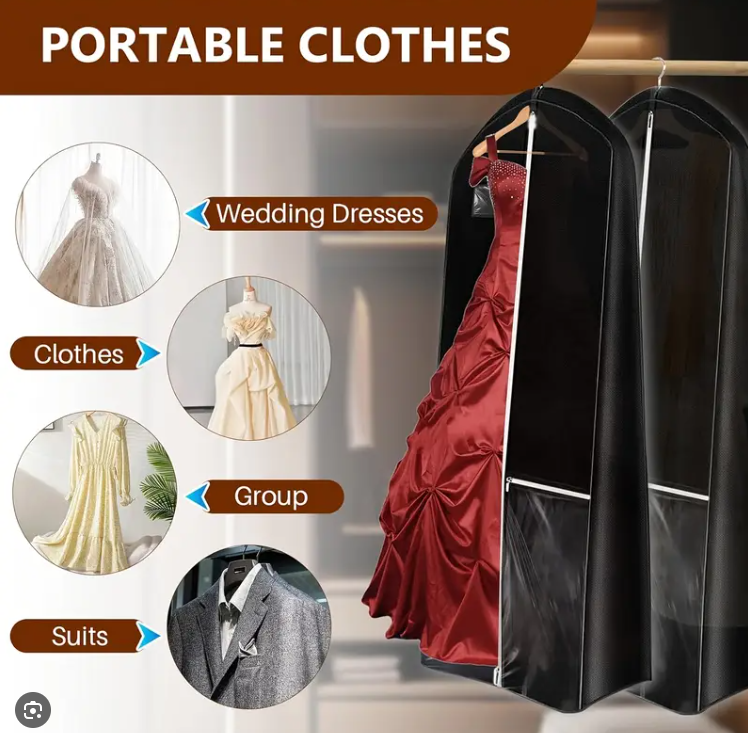
Garment bags are also used as reusable apparel packaging.
Fashion brands, suit retailers and formalwear stores may provide a garment bag when customers purchase:
- Tailored suits
- Coats
- Evening dresses
- Bridal garments
- Uniforms
- Premium apparel
In this case, the garment bag performs two functions:
Protection
It keeps the garment covered after purchase and during transportation.
Brand presentation
The large flat panel provides space for:
- Printed logos
- Store names
- Woven labels
- Brand messages
- Care information
Compared with a disposable plastic cover, a branded fabric or non-woven garment bag can become part of the retail product experience.
For this application, buyers should consider whether the garment bag is intended to be:
- Disposable packaging
- Reusable storage
- Travel-ready
- Premium branded packaging
This decision affects material, construction and cost.
4. Protecting Wedding Dresses and Long Garments
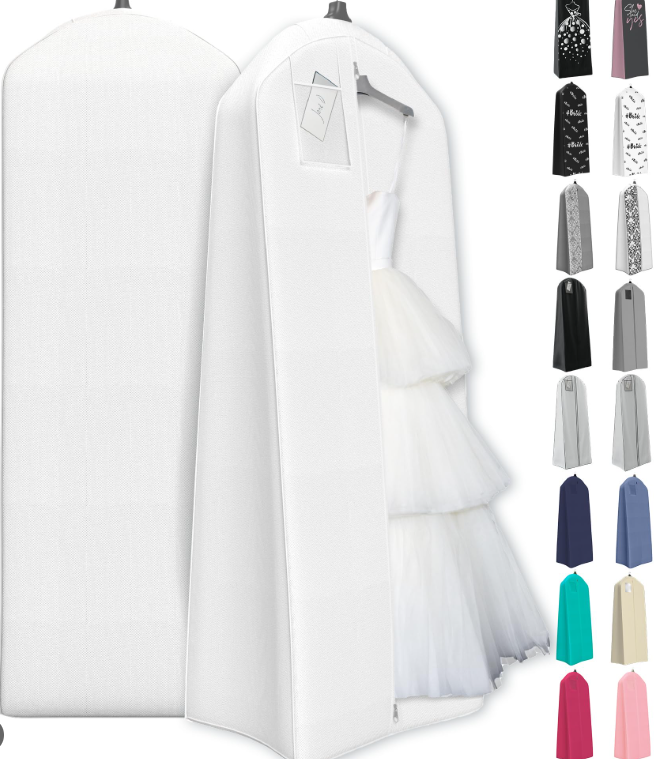
Wedding gowns and long formal dresses require a different garment bag structure from standard suit covers.
They often need:
- Greater overall length
- Wider body dimensions
- Additional gusset depth
- Stronger zipper construction
- More hanger space
- Reinforced handles
A narrow flat suit bag may compress a full wedding dress or prevent the zipper from closing properly.
For bridal applications, buyers should define the actual garment measurements before deciding the bag size.
Useful dimensions include:
- Garment length
- Shoulder width
- Maximum skirt width
- Garment thickness
- Number of garments per bag
A gusseted garment bag can provide additional internal depth for layered dresses, gowns and bulky formalwear.
5. Uniform Storage and Distribution
Garment bags are also useful for organizations that manage large quantities of uniforms.
Examples include:
- Hotels
- Airlines
- Schools
- Security companies
- Restaurants
- Corporate staff
- Sports organizations
- Performance groups
Uniform programs may use garment bags to keep clothing sets together during:
- Storage
- Distribution
- Transportation
- Employee assignment
Useful features can include:
- Transparent windows
- Name card pockets
- Printed identification
- Color coding
- Full-length zippers
- Multi-garment gussets
For large uniform programs, identification and organization may be more important than premium travel features.
6. Dry Cleaning and Garment Care
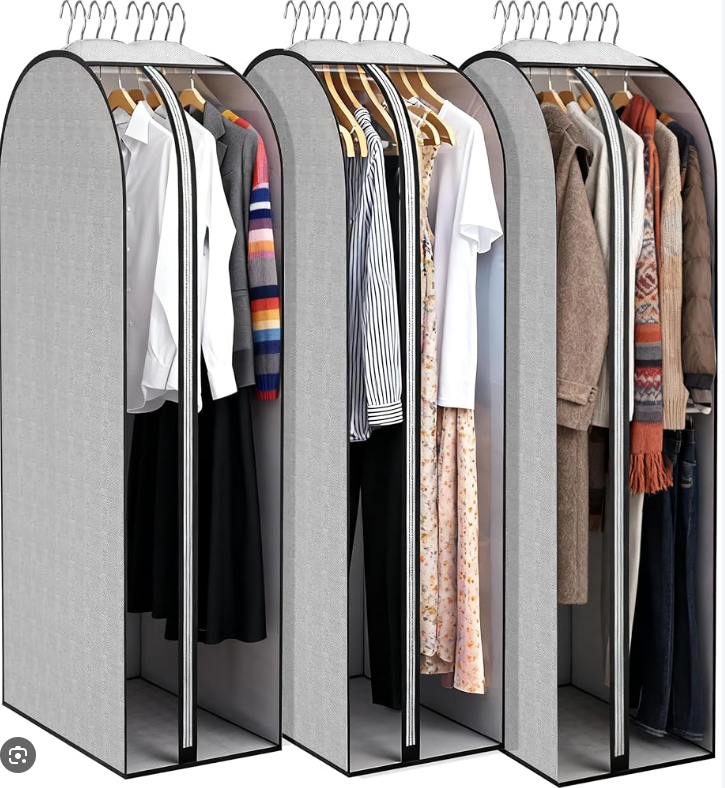
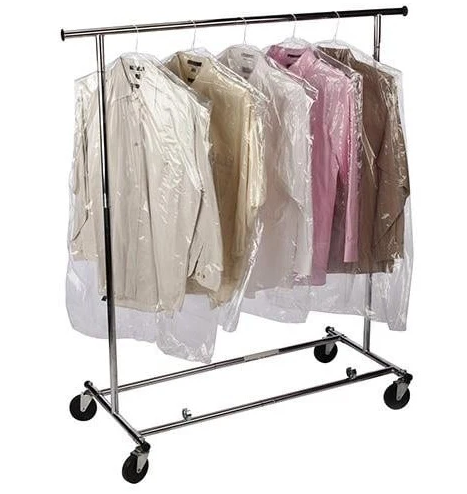
Dry cleaners, tailoring shops and garment-care businesses also use garment covers to protect finished clothing before collection or delivery.
The bag helps keep cleaned or pressed clothing separated from:
- Dust
- Handling surfaces
- Other garments
- Transportation environments
A reusable garment cover may also provide a more professional customer presentation than a basic disposable cover.
For this market, buyers often prioritize:
- Lightweight construction
- Fast packing
- Clear identification
- Logo printing
- Suitable garment length
- Cost efficiency
A simple non-woven garment bag is often suitable when the main objective is protection and presentation rather than frequent travel.
7. Retail Display and Stock Organization
Garment bags are not only used after a garment is sold.
They can also help retailers and apparel businesses organize inventory.
Examples include:
- Sample collections
- Seasonal stock
- Formalwear rentals
- Costume storage
- Bridal inventory
- Uniform stock
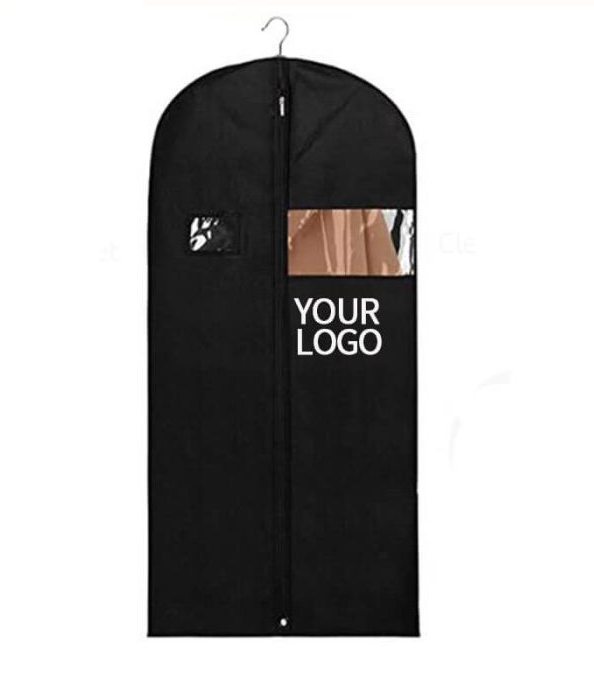
A clear-front garment cover can be particularly useful when staff need to identify garments without opening every bag.
For bulk clothing storage, buyers may also use gusseted multi-garment covers capable of holding several items together.
This can reduce the number of individual covers required while keeping related garments organized.
What Clothes Are Garment Bags Best For?
Garment bags are most useful for clothing that is:
- Normally stored on hangers
- Sensitive to wrinkles
- Difficult to fold
- Formal or high-value
- Used only occasionally
- Long or structured
Typical Garments
| Garment |
Garment Bag Use |
| Business suit |
Travel and storage |
| Blazer |
Travel and wardrobe protection |
| Formal dress |
Travel and storage |
| Wedding dress |
Bridal storage and transportation |
| Coat |
Seasonal storage |
| Uniform |
Distribution and organization |
| Costume |
Storage and event transportation |
| Dress shirt |
Business travel |
| Tuxedo |
Formal-event travel |
Basic casual clothing such as T-shirts, shorts and jeans usually does not require a garment bag unless there is a specific packaging or organizational reason.
Garment Bag vs Suitcase
These products serve different purposes.
| Feature |
Garment Bag |
Suitcase |
| Hanging clothing |
Excellent |
Limited |
| Wrinkle-sensitive garments |
Better suited |
Usually folded |
| Casual clothing |
Limited |
Excellent |
| Shoes and accessories |
Depends on design |
Excellent |
| Long dresses and coats |
Suitable |
Often difficult |
| Wardrobe storage |
Suitable |
Not practical |
| General travel |
Specialized |
More versatile |
A garment bag is therefore not necessarily a replacement for a suitcase.
For many travelers, the two products are used together:
- Suitcase → general clothing and travel items
- Garment bag → suits, dresses and formal clothing
Garment Bag vs Simple Dust Cover
They may look similar, but their intended use can differ.
Simple Garment Cover
Primarily designed for hanging storage.
Typical features:
- Lightweight material
- Hanger opening
- Full zipper
- Minimal reinforcement
Travel Garment Bag
Designed for both protection and carrying.
It may include:
- Reinforced handles
- Foldable construction
- Snap closures
- Shoulder straps
- Additional pockets
- Stronger seams
If the product will remain inside a wardrobe, there is little value in adding expensive travel hardware.
Likewise, a lightweight dust cover may not be suitable for repeated transport.
What Materials Are Commonly Used for Garment Bags?
Garment bags can be made from different materials depending on whether the priority is cost, breathability, durability, water resistance, visibility or premium presentation.
The most common options include:
Non-Woven Polypropylene
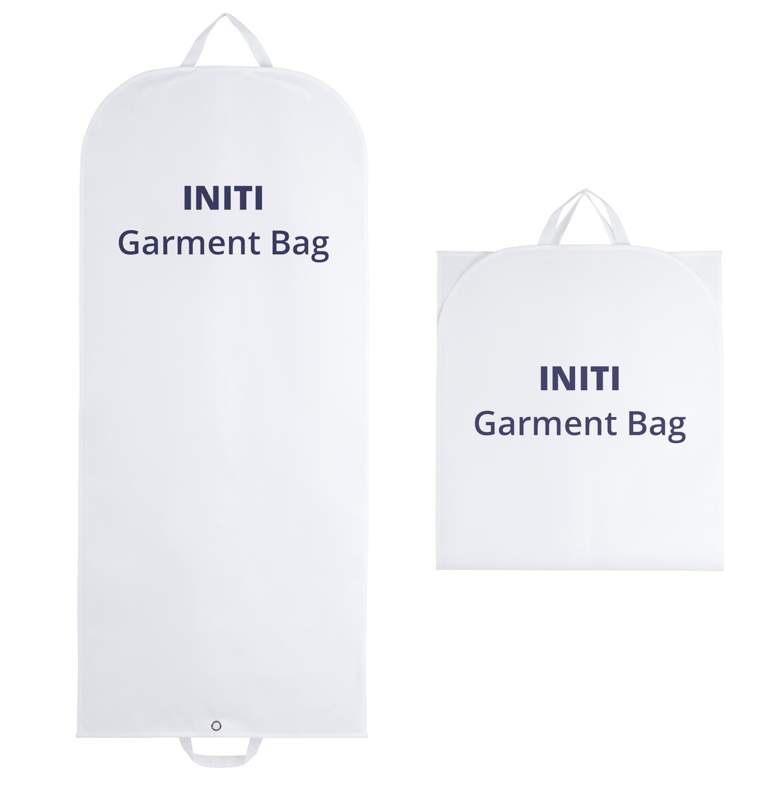
Non-woven PP is widely used for economical garment covers and retail clothing packaging.
Advantages:
- Lightweight
- Cost-effective
- Available in many colors
- Suitable for logo printing
- Breathable compared with fully coated plastic materials
- Suitable for bulk retail and uniform projects
Common uses:
- Suit covers
- Retail apparel packaging
- Dry-cleaning covers
- Uniform storage
- Promotional garment bags
For large-volume programs where cost control is important, non-woven fabric is often one of the most practical options.
Polyester
Polyester is commonly used for reusable and travel-oriented garment bags.
Advantages:
- Better abrasion resistance than lightweight non-woven materials
- Suitable for repeated use
- Works well with reinforced handles and shoulder straps
- Can support additional pockets and more complex structures
- Available with different coatings and fabric weights
Common uses:
- Travel garment bags
- Business suit carriers
- Uniform transport
- Reusable apparel bags
Polyester is generally more suitable when the garment bag will be carried frequently rather than used only as a simple dust cover.
Oxford Fabric
Oxford fabric, usually polyester-based, provides a more structured and durable surface.
Advantages:
- Good abrasion resistance
- More substantial hand feel
- Suitable for reinforced travel structures
- Works well with zippers, handles and external pockets
Common uses:
- Premium suit carriers
- Travel garment bags
- Corporate uniform bags
- Heavy-duty garment storage
It is often selected when the buyer wants a stronger, more travel-ready product.
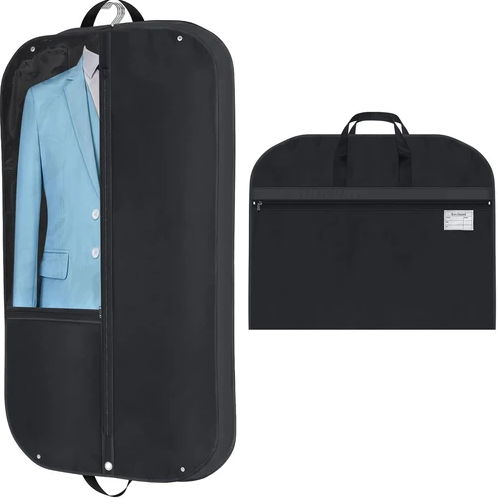
PEVA / EVA Film
PEVA or EVA film can be used where moisture resistance and easy surface cleaning are important.
Advantages:
- Smooth surface
- Easy to wipe clean
- Helps reduce moisture penetration
- Can be transparent or semi-transparent depending on the construction
Common uses:
- Wardrobe storage
- Household garment protection
- Dust and moisture covers
Because these materials are less breathable than fabric-based options, ventilation should be considered for long-term clothing storage.
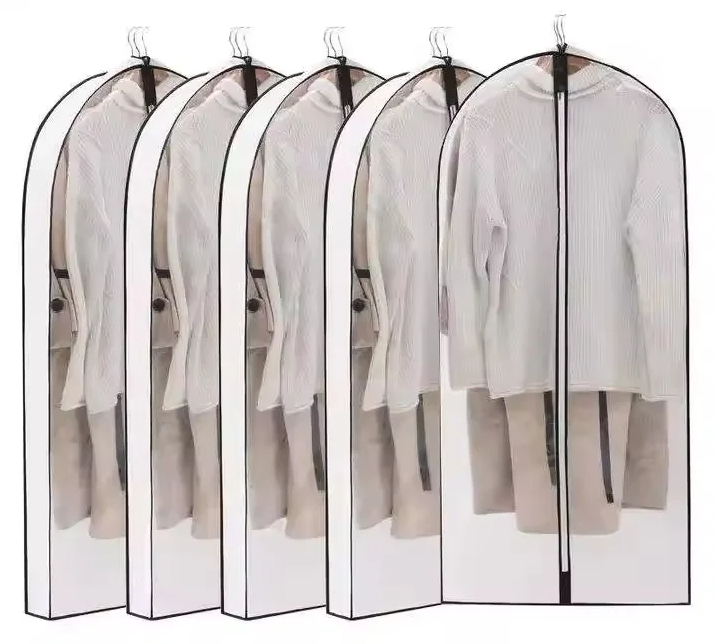
PVC
PVC is mainly used when visibility or water-resistant surface performance is required.
It can be used as:
- A full transparent garment cover
- A clear front panel
- A viewing window combined with fabric
Advantages:
- High visibility
- Easy surface cleaning
- Good product presentation
- Useful for stock identification
Common uses:
- Bridal garments
- Costume storage
- Retail inventory
- Multi-garment covers
For long-term storage, a fully sealed PVC structure may not be suitable for every garment because airflow is limited.
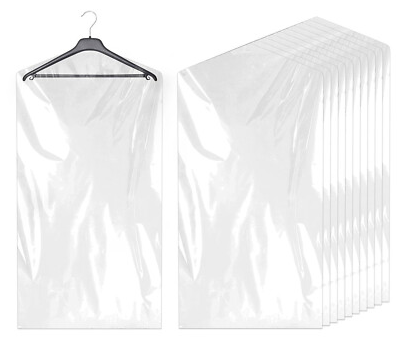
Cotton or Canvas
Cotton and canvas are less common for basic garment covers because they are heavier and more expensive, but they can be used for premium reusable packaging.
Advantages:
- Natural textile appearance
- Good printing and embroidery surface
- Strong reusable positioning
- Premium brand presentation
Common uses:
- Luxury apparel packaging
- Premium suits
- Designer clothing
- Reusable branded garment covers
Canvas is generally selected for brand value rather than minimum cost or lightweight packing.
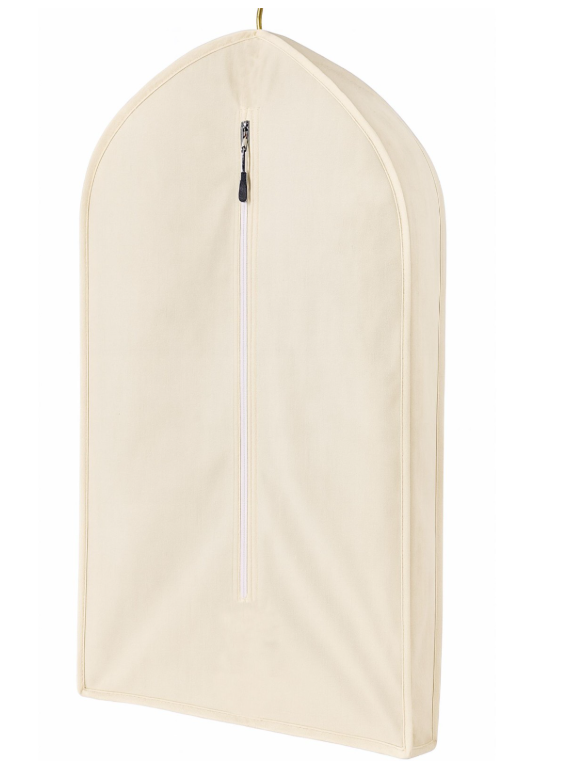
Mixed-Material Construction
Many garment bags combine several materials.
Common combinations include:
- Non-woven body + PVC window
- Polyester body + clear identification pocket
- Oxford fabric + PEVA lining
- Fabric body + reinforced webbing handles
- Transparent front + breathable fabric back
This allows different parts of the garment bag to serve different functions.
Material Comparison
| Material |
Cost |
Durability |
Breathability |
Water Resistance |
Visibility |
Best For |
| Non-woven PP |
Low |
Low–Medium |
Good |
Low |
Low |
Retail packaging, storage |
| Polyester |
Medium |
High |
Medium |
Medium |
Low |
Travel, repeated use |
| Oxford Fabric |
Medium–High |
High |
Medium |
Medium–High |
Low |
Heavy-duty travel |
| PEVA / EVA |
Medium |
Medium |
Low |
Good |
Medium–High |
Household storage |
| PVC |
Medium |
Medium |
Low |
Good |
Excellent |
Clear covers, inventory |
| Cotton / Canvas |
High |
High |
Good |
Low |
Low |
Premium reusable packaging |
For custom development, material should be selected according to the garment bag’s actual purpose.
A lightweight non-woven suit cover and a reinforced polyester travel garment bag may look similar in shape, but they are designed for very different usage cycles and load requirements.
How Should Buyers Choose a Garment Bag?
For B2B sourcing, start with the application rather than the material.
For Retail Clothing Packaging
Prioritize:
- Logo area
- Lightweight construction
- Appropriate garment length
- Attractive presentation
- Efficient bulk packing
For Travel
Prioritize:
- Foldable structure
- Reinforced handles
- Strong zipper
- Carrying comfort
- Repeated-use durability
For Wardrobe Storage
Prioritize:
- Breathability
- Full coverage
- Visibility
- Easy access
- Suitable dimensions
For Wedding Dresses
Prioritize:
- Extra length
- Gusset depth
- Strong hanger area
- Wide zipper opening
- Reinforced carrying structure
For Uniform Programs
Prioritize:
- Identification
- Standardized dimensions
- Multi-garment capacity
- Durable zipper
- Cost control
This approach usually produces a more practical specification than selecting a standard garment bag first and trying to adapt it later.
Key Specifications to Confirm Before Ordering
A garment bag specification should normally include:
| Specification |
What to Confirm |
| Intended Use |
Travel / storage / retail / uniform / bridal |
| Garment Type |
Suit / dress / coat / uniform |
| Size |
Width × length × gusset |
| Material |
Non-woven / polyester / coated fabric / transparent panel |
| Closure |
Full zipper / partial zipper |
| Hanger Opening |
Size and position |
| Handles |
None / top / top and bottom |
| Foldable Design |
Required or not |
| Viewing Window |
Required or not |
| Gusset |
Flat / single garment / multi-garment |
| Branding |
Print / label / custom zipper pull |
| Packaging |
Bulk / individual / retail pack |
One garment bag specification should not be expected to work equally well for suits, winter coats and wedding dresses.
FAQ
What is the main purpose of a garment bag?
Its main purpose is to protect hanging garments during storage, travel or handling while reducing dust exposure and unnecessary folding.
Are garment bags only used for suits?
No. They are also commonly used for dresses, coats, uniforms, wedding gowns, costumes and other hanging clothing.
Can garment bags be used for long-term storage?
Yes. Storage garment bags are commonly used for seasonal and formal clothing. Material choice and breathability should be considered according to the garment and storage environment.
What is the difference between a travel garment bag and a garment cover?
A basic garment cover is mainly intended for storage, while a travel garment bag normally includes carrying handles, folding structures or additional reinforcement.
What size garment bag should I order?
The size should be based on the garment length, shoulder width, thickness and whether one or multiple garments need to fit inside. Wedding gowns and coats generally require larger dimensions than standard suits.
Conclusion
A garment bag is used for much more than business travel.
Its main applications include:
- Protecting suits and formal clothing during travel
- Keeping garments clean during wardrobe storage
- Packaging premium apparel
- Protecting wedding dresses
- Organizing uniforms
- Supporting dry-cleaning services
- Managing retail and rental inventory
The best garment bag depends primarily on what garment it needs to protect and how it will be handled.
For custom sourcing, buyers should define the application, garment dimensions, required protection and carrying method before selecting material and additional features.
Inquiry Support
For a custom garment bag project, provide:
- Intended use
- Garment type
- Preferred size or garment dimensions
- Estimated quantity
- Preferred material
- Required zipper or transparent window
- Handle or foldable requirements
- Logo artwork
- Packaging requirements
If the final specification has not been confirmed, you can first provide the garment type and intended use, and we can recommend a suitable structure.
Related Products


 Hot News