What Is a Wine Bag: Types, Sizes and Materials Explained
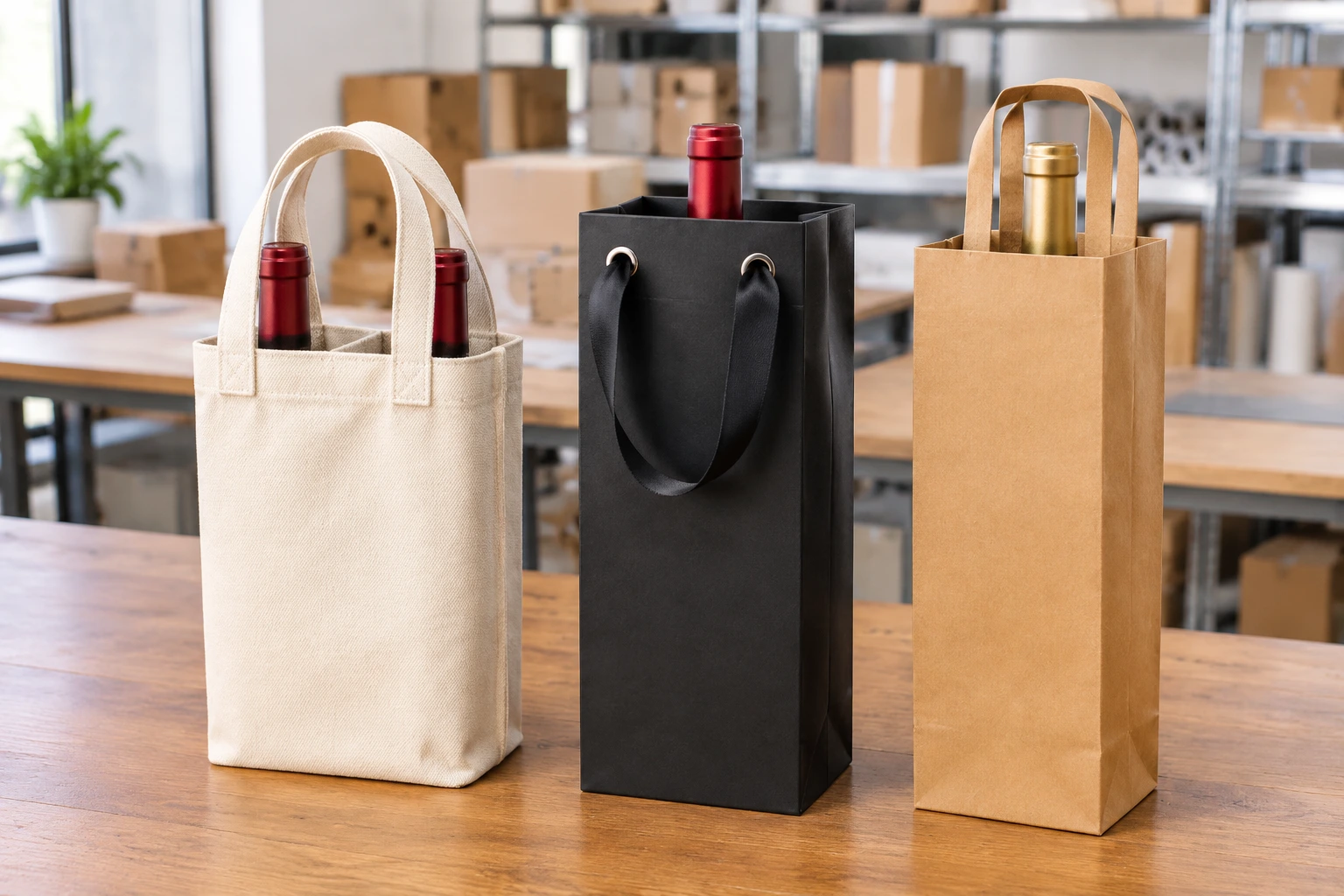
A wine bag is a specially designed bag used to carry, present or package one or more bottles of wine. Unlike an ordinary shopping bag, a wine bottle bag is usually shaped around the height and width of a bottle, with attention to its base, handles and carrying structure.
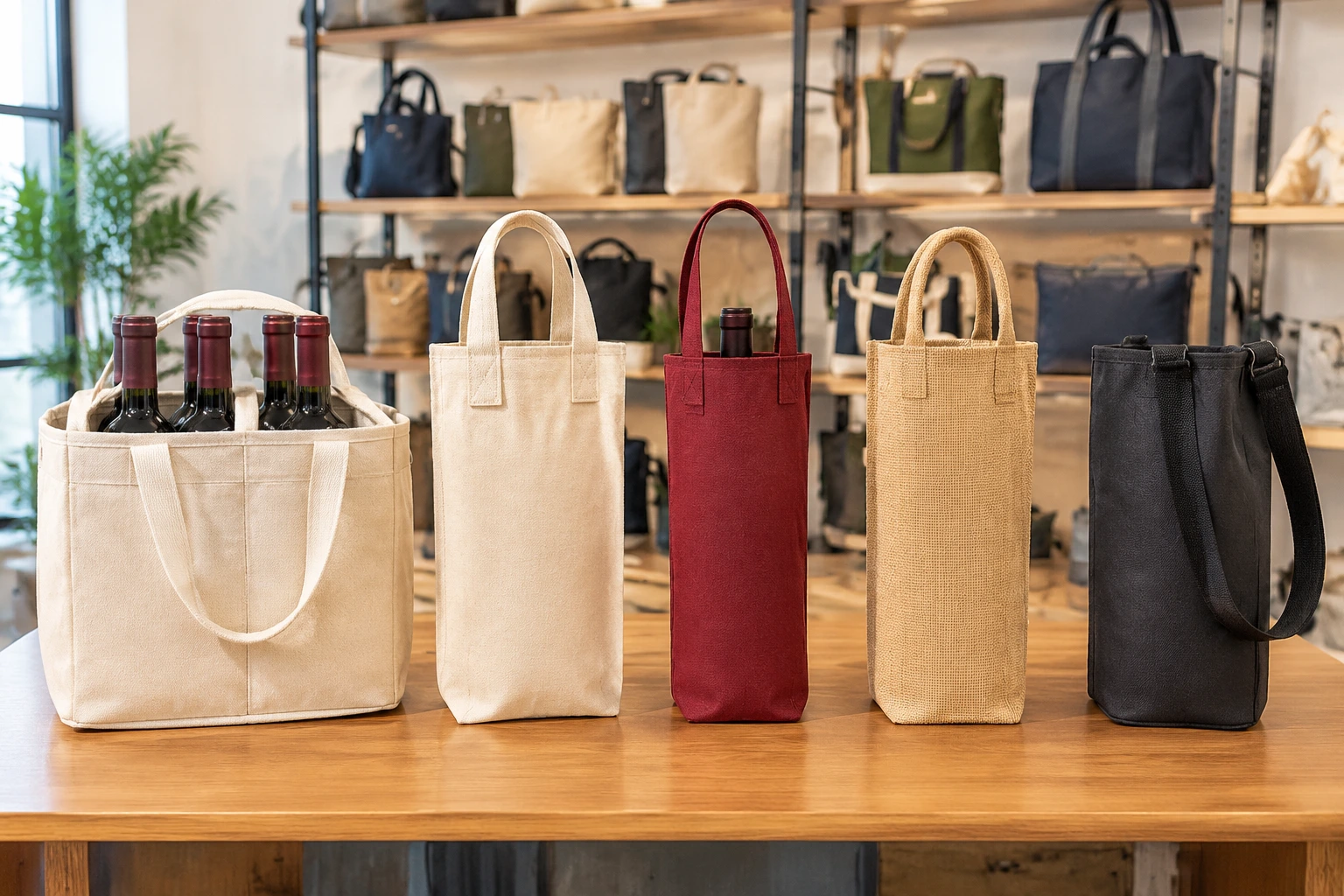
Wine bags come in several forms, from simple paper gift bags and reusable canvas totes to divided multi-bottle carriers and insulated wine bags for picnics or travel.
The right design depends on more than appearance. A single-bottle gift bag has different requirements from a six-bottle carrier, while a Champagne bottle may not fit a bag designed for a narrower Bordeaux bottle.
This guide explains the main wine bag types, bottle sizes, material options and practical details worth checking before buying or developing custom wine bags.
1. What Is a Wine Bag Used For?
A wine bag is primarily a carrying or presentation accessory for bottled wine.
Depending on its design, it can serve several purposes:
- Gift presentation: Making a bottle suitable for personal, corporate or seasonal gifting.
- Retail packaging: Giving customers a convenient way to carry wine purchased from a winery or shop.
- Reusable bottle carrying: Transporting one or more bottles between locations.
- Short-term temperature management: Helping slow temperature changes when a wine bag has suitable insulation.
- Brand promotion: Providing a surface for winery logos, event artwork or private-label branding.
Not every wine bag performs all these functions.
A lightweight paper wine bag is mainly designed for presentation and short-distance hand carrying. A divided fabric carrier can support repeated use, while an insulated wine bag is intended to offer some thermal buffering.
A wine bag should also be distinguished from bag-in-box wine packaging. Bag-in-box uses a flexible liquid container inside a carton, whereas the wine bags discussed here are carriers for bottles.
2. What Are the Main Types of Wine Bags?
Wine bags are usually classified by bottle capacity, material or intended use.
Several characteristics can overlap. For example, a two-bottle wine carrier may be made from canvas, jute, felt or neoprene.
| Wine Bag Type |
Typical Construction |
Main Application |
| Single-bottle wine gift bag |
Tall, narrow body with a handle or drawstring |
Individual gifts and retail purchases |
| Two-bottle wine tote |
Two bottle compartments or separate sleeves |
Gift sets and winery retail |
| Multi-bottle wine carrier |
Four or six compartments with dividers and reinforced carrying structure |
Wine clubs, retail purchases and events |
| Paper wine bag |
Structured paper body with a reinforced base |
Gift packaging and promotional presentation |
| Fabric wine tote |
Cotton, canvas, jute, felt or synthetic textile |
Reusable carrying and branded merchandise |
| Insulated wine bag |
Insulating layer, lining and suitable closure |
Picnics, short trips and chilled beverage carrying |
| Wine bottle sleeve |
Flexible fitted or drawstring cover |
Decorative gifting and light bottle cushioning |
Single-Bottle Wine Bags
Single-bottle bags are commonly used in wineries, wine shops, hotels, restaurants and corporate gift programs.
Their narrow shape helps position a bottle upright and limits unnecessary movement within the bag.
Paper bags may feature rope or ribbon handles, while fabric versions can use stitched handles, die-cut grips or drawstring closures.
The main considerations are bottle fit, base support, handle strength and overall presentation.
Two-Bottle Wine Bags
Two-bottle carriers are popular for paired wine gifts and retail purchases.
The main structural difference is the internal separation between the bottles.
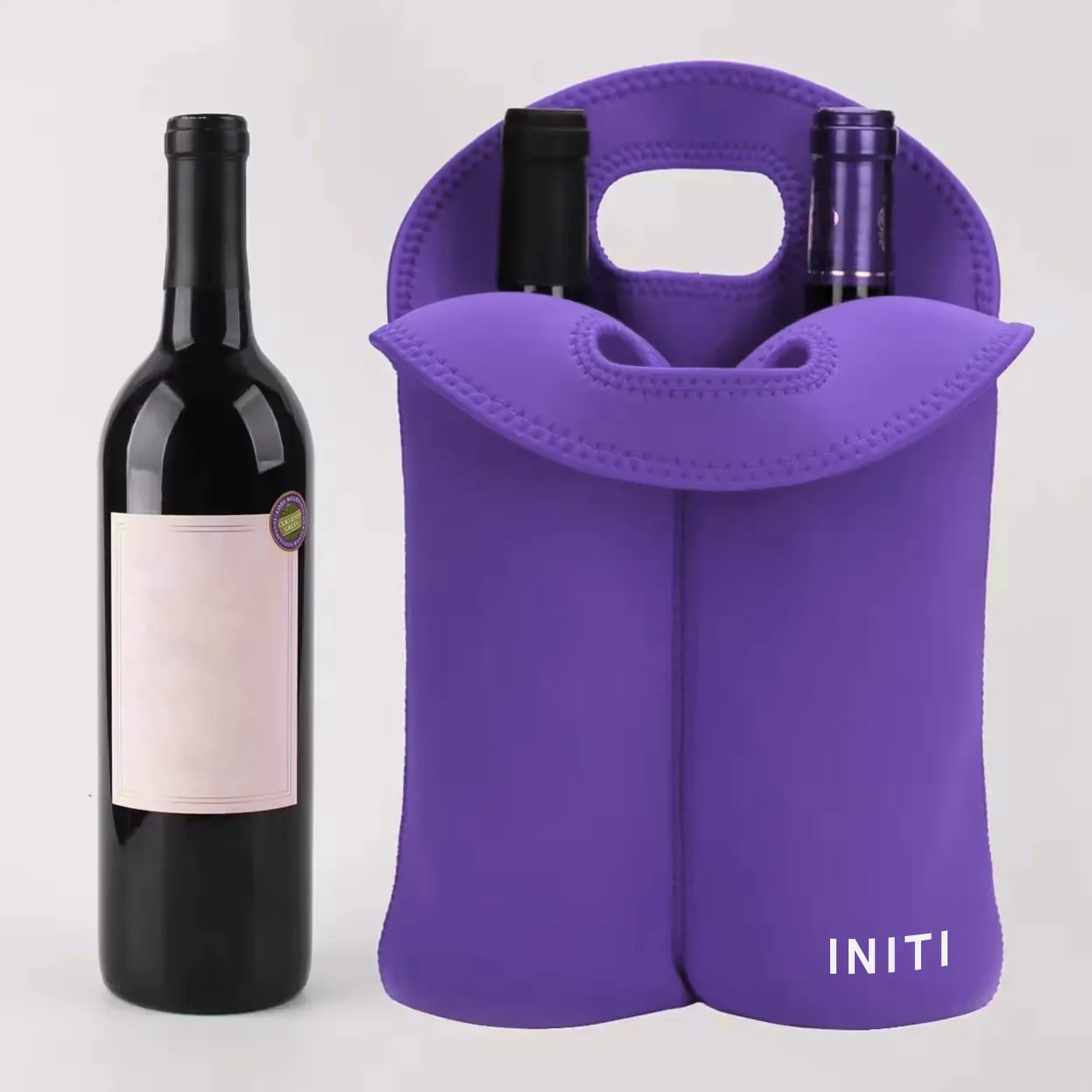
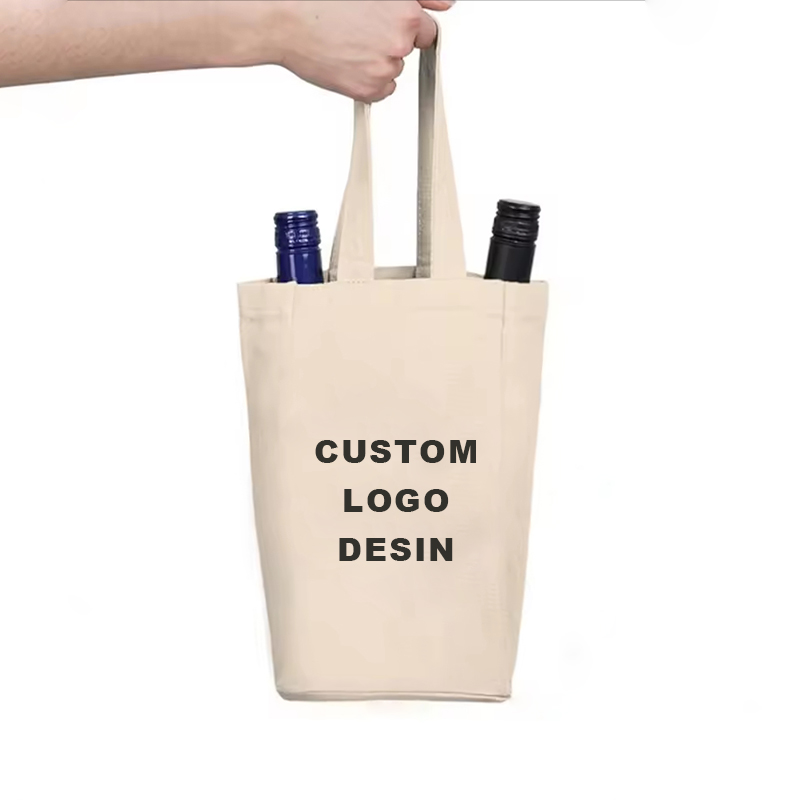
A canvas tote may include a stitched divider, while a neoprene carrier may use two individual bottle sleeves joined by a central seam.
Both arrangements help reduce direct bottle-to-bottle contact during normal carrying.
However, a soft divider should not automatically be treated as impact-resistant packaging.
Four- and Six-Bottle Wine Carriers
Larger wine carriers are used when several bottles need to be carried together.
They generally require more attention to:
- Individual bottle compartments
- Bottom support
- Handle attachment and load distribution
- Bottle movement during lifting
- Overall bag stability
A six-bottle carrier holding full glass bottles can become substantially heavier than a single-bottle gift bag.
For these designs, bottle count alone is not a sufficient specification. The actual filled-bottle weights and finished-bag performance must be considered.
Insulated Wine Bags
Insulated carriers are designed to slow temperature changes during short periods of transportation.
They may use foam, neoprene or other insulating constructions, sometimes combined with a reflective or wipe-clean lining.
Insulation does not actively refrigerate the wine.
An insulated bag performs differently depending on the starting bottle temperature, ambient conditions, insulation thickness, closure and duration of use.
For projects requiring a specific temperature-retention period, the complete bag should be tested under defined conditions.
3. What Sizes Do Wine Bags Come In?
There is no single universal wine bag size.
The required dimensions depend on the number of bottles and, importantly, the physical shape of the bottles being carried.
Most ordinary retail wine bags are designed around 750mL bottles, but this only describes the liquid capacity.
Common Wine Bottle Sizes
| Bottle Volume |
Common Name |
Wine Bag Consideration |
| 187.5mL |
Piccolo / Split |
Requires a smaller bottle sleeve or gift bag |
| 375mL |
Half bottle / Demi |
Shorter, smaller bag dimensions |
| 750mL |
Standard bottle |
Most common reference for single-bottle bags |
| 1.5L |
Magnum |
Larger bottle, requiring a specifically sized carrier |
| 3L |
Double Magnum |
Usually requires a purpose-designed carrying or presentation solution |
A 1.5L Magnum contains twice the wine volume of a standard 750mL bottle, but it should not be assumed to fit a bag designed for two separate bottles.
Bordeaux, Burgundy and Champagne Bottles
Even when bottles all contain 750mL, their shapes differ.
Bordeaux bottles typically have relatively straight sides and more pronounced shoulders.
Burgundy bottles have more sloping shoulders and often a broader body.
Champagne and sparkling wine bottles are commonly heavier and wider because their construction must withstand internal pressure.
Tall, slender Alsace-style bottles present another fit consideration: they may require additional bag height even when the bottle diameter is relatively small.
For custom wine bag sizing, the actual bottle specification is more reliable than a general description such as "standard 750mL bottle."
How to Measure a Bottle for a Wine Bag
Measure the intended bottle before approving the bag dimensions.
| Measurement |
Why It Matters |
| Overall height |
Determines the required bag height and neck exposure |
| Maximum body diameter |
Determines the minimum usable internal width or sleeve diameter |
| Base diameter |
Affects bottom-panel dimensions and support |
| Shoulder profile |
Affects fit in tapered or closely fitted sleeves |
| Filled bottle weight |
Determines carrying-load requirements |
| Closure and packaging details |
Ensures sufficient space for the cap, capsule or decorative wrap |
For a rectangular single-bottle paper bag, the key dimensions are usually expressed as width × gusset/depth × height.
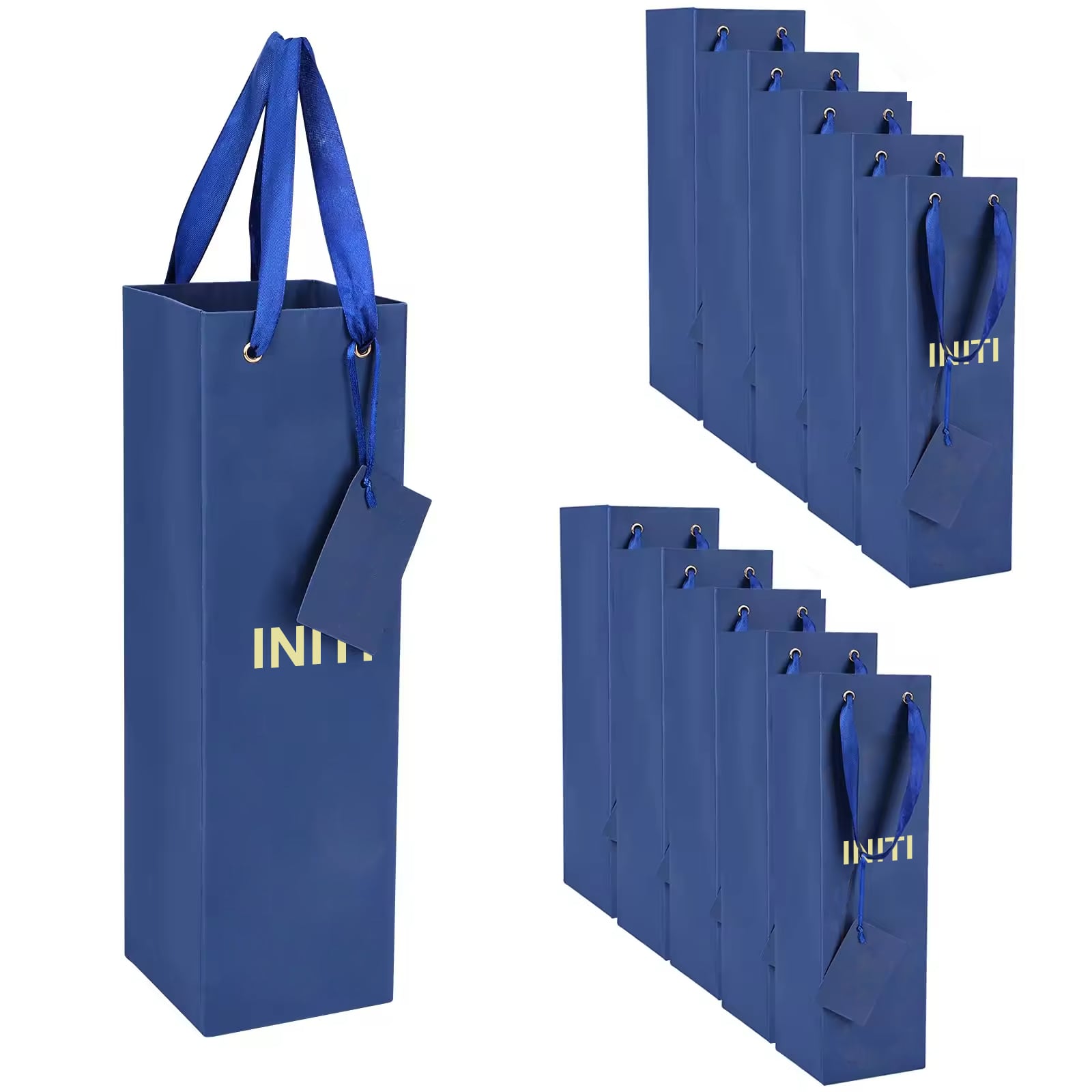
As one actual product reference, INITI offers a ribbon-handle paper wine bag measuring approximately 10 × 10 × 35 cm.
This is an example of a bag designed for a particular single-bottle presentation, not a universal dimension suitable for every wine bottle.
The usable interior dimensions, folded paper gussets and base reinforcement must still be checked against the intended bottle.
Sizing Two- and Multi-Bottle Wine Bags
For two or more bottles, the width of the bag depends on the compartment arrangement.
A bag with two adjacent sleeves may have different dimensions from a rectangular tote with an internal divider.
Buyers should confirm:
- The maximum dimensions of each bottle
- The number and arrangement of compartments
- Divider thickness and finished internal space
- Required clearance for inserting and removing bottles
- Handle position and carrying balance
A sample should be checked using the actual filled bottles rather than empty substitutes with different weights or shapes.
4. What Materials Are Wine Bags Made From?
The material influences the bag's appearance, flexibility, printability, reuse potential and handling requirements.
No single material is best for all wine packaging.
| Material |
Main Characteristics |
Suitable Applications |
| Kraft or specialty paper |
Structured appearance, wide printing and finishing options |
Retail wine gifts and branded packaging |
| Cotton / canvas |
Flexible woven fabric, reusable design potential |
Winery merchandise and multi-bottle totes |
| Jute / burlap |
Coarse natural texture and rustic appearance |
Wine gifts and lifestyle packaging |
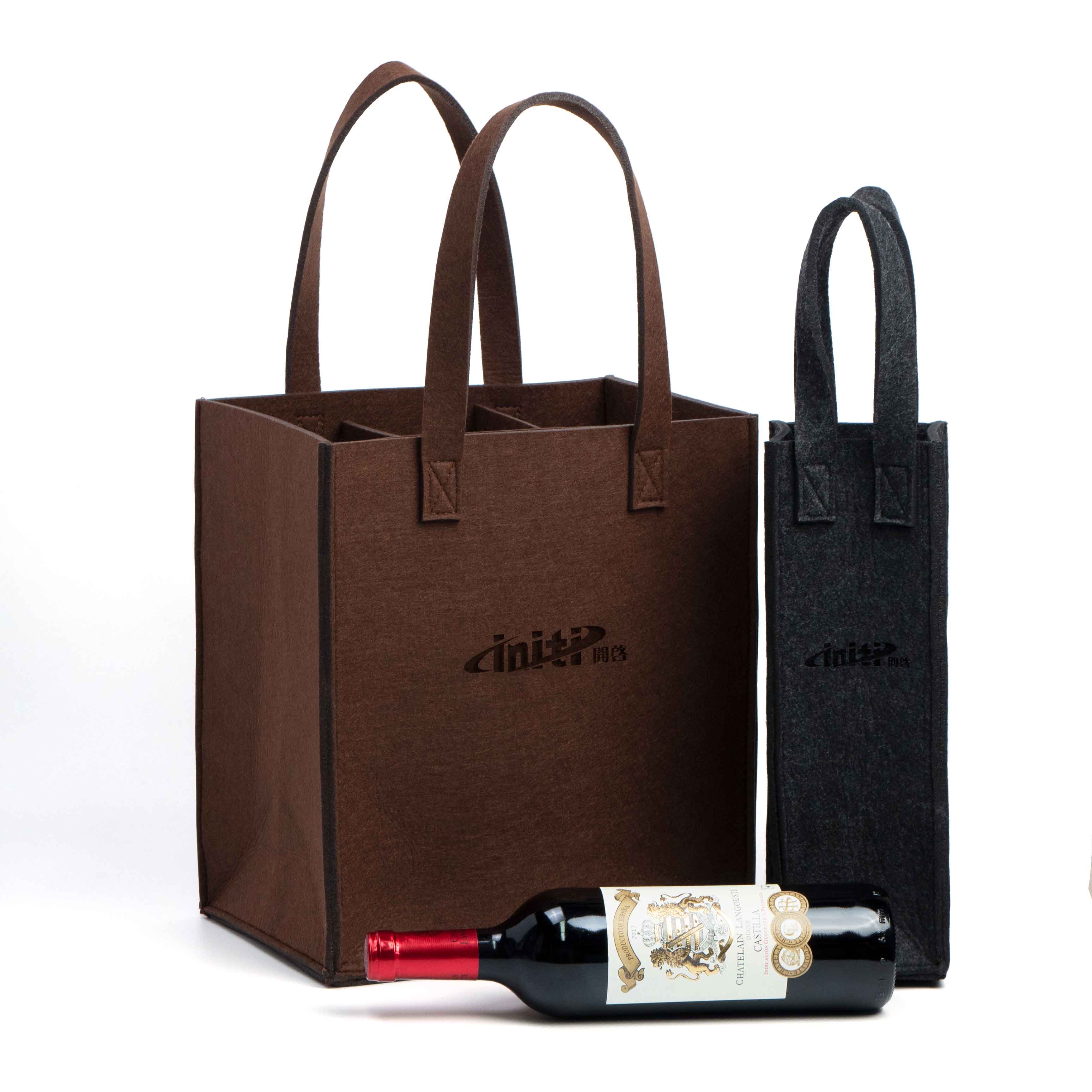
| Felt |
Soft surface with options for structured panels |
Premium gift carriers and multi-bottle bags |
| Non-woven polypropylene |
Lightweight manufactured fabric |
Promotional wine carriers |
| Neoprene |
Flexible and cushioned construction |
Fitted sleeves and soft bottle carriers |
| Polyester / RPET |
Various fabric structures and finishing options |
Reusable bottle totes and custom carriers |
Paper Wine Bags
Paper wine bags are often chosen for bottle presentation and retail gifting.
They can feature printed artwork, matte or gloss finishes, foil stamping, ribbon handles or rope handles.
Their carrying performance depends on more than paper weight.
A wine bottle places a concentrated load on the bottom panel, so base reinforcement and handle-hole construction are particularly important.
Paper bags are generally better suited to controlled retail and gifting conditions than repeated exposure to moisture or heavy handling.
Cotton and Canvas Wine Bags
Canvas offers a flexible woven surface suitable for repeated carrying and clear logo applications.
Single-bottle versions can be made with narrow panels, while two-bottle totes often include a divider.
For reusable canvas wine bags, buyers should check handle stitching, fabric specification and divider construction.
A heavier canvas does not compensate for poorly attached handles.
Jute Wine Bags
Jute wine bags are recognized for their coarse texture and natural-looking appearance.
They are used for wine gifts, rustic retail displays and promotional packaging.
Some designs include cotton rope handles, reinforced bases and transparent windows that allow the bottle label to remain visible.
Jute can also be combined with other materials, such as canvas panels or lining fabrics.
Its natural appearance does not establish that the finished product is entirely biodegradable or recyclable.
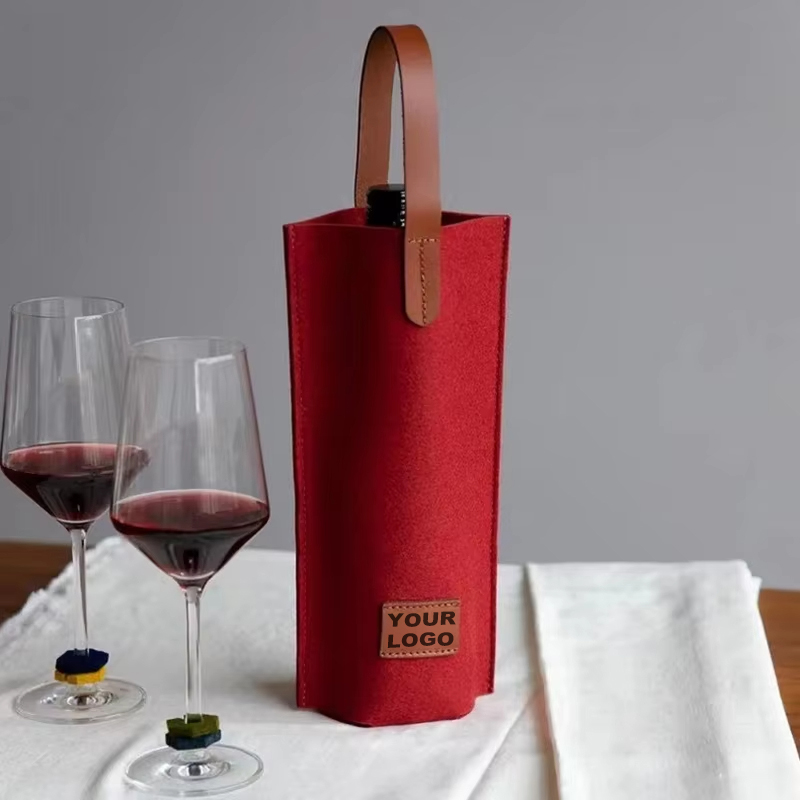
Felt Wine Bags
Felt can provide a softer, more substantial presentation than lightweight paper.
Single-bottle felt bags may use an upright structured body and reinforced handles.
Multi-bottle versions can include sewn dividers and bottom support.
Felt thickness alone does not define carrying capacity or bottle protection. Density, reinforcement and the finished construction are also relevant.
Neoprene and Insulated Fabrics
Neoprene is useful for flexible bottle sleeves and soft wine carriers.
It provides a cushioned surface and can contribute to limited thermal buffering.
However, neoprene thickness and construction determine its actual performance. A simple open-top sleeve is not equivalent to a fully insulated cooler bag.
For custom insulated designs, buyers should evaluate the complete layering system rather than only the exterior material.
5. What Makes a Good Wine Bag?
A good wine bag should fit the intended bottles and support their weight during normal use.
Its performance is determined by the complete construction, not only by the material name.
Bottom Support
Glass bottles concentrate considerable weight on a relatively small bottom area.
A paper wine bag may use a reinforced baseboard. A fabric carrier may use a reinforced bottom panel or separate insert.
The appropriate construction depends on the bottle weight, bag geometry and use conditions.
Handle Strength
Handles and their attachments should be evaluated with filled bottles inside the bag.
For paper bags, the reinforcement around handle openings is important.
For textile bags, stitching, webbing attachment and reinforcement at stress points determine how the load is transferred through the bag.
Dividers and Bottle Separation
When carrying more than one bottle, dividers help reduce direct contact between glass surfaces.
A divider should be positioned so it remains functional when the bag is lifted or tilted.
Simple fabric partitions can assist separation, but they do not necessarily protect bottles from severe impacts.
Closure and Bottle Retention
Open-top gift bags are convenient for inserting bottles and displaying labels.
For activities involving more movement, drawstrings, straps, zippers or more secure top structures may be appropriate.
The right closure depends on whether the bag is mainly a presentation accessory or a transport carrier.
What a Wine Bag Does Not Replace
A normal wine gift bag should not be treated as a substitute for protective export cartons or parcel shipping packaging.
Courier and freight shipments require an appropriate bottle-protection system for handling, vibration, compression and possible impacts.
A decorative or reusable outer bag can be part of a gift set, but transport protection must be evaluated separately.
6. Which Wine Bag Is Best for Different Uses?
The right wine bag depends on how and where it will be used.
| Application |
Practical Starting Choice |
Priority |
| Winery retail purchase |
Single-bottle paper or fabric bag |
Bottle fit, convenient carrying, branding |
| Corporate wine gifting |
Ribbon-handle paper, jute or felt bag |
Presentation, bottle stability, logo finish |
| Two-bottle gift set |
Canvas or neoprene divided carrier |
Bottle separation and handle strength |
| Wine club collections |
Multi-bottle carrier with reinforced structure |
Compartment fit and combined weight |
| Picnic or outdoor gathering |
Insulated wine bag |
Thermal construction, closure, portability |
| Promotional giveaway |
Paper or reusable textile wine bag |
Brand visibility, appropriate carrying performance |
For a gift program, appearance and consistent presentation may be the main priorities.
For repeated carrying, the construction should place greater emphasis on reinforced handles, bottle separation and long-term usability.
For temperature-sensitive use, insulation and the actual carrying conditions become more important.
These needs should be clarified before choosing the material or decoration method.
7. How to Choose and Customize Wine Bags
Custom wine bags should be developed around the actual bottles and intended use.
| Customization Area |
What Buyers Should Confirm |
| Bottle details |
Volume, shape, dimensions and filled weight |
| Bottle capacity |
Single, two-bottle or multi-bottle arrangement |
| Material |
Paper, canvas, jute, felt, neoprene or other textile |
| Structure |
Bottom support, dividers, handles and closure |
| Branding |
Printing, foil stamping, woven labels, embroidery or patches |
| Decoration |
Window, ribbon, hangtag and selected finishes |
| Packing |
Folded dimensions, units per carton and retail presentation |
| Performance |
Bottle fit, handling load, divider stability and applicable tests |
Logo and Printing Options
Paper wine bags can support detailed graphics, selected coatings and decorative finishes.
Canvas provides a relatively even woven surface for many printed logos.
Jute has a coarser texture, so very fine artwork may be less clear.
Felt and neoprene may be better suited to selected printing methods, patches or labels depending on their surface and construction.
The final decoration method should be confirmed on the actual material.
Packing for Wholesale Orders
Empty paper wine bags can often be folded relatively flat. Many fabric bags can also be collapsed for packing.
However, structured bases, thick felt, foam insulation and rigid inserts may increase carton volume.
For bulk orders, buyers should confirm the packed dimensions, carton quantity, overall CBM and appearance after unpacking.
Packing efficiency should not come at the expense of damaged paper folds, crushed insulated panels or distorted bag shapes.
Material and Environmental Claims
The environmental characteristics of a wine bag depend on all its components, not just the outer fabric.
A jute bag may contain plastic window film. A paper bag may have lamination, adhesives or mixed-material handles. A felt bag may contain synthetic fibers.
Claims such as recyclable, biodegradable, compostable or made from recycled materials should be supported by evidence relevant to the complete product and target market.
For insulated bags, temperature-retention claims similarly require suitable testing.
8. Frequently Asked Questions
Q1. What is the difference between a wine bag and a wine tote?
A wine bag is the broader category for bottle carriers and presentation bags. A wine tote usually refers to a handled fabric or flexible carrier, often designed for repeated use.
Q2. What size bag fits a 750mL wine bottle?
There is no universal size. A 750mL bottle can have different heights and diameters depending on its shape. The bag should be sized using the actual bottle measurements.
Q3. Are two-bottle wine bags safe for glass bottles?
A properly fitted divider can help prevent direct contact during normal carrying. However, it does not guarantee protection from drops or shipping impacts.
Q4. Do neoprene wine bags keep wine cold?
Neoprene can slow temperature changes under some conditions, but it does not actively cool wine. Any claimed retention period depends on the finished bag construction and testing conditions.
Q5. Can wine bags be customized for retail and gift programs?
Yes. Buyers can specify bottle capacity, material, size, handles, dividers, logo application, colors, windows and packaging. Sample approval should use the intended bottles.
Conclusion
Wine bags range from simple single-bottle gift packaging to reusable multi-bottle carriers and insulated bottle bags.
Their most important differences are bottle capacity, material, fit and carrying structure.
A paper wine bag may be suitable for elegant retail presentation. Canvas and felt can offer reusable formats, while neoprene and insulated constructions suit different carrying needs.
Whatever the material, the finished bag should fit the intended bottle and provide appropriate support at the base, handles and dividers.
For buyers sourcing custom wine bags, the best starting point is to confirm the bottle dimensions, filled weight and intended use before selecting the design.
Recommended Products: Wine Bags for Different Applications
The following INITI products illustrate different approaches to bottle gifting and carrying.
1. Ribbon Handle Paper Wine Bottle Bag
A premium single-bottle paper gift bag with a tall square structure, satin ribbon handles and metal eyelets.
The displayed design measures approximately 10 × 10 × 35 cm.
Suitable for: Winery retail, corporate gifting, hospitality programs and seasonal wine packaging.
Main considerations: Bottle dimensions, base reinforcement, ribbon-handle attachment and artwork.
View Ribbon Handle Paper Wine Bottle Bag
2. Two-Bottle Cotton Canvas Wine Tote Bag
A reusable canvas wine carrier with two bottle compartments, an internal divider and reinforced handles.
Suitable for: Two-bottle gift sets, winery merchandise, wine clubs and retail promotions.
Main considerations: Divider fit, canvas weight, bottle dimensions and handle strength.
View Two-Bottle Cotton Canvas Wine Tote Bag
3. Jute Wine Bottle Gift Bag With Windowed
A textured jute wine bag with a transparent display window, cotton rope handles and single- or two-bottle options.
Suitable for: Wine gifting, rustic retail displays, promotional programs and branded gift collections.
Main considerations: Window material, bottle fit, divider arrangement and logo placement.
View Jute Wine Bottle Gift Bag With Windowed
4. Two-Bottle Neoprene Wine Carrier
A flexible carrier with two individual bottle sleeves, a reinforced center seam and integrated die-cut carrying handles.
Suitable for: Winery promotions, paired gifts, events and reusable bottle carriers.
Main considerations: Bottle fit, neoprene thickness, handle openings and cushioning requirements.
View Two-Bottle Neoprene Wine Carrier
Explore additional styles in the Wine Bag Collection.
Inquiry Support
INITI has over 16 years of OEM and ODM bag manufacturing experience and supports custom wine bags for retailers, wineries, importers and gift suppliers.
Our team can assist with bottle-fit design, material selection, dividers, handle reinforcement, sample development, free design support and bulk production.
For a fast quotation, email [email protected] with the bottle dimensions, required bottle capacity, preferred material, logo artwork, estimated quantity and target market.
Related Articles
References


 Hot News