Promotional Bags for Events & Retail Campaigns
Promotional bags are used by brands, retailers, event organizers and promotional product distributors to carry merchandise, distribute gifts and present a consistent brand identity.
However, a bag designed for a one-day exhibition does not need the same specifications as a reusable shopping bag distributed across hundreds of retail stores.
For B2B buyers, the right promotional bag depends on five practical factors:
- What the bag needs to carry
- How it will be distributed
- Whether it is intended for occasional or repeated use
- The required branding and customization
- The total purchasing and distribution budget
A lightweight non-woven tote may be sufficient for a large giveaway program, while a cotton canvas tote, foldable shopping bag or laminated PP woven shopper may provide better value for a retail campaign.
The following sections explain how to match promotional bag types, materials and construction to different commercial requirements.
Promotional Bags for Events vs Retail Campaigns
Although both applications use branded bags, their purchasing priorities are not identical.
| Purchasing Factor |
Event Promotional Bags |
Retail Campaign Bags |
| Primary Purpose |
Giveaway and merchandise distribution |
Shopping, customer rewards and branded packaging |
| Typical Contents |
Brochures, samples, apparel and gifts |
Purchased products, merchandise and promotional sets |
| Product Structure |
Usually simple and lightweight |
May require gussets, reinforcement or added features |
| Branding |
Event graphics, sponsor logos |
Brand identity, seasonal graphics and retail labels |
| Packing |
Compact bulk packing |
Bulk packing or retail-ready packaging |
| Durability |
Based on intended use and load |
Often designed for repeated carrying |
| Key Purchasing Priority |
Cost and distribution efficiency |
Product function, appearance and consistency |
An event bag is often designed around distribution efficiency and visible branding.
A retail promotional bag needs to balance those requirements with shopping capacity, product presentation and carrying performance.
For programs involving different customer groups or distribution channels, separate bag specifications may be more economical than using one premium design for every recipient.
Best Promotional Bag Types for Different Projects
There is no single bag structure suitable for every campaign.
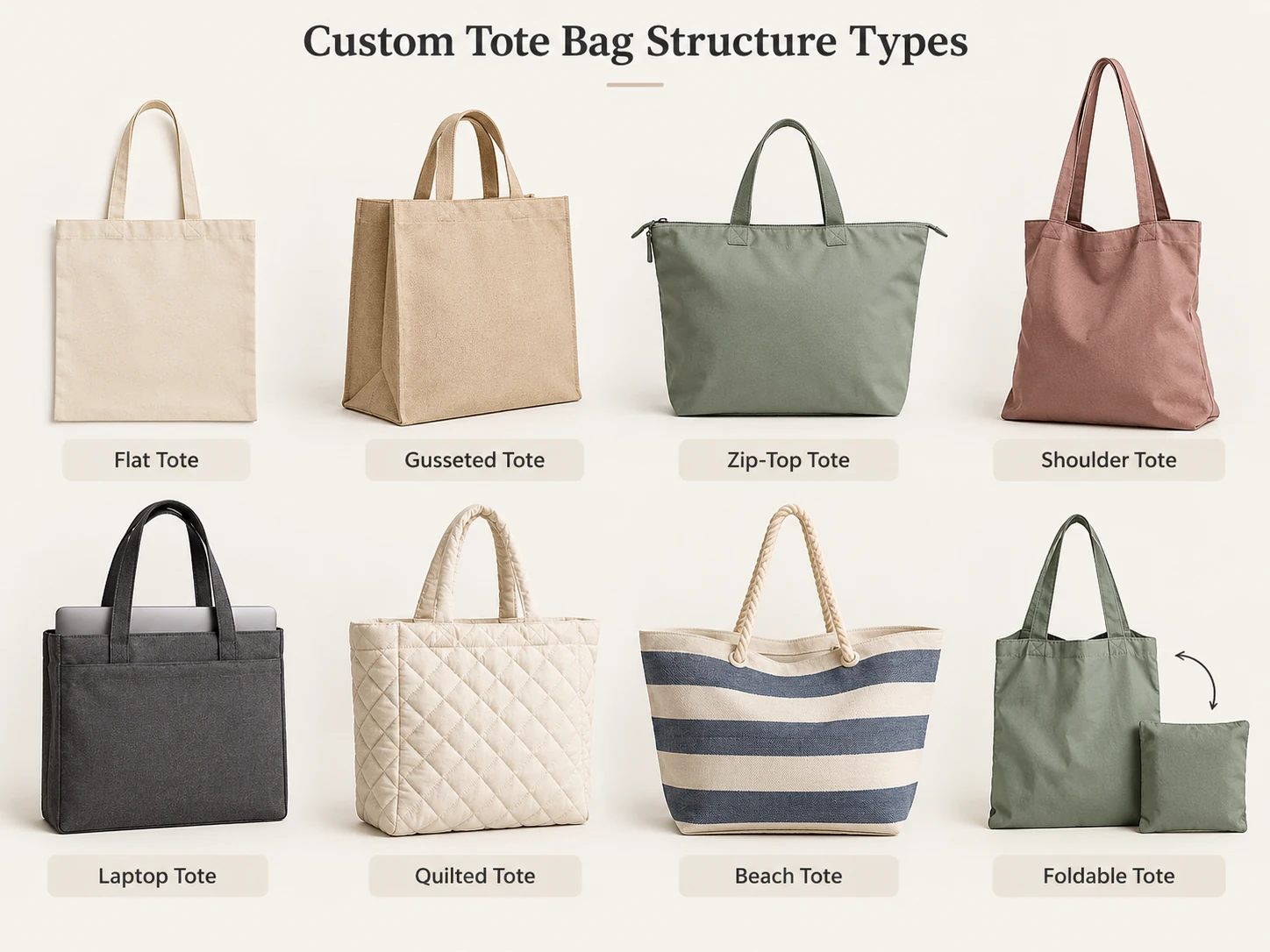
The following product types provide different combinations of cost, functionality and brand presentation.
Non-woven polypropylene bags are a practical choice for high-volume promotional programs.
They offer:
- Lightweight construction
- Large printable panels
- Custom dimensions
- Different handle options
- Flat or gusseted structures
- Efficient bulk packing
They are commonly used for exhibitions, retail openings, conferences and cost-controlled promotional distributions.
For larger bags, buyers should confirm fabric GSM, handle attachment and bottom construction rather than choosing based on price alone.
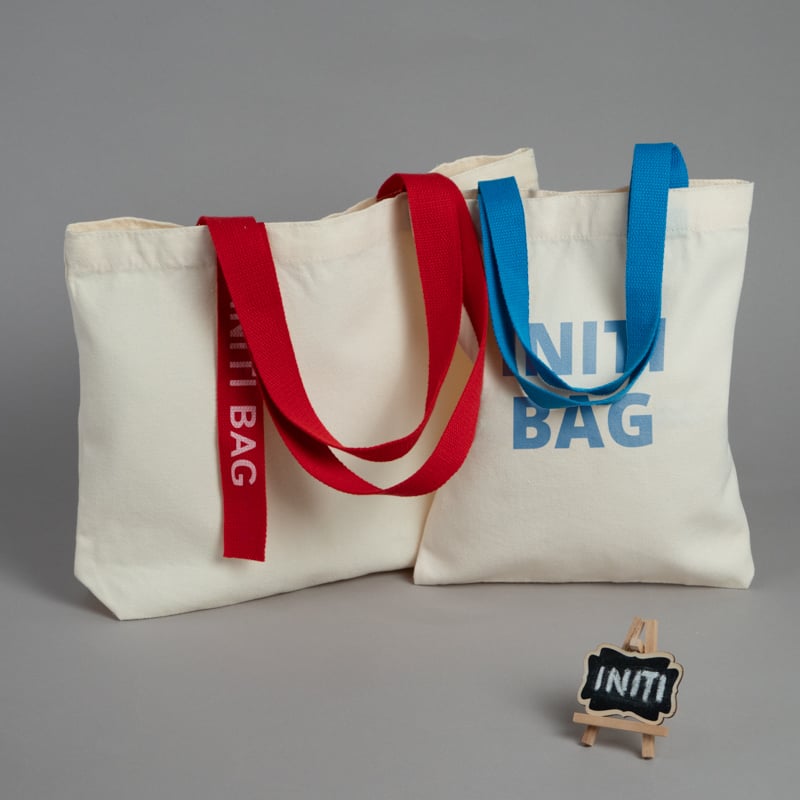
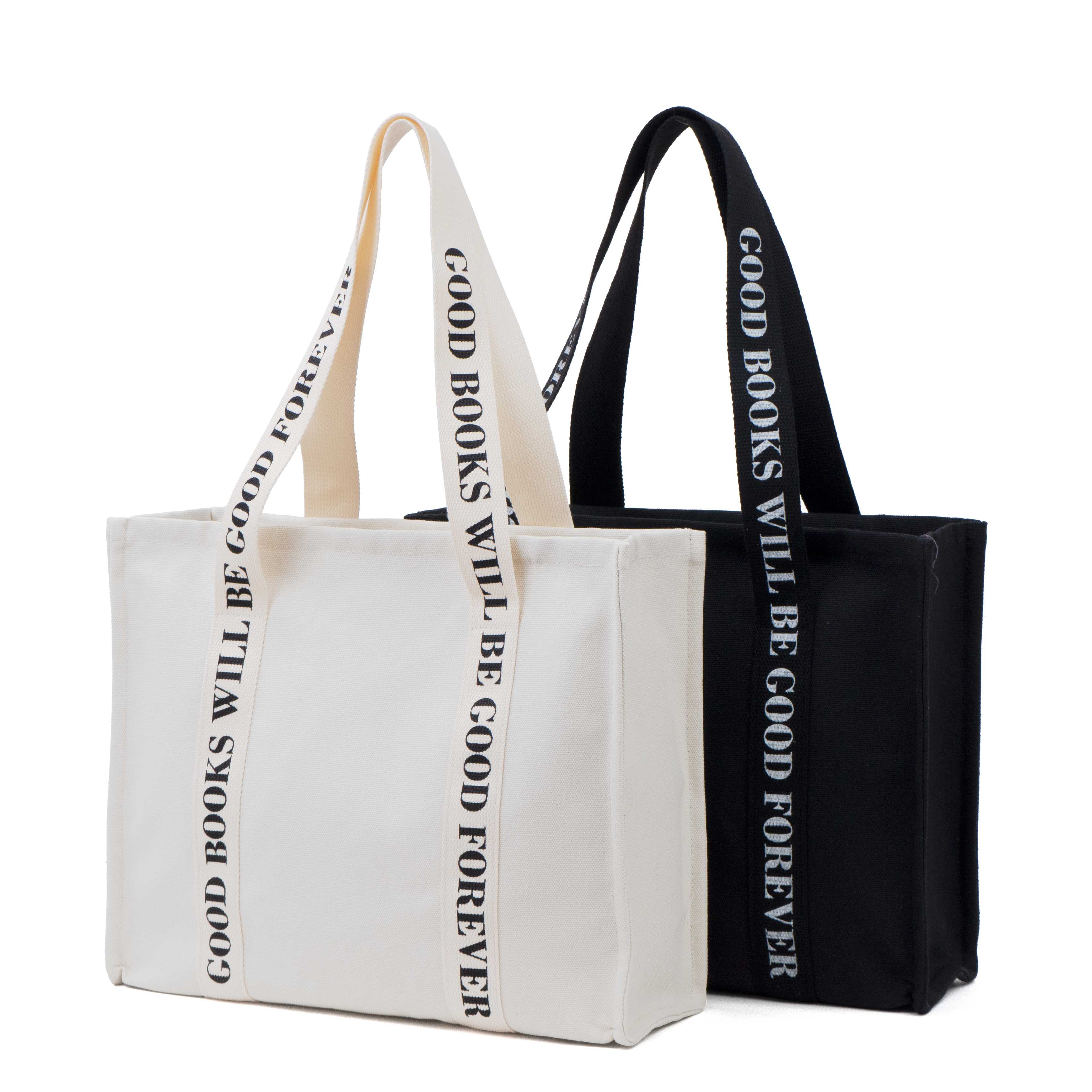
Cotton and canvas totes provide a more textile-oriented appearance than standard non-woven bags.
Lightweight cotton is suitable for simple promotional gifts, while heavier canvas can support more structured reusable products.
Common customization options include:
- Screen-printed logos
- Full-panel artwork
- Shoulder-length handles
- Bottom gussets
- Reinforced stitching
- Woven labels
Canvas totes are particularly suitable for lifestyle retail campaigns, museum merchandise, university programs and premium customer gifts.
Drawstring backpacks, also called cinch bags or gym sacks, are useful when recipients need hands-free carrying.
They are particularly suitable for:
- Sports events
- Running races
- Fitness campaigns
- School activities
- Youth-oriented promotions
Lightweight polyester versions are suitable for simple giveaways. More functional versions can include wider straps, pockets or separate storage compartments.
A basic promotional drawstring backpack should not be treated as a substitute for a conventional backpack intended to carry heavy contents.
Foldable shopping bags combine a full-size carrying compartment with compact storage.
They are suitable for:
- Supermarket membership campaigns
- Retail customer rewards
- Travel promotions
- Reusable shopping programs
- Purchase-with-purchase gifts
Polyester, nylon and RPET polyester are common material options.
Buyers should confirm both the opened dimensions and folded dimensions, together with the pouch or folding mechanism.
For more detail, see What Is a Foldable Shopping Bag? Materials, Folding Styles & Uses.
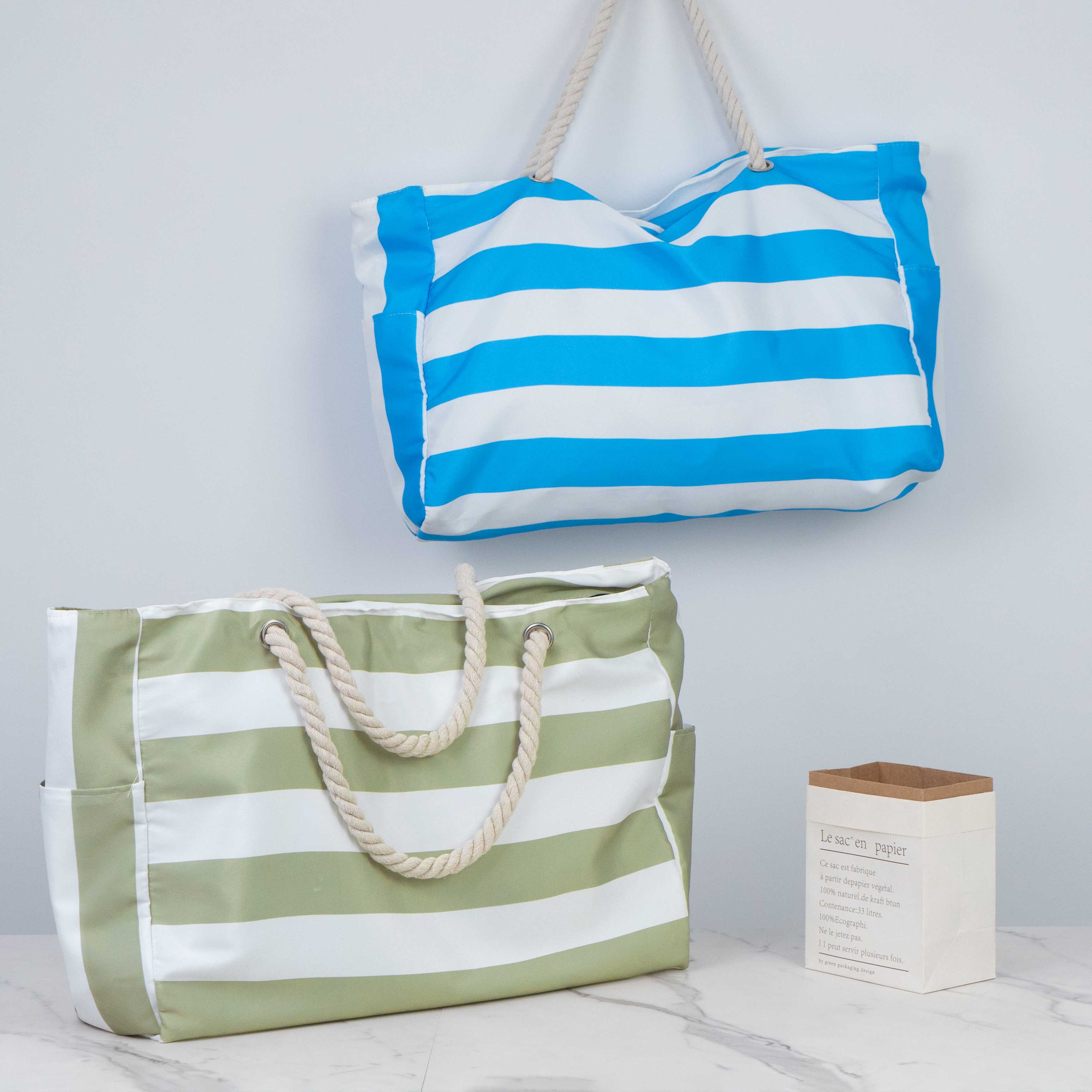
Laminated PP woven bags can provide larger shopping capacity and a more structured appearance.
They are useful for retail and supermarket programs requiring:
- Large printed graphics
- Side and bottom gussets
- Reinforced handles
- Repeat-use construction
- Consistent branded presentation
Their material weight, lamination, handle construction and packing volume should be evaluated together.
Choosing the Right Promotional Bag Material
Material selection affects appearance, carrying performance, printing, packed volume and price.
| Material |
Main Advantage |
Key Consideration |
Suitable Projects |
| PP Non-Woven |
Lightweight and cost-efficient |
Handle and seam strength |
Large giveaways, exhibitions |
| Cotton |
Natural textile appearance |
Fabric weight, shrinkage |
Branded gifts, retail events |
| Canvas |
Substantial feel and structure |
Higher weight and material use |
Premium promotions, merchandise |
| Polyester |
Lightweight and versatile |
Fabric specification and finish |
Sports, event bags |
| RPET Polyester |
Recycled-content options |
Recycled-content verification |
Retail rewards, reusable programs |
| PP Woven |
Structured and suitable for repeat use |
Lamination and packing volume |
Supermarkets, retail chains |
| Jute |
Distinct natural woven appearance |
Coarse surface and finishing |
Gift retail, lifestyle campaigns |
Material cost should not be evaluated separately from construction.
For example, a low-cost fabric combined with multiple pockets, special handles and complex printing may produce a higher final unit cost than a simpler bag made from a more expensive material.
Buyers should choose the complete product specification, not just the cheapest fabric.
Branding and Printing for Promotional Bags
A promotional bag must display the intended artwork clearly without compromising product construction.
Common customization methods include:
- Screen printing for simple logos and limited-color graphics
- Heat transfer for selected detailed or multicolor artwork
- Sublimation printing on compatible polyester materials
- Embroidery for suitable heavier textile constructions
- Woven labels for subtle retail branding
- Laminated printing for suitable full-color shopping bag structures
Logo Placement
For most basic tote bags, the front and back panels provide the main branding areas.
However, buyers should check whether:
- A gusset changes the visible artwork area
- Handles cover part of the printed design
- The logo remains visible when the bag is loaded
- Multiple sponsor logos have enough spacing
- Folded products require a second logo position
For retailer campaigns, color consistency may be especially important when the same bags are distributed through different stores.
Print position, artwork dimensions, color references and acceptable tolerances should be confirmed during sample approval.
How to Control Promotional Bag Costs
For bulk promotional projects, unit price is important, but it is not the only cost.
The total purchasing cost is influenced by:
Material + construction + printing + accessories + packaging + freight
Several design decisions have a direct impact.
Simplify the Bag Structure
A basic open-top tote normally requires fewer components than a lined bag with zipper pockets and additional hardware.
For large giveaway programs, unnecessary structural details can increase cost without improving the bag's intended function.
Select Printing Based on Artwork
A simple one-color logo may be more economical than a complex full-color design.
However, the most suitable method still depends on fabric, print area, order quantity and setup requirements.
Standardize Sizes Across Campaigns
Using one or two approved bag dimensions across multiple promotional designs can simplify material planning, sampling and production.
For multi-store programs, standardizing construction while varying printed artwork may also reduce unnecessary complexity.
Evaluate Packing and Freight
A low unit price can lose part of its advantage if the bag requires bulky individual packaging.
For large export orders, buyers should confirm:
- Pieces per carton
- Carton dimensions
- Gross weight
- Shipment CBM
- Individual packing requirements
The objective is to control total delivered cost, not only the ex-factory unit price.
Bulk Production for Events and Multi-Store Retail Campaigns
A promotional project has a fixed commercial purpose, and many have a fixed distribution date.
This makes production and delivery planning particularly important.
Event Programs
Event orders usually require coordination around:
- Artwork approval
- Sample confirmation
- Production quantity
- Event date
- Packing configuration
- Delivery destination
If bags must be filled with promotional merchandise before the event, the delivery schedule should also allow time for packing and distribution.
Retail Campaigns
Retail orders may involve:
- Multiple bag sizes
- Seasonal artwork
- Several color combinations
- Different store quantities
- Market-specific labeling
- Separate carton identification
- Repeat purchasing programs
For these projects, buyers should prepare a clear SKU breakdown showing the quantity, color, artwork and packing requirements for each version.
Quality Control
Before mass production, the approved sample should confirm:
- Material and fabric specification
- Finished dimensions
- Logo appearance
- Handle attachment
- Seam strength
- Intended carrying load
- Printing consistency
- Packing method
For large orders, production inspections should use agreed specifications and acceptance criteria rather than relying only on visual comparison.
Selecting Promotional Bags by Campaign Objective
| Campaign Type |
Recommended Bag Direction |
Purchasing Priority |
| Trade Show Giveaway |
Lightweight non-woven tote |
Logo visibility and efficient distribution |
| Conference Welcome Kit |
Cotton tote or non-woven tote |
Contents, size and presentation |
| Marathon or Fitness Event |
Polyester drawstring backpack |
Low weight and convenient carrying |
| Retail Store Opening |
Printed cotton or canvas tote |
Brand presentation |
| Supermarket Loyalty Program |
Foldable or PP woven shopping bag |
Reuse, capacity and load performance |
| Premium Customer Reward |
Structured canvas tote |
Finish, durability and perceived value |
| Seasonal Retail Campaign |
Custom printed tote |
Artwork and color consistency |
| Multi-Store Promotional Rollout |
Standardized reusable shopping bag |
Production consistency and logistics |
The recommendations are starting points. Final material and construction should be based on the actual contents, target cost and expected use.
For event kits containing several promotional items, see our separate guide: What Is a Swag Bag? A Complete Guide to Custom Bags for Brands and Events.
Common Purchasing Mistakes
Promotional bag projects can encounter avoidable problems when specifications are approved too quickly.
Choosing by appearance alone
An attractive sample may not have suitable handle strength or capacity for the intended contents.
Over-customizing a low-cost giveaway
Additional pockets, lining, zippers and hardware can increase cost without providing meaningful value for a simple event bag.
Ignoring carton volume
Large quantities of bulky bags can increase freight and storage requirements.
Approving artwork without a physical sample
Screen colors and digital mockups cannot reliably confirm actual fabric color, print appearance or logo placement.
Making unsupported sustainability claims
Reusable does not automatically mean recyclable, biodegradable or environmentally preferable in every situation. Recycled-content and other environmental claims require appropriate evidence.
Why Work With INITI for Custom Promotional Bags?
Hangzhou INITI Imp&Exp Co., Ltd. supports custom bag and packaging projects for retailers, importers, distributors, promotional companies and brand owners.
With over 16 years of industry experience, INITI offers OEM and ODM development across different promotional bag categories, including cotton totes, canvas bags, PP non-woven bags, PP woven shopping bags, RPET bags and drawstring bags.
Our project support includes:
- Material and construction recommendations
- Custom dimensions and logo applications
- Sample development
- Color and artwork confirmation
- Bulk production coordination
- Quality inspections
- Custom packing and carton labeling
- Export and shipment coordination
For large-volume or multi-SKU programs, we can review the specifications, packing requirements and delivery schedule together before production.
INITI also supports applicable material testing, compliance documentation and factory audit requirements according to the product and destination market. Our supplier qualifications include SEDEX, GRS, HIGG and ISO 9001-related credentials, with applicability confirmed for each project.
The aim is to develop a promotional bag that meets the brand's functional requirements without adding unnecessary material, manufacturing or logistics costs.
FAQ
What are the best bags for promotional giveaways?
Non-woven totes, lightweight cotton bags and polyester drawstring backpacks are practical starting options. The best choice depends on the intended contents, budget, branding area and distribution method.
Which promotional bags are suitable for retail campaigns?
Cotton totes, canvas bags, foldable shopping bags and PP woven bags are suitable for different retail programs. Buyers should select the structure according to load requirements, product positioning and expected reuse.
Can promotional bags be customized with multiple logos?
Yes. Many promotional bag constructions can support multiple logos, sponsor artwork or seasonal graphics. Printing feasibility depends on the material, available print area, number of colors and selected method.
What is the MOQ for custom promotional bags?
MOQ varies by bag type, material, printing method and customization requirements. Standardized designs may offer more flexibility than products requiring specially sourced materials or complex construction. Buyers should request a quotation based on their actual quantity.
How early should promotional bags be ordered before an event?
The required schedule depends on sample development, artwork approval, material availability, manufacturing quantity and shipping method. Buyers should share the required delivery date at the initial quotation stage so the production and logistics plan can be evaluated.
Conclusion
The most effective promotional bag is not necessarily the cheapest or the most elaborate.
For event giveaways, the priority is often a practical bag with clear branding, efficient bulk packing and controlled cost.
For retail campaigns, carrying performance, product appearance, repeat use and consistent production may matter more.
By defining the contents, campaign objective, order quantity, artwork and delivery requirements early, buyers can choose a bag structure that fits both the promotional purpose and the purchasing budget.
Inquiry Support
For your custom promotional bag project, you can provide:
- Logo artwork
- Estimated quantity
- Preferred size or reference dimensions
- Required colors
- Packaging requirements
Additional useful information includes the campaign type, intended contents, target budget, distribution markets and required delivery date.
If you have not finalized all details, you can first send your intended use and target quantity, and we can recommend a suitable specification.
Contact [email protected] to discuss custom promotional bags, request samples or obtain a quotation for your event or retail campaign.
Related Products
Non-Woven Tote Bag
Large Logo Webbing Canvas Tote Bag
Printed PP Woven Tote with Branded Straps
Foldable Reusable Shopping Bag
RPET Drawstring Backpack with Shoe Pocket
Related Blog Articles
What Is a Swag Bag? A Complete Guide to Custom Bags for Brands and Events
Cotton vs Canvas vs RPET Bags: Which Material Should Your Brand Choose?
What Is a Foldable Shopping Bag? Materials, Folding Styles & Uses
Gift Bag Materials & Styles: How to Choose the Right Option for Your Brand



 Hot News