A quart size bag and a sandwich bag may look similar at first glance. Both are commonly available in transparent plastic, feature a resealable opening, and can hold small items. However, they are designed for different purposes, and their differences become more important when packing liquids for air travel.
A sandwich bag is primarily intended for food storage, portioning, and everyday organization. A quart size bag, on the other hand, is closely associated with airport liquid restrictions and the organization of travel-size toiletries. Although a sandwich bag may work for a small number of personal-care products, its dimensions, opening, and construction may make it less suitable for a full set of travel essentials.
The choice also depends on how frequently the bag will be used, what it needs to contain, and whether it is intended for personal use or commercial distribution. For travel accessory brands, cosmetic retailers, promotional gift suppliers, and other B2B buyers, understanding these differences helps determine whether a disposable plastic bag or a reusable transparent pouch is the better product.
This guide compares quart size bags and sandwich bags in terms of dimensions, capacity, airport security requirements, materials, durability, everyday applications, and purchasing considerations.
What Is a Quart Size Bag?
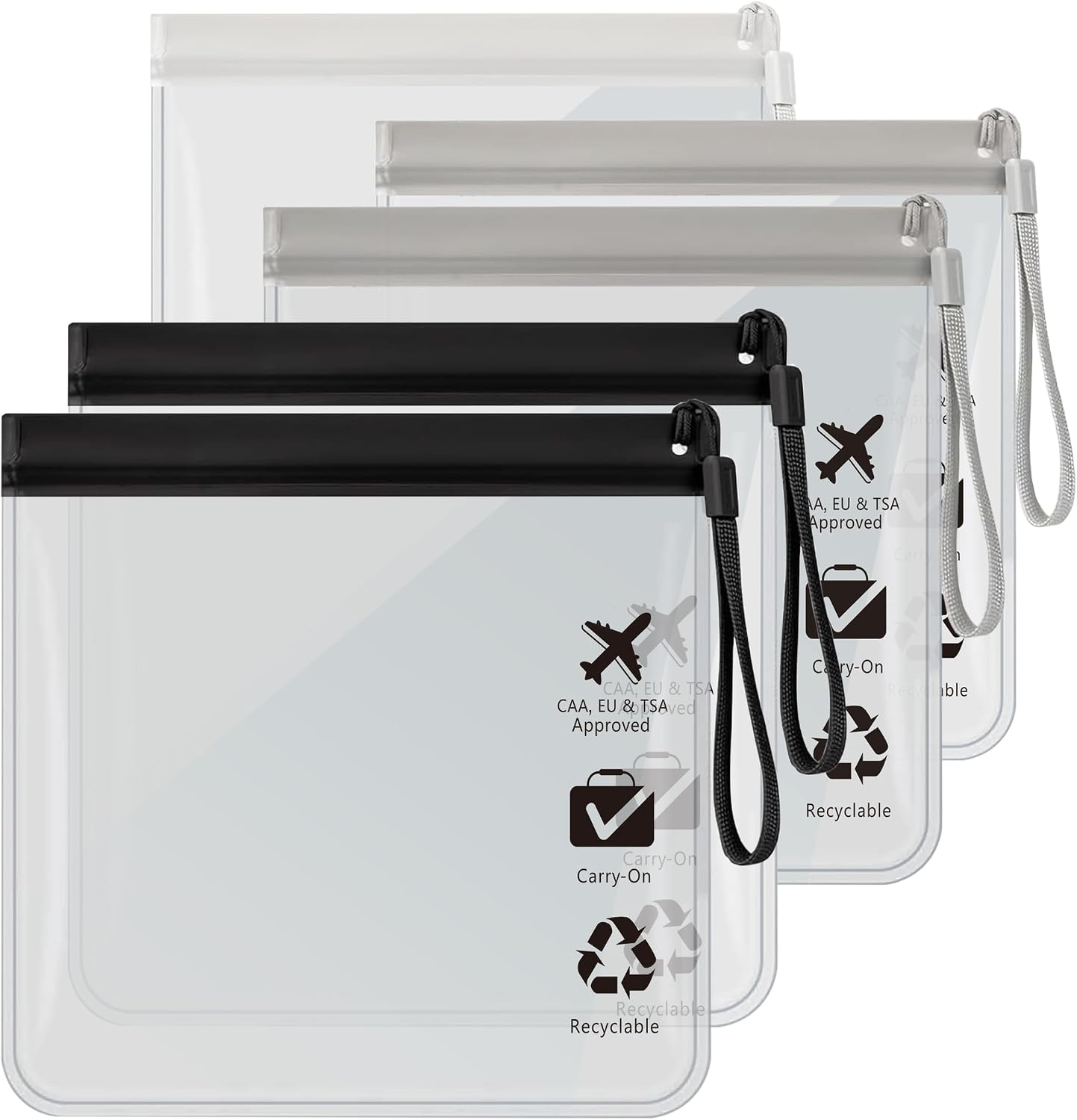
A quart size bag is a small bag associated with the storage of travel-size liquids, gels, aerosols, creams, and pastes in carry-on luggage. In the United States, the term is widely used because the Transportation Security Administration (TSA) refers to a quart-sized bag in its 3-1-1 liquids rule.
One US liquid quart equals approximately 946 mL, or 32 US fluid ounces. However, this does not mean that every quart size bag has a rigid internal volume of exactly 946 mL. The term is primarily used in the context of airport liquid restrictions, and the bag's practical capacity depends on its dimensions, shape, closure, and how it is packed.
Quart size bags are commonly associated with transparent, resealable plastic bags. Transparency makes it easier to see the contents, while a resealable opening helps keep small containers together and makes the bag convenient to remove from luggage when required.
Common Dimensions of a Quart Size Bag
There is no single universal length and width that defines every quart size bag.
Measuring approximately 7 × 8 inches are a common reference
What Is a Quart Size Bag Used For?
The most familiar application is carrying small liquid and personal-care containers during air travel. Common examples include:
- Shampoo and conditioner
- Facial cleanser and moisturizer
- Sunscreen and liquid makeup
- Toothpaste and mouthwash
- Hand sanitizer
- Small perfume bottles
- Travel-size lotion
A quart size bag can also help organize small items in a suitcase, gym bag, or overnight bag. For example, it may keep travel toiletries separate from clothing or group several small personal-care products into one easy-to-find package.
What Is a Sandwich Bag?
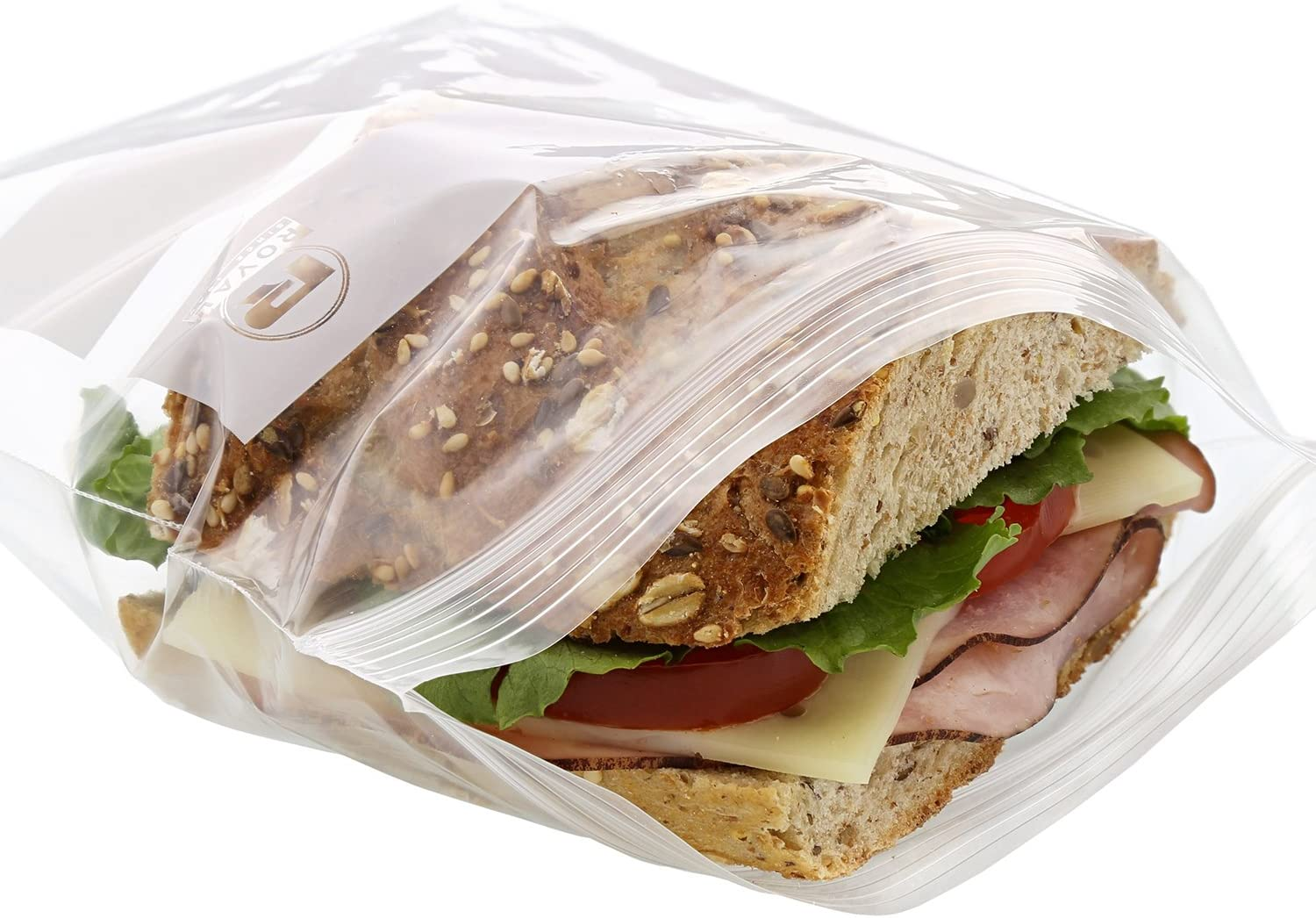
A sandwich bag is a small bag designed primarily for storing sandwiches, snacks, and other food portions. Most conventional versions are made from thin, flexible plastic film, often polyethylene, and feature a press-to-close or interlocking resealable seal.
Sandwich bags are widely used because they are lightweight, inexpensive, easy to store, and convenient for everyday tasks. Their flexible construction allows them to accommodate irregularly shaped food items without requiring a rigid container.
Although the name suggests food storage, sandwich bags are also used for organizing small non-food items. People may use them to separate charging cables, stationery, travel accessories, or small personal-care products.
Common Dimensions of a Sandwich Bag
Sandwich bags do not have one universal size. Dimensions vary by manufacturer, product line, and intended application.
A conventional sandwich bag may be around 6.5 × 5.5 inches, although some products are larger or smaller. Its shape is often wider than it is tall, making it suitable for sandwiches, snack portions, and relatively flat items.
The following table provides a practical comparison of common formats.
| Attribute |
Quart size bag |
Sandwich bag |
| Panel size |
7 × 8 in / 17.8 × 20.3 cm |
6.5 × 5.5 in / 16.5 × 14.0 cm |
| Panel area |
~361 cm² |
~246 cm² |
| Typical film thickness |
1.5–2 mil / 38–50 µm |
1.2–1.5 mil / 30–38 µm |
| Film weight (both panels, film only) |
~2.5–3.5 g |
~1.4–1.9 g |
| Usable volume when sealed |
~0.9–1.0 L |
~0.5–0.65 L |
| Closure |
Press-to-close or slider |
Press-to-close, usually single track |
| Stands when filled |
Yes, with a flat base fold |
Rarely — collapses |
| Holding liquid |
Fair with a double track; good with a slider |
Poor |
| Freezer use |
Good at 2 mil and above |
Limited — thin film goes brittle |
| Airport liquids |
Meets the US quart rule and the EU/UK 1 liter rule |
Meets neither reliably |
| Reuse cycles |
10–20 with careful handling |
3–8 |
| Cost per bag |
Medium |
Low |
| Best at |
Travel accessories, toiletries, cosmetic sets |
Food storage, household supplies, food-service applications |
The dimensions shown are examples, not mandatory specifications. Always check the actual product dimensions before comparing bags from different manufacturers.
How Much Each Bag Really Holds
The capacity claims on these boxes are usually expressed as a count of things — "fits ten travel bottles" — rather than a volume. That is a marketing sentence, not a measurement. Ten 100 ml bottles can be tall and narrow or short and wide, and the bag does not care which.
The honest way to answer the question is to work from the usable panel area, subtract the strip that the closure occupies, and divide the target volume by that area to find the average depth the bag has to reach.
Usable panel area = panel width × (panel length − closure header)
The closure header is the band of film above the zip track where the two panels are joined and where you grip the bag to open it. On a typical press-to-close bag it eats 20 to 30 mm of the panel length. Nothing can go in there, so it has to come out of the calculation.
Take a quart bag at 178 × 203 mm with a 25 mm header. The usable panel is 178 × 178 mm, or 316.8 cm². To hold one US quart of 946.35 cm³, the bag has to average:
946.35 ÷ 316.8 = 2.99 cm
So a 7 × 8 inch bag holds a quart when the film bulges to about 3 cm across the panel. That is a comfortable fill for a bag this size, which is why the 7 × 8 convention survived: it delivers the stated volume without being strained.
Now the same calculation for a sandwich bag at 165 × 149 mm with the same 25 mm header. The usable panel is 165 × 124 mm, or 204.6 cm², and one quart would require:
946.35 ÷ 204.6 = 4.63 cm
A sandwich bag cannot reach 4.6 cm average depth without the side folds splitting or the track letting go. That is the geometric reason it is not a quart bag, no matter what a retailer prints on the box. At a realistic 3 cm fill it holds about 614 cm³, or 0.65 quart. At a conservative 2.5 cm fill, which still leaves the closure sitting flat, it holds about 512 cm³, or 0.54 quart.
| Bag |
Usable panel |
Depth needed for 1 quart (946 ml) |
Realistic sealed fill |
Share of a quart |
| Sandwich bag |
~205 cm² |
4.6 cm — beyond practical limit |
~500–615 ml |
~0.54–0.65 qt |
| Quart bag |
~317 cm² |
3.0 cm — comfortable |
~900–1,000 ml |
~0.95–1.05 qt |
Which Bag Is Easier to Organize?
A conventional sandwich bag is flexible and often collapses when empty. This is useful when storage space is limited, but it can make small items harder to organize.
A reusable quart-style pouch may provide a more controlled opening and a more defined shape. Depending on its construction, it may also be easier to open, close, and retrieve items from without removing everything inside.
Can You Use a Sandwich Bag Instead of a Quart Size Bag at the Airport?
A sandwich bag can hold travel-size toiletries, but it is not necessarily a suitable replacement for a quart-size bag under the TSA's 3-1-1 liquids rule
Under the TSA's commonly published 3-1-1 liquids rule, passengers traveling through US airport security may generally carry liquids, aerosols, gels, creams, and pastes in containers of 3.4 US fluid ounces (100 mL) or less, with those containers placed together in one quart-sized bag. Exceptions apply to certain items, including qualifying medications and infant or child nourishment.
The rules concern both the individual containers and the way the liquids are carried. Simply placing small bottles in a transparent sandwich bag does not establish that the overall arrangement meets every requirement.
Why a Sandwich Bag May Not Be a Reliable Substitute
There are several practical reasons to be cautious.
1. The bag may be too small. A sandwich bag may accommodate a few small containers but leave insufficient room for a complete set of travel toiletries.
2. Its shape may limit packing efficiency. A short, wide bag may not accommodate taller bottles as effectively as a more suitable rectangular pouch.
3. The closure may be less convenient. A press-to-close seal can be practical, but it may become difficult to close if the bag is overfilled or the seal is contaminated with lotion or other residue.
4. Its construction may not suit repeated handling. Thin film can tear or puncture, particularly when sharp-edged caps, rigid containers, or other items press against it.
5. Transparency alone does not guarantee suitability. A clear bag may make its contents visible, but that does not establish that its dimensions or overall use meet the applicable rules.
Does a Quart Size Bag Need to Be Exactly 7 × 8 Inches?
No single pair of dimensions should be treated as a universal definition of a quart size bag.
The commonly referenced dimensions of approximately 7 × 8 inches are useful when comparing product formats, but they are not a substitute for checking official requirements.
A flat bag and a gusseted pouch with similar external measurements can have different internal capacities. Likewise, two bags with the same nominal capacity may differ in the space available after accounting for seams, binding, and closures.
Quart Size Bag vs Sandwich Bag for Different Situations
In the Kitchen: Which Bag Belongs to Which Job
This is where most of these bags are actually used, and it is also where the two formats separate most clearly. A sandwich bag is a portion tool. A quart bag is a container that happens to be flat.
Freezing. This is the job that punishes thin film. Moisture migrates through polyethylene over time, and the thinner the film, the faster the surface of the food dries and turns pale and leathery. A 1.2 mil sandwich bag holding a portion of stew for three weeks in a freezer will produce freezer burn at the corners; a 2 mil quart bag with a double track, pressed flat to remove air, resists it far better. The technique matters as much as the bag: portion first, press the bag flat to push air out before sealing, freeze flat so the contents freeze quickly, and stack the flat sheets like cards. Removing air is worth more than adding thickness.
Marinating. The quart bag became a kitchen standard because it puts meat in contact with marinade on all sides with no washing up. Put the meat in, add the marinade, press out the air, seal, and leave it in a bowl in case of leaks. For cuts with bones or sharp edges, double-bag it or use a thicker film, because a bone corner can work a pinhole through 1.5 mil film within a few hours of handling.
Produce. Berries usually last noticeably longer in a sandwich bag with a folded paper towel, because the towel absorbs condensation that would otherwise sit against the fruit. Leafy greens do better in a quart bag with a little air left in it and a paper towel, sealed loosely. The bag is not the active ingredient here; managing moisture is.
Leftovers and smell. Quart bags are the practical container for half an onion, a cut lemon, or a portion of rice. Two habits make a real difference: let hot food cool before sealing, because steam condenses, sogs the contents and loosens the closure; and double-bag anything strongly scented, because onion, garlic and fish will perfume everything else in the drawer through a single layer of film within a day.
At the Airport: What Actually Happens at Security
The quart bag's second life began at a security checkpoint, and the checkpoint is where the gap between what the bag is and what people expect of it becomes obvious.
The scene is familiar. You queue, you take out your laptop, you empty your pockets, and you haul out a bag of bottles that has been sitting in a hotel bathroom or a bathroom cabinet for months. The officer lifts it, looks at it, and either waves it through or asks you to repack it. What decides the outcome is rarely the size printed on the box. It is whether the bag closes with the contents inside, whether the film is clear enough to see through, and whether the bottles are the right size.
The two-thirds rule. Fill the bag to about two-thirds, press it flat to expel air, then seal. Three things go wrong when a quart bag is packed full: the closure is under load from the contents, the trapped air expands as the cabin pressure drops after takeoff and pushes against that closure, and the bag will not sit flat in a tray or a suitcase pocket. A bag filled to two-thirds and squeezed flat behaves like a sealed pouch; a bag stuffed to the zip behaves like a container with a lid that is only resting on top.
The bottles are the other half of the problem. Every container has to be 100 ml or 3.4 oz or smaller in its own right, and the total has to fit. A 200 ml bottle filled halfway is still a 200 ml bottle and will be refused at most checkpoints, including in the UK, where the limit applies to the container's capacity rather than its contents. Decanting into smaller bottles before the trip is not a trick; it is the requirement.
Packing order matters at the hotel too. Put the liquids bag at the top of the carry-on, not at the bottom under a laptop and a jacket. You will need it at security on the way out and possibly again on a connection, and a bag you can reach in ten seconds is a bag that does not get repacked in a hurry and left open.
The return trip is where bags fail. A quart bag that survived the outbound flight often comes home with a damp interior, a stretched closure and a shampoo film on the inside. Rinse it, dry it open, and check the track before reusing it. A bag that no longer stays closed when you run a thumb along the track is finished, and putting it back in the kit is how the next trip's spill happens.
What the bag is genuinely good at on the road: it organizes. Once you arrive, the same bag holds chargers, adapters and a travel router in a drawer, or keeps a wet swimsuit away from everything else. That second life is why frequent travelers end up with a favorite bag rather than a favorite brand.
Material and Construction: What Actually Matters?
The material and construction determine how a bag performs in everyday use. This is particularly important when comparing disposable bags with reusable travel pouches.
A low-cost bag may be adequate for a simple, one-time task, while a reusable product may justify a higher purchase price through better handling and repeated use.
Polyethylene Film
Polyethylene (PE) is commonly used in disposable food-storage bags, including many sandwich bags. It is lightweight, flexible, and suitable for a range of everyday storage applications when the specific grade and product are designed for that use.
The performance of a PE bag depends on its formulation, thickness, seal design, and manufacturing quality. A very thin film may be easy to fold and store but more vulnerable to punctures or tearing under stress.
For food storage, buyers should verify that the product is intended for food contact and is suitable for the intended food type and conditions.
For travel toiletries, a disposable PE bag may provide basic containment and visibility, but it may not be designed to withstand frequent opening, heavy contents, or long-term use.
PVC for Reusable Clear Pouches
Polyvinyl chloride (PVC) is used in some reusable transparent cosmetic bags and travel pouches. Depending on the formulation and thickness, it can provide a relatively structured clear panel and a surface suitable for displaying the contents.
PVC pouches are often combined with fabric binding, zipper tape, or other components. This creates opportunities for color coordination and branding while maintaining visibility.
However, PVC is not a single performance specification. Buyers should confirm the material grade, thickness, flexibility, odor, finish, and intended use with the supplier. Material compliance and chemical requirements should be assessed for the destination market and product category.
A PVC cosmetic pouch should not be assumed to be suitable for direct food contact simply because it is transparent.
TPU for Transparent Travel Bags
Thermoplastic polyurethane (TPU) is another material used in transparent or translucent reusable pouches. Its characteristics vary by grade and construction, but it can offer a flexible alternative for certain travel and cosmetic applications.
For buyers, the decision between PVC and TPU should not be based solely on broad claims that one material is always better. Relevant factors include the desired feel, transparency, flexibility, thickness, cost, manufacturing process, and applicable compliance requirements.
Zipper and Press-to-Close Seals
The closure is one of the most important differences between disposable bags and reusable pouches.
A press-to-close seal is lightweight and convenient. It is common in food-storage bags and can be reopened without additional hardware. Its performance depends on the profile of the seal, the quality of the film, and whether the two sides close evenly.
A zipper used on a reusable pouch can provide a different opening experience and may be more suitable for repeated handling. However, zipper quality, stitching, zipper stops, and the surrounding material all affect the finished product.
Neither closure should automatically be described as leakproof. Even if a closure appears secure, liquid may escape through imperfect seams, damaged film, or gaps near the ends of a zipper.
For travel use, the closure should be tested with the intended contents and under realistic conditions. For retail products, it should also be checked for smooth operation and consistent appearance across production samples.
Thickness, Seams, and Finished-Bag Quality
Thickness is useful when comparing similar materials, but it does not tell the entire story.
A thicker bag may resist punctures better under certain conditions, yet a weak seal or poorly constructed seam can still cause failure. Likewise, a thinner film with an appropriate formulation and well-designed seal may perform adequately for light-duty use.
When evaluating a finished bag, consider:
- Film or panel thickness and consistency
- Resistance to tearing and puncturing
- Seal or zipper performance
- Seam quality and alignment
- Flexibility at the intended temperature
- Transparency and surface appearance
- Resistance to the products expected to be stored inside
For reusable pouches, also examine whether the material becomes cloudy, stiff, scratched, or distorted during ordinary handling.
The most reliable choice is the product that meets the intended performance requirements, not necessarily the one with the thickest material or the highest initial price.
Are Quart Size Bags and Sandwich Bags Reusable?
Reusability depends on the product's intended design, material condition, cleanliness, and the type of items stored inside.
Some disposable sandwich bags can be reused for appropriate purposes when they remain clean and undamaged. However, they may not withstand repeated washing, friction, or stress at the closure. Food safety requirements also matter: a bag that has held raw meat, oily food, or other contamination-sensitive items should not be casually reused for unrelated purposes.
Disposable quart size bags have similar limitations. They may survive more than one use, but they are not necessarily engineered for long-term durability.
Reusable clear travel pouches are designed with repeated handling in mind. Their panels, seams, and closures may be more robust than those of disposable film bags, although actual performance varies by product.
When Is Reuse Practical?
Reuse is most practical when the bag can be cleaned safely, dried thoroughly, and inspected for damage before the next use.
For a disposable bag, signs that it should be discarded include:
- A damaged or distorted closure
- Tears, pinholes, or weakened seams
- Persistent residue or odor
- Cloudiness that makes the contents difficult to inspect
- Contamination that cannot be removed safely
For a reusable pouch, follow the manufacturer's cleaning instructions. Some materials may be wiped clean, while others may not tolerate hot water, aggressive cleaning products, or machine washing.
A bag used for toiletries should also be allowed to dry properly, especially around seams and zipper areas.
How to Choose the Right Bag for Your Needs
The easiest way to select between a quart size bag and a sandwich bag is to begin with the job the bag needs to perform.
Choose a Sandwich Bag When...
A sandwich bag is a practical option when:
- You need to store sandwiches, snacks, or small food portions.
- The contents are relatively lightweight and fit comfortably inside.
- You want a low-cost, compact option for occasional use.
- You need to separate small items within a larger bag.
- A flexible format is more useful than a structured pouch.
For food-related applications, verify the product's food-contact suitability and follow the manufacturer's instructions for temperature, reuse, and disposal.
A sandwich bag may also be convenient for temporary organization, but its dimensions and seal should be checked before using it to carry toiletries or other items that could leak.
Choose a Quart Size Bag When...
A quart size bag is a more relevant starting point when:
- You are organizing travel-size liquids for a flight subject to the TSA 3-1-1 rule.
- You need to group several small toiletry containers together.
- Transparency helps you identify the contents quickly.
- You want a compact pouch that can be removed from luggage easily.
- You are developing a travel kit around a specific set of small containers.
The final choice should still be based on actual dimensions, opening size, and the applicable airport requirements. A product label alone does not guarantee that a bag is suitable for every screening situation.
Buying Quart Size Bags and Sandwich Bags in Bulk: A Guide for B2B Buyers
For businesses sourcing these products, the decision involves more than selecting a familiar size. The right specification depends on the target customer, sales channel, product positioning, expected service life, and cost requirements.
Food-storage bags and reusable transparent pouches may look similar in photographs, but they can involve different materials, quality checks, compliance requirements, packaging methods, and manufacturing processes.
The following considerations help buyers define a product before requesting quotations or approving samples.
1. Define the Product's Intended Use
Start by identifying how the finished product will be used.
A disposable bag for food portions requires a different specification from a reusable pouch for toiletries. A travel pouch intended to organize small bottles may need greater opening width and material durability, while a basic disposable bag may prioritize low unit cost and compact packaging.
Useful questions include:
- Will the product hold food, toiletries, cosmetics, or non-food accessories?
- Is it intended for one-time use or repeated handling?
- Will it be sold individually, in multipacks, or as part of a gift set?
- Does transparency need to be complete or partial?
- Is the product intended for airport-related travel use?
- Will it be sold under a private label or used as a promotional item?
These answers determine which specifications should be prioritized. Without them, comparing quotations on unit price alone can lead to an unsuitable product.
2. Confirm Dimensions and Usable Capacity
For a bulk order, a product name such as "quart size bag" is not a complete specification.
Confirm the external width and height, usable internal dimensions, opening size, and any gusset depth. If the product must hold particular containers, provide their dimensions or include them in a fit test.
For a flat bag, the usable space may be reduced by the sealed edges. For a reusable pouch, binding, zipper placement, and curved corners may reduce the opening or internal capacity.
The following table provides a practical checklist.
| Specification |
What buyers should confirm |
Why it matters |
| External dimensions |
Width and height of the finished bag |
Establishes the overall product size |
| Internal dimensions |
Usable width and height after construction |
Determines whether the intended contents fit |
| Gusset |
Depth and opening behavior, if applicable |
Affects capacity and the shape of the filled bag |
| Opening width |
Actual usable opening |
Determines how easily items can be inserted and removed |
| Closure |
Press seal, zipper, or another design |
Influences convenience and repeated use |
| Material thickness |
Agreed measurement and tolerance |
Helps control consistency and performance |
| Transparency |
Clear, tinted, frosted, or partly transparent |
Affects visibility and visual presentation |
| Finished-product tolerance |
Acceptable dimensional variation |
Reduces inconsistency between units |
The sample should be tested with the actual intended contents before bulk production. A theoretical volume calculation cannot fully predict whether irregularly shaped products will fit through the opening or allow the closure to work properly.
3. Select the Material for the Application
Material selection should balance performance, cost, appearance, and applicable compliance requirements.
For disposable food-storage bags, buyers should confirm that the material is suitable for the intended food-contact application. For reusable cosmetic or travel pouches, the priorities may include transparency, flexibility, surface quality, zipper compatibility, and resistance to routine handling.
A useful starting point is to define the performance requirements first and then compare material options against them.
| Requirement |
Questions to ask |
| Flexibility |
Does the material bend and fold as expected? |
| Visibility |
Are the contents easy to see under normal lighting? |
| Strength |
Can the bag handle the intended contents without tearing? |
| Closure performance |
Does the seal or zipper work consistently? |
| Surface quality |
Is the finish acceptable for retail presentation? |
| Cleaning |
Can the product be cleaned according to its intended use? |
| Compliance |
Does the material meet applicable requirements in the destination market? |
| Cost |
Does the material fit the target selling price and margin? |
Do not assume that two bags made from the same general material will perform identically. Material grade, thickness, additives, manufacturing methods, and construction details can all affect the result.
4. Evaluate Closure Performance
The closure should match the expected frequency of use and the contents of the bag.
For disposable bags, check that the press-to-close seal aligns properly and closes across the intended opening. For reusable pouches, evaluate zipper smoothness, alignment, end stops, stitching, and the strength of the surrounding panel.
A sample evaluation should include repeated opening and closing, visual inspection of the closure, and testing with the intended contents. If spill containment is important, test the complete finished product rather than only the closure component.
For a reusable travel pouch, a zipper that is difficult to operate may undermine the benefits of a durable material. For a disposable bag, an unreliable press seal can make an otherwise suitable product frustrating to use.
5. Check Product Consistency Before Bulk Production
Small variations can become more significant when multiplied across a large order.
Buyers should establish an approved reference sample and agree on acceptable tolerances for dimensions, material thickness, color, printing, and closure performance.
Depending on the product, inspection may include:
- Measuring a sample of finished bags
- Checking the consistency of the opening and closure
- Inspecting seams and sealed edges
- Looking for pinholes, tears, or surface defects
- Confirming transparency and appearance
- Checking logo placement and print quality, if applicable
- Verifying the packing quantity and packaging condition
Testing should reflect the product's intended use. A reusable pouch intended for frequent travel may require more emphasis on repeated closure operation than a basic disposable bag.
If a product will be used with food, liquids, cosmetics, or other regulated contents, additional documentation or testing may be necessary. Buyers should identify these requirements before finalizing the specification.
6. Compare Total Cost, Not Only Unit Price
A lower unit price does not necessarily mean a lower overall cost.
For disposable bags, the relevant factors may include material usage, seal quality, packaging quantity, shipping volume, and the expected replacement rate.
For reusable pouches, buyers should also consider the zipper, binding, printing, assembly, individual packaging, and the service life expected by the target customer.
| Cost factor |
Potential impact |
| Material choice |
Affects unit cost, weight, and performance |
| Dimensions |
Changes material consumption and packaging efficiency |
| Construction |
Additional gussets, binding, or components can increase cost |
| Closure |
Different closure types have different component and assembly costs |
| Branding |
Printing, color matching, and logo placement may add cost |
| Packaging |
Individual packaging and retail presentation affect total cost |
| Quality control |
Inspection and testing contribute to overall project cost |
| Shipping |
Finished dimensions, packing method, and order volume affect freight efficiency |
When comparing suppliers, make sure the quotations cover equivalent specifications. A thinner film, simpler closure, or smaller usable opening can make one quotation look cheaper while delivering a different product.
For reusable pouches, it may also be useful to consider the expected cost per use. A higher-priced product may be commercially attractive if it meets the target durability and customer expectations, but that conclusion should be based on realistic service-life assumptions rather than marketing claims.
7. Plan Customization and Retail Presentation
Customization is particularly relevant when a reusable pouch is part of a travel accessory collection, cosmetic gift set, or promotional campaign.
Potential design choices include:
- Customized dimensions and gusset construction
- Clear, tinted, or partially transparent panels
- Coordinated zipper colors and fabric binding
- Printed logos or campaign graphics
- Branded hangtags or retail packaging
- Matching pouches in different sizes
The design should remain practical. Large logos, dark printed areas, or decorative panels can reduce the visibility of the contents. Excessive decoration may also increase cost without improving the product's usefulness.
For travel-related products, buyers should distinguish between visual design and compliance claims. Custom printing or a premium finish does not establish that the finished bag meets a particular airport's requirements.
8. Request Samples Before Placing a Large Order
A sample is an effective way to identify problems that are difficult to detect in a product listing or quotation.
For a disposable bag, inspect the film, seal, dimensions, and general consistency. For a reusable pouch, also examine the zipper, seams, binding, opening width, transparency, and overall finish.
If the bag is intended for a specific set of toiletry bottles or cosmetic products, test those items inside the sample. Check whether the bag closes without excessive strain and whether the contents can be removed easily.
For branded products, review logo position, print clarity, color consistency, and how the design looks on the actual material.
Only after the sample meets the agreed requirements should the buyer finalize the production specification and approve bulk manufacturing.
FAQ
What Are the Standard Dimensions of a Quart Size Bag?
The North American retail convention is 7 × 8 inches, or 178 × 203 mm. No regulation fixes the dimensions, so the figure is a market standard rather than a legal requirement, and the bag should be chosen by panel size rather than by the word "quart."
How many 100 mL bottles fit in a quart size bag?
There is no fixed number. The number depends on the bottles' width, height, shape, and the bag's actual internal space. Several slim bottles may fit more easily than the same number of wide containers. Under the standard TSA 3-1-1 rule, the individual-container limit and the overall quart-bag requirement both need to be considered.
Which material is best for a reusable quart-style travel pouch?
There is no single best material for every product. PVC and TPU are among the options used in transparent pouches, but the choice depends on the desired appearance, flexibility, thickness, cost, construction, and applicable compliance requirements. Evaluate samples before committing to a bulk order.
Are quart size bags and sandwich bags suitable for storing food?
Many sandwich bags are designed for food storage, but suitability depends on the specific product and its labeling. A quart-style travel pouch made from PVC, TPU, or other materials should not be used for direct food contact unless it is specifically designed and verified for that purpose.
What should businesses specify when ordering custom quart-style pouches?
At minimum, define the intended use, external and internal dimensions, material, thickness, closure, transparency, branding, packaging, and destination market. If the pouch must hold specific products, confirm the fit using a physical sample before bulk production.
Conclusion
The main difference between a quart size bag and a sandwich bag is their intended purpose, not simply their appearance or dimensions. Sandwich bags are convenient for food storage, portioning, and light-duty organization. Quart size bags are commonly associated with carrying travel-size liquids, while reusable clear pouches may offer a more durable and presentable option for frequent travel or retail use.
INITI specializes in B2B custom pouch production. We support bag style selection, fit validation and full quality control aligned with your application and regional compliance rules, for both disposable and reusable pouch development.
Related Article




 Hot News