What Is a Quilted Bag: Construction, Padding and Common Uses
A quilted bag is a bag made with layers of fabric joined by stitching to create a patterned, textured surface. Many designs also contain a soft filling layer, which adds thickness and gives the bag a cushioned appearance.
Quilting is familiar from classic diamond-stitched handbags, but it is now used in oversized shoulder bags, puffer-style handbags, cosmetic organizers, laptop bags and travel accessories.
These products do not necessarily share the same construction. A compact makeup case may need firm panels and organized compartments, while a fashion puffer bag may use fuller padding to create a rounded silhouette.
To understand which design works best, it helps to look at how quilted bags developed, the styles that became recognizable, and how fabric, padding and construction affect different uses.
1. Where Did Quilted Bags Come From?
Quilting existed long before the modern handbag industry.
For centuries, people stitched layers of fabric together to make clothing, bedding and protective garments. The technique could hold filling in place, add thickness and create decorative patterns.
Some historical quilted textiles included wadding between two layers of fabric, while others used simpler layered constructions.
From Traditional Quilting to Classic Handbags
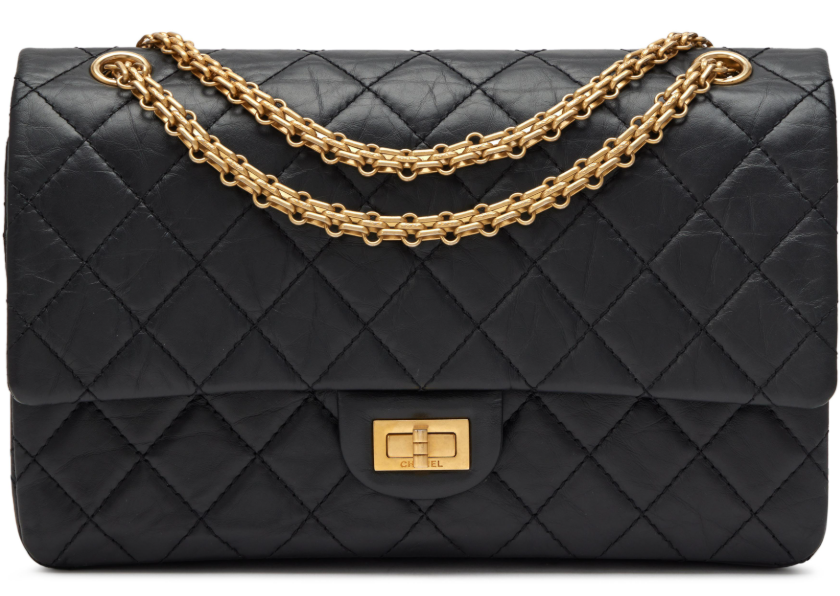
One of the most recognizable examples of quilting in fashion is the Chanel 2.55 handbag, introduced in February 1955.
Its quilted surface and shoulder-chain design helped establish diamond quilting as a defining visual feature of classic handbags.
Chanel did not invent quilting. The 2.55 instead brought an existing textile technique into a highly influential handbag design.
Diamond stitching remains associated with structured fashion handbags, although quilting has also developed into much softer and less formal styles.
Why Did Puffer and Pillow Bags Become Popular?
During the late 2010s and early 2020s, several fashion labels introduced handbags with fuller padding, softer shapes and cushion-like surfaces.
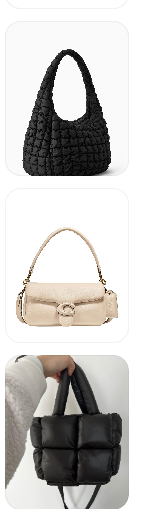
Maison Margiela's Glam Slam, introduced through its Spring/Summer 2018 collection, demonstrated how quilted leather could be used to create a rounded, pillow-like bag.
Coach's Pillow Tabby, introduced in 2021, became another recognizable example of this design direction.
Meanwhile, the COS Quilted Bag brought a soft, spacious quilted silhouette into more accessible everyday fashion. It ranked third in the Lyst Index's hottest products for the third quarter of 2023.
These designs became recognizable for different reasons, but shared an emphasis on tactile surfaces, soft structure and relatively relaxed silhouettes. Social media also helped some styles reach a wider audience.
Quilting and padding were no longer limited to compact, structured handbags. They became part of oversized casual bags, mini accessories and functional organizers.
2. Representative Quilted and Puffer Bag Styles
Quilted and puffer styles often overlap in modern fashion. Quilting refers to stitched layers, while puffer describes a fuller, cushioned appearance.
For a closer examination of their construction, padding and performance, read Puffer Bag vs Quilted Bag: What's the Difference?.
The styles below show how quilting and padded silhouettes have been adapted to different bag categories.
| Representative Style |
Main Characteristics |
Typical Applications |
| Classic diamond-quilted flap bag |
Regular diamond stitching, defined shape and flap closure |
Fashion shoulder and crossbody bags |
| Oversized quilted shoulder bag |
Soft, spacious body with visible quilted sections |
Everyday shoulder bags and casual totes |
| Pillow-style puffer bag |
Rounded silhouette and fuller cushioning |
Fashion handbags and shoulder bags |
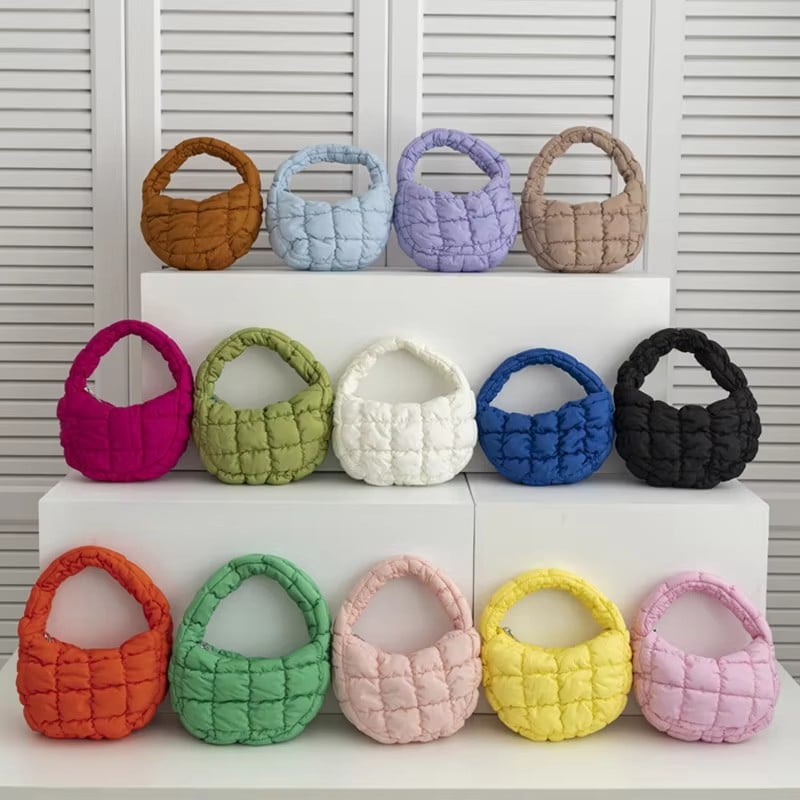
| Bubble-quilted mini bag |
Raised square or rounded padded sections |
Mini handbags and seasonal accessories |
| Quilted cosmetic organizer |
Light to medium padding with functional compartments |
Makeup storage and beauty gift sets |
| Padded laptop bag |
Quilted exterior with a separately designed device compartment |
Work bags, laptop sleeves and commuter accessories |
The Chanel 2.55 illustrates classic diamond quilting. The COS Quilted Bag represents a softer everyday format, while the Coach Pillow Tabby is an example of a fuller, pillow-shaped silhouette.
These are references for understanding different design directions, not interchangeable manufacturing specifications.
The same visual style can be developed with different fabrics, filling materials, panel shapes and internal structures.
3. How Is a Quilted Bag Constructed?
A typical padded quilted panel contains an outer fabric, a padding layer and a backing fabric. Stitching joins these layers and creates the visible surface pattern.
The finished bag may have an additional interior lining, reinforcement, pockets and closures.
| Layer |
Function |
Common Options |
| Outer fabric |
Provides the visible texture and surface finish |
Polyester, nylon, cotton, corduroy |
| Padding |
Creates softness, thickness or cushioning |
Polyester wadding, fiberfill, selected foam |
| Backing fabric |
Supports the quilted panel and helps stabilize its layers |
Woven or non-woven backing |
| Interior lining |
Finishes the bag interior and supports storage compartments |
Polyester lining, coated fabric, suitable easy-clean materials |
The backing used in a quilted panel is not necessarily the finished bag's interior lining. Some products use both.
Does Every Quilted Bag Have Padding?
Not necessarily.
Quilting describes how fabric layers are joined, while padding refers to cushioning materials added within the construction.
A lightly quilted pouch may have little noticeable loft. A puffer-style handbag may contain substantially more filling.
The appearance of the stitching alone does not establish how much protection or cushioning the finished bag provides.
Stitched Quilting, Bonding and Embossing
Traditional quilting uses thread to join material layers.
Some compatible synthetic textiles can also be joined using ultrasonic or thermal bonding, producing patterned sections without conventional stitches. Embossing can create a similar raised or recessed appearance without the same layered structure.
These processes are not technically identical.
For a custom bag project, the method should be identified in the product specification rather than relying solely on the appearance of a quilted sample.
4. What Padding Materials Are Used in Different Quilted Bags?
Padding affects thickness, shape, flexibility and usable interior space. Its purpose changes according to the bag category.
Polyester Wadding: Soft Everyday Accessories
Polyester wadding is a lightweight fibrous layer frequently used in quilted textiles.
It can produce a softly raised surface without making the finished bag excessively rigid.
It is suitable for applications such as lightweight fashion handbags, quilted cosmetic pouches and flexible travel organizers.
The result depends on the wadding's density, thickness, loft and the distance between quilting stitches.
Fiberfill: Fuller Fashion and Pillow-Style Bags
Polyester fiberfill can help create the rounded, cushioned appearance associated with puffer handbags.
Loose filling or lofty fibrous layers need to remain stable inside the bag panels.
Depending on the filling and shell fabric, a suitable backing or fiber-migration-resistant scrim may be needed to reduce the risk of fibers appearing through the outer material. This is a construction-dependent measure, not a standard requirement for every puffer bag.
Buyers should check for uneven filling, shifting, localized flattening and loss of shape after normal handling.
Foam Padding: Cosmetic Cases and Laptop Compartments
Foam padding is useful where a product needs more defined structure or localized cushioning.
In a structured cosmetic organizer, foam can help the case retain its shape and provide cushioning around makeup containers or glass skincare bottles.
However, protection against breakage depends on the complete design, including dividers, compartment fit and tested impact performance. Foam alone does not guarantee that fragile contents will remain undamaged.
For laptop sleeves and work bags, foam is often used in a dedicated device compartment rather than relying on decorative outer quilting.
Foam type, density and thickness should therefore be selected according to the actual contents, rather than simply to create a thicker-looking bag.
Is Thicker Padding Always Better?
No.
Thicker filling may create a fuller silhouette, but it also adds bulk and can reduce the internal space available for storage.
A compact cosmetic pouch and a pillow-style handbag have different construction priorities.
For custom projects, the finished sample should be checked for shape, usable capacity and handling comfort—not only nominal filling thickness.
5. How Do Quilting Patterns Affect the Finished Product?
Quilting patterns affect the appearance of the bag and the distribution of its padding.
| Pattern |
Visual Character |
Common Applications |
| Diamond quilting |
Regular diagonal stitching |
Classic handbags, cosmetic cases |
| Grid quilting |
Square or rectangular sections |
Organizers, work bags, casual accessories |
| Channel quilting |
Parallel raised strips |
Travel accessories, soft shoulder bags |
| Wave quilting |
Curved stitched lines |
Cosmetic bags, lifestyle accessories |
| Bubble quilting |
Pronounced rounded or square padded sections |
Mini handbags, puffer accessories |
Closely spaced quilting lines compress more of the padding, creating smaller raised sections. Wider spacing can produce fuller areas, provided the filling remains adequately stabilized.
There is no single ideal quilting distance for every fabric and filling combination.
What Should Buyers Check in a Quilted Sample?
The most useful checks are stitch alignment, even padding distribution, unwanted puckering, shape retention and consistency around seams and curved panels.
Where multiple colors or production batches are involved, the approved sample should establish an acceptable appearance for the quilting pattern and finished silhouette.
A visually attractive flat panel does not always behave the same way after it has been sewn into a three-dimensional bag.
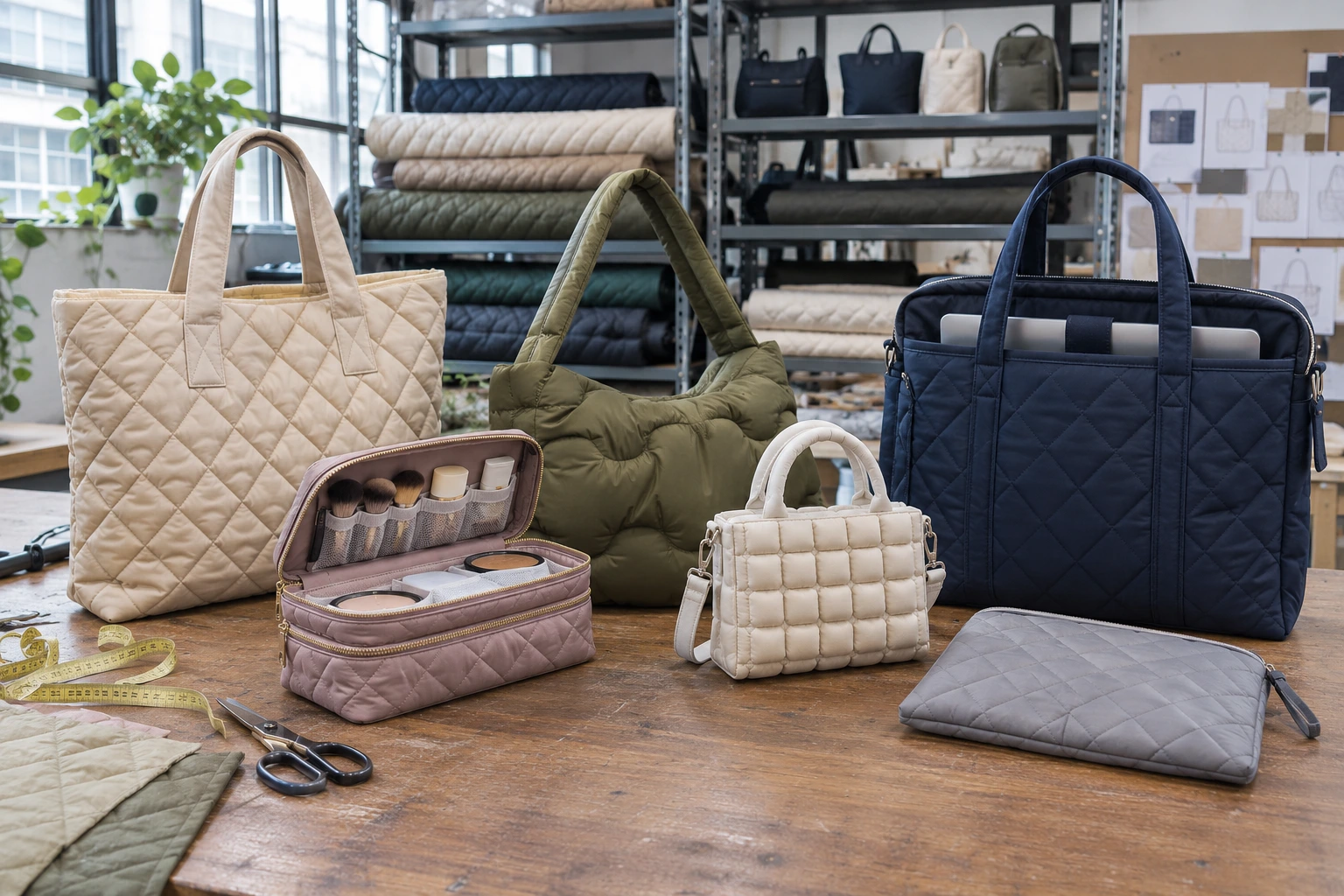
6. What Types of Bags Can Be Made With Quilting?
Quilting can be applied to more than traditional totes and fashion shoulder bags.
Changing the filling, fabric, pattern and reinforcement allows the same basic construction technique to serve different product categories.
| Bag Type |
Construction Priority |
Common Uses |
| Quilted fashion handbag |
Surface design, silhouette and padding stability |
Fashion retail and lifestyle accessories |
| Quilted cosmetic organizer |
Panel structure, cleaning and compartment layout |
Beauty products and makeup kits |
| Padded laptop bag |
Device fit, localized cushioning and reinforcement |
Work, school and commuting |
| Quilted travel pouch |
Flexibility, compact storage and low bulk |
Toiletries and travel accessories |
| Bubble-quilted mini bag |
Pronounced volume and shape consistency |
Seasonal fashion collections |
| Quilted backpack |
Carrying-system reinforcement and practical compartments |
Casual travel and campus accessories |
| Quilted tote bag |
Main-compartment space and handle strength |
Everyday shopping and commuting |
Cosmetic and Beauty Organizers
Quilting can give a cosmetic bag a soft exterior while the interior uses a separate structure for bottles, palettes and brushes.
Useful features include elastic brush holders, mesh pockets, divided storage and appropriate wipe-clean linings.
For beauty brands, the key question is not how thick the quilting looks, but whether the organizer accommodates the intended products and remains easy to use.
Laptop Sleeves and Work Bags
A quilted laptop bag needs a more functional construction.
The device compartment should match the intended laptop dimensions, and any protective claims should be supported by suitable testing.
A padded outer surface may contribute to cushioning, but decorative quilting should not be used as proof of drop protection.
Fashion and Travel Accessories
Pillow bags, bubble-quilted mini handbags and oversized shoulder bags use padding mainly to influence the silhouette and tactile feel.
Travel pouches and packing organizers often have different priorities: low weight, flexibility and efficient packing.
Using a thicker puffer construction in every product would increase bulk without necessarily improving its function.
For detailed quilted tote specifications, see Quilted and Padded Tote Bags: Materials, Construction, Features and Uses.
7. How Do Outer Fabrics and Linings Affect Different Bag Types?
Polyester, nylon, cotton, corduroy and recycled polyester can all be used in suitable quilted constructions.
The material name alone does not determine performance. Fabric weight, weave, finish and compatibility with the chosen quilting method are also relevant.
The more important question is how the outer fabric, filling and lining work together in the finished product.
Cosmetic Bags: Exterior Fabric and Wipe-Clean Lining
For cosmetic bags, a smooth polyester or nylon exterior can be combined with an appropriate wipe-clean interior.
This helps users remove minor cosmetic residue and keep the storage area easier to maintain.
However, the lining's cleanability depends on its own material and finish, not simply on whether the outer fabric is polyester or nylon.
For products that may contain leaking liquids, lining construction and seam details also need attention. An easy-clean fabric does not automatically make the compartment leakproof.
Puffer Handbags: Shell Fabric and Filling Stability
For lightweight puffer handbags, soft nylon or polyester fabrics can be combined with high-loft filling to produce a rounded silhouette.
If the selected filling has a tendency to migrate, an appropriate backing, stable batting construction or fiber-resistant layer may be required.
The choice depends on the filling type, fabric density and assembly process. A down-proof fabric or anti-migration scrim is not mandatory for every puffer design.
Sampling should establish whether fibers migrate, the padding remains even and the exterior retains its intended appearance after handling.
Laptop Bags: Inner Protection Over Surface Softness
For laptop bags, the exterior material can be selected for weight, appearance or durability, but the interior protection requires separate design decisions.
Device fit, cushioning placement, compartment closures and reinforcement are more important than the softness of the quilted outer surface.
Are Quilted Bags Waterproof?
Not automatically.
Water-resistant outer fabric does not make a finished quilted bag waterproof. Stitching can introduce needle holes, while seams, zippers and openings may allow water to enter.
For everyday accessories, an easy-clean lining or a suitable level of water resistance may be sufficient. Waterproof claims require appropriate finished-product construction and supporting tests.
8. What Should Buyers Check When Customizing Quilted Bags?
Custom development should begin with the intended bag type and contents, not the quilting pattern alone.
| Customization Area |
What to Confirm |
| Style and dimensions |
Bag silhouette, usable interior and intended contents |
| Outer fabric |
Composition, weight, finish and color |
| Padding |
Material, thickness, density and required stability |
| Quilting |
Pattern, spacing and visible alignment |
| Interior structure |
Lining, compartments, foam inserts and closures |
| Branding |
Woven labels, patches, embroidery or compatible printing |
| Packing |
Folding method, units per carton and protection of the finished shape |
Logo Placement and Surface Design
Raised quilting can make fine printing difficult to reproduce cleanly.
Depending on the artwork, woven labels, patches, embroidery or separate smooth fabric panels may produce more predictable results.
Printing on the outer fabric before quilting may also be possible, but the artwork must account for later stitching and assembly.
Bulk Packing and Carton Volume
Lightly quilted organizers may be packed relatively flat, while structured cosmetic cases and highly padded puffer handbags often require more carton space.
Over-compression may cause creases, distortion or incomplete recovery of the filling.
Buyers should review the packed sample, unpacked appearance, units per carton and shipping volume (CBM) before approving a bulk packing arrangement.
Reducing carton volume is useful only if the product maintains an acceptable appearance after unpacking.
Product Quality and Compliance
The approved sample should define the fabric, quilting pattern, padding, dimensions and functional details.
Depending on the intended market and materials, additional chemical compliance documentation or product-specific testing may be required.
Claims concerning recycled content, water resistance or impact protection should be supported by suitable evidence.
9. Frequently Asked Questions
Q1. What is the difference between a quilted bag and a puffer bag?
Quilted describes stitched layers, while puffer refers to a fuller, cushioned design. The styles can overlap, but they are not identical.
Q2. Are quilted bags always filled with padding?
No. Many contain wadding, but some quilted constructions use fabric layers without substantial filling.
Q3. What are some well-known quilted bag styles?
Recognizable examples include classic diamond-quilted flap bags, oversized quilted shoulder bags, pillow-style handbags and bubble-quilted mini bags. Historical examples include the Chanel 2.55, Maison Margiela Glam Slam, Coach Pillow Tabby and COS Quilted Bag.
Q4. Can quilted bags protect laptops or glass cosmetic bottles?
Suitable cushioning and compartment design can help reduce certain handling risks, but decorative quilting alone is not sufficient evidence of protection. Any specific protective claim should be evaluated against the intended contents and test conditions.
Q5. Can quilted bags be customized for retail or wholesale orders?
Yes. Common customization options include fabric, padding, quilting pattern, dimensions, compartments, logo application and packing method. The approved sample should reflect the intended production construction.
Conclusion
Quilted bags developed from a long-established textile technique into a wide range of fashion and functional accessories.
Classic diamond-stitched handbags established a recognizable style, while more recent pillow-shaped and oversized quilted designs brought softer silhouettes into everyday fashion.
The construction is now used in cosmetic organizers, travel pouches, laptop bags, mini handbags and totes.
For buyers, the most useful distinction is between the appearance created by quilting and the function provided by padding, compartments and reinforcement.
A suitable quilted bag should meet both requirements without adding unnecessary bulk or compromising its intended use.
Recommended Products: Quilted Bags for Fashion, Beauty and Work
The following INITI products illustrate three applications of quilted construction.
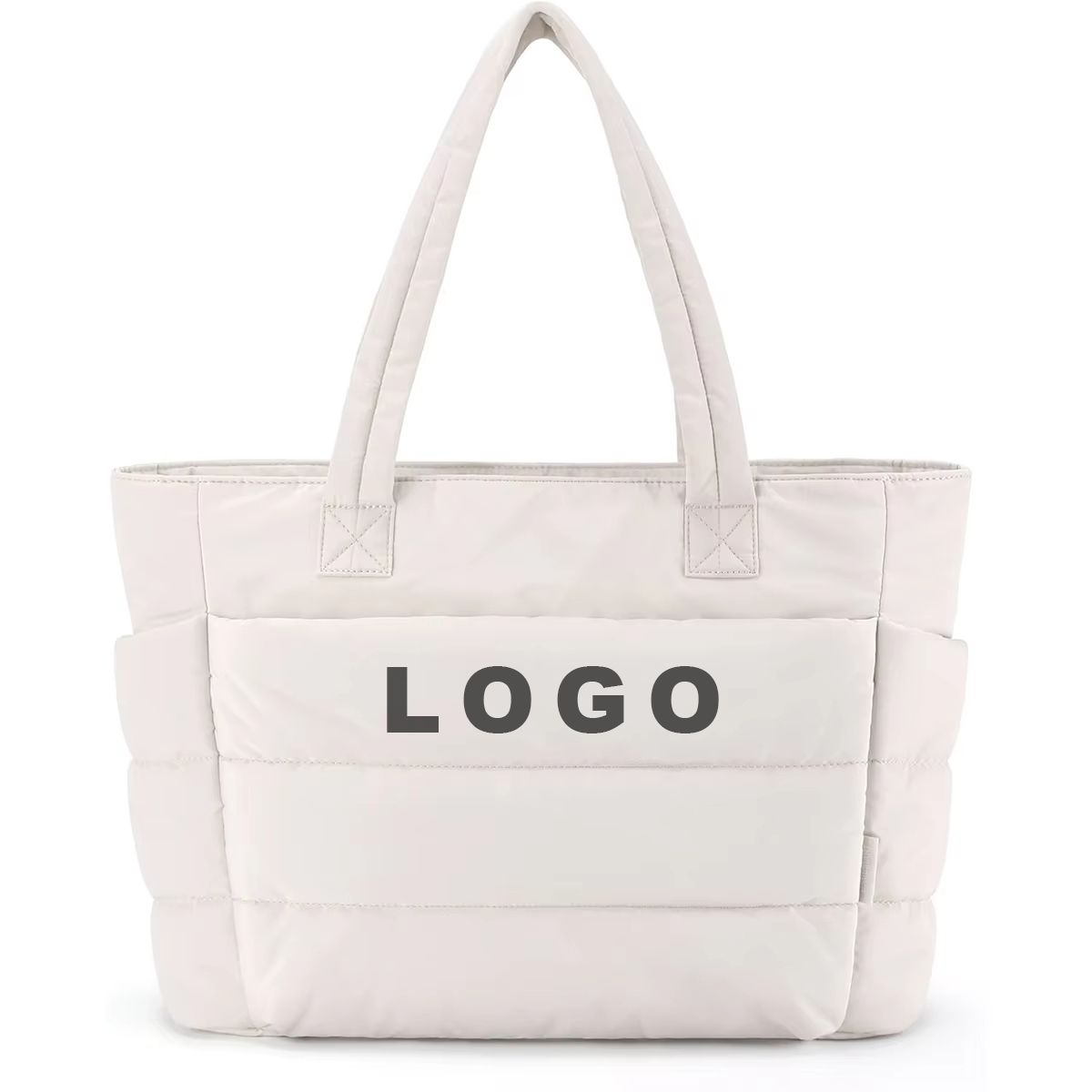
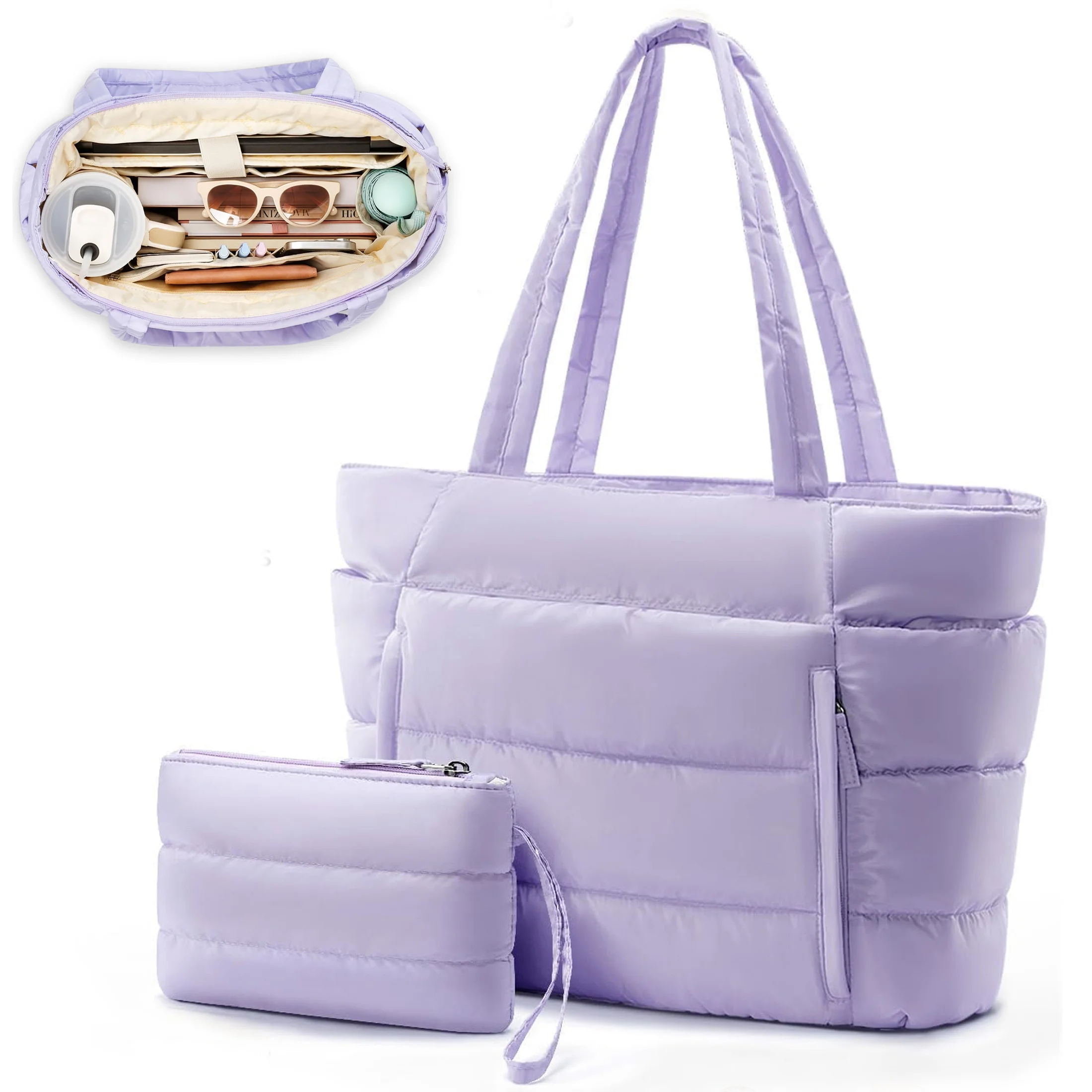
1. Padded Quilted Tote Bag with Laptop Compartment
A soft padded tote with a spacious main compartment, exterior organizer pockets and a dedicated padded laptop section.
Suitable for: Work, commuting, campus accessories and everyday retail.
Key considerations: Laptop compartment size, cushioning, handle reinforcement and interior layout.
View Padded Quilted Tote Bag with Laptop Compartment
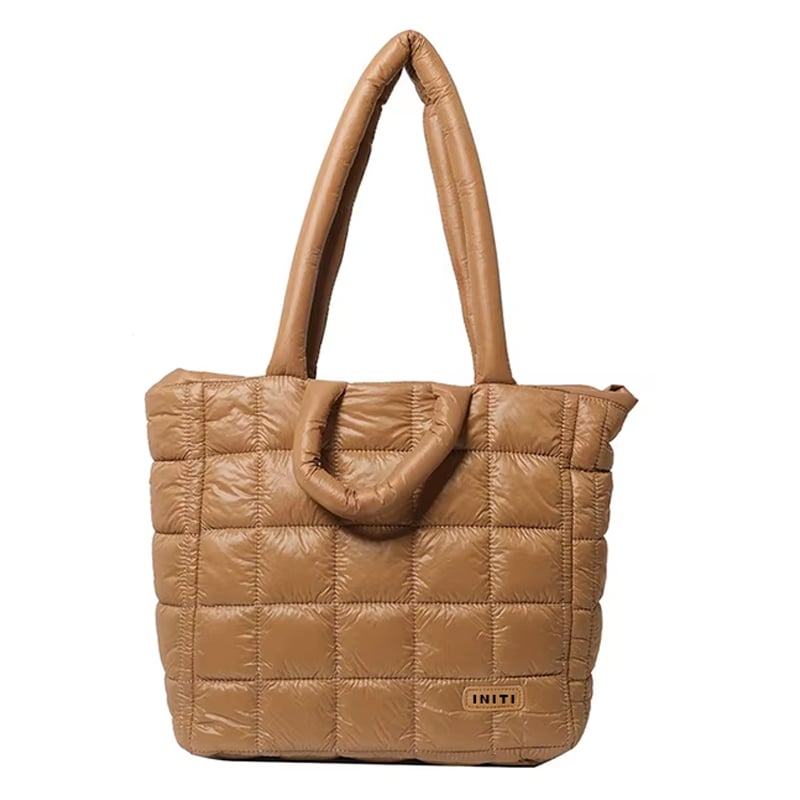
2. Mini Bubble-Quilted Puffer Handbag
A compact fashion handbag with raised bubble-grid quilting, a padded carrying handle and a top zipper.
Suitable for: Fashion collections, boutique retail and seasonal accessories.
Key considerations: Padding stability, finished silhouette, zipper operation and usable interior space.
View Mini Bubble-Quilted Puffer Handbag
3. Double-Layer Makeup Bag with Brush Compartment
A structured quilted cosmetic organizer with two zippered storage sections, brush holders and interior mesh pockets.
Suitable for: Beauty brands, makeup kits, travel cosmetics and gift collections.
Key considerations: Compartment dimensions, cleanable lining, brush organization and panel structure.
View Double-Layer Makeup Bag with Brush Compartment
More designs can be found in the Quilted Tote Bag Collection.
Inquiry Support
INITI supports OEM and ODM quilted bag development, including fabric selection, padding, quilting patterns, sampling and bulk production.
For a fast quotation and free design support, email [email protected] with your bag type, dimensions, materials, quilting design, estimated quantity and destination market.
Related Articles
References


 Hot News