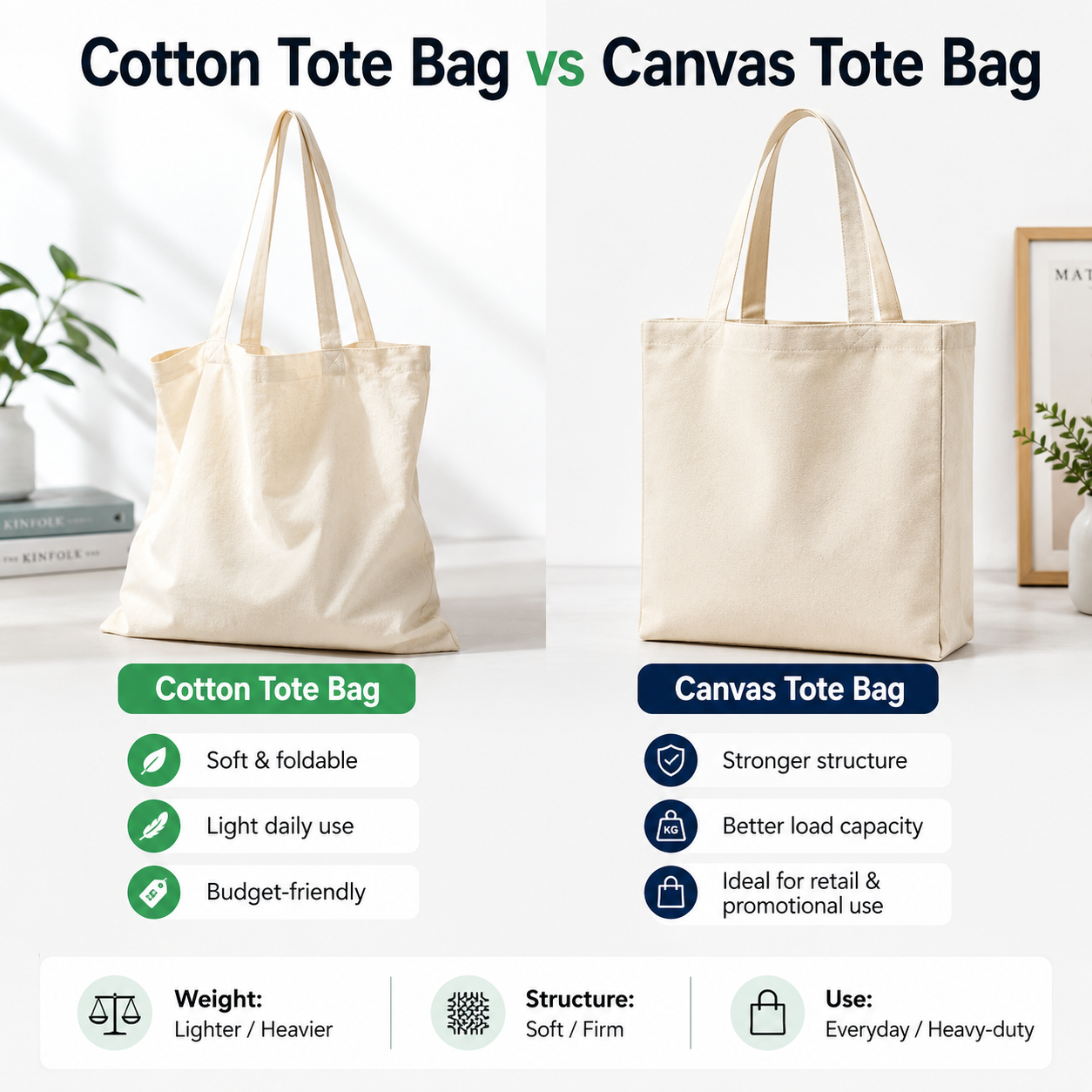
A cotton tote bag is typically made from lightweight or medium-weight cotton fabric. It may have a simple flat construction or include a bottom gusset, side gusset, inner pocket or closure.
Because cotton fabric is soft and easy to fold, these bags are suitable for promotional distribution, exhibitions, schools, bookstores, fashion campaigns and light retail packaging.
Common Features of Cotton Tote Bags
Cotton tote bags often include:
- Lightweight natural cotton fabric
- Flat or gusseted construction
- Short or long cotton handles
- Screen-printed logos or campaign graphics
- Natural, dyed or Pantone-matched colors
- Foldable and compact packaging
- Low-to-medium load capacity
- Cost-effective bulk production
For promotional companies and event organizers, lightweight cotton bags are often selected because they provide a large printable area without significantly increasing transportation or distribution costs.
What Is a Canvas Tote Bag?
A canvas tote bag is made from a heavier and more tightly woven fabric. Cotton canvas is common, although recycled cotton, blended canvas and other fiber combinations may also be available.
The dense fabric gives the bag a more structured shape and allows it to carry heavier contents. Canvas tote bags are widely used by retailers, supermarkets, fashion brands, lifestyle companies, museums, bookstores and corporate gift suppliers.
Common Features of Canvas Tote Bags
Canvas tote bags may include:
- Medium- or heavy-weight fabric
- Reinforced handles and stress points
- Boxed bottoms or wide gussets
- Inner lining or pockets
- Zipper, snap button or magnetic closure
- Screen printing, digital printing or embroidery
- Custom woven labels and private label branding
- Higher durability for repeated use
For brands selling tote bags as merchandise, canvas is often selected because it provides a stronger structure and a higher perceived retail value.
1. Fabric Weight and Thickness
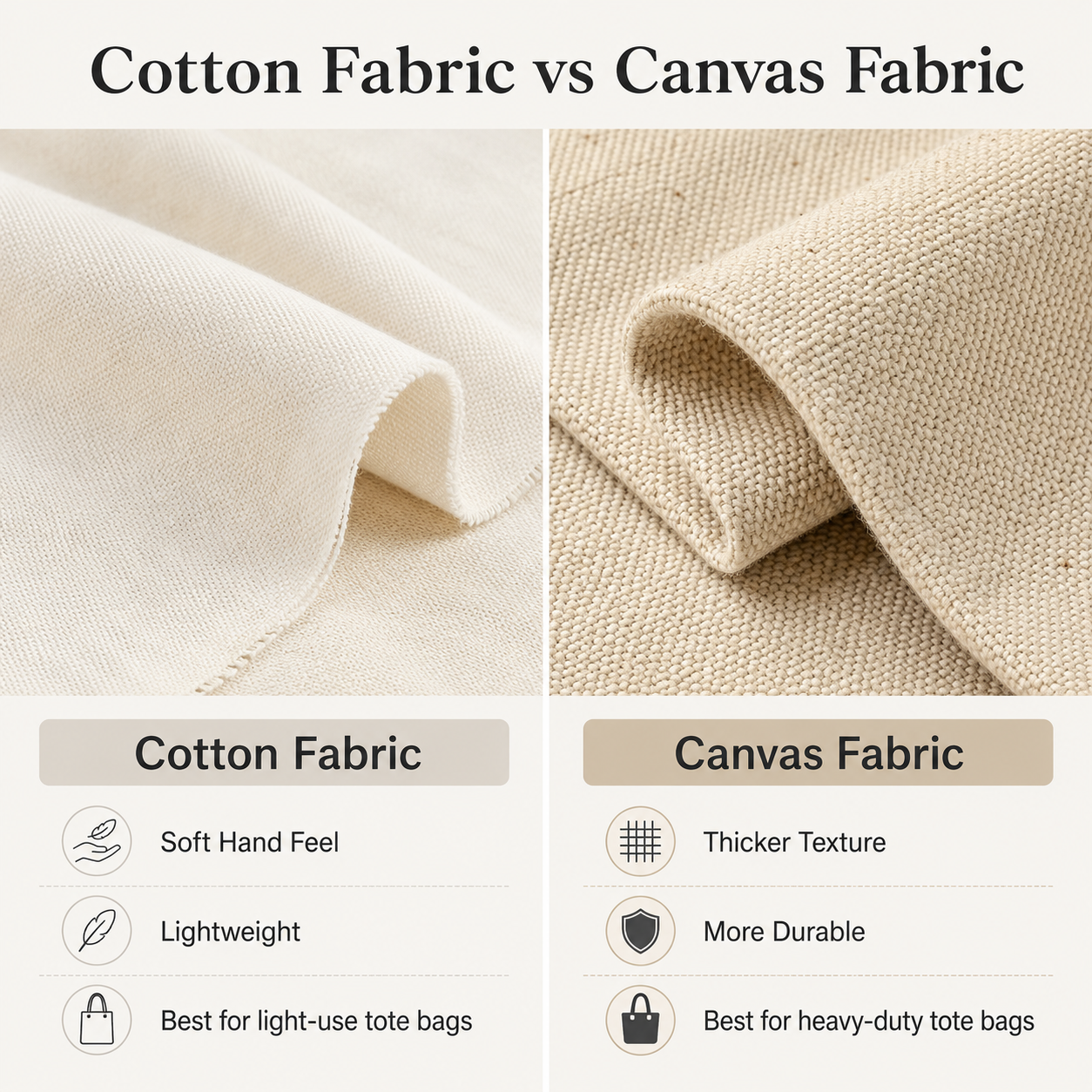
Fabric weight is one of the most important differences between cotton and canvas tote bags.
Lightweight cotton bags are generally softer, thinner and easier to fold. Canvas bags are normally thicker and maintain their shape more effectively.
In B2B sourcing, fabric weight may be stated in:
- GSM, meaning grams per square meter
- Ounces, commonly used for canvas
- Fabric construction or yarn count
- Supplier-specific material categories
Buyers should not select a bag based only on the words “cotton” or “canvas.” It is more useful to ask for the exact fabric weight, sample swatch and finished product sample.
Why Fabric Weight Matters
Fabric weight affects:
- Unit cost
- Bag appearance
- Printing results
- Carrying capacity
- Folding performance
- Shipping volume
- Customer perception
- Suitability for repeated use
A lightweight promotional cotton bag and a heavy-duty canvas shopping bag may both contain cotton fiber, but they serve very different purchasing needs.
2. Durability and Load Capacity
Canvas tote bags usually provide better durability because the fabric is thicker and more densely woven. However, the fabric alone does not determine the strength of the finished bag.
A durable custom tote bag should also have:
- Reinforced handle attachment
- Strong stitching at load-bearing points
- Appropriate handle width
- Suitable thread quality
- Correct bottom and gusset construction
- Consistent seam allowance
- Quality-controlled fabric cutting
For carrying brochures, clothing or lightweight giveaway items, a standard cotton tote bag may be sufficient. For groceries, books, wine bottles, boxed products or daily shopping, a heavier canvas tote bag may be a more reliable choice.
Bulk buyers should provide the intended load and application when requesting quotations. This allows the manufacturer to recommend a more suitable fabric weight and structure.
3. Printing and Logo Customization
Both cotton and canvas tote bags provide good surfaces for custom branding. The best printing method depends on the logo design, color quantity, order volume and desired finish.
Screen Printing
Screen printing is commonly used for:
- Simple logos
- Solid colors
- Promotional slogans
- Medium and large bulk orders
- Retail and event tote bags
It is suitable for both cotton and canvas. The final result may look more solid on tightly woven canvas, while lightweight cotton can produce a softer print appearance.
Digital Printing
Digital printing is useful for:
- Detailed illustrations
- Multiple colors
- Photographic artwork
- Shorter custom runs
- Fashion and creative merchandise
The fabric pretreatment, base color and surface texture can influence the printed result.
Heat Transfer Printing
Heat transfer can be considered for:
- Colorful campaign graphics
- Smaller order quantities
- Detailed logos
- Selected cotton or blended fabrics
The manufacturer should test adhesion and finish before bulk production.
Embroidery
Embroidery is more suitable for medium- or heavy-weight canvas because the fabric provides stronger support for stitched logos.
It is often selected for:
- Premium retail merchandise
- Corporate gifts
- Uniform-related products
- Lifestyle brands
- Private label collections
For B2B buyers, the artwork should be reviewed before sampling to confirm whether printing, embroidery, a woven label or another branding method will produce the required result.
4. Appearance and Brand Positioning
Cotton tote bags usually communicate a natural, lightweight and accessible image. Canvas tote bags generally look more substantial and may support a more premium retail position.
Cotton Tote Bags Are Often Suitable for:
- Environmental awareness campaigns
- Conferences and exhibitions
- Educational events
- Promotional giveaways
- Bookstores
- Museums
- Charity campaigns
- Lightweight retail packaging
Canvas Tote Bags Are Often Suitable for:
- Fashion brands
- Supermarkets
- Lifestyle retailers
- Corporate merchandise
- Membership gifts
- Book and stationery brands
- Home and gift stores
- E-commerce private label products
The correct choice depends on how the buyer wants customers to perceive the product. A low-cost giveaway bag and a reusable branded retail tote require different materials and construction.
5. Cost and Wholesale Pricing
Cotton tote bags are generally more economical when using lightweight fabric and a simple structure. Canvas tote bags usually cost more because they require heavier material, stronger stitching and sometimes more complex construction.
Key factors affecting wholesale tote bag prices include:
- Fabric composition
- Fabric weight
- Bag size
- Gusset structure
- Handle material and length
- Printing method
- Number of print colors
- Lining and pockets
- Zipper or closure
- Individual packaging
- Order quantity
- Quality inspection requirements
- Export carton specifications
A lower unit price is not always the lowest total sourcing cost. If a bag is too thin for the intended use, product complaints, replacement costs or poor brand perception may outweigh the initial saving.
For accurate quotations, buyers should provide a target specification rather than requesting only “a cotton tote bag price” or “a canvas bag price.”
6. Packaging and Shipping Considerations
Lightweight cotton bags usually fold flat and occupy less carton space. This can help reduce storage and international shipping volume.
Canvas tote bags are heavier and thicker, especially when they include:
- Wide gussets
- Inner lining
- Padding
- Zippers
- Rigid bottom boards
- Reinforced handles
- Additional pockets
For importers and distributors, the carton dimensions and gross weight should be evaluated before order confirmation.
Possible packaging options include:
- Bulk packing
- Individual polybags
- Paper sleeves
- Recycled paper belly bands
- Custom printed boxes
- Barcode labels
- Retail-ready packaging
- Export cartons with shipping marks
The packaging method should match the sales channel. Retail-ready canvas bags may require individual branding and barcodes, while promotional cotton tote bags may be packed in bulk for event distribution.
7. Sustainability Considerations
Cotton and canvas tote bags are often marketed as reusable alternatives to disposable shopping bags. However, the sustainability value depends on material sourcing, manufacturing, durability and actual reuse.
Buyers may consider:
- Conventional cotton
- Organic cotton
- Recycled cotton
- Cotton blends
- Certified recycled material
- Water-based or lower-impact printing inks
- Plastic-reduced packaging
- Reusable product design
- Long-lasting stitching and construction
A heavier bag does not automatically mean it is more sustainable. The product should be designed around realistic usage requirements.
For a short promotional campaign, an appropriately specified lightweight cotton bag may be sufficient. For long-term customer reuse, a durable canvas tote bag may offer better performance.
Certification requirements should be confirmed before sampling and production. Different markets and buyers may require different transaction certificates, material documentation or factory audits.
Which Tote Bag Is Better for Retailers?
Retailers should select the material according to product positioning, expected load and selling price.
A lightweight custom cotton tote bag may be suitable for:
- Checkout packaging
- Seasonal promotions
- Membership giveaways
- Book or apparel purchases
- Low-cost branded merchandise
A canvas tote bag may be more suitable for:
- Reusable shopping programs
- Premium retail merchandise
- Lifestyle collections
- Bookstores and home stores
- Private label tote bag sales
Retailers selling the bag as a standalone product should pay more attention to structure, finishing, stitching and packaging than buyers using it only as secondary packaging.
Which Tote Bag Is Better for Supermarkets?
For supermarket use, the bag must often carry groceries, packaged food and household products. A medium- or heavy-weight canvas tote with reinforced handles and a gusseted bottom may be more suitable.
However, supermarkets may also use lightweight cotton tote bags for:
- Membership campaigns
- Store openings
- Seasonal events
- Sustainability promotions
- Customer rewards
- Limited promotional distribution
For regular grocery shopping, buyers should request load testing and confirm the handle reinforcement, bottom structure and fabric specification before placing a bulk order.
Which Tote Bag Is Better for Promotional Campaigns?
Promotional companies often prioritize:
- Competitive unit cost
- Large printable area
- Fast distribution
- Compact packaging
- Consistent logo reproduction
- Flexible order quantities
For these requirements, lightweight cotton tote bags are frequently selected.
Canvas tote bags may be more appropriate when the campaign requires:
- Higher gift value
- Longer-term reuse
- Premium customer rewards
- Influencer merchandise
- Executive gifting
- Retail-quality promotional products
The promotional objective should determine the material, not only the available budget.
Which Tote Bag Is Better for Private Label Brands?
Private label brands usually require more than a basic bag. They may need custom dimensions, specific color matching, branded labels, retail packaging and consistent quality across repeat orders.
Canvas is often preferred for private label tote bag collections because it provides:
- Better structure
- More customization options
- Higher retail value
- Strong support for pockets and closures
- Better suitability for embroidery
- More premium presentation
Cotton can still be suitable for minimalist brands, sustainable collections, bookstores, creative studios and lightweight fashion merchandise.
As an OEM and ODM tote bag manufacturer, we can develop cotton and canvas bags based on the buyer’s target market, application and budget.
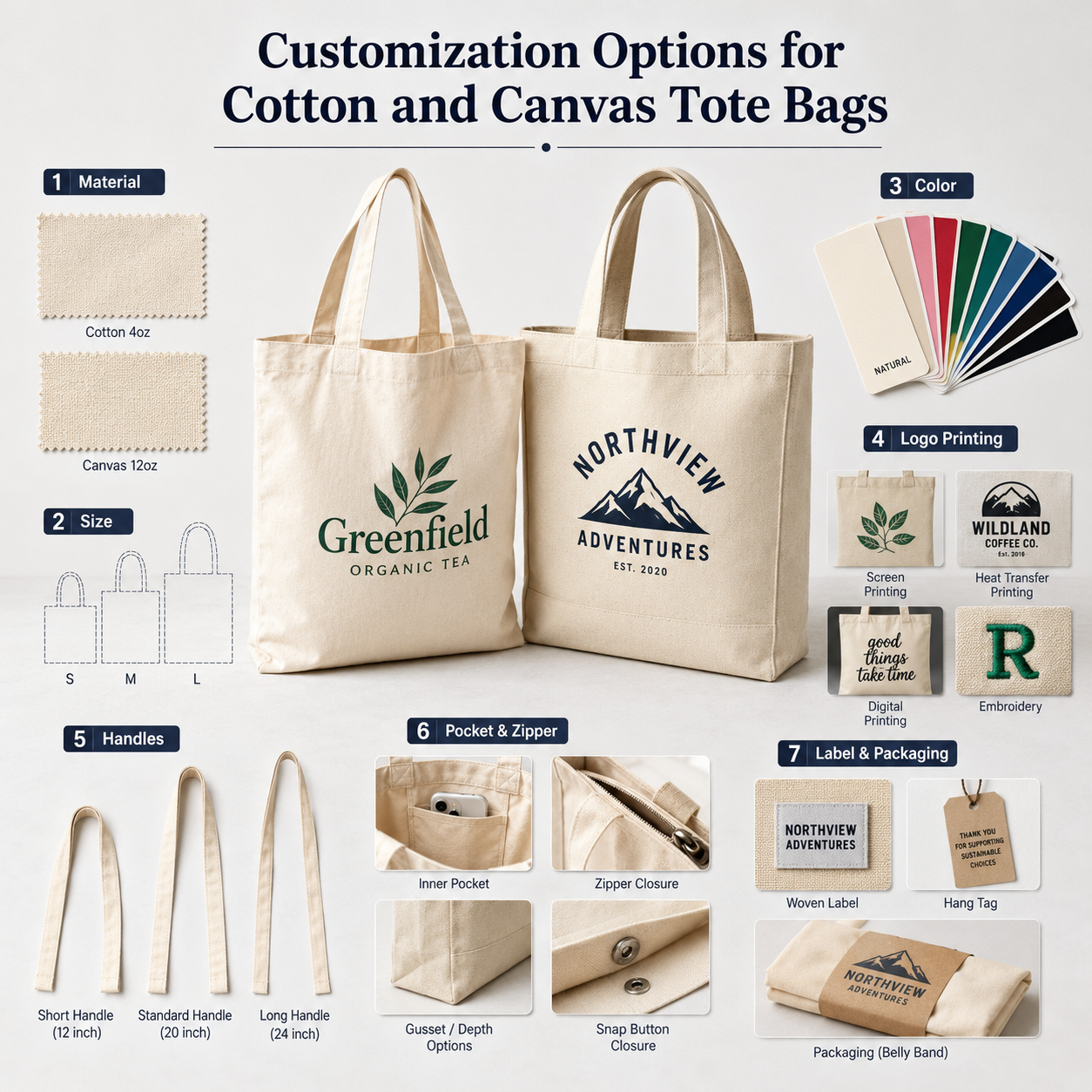
Common customization options include:
Material Options
- Natural cotton
- Dyed cotton
- Cotton canvas
- Recycled cotton
- Organic cotton options
- Cotton-blended fabric
- Laminated or coated fabric where required
Structural Options
Handle Options
- Short hand-carry handles
- Long shoulder straps
- Webbing handles
- Self-fabric cotton handles
- Reinforced handles
- Contrast-color straps
Branding Options
- Screen printing
- Digital printing
- Heat transfer
- Embroidery
- Woven labels
- Printed labels
- Leather or synthetic patches
- Hang tags
- Custom packaging
For larger programs, sample development can be used to evaluate fabric, color, print quality, bag structure and packing method before wholesale production.
How B2B Buyers Should Choose Between Cotton and Canvas
Before selecting a material, buyers should answer the following questions:
What Will the Bag Carry?
Lightweight contents may only require standard cotton fabric. Books, groceries, bottles or heavier retail products may require canvas and reinforced construction.
Is the Bag a Giveaway or a Retail Product?
Giveaway bags usually prioritize cost and print area. Retail products require stronger construction, better finishing and higher perceived value.
How Often Will Customers Reuse It?
For occasional use, lightweight cotton may be sufficient. For frequent shopping or daily use, canvas may provide better long-term performance.
What Is the Target Unit Cost?
Cotton provides more flexibility for price-sensitive promotional orders. Canvas supports premium programs but usually increases material and shipping costs.
Which Branding Method Is Required?
Simple printed logos work well on both materials. Heavy embroidery or complex structures are usually better suited to canvas.
What Are the Packaging and Logistics Requirements?
Large quantities of heavy canvas bags require more carton space and transport capacity than lightweight cotton bags.
Cotton or Canvas: Which One Should You Choose?
Choose a cotton tote bag when you need:
- A lightweight promotional bag
- Lower wholesale cost
- Compact shipping and storage
- A large printable surface
- Event or campaign distribution
- Simple and natural brand presentation
Choose a canvas tote bag when you need:
- Higher carrying strength
- More structured appearance
- Long-term reusable shopping
- Premium branded merchandise
- Additional pockets or closures
- Embroidery or detailed construction
- Stronger retail positioning
There is no single material that is better for every project. The best solution is the material that matches the expected use, budget, branding and customer experience.
We support B2B buyers with material selection, bag structure development, logo application, sampling, quality inspection and bulk production.
Our OEM/ODM capabilities cover promotional cotton bags, heavy-duty canvas shopping bags, private label tote bags and custom reusable packaging for retailers, supermarkets, brands, importers and corporate clients.
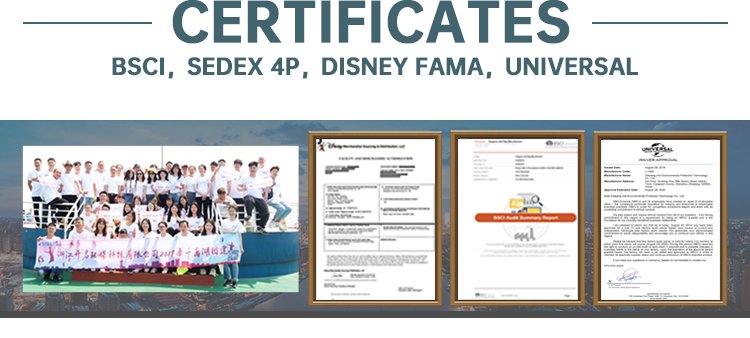
Our production system includes quality-control procedures and factory compliance support, with certifications such as SEDEX, GRS, HIGG and ISO 9001 available according to the relevant facility and project. We also have experience supporting large international companies and brand-related projects, subject to confidentiality requirements.
Frequently Asked Questions
1. Is canvas always made from cotton?
No. Traditional canvas is often made from cotton, but canvas can also be produced from polyester, recycled fibers or blended materials. Buyers should confirm the exact fiber composition.
2. Which material is better for logo printing?
Both cotton and canvas are suitable for custom logo printing. The best result depends on fabric color, weave, coating and printing method.
3. Are canvas tote bags more expensive than cotton tote bags?
Usually yes, because canvas fabric is heavier and may require stronger stitching and higher shipping costs. Final pricing depends on the complete specification.
4. Can cotton and canvas tote bags be customized in Pantone colors?
Yes. Fabric dyeing and logo colors can be matched according to Pantone references, subject to material, order quantity and sampling approval.
5. Which tote bag is suitable for supermarkets?
Medium- or heavy-weight canvas tote bags with reinforced handles and gussets are often suitable for repeated grocery shopping. Lightweight cotton bags can be used for promotions and membership campaigns.
6. Can you add zippers, pockets and lining?
Yes. Custom structures can include zipper closures, internal pockets, external pockets, lining, bottom boards and reinforced handles.
7. Do you provide private label tote bag manufacturing?
Yes. Private label services can include custom materials, dimensions, colors, woven labels, logo printing, hang tags, barcodes and retail packaging.
8. Can buyers request samples before bulk production?
Yes. Sample development is recommended for confirming the material, color, print effect, dimensions, structure and packaging before mass production.
Conclusion
The main difference between cotton and canvas tote bags is not simply the fiber. Cotton describes the material, while canvas usually describes a heavier and denser fabric construction.
Lightweight cotton tote bags are suitable for promotional campaigns, exhibitions, giveaways and cost-sensitive wholesale orders. Canvas tote bags provide greater structure, durability and perceived value, making them suitable for retail merchandise, supermarkets, private label brands and repeated daily use.
For B2B buyers, the correct decision should be based on fabric weight, load requirements, branding method, target price, shipping volume and end-use expectations.
A clearly defined specification helps the manufacturer recommend the appropriate material and reduces the risk of receiving a bag that is too thin, too heavy or unsuitable for the intended market.
Bottom Internal Links
Related Products
Cotton Tote Bag | Tote Bag | Non Woven Bag | RPET Shopping Bag | Jute Tote Bag | Drawstring Bag | Foldable Shopping Bag | Promotional Bag
Applications
Retail Brands | Supermarkets | Promotional Companies | Corporate Gifts | Bookstores | Trade Shows | Importers & Distributors | Private Label Brands
Custom Services
OEM/ODM Manufacturing | Custom Logo Printing | Private Label Service | Material Selection | Sample Development | Pantone Color Matching | Packaging Customization | Wholesale Production | Bulk Order Support


 Hot News