Open any home goods shelf, and you will spot dozens of fabric storage bags. To shoppers, they appear almost identical: textile body, zipper closure, simple carry handles.
For importers and private‑label buyers, appearances can be misleading. A well‑photographed sample may fail in real‑life use: bulging beyond bed‑frame clearance, zippers bursting under compression, handles ripping during moving, or inflated freight bills from poor fold design.
Custom storage bags serve wildly different missions. Some hold bulky winter quilts for seasonal storage. Others carry heavy household goods across moves. Some sit neatly inside wardrobes;Brand positioning further shifts priorities: luxury lines focus on texture and finish; mass‑market lines optimize for cost‑effective packing and production.
You do not need to chase a mythical “perfect” bag. You need the right bag built for your exact market and use case. In this guide, we break down custom storage bag types, material selection, dimension and construction rules, practical performance testing, bulk‑buy considerations, cost analysis and supplier comparison.
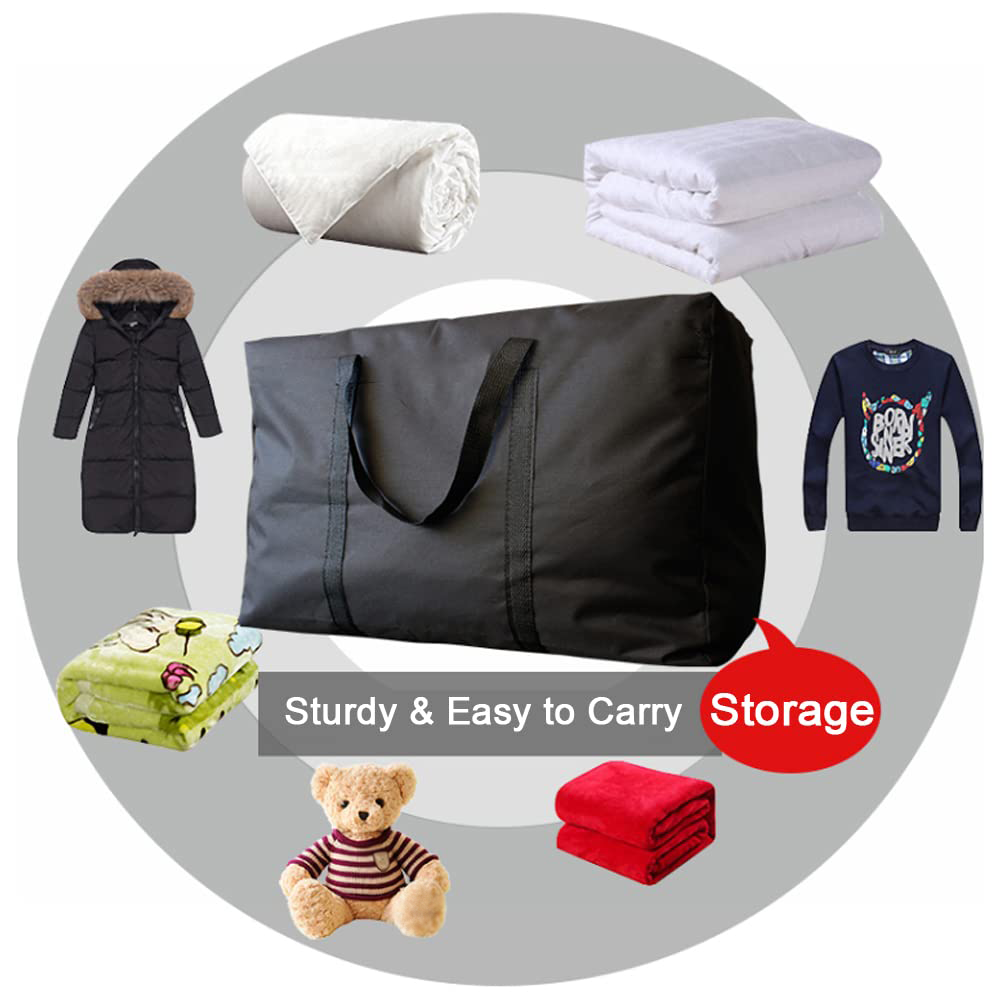
A storage bag is a flexible container used to store, organize, protect, or transport items when they are not being used. Unlike rigid storage boxes, storage bags are usually made from fabric, non-woven materials, mesh, plastic-based materials, or other flexible materials, allowing them to be folded or compressed when empty.
The design of a storage bag depends largely on what it is intended to hold. A bag for bulky bedding may need a wide opening and a large capacity, while a closet storage bag may prioritize compact dimensions and visibility. A moving bag may require reinforced handles and stronger seams, whereas a laundry storage bag may benefit from breathable mesh.
Storage bags can also vary considerably in their construction. Some are flat and lightweight, while others use gussets to create additional depth. Closures may include zippers, drawstrings, snaps, or other fastening systems. Some designs include clear windows so users can identify the contents without opening the bag, while mesh panels can provide airflow and visibility.
This flexibility is one reason storage bags are used across both household organization and commercial product lines.
Types of Storage Bags
Storage bags can be divided by their intended application rather than simply by their shape.
Understanding the application helps buyers determine which specifications deserve the most attention.
Under-Bed Storage Bags
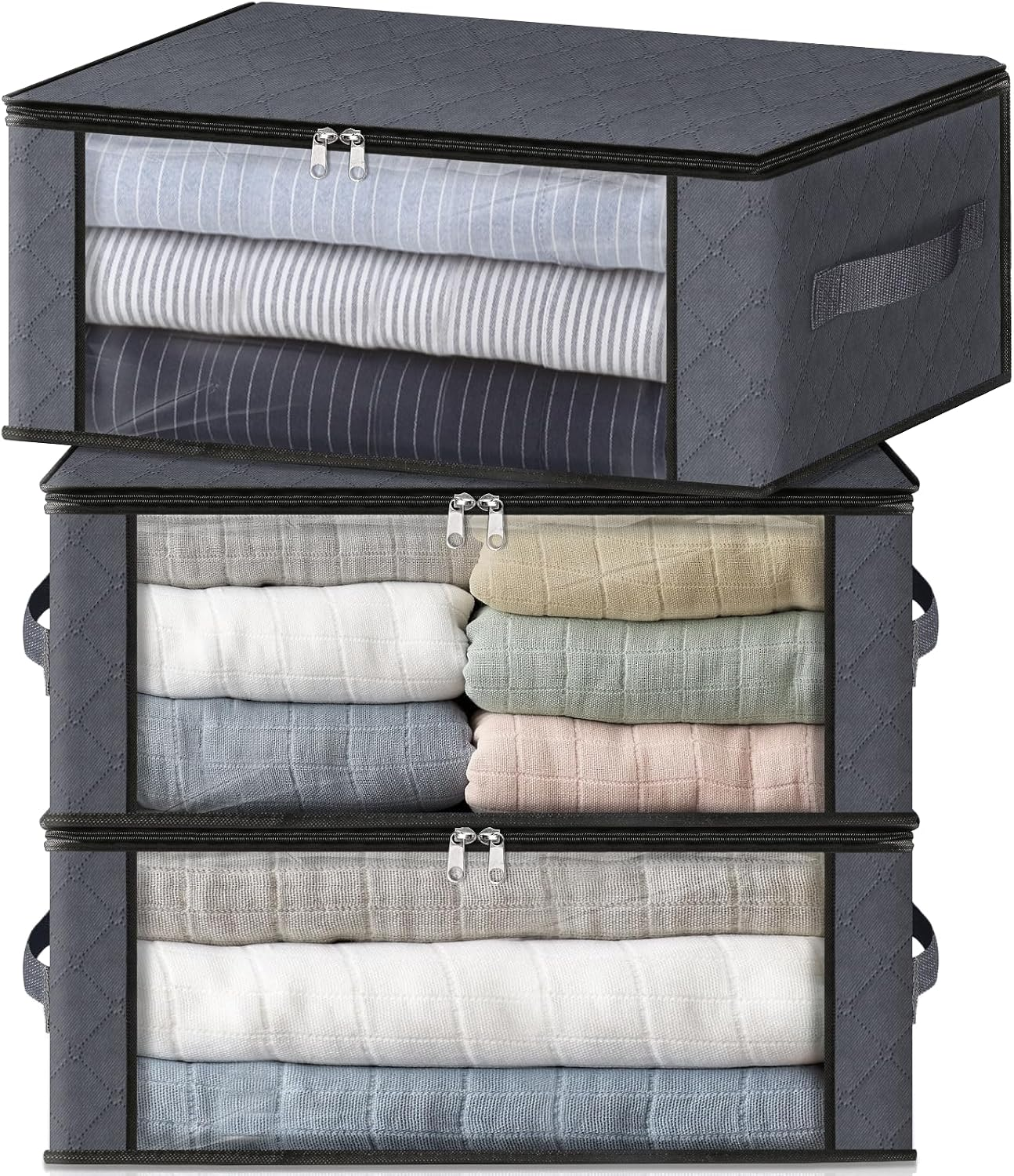
Under-bed storage bags are designed for duvets, bedding, off-season clothing and shoes, and they are the type with the least tolerance for error.
They are not carried, they are not lifted, and they are rarely opened. Their job is to sit in a fixed space for months while a bed frame presses down on top of them. That combination makes dimensional fit the single most important specification in the type, ahead of fabric strength.
The key measurement is not simply the bag's nominal size.
Buyers should consider:
- actual clearance beneath the frame
- packed height rather than flat height
- width and length against the contents
- handle position for pulling
- zipper opening size
- base panel and foldability
- folded thickness for carton planning
The available height is limited, so the product usually needs a low profile with a larger width and length. The working order is to measure the usable clearance beneath the bed, subtract a tolerance for the closed zipper and handle webbing, and set that figure as the maximum filled height. Only then should the length and width be derived from the contents.
Moving Storage Bags
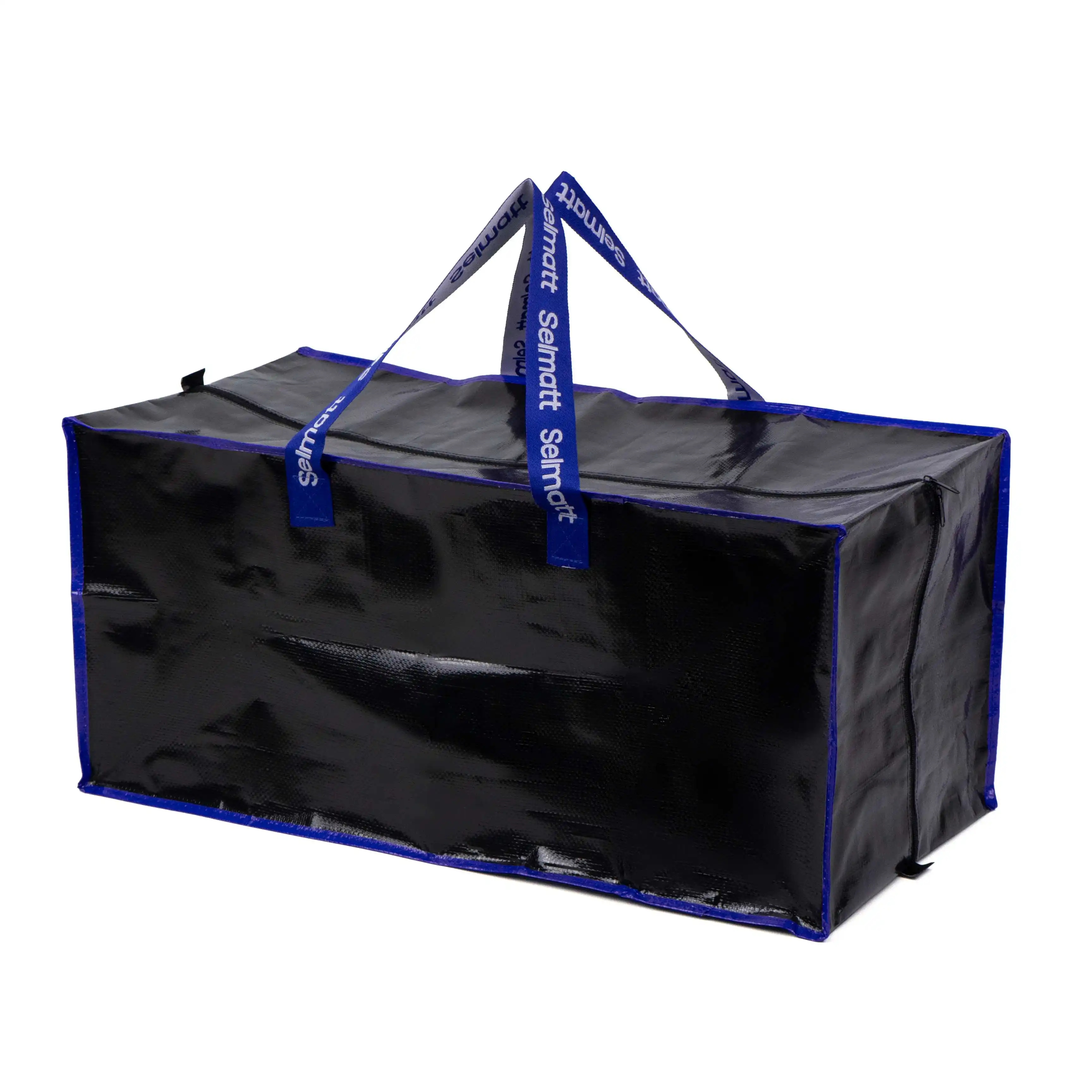
Moving bags are generally exposed to more demanding handling.
They may be filled with:
- Clothing
- Towels
- Bedding
- Shoes
- Books
- Household accessories
- Miscellaneous personal items
The contents may also be unevenly distributed.
For this reason, the main consideration is often load-bearing construction.
Important areas include:
- Handles
- Handle attachment points
- Bottom seams
- Side seams
- Corners
- Zipper ends
- Fabric strength
A common sourcing mistake is to evaluate only the fabric.
A heavy fabric does not automatically produce a strong bag if the handle attachment or bottom seam is weak.
For moving products, the complete load path should be considered: where the weight sits, how it transfers through the bottom and side seams, and where the handles connect to the body.
Bedding Storage Bags
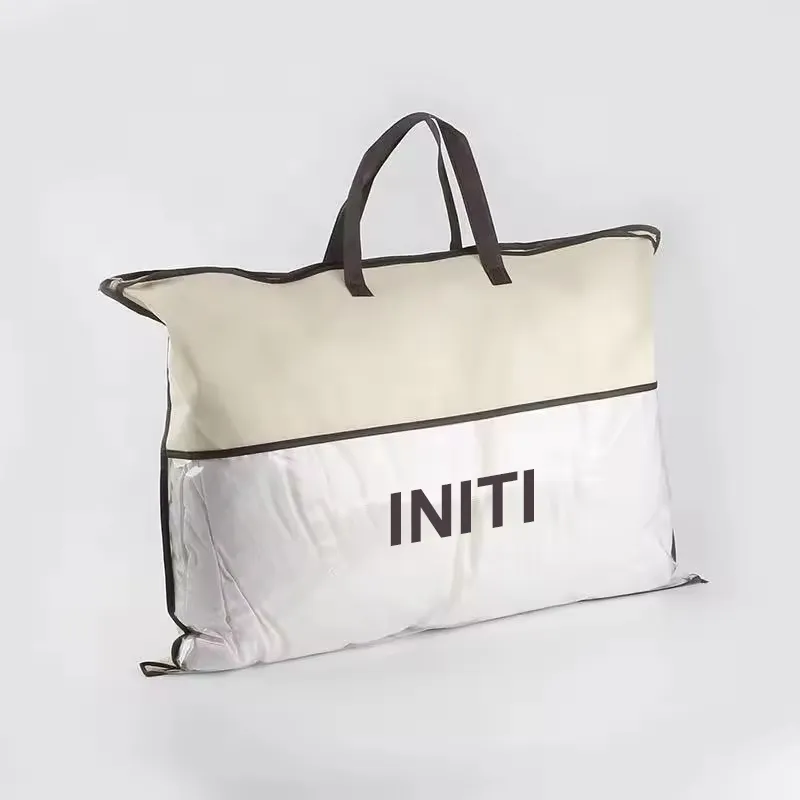
Bedding storage bags are designed for bulky household textiles such as:
- Duvets
- Comforters
- Quilts
- Blankets
- Sheets
- Pillows
- Seasonal bedding
The biggest challenge is usually not the weight of the contents but their volume and bulk.
A comforter can be lightweight but difficult to insert into a bag with a narrow opening. As a result, opening design can be just as important as the overall dimensions.
Buyers should consider:
- Internal capacity
- Opening width
- Zipper position
- Gusset depth
- Handle placement
- Clear window size
- Foldability
- Packed volume
A wider zipper opening can make it easier for users to load bulky bedding. A gusset can provide additional depth without requiring an extremely tall bag. A transparent window can help users identify the contents without opening the bag.
For retail products, these features should be balanced against cost and the intended price position.
A storage bag designed for occasional seasonal use does not necessarily need the same construction as a bag that consumers open and close every week.
Wardrobe and Hanging Storage
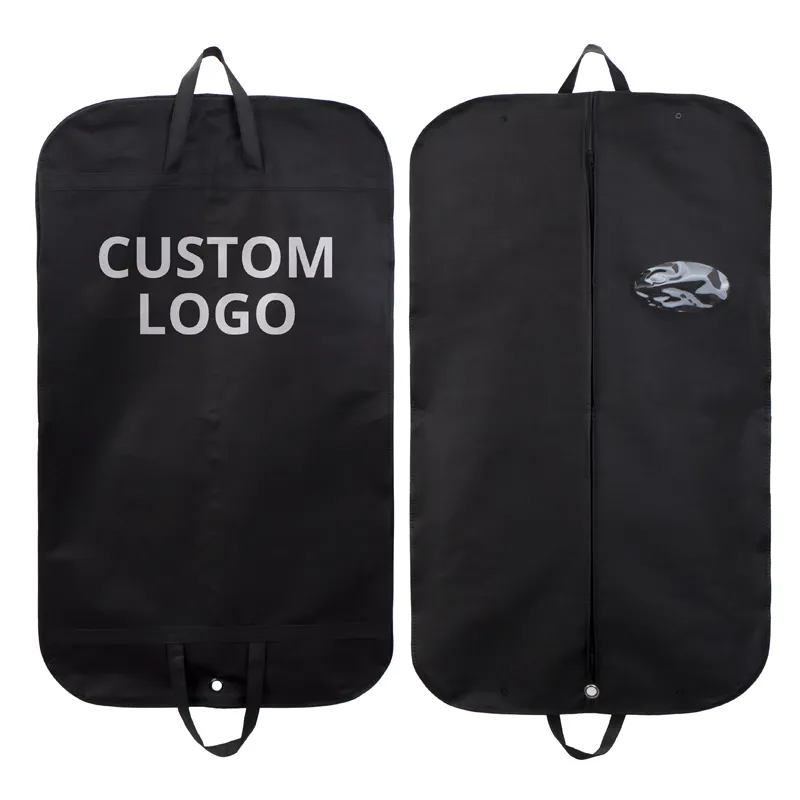
Wardrobe and hanging storage bags are used for suits, coats and folded stacks, and they are the only type that puts a panel under permanent tension.
The bag hangs, so the top panel carries the weight continuously rather than intermittently. That single fact changes the specification. A reinforced top panel with an internal hanger bar or a reinforced eyelet is not an optional upgrade, it is the part of the product that decides whether the bag survives a season.
Typical features include:
- full-length zipper
- reinforced top panel and eyelet
- hanging hook or loop
- dust-resistant closure
- breathable or coated fabric
- clear window for identification
Buyers should consider:
- zip length against garment length
- top panel reinforcement
- fabric breathability against moisture
- gusset depth for folded stacks
- handle or loop positioning
- folded thickness for retail packaging
Seasonal and Holiday Storage
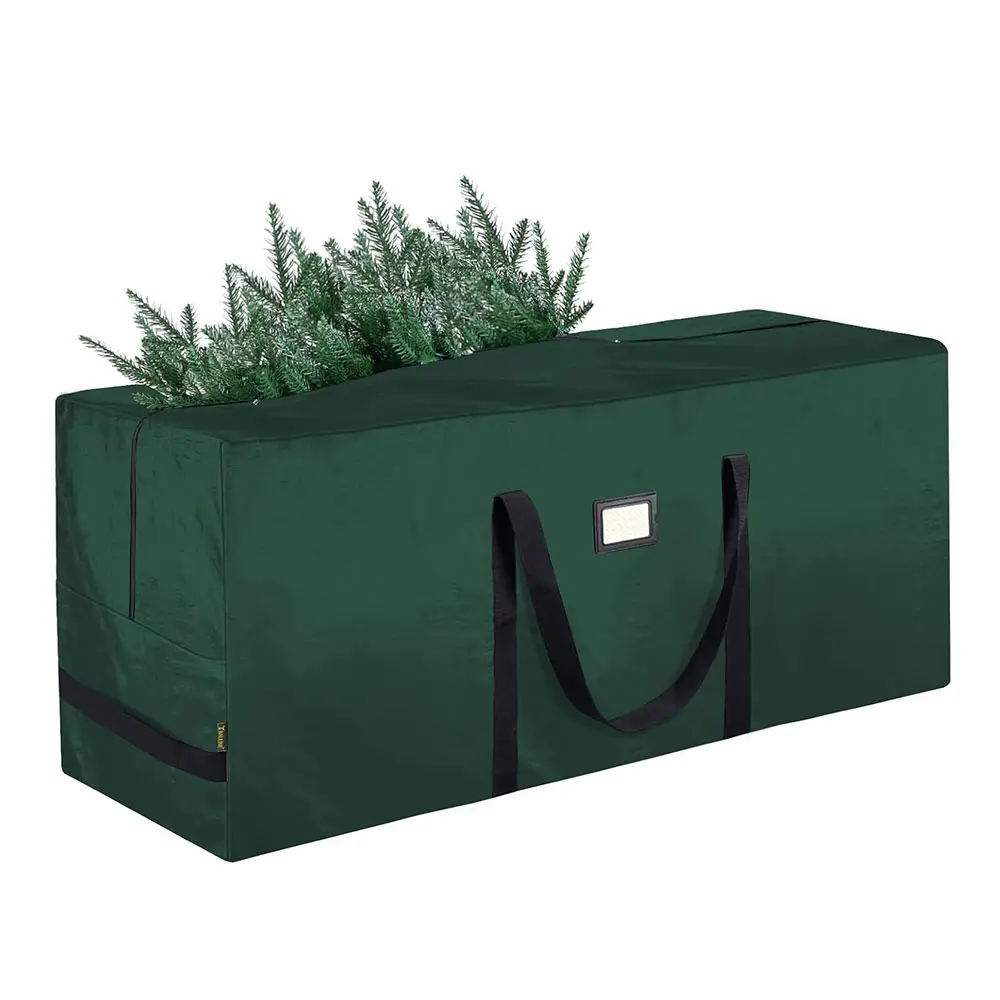
Seasonal storage bags are used for Christmas trees, wreaths and decorations, and they are the most irregular type in the category.
The contents are bulky, they frequently have sharp metal edges, and they are handled once a year. That combination produces a failure profile unlike any other storage product. It is not steady load or dimensional fit that decides field life, it is puncture and one-off handling.
Important areas include:
- puncture resistance at the base
- strength around the trunk opening
- zipper size and smoothness
- body shape and gusset structure
- handle strength for a one-off lift
- fabric coating for dust and moisture
- print durability for seasonal packaging
Puncture resistance matters most, and this is where material choice is decisive. Woven polypropylene resists tear propagation in a way that light non-woven cannot, which makes woven constructions the sensible default for tree and wreath storage.
Vacuum and Compression Bags
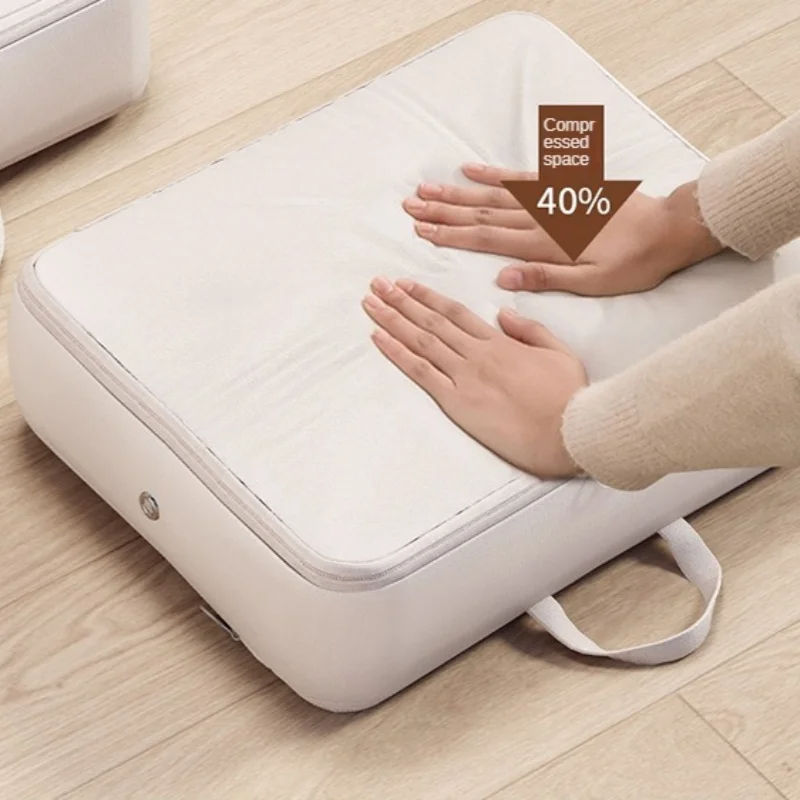
Vacuum and compression bags hold duvets, sweaters and travel clothing, and they are a film product rather than a sewn product.
This distinction is worth stating plainly because it changes the sourcing approach. There is no fabric weight, no zipper number and no handle attachment. The specification is a track seal, a one-way valve and a film structure, and the tests that apply to fabric storage bags do not apply here.
The product should be assessed on:
- seal integrity after repeated opening and closing
- valve leakage under sustained vacuum
- film puncture resistance
- compression ratio achieved and held
- reusability across cycles
- clarity and printing on the film
Closet Cubes and Drawer Inserts
Closet cubes and drawer inserts are shape-holding products, not load-bearing ones.
They are used for folded clothing and small items, and they place greater emphasis on organization and appearance than on load capacity. That means the specification should follow the shelf rather than the load.
Typical features include:
- shaped frame or insert panel
- transparent window or front opening
- label or content pocket
- foldable construction for flat packing
- matching colors across the range
- stackable dimensions
- optional compartments
Type Overview Table
| Family |
Typical contents |
Load profile |
Main closure |
Primary failure risk |
| Under-bed storage bag |
Duvets, bedding, off-season clothing, shoes |
Medium load, static, compressed by the bed frame |
#5 dual-slider zipper, often 3-sided |
Bag too tall for the frame; zipper tape failure |
| Moving / relocation bag |
Household contents, books, kitchenware |
High load, dynamic, lifted repeatedly |
Heavy dual zipper or top flap |
Handle pull-out; seam burst; base tear |
| Bedding / comforter bag |
Comforters, quilts, pillows |
Bulky, low density, high volume |
Zipper or drawstring |
Window cracking; handle stitching |
| Wardrobe / hanging storage |
Suits, coats, folded stacks |
Low load, hanging |
Full-length zipper |
Zip running off the tape; hanger tearing the top panel |
| Seasonal / holiday storage |
Trees, wreaths, decorations |
Irregular load, sharp edges |
Large zipper or drawstring |
Puncture; zip misalignment on bulky contents |
| Vacuum / compression bag |
Duvets, sweaters, travel clothing |
Air-pressure load on film |
Triple-seal track plus valve |
Seal failure; valve leak; film puncture |
| Closet cube / drawer insert |
Folded clothing, small items |
Low load, frequent access |
Open top or zip lid |
Shape collapse; frame corrosion |
How to Choose Materials for Storage Bags
There is no universally best storage bag material.
The correct material depends on the intended load, frequency of use, appearance, required flexibility, price target, packaging requirements and market positioning.
Common materials include:
- Polyester
- Oxford fabric
- Non-woven fabric
- Canvas
- Cotton
- RPET
- Mesh
- Laminated or coated fabrics
- Transparent materials for selected windows
The material name alone is not enough to determine product performance.
Two products described simply as “polyester storage bags” can have significantly different results because of differences in fabric weight, weave, finishing, construction and reinforcement.
Polyester
Polyester is one of the most versatile materials for storage products.
It can be used for:
- Bedding bags
- Moving bags
- Closet organizers
- Laundry storage
- Travel organizers
Its advantages include a wide range of available specifications, relatively low weight, flexible construction and compatibility with various printing methods.
It can also be developed in many colors and finishes, making it practical for private-label product collections.
However, buyers should avoid treating “polyester” as a complete specification.
The fabric weight, construction and finishing still need to be defined.
For example, a lightweight polyester fabric may be appropriate for a simple closet organizer but less suitable for a large moving bag carrying heavy contents.
Oxford Fabric
Oxford fabric is often considered when a storage bag needs a more substantial structure.
It can be used for:
- Moving bags
- Heavy-duty household storage
- Travel organizers
- Utility storage
- Large organizers
One important point is that “Oxford fabric” describes a fabric construction rather than a single universal performance level.
Different specifications can vary in:
- Weight
- Weave
- Thickness
- Coating
- Flexibility
- Abrasion resistance
Oxford polyester is the default mid-to-premium storage fabric and is specified by denier — the linear density of the yarn, in grams per 9,000 meters. The practical bands are narrow and worth knowing precisely.
- 600D is the workhorse: durable, sewable, takes a PU coating, and handles a 15–20 kg under-bed load with a reinforced base. It is widely regarded as the heaviest denier that remains genuinely practical to sew at volume.
- 900D is noticeably stiffer and more abrasion-resistant, suited to moving bags that get dragged across rough surfaces.
- 1680D is heavy, rigid and expensive. It is justified where the bag is a durable good in its own right, or where the brand position requires a ballistic-nylon aesthetic. It is not justified for a bag that sits under a bed.
If water resistance is required, buyers should clarify the actual coating or finishing specification instead of assuming that Oxford fabric itself means waterproof.
Non-Woven Fabric
Non-woven fabric is often used for lightweight and cost-sensitive storage products.
Typical applications include:
- Closet organizers
- Bedding storage
- Seasonal storage
- Promotional storage products
Its advantages may include:
- Low weight
- Efficient material use
- Easy folding
- Simple construction
- Suitable surfaces for printing
However, it may not be the first choice for products that are expected to carry heavy loads repeatedly.
For larger bags, buyers should look at the complete construction rather than relying only on the fabric type.
Canvas
Canvas can provide a more substantial and lifestyle-oriented appearance.
It may be suitable for:
- Premium home organization
- Decorative storage
- Toy storage
- Closet organizers
- Reusable household products
Canvas is generally heavier than many lightweight synthetic fabrics.
That can contribute to a premium tactile impression, but it also increases:
- Product weight
- Folding volume
- Shipping volume
- Material cost
Therefore, canvas should be selected when its appearance and physical characteristics fit the product positioning rather than simply because it is considered a “strong” material.
Cotton
Cotton is useful when a brand wants a natural textile appearance.
It can be considered for:
- Minimalist home organization
- Clothing storage
- Fabric organizers
- Gift-oriented products
- Lifestyle collections
Natural-fiber products can require more attention to dimensional stability, shrinkage and color consistency.
If the finished dimensions need to remain highly consistent, these characteristics should be considered during product development.
RPET
RPET is recycled polyester produced from recycled PET material.
It can be considered for storage products developed for brands that want to incorporate recycled materials into their product range.
However, buyers should distinguish between:
A product made from polyester
and:
A product making a verified recycled-content claim.
If recycled content is part of the product marketing, appropriate supporting documentation should be established rather than relying solely on a supplier's description.
Fabric Selection Logic
| Material |
Tear resistance |
Moisture resistance |
Printability |
Relative cost |
Best-fit segment |
| Non-woven PP 60–80 gsm |
Low |
Low unless backed |
Good, flat color |
Low |
Drawer and shelf organizers |
| Non-woven PP 90–120 gsm, PE-backed |
Low–medium |
Medium–high |
Good |
Low–medium |
Bedding, wardrobe, cubes |
| rPET non-woven (spunbond, recycled) |
Low–medium |
Low unless backed |
Good, flat color |
Low–medium |
Bedding, wardrobe and cube ranges with a recycled-content claim |
| Woven PP, 180 gsm coated |
High |
High |
Laminating or patch only |
Low–medium |
Moving, seasonal, tree storage |
| Oxford polyester 600D PU-coated |
Medium–high |
High |
Good (screen, transfer, digital) |
Medium |
Under-bed, wardrobe |
| Oxford polyester 900D / 1680D |
High |
High |
Limited |
Medium–high |
Heavy-duty moving |
| rPET woven / oxford (recycled polyester) |
Medium–high |
High with PU coating |
Good (screen, transfer, digital) |
Medium–high |
Under-bed and moving ranges positioned on recycled content |
| Cotton canvas 10–12 oz (≈339–407 g/m²), unbacked |
Medium–high |
Low to medium (breathable) |
Excellent (screen, embroidery, transfer) |
Medium |
Design-led bedding, wardrobe and under-bed storage |
| Cotton canvas 14 oz (≈475 g/m²) or laminated |
High |
Medium to high when laminated |
Good to excellent |
Medium–high |
Structured, premium and heavy-duty storage |
| Cotton, lightweight 4–8 oz (≈136–271 g/m²) |
Low–medium |
Low |
Excellent |
Low–medium |
Dust bags, drawstring pouches, linings, gift packaging |
| Clear PVC 10–20 mil |
Medium |
Very high |
Reverse print only |
Low–medium |
Bedding retail, visibility-led lines |
| PEVA film |
Medium |
Very high |
Reverse print only |
Medium |
Bedding, clothing (odor-sensitive) |
| Felt |
Low |
Low |
Limited |
Low–medium |
Drawer, shelf organizers |
The goal is not to find the material that sounds strongest on paper.
The goal is to select the material that provides the required performance without adding unnecessary weight, cost or complexity.
Storage Bag Design: Size, Closure, Handles and Construction
After selecting the general material direction, the next challenge is converting the storage requirement into a practical physical design.
This is where many seemingly small decisions have a large effect on usability.
Size and Capacity
The external dimensions of a storage bag do not necessarily equal its practical storage capacity.
A bag with the same length, width and height can hold different amounts depending on:
- Opening size
- Gusset
- Fabric flexibility
- Internal shape
- Closure position
- Product compression
For bulky products, the opening can be particularly important.
Imagine a bag intended for a large comforter. The internal volume may be sufficient, but if the zipper opening is narrow, inserting the comforter can still be difficult.
Therefore, capacity should be considered together with loading access.
For B2B development, it can be useful to define capacity based on the actual product to be stored rather than only specifying a theoretical bag volume.
Flat vs. Gusseted Construction
A flat storage bag is simple and can be economical.
It can work well for:
- Clothing
- Lightweight textiles
- Documents
- Flat accessories
- Simple travel storage
A gusseted design creates additional depth.
Depending on the design, the gusset can be positioned along:
- The bottom
- The sides
- Both sides and bottom
Gussets are especially useful for bulky items because they allow the bag to expand in depth.
However, they also increase fabric consumption and construction complexity.
Therefore, a gusset should solve a real capacity problem rather than being added simply because it looks more substantial.
Zipper and Closure Selection
The closure should correspond to the way consumers load and access the bag.
Zippers are widely used because they provide an enclosed and relatively secure opening.
For large storage bags, buyers should consider:
- Zipper length
- Opening direction
- Single or double slider
- Corner construction
- Puller design
- Zipper tape
- Ease of operation under load
A long zipper opening can make bulky products easier to insert.
However, a larger opening also creates a larger structural interruption in the bag body, which means the surrounding construction must be properly developed.
For lightweight products, drawstring closures may offer a simpler and more flexible solution.
The important point is to select the closure based on actual use rather than treating one closure type as universally better.
Handles
Handles are important whenever a storage bag is expected to be moved while loaded.
Their design involves more than selecting a suitable length.
Consider:
- Handle material
- Width
- Attachment position
- Stitching
- Reinforcement
- Carrying distance
- Expected load
A handle that is comfortable on an empty bag may feel very different when the bag contains several kilograms of clothing or bedding.
The attachment area deserves particular attention because the load is concentrated there.
Reinforcement
Reinforcement should focus on actual stress points.
Common areas include:
- Handle attachments
- Bottom corners
- Zipper ends
- Side seams
- Carrying points
The objective is not to reinforce every part of the product.
Over-reinforcement can increase cost, weight and bulk without producing meaningful additional value.
A better approach is to identify where forces are concentrated and reinforce those areas appropriately.
Clear Windows
Clear windows are popular in storage products because they allow users to see the contents without opening the bag.
They can be useful for:
- Bedding
- Seasonal clothing
- Quilts
- Toys
- Household textiles
The size and position of the window should be considered together with the product's structure.
A large window may improve visibility but can change the flexibility and folding behavior of the bag.
The window material and attachment method should therefore be tested as part of the finished product.
How to Test Custom Storage Bags Before Bulk Production
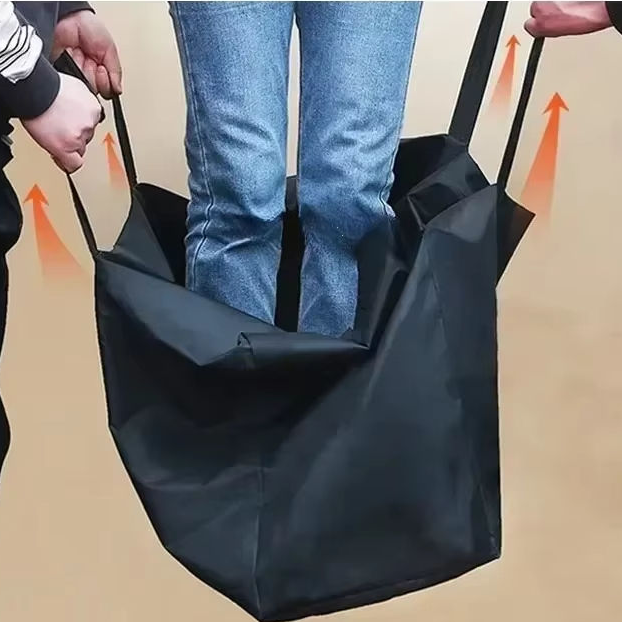
Before bulk production, test the sample under realistic use conditions rather than checking the empty bag only.
| What to Test |
What to Check |
| Dimensions |
Size, gusset, opening and capacity |
| Load |
Handles, seams, bottom and corners under realistic weight |
| Closure |
Zipper or closure operation when empty and filled |
| Construction |
Stitching, reinforcement, handles and attachment points |
| Appearance |
Fabric, printing, window/mesh and overall finish |
| Special Requirements |
Abrasion, colorfastness or water resistance when required |
| Packaging |
Folding, packed size and protection during shipping |
The testing criteria should be agreed with the supplier before bulk production so the approved sample can serve as a clear production reference.
MOQ, Cost and Supplier Comparison
MOQ is often treated as a simple factory requirement, but it can be influenced by the product specifications.
Factors include:
- Fabric color
- Custom fabric production
- Printing
- Hardware
- Packaging
- Number of sizes
- Number of colors
- Special materials
For example, producing 10,000 pieces in one fabric color is a different manufacturing situation from producing 1,000 pieces each in ten colors.
Similarly, a five-size product collection may require more production planning than one standard SKU.
When comparing MOQ, make sure the quantities refer to the same:
- Size
- Color
- Material
- Printing
- Packaging
Otherwise, the comparison may be misleading.
What Determines the Cost of a Custom Storage Bag?
The cost of a custom storage bag depends on more than the bag itself. The main factors include:
| Cost Factor |
What Affects the Price |
| Bag Size |
Larger bags generally require more fabric and materials. |
| Material |
Cotton, canvas, polyester, non-woven fabric and other materials have different costs. |
| Fabric Weight |
Heavier or thicker fabrics usually increase material cost. |
| Bag Construction |
Gussets, multiple panels, reinforced bottoms and complex structures require more production work. |
| Closure |
Zippers, drawstrings, snaps and other closure systems have different material and labor costs. |
| Handles |
Handle length, width, material and reinforcement can affect the final price. |
| Printing & Branding |
Printing method, artwork coverage, labels and other branding details add to customization costs. |
| Special Features |
Clear windows, mesh panels, padding or other functional components can increase the unit cost. |
| Order Quantity |
Larger quantities can generally spread setup and production costs across more units. |
| Packaging |
Individual packaging, special folding or custom packing requirements may add to the total cost. |
For bulk buyers, it is useful to compare quotations based on the same specifications, rather than comparing unit prices alone.
How to Control Cost Without Sacrificing Product Quality
Cost optimization does not necessarily mean using a cheaper fabric.
In many cases, the better approach is to simplify the product intelligently.
Standardize Materials
If several products in a collection can use the same base fabric, this can simplify:
- Purchasing
- Color management
- Quality control
- Production planning
Standardize Hardware
Using the same zipper color, zipper pull and label style across several SKUs can reduce unnecessary variation.
It also helps create a consistent visual identity.
Remove Low-Value Features
Ask whether each pocket, divider or decorative component has a real function.
A product with fewer features but better construction can provide more practical value than a complicated product with many rarely used details.
Optimize Folding and Packaging
A storage bag that can be folded efficiently may reduce:
- Carton volume
- Warehouse space
- Shipping volume
However, folding should be tested before production, particularly when the product includes windows, coatings or structural components.
Reduce Unnecessary Color Variations
If six colors do not provide meaningful commercial value, reducing the number of colors may simplify production and inventory.
For private-label brands, a smaller but coordinated collection can sometimes be easier to manage than a large number of variations.
Building a Custom Storage Bag Collection for Retail and Private Label
For a retailer or private-label brand, the opportunity is not necessarily limited to one storage bag.
A coordinated collection can include several products serving different storage situations.
For example:
Home Storage
- Bedding storage
- Quilt storage
- Closet organizers
Utility Storage
- Moving bags
- Laundry bags
- Large household storage
Travel Organization
- Packing cubes
- Shoe bags
- Travel laundry bags
These products can share:
- Brand colors
- Core materials
- Zipper colors
- Labels
- Packaging
- Graphic style
However, they do not need to have identical construction.
A bedding bag may need more capacity.
A moving bag may require stronger handles.
A laundry product may benefit from mesh.
A travel organizer may need lightweight construction.
The goal is therefore collection consistency without sacrificing product functionality.
This can be particularly useful for private-label brands because consumers can recognize the relationship between products while each SKU serves a distinct purpose.
Inquiry Support
| Field |
What to provide |
| Segment and use |
Under-bed, moving, bedding, wardrobe, seasonal, vacuum or closet |
| Filled dimensions |
Length × width × filled height — the height the bag reaches when packed |
| Storage clearance |
The space the bag must fit into, if fit is the selling feature |
| Target load |
Load at 100% fill volume, in kg and lb |
| Fabric |
Material family, gsm or denier, coating and backing |
| Closure |
Zipper number, slider count, zip sides (top-only or three-sided) |
| Structure |
Base panel yes/no, edge binding, reinforcement patches |
| Carrying |
Handle count and position, webbing width, strap type |
| Features |
Window, ID pocket, desiccant pocket, ventilation panel |
| Branding |
Artwork, print method, label placement, hangtag |
| Compliance |
Destination market, required test report, required claim |
| Packaging |
Polybag with suffocation warning if required, inner and master carton |
| Commercial |
Quantity per colorway, destination port, required delivery date |
If you have not finalized all details, you can first send your intended use and target quantity, and we can recommend a suitable specification.
FAQ
What is the best material for custom storage bags?
There is no single best material for every storage application. Polyester and Oxford fabrics can be suitable for many general and utility storage products, while canvas or cotton may be selected for lifestyle-oriented collections.
Can storage bags be customized with a logo?
Yes. Depending on the material and design, storage bags can be customized with printing, woven labels, printed labels, heat-transfer decoration and other branding methods.
Can custom storage bags be made in different sizes?
Yes. Custom storage bags can be developed in different dimensions for bedding, clothing, moving, laundry, travel and other applications. Multiple sizes can also be developed as part of a coordinated product collection.
What should I test before placing a bulk order?
At minimum, evaluate dimensions, seams, handles, closure performance and overall function under realistic use conditions. Additional testing such as abrasion, colorfastness or water resistance can be considered when relevant to the product.
How do I compare quotes from different storage bag suppliers?
Make sure all suppliers are quoting the same specifications, including material, fabric weight, size, closure, handles, printing, packaging and quantity. Comparing unit prices without standardizing these details can produce misleading results.
What affects the MOQ for custom storage bags?
MOQ can be affected by fabric colors, custom materials, printing, hardware, packaging, number of sizes and number of colors. A simple single-SKU project may have different production requirements from a multi-size private-label collection.
Can a manufacturer develop a storage bag from a reference sample?
Yes. A reference sample, photo or basic concept can be used as the starting point for an OEM or ODM project. The manufacturer can help translate the concept into dimensions, materials, construction details and a production sample.
Can storage bags be customized for retail packaging?
Yes. Depending on the project, custom packaging can include individual bags, sleeves, hangtags, labels, barcodes, printed cartons and multi-piece sets.
Conclusion
Custom storage bags may look simple, but successful bulk sourcing depends on choosing the right design for the intended use.
Dimensions, materials, closures, handles, construction and packaging should all match how the bag will be stored, handled and used. Testing should also reflect real conditions, including loading, carrying, opening and closing, and packing.
For bulk buyers, a clear specification makes supplier quotations easier to compare and helps avoid unnecessary production issues. Retailers, procurement teams, promotional product companies and private-label brands can also develop coordinated storage bag collections by combining consistent materials, colors and branding across different applications.
A successful storage bag is not just designed to hold something—it is designed around how that item will be stored, handled and used.
Related Products



 Hot News