Neoprene vs Felt Laptop Sleeves: Which Material Should Buyers Choose?
Neoprene and felt are both common materials for laptop sleeves, but they protect and carry a laptop in very different ways.
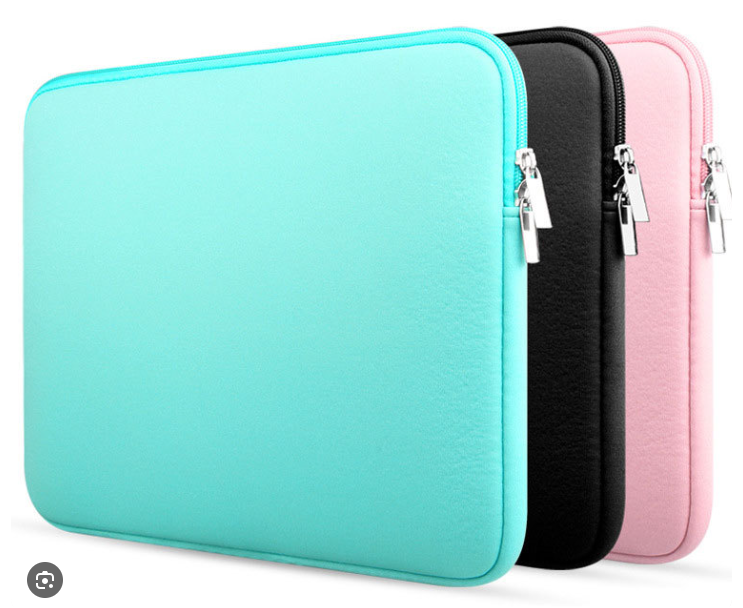
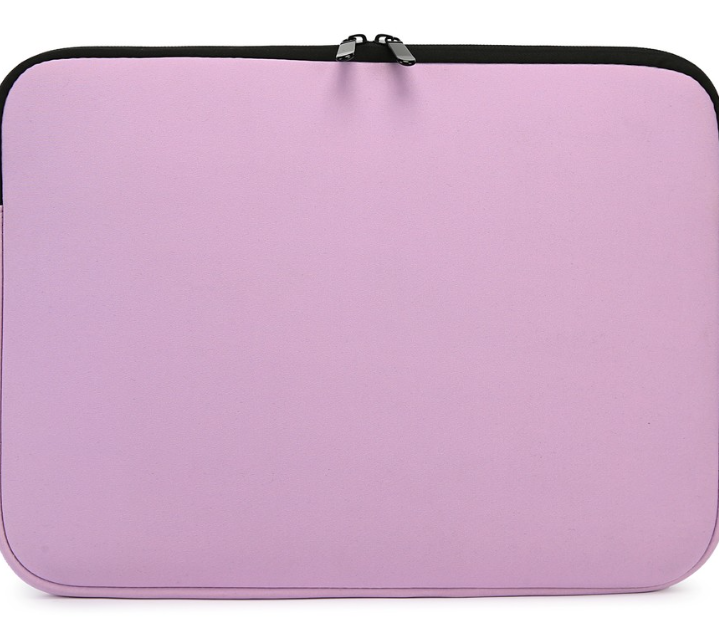
A neoprene laptop sleeve is soft, flexible and naturally cushioned by its foam structure. It stretches slightly around the device and works well when the sleeve needs to stay slim while still providing everyday protection against scratches and minor bumps.
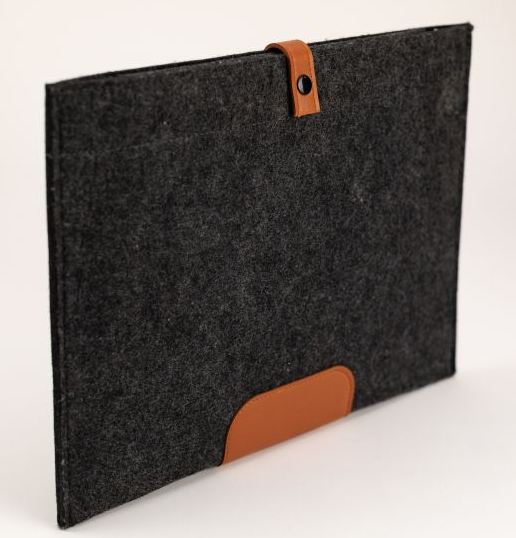
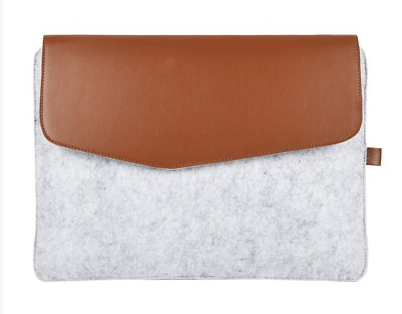
A felt laptop sleeve is firmer and more structured. It usually keeps a cleaner shape when empty and works particularly well for minimalist office accessories, corporate gifts and envelope-style designs.
The simplest comparison is:
Choose neoprene when cushioning, flexibility and a close fit matter more.
Choose felt when structure, simplicity and a clean office-style appearance matter more.
Neither material should automatically be described as providing heavy drop protection. For that, the complete sleeve needs appropriate padding, edge construction and, where required, reinforced corners.
Neoprene vs Felt Laptop Sleeves at a Glance
| Feature |
Neoprene Sleeve |
Felt Sleeve |
| Feel |
Soft, flexible, slightly elastic |
Soft but firmer |
| Structure |
Flexible, collapses when empty |
Holds shape better |
| Cushioning |
Built into foam structure |
Depends on felt thickness/density |
| Stretch |
Yes, usually some stretch |
Very little |
| Fit |
Close-fitting |
Requires more clearance |
| Surface water resistance |
Better |
Lower |
| Full waterproof protection |
No |
No |
| Scratch protection |
Good |
Good |
| Minor bump protection |
Good with sufficient foam thickness |
Moderate, depending on density/thickness |
| Full-color printing |
Very suitable on compatible laminated face |
Less suitable |
| Embroidery / patches |
Possible |
Very suitable |
| Minimalist appearance |
Moderate |
Excellent |
| Bright promotional graphics |
Excellent |
More limited |
| Structural envelope design |
Less suitable |
Excellent |
| Zippered sleeve |
Very common |
Possible |
| Corporate gift use |
Good |
Excellent |
| Sport / tech appearance |
Excellent |
Less typical |
A typical neoprene sleeve does not consist of bare rubber alone.
It usually combines a polychloroprene foam core with knitted textile laminated to one or both surfaces.
The foam gives the material:
The textile surface provides:
Better hand feel
Color
Printing surface
Abrasion protection
This combination is why neoprene is commonly used for:
The material bends easily around the product rather than maintaining a rigid shape.
Felt is a sheet material formed by bonding or entangling fibers rather than weaving conventional warp and weft yarns.
Laptop sleeves commonly use synthetic felt, particularly polyester felt, although wool, wool blends and other compositions also exist.
Polyester needle-punched felt can be produced at different:
Thicknesses
Densities
Stiffness levels
Surface finishes
That means “felt” by itself is not a complete material specification. Two sleeves that both use 3 mm felt may still feel different if one material is much denser than the other.
Needle-punched polyester felt is a nonwoven structure formed through mechanical fiber entanglement, and its compression behavior changes with material weight, construction and reinforcement.
For laptop sleeves, felt is commonly used in:
Envelope sleeves
Flap closures
Minimalist cases
Corporate gifts
Office accessory sets
The Biggest Difference: Soft Cushioning vs Firm Structure
This is the most noticeable difference when you hold the two materials.
Neoprene
Neoprene behaves more like flexible foam.
Press it and it compresses.
Bend it and it follows the shape of the laptop.
When the laptop is removed, a thin neoprene sleeve usually collapses relatively flat.
Felt
Dense felt behaves more like a soft sheet.
It can remain relatively flat and structured even when no laptop is inside.
This makes felt particularly suitable for:
Commercial polyester felt can be engineered to have considerable board-like rigidity depending on its construction and heat treatment.
So the choice is not only about protection.
It also changes how the finished sleeve looks and behaves in the hand.
Which Material Provides Better Cushioning?
For a simple sleeve without additional padding, neoprene usually provides more natural cushioning.
The foam core compresses when the sleeve is bumped or pressed.
That makes it suitable for everyday protection against:
However, this does not mean every neoprene sleeve is highly impact resistant.
Protection changes with:
Foam thickness
Foam density
Edge construction
Zipper position
Device fit
Corner reinforcement
A very thin neoprene sleeve may provide less protection than a thick felt sleeve with added foam.
Does Felt Protect a Laptop?
Yes, but it protects differently.
Felt is particularly useful for:
A dense, thick felt can offer more cushioning than a thin decorative felt.
But felt should not automatically be marketed as shockproof.
For stronger impact protection, the sleeve may need:
Additional foam layer
Lining
Reinforced bottom
Corner protection
The felt itself creates the sleeve structure, but structure and impact absorption are not the same property.
Which Is Better Against Water?
Neoprene has the advantage, but the wording matters.
Closed-cell neoprene foam does not absorb water in the same way as an open fibrous material, so the material itself provides a useful barrier against everyday splashes.
However, a normal neoprene laptop sleeve also contains:
Fabric lamination
Stitching
Seams
Zipper
Openings
Water can enter through these areas.
So a normal neoprene sleeve should usually be described as:
water-resistant
rather than:
waterproof
unless the finished product has been specifically constructed and tested for waterproof performance.
What Happens When Felt Gets Wet?
Felt is more likely to hold moisture within its fibrous structure.
A small splash is not necessarily a problem, but a soaked felt sleeve:
Research on polyester needle-punched fabrics also shows that wet conditions can affect compression behavior and thickness recovery.
For this reason, felt is usually better suited to:
Office use
Indoor carrying
Bag-in-bag use
than situations where the sleeve may regularly encounter rain or wet environments.
Does That Mean Neoprene Is Better for Commuting?
Often, yes—particularly if the commute involves:
Neoprene combines:
This makes it practical for everyday movement.
Felt is still suitable for commuting when it is carried inside:
where exposure to rain is limited.
Which Material Fits a Laptop More Closely?
Neoprene.
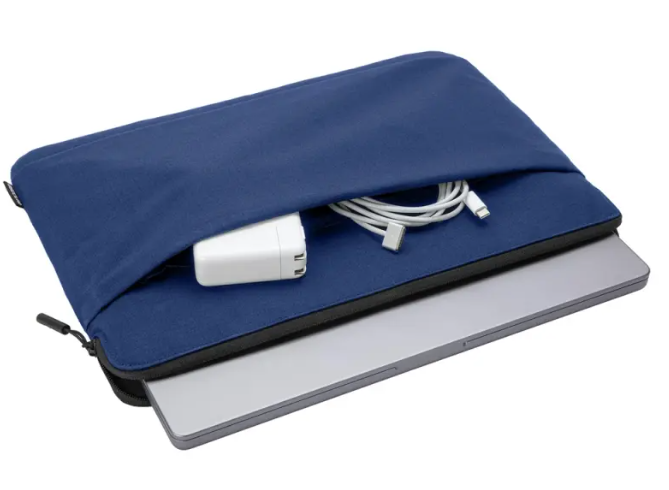
Because the material has some stretch, it can conform more closely to the device.
That gives a neoprene sleeve the familiar:
snug-fit
feel.
A small amount of material stretch can also provide some tolerance between laptop models with slightly different dimensions.
But stretch should not be used as an excuse for poor sizing.
A sleeve that is too tight can:
A sleeve that is too loose allows the laptop to move around inside.
Felt Requires More Accurate Pattern Allowance
Felt does not stretch significantly in normal laptop-sleeve use.
That means the internal dimensions must provide enough clearance for:
Laptop thickness
Seam allowance
Closure
Easy insertion
If a felt sleeve is cut almost exactly to the laptop dimensions, it may be difficult to use.
Industry sleeve-sizing comparisons similarly distinguish neoprene as a flexible material with greater fit tolerance, while felt requires more physical clearance around the device.
For custom production, the useful information is therefore not only:
14-inch laptop
but:
laptop width × depth × thickness.
Screen Size Is Not Enough for Either Material
A 14-inch laptop from one brand may not have the same external dimensions as another 14-inch model.
Differences come from:
Screen bezel
Body shape
Device thickness
Aspect ratio
Protective shell
For both neoprene and felt sleeves, actual device dimensions are more useful than screen size alone.
This is especially important for felt because the material offers much less stretch.
Which Material Keeps Its Shape Better?
Felt.
A sufficiently dense felt sleeve can maintain:
even when empty.
Neoprene is softer and usually depends on the laptop itself to create the shape.
This affects how the product looks in:
Retail displays
Gift sets
Photography
Corporate presentation
If the brief calls for a very clean, architectural sleeve, felt is often the better starting point.
Which Material Is Better for a Zippered Sleeve?
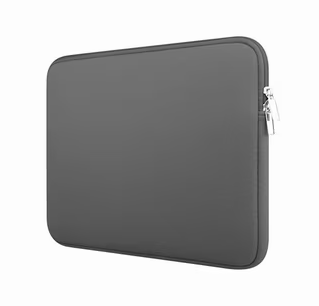
Neoprene is particularly well suited to zipper construction.
A common neoprene laptop sleeve may use:
The flexible material works naturally with this construction.
Felt can also use a zipper, but many felt sleeves are deliberately designed with simpler closures such as:
Envelope flap
Hook-and-loop
Snap
Elastic strap
This allows the felt itself to remain the main visual feature.
Which Material Is Better for an Envelope Sleeve?
Felt.
An envelope-style sleeve benefits from material that can:
Felt does this naturally.
Neoprene is better suited to a soft zippered or slip-in sleeve than a crisp envelope structure.
Which Material Is Better for Printing?
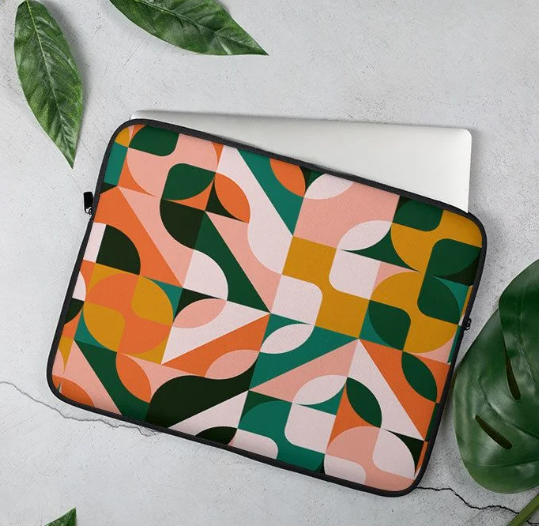
For large, colorful graphics, neoprene usually has the advantage.
Because commercial neoprene is commonly laminated with a textile face, compatible constructions can support:
Sublimation
Screen printing
Heat-transfer decoration
depending on the selected face fabric and process.
This makes neoprene particularly useful for:
The printing method must still match the actual laminated textile.
Which Branding Methods Work Well on Felt?
Felt suits a different type of branding.
Common options include:
Embroidery
Woven labels
Printed patches
PU patches
Leather-look patches
Screen printing
Laser-cut decoration
The slightly textured surface works especially well with simple, restrained branding.
For example:
grey felt + small logo patch
creates a very different product from:
full-color printed neoprene.
Both can be branded well; they simply suit different visual directions.
Which Material Looks More Premium?
There is no universal answer.
Felt Often Feels More:
Minimal
Office-oriented
Warm
Textile-focused
Understated
This makes it popular for:
Neoprene Often Feels More:
Technical
Sporty
Modern
Functional
Color-driven
It works well for:
Electronics accessories
Student products
Tech promotions
Travel
Sports-oriented branding
The better material is the one that fits the intended brand.
What About Surface Wear?
The two materials age differently.
Felt
Repeated rubbing can lead to:
Pilling
Fuzzing
Fiber pickup
Flattened surface areas
Dark felt can also make:
more visible.
The amount of pilling depends on fiber composition, density and finishing.
Neoprene
The foam itself is normally covered with textile, so surface durability depends heavily on the laminated face fabric.
Over time, the surface can show:
particularly at corners and edges.
The bound seams and zipper area also need to withstand repeated use.
Which Material Is Easier to Clean?
Neoprene is generally easier to wipe or gently wash when the complete sleeve construction allows it.
Its smooth laminated surface does not trap dry lint in the same way as felt.
Felt is usually better maintained by:
Brushing
Lint removal
Spot cleaning
rather than repeated aggressive washing.
For both materials, the sleeve should be dried completely before storing a laptop inside it.
A damp sleeve should never be closed around electronic equipment.
What About Heat?
Neither sleeve should be used as an insulating cover around a laptop while the computer is generating significant heat.
Laptop sleeves are designed mainly for:
Neoprene in particular is an insulating foam material.
The laptop should normally be removed from the sleeve during operation so that its intended ventilation is not blocked.
Which Material Is Lighter?
This depends on:
Thickness
Density
Size
Hardware
Added pockets
but both materials can produce relatively lightweight sleeves.
A very simple felt envelope can use:
with almost no hardware.
A neoprene sleeve may add:
Zipper
Binding
Handle
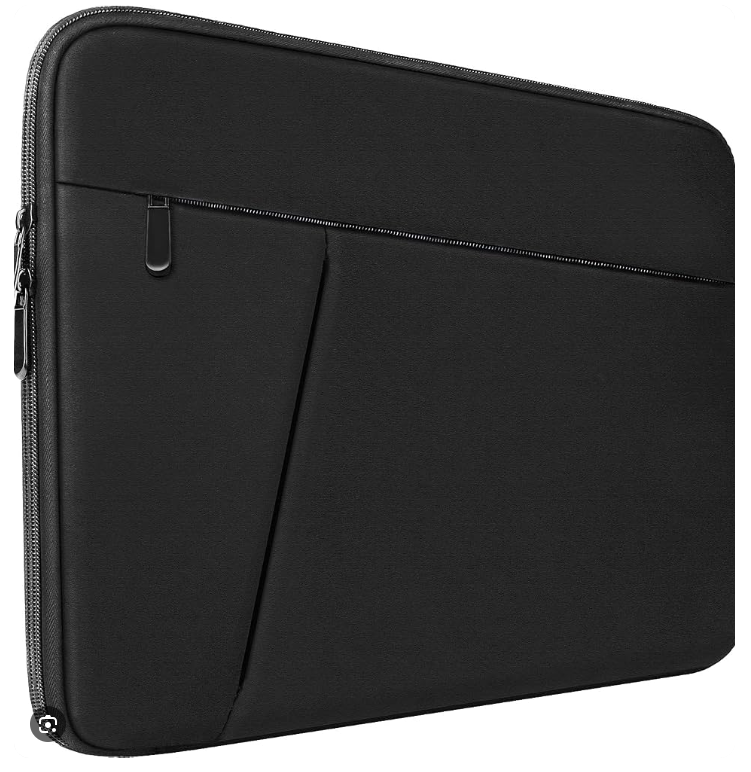
Front pocket
which can increase the finished weight.
So comparing material weight alone is not particularly useful.
Which Material Is Better for Corporate Gifts?
Felt often has an advantage when the brief calls for:
Neutral colors
Simple logo
Office use
Minimal packaging
Professional appearance
A felt envelope sleeve can be included in:
Employee onboarding kits
Conference gifts
Office accessory sets
Laptop bundles
without looking overly promotional.
Neoprene makes more sense when the corporate program needs:
Strong brand colors
Larger printed graphics
More cushioning
Zipper closure
Carry handle
Which Material Is Better for Retail?
Both can work.
Choose neoprene when the retail product needs:
Bright colors
Sporty appearance
Close fit
Flexible padding
Multiple prints
Choose felt when it needs:
The retail customer is buying the appearance as well as the protection.
Which Material Is Better for Schools and Universities?
Neoprene is often more practical.
Students may carry laptops together with:
Books
Bottles
Chargers
Stationery
inside a backpack.
A neoprene sleeve provides a slim cushioned layer around the device without adding too much structure.
It also supports stronger colors and printed graphics for:
Universities
School programs
Student merchandise
Felt can still work well for university gifts and office-style laptop kits, particularly where design matters more than rugged daily use.
Which Material Is Better for Bag-in-Bag Use?
Both.
But they behave differently.
Neoprene
Good when you want:
Cushioning
Close fit
Flexibility
Felt
Good when you want:
Separation
Scratch protection
More structure
If the outer backpack already has substantial padding, a felt sleeve may be enough.
If the outer bag provides little laptop protection, neoprene generally adds more cushioning without much extra bulk.
What About Sustainability?
Neither material should receive a broad sustainability claim based only on its name.
Neoprene
Traditional neoprene is a synthetic rubber material.
There are alternative formulations and manufacturing approaches, but environmental claims should be based on the actual supplied material and supporting documentation.
Felt
Felt can be made from:
Virgin polyester
Recycled polyester
Wool
Wool blends
Acrylic
Other fibers
So the word felt does not automatically mean:
Natural
Recycled
Biodegradable
Eco-friendly
If recycled polyester felt is required, the recycled content should be specified and documented rather than inferred from appearance. Existing felt-material guidance likewise distinguishes polyester, recycled polyester, wool and other felt compositions rather than treating felt as a single material.
Which Material Usually Costs More?
There is no fixed rule.
A basic felt envelope sleeve can be a relatively simple product because it may require:
One main material
Limited stitching
Simple closure
No zipper
A neoprene sleeve commonly requires:
Laminated neoprene
Zipper
Binding
Additional stitching
which can make the construction more complex.
But a premium dense felt sleeve with:
Lining
Embroidery
PU patch
Additional foam
can cost more than a simple neoprene sleeve.
The useful comparison is always the finished specification, not the raw material name.
Neoprene vs Felt for Different Laptop Sleeve Projects
| Project |
Better Starting Point |
Why |
| Daily backpack use |
Neoprene |
Flexible cushioning |
| School / university |
Neoprene |
Lightweight and easy to print |
| Travel |
Neoprene |
Close fit and better surface moisture resistance |
| Corporate gift |
Felt |
Clean, professional appearance |
| Employee welcome kit |
Felt |
Minimal and easy to brand |
| Tech promotion |
Neoprene |
Color and graphic flexibility |
| Executive gift |
Felt |
Understated design |
| Envelope sleeve |
Felt |
Better structure |
| Zippered sleeve |
Neoprene |
Suits flexible zip construction |
| Full-color promotional design |
Neoprene |
Better graphic options |
| Minimal logo patch |
Felt |
Strong visual fit |
| Sleeve inside padded backpack |
Either |
Depends on desired structure and cushioning |
When Should You Choose Neoprene?
Neoprene is the stronger starting point when the sleeve needs:
It is particularly suitable for a sleeve that needs to feel protective and functional without becoming bulky.
When Should You Choose Felt?
Felt is the stronger starting point when the sleeve needs:
It is particularly suitable when the product is intended to feel more like a business accessory than a technical protective case.
When Should Neither Material Be Used Alone?
If the project requires significant drop protection, neither basic neoprene nor basic felt should be selected only by appearance.
Consider adding:
Likewise, if the requirement is true waterproof performance, neither a conventional felt sleeve nor an ordinary stitched neoprene sleeve should automatically be used.
The complete construction must match the performance claim.
What Should Buyers Specify for a Custom Laptop Sleeve?
A useful RFQ should include:
| Specification |
What to Provide |
| Device |
Laptop model or dimensions |
| Size |
Width × depth × thickness |
| Material |
Neoprene / felt |
| Material Detail |
Thickness, density or composition if required |
| Protection |
Scratch / everyday bump / higher impact requirement |
| Closure |
Zipper / flap / hook-and-loop / other |
| Carry Style |
Sleeve only / handle |
| Pocket |
Required / not required |
| Lining |
Required / not required |
| Branding |
Print / embroidery / patch |
| Color |
Required color |
| Quantity |
Estimated order quantity |
| Packaging |
Individual / bulk / retail packaging |
For fit, actual laptop dimensions are more useful than simply saying:
13-inch
14-inch
15.6-inch
because computers with the same screen size can have different external dimensions.
Common Mistakes When Choosing Between Neoprene and Felt
Choosing Felt Only Because It Looks “Eco-Friendly”
Felt composition varies widely. Check the actual fiber content before making a recycled or environmental claim.
Calling Every Neoprene Sleeve Waterproof
The foam may resist water penetration, but seams, zippers and openings mean the finished sleeve is usually not waterproof.
Comparing Thickness Alone
A 3 mm felt and 3 mm neoprene do not behave the same way.
Material:
Density
Compression
Structure
Resilience
also matter.
Ignoring Device Dimensions
Neoprene can tolerate small dimensional differences better than felt, but neither material can compensate for a badly sized pattern.
Expecting Felt to Provide Heavy Drop Protection
Felt provides useful surface and light cushioning protection, but stronger impact requirements may need added padding.
Choosing Neoprene When a Rigid Presentation Is Required
Neoprene is naturally flexible. If the empty sleeve needs to maintain a clean, structured shape, felt may be more suitable.
FAQ
Is neoprene better than felt for laptop sleeves?
Neoprene is generally better when cushioning, flexibility and a close fit are priorities. Felt is better when structure, minimalist appearance and office-style presentation are more important.
Which material provides better laptop protection?
For a basic sleeve without added padding, neoprene generally provides more cushioning against everyday bumps. Felt provides good scratch separation and light cushioning, but its impact protection depends heavily on thickness and density.
Is a neoprene laptop sleeve waterproof?
A normal neoprene laptop sleeve should not be considered waterproof. The neoprene foam itself resists water well, but water can enter through zippers, seams and openings.
Is felt water-resistant?
Felt is less suitable for wet conditions than neoprene. Polyester felt can tolerate occasional light moisture, but the fibrous structure can hold water and takes longer to dry after becoming wet.
Which material is better for a tight laptop fit?
Neoprene. Its flexibility allows it to conform more closely to the device. Felt has little stretch and therefore requires more dimensional clearance.
Which material is better for printing?
Neoprene is generally better for large, colorful or full-surface graphics when the laminated surface is compatible with the selected printing process.
Which material is better for embroidery?
Felt is usually the better choice. Its firm surface works well with embroidery, logo patches and other simple branding methods.
Does felt protect against scratches?
Yes. Its soft surface helps separate the laptop from harder objects and reduces everyday rubbing and scratching.
Can recycled felt be used for laptop sleeves?
Yes. Recycled-polyester felt is available, but the recycled content and supporting documentation should be specified for the project rather than assumed simply because the material is felt.
Which material is better for corporate laptop sleeves?
Felt often works well for understated corporate gifts and office programs, while neoprene is more suitable when the project needs stronger colors, printed graphics or additional cushioning.
Conclusion
Neoprene and felt laptop sleeves are not simply two versions of the same product.
They create different carrying experiences.
Choose neoprene when you need:
Choose felt when you need:
More structure
Minimalist styling
Envelope construction
Neutral office appearance
Embroidery or logo patches
Corporate or executive positioning
For protection, material choice is only the starting point.
A good laptop sleeve also depends on:
correct fit + material thickness + padding + edge construction + bottom protection + closure.
The right material is the one that matches how the sleeve will actually be carried, branded and used.
Inquiry Support
For a custom laptop sleeve project, you can provide:
Target laptop model or device dimensions
Estimated quantity
Neoprene or felt preference
Required material thickness
Protection requirement
Closure type
Pocket requirements
Carry handle requirements
Required colors
Logo artwork
Packaging requirements
If you have not finalized all details, you can first send your intended use and target quantity, and we can recommend a suitable specification.
Related Products


 Hot News