At first glance, a drawstring bag and a dust bag can look almost identical. Both may be made from soft fabric, feature a simple opening, and use a drawstring to close the bag. This is why buyers often wonder whether they are actually two different products.
They do overlap, but they are not exactly the same.The easiest way to understand the difference is this:
A drawstring bag describes how a bag closes, while a dust bag describes what a bag is designed to do.
A drawstring bag can be used for carrying, storage, gifts, promotional campaigns, product packaging, or organization. A dust bag, by comparison, is primarily intended to protect another product from dust, surface contact, light, and other common risks during storage or handling.
This distinction becomes especially important when you are sourcing custom bags for a brand. The same basic fabric pouch could be suitable for one application but completely unsuitable for another. A promotional drawstring bag may prioritize cost, durability, and a large branding area, while a dust bag for a premium handbag may require a softer fabric, more precise dimensions, and a more refined appearance.
There is also an important area of overlap: a dust bag can use a drawstring closure. In fact, many traditional dust bags for handbags, shoes, and accessories are drawstring bags by construction. In this situation, the product can accurately be described as a drawstring dust bag.
So, if you are trying to decide between a drawstring bag and a dust bag, the question should not simply be "Which one is better?"
The better question is:
What does the bag need to do?
This guide explains the differences, where the two categories overlap, how the choice changes according to the product, and what you should consider when developing a custom bag for your brand.
Why Are Drawstring Bags and Dust Bags Often Confused?
The confusion is understandable because the finished products can look very similar.
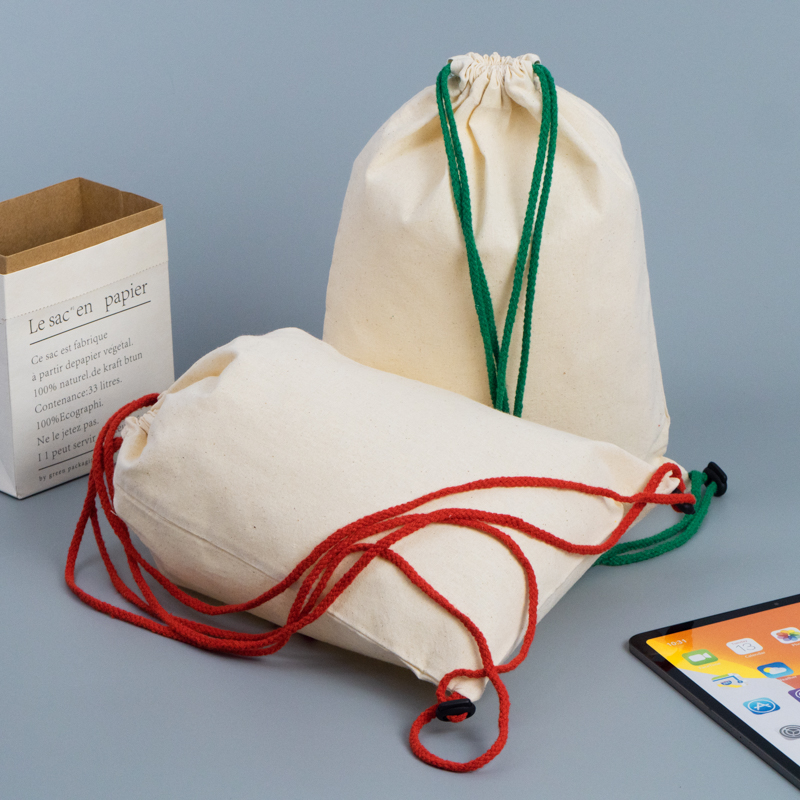
A typical drawstring bag may consist of a rectangular or square fabric body with an opening at the top. A cord passes through a channel around the opening, allowing the user to pull the cord and gather the fabric closed.
A traditional dust bag can have almost exactly the same construction.
For example, a cotton dust bag for a handbag may have:
- a soft cotton body
- a top opening
- a drawstring channel
- one or two cords
- a printed brand logo
- dimensions selected specifically for the handbag
If you look only at the physical appearance, there may be almost no obvious difference between this bag and a simple cotton drawstring pouch.
The difference becomes clear when you ask what the bag is being used for.
A promotional drawstring bag might be given to customers at an event. The customer uses it to carry a water bottle, clothing, books, or other belongings.
A handbag dust bag may never be used to carry anything separately. Instead, it stays with the handbag and protects the handbag when it is not being used.
The structure may be similar.
The purpose is different.
This is why product terminology can vary between suppliers. One manufacturer may call a product a cotton drawstring bag, while another may call a similar product a cotton dust bag or drawstring pouch.
For buyers, the product name should therefore be treated as a starting point rather than a complete specification.
What matters more is:
- what the bag will hold
- whether it needs to protect another product
- how the customer will use it
- how often it will be reused
- what material is appropriate
- what size is required
- how the brand should appear on the finished bag
Understanding this distinction can make the sourcing process much easier.
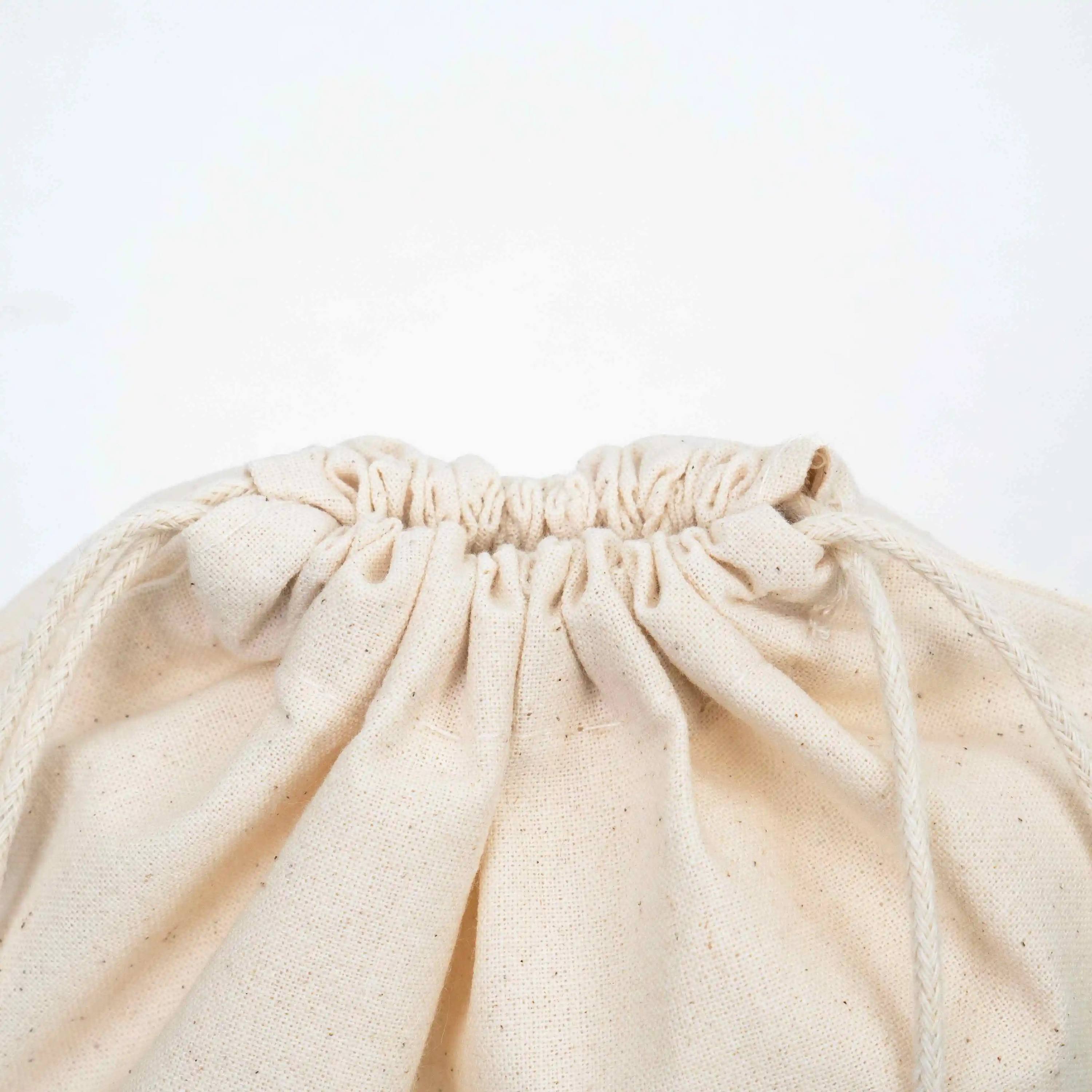
A drawstring bag is a bag that uses a cord or string to open and close the top.
The name comes from the closure mechanism. When the cord is pulled, the fabric around the opening gathers together, reducing the size of the opening and securing the contents inside.
The defining feature is therefore the drawstring closure, not a specific material, size, or application.
A drawstring bag can be made from cotton, canvas, polyester, nylon, non-woven fabric, recycled materials, or many other fabrics.
It can also be designed in many different sizes.
A small drawstring pouch may be used for jewelry or gifts, while a larger drawstring bag may be used for shoes, clothing, sports products, or general storage.
Drawstring bags can serve several purposes, including:
- carrying
- packaging
- storage
- organization
- promotion
- gifting
- product protection
This broad range of applications is one reason drawstring bags are popular for both consumer and business use.
The construction is relatively simple, but the final specification can still vary considerably depending on the intended application.
The Drawstring Defines the Construction
When someone says "drawstring bag," the most important information being communicated is the closure style.
The bag has an opening and a cord that allows the opening to be gathered.
That means the term does not automatically tell you:
- how soft the fabric is
- how durable the bag is
- whether it is waterproof
- whether it is designed for luxury products
- whether it is intended for storage
- whether it is promotional packaging
- whether it is a dust bag
These characteristics have to be defined separately.
This is particularly important for buyers.
If you tell a supplier that you need a "drawstring bag," the supplier may still need to ask what the bag is for.
A drawstring bag for a trade-show giveaway may need a completely different specification from a drawstring bag designed to protect a leather handbag.
The closure may be the same.
The rest of the product may not be.
What Is a Dust Bag?
A dust bag is a soft protective bag designed to cover and store another product.
Its primary purpose is not simply to contain an item. It is to create a barrier between the product and its surrounding environment.
Dust bags are commonly associated with handbags, but they are also used for shoes, leather goods, jewelry, watches, accessories, clothing, gifts, and other products that benefit from protected storage.
A typical dust bag is lightweight, flexible, and relatively unstructured.
Many are made from cotton, flannel, non-woven fabric, satin, canvas, recycled polyester, or similar materials.
The specific material depends on the product being protected and the desired balance between protection, appearance, durability, sustainability, and cost.
For handbags and other fashion products, a dust bag may help reduce exposure to dust, light, and surface friction during storage. Recent guidance on handbag dust bags similarly describes them as soft, breathable covers rather than padded or waterproof containers.
This is an important point:
A dust bag is not necessarily a heavy-duty protective case.
Its job is often much simpler.
It provides a soft covering that helps keep the product clean and separated from other objects while it is being stored.
Why Are Dust Bags Used?
Imagine a handbag sitting directly on a shelf for several months.
It may be exposed to:
- dust
- sunlight
- accidental rubbing
- contact with another bag
- dirt from the shelf
- pressure from surrounding objects
A dust bag creates a simple protective layer.
The same principle applies to shoes.
A pair of premium shoes may be placed in individual fabric bags so that the surfaces do not rub directly against each other or against other products during storage or transportation.
For jewelry, watches, and smaller accessories, a soft pouch can provide a similar function while also improving the presentation of the product.
This is why the term "dust bag" is more closely connected with product protection and storage than with the physical construction of the bag.
Drawstring Bag vs Dust Bag: The Key Differences
The difference becomes much clearer when the two products are compared by function rather than appearance.
1. Definition
The first and most important difference is the way the terms are defined.
Drawstring bag:
Describes the construction or closure.
Dust bag:
Describes the purpose or application.
This means the two terms are not mutually exclusive.
A bag can be both.
2. Main Function
A drawstring bag can have many functions.
It may be designed for:
- carrying
- organizing
- gifting
- promotion
- storage
- packaging
A dust bag has a more specific primary function:
protecting another product.
This does not mean every drawstring bag is less protective. It simply means protection is not what defines the category.
3. Relationship With the Product Inside
A general drawstring bag may be designed around a broad category of contents.
For example, a promotional drawstring bag might be large enough to carry a range of personal items.
A dust bag is often designed around a particular product.
A handbag dust bag may be sized specifically for one handbag model.
A shoe dust bag may be designed around the dimensions of a shoe.
A jewelry pouch may be much smaller.
This means product dimensions are often more important when developing a dust bag.
4. Material Priorities
For a general drawstring bag, buyers may prioritize:
- durability
- weight
- printing
- cost
- general appearance
For a dust bag, buyers may pay more attention to:
- softness
- breathability
- surface compatibility
- fabric feel
- appearance
- product protection
The material should therefore be selected according to the application's actual requirements.
5. Size
A general drawstring bag can often use standardized dimensions.
A dust bag is more likely to be developed around the product.
For example, a handbag with handles, hardware, and a structured shape may require more room than a simple rectangular product of the same approximate dimensions.
This is why buyers should provide actual product measurements and, when possible, product photographs.
6. Customer Experience
With many promotional drawstring bags, the bag itself becomes a useful product for the customer.
The customer carries it, reuses it, or takes it to another location.
With a dust bag, the bag often supports the main product.
It may stay with the handbag, shoes, or accessories and become part of the customer's storage routine.
This difference affects how the bag should be designed.
Quick Comparison
| Feature |
Drawstring Bag |
Dust Bag |
| Definition |
Describes the bag's closure and construction |
Describes the bag's protective purpose |
| Main function |
Carrying, packaging, storage, promotion, or organization |
Protecting another product |
| Closure |
Drawstring |
Often drawstring, but other closures are possible |
| Product inside |
Broad range of products |
Usually a specific product or product category |
| Material priority |
Depends on application |
Often softness and breathability are important |
| Size |
Can be standardized or application-based |
Usually designed around the product dimensions |
| Branding |
Often highly visible |
Usually integrated into the packaging experience |
| Protection |
Depends on design |
Protection is the primary consideration |
| Appearance |
Can range from basic to promotional |
Often designed to complement the product |
| Reusability |
Depends on the application |
Usually desirable |
| Common users |
Brands, events, retailers, promotional buyers |
Fashion, footwear, jewelry, luxury and retail brands |
The most important difference is therefore not the shape.
The key takeaway is simple:Drawstring describes the bag's structure. Dust bag describes its function.
Can a Drawstring Bag Also Be a Dust Bag?
Yes.
This is probably the most important answer for someone comparing the two terms.
A drawstring bag can function as a dust bag when it is specifically designed to protect another product.
For example, imagine a cotton pouch with a drawstring closure.
If a company uses it as a promotional giveaway, it is a drawstring bag.
If a handbag brand uses a similar pouch to protect its handbags during storage, it is a dust bag.
If a shoe company uses two branded cotton drawstring pouches to protect individual shoes, they can be described as both drawstring bags and dust bags.
This is why the phrase drawstring dust bag is useful.
It communicates both:
- the construction
- the purpose
The drawstring tells you how the bag closes.
The dust-bag designation tells you what the bag is intended to protect.
Why This Matters for Buyers
If you search only for "drawstring bags," you may find a large variety of products designed for:
- promotions
- sports
- events
- gifts
- general storage
If you search for "dust bags," you are more likely to find products designed specifically around:
- handbags
- shoes
- accessories
- retail packaging
- product protection
However, you should not assume that one category is automatically better.
The correct choice depends on the product.
If you need a general-purpose carrying bag, a standard drawstring bag may be more appropriate.
If you need protective packaging for a premium product, a dust bag may be the better starting point.
If you need both functions, a drawstring dust bag can combine them.
When Does a Drawstring Bag Make More Sense?
A drawstring bag is usually the better choice when the bag itself needs to be useful to the customer.
Promotional Products
Promotional campaigns often require bags that are:
- affordable
- lightweight
- easy to distribute
- easy to print
- reusable
The customer may use the bag after the event, which creates additional exposure for the brand.
In this situation, the bag does not necessarily need the softest possible fabric.
Instead, the buyer may prioritize:
cost + durability + branding + convenience.
Event Giveaways
For conferences, exhibitions, sports events, and corporate campaigns, a drawstring bag can be an easy way to package or distribute several small items.
The bag may need enough capacity to hold:
- brochures
- clothing
- promotional merchandise
- bottles
- accessories
- small gifts
Here, general usability may be more important than precise product fit.
General Storage
Drawstring bags can also be useful for organizing products or personal belongings.
They can separate items inside:
- luggage
- closets
- storage boxes
- retail displays
Again, the primary goal is organization rather than protecting a delicate product.
Gift Packaging
A drawstring pouch can also serve as reusable gift packaging.
The customer receives the product inside the bag and can continue using the bag afterward.
This creates an overlap with dust bags.
If the bag is primarily protecting the gift product during storage, it could also function as a dust bag.
When Is a Dust Bag the Better Choice?
A dust bag makes more sense when the bag is primarily there to protect another product.
Handbags
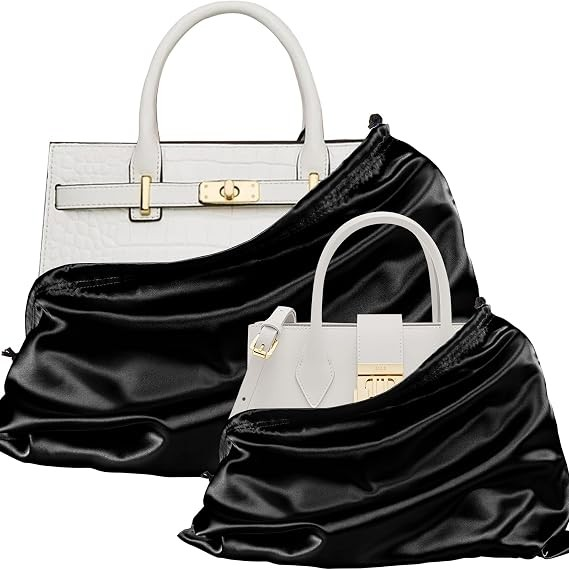
Handbags are one of the most recognizable applications.
The bag may need protection from:
- dust
- surface friction
- light
- contact with other products
- storage conditions
A properly sized fabric dust bag can provide a simple solution without adding the bulk of rigid packaging.
Shoes
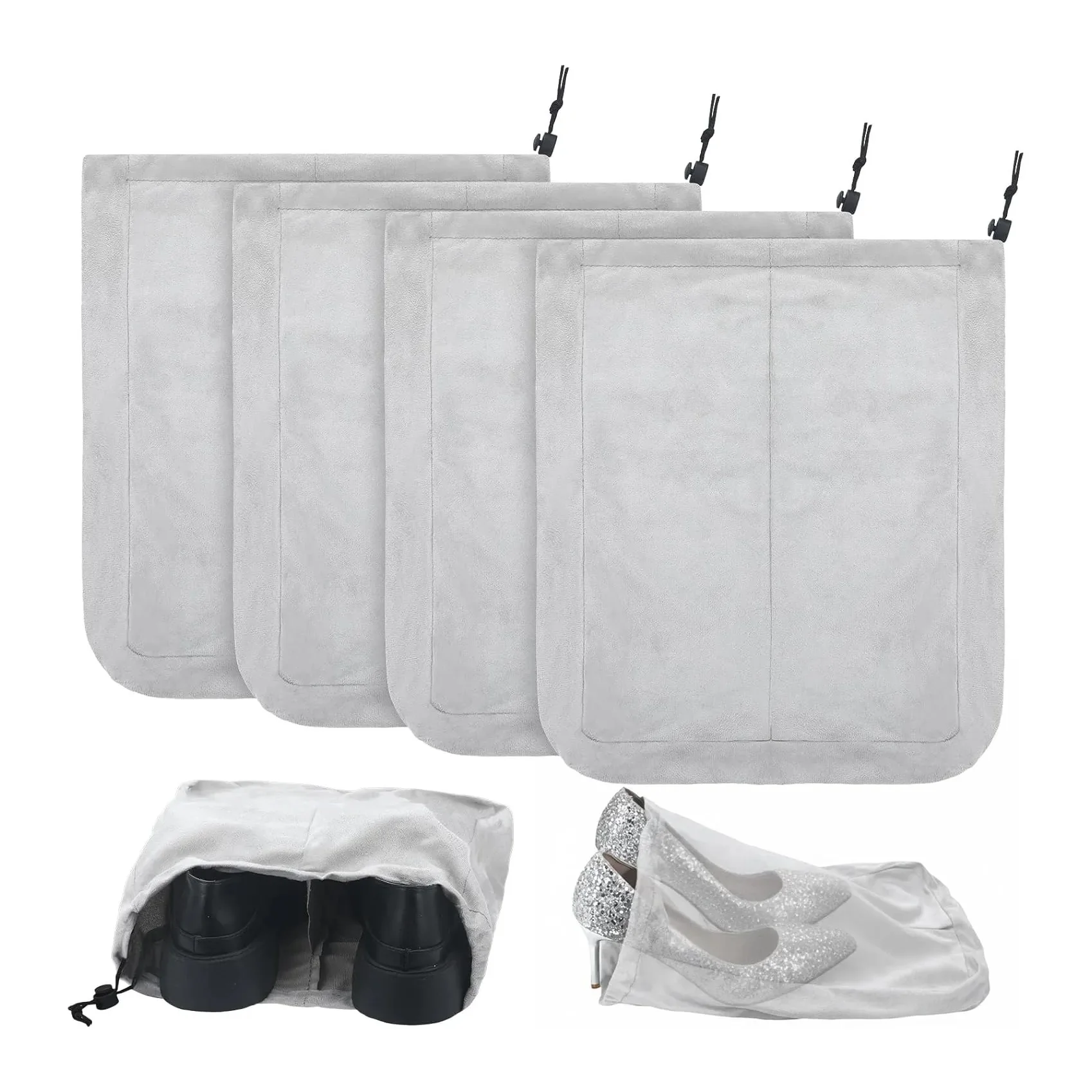
Shoes are another common application.
A dust bag can help keep individual shoes separated and reduce contact between the surfaces.
Depending on the product, a brand may choose:
- one bag for each shoe
- one larger bag for the pair
- separate bags for different components
The choice depends on the packaging experience and storage requirements.
Leather Goods
Leather products may benefit from soft protective storage.
Examples include:
- wallets
- belts
- handbags
- small leather accessories
The material should be selected carefully because the bag may remain in direct contact with the product for long periods.
Jewelry and Accessories
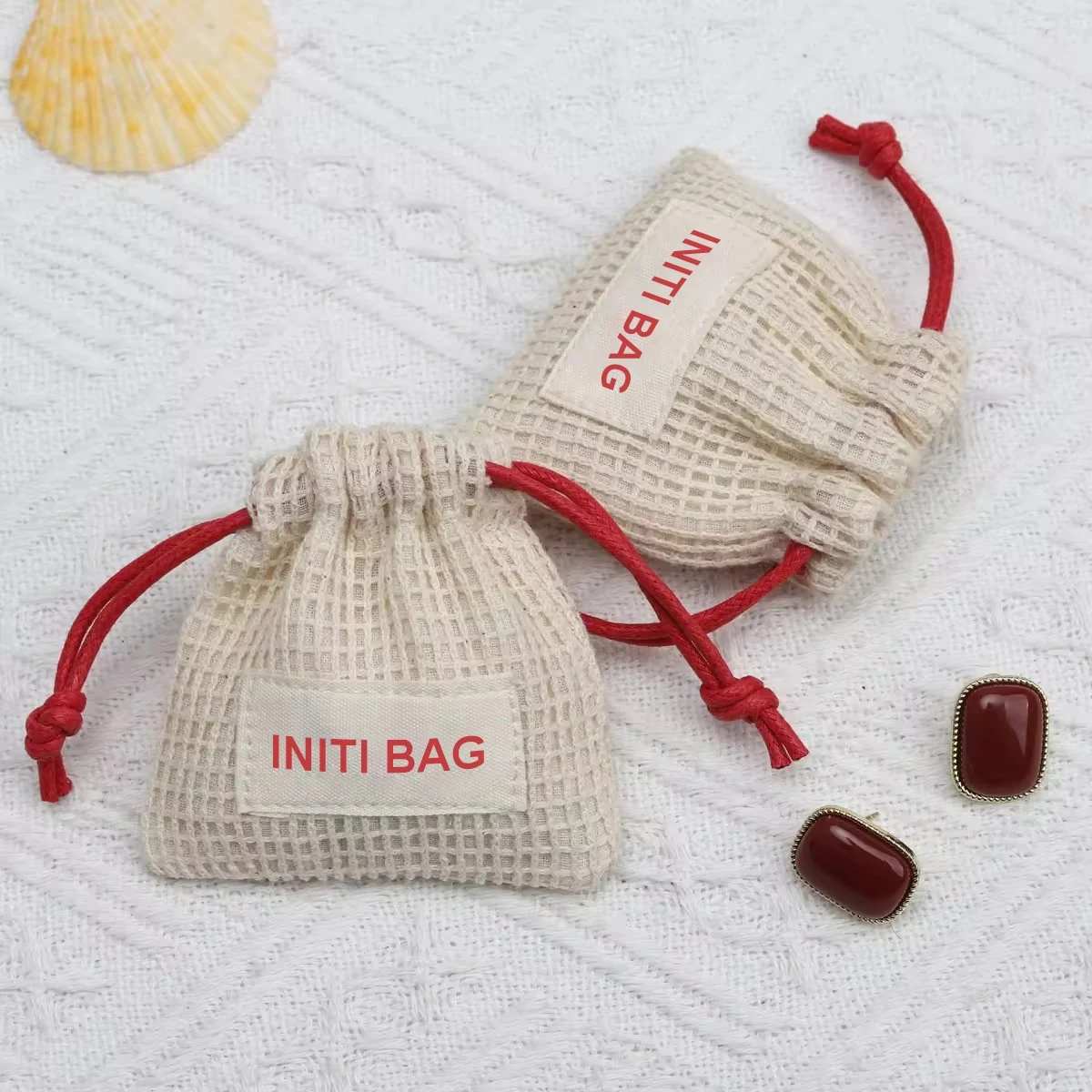
Smaller products require smaller packaging.
Jewelry dust bags often place more emphasis on:
- soft texture
- compact dimensions
- neat finishing
- premium appearance
- precise branding
An oversized pouch may make a small product feel less refined.
Premium Retail Products
A dust bag can also become part of the overall retail experience.
A customer may associate a carefully designed protective pouch with attention to detail and product quality.
That makes the dust bag more than a functional storage item.
It becomes part of the brand presentation.
Which Closure Is Better for a Dust Bag?
Drawstring closure is common because it is simple and easy to use.
But even within drawstring designs, buyers have choices.
Single Drawstring
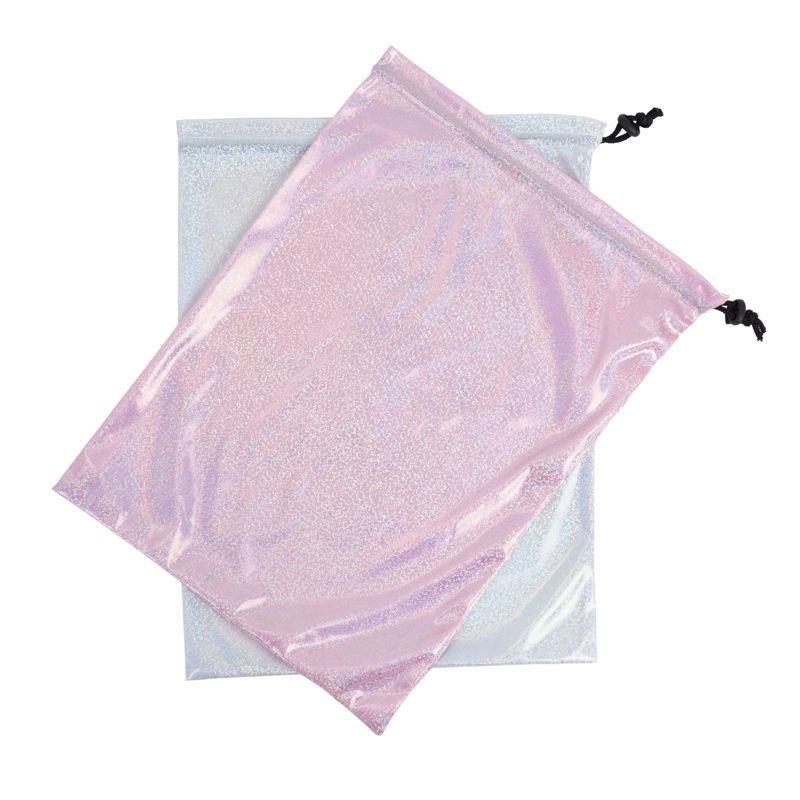
A single cord is simple and cost-effective.
It can work well for:
- small pouches
- jewelry
- accessories
- lightweight products
- basic packaging
Double Drawstring
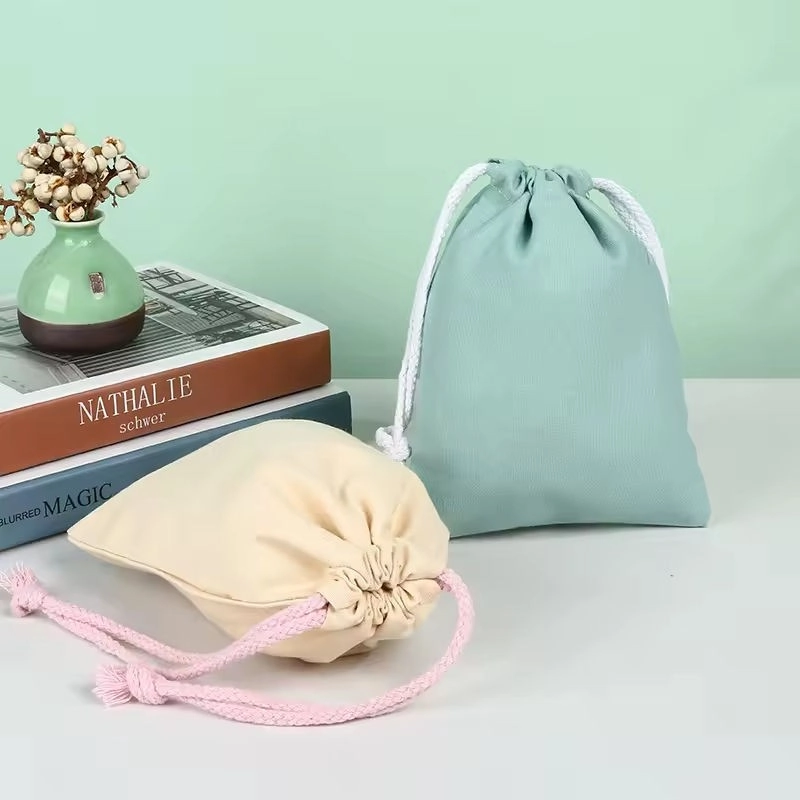
Two cords can create a more balanced closure and may provide a more premium appearance.
They are commonly used for larger dust bags because they can make opening and closing easier.
Ribbon Closure
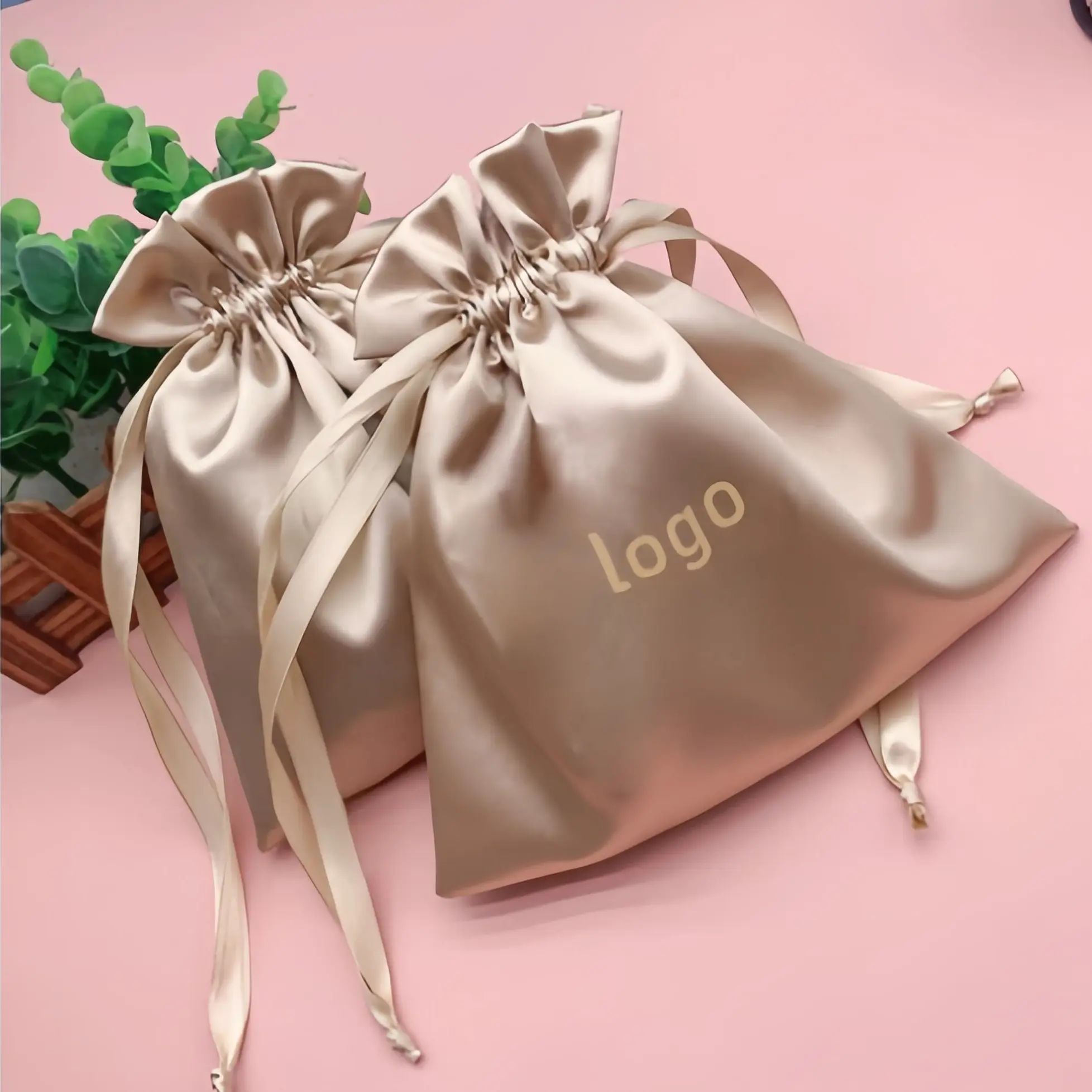
Ribbon can be used when appearance is particularly important.
It can create a softer, more decorative presentation for:
- gifts
- luxury packaging
- wedding products
- premium accessories
Non-Drawstring Closures
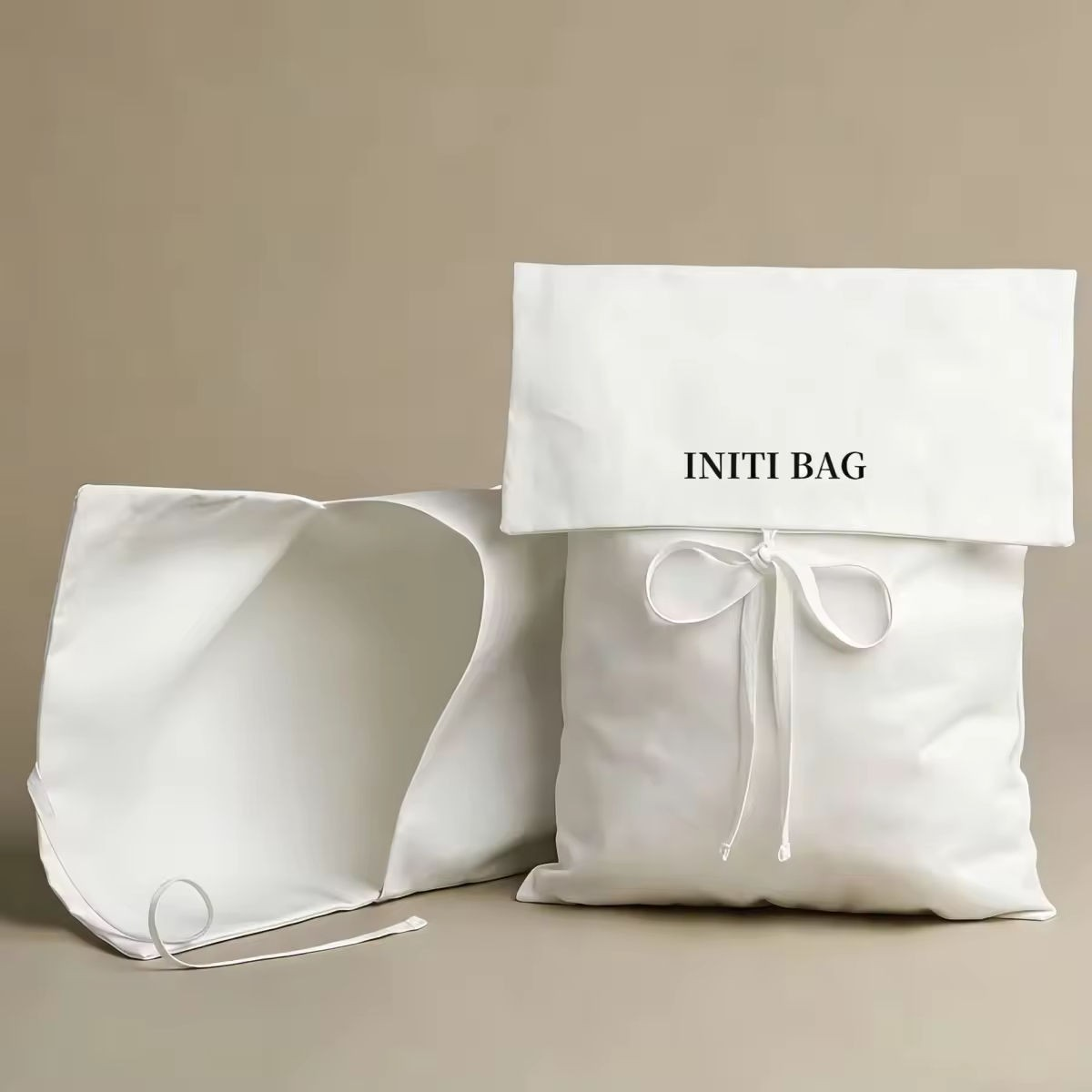
Some protective bags use:
- flap closures
- snaps
- buttons
- zippers
The correct choice depends on how the product will be accessed and what visual experience the brand wants.
For many retail dust bags, however, the simplicity of a drawstring remains difficult to beat.
Should a Dust Bag Be the Same Size as the Product?
Not necessarily.
This is one of the most common purchasing questions.
A dust bag should generally provide enough room for the product to be inserted and removed without unnecessary force.
At the same time, excessive extra space is not desirable.
Think about the actual use process.
The customer should be able to:
- Open the bag easily.
- Insert the product without forcing it.
- Close the drawstring without excessive tension.
- Remove the product without pulling aggressively.
- Store the packaged product conveniently.
For irregular products, the dimensions of the product in its normal storage position are more useful than measurements taken from a flattened or compressed state.
Example: Handbag Dust Bag
Suppose a handbag has a structured body, handles, and decorative hardware.
The dust bag needs enough room for the handbag to enter without damaging or bending the handles.
A simple width × height calculation may therefore not be sufficient.
The buyer should provide product photos and measurements to the supplier and, ideally, request a sample before mass production.
Drawstring Dust Bags: Where the Two Concepts Meet
The drawstring dust bag is where the distinction between the two terms becomes especially useful.
It combines:
Drawstring construction
with
Dust-bag functionality.
This format is popular because the two characteristics complement each other.
The drawstring provides:
- simple opening
- simple closing
- adjustable fit
- easy reuse
- low structural complexity
The dust-bag application provides:
- product-focused sizing
- protective storage
- reusable packaging
- branded presentation
This combination works particularly well for fashion and retail products.
What Makes a Good Drawstring Dust Bag?
The best drawstring dust bag is not simply one that looks attractive.
It should work well with the product.
Important considerations include:
Correct Size
The product should fit without being squeezed or swimming in excessive fabric.
Suitable Fabric
The fabric should match the product's surface and intended storage conditions.
Smooth Closure
The drawstring should move easily and close the opening securely.
Strong Construction
The seams and drawstring channel should withstand repeated use.
Appropriate Branding
The logo should complement the product rather than overwhelm it.
Reusable Design
If customers are expected to keep the bag, it should be durable enough for repeated use.
How Does Material Choice Change Between Drawstring Bags and Dust Bags?
There is no single “best” material for every application.
The right choice depends on what the bag needs to accomplish.
Cotton
Cotton is one of the most common options for dust bags and fabric drawstring packaging.
Its advantages include:
- soft hand feel
- breathable construction
- natural appearance
- good printability
- reusable positioning
- suitability for many fashion products
Cotton can work particularly well for handbag, shoe, accessory, and sustainable-brand packaging.
For buyers, however, cotton should not be selected simply because it sounds premium or environmentally friendly.
Consider the required fabric weight, finish, color, printing method, and target cost as a complete package.
Canvas
Canvas is generally sturdier and more structured than lightweight cotton fabrics.
It can be useful when the packaging needs a stronger, more substantial feel.
However, that added structure may not be necessary for a delicate product that simply needs a soft protective cover.
Canvas may therefore be better suited to:
- heavier products
- reusable packaging
- premium storage bags
- products where durability is more important
Non-Woven Fabric
Non-woven fabric can provide a lightweight and cost-conscious solution, particularly for larger production quantities.
It can be suitable when the buyer needs:
- large quantities
- basic product protection
- lightweight packaging
- cost control
- simple logo printing
However, the hand feel and visual positioning can differ significantly from cotton or premium fabrics.
For a luxury product, buyers should evaluate a physical sample rather than judging the material solely from photographs.
Flannel
Flannel provides a softer hand feel and can be useful where gentle surface contact matters.
It can be considered for:
- handbags
- shoes
- delicate accessories
- products with sensitive surfaces
The trade-off may be higher material cost or a different visual appearance compared with simple cotton.
Satin
Satin has a smooth and visually distinctive surface.
It can work particularly well for:
- jewelry
- gift packaging
- beauty products
- wedding favors
- premium presentation
However, satin is not automatically the best option for every product.
The buyer should consider whether the product actually requires the characteristics of satin or whether a simpler material would provide the same functional value at a lower cost.
Recycled Fabrics
For brands with sustainability goals, recycled cotton or recycled polyester can be considered.
The important point is to treat sustainability as part of the specification rather than as a marketing phrase.
Ask the supplier about:
- recycled content
- available certifications
- fabric composition
- minimum order requirements
- color availability
- printing compatibility
This creates a more transparent specification for both the supplier and the customer.
How to Choose the Right One for Your Product
If you are a buyer trying to decide between a drawstring bag and a dust bag, start with the product rather than the bag.
Ask the following questions.
Question 1: Is the Bag Carrying Something or Protecting Something?
If the customer will actively carry the bag, a general drawstring bag may be appropriate.
If the bag primarily protects another product, a dust bag is likely more suitable.
If it does both, consider a drawstring dust bag.
Question 2: Does the Product Have a Delicate Surface?
If the product has:
- leather
- suede
- polished metal
- delicate fabric
- special coating
- light-colored surface
then fabric softness and surface compatibility become more important.
Question 3: Will the Customer Reuse the Bag?
If yes, consider:
- stronger fabric
- reliable stitching
- durable drawstring
- washable or easy-care construction where appropriate
A bag that is intended to remain in the customer's home should not feel disposable unless that is part of the brand strategy.
Question 4: Is the Bag Part of the Retail Packaging?
If the answer is yes, consider the bag as part of the product presentation.
The fabric, color, logo, dimensions, and finishing should all be consistent with the brand.
Question 5: Does the Product Require a Custom Size?
If the product is irregular, structured, oversized, or unusually shaped, a custom size may be necessary.
Do not assume that a standard bag size will provide the best fit.
Common Buying Mistakes When Choosing Between a Drawstring Bag and Dust Bag
Choosing the wrong specification can create problems even when the final bag looks acceptable in a photograph.
Mistake 1: Choosing Based on the Product Name
Do not assume that "dust bag" automatically means premium or that "drawstring bag" automatically means promotional.
The actual specification matters more.
Compare:
- fabric
- dimensions
- construction
- closure
- logo
- finishing
- quantity
rather than comparing names alone.
Mistake 2: Choosing Only by Unit Price
The lowest price may come with:
- lighter fabric
- simpler construction
- smaller dimensions
- lower-cost cord
- different printing
- fewer finishing details
Mistake 3: Using One Size for Multiple Products
If you have several product sizes, one dust-bag size may not work equally well for all of them.
An oversized bag can look loose and inefficient.
An undersized bag can be difficult to use.
For a multi-product brand, consider whether you need:
- one standard size
- several sizes
- product-specific sizes
Mistake 4: Ignoring Fabric Feel
This is particularly important for products that customers associate with quality.
A premium handbag placed inside a rough or excessively thin fabric bag can create a mismatch.
Request a sample and evaluate the actual hand feel.
Mistake 5: Making the Branding Too Complicated
A dust bag does not need to become a large advertising banner.
In many cases, a simple:
brand color + clean logo + suitable fabric
is enough.
The packaging should support the product rather than compete with it.
Mistake 6: Skipping the Sample
A sample allows you to evaluate the actual result.
Check:
- fit
- size
- fabric
- color
- logo
- stitching
- cord
- opening
- overall appearance
This is especially important before placing a large custom order.
Mistake 7: Not Thinking About the Final Product Experience
The bag should be evaluated together with the product.
Ask:What will the customer see when they first open the package?
And:What will the customer see six months later when they take the product out of storage?
A well-designed dust bag should make sense at both moments.
FAQ
Is a drawstring bag the same as a dust bag?
Not necessarily. A drawstring bag describes a bag with a drawstring closure, while a dust bag describes a bag designed primarily to protect another product. A dust bag can use a drawstring closure, which means one product can fit both definitions.
Can a drawstring bag be used as a dust bag?
Yes. If the material, size, construction, and closure are suitable for protecting a product, a drawstring bag can function as a dust bag.
Why do dust bags usually have drawstrings?
Drawstrings provide a simple, lightweight, reusable closure. They also allow the opening to adapt to products with different shapes and make the packaging easy for customers to open and close.
Are dust bags only for handbags?
No. Dust bags can be used for shoes, sneakers, jewelry, watches, accessories, clothing, leather goods, gifts, and many other products that benefit from protection during storage.
What is the best material for a dust bag?
There is no universal best material. Cotton, non-woven fabric, flannel, canvas, satin, recycled fabrics, and other materials can all be suitable depending on the product, desired hand feel, protection requirements, appearance, and budget.
Should a dust bag be waterproof?
Usually, waterproofing is not the primary purpose of a dust bag. A dust bag is generally intended to protect against dust, light, and surface contact rather than replace waterproof packaging.
How much larger should a dust bag be than the product?
There should be enough room for the product to be inserted and removed comfortably without excessive force. The exact allowance depends on the product’s shape and the construction of the bag, so providing product dimensions and photos to the manufacturer is recommended.
Can dust bags be customized with a logo?
Yes. Custom dust bags can typically be customized with printed logos, embroidery, woven labels, fabric colors, drawstring colors, dimensions, and other branding details depending on the material and production method.
Should I order a sample before placing a bulk order?
For customized products, especially large orders or premium packaging, requesting a sample is strongly recommended. It allows you to verify fit, fabric, color, logo placement, closure, and construction before committing to mass production.
Conclusion
A drawstring bag and a dust bag may look almost the same, but they are not defined in the same way.
The simplest way to remember the difference is:Drawstring describes the closure. Dust bag describes the purpose.
A drawstring bag can be used for carrying, storage, promotion, gifts, packaging, and many other applications.
A dust bag is primarily designed to protect another product during storage, handling, transportation, or periods when the product is not being used.
The two concepts can also overlap.
A cotton pouch with a drawstring closure can be a general drawstring bag when used for promotional purposes. The same basic construction can become a dust bag when it is designed specifically to protect a handbag, pair of shoes, leather accessory, or other product.
For brands and businesses, the best choice therefore depends less on the product name and more on the intended application.
Start with the product.
Consider its dimensions, surface, storage requirements, customer experience, and brand positioning. Then select the appropriate fabric, size, closure, branding, and finishing.
If the bag needs to be carried and reused as a general-purpose item, a drawstring bag may be the right solution.
If the bag's primary role is protecting another product, a dust bag may be more appropriate.
If you need both product protection and the convenience of a drawstring closure, a custom drawstring dust bag can combine the two.
Inquiry Support
For a custom drawstring bag/dust bag project, you can provide:
Product Information
Tell the supplier what the bag will protect.
For example:
- handbag
- shoes
- jewelry
- watch
- clothing
- accessories
- gift set
Product Dimensions
Provide:
- length
- width
- height
- depth
- product photos if possible
Bag Size
If you already know the required size, provide it.
If not, provide the product dimensions and ask the supplier to recommend the bag size.
Material
Specify your preferred material if you already have one.
Otherwise, explain:
- target appearance
- desired softness
- protection requirement
- target cost
Quantity
Always include the estimated order quantity.
For example:
1,000 pcs for the initial order, with potential repeat orders.
Logo
Provide:
- logo file
- preferred placement
- logo size
- printing or embroidery preference
Color
Provide your preferred fabric color and, when applicable, a Pantone reference.
Packaging
If each dust bag needs individual packaging, barcode labeling, carton marks, or other packing requirements, mention these before quotation.
Delivery
Include your required arrival date if there is a product launch or retail deadline.
This allows the supplier to evaluate production and shipping timing before the order is confirmed.
If you have not finalized all details, you can first send your intended use and target quantity, and we can recommend a suitable specification.
Related Products
Related article





 Hot News