RPET Bag Material Guide: What Buyers Should Know
RPET bags are used in retail shopping programs, promotional campaigns, corporate gifts and private-label accessories. But two products described as “RPET bags” can look and perform very differently.
One may be a lightweight foldable shopping bag. Another may use stitch-bond non-woven fabric for a large supermarket tote, while a third uses denser woven recycled polyester for a travel organizer.
RPET identifies recycled PET material, not a specific fabric construction, weight or finished-bag performance level.
For importers, retailers and wholesale buyers, choosing the right RPET bag material means checking fabric construction, recycled content, GSM, surface treatment, carrying requirements and documentation before placing an order.
This guide focuses on the material decisions that affect real custom RPET bag projects, including product quality, chemical compliance and sourcing costs.
1. What Is RPET Material?
RPET stands for recycled polyethylene terephthalate, a recycled form of PET plastic.
PET is used in beverage bottles, packaging and polyester textiles. Recovered PET can be processed into recycled polyester fibers and yarns, which can then be manufactured into fabrics for bags and other products.
According to Textile Exchange's recycled polyester overview, recycled polyester can be produced through mechanical or chemical recycling.
Mechanical recycling generally involves recovering, cleaning, melting and reprocessing suitable PET. Chemical recycling breaks the polymer into chemical components that can be used to produce polyester again.
For bag buyers, the important distinction is that RPET describes the recycled polymer source, while words such as woven, non-woven, Oxford and stitch-bond describe fabric construction.
Are All RPET Bags Made From Recycled Plastic Bottles?
No.
Recycled polyester may come from post-consumer PET bottles, other suitable PET packaging, recovered polyester textiles or eligible pre-consumer material streams.
Plastic bottles are an important feedstock, but a supplier should identify the material source when the buyer requires a bottle-derived or post-consumer recycled-content claim.
An RPET bag should not be advertised as made from ocean plastic, recovered fishing nets or textile-to-textile recycled material unless documentation supports that specific source.
For the production process, read How to Make Bags from Plastic Bottles?.
2. Types of RPET Fabric Used for Bags
The first purchasing decision is fabric construction.
Different recycled PET fabrics provide different handling, printing, folding and structural characteristics.
| RPET Fabric Type |
Material Characteristics |
Common Bag Applications |
Main Checks |
| Lightweight woven RPET polyester |
Flexible woven fabric that can fold compactly |
Foldable shopping bags, drawstring bags, promotional totes |
Fabric density, seams, print quality and folded size |
| RPET stitch-bond fabric |
Fibrous substrate held together by stitching |
Supermarket totes, promotional shopping bags, reusable carry bags |
GSM, stitch construction, directional strength and handle attachment |
| Other RPET non-woven fabrics |
Fibrous non-woven structures with different bonding methods |
Lightweight shopping bags and promotional packaging |
Bonding, tear resistance and seam performance |
| RPET Oxford or dense woven fabric |
More structured woven fabric, depending on yarn and weave |
Backpacks, travel organizers and functional totes |
Denier, GSM, abrasion, coating and reinforcement |
| Coated or laminated RPET fabric |
RPET base combined with a surface treatment or additional layer |
Retail and functional bags requiring specific finishes |
Water resistance, coating composition, chemical compliance and recyclability |
An RPET Oxford fabric is not automatically heavier or stronger than every RPET stitch-bond material. Compare actual specifications and samples.
Woven RPET for Foldable Shopping Bags
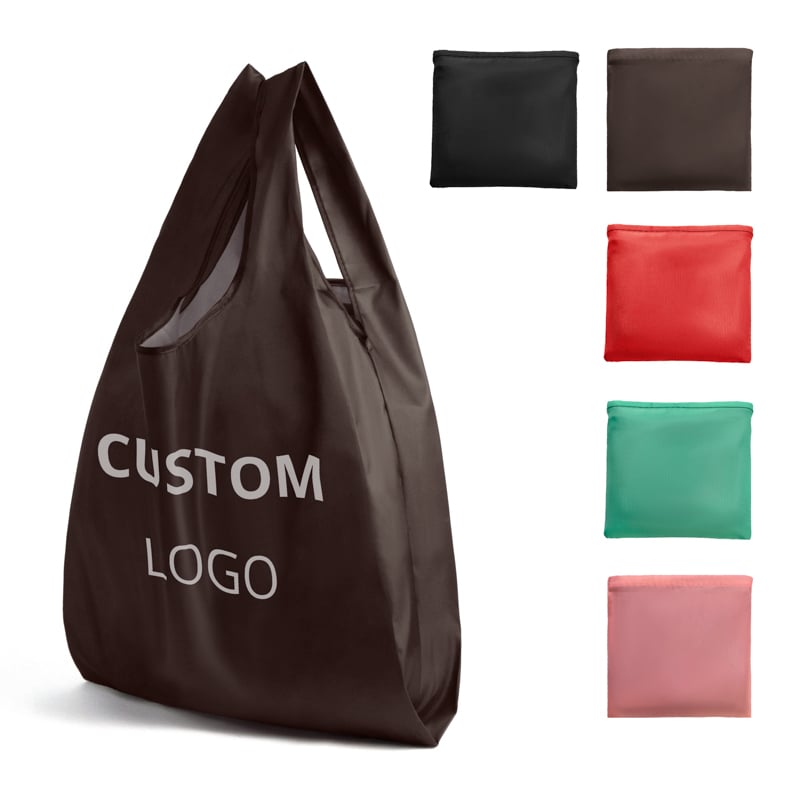
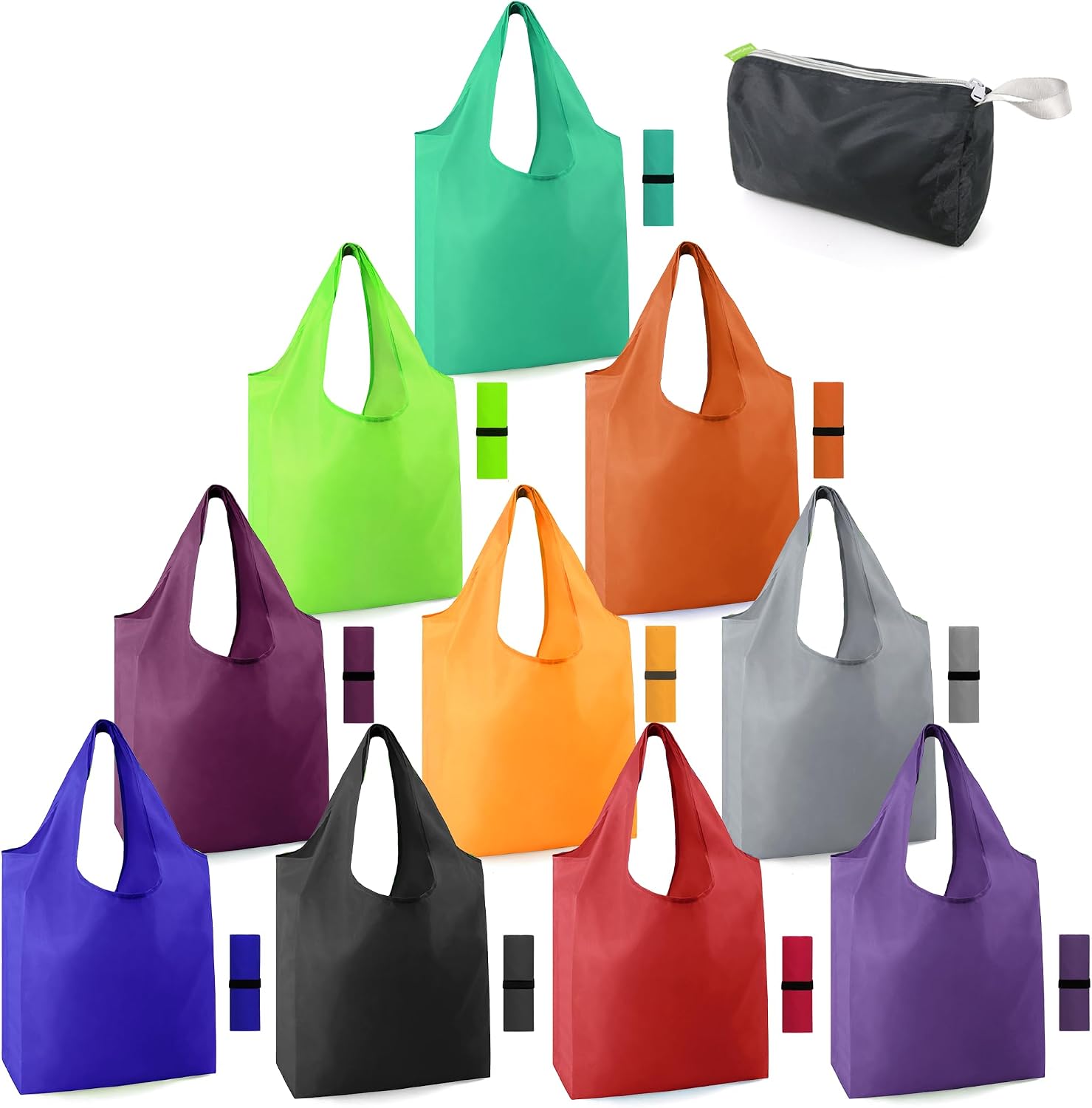
Lightweight woven recycled polyester fabric is commonly considered for foldable RPET shopping bags and reusable promotional totes.
Its flexibility can allow the finished bag to fold or roll into a compact format.
Buyers should evaluate fabric GSM, folded dimensions, crease appearance, handle attachment and any elastic band or storage pouch.
RPET Stitch-Bond Fabric for Shopping Bags
RPET stitch-bond is a different fabric structure.
Stitch yarn holds a fibrous substrate together. The material's properties depend on the fiber web, yarn, stitch pattern, stitch density and finishing.
For high-volume RPET shopping bag programs, this construction can provide a lightweight structure with large panels for custom branding.
Buyers should also confirm which components contribute to the stated recycled-content percentage, including the fibrous substrate and stitch yarn.
For further detail, see Stitch-Bond Fabric for Reusable Shopping Bags.
RPET Oxford Fabric for Functional Bags
For backpacks, travel organizers and other structured products, RPET Oxford or another suitable woven polyester fabric may be more relevant.
However, the name “Oxford” does not establish a universal thickness, strength or abrasion rating.
Specify yarn construction, weave, GSM, coating, color and applicable performance requirements.
3. RPET Fabric GSM, Denier and Coatings: What Specifications Matter?
A quotation stating only “100% RPET fabric” leaves out several important purchasing details.
GSM: Fabric Weight
GSM means grams per square metre (g/m²).
It describes fabric mass per unit area.
Two RPET fabrics with the same GSM can have different stiffness, surface texture, tear resistance and appearance because their constructions differ.
A stitch-bond non-woven RPET sheet and a woven RPET polyester fabric should not be assumed to perform identically at the same GSM.
Compare fabric weight within the relevant construction rather than treating GSM as a universal strength rating.
Denier: Yarn Linear Density
Denier (D) measures the mass of yarn in grams per 9,000 metres.
Terms such as 210D RPET and 600D RPET are commonly used for certain woven polyester materials.
However:
- 600D does not mean 600 GSM.
- Higher denier does not automatically establish greater finished-bag strength.
- Two 600D fabrics may differ in weave, thread density, coating and weight.
A 600D RPET Oxford quotation should identify the relevant fabric specifications beyond denier alone.
Coating and Lamination
Coated or laminated recycled polyester fabrics may be considered when a bag requires a different surface finish, greater stiffness, improved moisture resistance or other defined performance characteristics.
Options may include PU coatings, PVC laminations or suitable TPU films, depending on the project.
These treatments can affect:
- Water resistance
- Surface appearance and hand feel
- Flexibility and foldability
- Printing compatibility
- Coating adhesion and abrasion performance
- Material composition and end-of-life recycling options
RPET fabric is not automatically waterproof. Even a water-resistant or coated fabric may allow water through seams, zippers or needle holes.
If waterproof performance is required, buyers should specify the finished-bag test conditions rather than relying on the material name.
Coating, REACH Compliance and Recyclability
Coating selection also affects chemical compliance and potential recyclability.
PU coatings and PVC laminations may improve water resistance or surface protection, but additional polymer layers can complicate material separation and recycling.
A 2024 study published in RSC Sustainability examined the separation challenges involved in recycling PU-coated PET fabrics.
For RPET bags entering the EU market, buyers should review applicable chemical restrictions, including REACH Annex XVII Entry 51, which restricts DEHP, DBP, BBP and DIBP in specified plasticised materials and articles, subject to its conditions and exemptions.
The restriction applies to relevant plasticised materials, which can include PVC, polyurethane, surface coatings, adhesives and certain inks. It should not be interpreted as a blanket claim that all PVC coatings contain restricted phthalates.
See the official EU regulation amending REACH Annex XVII Entry 51.
Water-based PU and solvent-free TPU may be evaluated as alternative finishing systems. However, neither automatically guarantees better recyclability, biodegradability or lower overall environmental impact.
For projects with specific circularity requirements, request:
- Base fabric and coating composition
- Relevant chemical compliance declarations and test evidence
- Water-resistance or other required performance results
- Information supporting any recyclability claim
- Confirmation of how mixed materials and coatings affect the intended recycling route
Material selection should balance required performance, chemical compliance and the actual end-of-life options available in the target market.
4. How to Choose RPET Bag Material for Different Applications
The right material depends on the bag's intended use, not simply whether it is marketed as environmentally friendly.
| B2B Application |
Material Direction |
Why It May Fit |
What to Validate |
| Supermarket reusable shopping bags |
RPET stitch-bond or suitable woven polyester |
Large branding panels and adaptable shopping-bag construction |
Loaded carrying, seams and handles |
| Foldable shopping bags |
Lightweight woven RPET |
Compact storage and flexible construction |
Folded size and repeated handling |
| Promotional RPET tote bags |
Woven RPET or stitch-bond |
Logo printing and bulk distribution |
Print results, cost and packing |
| Backpacks and travel organizers |
Suitable RPET Oxford or other woven fabric |
Structured fabric options |
Abrasion, seam strength and hardware |
| RPET drawstring bags |
Lightweight woven RPET |
Flexible body and drawstring closure |
Cord channels and seam durability |
| Multi-layer functional bags |
Selected RPET outer material |
Recycled-material option for the exterior |
Coating, lining, complete composition and performance |
Retail and Supermarket Buyers
A large RPET shopping bag should be designed around actual contents, expected load and distribution needs.
A suitable gusset and properly attached handles can matter more than choosing the highest available fabric GSM.
For heavier loads, the buyer should also assess how forces transfer from the handles into the bag body.
Promotional Product Importers
Branded RPET tote bags need consistent colors, clear logos, stable dimensions and efficient packing.
The fabric should be evaluated alongside printing requirements and target order quantities.
Private-Label Bag Brands
When a reusable RPET bag is sold as a retail product, fabric hand feel, seams, hardware and repeat-use performance can be as important as recycled-material positioning.
Evaluate the finished sample as a complete product.
5. RPET Bag Durability: Material Quality and Handle Reinforcement
Recycled PET and virgin PET belong to the same polymer family. RPET can be manufactured into fabrics suitable for many applications traditionally using polyester.
However, this does not mean every RPET fabric performs identically to a particular virgin polyester fabric.
Actual properties depend on feedstock quality, processing, yarn construction, fabric design and finishing.
Common Quality Risks for RPET Bags
| Potential Problem |
Possible Cause |
Buyer Check |
| Inconsistent fabric hand feel |
Material or finishing variations |
Approve a fabric swatch and compare batches |
| Unexpected tearing |
Unsuitable fabric structure or concentrated stress |
Test fabric strength and finished construction |
| Handles pulling away or fabric tearing near attachments |
Concentrated loads, weak attachment stitching, insufficient reinforcement or unsuitable fabric strength in the loading direction |
Evaluate Box-X stitching, bar-tack reinforcement, backing patches or bottom-wrapping webbing; test the complete loaded bag |
| Color variation |
Dyeing or material-batch differences |
Approve colors under agreed lighting |
| Print cracking or poor adhesion |
Incompatible printing process or fabric finish |
Test printed production samples |
| Coating damage |
Unsuitable finish or repeated flexing |
Perform relevant flexing and adhesion checks |
| Excessive abrasion |
Fabric surface unsuitable for intended use |
Conduct abrasion testing where appropriate |
Stitch-Bond Fabric Strength and Handle Attachment
Handle attachment deserves particular attention in RPET stitch-bond shopping bags.
Depending on fiber-web orientation and stitch construction, stitch-bond non-woven fabric may show different tensile behavior in the machine direction (MD) and cross direction (CD).
This does not mean every stitch-bond fabric has the same directional strength difference. Buyers should request relevant test results for the actual material.
For example, ISO 9073-3:2023 provides a strip-test method for determining non-woven tensile strength and elongation at break. Where directional behavior matters, the test plan should include the relevant material directions.
See the ISO 9073-3:2023 standard overview.
Which Handle Reinforcement Is Suitable?
Several construction options may be evaluated:
| Reinforcement Method |
Purpose |
Sourcing Consideration |
| Box-X stitching |
Distributes load across a rectangular attachment area |
Check stitch pattern, attachment area and fabric integrity |
| Bar-tack reinforcement |
Adds concentrated stitching at selected stress points |
Confirm that dense stitching does not create a tear-prone area |
| Backing patch or reinforcement layer |
Spreads load across additional fabric area |
Match reinforcement stiffness and attachment to the base fabric |
| Bottom-wrapping webbing |
Extends load-bearing webbing around the bag body or base |
Check full load path, sewing quality and material consumption |
Box-X stitching, bar-tacks and bottom-wrapping webbing are different construction methods. They should not be described as interchangeable or mandatory for every bag.
A stronger stitch pattern alone may not solve the problem if the surrounding stitch-bond fabric tears first.
The appropriate reinforcement depends on bag dimensions, fabric strength, intended carrying load and finished-bag testing.
For wholesale supermarket RPET bags, test both handle attachment and surrounding fabric under the expected load and repeated carrying conditions.
Does Higher GSM Mean Better Durability?
Not necessarily.
A higher fabric GSM can change the bag's weight and structure, but it cannot independently establish finished-bag load capacity.
A heavy RPET shopping bag can still fail if its handles, seams or bottom design are unsuitable.
Specify the expected load, carrying method, repeat-use cycles and pass/fail criteria before approving the sample.
6. Recycled Content: What Does “100% RPET Bag” Mean?
A finished RPET bag may contain several components:
- RPET main-body fabric
- Handle webbing
- Sewing thread and binding
- Zipper tape and hardware
- Labels
- Lining, foam or coating
- Internal reinforcement
The statement “100% recycled polyester fabric” may describe the specified fabric only.
It should not automatically be rewritten as “100% recycled bag.”
A finished-product recycled-content claim needs a defined scope, an appropriate calculation basis and supporting evidence.
RPET, GRS and RCS Are Different Concepts
RPET is a material description.
GRS (Global Recycled Standard) and RCS (Recycled Claim Standard) are certification systems used to verify eligible recycled content and its traceability through specified supply chains.
For a certified bag project, buyers should establish whether they require:
- Recycled-content evidence for the fabric
- Certification of the relevant finished product
- Transaction-level traceability
- Approval of a consumer-facing claim or label
A fabric supplier's certificate does not automatically prove certification of every finished bag made with that fabric.
For further guidance, see RPET Bag Certification Guide for B2B Buyers.
For shipment-specific certificate checks, read GRS Transaction Certificates: Step-by-Step Verification for RPET Bags.
For official background, see the Textile Exchange Standards FAQ.
Are RPET Bags Recyclable or Biodegradable?
RPET is not inherently biodegradable.
Although RPET uses recycled PET feedstock, that does not prove every finished RPET bag is recyclable through local collection systems.
Coatings, laminations, mixed fibers, labels, zippers and other components can affect how a product can be processed at end of life.
A recyclable claim should reflect the actual finished design and the relevant collection and recycling infrastructure.
Avoid broad environmental claims where only the recycled content of one material has been established.
7. Real INITI RPET Bag Material Examples
INITI's existing product range illustrates how different RPET materials support different bag constructions.
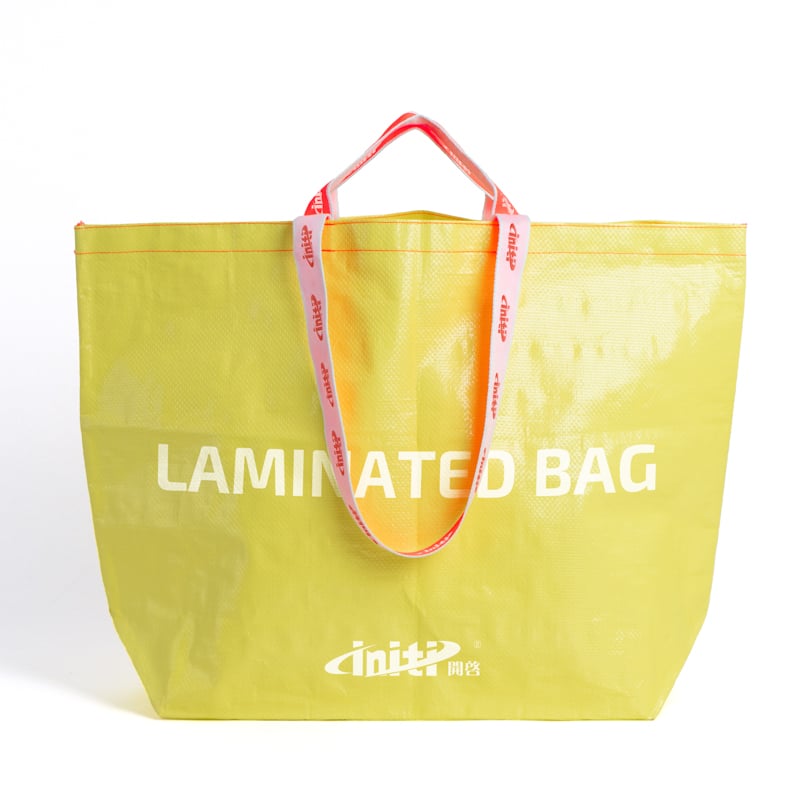
Large Gusseted RPET Stitch-Bond Shopping Bag
Large Gusseted RPET Stitch-Bond Shopping Bag
Material: RPET stitch-bond non-woven fabric
Structure: Large rectangular shopping tote with side gussets, open top and sewn fabric handles.
This style demonstrates how stitch-bond material can be used for lightweight, spacious retail shopping bags.
For supermarket and wholesale programs, buyers can specify fabric GSM, bag dimensions, handle attachment, reinforcement and branding based on the expected carrying load.
Where required, a water-resistant finish can be evaluated separately.
Printed RPET Open-Top Tote Bag
Printed RPET Open-Top Tote Bag
Material: RPET fabric
Existing reference dimensions: Approximately 45 cm top width × 32.5 cm height × 13 cm depth, with approximately 32 cm bottom width.
Structure: Open-top tote with bottom gusset, long shoulder handles and an all-over printed design.
This product illustrates the importance of surface appearance, print compatibility, handle design and bag dimensions in custom RPET tote programs.
The product's RPET classification does not itself establish a specific recycled-content percentage or certification status.
Elastic-Band Foldable RPET Shopping Bag
Elastic-Band Foldable RPET Shopping Bag
Material: Lightweight RPET polyester fabric
Structure: Reusable shopping tote with gusset, shoulder handles and an integrated elastic storage band.
For this type of custom foldable RPET shopping bag, fabric flexibility matters alongside carrying performance.
Buyers should check folded dimensions, repeated folding, elastic recovery, seam quality and handle attachment.
Explore more options in the RPET Bag Collection.
8. What Affects RPET Bag Pricing and Bulk Quality?
Two custom RPET bags with similar dimensions can have different production costs.
| Cost or Quality Driver |
Purchasing Impact |
| Fabric construction |
Woven, stitch-bond and other structures require different materials and processing |
| GSM, denier and fabric specification |
Affect fabric options and material consumption |
| Recycled-content requirements |
Influence sourcing, documentation and material availability |
| Coating or lamination |
Add processing, performance and chemical-compliance considerations |
| Bag dimensions and gussets |
Affect material usage and manufacturing operations |
| Handles and reinforcement |
Influence stitching, load distribution and finished performance |
| Branding and color |
Affect printing processes and color approvals |
| Testing and certification |
Need to be specified according to the order |
| Export packing |
Influence carton quantities and freight volume |
The lowest unit price is not always the lowest total project cost.
Inadequate material selection, weak handle attachment or incompatible coatings can result in unsuitable products, rejected goods or additional development costs.
Compare suppliers against an agreed specification rather than a generic description such as “custom RPET tote bag.”
9. Custom RPET Bag RFQ Checklist
A practical wholesale or OEM specification should cover both the material and the finished product.
| RFQ Item |
What Buyers Should Specify |
| Application |
Retail shopping, promotional gifts, travel, storage or another use |
| Fabric construction |
Woven RPET, stitch-bond RPET, non-woven RPET or another defined structure |
| Material specifications |
GSM, applicable denier, color and finishing |
| Coating requirements |
PU, PVC, TPU or another specified system, where relevant |
| Chemical compliance |
Applicable destination-market restrictions and supporting evidence |
| Recyclability requirements |
Finished-material composition and basis for any claim |
| Recycled content |
Percentage, scope and supporting documents |
| Bag structure |
Dimensions, gussets, lining, closure and reinforcement |
| Handles |
Width, drop, attachment method, reinforcement and target load |
| Branding |
Logo artwork, printing method, placement and color requirements |
| Testing |
Carrying load, seams, fabric direction, colorfastness, abrasion and coating tests as relevant |
| Documentation |
Material data, test reports and certification or transaction evidence where required |
| Packing |
Pieces per carton, carton measurements, gross weight and CBM |
| Commercial terms |
Quantity, color variations, destination and delivery schedule |
For RPET stitch-bond shopping bags, the sample approval process should include the intended product load and an inspection of the handle attachment area after testing.
For coated RPET bags intended for the EU market, relevant chemical compliance should be agreed before material purchasing.
For more information on supplier evidence, see Packaging Data Checklist for Custom Bag Importers.
INITI custom bag projects generally start from 500 pieces, with higher minimum quantities possible for specific fabrics, colors or designs.
Why Choose INITI for Custom RPET Bags?
Hangzhou INITI Imp&Exp Co., Ltd. has over 16 years of experience in custom bags and packaging, supported by two production facilities and OEM/ODM development capabilities.
Our RPET range includes stitch-bond shopping bags, printed reusable totes and foldable polyester bags. These designs offer development references for supermarkets, retailers, importers, promotional distributors and private-label brands.
INITI supports fabric selection, custom dimensions, GSM specifications, handle construction, reinforcement, printing, sampling, quality inspection and export packing. For coated materials or recycled-content projects, buyers can define chemical compliance, testing and certification requirements before bulk production.
We can also work with buyers to review sample carrying performance, material composition and the relevant supporting documents.
Certification and transaction eligibility must be confirmed for the specific supply chain and order. Selecting RPET fabric alone does not guarantee a certified finished product.
FAQ
Is RPET the same material as polyester?
RPET is recycled PET and can be processed into recycled polyester fiber and fabric. Its recycled source does not determine the finished fabric's weave, coating or performance.
Which RPET fabric is best for shopping bags?
It depends on the application. Stitch-bond RPET can suit certain large shopping bags, while lightweight woven RPET may be useful for foldable designs. Compare actual fabric specifications and tested construction.
Are coated RPET bags waterproof?
Not automatically. Coatings may improve water resistance, but finished-bag performance also depends on seams, zippers, openings and the specified test conditions.
Does 100% RPET fabric mean the entire bag is 100% recycled?
No. Handles, labels, stitching, lining and other components may have different material compositions. A finished-product claim needs its own supporting evidence.
Can I order custom RPET bags with my logo?
Yes. INITI supports OEM/ODM development for fabric, size, handles, reinforcement, printing and packaging. Custom orders generally start from 500 pieces, subject to the final specifications.
Conclusion
The most important fact for RPET bag buyers is that RPET identifies recycled material, not a single fabric type or performance grade.
A practical sourcing decision begins with the intended application, followed by fabric construction, GSM, coating, dimensions, handle design and finished-product testing.
Coating choices can affect chemical compliance and potential recyclability. Stitch-bond fabric should be evaluated with particular attention to loading direction and handle attachments.
Recycled-content documentation should also be assessed separately from the bag's physical performance.
For wholesale and OEM RPET bag orders, defining these requirements before sampling helps buyers obtain comparable quotations and reduce avoidable production risks.
Inquiry Support
For custom RPET tote bags, reusable shopping bags or other recycled polyester bag projects, please provide:
- Intended application and target market
- Preferred RPET fabric construction
- Size, GSM, denier and finishing requirements
- Recycled-content specification
- Logo artwork and printing requirements
- Handle construction and target carrying load
- Chemical compliance and testing requirements
- Certification or traceability requirements
- Estimated order quantity
- Destination and export packing requirements
Email us at [email protected] to discuss RPET material options, custom bag development, sample testing and wholesale quotations.
Related Products
Large Gusseted RPET Stitch-Bond Shopping Bag
Printed RPET Open-Top Tote Bag
Elastic-Band Foldable RPET Shopping Bag
RPET Bag Collection
Related Blog Articles
How to Make Bags from Plastic Bottles?
RPET Bag Certification Guide for B2B Buyers
Stitch-Bond Fabric for Reusable Shopping Bags
GRS Transaction Certificates: Step-by-Step Verification for RPET Bags
Packaging Data Checklist for Custom Bag Importers
Cotton vs Canvas vs RPET Bags: Which Material Should Your Brand Choose?





 Hot News