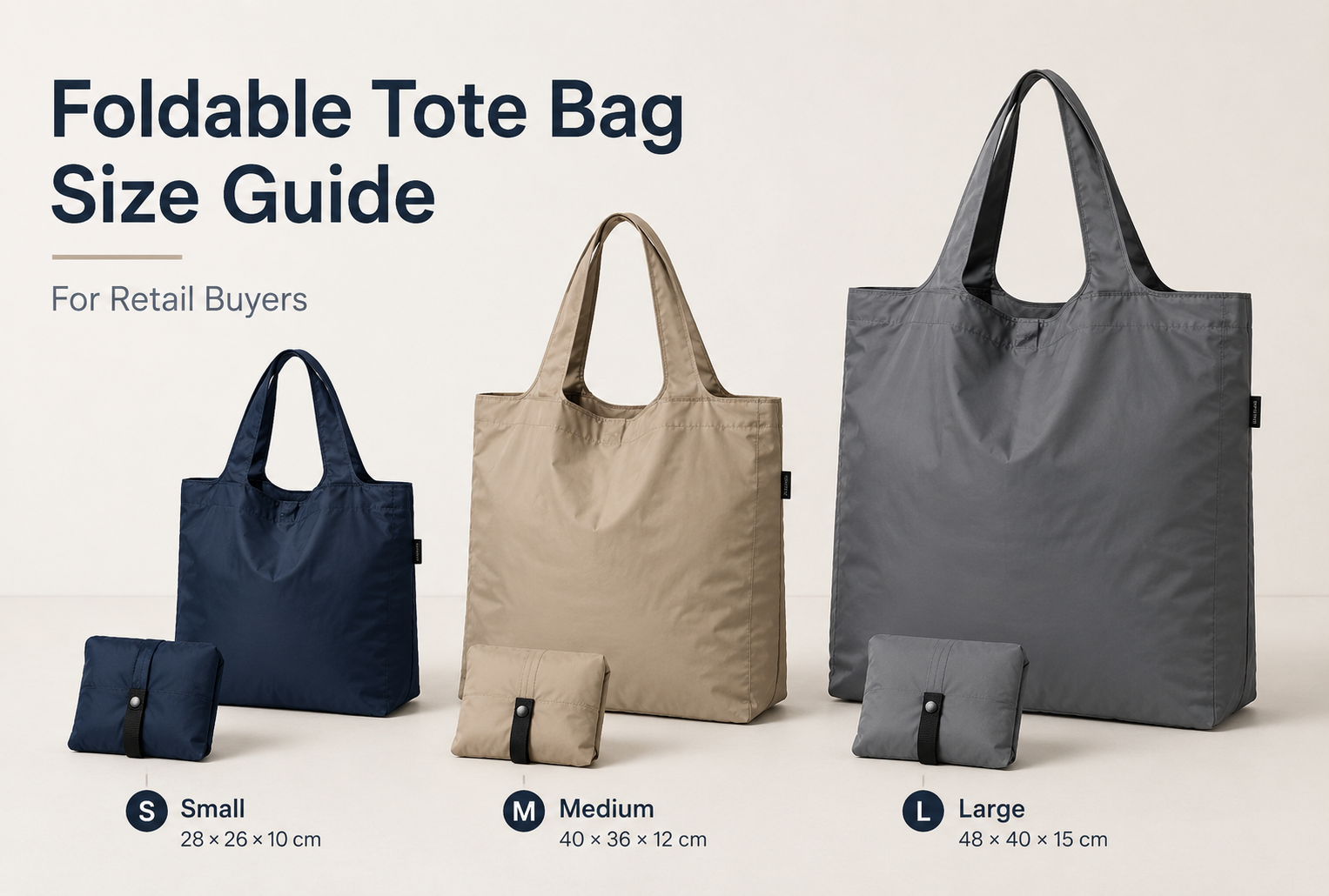
Foldable Tote Bag Size Guide for Retail Buyers
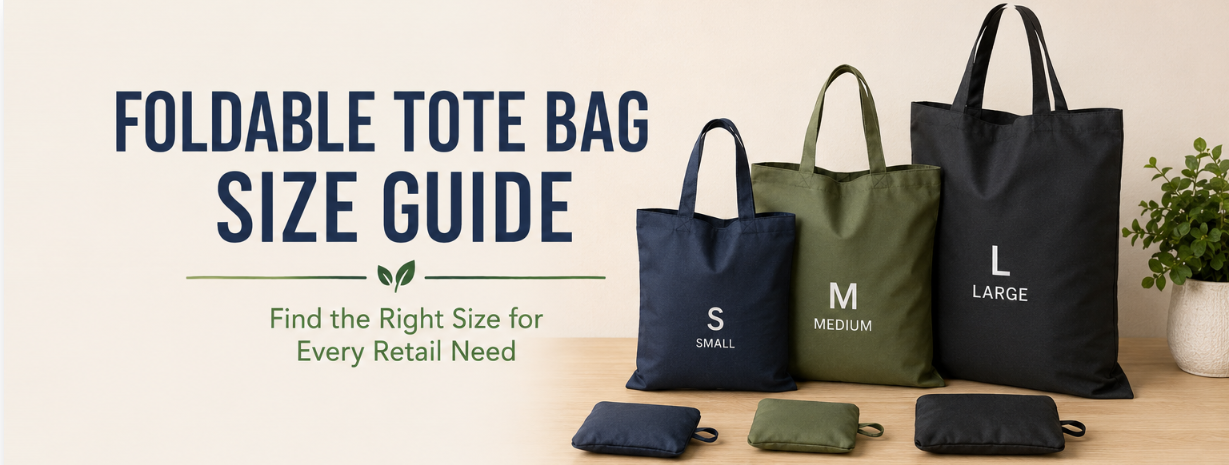
Foldable tote bags are widely used by retailers, supermarkets, travel brands, event organizers, promotional companies, and lifestyle brands because they are lightweight, reusable, compact, and easy to distribute. Unlike standard tote bags, foldable tote bags can be packed into a small pouch, corner pocket, or attached storage bag, making them convenient for daily carrying.
For retail buyers, choosing the right size is not just about appearance. Bag size affects carrying capacity, customer experience, material cost, printing area, shipping volume, retail positioning, and repeat-use value. A bag that is too small may feel less useful, while a bag that is too large may increase cost and reduce portability.
This guide explains how to choose suitable foldable tote bag sizes for different retail and promotional applications.
1. Why Foldable Tote Bag Size Matters
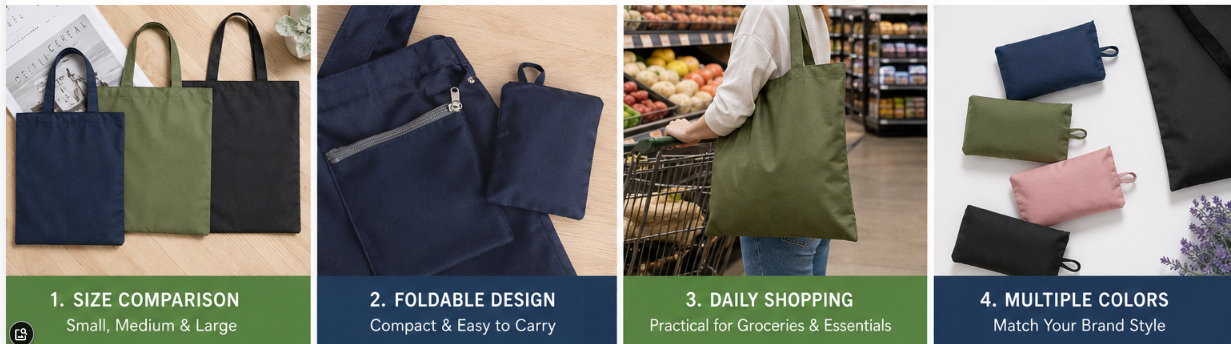
Foldable tote bags are usually selected for convenience. Buyers expect them to be easy to carry, easy to store, and practical after unfolding. The final size must balance two different conditions:
- Folded size: small enough to fit in handbags, backpacks, car compartments, or luggage
- Unfolded size: large enough to carry groceries, clothing, books, gifts, travel items, or promotional materials
For B2B buyers, size also affects production cost. Larger bags require more fabric, longer handles, larger printing areas, and stronger stitching. Smaller bags are easier to distribute but may not provide enough carrying value.
A good foldable bag size should match the final use scenario.
2. Common Foldable Tote Bag Size Ranges
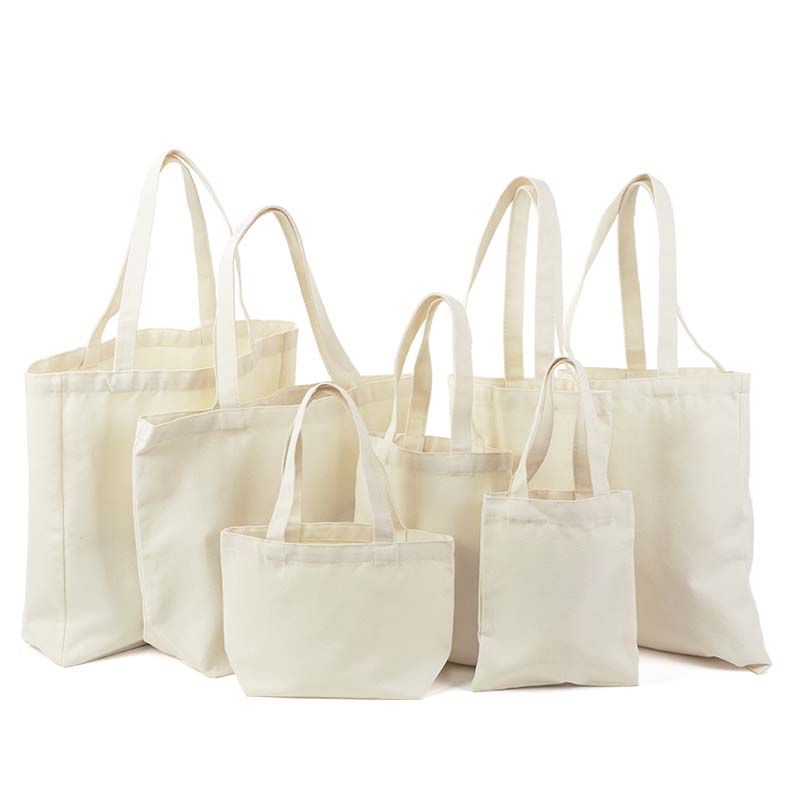
Foldable tote bags can be customized in many dimensions, but most retail projects fall into several common size ranges.
| Size Type |
Approx. Unfolded Size |
Best Use |
| Small |
30 × 35 cm |
Light shopping, gifts, events, small retail items |
| Medium |
38 × 42 cm |
Daily shopping, apparel, books, supermarket use |
| Large |
45 × 50 cm |
Groceries, travel, beach, larger retail items |
| Extra Large |
50 × 60 cm or above |
Bulk shopping, laundry, outdoor, family travel |
These sizes are only general references. Buyers should confirm the final size according to product category, target users, carrying weight, and folded pouch design.
3. Small Foldable Tote Bags
Small foldable tote bags are suitable for lightweight items and promotional use. They are easy to fold, inexpensive to produce, and convenient for events or giveaways.
Best Applications
- Trade show giveaways
- Cosmetic retail packaging
- Small gift promotions
- Bookstore accessories
- Pharmacy or convenience store use
- Light shopping bags
- Gift-with-purchase programs
Small foldable bags are useful when buyers need a low-cost reusable item with good branding value. However, they are not suitable for heavy groceries or large retail products.
For small bags, the logo area should be simple and clear. Large complicated artwork may not display well on a limited panel size.
4. Medium Foldable Tote Bags
Medium foldable tote bags are the most common choice for daily shopping and retail programs. They provide enough capacity for regular use while staying compact when folded.
Best Applications
- Supermarket shopping
- Apparel retail
- Bookstore shopping
- Corporate gifts
- Lifestyle retail products
- Promotional campaigns
- E-commerce customer gifts
For many retail buyers, medium size is the safest option. It gives customers enough usable space without making the bag too bulky. Medium foldable bags also offer a good logo printing area, making them suitable for brand campaigns.
If the buyer is unsure which size to choose, medium size is usually the first sample option to test.
5. Large Foldable Tote Bags
Large foldable tote bags are designed for users who need more capacity. They are suitable for groceries, travel, beach items, clothing, towels, and bulk shopping.
Best Applications
- Grocery shopping
- Supermarket campaigns
- Beach and travel use
- Family shopping
- Large retail products
- Outdoor and picnic items
- Farmers’ markets
Large bags should use stronger fabric and reinforced stitching. Handle length and width also become more important because the bag may carry heavier items.
For large foldable tote bags, buyers should consider:
- Fabric strength
- Handle reinforcement
- Bottom structure
- Stitching quality
- Logo placement
- Folded size after packing
A large tote bag that folds poorly may become inconvenient for consumers. The pouch design should be tested before bulk production.
6. Extra-Large Foldable Tote Bags
Extra-large foldable tote bags are less common for standard retail giveaways but useful for specific applications. They are suitable for heavy or bulky products.
Best Applications
- Laundry carrying
- Travel packing
- Outdoor storage
- Wholesale shopping
- Family grocery shopping
- Sports or beach equipment
- Home organization
Extra-large foldable bags require careful construction. Buyers should not only increase the size, but also improve fabric thickness, handle strength, bottom stitching, and edge reinforcement.
These bags are better positioned as functional storage or travel products rather than low-cost promotional giveaways.
7. Folded Size and Pouch Design
The folded size is just as important as the unfolded size. A foldable tote bag usually has one of the following storage methods:
| Folding Type |
Description |
Best Use |
| Attached corner pouch |
Small pouch sewn into the bag corner |
Daily shopping, retail gifts |
| Separate storage pouch |
Independent pouch for packing the bag |
Premium retail, travel |
| Inside pocket folding |
Bag folds into its own inner pocket |
Clean design, reusable shopping |
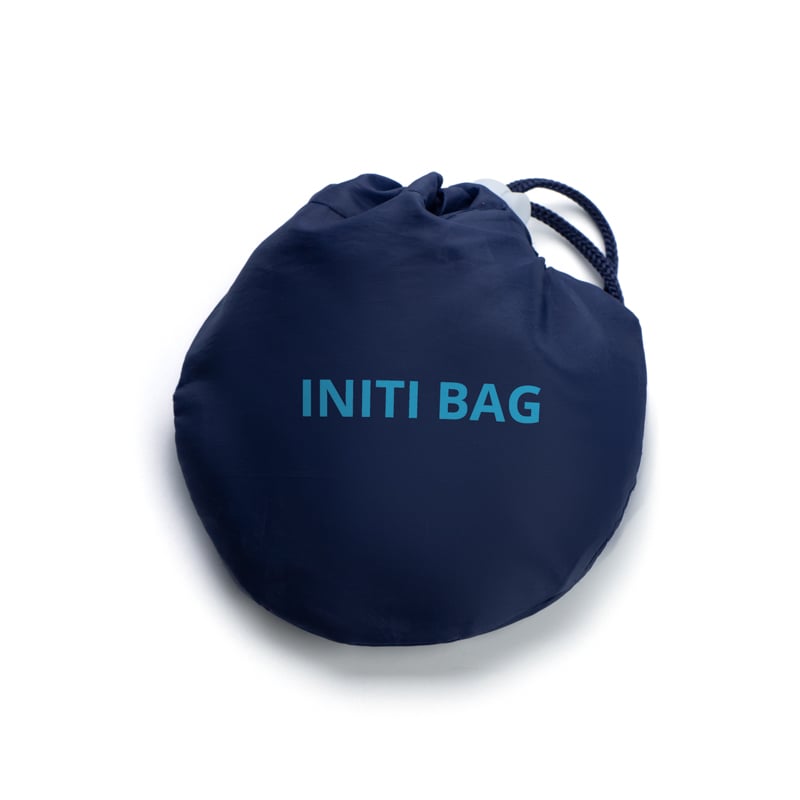
| Drawstring pouch |
Soft pouch with drawstring closure |
Promotional and travel use |
Attached pouches are practical because they do not get lost. Separate pouches can look more premium but may be misplaced by users. Inside pocket folding gives a cleaner structure but needs accurate sewing and folding design.
For retail buyers, the best pouch design depends on target price, user habits, and packaging style.
8. How Size Affects Material Selection
Foldable tote bags are usually made from lightweight materials such as polyester, nylon, RPET polyester, or coated fabric.
For Small and Medium Bags
Recommended materials:
- Lightweight polyester
- Nylon fabric
- RPET fabric
- Thin reusable fabric
These materials keep the bag soft, foldable, and cost-efficient.
For Large and Extra-Large Bags
Recommended materials:
- Higher-density polyester
- Nylon with stronger coating
- RPET fabric with reinforced stitching
- Oxford fabric for stronger structure
Larger bags need better strength. If the fabric is too thin, the bag may feel weak and reduce customer trust.
9. Size and Logo Printing
Bag size affects logo visibility. A larger bag provides more print area, but the logo must still be balanced with the bag shape.
For foldable tote bags, common logo methods include:
- Screen printing
- Heat transfer printing
- Digital printing
- Sublimation printing
- Woven label
- Full-panel printing
- Pouch logo printing
A practical approach is to print the main logo on the unfolded bag and add a smaller logo on the storage pouch. This improves brand visibility in both folded and unfolded states.
For retail promotions, buyers should confirm logo size on actual samples instead of only checking digital artwork.
10. Recommended Sizes by Retail Scenario
| Retail Scenario |
Recommended Size |
Reason |
| Cosmetic gift promotion |
Small |
Lightweight, low-cost, easy to distribute |
| Apparel retail |
Medium |
Fits clothing and accessories |
| Bookstore promotion |
Medium |
Suitable for books and stationery |
| Supermarket shopping |
Medium to large |
Good capacity for groceries |
| Travel promotion |
Medium to large |
Useful for spare shopping and travel items |
| Beach or outdoor campaign |
Large |
Fits towels, clothes, and accessories |
| Laundry or home storage |
Extra large |
Better for bulky items |
| Trade show giveaway |
Small to medium |
Cost-efficient and easy to pack |
The best size depends on product type, user behavior, and budget. For most general retail projects, medium size is the most balanced option.
Recommended Products
Suitable for supermarkets, retail stores, travel brands, and promotional campaigns. These bags can be customized with attached pouches, lightweight fabric, large logo printing areas, and different unfolded sizes.
Made from recycled polyester material, RPET foldable bags are suitable for buyers who want a stronger sustainability story. They are practical for eco campaigns, supermarkets, and brand promotions.
Nylon and polyester foldable tote bags are lightweight, durable, and easy to customize. They are suitable for daily shopping, travel, and large-volume promotional projects.
For buyers who need larger branding space or stronger structure, regular reusable shopping tote bags can be developed alongside foldable bags as part of a complete retail bag collection.
Large foldable bags can also be adapted for outdoor, beach, camping, and sports use. Material, coating, handle structure, and storage pouch design can be customized.
Buyer Checklist Before Ordering Foldable Tote Bags
Before confirming a foldable tote bag project, buyers should check:
-
Unfolded size
Confirm whether the bag is for small retail items, daily shopping, groceries, travel, or bulky products.
-
Folded size
Check whether the folded bag is compact enough for daily carrying.
-
Material strength
Choose polyester, nylon, RPET, Oxford, or coated fabric according to load requirements.
-
Pouch design
Decide whether the bag uses an attached pouch, separate pouch, inner pocket folding, or drawstring pouch.
-
Handle length
Confirm whether the bag is for hand carrying or shoulder carrying.
-
Logo position
Consider both unfolded logo display and folded pouch logo display.
-
Packaging method
Choose bulk packing, individual polybag, hangtag, belly band, barcode label, or retail-ready packaging.
-
Sample test
Check folding process, handle strength, fabric feel, logo effect, size accuracy, and final packing.
Why Choose Us
With 16+ years of manufacturing experience, two factory buildings, and cooperation experience with global brands and Fortune 500 companies, we provide reliable OEM/ODM foldable bag production support for importers, distributors, retailers, supermarkets, gift suppliers, and promotional buyers.
Our factory supports certified production and quality systems including SEDEX, DISNEY, GRS, HIGG, and ISO9001, helping buyers meet brand, retail, and export market requirements. We also support sustainability-focused development with RPET, recycled polyester, reusable fabrics, cotton, canvas, jute, Tyvek, and other eco-conscious material options.
For foldable tote bag projects, buyers usually care about fabric strength, folding structure, pouch function, handle durability, logo accuracy, color consistency, packaging presentation, and stable bulk production. We support these requirements through material sourcing, sample development, size adjustment, logo testing, structure optimization, quality inspection, and export-ready packing.
Whether your project is for retail sales, supermarket programs, travel promotions, eco campaigns, or corporate giveaways, we help reduce sourcing risk and develop foldable tote bags that match your budget, brand positioning, and target market.
Conclusion
Choosing the right foldable tote bag size is important for both customer experience and B2B purchasing success. Small bags are suitable for lightweight promotions, medium bags work well for general retail and daily shopping, large bags are better for supermarkets and travel, and extra-large bags are useful for bulky items or home storage.
Retail buyers should evaluate unfolded size, folded size, material strength, handle design, logo visibility, pouch structure, and packaging before confirming production.
As a professional custom bag manufacturer, we support OEM/ODM foldable tote bag development with custom sizes, materials, logos, colors, pouches, handles, and retail packaging. Contact our sales team to discuss your foldable bag project and request a custom quote or sample.
FAQ
1. What is the most common size for foldable tote bags?
Medium size is usually the most common because it works well for daily shopping, retail use, apparel, books, and promotional campaigns.
2. What material is best for foldable tote bags?
Polyester, nylon, and RPET are common choices because they are lightweight, foldable, durable, and suitable for logo printing.
3. Can the folded pouch size be customized?
Yes. The pouch size, folding method, and pouch position can be customized according to the unfolded bag size and target use.
4. Can the logo be printed on both the bag and pouch?
Yes. Buyers can print a large logo on the unfolded bag and a smaller logo on the folded pouch for better brand visibility.
5. Are foldable bags suitable for supermarkets?
Yes. Medium and large foldable bags are suitable for supermarkets, grocery shopping, reusable bag programs, and promotional campaigns.
6. What should buyers test before bulk production?
Buyers should test folding function, fabric strength, handle stitching, logo effect, folded size, unfolded capacity, and packaging method.
Related Topics