How to Choose a Reliable Custom Bag Manufacturer
Finding a custom bag supplier is not difficult. Finding one that can reproduce an approved sample consistently across thousands of pieces is much harder.
For importers, retailers and brand owners, the main risk is usually not whether a factory can make one acceptable sample. The real question is whether the supplier can control materials, construction, branding, quality and delivery throughout bulk production.
Before placing an order, buyers should evaluate the manufacturer in several practical areas.
1. Check Whether the Supplier Actually Understands Bag Manufacturing
A reliable manufacturer should be able to discuss more than bag size and logo printing.
For example, if you are developing a canvas tote bag, the supplier should be able to explain how changes in fabric weight, handle construction, gusset depth and printing affect the finished product.
For a cooler bag, the discussion should include insulation, lining, zipper structure and leak-risk areas.
For a backpack or travel bag, questions about webbing, zipper specifications, reinforcement and internal construction become more important.
A useful test is simple: send the supplier your design and ask what they would change before sampling.
A manufacturer with real development experience will usually identify potential problems instead of simply replying:
“Yes, we can make it.”
That technical feedback is often more valuable than a fast quotation.
2. Evaluate the Sampling Process
Samples show how a supplier translates specifications into an actual product.
Do not evaluate only whether the sample “looks good.”
Check whether the manufacturer followed the agreed specifications for:
- Material
- Fabric weight or thickness
- Dimensions
- Handle length and width
- Zipper and hardware
- Stitching
- Reinforcement
- Logo size and position
- Printing color
- Lining
- Packaging
If the first sample requires changes, that is not automatically a problem.
Custom product development often involves revisions.
What matters is whether the supplier clearly records those revisions and applies them correctly to the next sample.
Before approving a sample, confirm:
- Final dimensions
- Material specification
- Pantone or color reference
- Logo artwork
- Printing method
- Accessories
- Stitching and reinforcement
- Packaging
- Any approved tolerances
The approved sample should become a reference for bulk production rather than just a visual example.
3. Ask How Bulk Quality Is Controlled
One good sample does not guarantee one good shipment.
The real test of a manufacturer is consistency.
For custom bags, common bulk-production problems include:
- Fabric color variation
- Incorrect dimensions
- Crooked printing
- Logo color differences
- Uneven stitching
- Loose threads
- Weak handles
- Poor zipper movement
- Incorrect accessories
- Packaging mistakes
Ask the supplier when inspections take place.
A practical quality-control process may include:
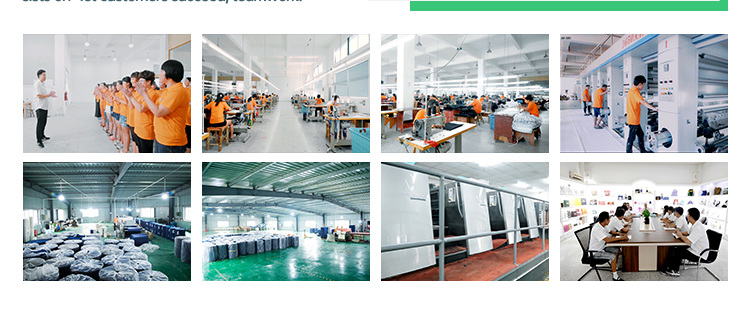
Incoming Material Inspection
Check fabric, webbing, zippers, hardware and other materials before production.
In-Process Inspection
Identify sewing, printing or assembly problems before the whole order is completed.
Finished Product Inspection
Check appearance, dimensions, function and workmanship.
Packing Inspection
Confirm quantity, polybags, labels, barcodes, carton marks and export cartons.
The exact inspection system can vary between factories. What matters is that quality control happens during production rather than only after all goods are packed.
4. Look at Handle, Seam and Functional Testing
Visual inspection is not enough for functional bags.
If a tote bag is designed to carry groceries, the handles and seams need to survive the expected load.
If a cooler bag contains a zipper, insulation and lining, these components need to work together.
Depending on the product, useful tests may include:
- Static load testing
- Repeated lifting
- Handle pull testing
- Seam strength checks
- Zipper cycling
- Water-resistance checks
- Abrasion testing
- Colorfastness testing
- Drop or packing tests
Not every project needs laboratory testing.
However, the supplier should at least understand which parts of the bag are most likely to fail.
For many tote bags, for example, the handle attachment is more critical than the center of the fabric panel.
5. Verify Material Specifications, Not Just Material Names
A quotation that says only “cotton,” “polyester” or “RPET” is usually not detailed enough.
Material specifications may affect both price and product performance.
For example:
Canvas
Buyers may need to confirm fabric weight, weave, color, finishing and shrinkage.
Polyester
Confirm denier, coating, texture and intended performance.
RPET
Confirm recycled-content requirements and supporting documentation where needed.
Non-woven PP
Confirm GSM, lamination, handles and seam construction.
Felt
Confirm fiber composition, thickness, density and stiffness.
Two suppliers may quote the same bag using different material grades while describing both materials with the same general name.
This is one reason unusually low prices need to be examined carefully.
6. Check Certifications Based on Your Actual Market
Certificates are useful, but buyers should understand what each certificate proves.
Factory audits, quality-management certifications and material certifications serve different purposes.
Depending on the buyer, retailer and destination market, a project may require evidence relating to:
- Factory social compliance
- Quality-management systems
- Recycled material
- Restricted substances
- Product testing
- Retailer-specific standards
Do not simply ask:
“What certificates do you have?”
A better question is:
“Can your current factory, material and production process support the compliance requirements for this specific order?”
Also verify whether the certificate is current and whether its scope actually covers the relevant factory or material.
A certificate should support supplier evaluation, not replace it.
7. Compare Quotations on the Same Specification
The cheapest quotation is not necessarily the lowest-cost option.
Suppose three factories quote a canvas tote bag.
One supplier uses:
- Heavier canvas
- Wider handles
- Reinforced stitching
- Better packaging
Another supplier quotes a lighter construction without clearly stating it.
The second price will naturally be lower.
Before comparing suppliers, align:
- Size
- Material
- Material weight
- Lining
- Handles
- Accessories
- Printing
- Packaging
- Quantity
- MOQ
- Testing
- Trade terms
Without this, you may be comparing three different products rather than three prices for the same bag.
8. Pay Attention to Communication Quality
Communication is a practical part of manufacturing quality.
Custom bags often involve dozens of small details. A supplier that does not record them accurately creates risk before production even begins.
Warning signs include:
- Specifications repeatedly being forgotten
- Different salespeople giving different answers
- Important questions being skipped
- Material substitutions without approval
- Changes discussed only through informal messages
- Quotations that do not clearly describe what is included
A reliable supplier should be able to summarize the final specification before production.
For complicated projects, use a specification sheet or approved sample record rather than relying on a long message history.
9. Check Whether the Supplier Can Handle Your Order Size
A factory suitable for 500 simple promotional bags may not necessarily be the best partner for a 50,000-piece retail program.
Likewise, a large factory may not be flexible enough for very small development orders.
Ask about:
- Normal MOQ
- Sample capacity
- Monthly production capacity
- Peak-season workload
- Typical lead time
- Ability to manage multiple colors or SKUs
- Packaging and labeling capacity
For retailers and distributors, scalability is particularly important.
A supplier may perform well on the first order but struggle when the program expands to more colors, more stores or repeat orders.
10. Understand What Happens After the Sample Is Approved
This is one of the most important questions to ask:
How does the factory ensure that bulk production matches the approved sample?
A reliable manufacturer should have a method for transferring the approved specifications into production.
This may include:
- Approved sample retained at the factory
- Production specification sheet
- Material reference
- Pantone reference
- Logo artwork file
- Accessory specifications
- Packing instructions
- QC checklist
The more customized the bag, the more important this becomes.
The sample should not disappear into a sales department once the order enters production.
Warning Signs When Evaluating a Bag Supplier
Buyers should investigate further when they encounter these situations:
| Warning Sign |
Possible Risk |
| Price is far below other quotations |
Different material or construction |
| Supplier agrees to every request immediately |
Limited technical review |
| Material specification is unclear |
Bulk substitution or inconsistency |
| No structured sample approval |
Production misunderstanding |
| Supplier cannot explain QC process |
Weak bulk-quality control |
| Certificates cannot be verified |
Compliance risk |
| Production schedule changes repeatedly |
Capacity problems |
| Important specifications remain only in chat messages |
Communication errors |
None of these automatically means a supplier is unreliable, but they should trigger additional verification.
A Practical Supplier Evaluation Checklist
Before confirming a custom bag manufacturer, evaluate these eight areas:
Factory Capability
Can they actually manufacture the product structure you need?
Material Knowledge
Can they clearly specify the fabric, accessories and construction?
Sampling
Can they convert your design into a controlled production sample?
Quality Control
Do they inspect materials, production and finished goods?
Testing
Can they test the parts of the bag most likely to fail?
Compliance
Can they provide relevant and verifiable documentation?
Communication
Are specifications clearly recorded and confirmed?
Bulk Production
Can they maintain quality and delivery when quantity increases?
A supplier does not need to be perfect in every area. The important point is that its capabilities match the risk level of your project.
How INITI Supports Custom Bag Projects
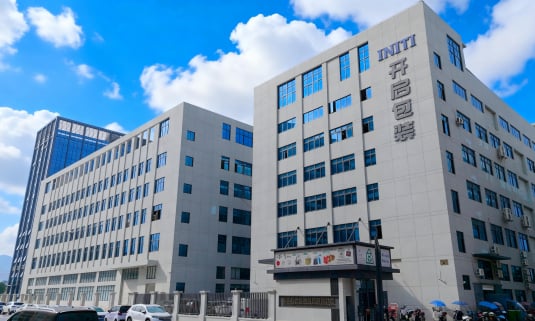
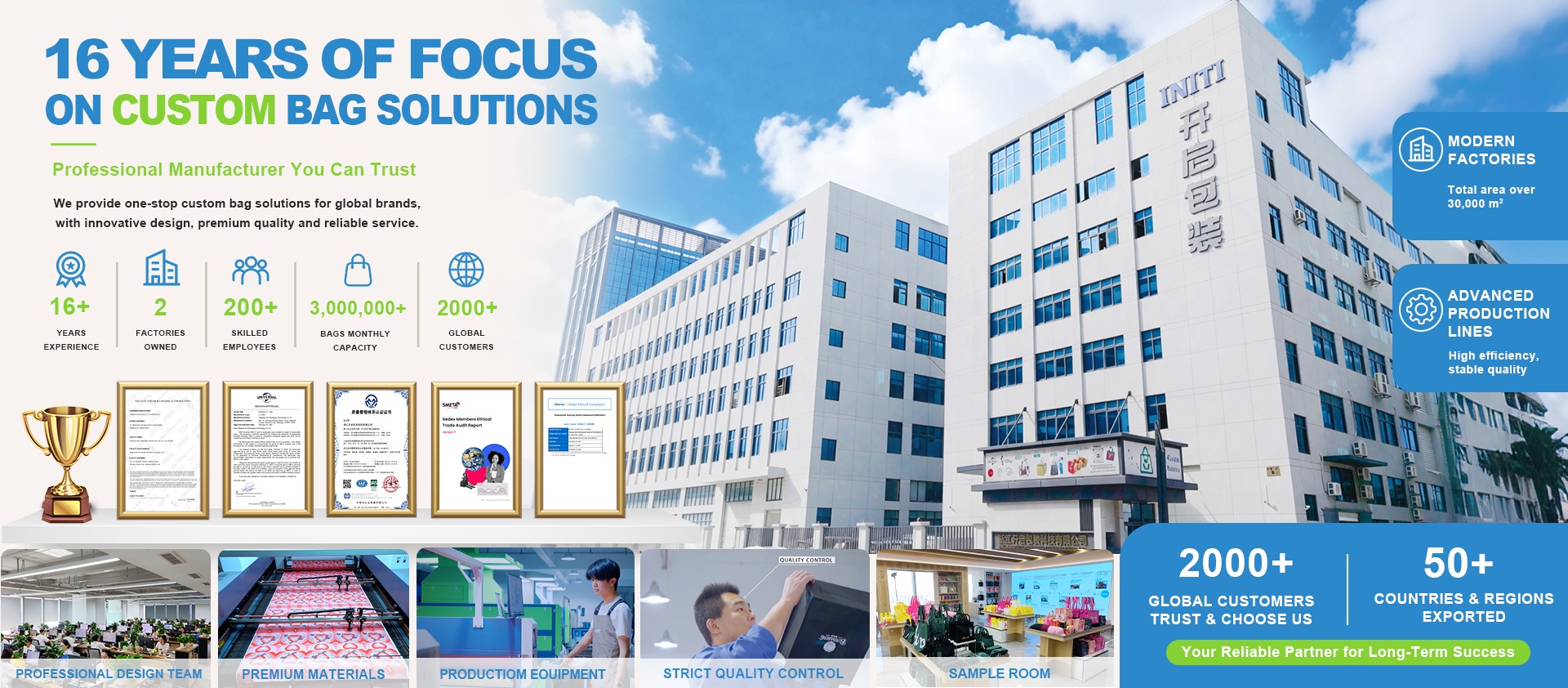
Hangzhou INITI Imp&Exp Co., Ltd. has more than 16 years of experience in custom bag development and supports OEM/ODM projects from design and sampling through bulk production.
Our production system supports material selection, structure development, logo customization, sampling, production inspection and export packaging. Factory and management credentials currently listed by INITI include SEDEX, DISNEY, GRS, HIGG and ISO9001.
For buyers, the goal is not simply to provide a quotation. The more important work happens before bulk production: confirming the material, construction, branding details and quality requirements so that the final order can be produced consistently.
FAQ
Should I always choose a factory instead of a trading company?
Not necessarily. The more important question is whether the supplier has sufficient control over product development, production, QC and communication. However, buyers should understand clearly who is actually manufacturing the order.
How can I verify a custom bag manufacturer before placing a large order?
Review factory information, samples, certificates, material specifications and QC procedures. For larger programs, factory audits or third-party inspections can provide additional verification.
Is the lowest quotation usually a warning sign?
Not always, but a large price difference should be explained. Check whether the material, dimensions, printing, accessories, reinforcement and packaging are actually the same.
How many samples should I make before bulk production?
There is no fixed number. Simple bags may require only one approval sample, while complex products may require several revisions. Production should begin only after the important specifications are confirmed.
What information should I send when contacting a bag manufacturer?
At minimum, provide the product type, dimensions, material preference, logo artwork, estimated quantity and target application. Reference photos or an existing sample can also help.
Conclusion
A reliable custom bag manufacturer should do more than make a good sample or offer a competitive price.
The strongest suppliers help buyers control the entire process:
specification → sample → material → production → inspection → packing → delivery
When evaluating suppliers, focus on how they manage these steps rather than relying only on price, factory size or a list of certificates.
For bulk custom bag projects, consistency is usually more valuable than the lowest initial quotation.
Inquiry Support
For a custom bag project, you can provide:
- Product type
- Estimated quantity
- Preferred size or reference dimensions
- Material preference
- Required colors
- Logo artwork
- Packaging requirements
If you have not finalized all details, you can first send your intended use and target quantity, and we can recommend a suitable specification.
Related Products


 Hot News