Complete Guide to Custom Bag Printing Methods
Custom printing is one of the most important parts of branded bags.
A logo, pattern or message does not only identify a brand. It also affects the bag’s appearance, perceived value, production cost and durability.
However, different bag materials and product structures require different printing methods.
A printing method suitable for a cotton tote bag may not be suitable for a polyester cooler bag or a felt storage bag.
When selecting a printing method, buyers should consider:
- Bag material
- Surface texture
- Artwork complexity
- Number of colors
- Order quantity
- Required durability
- Target budget
- Final application
The most common custom bag printing methods include:
- Screen printing
- Heat transfer printing
- Sublimation printing
- Digital printing
- Embroidery
- Woven labels and patches
1. Screen Printing
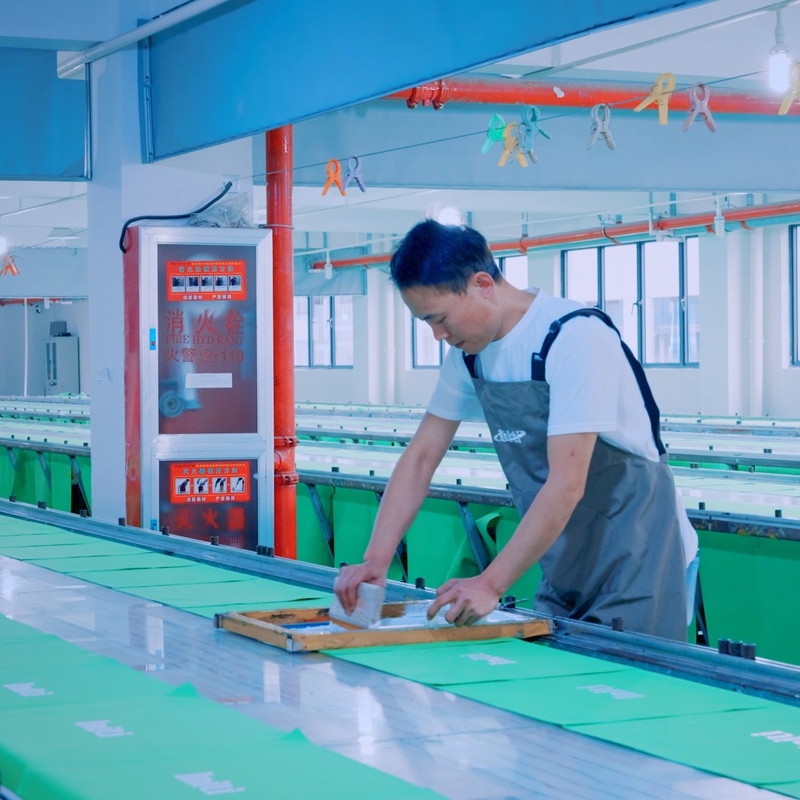
Screen printing is one of the most widely used methods for custom bags.
The process transfers ink through a prepared mesh screen onto the bag surface.
It is commonly used for:
- Cotton tote bags
- Canvas bags
- Non-woven bags
- Jute bags
- Polyester bags
Advantages
Screen printing is popular because it offers:
- Competitive cost for bulk orders
- Strong color coverage
- Good durability
- Simple production process
- Suitable for large logos and text
It works especially well for:
- One-color logos
- Two-to-four-color artwork
- Promotional campaigns
- Retail packaging bags
Limitations
Screen printing is less suitable for:
- Complex photo images
- Large numbers of colors
- Very small details
- Gradient effects
Each color usually requires a separate screen setup, which can increase cost when artwork becomes complicated.
Best Applications
2. Heat Transfer Printing
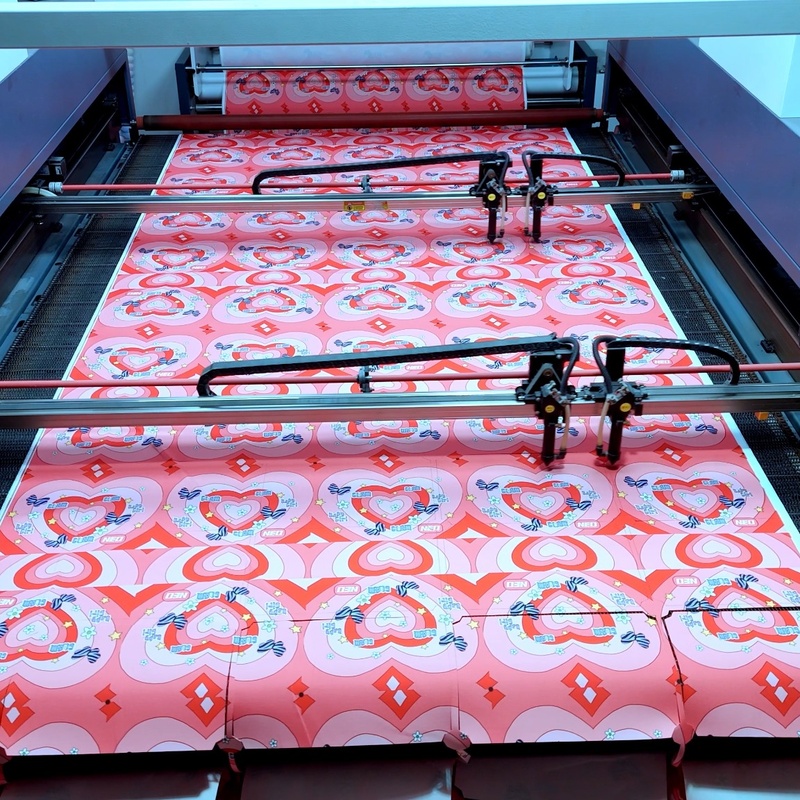
Heat transfer printing uses heat and pressure to transfer printed artwork onto the bag surface.
The artwork is usually prepared on transfer film or transfer paper before application.
This method is commonly used for:
- Polyester bags
- Sports bags
- Cosmetic bags
- Promotional backpacks
- Small custom orders
Advantages
Heat transfer printing provides:
- Detailed artwork reproduction
- Multiple colors
- Smooth logo appearance
- Good option for smaller quantities
- Suitable for complex graphics
It works well for:
- Brand logos
- Illustrations
- Characters
- Detailed patterns
Limitations
Performance depends on:
- Fabric type
- Surface treatment
- Printing quality
- Application temperature
On rough fabrics such as coarse jute or textured felt, the result may be less consistent.
Best Applications
| Product |
Suitable |
| Polyester bags |
Excellent |
| Sports bags |
Excellent |
| Cosmetic bags |
Good |
| Cotton canvas |
Good after testing |
| Rough jute fabric |
Limited |

3. Sublimation Printing
Sublimation printing uses heat to convert dye into gas, allowing the color to penetrate suitable synthetic fibers.
It is mainly used for polyester-based materials.
Common applications include:
- Polyester tote bags
- Sports bags
- Drawstring bags
- Full-print promotional bags
Advantages
Sublimation allows:
- Full-color printing
- Photo-quality images
- All-over patterns
- Smooth color transition
- No raised print surface
The design becomes part of the fabric rather than sitting on top of it.
Limitations
Sublimation requires suitable materials.
It works best with:
- Polyester fabric
- Polyester-coated surfaces
It is generally not suitable for:
- Cotton canvas
- Natural jute
- Standard felt
- Untreated natural fabrics
Best Applications
| Product |
Suitable |
| Polyester bags |
Excellent |
| Sports bags |
Excellent |
| RPET polyester bags |
Good depending on material |
| Cotton bags |
Not suitable |
| Jute bags |
Not suitable |
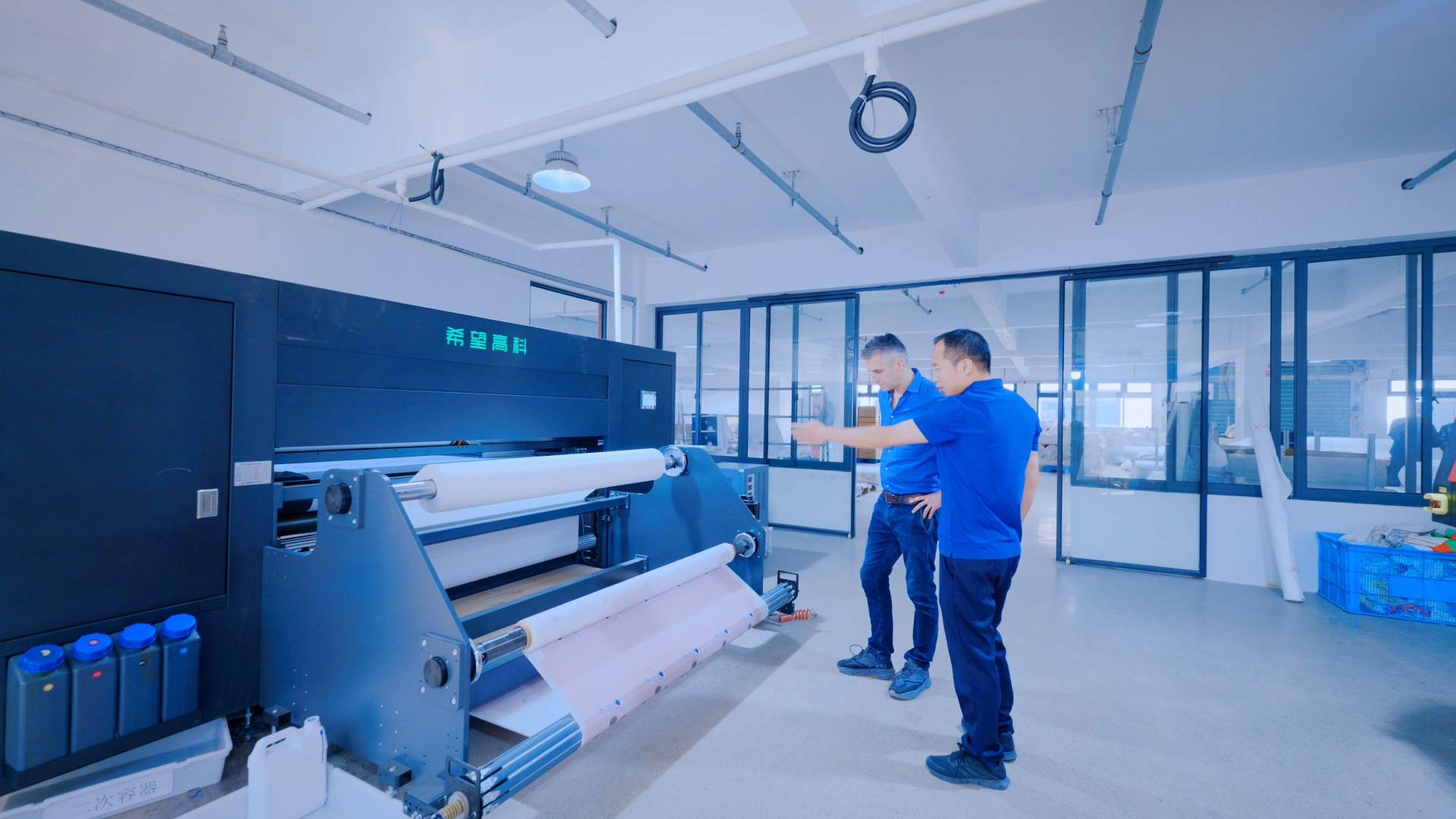
4. Digital Printing
Digital printing directly applies artwork from a digital file onto the material.
It is often used for:
- Small production runs
- Complex artwork
- Prototype development
- Customized collections
Advantages
Digital printing offers:
- No screen setup
- Flexible artwork changes
- Detailed images
- Multiple colors
- Suitable for samples and small quantities
It is useful for brands testing new designs before larger production.
Limitations
Compared with screen printing, digital printing may have:
- Higher unit cost for large quantities
- Different performance depending on fabric
- Limited penetration on some materials
The final result depends heavily on:
- Fabric surface
- Ink system
- Pretreatment
- Production equipment
5. Embroidery
Embroidery creates a logo or pattern by stitching thread directly onto the bag surface.
It is commonly used for:
- Premium tote bags
- Backpacks
- Cosmetic bags
- Corporate gifts
- Lifestyle products
Advantages
Embroidery provides:
- Premium appearance
- Strong brand recognition
- Three-dimensional texture
- Long-lasting decoration
It is especially suitable for:
- Simple logos
- Text
- Brand marks
- Small decorative elements
Limitations
Embroidery has limitations when:
- Artwork contains very fine details
- The logo is extremely large
- The material is too thin
- The surface cannot support stitching
Heavy embroidery may also add stiffness or weight.
Best Applications
| Product |
Suitable |
| Canvas bags |
Excellent |
| Backpacks |
Excellent |
| Felt bags |
Good |
| Thin non-woven bags |
Limited |
| Lightweight polyester |
Depends on structure |
6. Woven Labels and Patches
Instead of printing directly onto the bag, brands can add a separate branding element.
Common options include:
- Woven labels
- Embroidered patches
- PU patches
- Rubber patches
- Leather-style patches
Advantages
They provide:
- Premium branding appearance
- Strong product identity
- Flexible placement
- Suitable for private-label products
They are often used on:
- Fashion bags
- Lifestyle bags
- Storage products
- Premium promotional items
Limitations
Additional components increase:
- Material cost
- Production steps
- MOQ requirements
- Attachment requirements
The patch attachment method should be tested to ensure it does not damage the base material.
Printing Method Comparison
| Printing Method |
Best Materials |
Artwork |
Suitable Quantity |
Main Advantage |
| Screen Printing |
Cotton, canvas, jute, non-woven |
Simple logos |
Medium to large |
Cost-effective and durable |
| Heat Transfer |
Polyester, coated fabrics |
Detailed graphics |
Small to medium |
Flexible artwork |
| Sublimation |
Polyester |
Full-color patterns |
Medium to large |
Photo-quality printing |
| Digital Printing |
Various tested materials |
Complex images |
Small quantity |
No plate setup |
| Embroidery |
Canvas, felt, backpacks |
Logos and text |
Medium |
Premium appearance |
| Woven Labels/Patches |
Various materials |
Brand marks |
Medium |
Premium branding |
| Offset Printing (Heidelberg) |
Paper bags and packaging |
Detailed graphics |
Medium to large |
High-quality retail printing |
| Flexographic Printing |
Kraft paper and packaging paper |
Simple graphics and patterns |
Large volume |
High production efficiency |
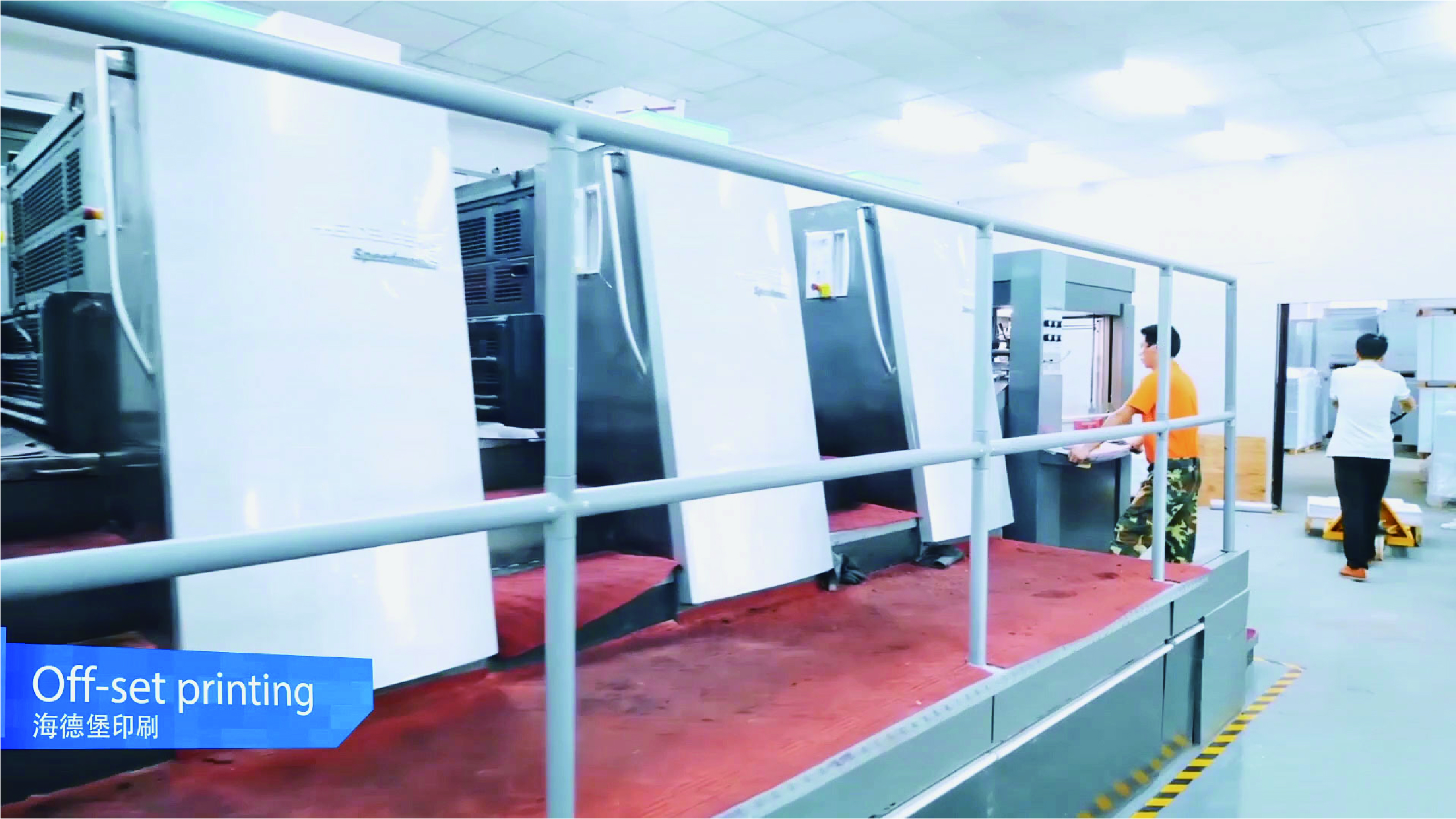
Offset Printing (Heidelberg Printing)
Offset printing is one of the most widely used printing methods for premium paper packaging products.
In the packaging industry, Heidelberg printing presses are widely recognized for their accuracy, color consistency and production efficiency, especially for medium and large-volume orders.
Unlike screen printing, offset printing transfers ink indirectly through a printing plate and rubber blanket before applying it to the paper surface.
This process allows high-quality reproduction of:
- Brand colors
- Fine text
- Detailed patterns
- Product images
- Complex graphics
Advantages
Offset printing provides:
- Excellent print clarity
- Stable color reproduction
- Smooth gradients
- Professional retail appearance
- Efficient production for large quantities
It is commonly used for:
- Paper gift bags
- Luxury shopping bags
- Wine bags
- Paper sleeves
- Retail packaging
- Folding cartons
Limitations
Offset printing requires:
- Plate preparation
- Color adjustment
- Production setup
Therefore, it is usually more suitable for:
- Medium to large orders
- Fixed artwork
- Retail packaging projects
For small quantities or frequently changing designs, digital printing may be more practical.
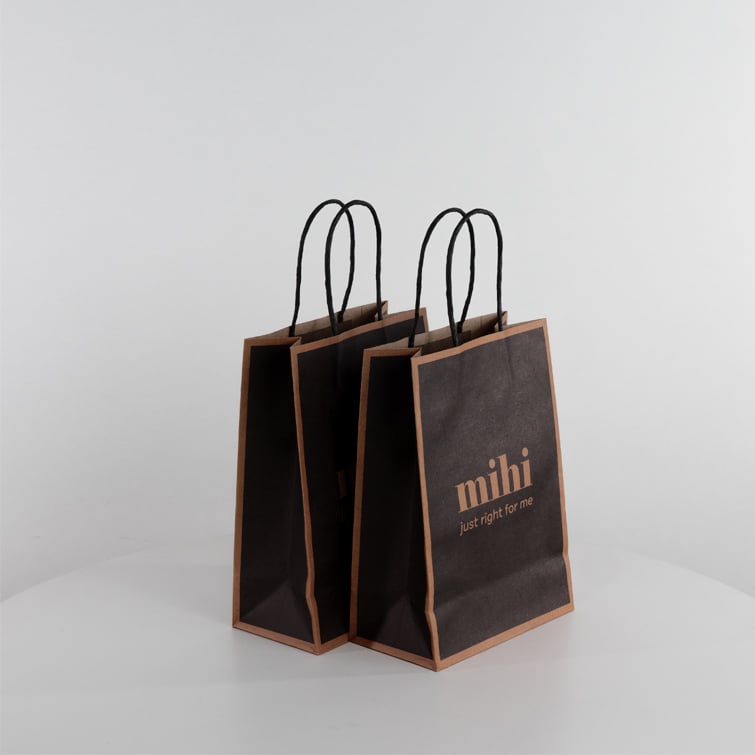
Best Applications
Flexographic Printing
Flexographic printing is another common printing method for paper-based packaging and high-volume bag production.
It uses flexible printing plates to transfer ink directly onto the material surface.
Flexographic printing is often selected for:
- Kraft paper bags
- Food packaging
- Disposable paper packaging
- Large-volume packaging programs
Advantages
Flexographic printing offers:
- Fast production speed
- Cost efficiency for large quantities
- Suitable for continuous printing
- Good performance on paper materials
It is especially suitable for:
- Simple graphics
- Repeated patterns
- One or several-color designs
- Large-volume packaging orders
Limitations
Compared with offset printing:
- Fine image reproduction is more limited
- Color accuracy may vary depending on material
- Complex artwork may require additional preparation
Best Applications
| Product |
Suitability |
| Kraft paper bags |
Excellent |
| Food paper packaging |
Excellent |
| Large-volume paper bags |
Excellent |
| Premium gift bags |
Depends on artwork |
| Fabric bags |
Not typical |
Choosing Between Offset Printing and Flexographic Printing
| Comparison |
Offset Printing |
Flexographic Printing |
| Main materials |
Paper bags, cartons, sleeves |
Kraft paper, packaging paper |
| Print quality |
Higher detail and color accuracy |
Good for production efficiency |
| Artwork complexity |
Excellent for detailed graphics |
Better for simple designs |
| Production volume |
Medium to large |
Large volume |
| Setup requirement |
Printing plates and adjustment |
Printing plates and setup |
| Premium packaging |
Excellent |
Moderate |
| Cost advantage |
Large-volume efficiency |
Very high-volume efficiency |
How to Choose the Right Printing Method?
1. Consider the Bag Material
The material is the first factor.
Examples:
- Cotton canvas → screen printing, embroidery
- Polyester → sublimation, heat transfer
- Jute → screen printing, patches
- Felt → embroidery, patches, printing after testing
- Non-woven PP → screen printing, lamination printing
The same logo may require different processes on different materials.
2. Consider Artwork Complexity
Simple logo:
- Screen printing
- Embroidery
- Woven label
Detailed artwork:
- Heat transfer
- Digital printing
- Sublimation
Large photographic images:
- Sublimation
- Digital printing
3. Consider Order Quantity
Large-volume orders usually benefit from:
- Screen printing
- Sublimation
- Standardized processes
Small-volume projects may be better suited for:
- Heat transfer
- Digital printing
- Patches
A method with higher setup cost may become more economical as quantity increases.
Consider Product Positioning
Different printing methods create different perceptions.
Promotional Bags
Usually prioritize:
- Cost efficiency
- Simple branding
- Large quantities
Recommended:
Retail Bags
Usually prioritize:
- Appearance
- Brand consistency
- Reusability
Recommended:
- Screen printing
- Embroidery
- Patches
- High-quality transfer
Premium Lifestyle Bags
Usually prioritize:
- Material feel
- Brand value
- Detail quality
Recommended:
- Embroidery
- Woven labels
- PU patches
- Specialty printing
Common Printing Problems Buyers Should Avoid
Incorrect Printing Method Selection
Using a method unsuitable for the material can cause:
- Poor adhesion
- Cracking
- Color differences
- Low durability
Ignoring Fabric Texture
Rough fabrics such as jute and some felts may reduce printing accuracy.
Not Confirming Color Requirements
Buyers should confirm:
- Pantone colors
- Print tolerance
- Fabric background color
- Ink appearance
Approving Artwork Without a Physical Sample
Digital previews cannot always represent:
- Fabric texture
- Ink absorption
- Color appearance
- Final logo position
A production sample is recommended for important projects.
Adding Too Many Printing Requirements
Multiple logos, colors and decoration methods can increase:
- Setup cost
- Production time
- Quality-control difficulty
A clear branding plan usually produces more consistent results.
Printing Quality Checklist
Before bulk production, buyers should confirm:
| Check Item |
Purpose |
| Logo size |
Ensure correct visual proportion |
| Logo position |
Maintain product consistency |
| Color reference |
Control printing variation |
| Material compatibility |
Avoid adhesion problems |
| Surface condition |
Confirm printing quality |
| Washing/rubbing resistance |
Match usage requirements |
| Sample approval |
Confirm final appearance |
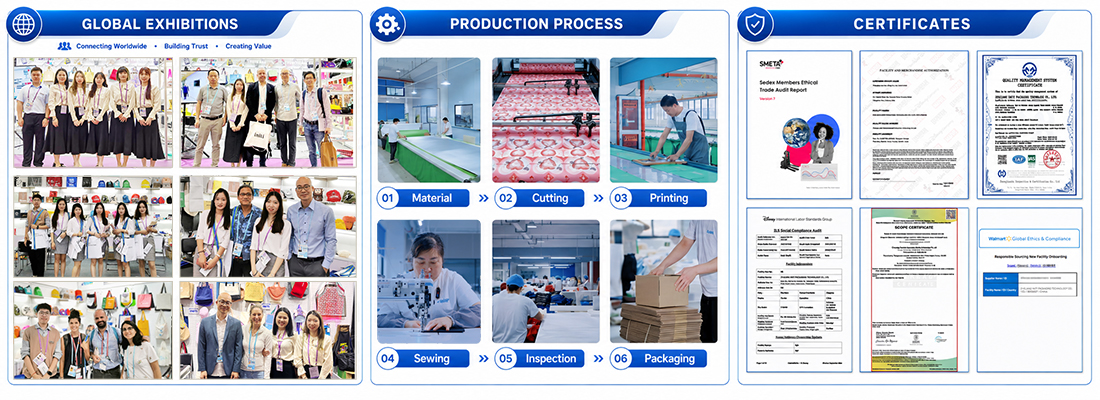
How INITI Supports Custom Bag Printing
INITI provides custom branding solutions for cotton, canvas, jute, RPET, polyester, non-woven and felt bags.
Available decoration options include:
- Screen printing
- Heat transfer printing
- Sublimation printing
- Embroidery
- Woven labels
- Custom patches
- Special branding solutions
During product development, the recommended printing method is selected according to:
- Material
- Artwork
- Quantity
- Application
- Target price
- Required durability
This helps buyers balance appearance, cost and production reliability.
FAQ
Which printing method is most commonly used for custom tote bags?
Screen printing is one of the most common methods for cotton, canvas and promotional tote bags because it provides good durability and cost efficiency.
Which printing method is best for photo images?
Sublimation or digital printing is generally more suitable for detailed images and full-color designs.
Can the same logo use different printing methods on different bags?
Yes. The recommended method depends on the bag material, surface texture and intended use.
Is embroidery more durable than printing?
Embroidery can provide excellent durability, but it is not suitable for every material or artwork style.
How should buyers choose between low cost and premium branding?
The choice depends on the purpose of the bag. Promotional campaigns usually prioritize cost efficiency, while retail and premium products often require higher-quality decoration methods.
Conclusion
Choosing the right custom bag printing method requires balancing:
- Material compatibility
- Artwork complexity
- Quantity
- Budget
- Product positioning
- Required durability
There is no single “best” printing method for all bags.
The most suitable solution comes from matching the decoration process with the bag material and the final application.
Inquiry Support
For custom printed bags, provide:
- Bag material
- Bag size
- Logo artwork
- Required colors
- Estimated quantity
- Target application
- Packaging requirements
If you have not finalized the printing method, you can first send your design and intended use, and we can recommend a suitable branding solution.
Related Products
Related Blog Articles


 Hot News