Custom Cooler Bag Specification Guide: Insulation, Lining, Compartment Design and Leakage Testing
A custom cooler bag should not be specified only by dimensions, outer fabric and a statement such as “keeps food cold for 8 hours.”
Thermal performance depends on the complete bag:
- Outer fabric
- Insulation material and thickness
- Interior lining
- Zipper and lid construction
- Seams and corners
- Bag dimensions
- Compartments
- Quantity and temperature of contents
- Ice packs or other cooling media
- Ambient temperature
- Frequency of opening
For B2B buyers, four specifications deserve particular attention:
- Insulation
- Interior lining
- Compartment design
- Thermal and leakage testing
The objective is to define measurable finished-product performance rather than relying on material names alone.
Quick Cooler Bag Specification Checklist
| Area |
What Buyers Should Confirm |
| Outer shell |
Polyester, Oxford, RPET or other fabric |
| Insulation |
Foam type and thickness |
| Lining |
PEVA, foil laminate or other specified material |
| Dimensions |
External and usable internal size |
| Contents |
Bottles, cans, lunch boxes, food containers or ice packs |
| Compartments |
Single insulated chamber or divided structure |
| Closure |
Single/double zipper, flap or other closure |
| Moisture requirement |
Water-resistant, leak-resistant or defined leakage test |
| Thermal performance |
Test temperature, contents, cooling media and duration |
| Food contact |
Whether unpackaged food can directly touch the lining |
1. How Cooler Bag Insulation Should Be Specified
Soft cooler bags normally use an insulating layer between the exterior fabric and interior lining.
Common constructions include polyethylene-based foams such as EPE or other closed-cell foam structures.
The insulation specification should identify:
- Material type
- Nominal thickness
- Density where relevant
- Coverage area
- Whether the lid and bottom use the same insulation
- Whether insulation is compressed around seams
Is Thicker Foam Always Better?
Increasing insulation thickness can improve resistance to heat transfer, but thickness alone does not determine how long a finished cooler bag stays cold.
Performance can also be affected by:
- Foam structure
- Bag size
- Surface area
- Zipper gaps
- Seam construction
- Insulation compression
- Amount of empty air inside
- Number of times the bag is opened
Therefore, specifications such as:
5 mm EPE, keeps cold for 8 hours
should not be accepted without a finished-product test supporting the second part of the claim.
Technical Reference
ASTM C518-21 — Standard Test Method for Steady-State Thermal Transmission Properties by Means of the Heat Flow Meter Apparatus
ASTM C518 measures steady-state thermal transmission through flat material specimens using a heat-flow meter.
It can be useful when evaluating thermal-insulation materials, but it does not directly establish how many hours a completed cooler bag will maintain a target temperature.
ASTM also notes that measured material properties do not necessarily represent every actual service condition.
Buyer takeaway:
Material thermal data and finished cooler-bag cold-retention time are two different specifications.
2. Interior Lining: PEVA, Foil and Other Options
The lining protects the insulation layer and provides the interior surface used around food, drinks and cooling media.
Common options include:
PEVA Lining
PEVA is widely used where buyers want:
- Flexible construction
- Smooth surface
- Easy cleaning
- Moisture resistance
- Lightweight structure
It is commonly suitable for lunch bags, promotional coolers and grocery cooler bags.
However:
“PEVA lining” does not automatically mean “food grade.”
The exact material and intended use must be considered.
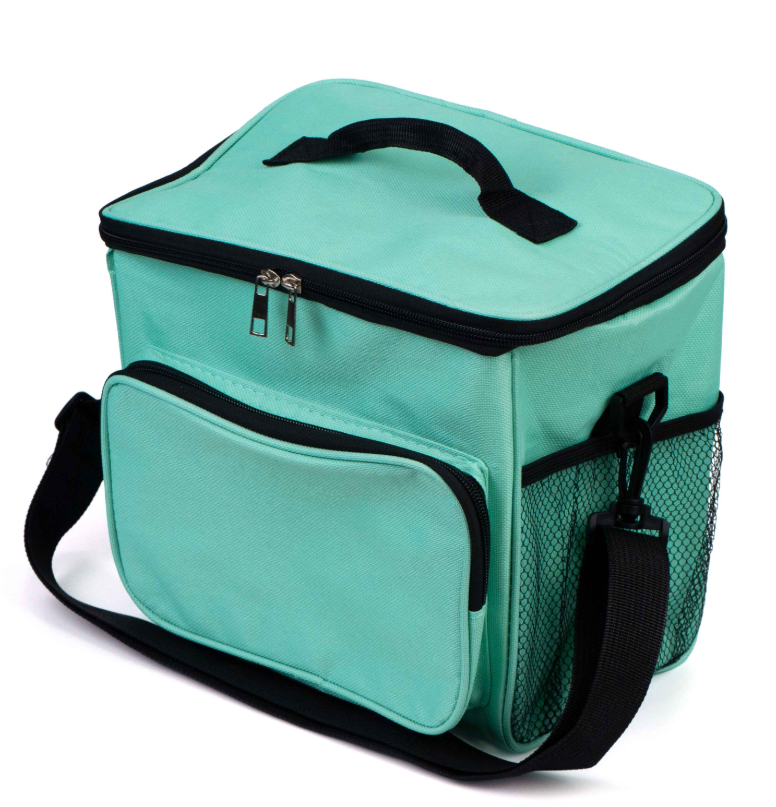
Aluminum-Foil or Foil-Laminated Lining
Foil-style linings are widely used in:
- Lunch bags
- Picnic bags
- Promotional coolers
- Grocery coolers
They provide a familiar insulated-bag appearance and can be combined with foam or bubble structures.
During sampling, buyers should inspect:
- Lamination adhesion
- Wrinkles
- Fold cracking
- Surface damage
- Seam construction
- Delamination
The foil layer should also not be described as the sole reason a bag provides thermal insulation. Thermal performance comes from the complete layered structure.
3. When Does Food-Contact Compliance Matter?
The first question should be:
Will unpackaged food directly contact the lining?
There is an important difference between:
Scenario A:
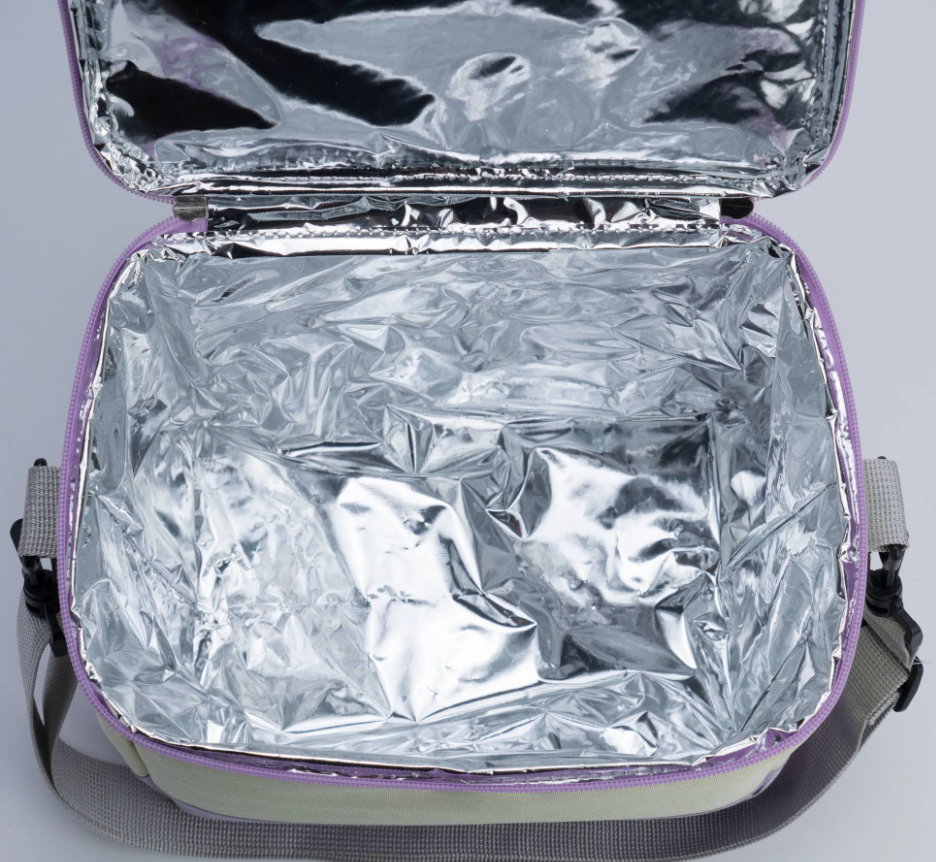
The cooler bag carries sealed drink bottles, lunch boxes and packaged food.
and:
Scenario B:
Unpackaged food is expected to directly touch the plastic lining.
The second situation creates more direct food-contact considerations.
Technical Reference
Commission Regulation (EU) No 10/2011 — Plastic materials and articles intended to come into contact with food
The regulation establishes requirements for plastic materials and articles that:
- Are intended to contact food
- Are already in contact with food
- Can reasonably be expected to contact food
It also covers relevant plastic multi-layer structures.
Buyer takeaway:
Do not accept the phrase “food-grade PEVA” without confirming:
- Exact lining material
- Intended contact condition
- Destination market
- Relevant declaration or test report
If the lining does not directly contact unpackaged food, the compliance requirement may differ from a product specifically designed for direct food contact.
4. Compartment Design Affects Both Capacity and Performance
Adding more compartments does not automatically make a cooler bag better.
Every divider, zipper and opening can affect:
- Usable capacity
- Insulation continuity
- Cleaning
- Material consumption
- Production cost
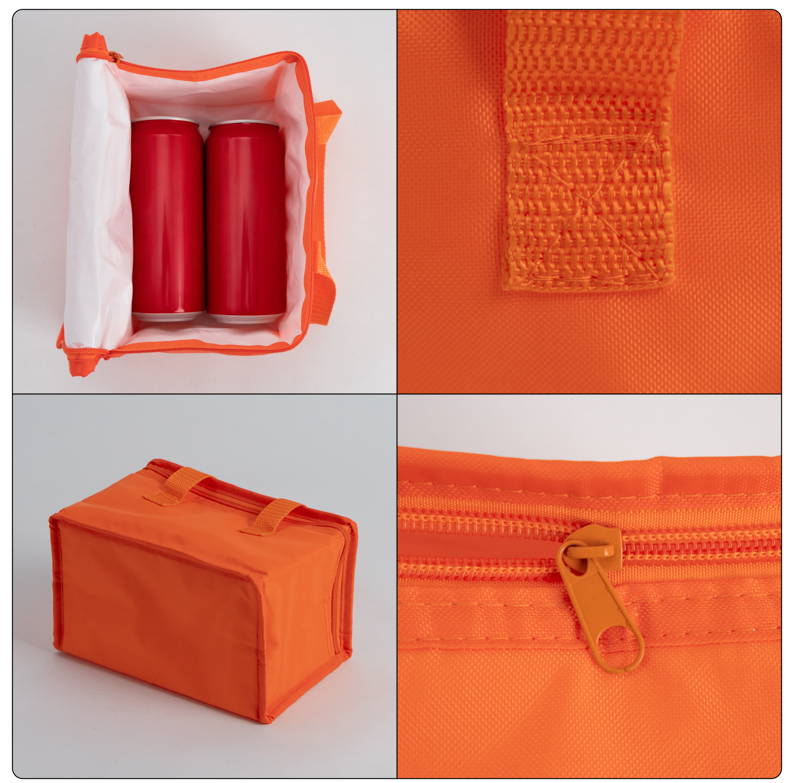
Single Insulated Compartment
A single insulated chamber offers:
- Maximum usable volume
- Simple construction
- Fewer internal seams
- Easier cleaning
Suitable for:
If thermal performance is the main priority, simple construction can often be more practical.
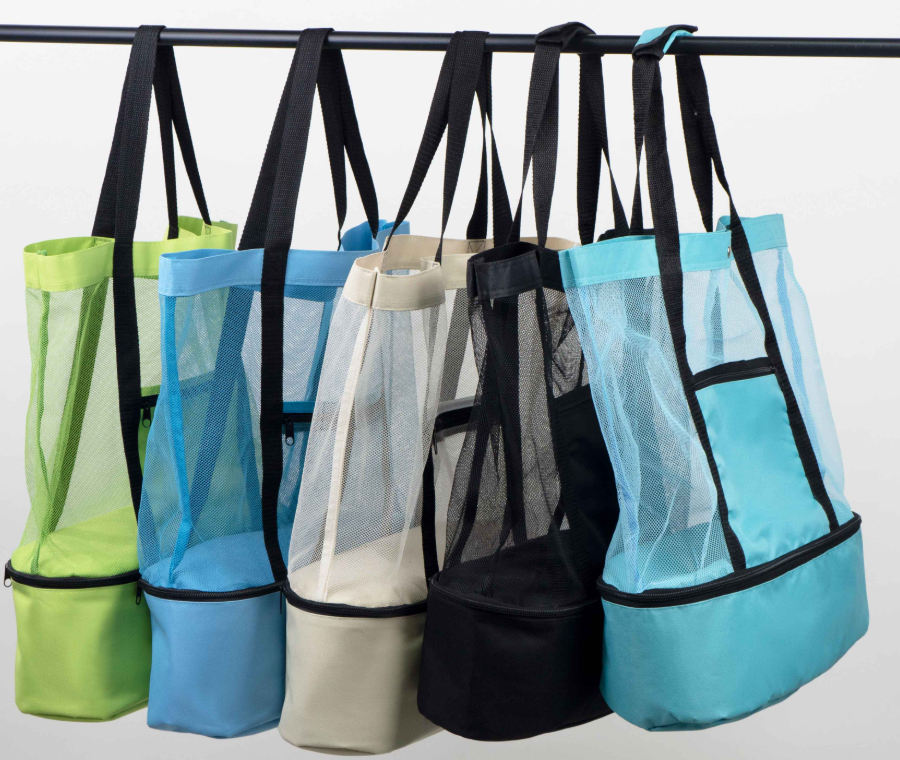
Insulated Compartment + Dry Storage
Some bags combine cold storage with a separate dry section.
Typical examples include:
- Cooler beach totes
- Picnic bags
- Sports bags
- Travel bags
The insulated section may hold:
- Drinks
- Fruit
- Food containers
- Ice packs
while the dry section carries:
- Towels
- Clothing
- Cutlery
- Phones
- Personal items
Buyers should confirm whether the divider between the sections is insulated.
An uninsulated divider can become a thermal weak point.
Bottle Dividers
Internal dividers can help prevent:
- Bottles falling over
- Glass containers hitting each other
- Food boxes moving during transport
But they also reduce usable internal volume.
For a bottle cooler, provide actual:
- Bottle diameter
- Bottle height
- Quantity
rather than asking only for a certain litre capacity.
5. Internal Dimensions Matter More Than External Capacity Claims
Insulation takes up space.
A bag with:
- Thick side insulation
- Thick bottom foam
- Padded lid
- Internal dividers
will have less usable space than another bag with the same external dimensions.
For custom development, provide representative items such as:
- 330 ml cans
- 500 ml bottles
- Lunch boxes
- Meal-prep containers
- Ice packs
During sampling, confirm:
- Do the products fit?
- Can the zipper close normally?
- Is there space for cooling media?
- Are bottles stable?
- Does the loaded bag retain its shape?
This is more reliable than specifying only “15 L” or “20 L.”
6. Zipper and Lid Construction
The opening is an important potential thermal weak point.
Common constructions include:
- Single zipper
- Double zipper
- U-shaped zipper opening
- Full top lid
- Roll-top structure
A large opening improves loading access but can increase heat exchange whenever the bag is opened.
Check:
- Zipper alignment
- Slider gaps
- Lid overlap
- Insulation around the opening
- Zipper-end construction
- Frequency of expected use
A water-resistant zipper can help reduce moisture entry from outside, but it does not automatically make the cooler compartment leakproof.
7. Water-Resistant Fabric Is Not the Same as a Leakproof Cooler Bag
This distinction should be included in every cooler-bag RFQ.
There are at least three separate performance questions.
Outer Fabric Water Resistance
This concerns rain or water entering through the exterior shell.
Lining Water Resistance
This concerns water passing through the lining material itself.
Finished-Bag Leakage
This concerns water escaping through:
- Seams
- Stitch holes
- Corners
- Zipper connections
- Lining joins
A supplier may provide evidence that the exterior fabric resists water while the completed cooler bag still leaks internally.
These are not contradictory results—they are different tests.
8. ISO 811 Does Not Prove a Finished Cooler Bag Is Leakproof
Technical Reference
ISO 811:2018 — Textiles — Determination of resistance to water penetration — Hydrostatic pressure test
ISO 811 specifies a hydrostatic-pressure method for determining the resistance of fabrics to penetration by water.
It applies to fabrics intended to be water resistant, whether or not they have received a water-resistant or water-repellent finish.
It is therefore useful for checking fabric performance.
However, ISO 811 does not by itself test:
- Finished cooler-bag corners
- Sewn lining seams
- Needle holes
- Zipper assemblies
- Complete compartment leakage
Buyer takeaway:
An ISO 811 fabric result should not be used as evidence that the complete cooler bag is leakproof.
If leakage matters, test the finished bag separately.
9. How to Define a Finished-Bag Leakage Test
Instead of asking:
“Can you guarantee no leakage?”
define a repeatable test.
A project-specific leakage test should state:
Water Quantity
Define how much water is placed inside.
The quantity should reflect the intended use.
Test Duration
Specify how long the filled bag remains under observation.
Bag Position
Define whether the bag is:
- Standing normally
- Lifted
- Tilted
- Carried
Inspection Areas
Pay particular attention to:
- Bottom corners
- Side seams
- Lining joints
- Zipper areas
Pass Criteria
Agree what constitutes failure:
- Visible droplets
- Wet external fabric
- Dampness under the bag
- Continuous leakage
There is no value in simply writing “leak test passed” if the supplier and buyer used different amounts of water and different test durations.
10. Thermal Performance Must Also Use Defined Conditions
Statements such as:
Keeps cold for 6 hours
Keeps cold for 12 hours
are only meaningful when the testing conditions are known.
A thermal-performance protocol should define:
| Test Variable |
What Should Be Specified |
| Ambient temperature |
Controlled test environment |
| Starting temperature |
Temperature of the contents before loading |
| Contents |
Water bottles, cans or representative products |
| Cooling media |
Ice, gel packs or none |
| Quantity |
Fixed load for each comparison |
| Sensor position |
Same location in every sample |
| Opening frequency |
Closed throughout or opened at defined intervals |
| Test duration |
Defined by the buyer |
| Pass criteria |
Target maximum temperature or temperature rise |
Why Conditions Matter
A cooler bag tested:
- Indoors at 22°C
- Fully loaded with chilled bottles
- With several frozen ice packs
- Without opening
will perform very differently from the same bag:
- Outdoors at 35°C
- Half empty
- Without ice packs
- Opened every 30 minutes
Therefore, thermal-retention claims should always be tied to test conditions.
11. A Relevant European Standard for Insulated Bags
Technical Reference
EN 12546-2:2000 / BS EN 12546-2:2000 — Materials and articles in contact with foodstuffs — Insulated containers for domestic use — Specification for insulated bags and boxes
The standard specifically covers portable insulated bags and boxes intended to contain generally wrapped or packaged foods and drinks.
Its scope is relevant to products such as:
- Domestic cooler bags
- Lunch coolers
- Portable insulated food bags
- Insulated drink bags
It does not cover every insulated transport application. For example, its stated scope excludes certain industrial/catering containers and bags specifically designed for short-term frozen-food transportation.
Buyer takeaway:
Testing requirements should match the product's actual use rather than applying a generic “cooler bag standard” to every project.
12. Recommended Structure by Application
| Application |
Development Direction |
| Promotional lunch bag |
Lightweight insulation + simple compartment |
| Office lunch cooler |
Easy-clean lining + structured zipper opening |
| Supermarket cooler |
Larger capacity + reinforced handles |
| Picnic cooler |
Stronger insulation + shoulder strap |
| Beach cooler tote |
Separate cooler section + dry storage |
| Beverage cooler |
Dimensions based on bottle/can layout |
| Outdoor cooler |
More demanding insulation and leakage requirements |
Adding performance also affects:
- Product weight
- Packing volume
- Carton quantity
- Freight cost
The best specification is not always the thickest construction.
13. Quality-Control Checklist
Before bulk production, check four areas.
Insulation
- Correct foam
- Correct thickness
- Consistent coverage
- No major gaps
- Limited compression
Lining
- Correct material
- No tears
- No delamination
- Clean seams
- Acceptable odor
Structure
- Correct internal dimensions
- Functional dividers
- Smooth zipper
- Reinforced handles
- Loaded balance
Performance
- Agreed leakage test
- Agreed thermal-retention test
- Production-equivalent sample
- Same testing conditions used for comparison
Common Buyer Mistakes
“5 mm Foam Means 8 Hours of Cooling”
There is no reliable direct conversion between foam thickness and finished-bag cooling hours.
“PEVA Means Food Grade”
The actual material, intended food-contact use and destination-market requirements must be verified.
“Waterproof Oxford Means Leakproof Interior”
Exterior fabric resistance and interior leakage are separate properties.
“ISO 811 Proves the Bag Is Waterproof”
ISO 811 evaluates fabric resistance to water penetration, not complete cooler-bag leakage.
“20 L Means 20 L of Practical Storage”
Insulation, dividers and internal structure reduce usable capacity.
“The Supplier Says 12 Hours, So It Is 12 Hours”
Ask for the complete test conditions.
Buyer Specification Checklist
Before requesting quotations, provide:
- Bag dimensions
- Intended contents
- Required usable capacity
- Outer material
- Insulation type
- Insulation thickness
- Lining material
- Compartment structure
- Zipper construction
- Handle and shoulder strap
- Direct food-contact requirement, if applicable
- Target market
- Leakage-test requirement
- Thermal-test requirement
- Logo artwork
- Estimated quantity
- Packaging requirements
This allows different supplier quotations to be compared against the same specification.
How INITI Supports Custom Cooler Bag Development
INITI develops custom cooler bags for food and beverage brands, retailers, supermarkets, promotional programs and outdoor applications.
Available development options can include:
- Polyester and Oxford outer fabrics
- RPET fabric
- Foam insulation
- PEVA or foil-style linings
- Single and multi-compartment layouts
- Separate insulated compartments
- Bottle pockets
- Reinforced handles
- Adjustable shoulder straps
- Custom zippers
- Custom logos
- Retail packaging
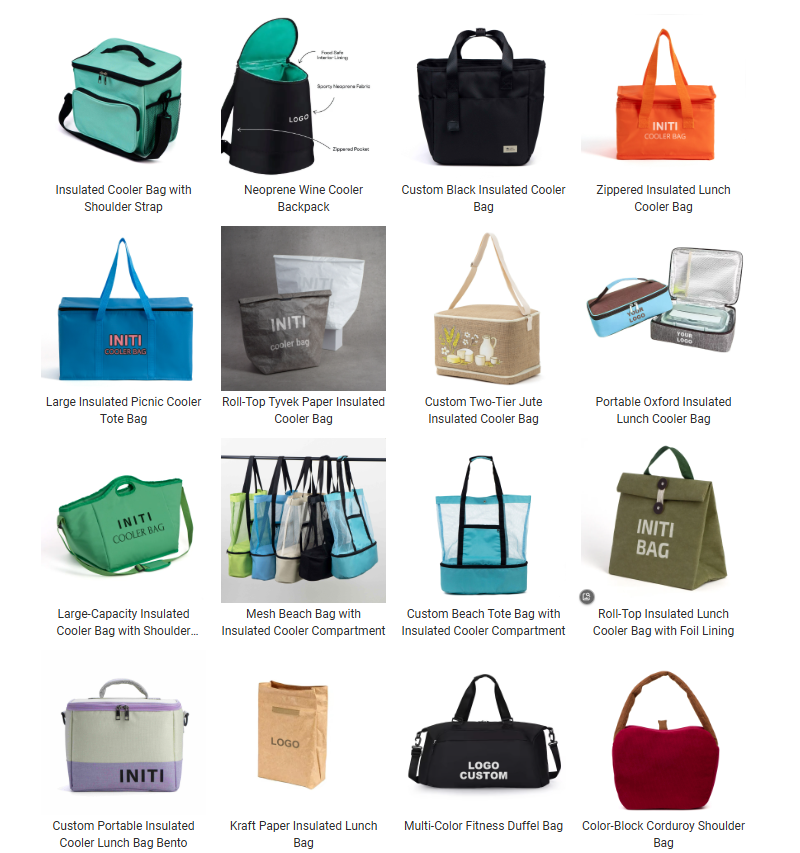
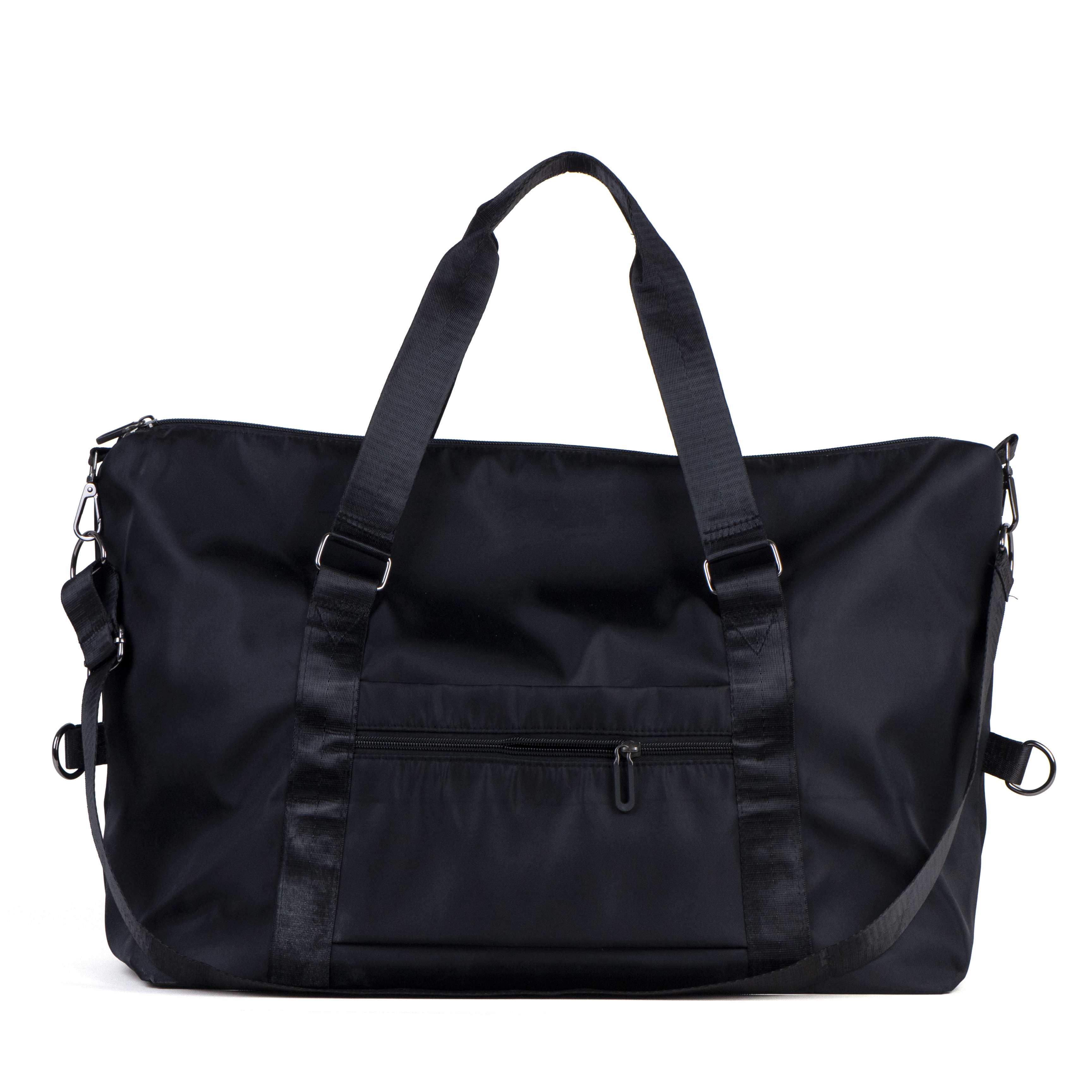
Current product structures include rectangular insulated cooler bags, portable lunch coolers and beach totes combining dry storage with a separate insulated cooler compartment.
For projects with specific thermal or leakage requirements, the approved sample should be tested under agreed conditions before bulk production.
FAQ
What insulation material is commonly used in soft cooler bags?
Polyethylene-based foam such as EPE is a common option. The appropriate material and thickness depend on the bag size, cost and required thermal performance.
Does thicker insulation always mean longer cold retention?
Not automatically. Thickness matters, but bag size, seams, zipper construction, loading conditions and ambient temperature also affect performance.
Is PEVA lining leakproof?
PEVA material itself can provide good moisture resistance, but sewn seams and corners may still leak. Finished-bag testing is required.
Can an ISO 811 test report prove the cooler bag is waterproof?
No. ISO 811 measures fabric resistance to water penetration. It does not evaluate the complete bag's seams, corners and zipper construction.
How should buyers verify a “keeps cold for 8 hours” claim?
Request the actual test conditions, including ambient temperature, initial product temperature, contents, cooling media, sensor position, opening frequency and pass criteria.
Conclusion
A reliable cooler bag specification should separate material properties from finished-product performance.
Buyers should define:
- Insulation type and thickness
- Lining material
- Usable internal dimensions
- Compartment structure
- Leakage requirements
- Thermal-performance conditions
More importantly, claims should be supported by appropriate evidence.
ISO 811 can support a fabric water-resistance claim. ASTM C518 can characterize thermal-insulation material. EU Regulation No 10/2011 is relevant when applicable plastic materials are intended for food contact. EN 12546-2 specifically addresses certain portable insulated bags and boxes.
None of these should be used to support a claim outside their actual scope.
For finished cooler bags, the most useful purchasing approach is still:
Define the expected performance → define the test conditions → approve the sample → use the same specification for bulk production.
Technical References
- ISO 811:2018 — Textiles — Determination of resistance to water penetration — Hydrostatic pressure test
- ASTM C518-21 — Standard Test Method for Steady-State Thermal Transmission Properties by Means of the Heat Flow Meter Apparatus
- EN 12546-2:2000 / BS EN 12546-2:2000 — Materials and articles in contact with foodstuffs — Insulated containers for domestic use — Specification for insulated bags and boxes
- Commission Regulation (EU) No 10/2011 — Plastic materials and articles intended to come into contact with food
Inquiry Support
For a custom cooler bag project, provide:
- Intended use
- Estimated quantity
- Preferred size or reference dimensions
- Products to be carried
- Required colors
- Preferred insulation structure
- Compartment requirements
- Target thermal performance
- Leakage requirements
- Logo artwork
- Packaging requirements
If you have not finalized all details, you can first send your intended use and target quantity, and we can recommend a suitable specification.

Related Products
Related Blog Articles



 Hot News