When sourcing high-quality yoga bags, aesthetics alone should not be your selection criterion. A market-competitive yoga bag must securely hold a yoga mat, provide organized storage for personal belongings, deliver comfortable carrying experience, and fit end users’ real scenarios of traveling to and from yoga studios. Lightweight yoga mat straps are designed for light studio visits; large-capacity yoga tote bags or gym bags cater to consumers who need to pack change of clothes, towels, water bottles and personal essentials.
The yoga bag market is flooded with various styles. Many models feature gimmicky functions that only add unnecessary weight and production costs. Some products focus on portability, some prioritize storage capacity, while multi-functional designs work seamlessly across yoga sessions, office commutes, short trips and daily use.
This sourcing guide breaks down mainstream yoga bag categories, compares fabric materials and practical features to help buyers accurately match products to target audiences. Whether your end customers are casual yoga practitioners, frequent studio attendees, or you are sourcing for retail stock and custom branded gift projects, understanding these differences will support you to make more efficient purchasing decisions.
What Is a Yoga Bag?
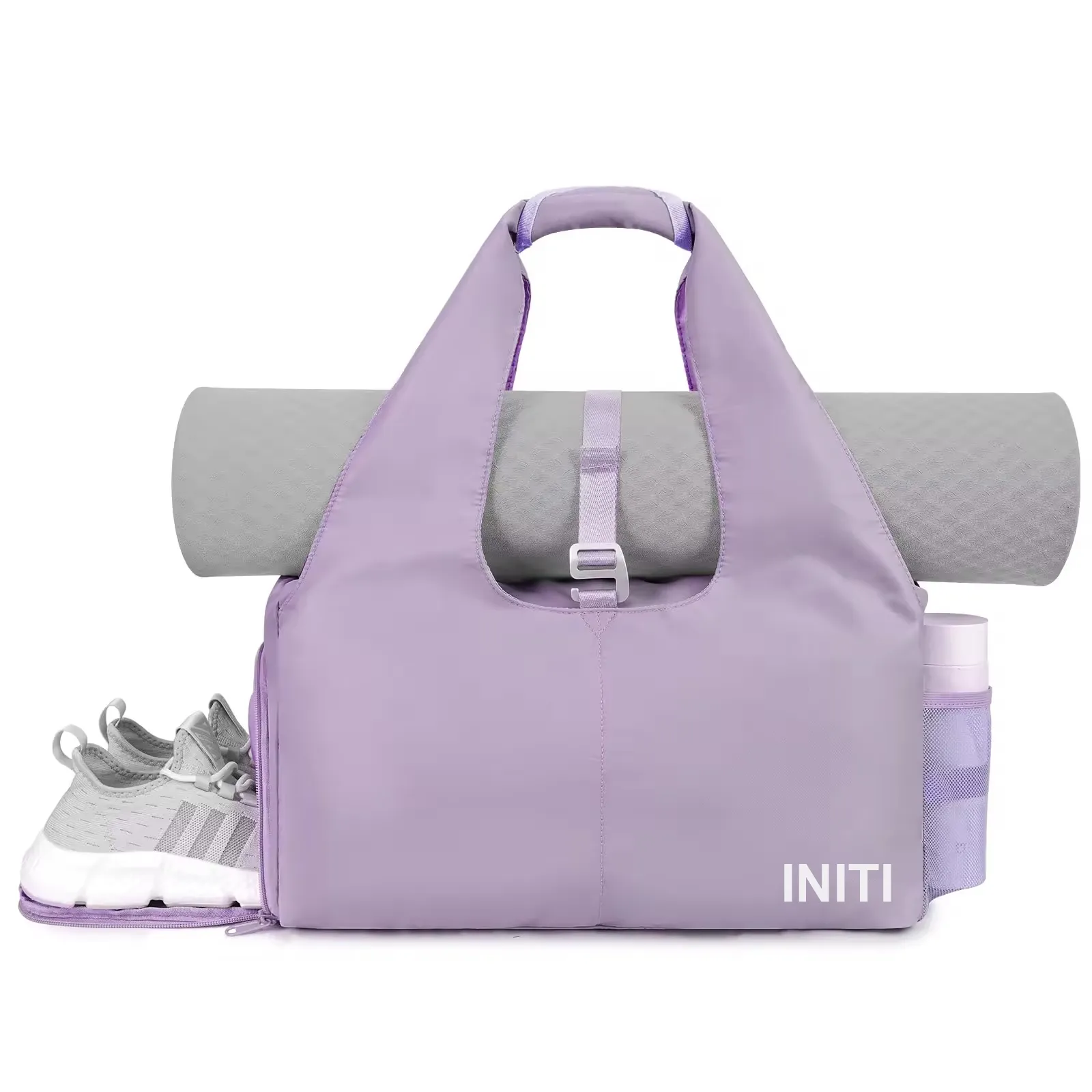
A yoga bag is a bag or carrier designed to transport yoga equipment, especially a rolled yoga mat. Depending on its structure, it may also accommodate yoga blocks, straps, towels, water bottles, spare clothing, toiletries, and personal items.
Unlike a standard handbag or gym bag, a dedicated yoga bag may include a mat sleeve, external mat straps, a long compartment, or a structure that keeps the mat separate from the main storage area.
However, not every yoga bag needs to carry every piece of equipment. A minimalist carrier can be sufficient for someone who brings only a mat to class, while a larger bag is more practical for people who combine yoga with work, commuting, or other fitness activities.
Yoga Bag vs. Yoga Mat Carrier
The terms yoga bag and yoga mat carrier are often used interchangeably, but they can describe different levels of functionality.
A yoga mat carrier usually focuses on holding the mat securely. It may consist of a simple strap, an open sling, or a narrow zippered sleeve. Its main advantages are portability and simplicity.
A yoga bag generally offers more storage space or additional functions. It may have a main compartment, multiple pockets, adjustable shoulder straps, a water bottle holder, or a separate section for sweaty clothing.
The distinction is useful when comparing products, although the categories overlap.
For example, a person who walks five minutes to a yoga studio may prefer a lightweight carrier. Someone who travels across town after work may need a bag that can hold a laptop, a change of clothes, and a mat without requiring several separate accessories.
What a Yoga Bag Actually Has to Do
Every yoga bag is asked to solve three problems at once, and the three pull against each other.
Carry a cylinder. A rolled mat is a rigid cylinder with a diameter that varies from roughly 6 cm to 18 cm depending on thickness, length, and how tightly the user rolls it. Unlike clothing, it cannot be compressed to fit a shape. The bag must be built around the cylinder or it does not work at all.
Carry everything else. Mat, towel, bottle, change of clothes, phone, keys, and in commuter use a laptop. These items are soft, divisible, and forgiving. The mat is none of those things, which is why the mat — not the clothing — should determine the bag's geometry.
Survive repetition. A studio bag is loaded and unloaded four to six times a week, set on floors, dragged through doorways, and hung on a hook by one strap. The stresses are repetitive and concentrated at a handful of points: strap anchors, holder attachment, zip ends, base corners.
A bag that solves the first problem well usually solves the third badly, because a tight mat fit means high compression on seams. A bag that maximizes storage usually makes the second problem worse, because a wide body with a full load becomes a one-shoulder burden.
Mat Holder Placement: Four Positions and What Each One Costs
Where the mat sits determines how the bag handles, how quickly the user can get to it, and how much printable surface remains for a logo. The four common positions are not interchangeable.
| Holder position |
Effect on balance |
Access speed |
Protection |
Branding area lost |
Cost |
| Front panel, horizontal |
Mat lies flat against the body; stable when compressed, swings when loose |
Fast — mat is outside the main compartment |
Moderate; two faces exposed |
Large front panel consumed |
Medium |
| External vertical sleeve |
Weight hangs below the shoulder line; less swing than horizontal |
Moderate; requires threading the mat |
Moderate to high |
Narrow strip on one side |
Low to Medium |
| Internal sleeve or full-length compartment |
Best balance; load sits against the body |
Slow; the main compartment must be opened |
Highest |
Small exterior area |
Medium to High |
| External webbing loops or straps |
Lowest stability; mat can shift and rotate |
Fastest |
Lowest |
Minimal |
Low |
Front panel holders trade printable area for convenience. The holder occupies the largest uninterrupted surface on the bag, which is also the best place for a logo. A tote with a front holder is therefore often branded on the upper front panel above the mat, on the back, or on a pocket. Buyers should decide this early, because adding a mat holder after artwork is approved usually means redesigning the print layout.
Internal sleeves protect the mat but consume the bag. A full-length internal compartment is the only arrangement that keeps rain and road grit off the mat entirely, but it takes 4–6 cm of the bag's depth for its whole length. A 19 cm deep duffel that adds an internal mat tube is effectively a 13–14 cm deep duffel. That is a fair trade for a commuter in a wet climate and a poor one for a hot-yoga practitioner whose mat is wet when it goes in.
External loops are a compromise that must be specified carefully. Webbing loops with adjustable buckles cost little and add almost no weight, but they rely on the user compressing the roll. Two loops set 25–30 cm apart, each wide enough to accept a 18 cm roll, with a cam buckle rather than a side-release buckle, hold a mat far more securely than four narrow loops spaced along the bag.
The Six Carry Architectures
Almost every product sold as a yoga bag belongs to one of six structural families. They are not variations in style; they are different solutions to the same transport problem, and each solves one part of it at the expense of another.
1. Mat Sleeve and Drawstring Carrier
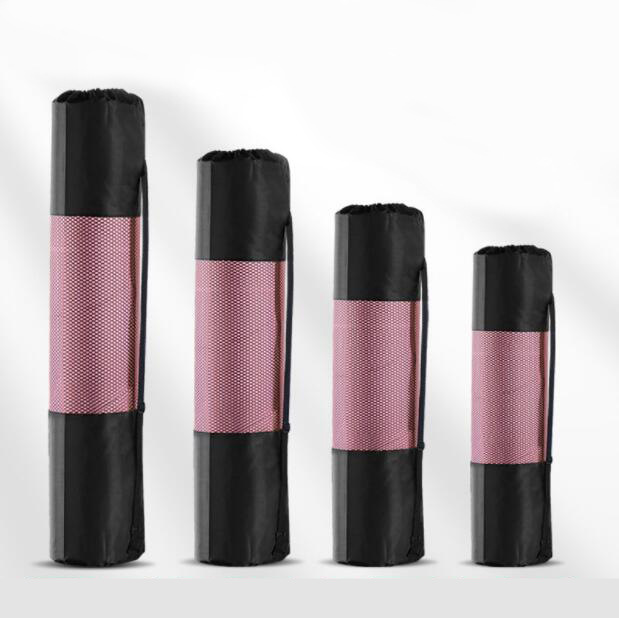
The simplest form: a tube or envelope sized to the rolled mat, closed with a zipper, drawstring, or flap, carried by a single shoulder strap or a pair of short handles.
This is the lightest and cheapest architecture, and for a practitioner whose only cargo is the mat it remains the most efficient. A well-made sleeve in 10 oz canvas or 210D ripstop nylon weighs 200–300 g and disappears into a tote or backpack when not in use.
The limitations are structural rather than stylistic. A sleeve has no compression, so the mat slides inside it during walking and the strap loads one small anchor point. There is no room for a bottle, so the bottle is carried separately — which is exactly how bottles get left on studio floors. And because the sleeve is often dimensioned from mat length alone, it frequently accepts a 4 mm mat while refusing a 6 mm one.
Best for: minimalists, home practitioners who occasionally travel to a studio, retreat packing where the sleeve is a second bag inside luggage, and gift or promotional programs where unit cost dominates.
2. Yoga Tote with External Mat Attachment
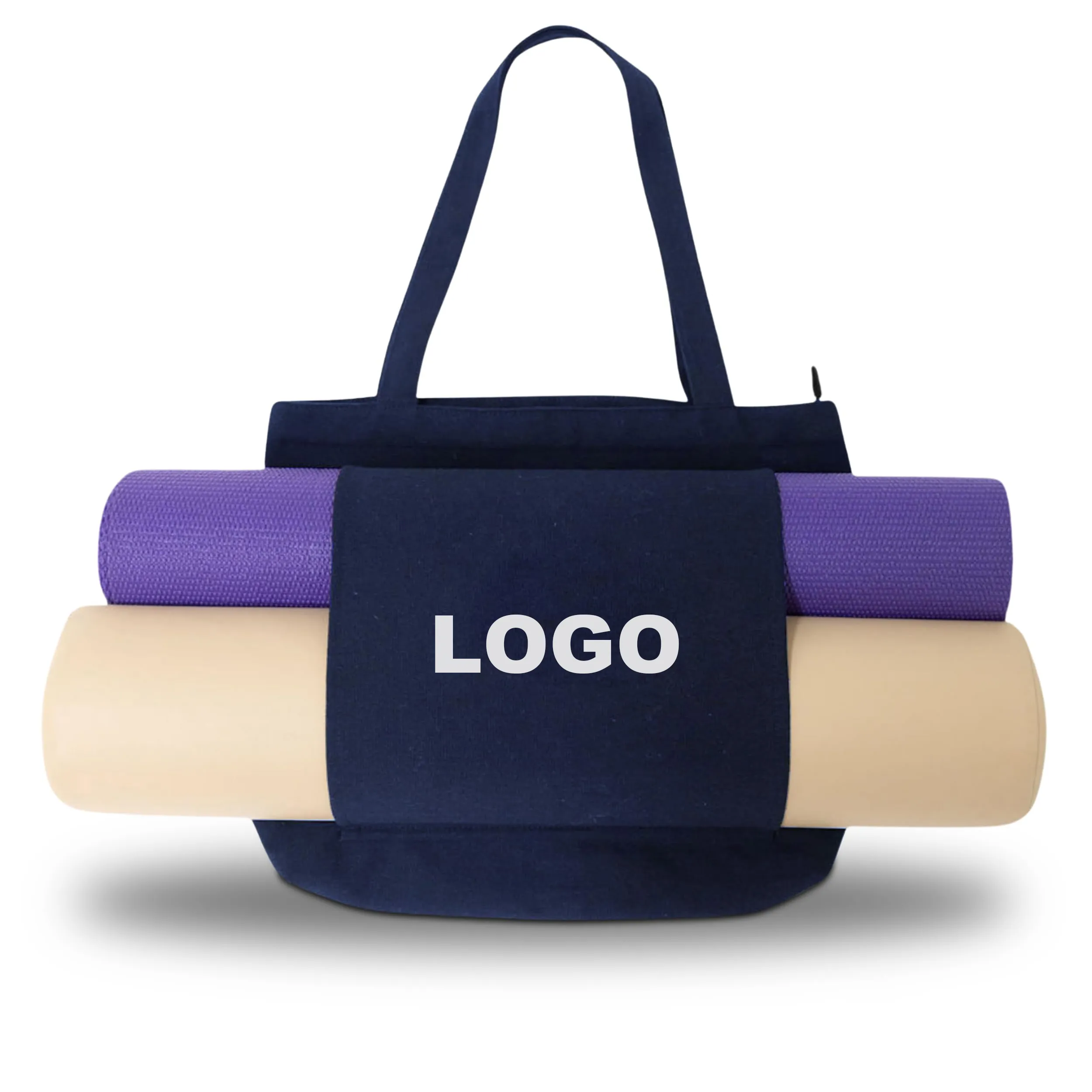
The tote is the most commercially successful yoga architecture because it does two jobs at once. The body carries clothing, a towel, a bottle, and personal items; the mat travels outside, either through a full-length sleeve on one face, behind two vertical straps, or under a flap.
Moving the mat outside the main body is the single most important spatial decision available to a yoga bag designer. A 6 mm mat consumes roughly 10 L of space when rolled; relocating it externally frees that volume for everything else and keeps the bag's silhouette closer to a normal tote, which is why the format reads as fashion rather than equipment.
The trade-offs are specific. An external sleeve leaves part of the mat exposed to weather and street dirt. External straps need buckles or elastic that must be adjusted for diameter, and loose strap ends snag. Most importantly, a mat hanging on one face shifts the bag's center of gravity outward, so a tote that feels balanced when empty can rotate against the hip when loaded.
Best for: studio-goers who want one bag for class and errands, retail assortments at mid-market price points, and any brand using the bag as a wearable marketing surface.
3. Yoga Backpack
The backpack solves the problem the tote cannot: distance. Two padded straps distribute load across the shoulders and upper back, and a sternum strap stabilizes the bag when the mat is mounted vertically on the outside.
For anyone cycling, riding public transport, or walking more than about fifteen minutes, the backpack is usually the correct answer, and it is the architecture least sensitive to total weight. It is also the most expensive to make, because a padded back panel, two adjustable straps, a mat attachment system, and internal organization multiply both material consumption and sewing operations.
The failure mode to watch is over-design. A backpack with a laptop sleeve, a shoe compartment, a wet pocket, a mat sleeve, two bottle pockets, and a trolley strap becomes a 1.2 kg bag that carries 6 kg — a poor ratio, and a confusing product to merchandise. Backpacks work best when the specification commits to one primary scenario.
Best for: commuters, cyclists, teachers carrying props, students moving between campus and studio, and multi-day travel where the mat rides outside the cabin bag.
4. Yoga Duffel with Shoe Compartment
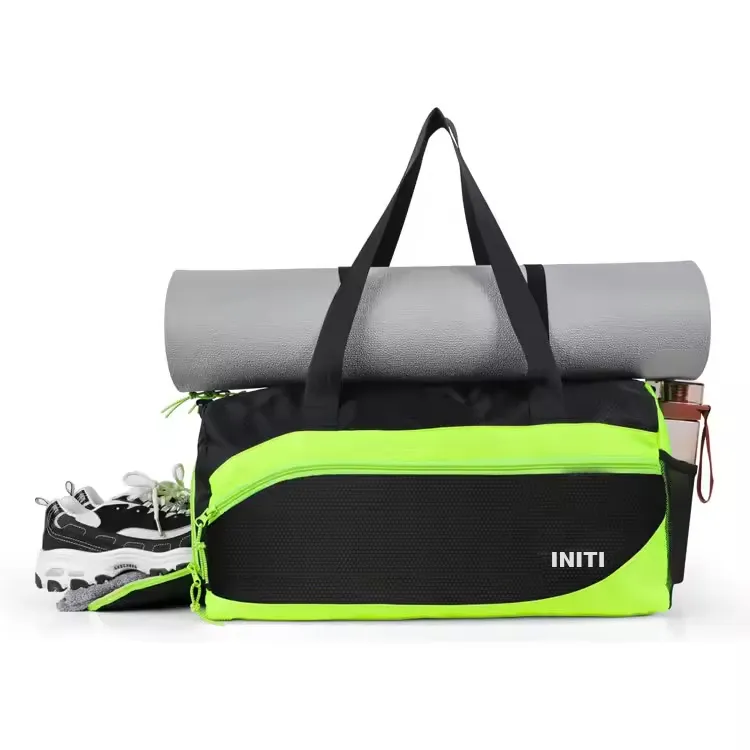
The duffel combines mat transport with a full gym kit. Its defining feature is not the shape but the compartmentalization: shoes in a ventilated end or side pocket, damp items isolated, mat internal or strapped externally, and enough volume for a change of clothes.
This is the architecture that wins with hybrid practitioners, and the one that most often fails commercially for a simple reason: every compartment added increases size, cost, and the chance that a buyer misreads capacity. A duffel claiming to hold "mat, shoes, clothes, and towel" usually holds all four only when the clothes are a single compressed set.
Duffels also carry the highest risk of contamination between zones. A shoe compartment without a physical divider, or a wet pocket whose seams are not sealed, turns a marketing feature into a complaint about a damp mat.
Best for: gym-plus-yoga users, sports clubs, corporate wellness programs, and travel where one bag must serve several activities.
5. Sling and Crossbody Mat Carrier
A sling is a mat tube with a diagonal strap. Worn across the body, the mat sits diagonally across the back. It is the most compact way to move a mat hands-free, and its ergonomics beat a single-shoulder tube because the load crosses the torso instead of hanging from one point.
The sling's constraint is capacity: by definition it carries the mat and a thin pocket. It suits practitioners who leave a change of clothes at the studio or who practice somewhere with secure storage.
Best for: short commutes, hot classes where the only cargo is a mat and towel, and festival or retreat environments.
6. Mat Strap Only
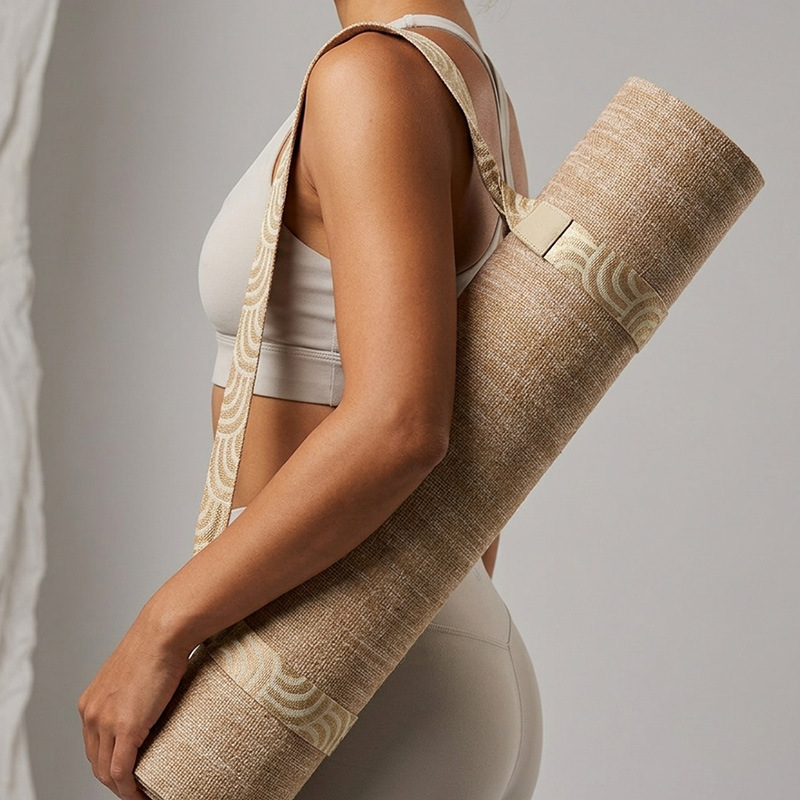
A strap with two loops is not a bag, but it deserves a place in the comparison because it is frequently the correct purchase. It weighs under 150 g, costs a fraction of a bag, occupies no storage, and holds the mat securely if the loops are sized to the rolled diameter.
The failure mode is loop security. Straps that rely on friction or a single plastic slide can loosen mid-walk; straps with buckled loops and an adjustable length hold better. For a practitioner who always carries a separate tote anyway, a strap plus a tote is a more flexible system than a dedicated mat bag.
Best for: travelers who pack a mat inside luggage, practitioners with an existing everyday bag, and low-cost promotional items.
Comparing the Six Architectures
| Architecture |
Mat position |
Typical empty weight |
Relative cost |
Main strength |
Main weakness |
| Mat sleeve |
Internal |
200–300 g |
Low |
Lightest, cheapest |
No capacity, single anchor point |
| Yoga tote |
External sleeve or straps |
400–700 g |
Medium |
Dual-purpose, brand surface |
Load shifts outward |
| Yoga backpack |
External vertical |
700–1,200 g |
High |
Best for distance and weight |
Component count, cost |
| Yoga duffel |
Internal or external |
600–1,100 g |
Medium–High |
Full kit, compartmentalized |
Size misreading, cross-contamination |
| Sling |
Internal diagonal |
250–400 g |
Low–Medium |
Hands-free, compact |
Minimal capacity |
| Mat strap |
Looped |
100–180 g |
Low |
Negligible storage footprint |
No protection |
The practical selection rule is to choose the architecture from the commute first, then adjust capacity, then choose materials.
Matching the Bag to the Practice
Practice style changes the payload more than it changes the aesthetic. The table below maps common practice contexts to the decisions that actually differ between them.
| Practice context |
Realistic payload |
Critical design requirement |
Least important feature |
| Hot yoga |
Mat, two towels, change of clothes, 1 L bottle |
Ventilation, wipe-clean lining, sealed damp zone |
Structured shape, fashion trim |
| Vinyasa and power |
Mat, towel, bottle, phone |
Secure mat, one-hand bottle access |
Shoe compartment |
| Ashtanga and Mysore |
Stiff 5 mm mat, cotton rug, towel |
Oversized sleeve for mat plus rug |
Wet pocket |
| Yin and restorative |
Mat, blanket, bolster, strap |
Volume and a wide opening |
External mat straps |
| Prenatal |
Mat, bolster, cushion, bottle, snacks |
Wide opening, stable base, easy floor access |
Slim silhouette |
| Gym and yoga hybrid |
Mat, shoes, clothes, towel, bottle |
Physical separation of shoes and clean kit |
Low weight |
| Studio commuter |
Mat, clothes, laptop, bottle |
Backpack carry, padded straps, secure mat |
Decorative hardware |
| Teacher, multiple classes |
Two mats, props, manuals, speaker |
Capacity, reinforcement, replaceable straps |
Minimal size |
| Retreat and travel |
Mat, clothes, toiletries |
Cabin compatibility, compressibility |
Rigid structure |
Four of these deserve elaboration because they are commonly mis-specified.
Hot yoga is a moisture problem disguised as a capacity problem. The class ends with a mat that is wet on one side, a towel that is soaked, and clothing that should not touch either. A bag with one large compartment forces all three together for the journey home, and the resulting odor is not a cleaning failure — it is a design failure. The correct response is a designated damp zone with a coated lining, seams that do not wick, and a vent path that lets vapor escape rather than condense.
Restorative practice is a volume problem. A bolster is roughly 60 cm long and 23 cm in diameter, about 25 L on its own. No conventional yoga bag carries one. The realistic options are a mat-and-blanket tote with a wide mouth or a separate bolster strap.
Ashtanga practice is a diameter problem. A stiff 5 mm mat plus a cotton rug rolls to a larger diameter than either alone, and stiff mats resist compression at the opening. Sleeves for this segment need both a larger circumference and a longer zipper opening; a standard 200 mm sleeve is unusable.
The teacher's bag is a durability problem. Two mats, blocks, a strap, printed sequences, and sometimes a small speaker, carried between three locations a day. That bag sees more load cycles in six months than a casual user's bag sees in five years, which makes reinforcement at the strap anchors the deciding factor, not styling.
How to Choose the Right Yoga Bag Size
A bag that is too small can make packing frustrating, while an oversized design may be inconvenient to carry and store.
The first step is to measure the equipment you actually use.
Step 1: Measure Your Rolled Yoga Mat
Check three measurements:
Length: The distance from one end of the rolled mat to the other.
Rolled diameter: The thickness of the roll at its widest point.
Width before rolling: Useful for understanding the mat's overall size, although it does not directly determine the carrier's opening diameter.
The rolled diameter is particularly important for enclosed bags. A thick mat may require a substantially larger opening than a thin travel mat.
If you use more than one mat, choose a bag based on the largest one you expect to carry.
Step 2: Decide What Else Goes Inside
A mat-only carrier requires little additional capacity. A bag for regular studio use may also need space for a towel, water bottle, strap, and personal belongings.
A hot-yoga bag may require additional room for spare clothing and used towels. A commuter bag may need to accommodate a laptop and work essentials.
Rather than choosing a bag based on volume alone, consider whether the compartment layout allows each item to fit comfortably.
Step 3: Consider the Bag's Usable Dimensions
External dimensions are not the same as internal capacity.
Lining, padding, curved corners, dividers, and pockets can reduce usable space. The opening may also be narrower than the main compartment.
For an enclosed mat bag, confirm that both the length and the opening accommodate the mat. For a tote with external mat straps, check the usable strap length and whether the bag body remains stable when the mat is attached.
Step 4: Allow Practical Clearance
A bag should not require excessive force to insert or remove the mat.
For an enclosed carrier, compare the opening and internal circumference with the rolled mat's actual diameter. A little extra room makes loading easier, but too much space can allow the mat to move around.
For external holders, check that the straps adjust sufficiently without becoming loose or placing unnecessary pressure on the mat.
Step 5: Test the Loaded Bag
A bag that fits everything when placed on a table may not carry comfortably.
When possible, test it with the mat and typical accessories inside. Check the balance, strap position, ease of access, and stability when walking.
Yoga Bag Materials: Which Fabric Should You Choose?
The fabric affects a yoga bag's weight, feel, appearance, maintenance, durability, and cost. There is no universally superior material because different designs face different demands.
A lightweight sling does not need the same construction as a large duffel carrying wet towels and spare clothes. Similarly, a lifestyle tote may prioritize appearance and print quality more heavily than a bag designed for frequent outdoor commuting.
Cotton and Cotton Canvas
Cotton is a natural fiber commonly used in casual bags and lifestyle accessories. Cotton canvas uses a woven construction that can provide a more substantial feel than lightweight cotton fabric.
Advantages:
- Natural textile appearance.
- Suitable for a variety of printed and decorative designs.
- Available in different weights and constructions.
- Can work well for tote-style yoga bags.
- Offers opportunities for reusable, everyday product positioning.
Limitations:
- Absorbs moisture more readily than many synthetic fabrics.
- May become heavier when wet.
- Performance depends on fabric weight, weave, stitching, and reinforcement.
- Some colors and finishes may require specific care.
Canvas can be a good option for a yoga tote that carries a mat externally and stores dry everyday essentials inside. It may be less suitable for a design intended to enclose wet equipment immediately after a hot-yoga session unless the bag includes an appropriate moisture-management solution.
Polyester
Polyester is widely used in sports and travel bags because it can offer a useful balance of weight, durability, versatility, and cost.
Its performance varies considerably depending on yarn, fabric density, weave, coating, and finishing.
Advantages:
- Available in lightweight and heavier constructions.
- Can support a broad range of colors and prints.
- Often suitable for everyday fitness bags.
- Can be combined with mesh, padding, and coated components.
- Generally offers practical care options, depending on the finish.
Limitations:
- Water resistance is not guaranteed without suitable construction or treatment.
- Some lightweight fabrics may be less abrasion-resistant than expected.
- Fabric quality alone does not determine the strength of the finished bag.
Polyester is a practical starting point for many multipurpose yoga bags, particularly when buyers need to balance price, appearance, and everyday functionality.
Nylon
Nylon is often selected for bags that require a lightweight yet durable fabric. Depending on its construction, it can offer good abrasion resistance and flexibility.
It is commonly used in backpacks, travel bags, and performance-oriented designs.
Advantages:
- Suitable for lightweight, functional constructions.
- Available in a variety of fabric weights and finishes.
- Can work well for bags exposed to frequent handling.
- Compatible with coatings and reinforced structural components.
Limitations:
- Cost varies by specification and finish.
- Water resistance depends on the complete fabric and bag construction.
- Appearance and texture may differ substantially between fabric types.
Nylon is worth considering for yoga backpacks and travel-oriented bags where repeated use and carrying comfort are priorities.
Recycled Polyester (rPET)
Recycled polyester, commonly called rPET, is made from recycled polyester feedstock. Depending on the manufacturing process, the feedstock may include post-consumer plastic bottles or other recycled polyester materials.
It can be used in yoga totes, backpacks, drawstring bags, and other sports accessories.
Advantages:
- Provides an option for incorporating recycled materials.
- Supports a variety of fabric weights, colors, and constructions.
- Can be used for branded products with sustainability-related positioning when claims are substantiated.
- Offers flexibility for different bag structures.
Limitations:
- Recycled content does not automatically make a finished bag recyclable.
- Durability still depends on fabric construction and manufacturing quality.
- Material claims should be supported by appropriate supplier documentation.
Buyers considering rPET should verify the recycled content, applicable documentation, and the exact scope of any environmental claims. The finished product's other components, including coatings, zippers, padding, and lining, also affect its overall material profile.
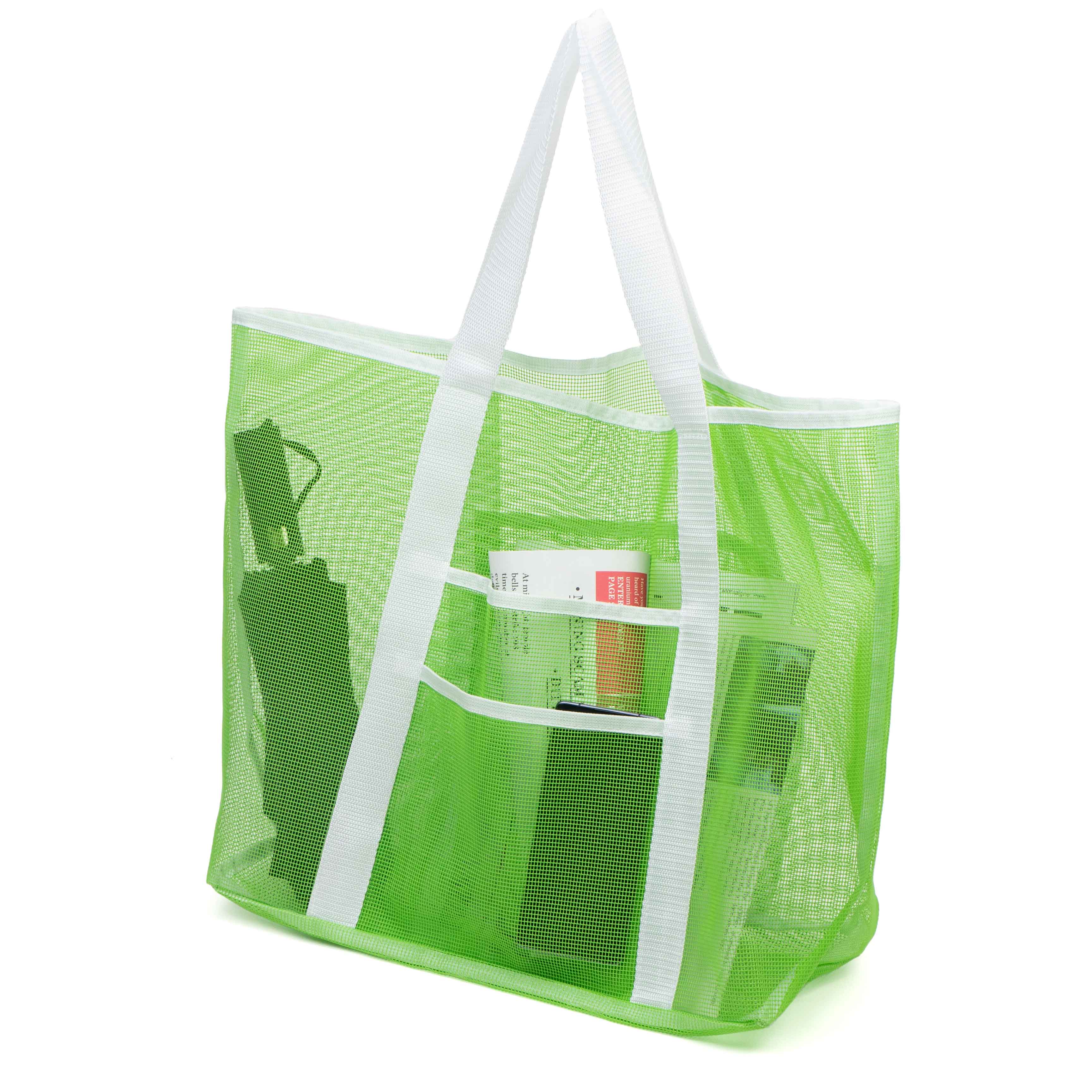
Mesh Fabric
Mesh is used where airflow, low weight, or visibility of contents is important.
It can appear as the main fabric of a yoga bag or as a panel within a larger design.
Advantages:
- Encourages airflow around equipment.
- Can reduce overall bag weight.
- Useful for designs that carry damp towels or frequently used mats.
- Provides a distinct sporty appearance.
Limitations:
- Offers limited protection against rain and fine dust.
- May expose contents to view.
- Mesh strength varies by yarn, opening size, and construction.
- Small items may need separate pockets.
Mesh is often most effective as part of a design rather than as a universal solution. A ventilated panel combined with a more protective main fabric can balance airflow and storage.
Three specification points carry more weight than the material name on the label.
Fabric weight is the first divider within a material family. A 10 oz canvas tote and a 16 oz canvas tote are different products at different price points, even though both are called canvas. Our canvas weight guide explains the ounce and gram-per-square-meter relationship in detail, and denier does the equivalent job for synthetic fabrics.
Coating decides water behavior, not the fiber. Uncoated polyester sheds a light drizzle and then wets through at the seams. A PU back-coating raises resistance meaningfully; a TPU film raises it further. None of these make a sewn bag waterproof, because needle holes and zipper openings remain.
Lining is where hygiene is won or lost. A coated 210D polyester lining can be wiped; an uncoated one absorbs. For damp compartments, a heat-sealed PEVA or TPU liner eliminates the stitch holes that otherwise let moisture migrate into the bag body.
What Should Buyers Look for When Sourcing Yoga Bags in Bulk?
For retailers, fitness brands, wellness businesses, and promotional merchandise buyers, selecting a yoga bag involves more than choosing a popular consumer style.
A successful product needs to match its target audience, price positioning, intended use, and branding requirements. It should also be practical to manufacture consistently at the required quantity.
1. Define the Target Customer
Start by deciding who will use the bag and how.
A boutique yoga studio may want a stylish tote with a printed logo. A sports retailer may prioritize a range of functional designs at different price points. A corporate wellness program may need a useful branded gift that recipients can also use outside the studio.
These audiences may prefer different materials, capacities, colors, and closures.
The target customer should determine the design rather than adding every available feature to one product.
2. Choose a Product Structure
The bag structure determines much of its functionality and production complexity.
A simple mat sling has fewer components, while a zippered tote with internal pockets, external holders, lining, and luggage straps requires more materials and assembly steps.
A practical product range might include:
- A basic mat carrier for entry-level retail or event use.
- A canvas yoga tote for lifestyle-oriented customers.
- A multipurpose yoga backpack for commuters.
- A larger gym bag for users who carry clothes and accessories.
- A ventilated design for customers who regularly transport damp equipment.
This approach creates meaningful differences between products without making every style unnecessarily complicated.
3. Select Materials Based on Use
Material choice should follow the expected performance requirements.
Canvas may suit a lifestyle tote where appearance and everyday carrying matter. Polyester or nylon may be appropriate for a sports-oriented backpack or duffel. Mesh can be incorporated where airflow is useful.
For recycled-material products, verify the recycled content and any supporting documentation before making environmental claims.
It is also important to consider the lining, webbing, zippers, padding, and reinforcement materials. A durable outer fabric cannot compensate for weak strap attachment points or poor construction.
4. Review Branding Options
Yoga bags offer several potential branding areas, including the front panel, side panel, pocket, woven label, and selected webbing details.
The best location depends on the bag's structure and the visual design.
For example, a large front panel may provide a suitable area for a logo on a yoga tote. A narrow mat sling may work better with a small label or understated print.
When reviewing artwork, consider the available flat surface, seam positions, pocket openings, and curved areas. Branding should remain legible without interfering with the bag's functional features.
5. Check Construction and Usability
Before approving a sample, examine the areas most likely to experience repeated stress.
These include strap attachment points, mat-holder loops, zipper ends, handle connections, and seams around loaded pockets.
Useful checks may include:
- Verifying the actual dimensions against the approved specification.
- Loading the bag with representative equipment.
- Checking the mat holder for slippage.
- Opening and closing the zipper repeatedly.
- Inspecting stitching and reinforcement.
- Assessing color consistency and print placement.
- Reviewing care instructions and packaging requirements.
The specific tests should reflect the product's intended use and the buyer's quality requirements.
6. Understand the Factors That Affect Cost
The final cost of a custom yoga bag depends on more than the fabric price.
| Cost factor |
Effect on unit cost |
Worth paying when |
Cost |
| Fabric weight increase (e.g. 12 oz to 16 oz canvas) |
Moderate |
The bag must stand unsupported or carry repeated loads |
Medium |
| Lining added throughout |
Moderate |
The bag carries damp or abrasive items |
Medium |
| Padded handle or strap |
Low |
Load routinely exceeds 5 kg or carry exceeds 15 minutes |
Low |
| Front mat holder vs external loops |
Moderate |
The mat must be stable while walking and the front must stay brandable |
Medium |
| Ventilated shoe or wet compartment |
Moderate |
The customer carries damp gear; otherwise it consumes volume |
Medium |
| Luggage pass-through |
Low |
The bag is sold into travel or retreat use |
Low |
| Two-way zip or water-resistant zip |
Low to Moderate |
The bag is loaded to capacity or used in rain |
Low |
| Custom Pantone fabric dyeing |
High |
Brand color is the product's identity; otherwise use stock shades |
High |
| Retail packaging (hangtag, polybag, insert card) |
Moderate |
The product sells from a shelf rather than a warehouse |
Medium |
| Order quantity |
High |
Consolidating SKUs usually saves more than negotiating unit price |
High |
7. Confirm MOQ, Sampling, and Lead Time
Minimum order quantity, sample costs, production lead time, and customization options vary by supplier and design.
A simple bag made from an existing fabric may have different requirements from a fully customized backpack with new compartments and specialized hardware.
Before placing an order, clarify:
- The minimum order quantity for the selected design.
- Whether fabric colors and components can be customized.
- Sample availability and sample approval procedures.
- Production lead time after final approval.
- Packaging and labeling requirements.
- Inspection standards and acceptable defect criteria.
- How changes to the approved sample will be handled.
Common Mistakes to Avoid When Buying a Yoga Bag
Even when a bag appears to meet the basic requirements, a few overlooked details can make it inconvenient in practice.
Choosing by Appearance Alone
A stylish bag may have insufficient room for a thick mat or a strap that becomes uncomfortable when loaded.
Check dimensions, carrying comfort, and storage layout before prioritizing appearance.
Assuming All Yoga Mats Fit the Same Bag
Mat length, width, and thickness vary. A bag that works for a standard mat may not accommodate a wider or thicker model.
Measure the rolled mat rather than relying only on the product name.
Paying for Unnecessary Features
A bag with numerous compartments, conversion straps, and hardware may look more versatile, but those additions can increase weight and cost.
Choose features based on actual use.
Confusing Water Resistance with Waterproofing
Water-resistant fabric may help protect against light moisture, but openings and seams can still allow water inside.
For moisture-sensitive contents, evaluate the entire bag construction and avoid unsupported waterproof claims.
Ignoring How Damp Equipment Will Be Stored
A fully enclosed bag can be convenient, but packing a wet mat and leaving it sealed can create hygiene and odor problems.
Consider ventilation, separate storage, and drying routines.
Overlooking Strap and Seam Quality
Handles and strap attachment points experience repeated stress. Weak reinforcement can undermine an otherwise attractive bag.
FAQ
What type of bag is best for yoga?
A yoga tote with a dedicated mat holder is a versatile option for people who carry both a mat and everyday essentials. A sling works well for minimalist use, while a backpack or duffel is often more practical for commuters and people who carry additional equipment.
Is a yoga tote or backpack better?
A tote offers convenient access and often works well for everyday use. A backpack generally distributes weight across both shoulders, making it a useful option for longer walks and commuting. The better choice depends on the load, carrying distance, and storage requirements.
Can a yoga bag hold a wet mat?
It can transport one, but it should not store one. Choose a design with a mesh vent, an accessible mat holder, or a coated wet pouch, and dry the mat open as soon as possible. Sealing a damp mat inside an unventilated bag for a day is what produces persistent odor.
Which material is best for a yoga bag?
Cotton canvas suits many casual tote designs, while polyester and nylon are common choices for functional sports bags. Mesh can improve ventilation, and recycled polyester is an option for buyers seeking recycled-content materials. The best choice depends on durability, maintenance, appearance, and intended use.
Can yoga bags be customized with a brand logo?
Many yoga bag styles can be customized with printed logos, labels, selected colors, and different pocket or strap configurations. Available options depend on the fabric, construction, order quantity, and supplier capabilities. Buyers should confirm the branding method and placement during sample development.
Conclusion
The ideal yoga bag accommodates the yoga mat, organizes personal belongings neatly, and aligns with end users’ daily routines. Simple sling straps offer minimalist carry solutions; yoga totes strike a balance between storage capacity and aesthetics; backpacks and duffels are better suited for users carrying full gear or commuting longer distances.
When evaluating products, prioritize mat compatibility, carrying comfort, practical storage and fabric performance, rather than focusing on the sheer number of advertised features.
At INITI, yoga bags are developed from the mat outward: the holder is sized to a stated rolled-diameter range, the body is built around the storage the routine requires, and the fabric, webbing, and reinforcement are specified in measurable terms before sampling. With OEM and ODM support across canvas, polyester, nylon, and recycled polyester constructions, a program can be tested in a small sample run and then scaled without changing the specification that made it work.
The best yoga bag is not the one with the most features. It is the one that fits the mat the customer actually owns, carries it the distance the customer actually walks, and still looks worth carrying on the days the customer is not going to class.
Related Products
Related Articles



 Hot News