Custom Yoga Bag Specification Guide: Mat Size, Shoe Compartment, Wet/Dry Storage and Straps
A custom yoga bag may need to carry more than a rolled mat.
Depending on the target market, users may also expect space for:
- Yoga clothing
- Shoes
- Towels
- Water bottles
- Personal items
- Wet garments after training
This creates several structural decisions that cannot be solved by selecting a standard bag size and adding a yoga logo.
For B2B buyers, the most important specifications are:
- Mat dimensions and carrying method
- Shoe-compartment capacity
- Wet/dry storage construction
- Strap length, comfort and reinforcement
These specifications affect the bag’s size, material consumption, balance, sewing complexity and final cost.
Quick Specification Overview
| Area |
Information Buyers Should Confirm |
| Yoga mat |
Rolled length, rolled diameter and mat weight |
| Mat storage |
Internal compartment, external sleeve or adjustable straps |
| Shoe compartment |
Shoe dimensions, pair capacity, ventilation and access |
| Wet storage |
Intended contents, lining, seam construction and cleaning |
| Main compartment |
Clothing, towel and accessory capacity |
| Shoulder strap |
Length range, width, padding and hardware |
| Handle |
Drop length, reinforcement and carrying position |
| Testing |
Loaded balance, strap strength and compartment function |
The bag should be developed around actual products rather than a general description such as “fits most yoga mats.”
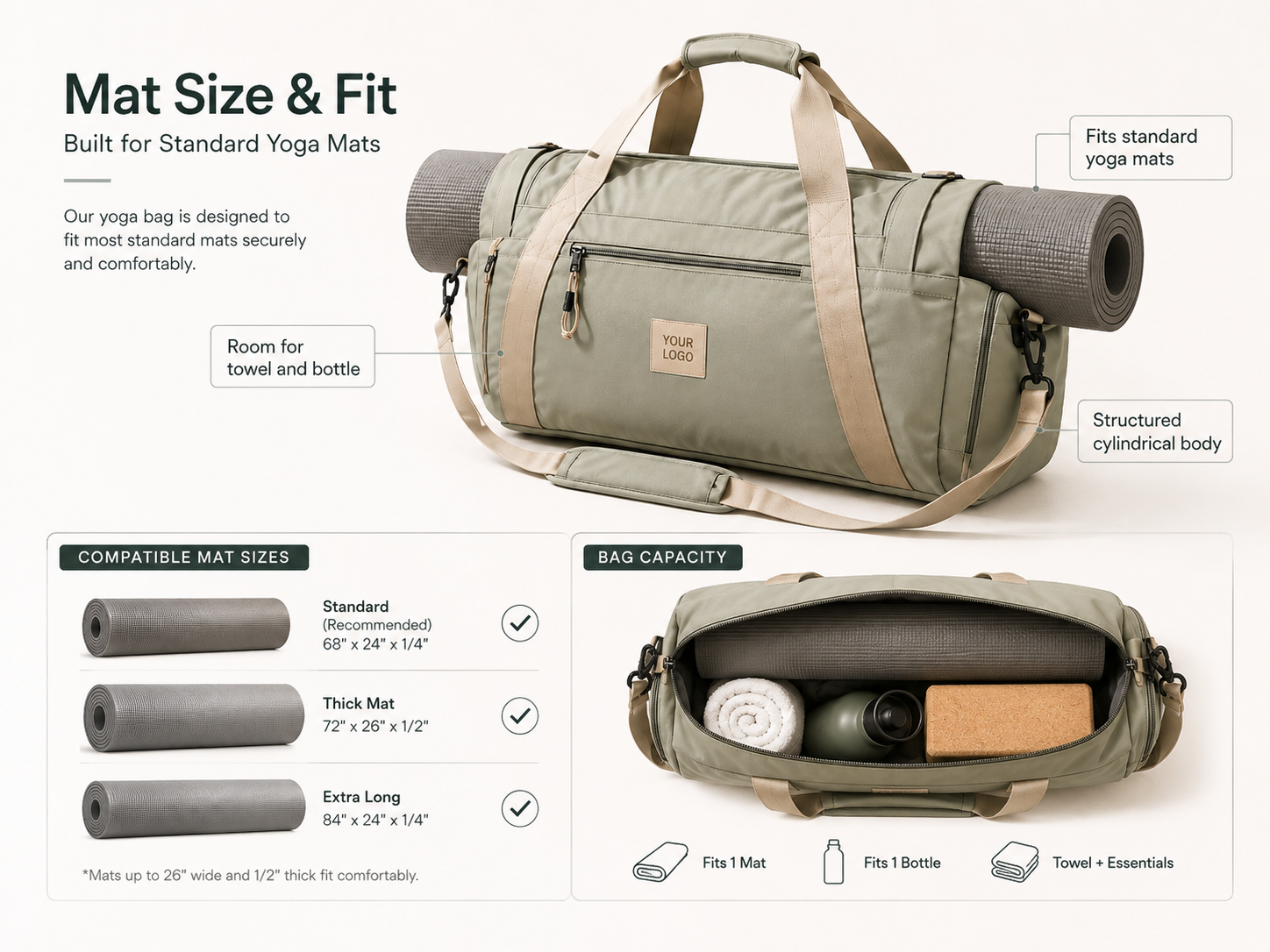
1. Specify the Rolled Yoga Mat Size
The flat size of a yoga mat does not directly determine the required bag dimensions.
Once rolled, three measurements matter:
- Rolled length
- Rolled diameter
- Rolled weight
Buyers should measure the actual mat after it has been rolled normally. Compressing the mat tightly during measurement may result in a bag that is difficult for users to pack.
A practical internal compartment should include enough allowance for:
- Easy insertion
- Zipper movement
- Fabric thickness
- Normal variation in rolling
- Reinforcement at both ends
A useful starting principle is:
Internal mat-compartment length should exceed the rolled mat length, while the compartment circumference should allow the mat to enter without excessive compression.
The final allowance should be confirmed through a physical sample.
Why Mat Thickness Matters
Two mats with the same flat length and width may produce very different rolled diameters.
A thin travel mat may fit into a narrow sleeve. A thicker training mat may require:
- A larger cylindrical compartment
- Wider external straps
- A deeper tote structure
- Stronger attachment points
Buyers should therefore avoid specifying capacity only by mat length.
Internal vs External Mat Storage
There are three common ways to carry a yoga mat.
Full Internal Compartment
The mat is completely enclosed inside the bag.
Advantages:
- Better protection from dirt
- Cleaner retail appearance
- No exposed mat during travel
- More secure storage
Limitations:
- Larger bag body
- Higher fabric consumption
- More difficult access to other items
- Greater shipping volume
This structure is suitable for travel-oriented yoga bags and premium gym bags.
External Mat Sleeve
The mat passes through a dedicated sleeve or open panel.
Advantages:
- Easy access
- Reduced main-compartment size
- Clear yoga-specific appearance
- Suitable for tote-style bags
Limitations:
- Part of the mat remains exposed
- Sleeve dimensions must fit the target mat
- The mat may shift if the fit is too loose
Adjustable Mat Straps
Two or more straps secure the mat outside the main bag.
Advantages:
- Accommodates different mat diameters
- Uses less material than a full compartment
- Keeps the main storage area separate
- Suitable for backpacks and duffel bags
Limitations:
- Buckles and straps increase component count
- Loose strap ends require control
- Attachment points must withstand movement
- The mat may affect carrying balance
Adjustable straps are useful when the product must fit several mat thicknesses.
2. Shoe Compartment Specifications
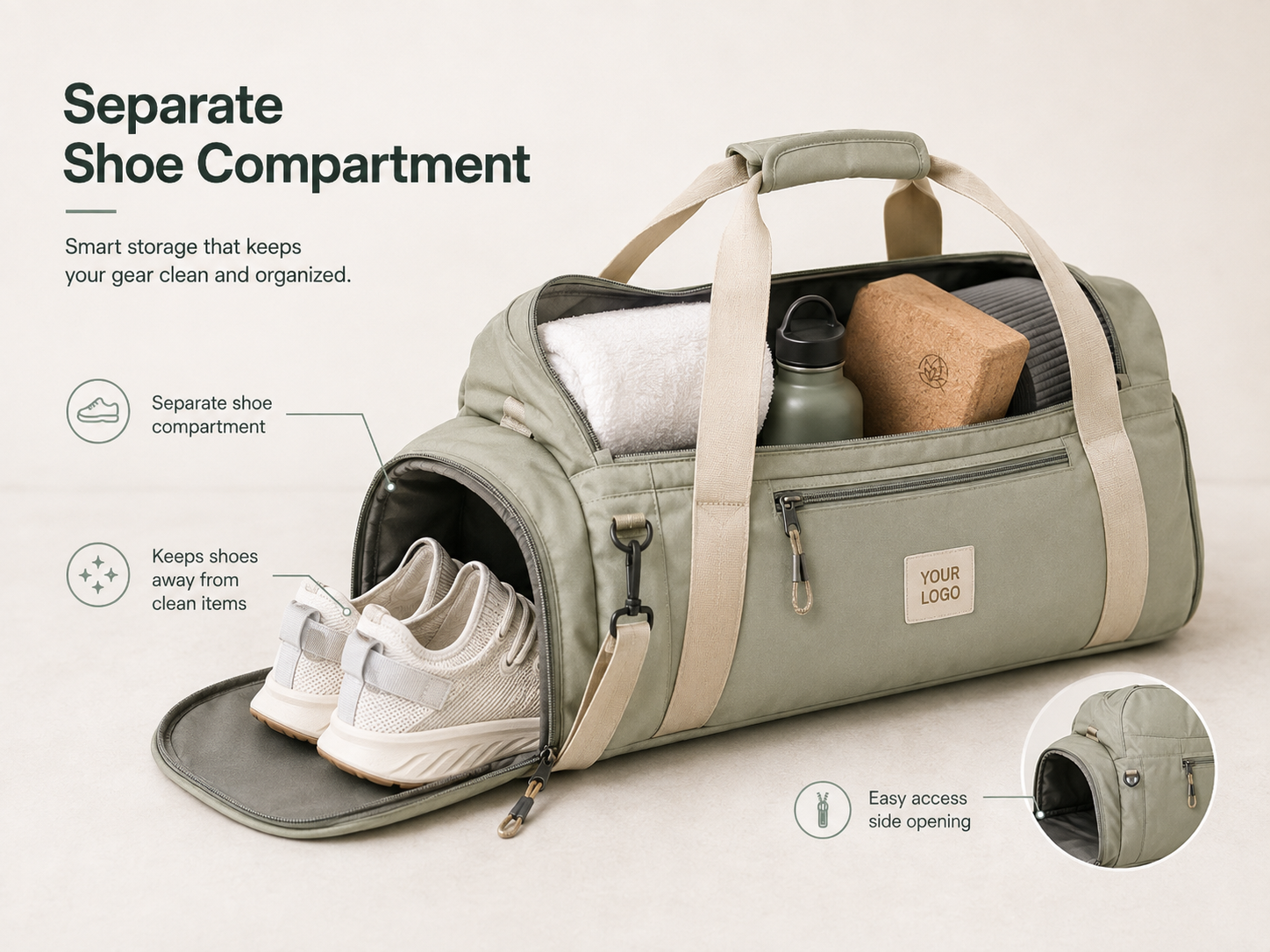
A shoe compartment should separate footwear from clothing, towels and personal items.
It should not simply be an additional side pocket.
The specification should confirm:
- Maximum shoe length
- Maximum shoe height
- One-shoe or one-pair capacity
- Compartment opening size
- Lining material
- Ventilation
- Cleaning method
- Whether the compartment collapses when empty
Buyers should provide actual footwear dimensions rather than relying only on regional shoe-size numbers.
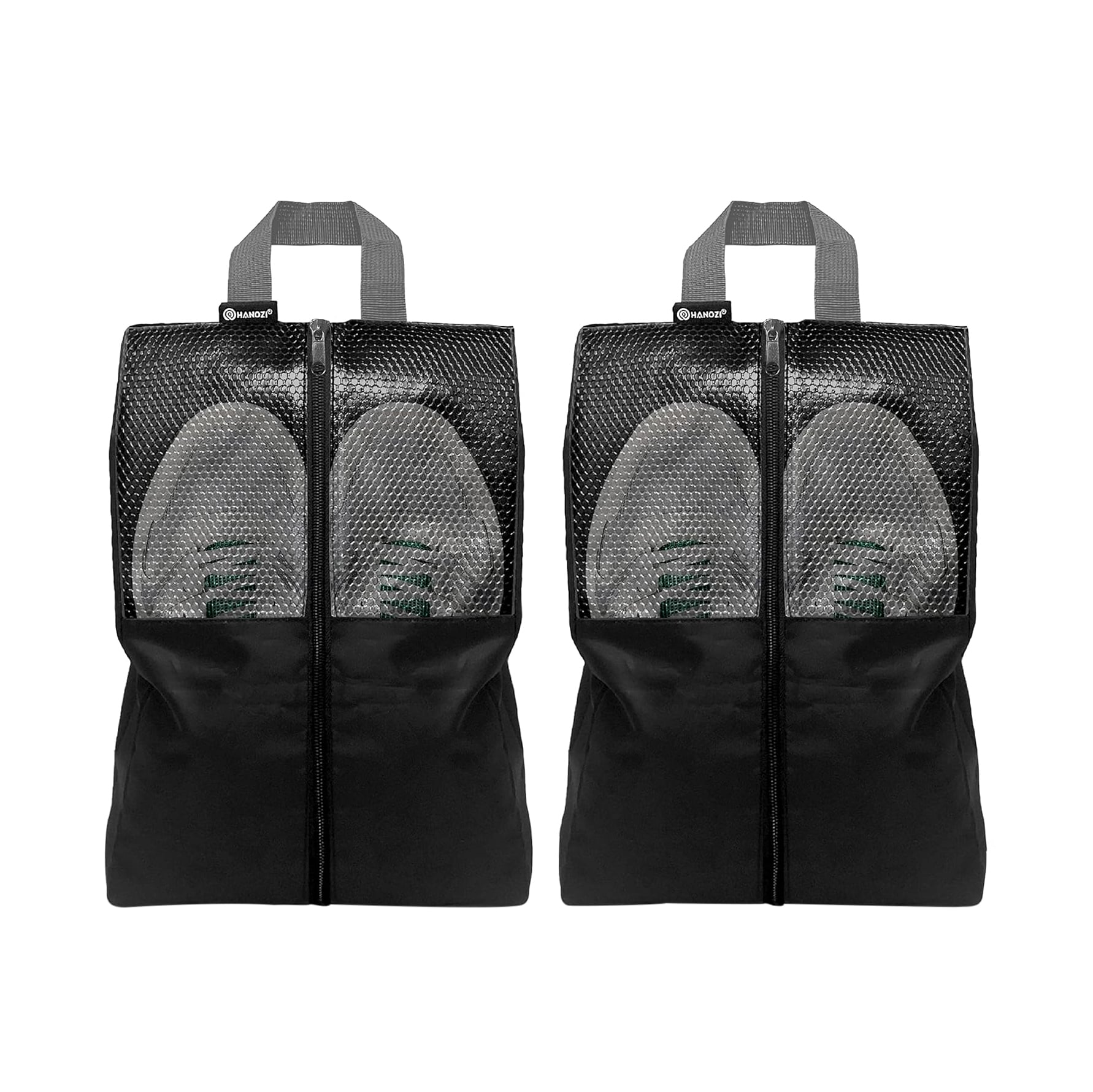
Side-Access Shoe Compartment
A side zipper allows shoes to enter without opening the main compartment.
This structure is practical for gym and studio use because it separates the access path from clean contents.
However, the internal shoe sleeve occupies space inside the main compartment. When shoes are inserted, the usable clothing capacity decreases.
Product photography and retail descriptions should show this clearly.
Separate Bottom Compartment
A horizontal divider creates a dedicated compartment at the bottom of the bag.
This provides clearer separation but adds:
- More panels
- Additional zipper length
- Reinforcement
- Greater sewing complexity
- A larger finished bag
The divider must support the weight of the main-compartment contents without collapsing onto the shoes.
Ventilation
Ventilation can be added through:
- Mesh panels
- Eyelets
- Perforated sections
- Breathable lining
- Partially open construction
Mesh improves airflow but may allow dirt or moisture to pass into surrounding areas.
The location should avoid direct contact with light-colored clothing or sensitive products.
Shoe-Compartment Lining
Common lining directions include:
- Polyester
- Coated polyester
- PEVA
- TPU-coated fabric
- Other wipe-clean materials
The lining should be evaluated for:
- Odor
- Color transfer
- Abrasion
- Seam durability
- Cleaning
- Temperature sensitivity
A water-resistant lining does not make the compartment completely leakproof.
3. Wet/Dry Storage Construction
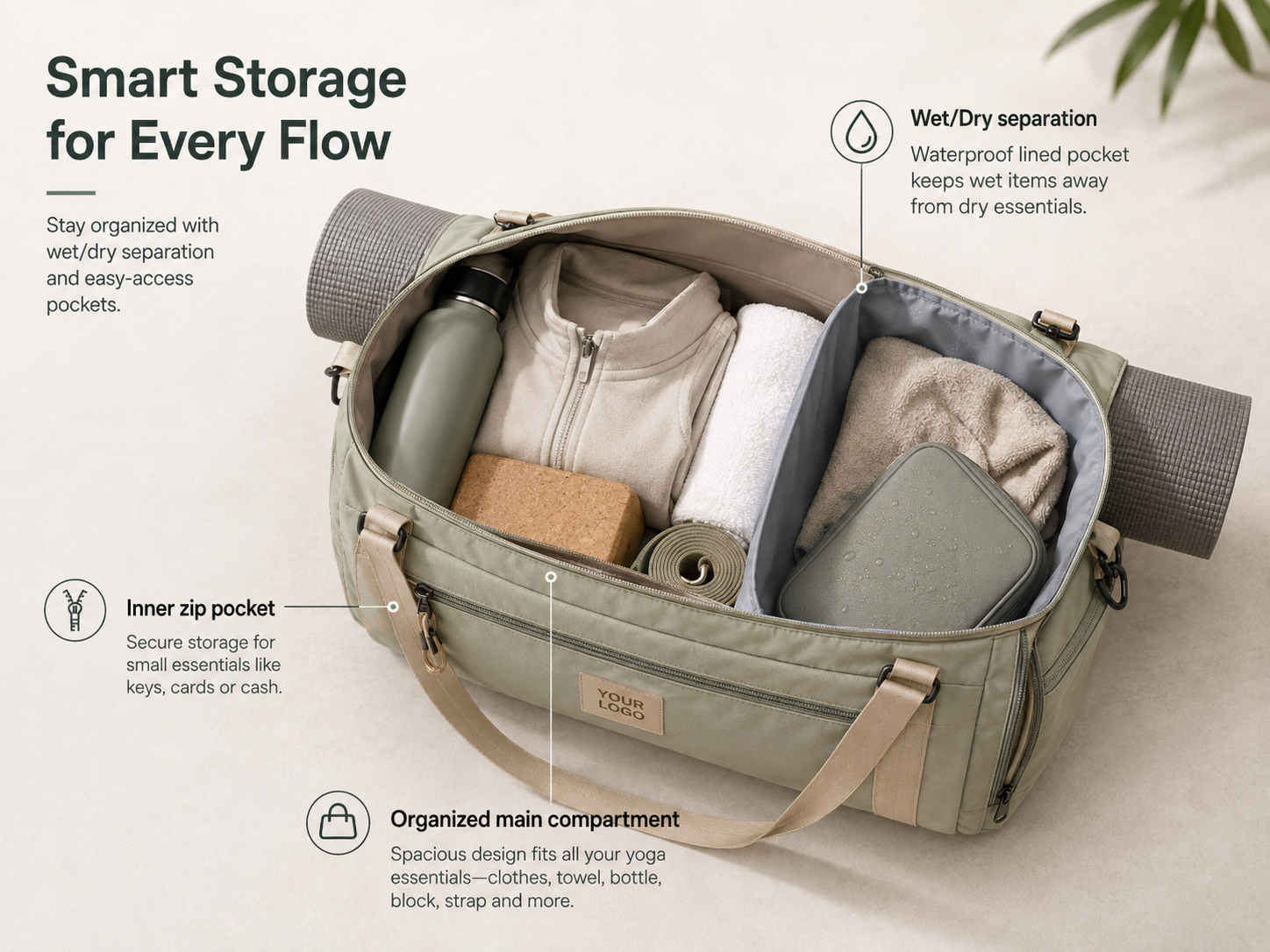
A wet compartment is commonly used for:
- Damp towels
- Used sportswear
- Swimwear
- Small toiletries
- Lightly wet personal items
The buyer should define what “wet storage” means for the product.
There is a major difference between holding a damp towel and containing free liquid.
Water-Resistant vs Waterproof
A coated lining may resist moisture on its surface, but water can still escape through:
- Sewing holes
- Zipper openings
- Binding seams
- Corners
- Panel connections
Unless the complete compartment uses sealed construction and has passed an appropriate test, it should be described as:
- Water-resistant
- Moisture-resistant
- Wipe-clean
- Suitable for damp items
rather than fully waterproof.
Wet-Pocket Location
Common options include:
Internal Zipper Pocket
Suitable for small damp items.
It uses little external space but may reduce the capacity of the main compartment.
External Side Pocket
Provides easy access and keeps damp items farther from clothing.
The pocket may require additional reinforcement if it carries bottles or heavy toiletries.
Full-Length Separate Compartment
Suitable for towels and clothing.
It provides greater separation but significantly increases bag size and production complexity.
Wet and Shoe Storage Should Be Defined Separately
A shoe compartment and a wet compartment solve different problems.
Combining them may reduce the number of pockets, but it can also create:
- Odor transfer
- Dirt contamination
- Difficult cleaning
- Poor retail communication
- Insufficient capacity
For yoga and gym bags positioned above the entry level, separate shoe and wet storage is generally easier for users to understand.
For compact bags, one wipe-clean multipurpose compartment may be more practical.
4. Strap Construction
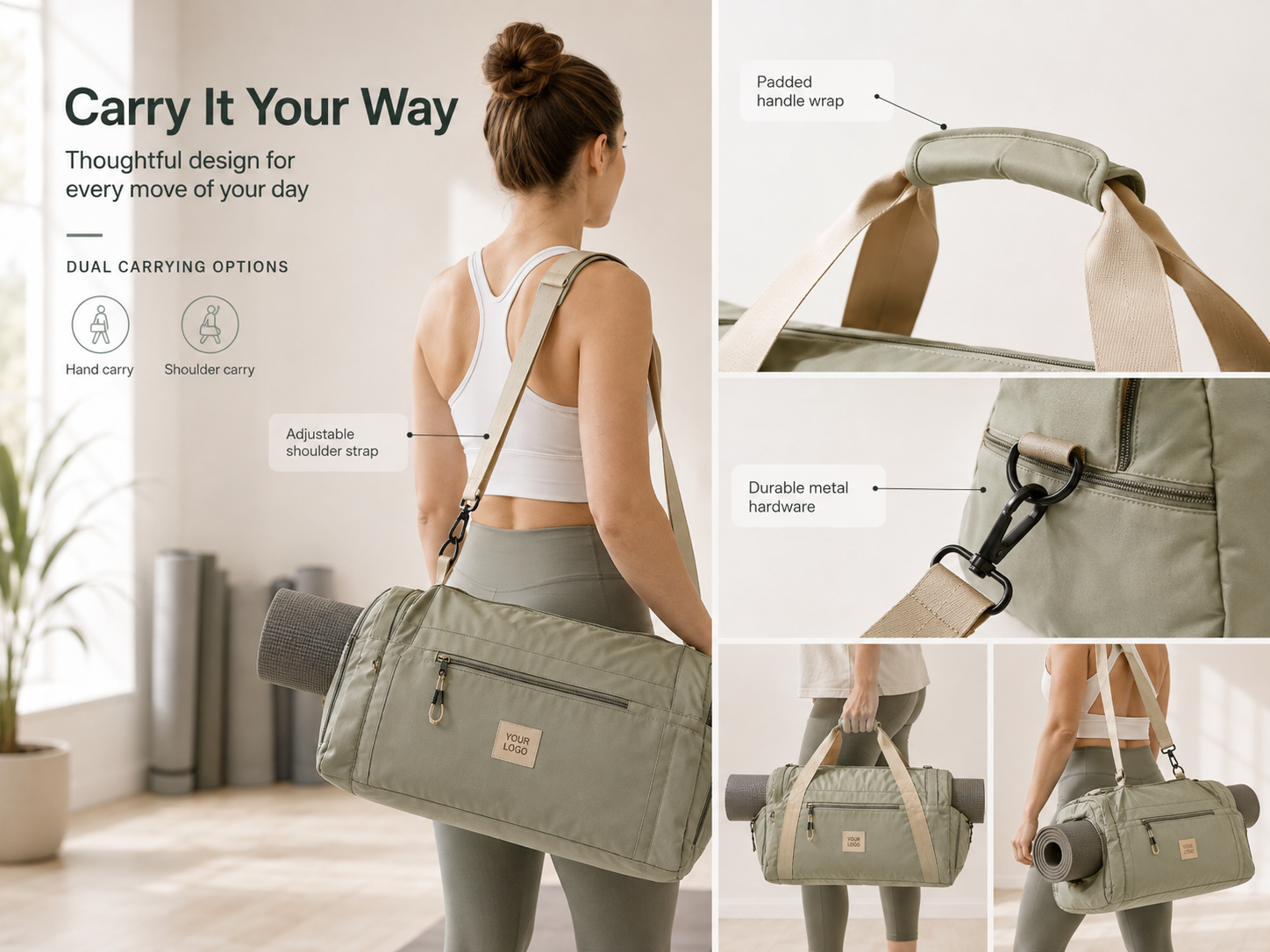
A yoga bag may be carried:
- By hand
- Over one shoulder
- Crossbody
- As a backpack
- With the mat attached externally
The strap system should be selected before the bag dimensions are finalized because it affects balance and reinforcement.
Shoulder-Strap Length
The specification should define:
- Minimum adjustable length
- Maximum adjustable length
- Strap width
- Whether the length includes hooks
- Intended shoulder or crossbody use
A fixed strap may be suitable for a simple yoga tote.
An adjustable strap is more suitable when the bag will be used by different users or worn over seasonal clothing.
Strap Width
A wider strap can distribute pressure more comfortably, particularly when the bag carries:
- A heavy mat
- Shoes
- A bottle
- Clothing
- Personal accessories
However, comfort also depends on:
- Webbing stiffness
- Edge finish
- Bag weight
- Strap angle
- Loaded balance
Shoulder Padding
Padding can improve comfort but adds:
- Material cost
- Sewing operations
- Packing thickness
- Additional positioning requirements
The pad should remain in the carrying area rather than sliding toward the hardware.
Hardware
Adjustable straps may use:
- Plastic buckles
- Metal buckles
- Swivel hooks
- D-rings
- Tri-glides
Hardware should be selected according to the intended load and product positioning.
Metal hardware can create a more premium appearance but increases weight and cost.
Attachment Points
The strap is only as strong as its connection to the bag body.
Attachment areas may require:
- Reinforcement patches
- Box stitching
- Cross stitching
- Bartacks
- Multiple fabric layers
- Webbing extending into the seam
Attaching a strong webbing strap to an insufficiently reinforced lightweight panel can still result in failure.
Bag Balance Under Load
A yoga bag may become unbalanced when the mat is attached to one side or shoes are placed in an end compartment.
During sampling, the buyer should test the bag with:
- The target yoga mat
- One pair of shoes
- A towel
- A water bottle
- Typical clothing
- Small accessories
Check whether the loaded bag:
- Tilts excessively
- Rotates while walking
- Pulls away from the body
- Causes the strap to twist
- Allows the mat to slide
- Places excessive pressure on one attachment point
A visually symmetrical empty bag may behave differently once loaded.
Recommended Structure by Product Positioning
| Product Type |
Recommended Structure |
| Basic mat carrier |
Full-length sleeve or drawstring body with one shoulder strap |
| Yoga tote |
Main compartment, external mat sleeve and small front pocket |
| Studio gym bag |
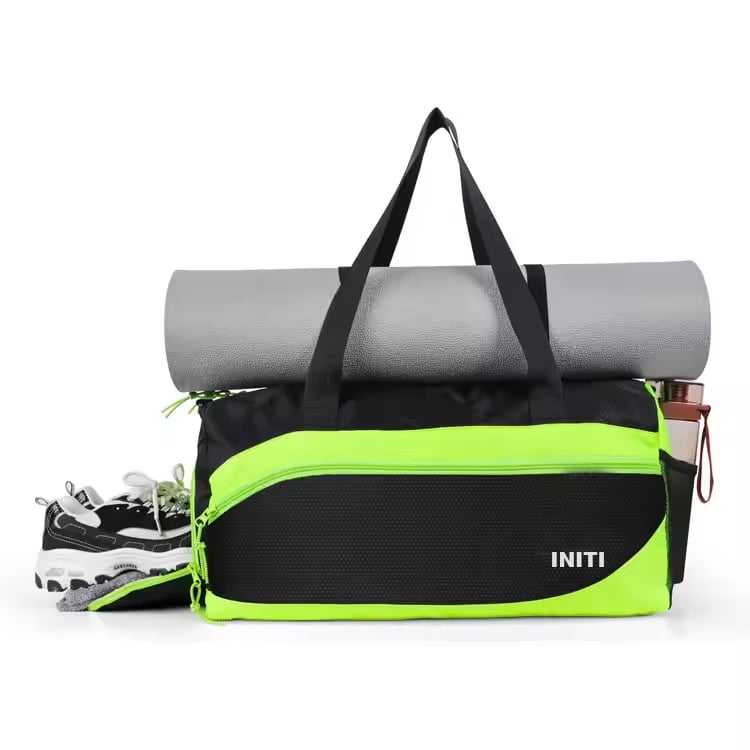
Main compartment, shoe pocket, wet pocket and adjustable strap |
| Yoga duffel bag |
Internal mat space or external straps, shoe compartment and dual handles |
| Yoga backpack |
External mat straps, shoe section, bottle pockets and padded shoulder straps |
| Travel yoga bag |
Enclosed mat compartment, organized interior and detachable shoulder strap |
Not every yoga bag needs every feature.
Adding a shoe compartment, wet pocket, bottle holder, mat sleeve and several internal pockets can make a compact product oversized and expensive.
The structure should reflect the target user and retail price.
Material Selection
Common material directions include:
Cotton or Canvas
Suitable for:
- Lifestyle yoga totes
- Natural visual positioning
- Screen printing
- Studio and retail use
Potential limitations include moisture absorption and slower drying.
Polyester or Nylon
Suitable for:
- Gym bags
- Wet/dry structures
- Travel products
- Lightweight construction
- Easy-clean surfaces
Coating and fabric density should be confirmed according to the required moisture resistance.
RPET Fabric
Suitable for product lines requiring recycled-polyester positioning.
Buyers should confirm recycled content, certification requirements and the composition of linings, straps and accessories.
Mesh
Useful for ventilation, external bottle pockets and selected shoe compartments.
Mesh opening size and strength should match the items stored inside.
Custom Yoga Bag Specification Checklist
| Specification |
Details to Provide |
| Mat |
Rolled length, diameter and weight |
| Mat storage |
Internal, sleeve or adjustable straps |
| Main bag size |
Width × height × depth |
| Shoes |
Maximum footwear dimensions |
| Shoe compartment |
Side, bottom or removable structure |
| Wet storage |
Intended contents and required capacity |
| Main fabric |
Material, weight, coating and color |
| Lining |
Standard, wipe-clean or moisture-resistant |
| Strap |
Fixed or adjustable, width and length |
| Handles |
Material, drop length and reinforcement |
| Hardware |
Plastic or metal |
| Pockets |
Bottle, phone, keys or accessories |
| Logo |
Printing, embroidery, label or patch |
| Testing |
Loaded balance, strap strength and seam strength |
| Packaging |
Flat packing, polybag, sleeve or retail box |
Quality Checks
The approved sample should be tested with the actual intended contents.
Key inspection points include:
- Mat fit and removal
- Shoe-compartment capacity
- Wet-pocket lining and seams
- Zipper operation
- Strap adjustment
- Hardware security
- Handle symmetry
- Reinforcement stitching
- Loaded carrying balance
- Main-compartment capacity
- Logo position
- Finished dimensions
For repeated-use products, static loading alone is insufficient. Repeated lifting and walking simulation can reveal gradual movement at straps and attachment points.
Common Buyer Mistakes
Specifying Only the Flat Mat Size
The rolled diameter determines whether the mat fits the carrier.
Using “Fits Standard Mats” Without Measurements
Yoga mats vary in length, thickness and rolled diameter.
Adding a Shoe Pocket Without Checking Lost Capacity
An internal shoe sleeve reduces the usable main compartment.
Describing a Coated Pocket as Waterproof
Moisture may still escape through seams and zippers.
Selecting Straps Only by Appearance
Strap width, adjustment range, reinforcement and loaded balance affect actual use.
Adding Too Many Compartments
More pockets increase size, cost and sewing complexity without always improving usability.

How INITI Supports Custom Yoga Bag Development
INITI’s current product range includes a Yoga Mat Shoulder Tote Bag with an integrated mat-carrying structure, main compartment, front pocket and long shoulder strap. Its travel-bag range also supports adjustable shoulder straps and optional shoe compartments.
Custom development can include:
- Mat dimensions
- External or internal mat storage
- Shoe compartments
- Wet/dry pockets
- Bottle pockets
- Adjustable straps
- Custom handles
- Fabric and lining
- Logo methods
- Retail packaging
- Sample development
- Bulk production inspection
The final structure should be confirmed using the actual mat, footwear and typical packed contents.
FAQ
What dimensions are needed for a custom yoga bag?
Provide the rolled mat length, rolled diameter and mat weight, together with the items that will be stored in the main compartment.
Should a yoga bag use an internal or external mat holder?
Internal storage provides greater protection. External sleeves or straps reduce the main bag size and allow faster access.
Does a shoe compartment reduce the main storage capacity?
Usually, yes. A shoe sleeve extending into the bag occupies internal space when loaded.
Can the wet pocket be described as waterproof?
Only when the complete structure has suitable sealed construction and testing. A coated lining alone normally provides moisture resistance rather than full waterproofing.
How should shoulder-strap strength be checked?
Test the finished bag with the intended contents using both static loading and repeated lifting. Inspect the webbing, stitching, hardware and body attachment points.
Conclusion
A reliable custom yoga bag should be specified around actual mat and equipment dimensions.
The four most important decisions are:
- How the rolled mat will fit and be carried
- Whether shoes need a separate ventilated compartment
- How damp items will be isolated
- How straps will distribute the completed load
These elements should be tested together in a finished sample.
A bag with the correct capacity but poor balance, weak strap attachments or an undersized shoe compartment will not perform as intended.
Inquiry Support
To develop a custom yoga bag, provide:
- Rolled yoga mat dimensions
- Estimated quantity
- Preferred bag size or reference sample
- Shoe-compartment requirements
- Wet/dry storage requirements
- Required colors
- Logo artwork
- Strap and handle preferences
- Packaging requirements
If you have not finalized all details, you can first send your intended use and target quantity, and we can recommend a suitable specification.
Related Products
Related Blog Articles


 Hot News